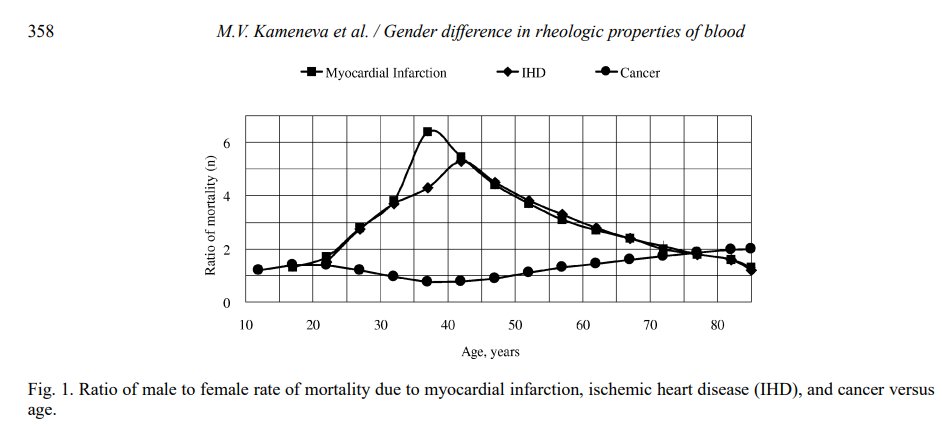
Men have ~5 times the rate of heart attack and heart disease in middle age, compared to women.
Hypothesis is that it's due to rheological properties of blood, and that regular blood donation can fix this.
Hypothesis is that it's due to rheological properties of blood, and that regular blood donation can fix this.
Essentially, women have blood that has a higher proportion of newer RBCs, as do blood donors.
content.iospress.com/articles/clini…
content.iospress.com/articles/clini…
Direct relation between blood viscosity and insulin resistance.
Idea is that high viscosity means blood can't properly perfuse muscle, which is where 80% of glucose goes. pubmed.ncbi.nlm.nih.gov/9535148/
Idea is that high viscosity means blood can't properly perfuse muscle, which is where 80% of glucose goes. pubmed.ncbi.nlm.nih.gov/9535148/
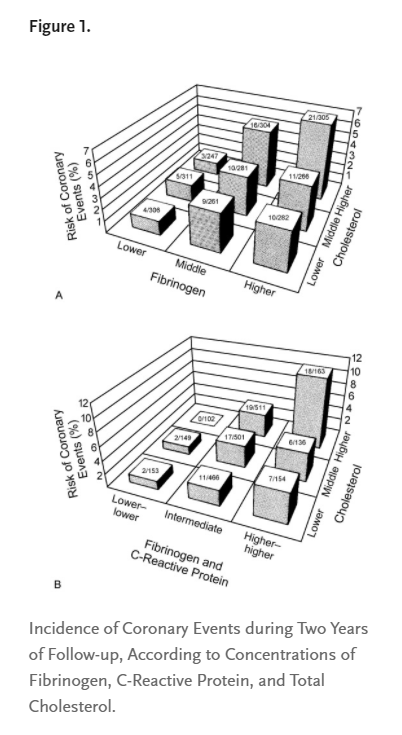
Patients who had low fibrinogen, a blood clotting factor, had low risk of heart attack or sudden death even with high cholesterol. nejm.org/doi/full/10.10…
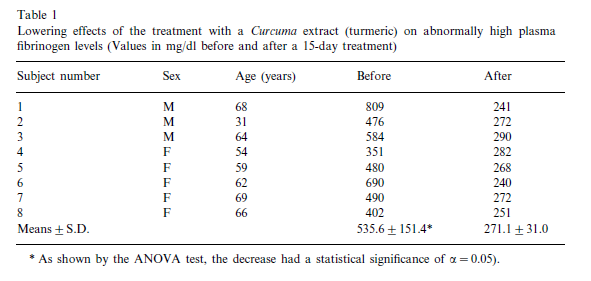
Curcumin lowers high fibrinogen in 15 days. sciencedirect.com/science/articl…
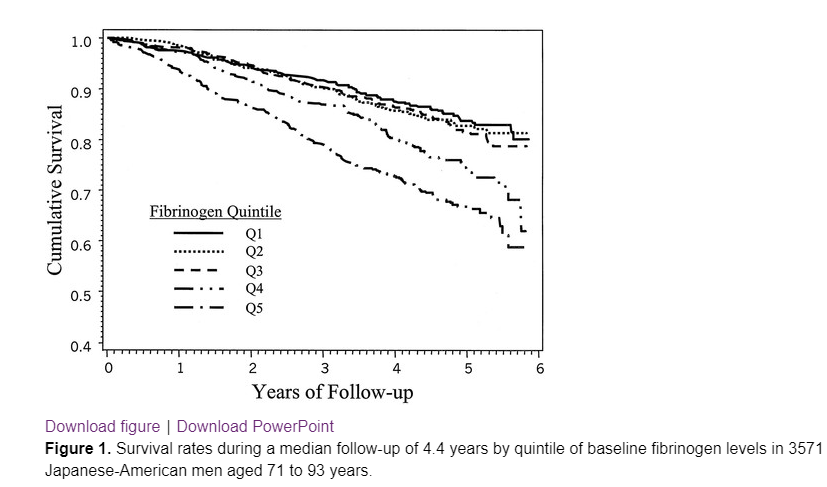
Fibrinogen, a blood clotting factor, is a powerful predictor of all-cause mortality. You really don't want to have a high level. ahajournals.org/doi/full/10.11…
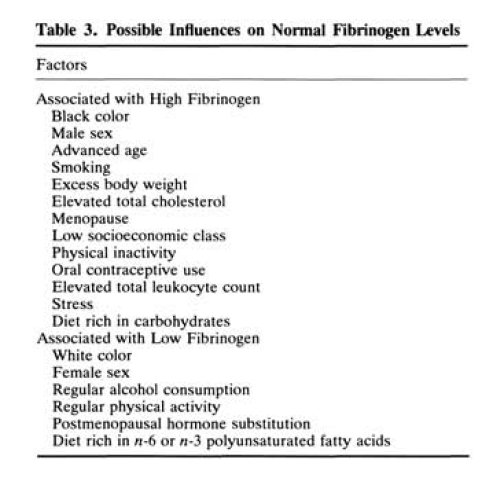
The usual suspects are associated with high fibrinogen: age, smoking, physical inactivity, and noteworthy, high carb consumption.
Moderate alcohol consumption decreases fibrinogen. 12% reduction in 3 weeks in healthy volunteers.
nature.com/articles/16014…
nature.com/articles/16014…
Omega-3 fatty acids from fish oil decrease blood viscosity, and that may account for (some of) its benefits. bmj.com/content/288/64…
People in the highest quartile of blood viscosity were over 60% more likely to develop diabetes. academic.oup.com/aje/article/16…
Obese people have higher blood viscosity and fibrinogen, and weight loss decreases both. europepmc.org/article/med/82…
Cardiovascular benefits of phlebotomy are (at least in part) due to decrease in blood viscosity.
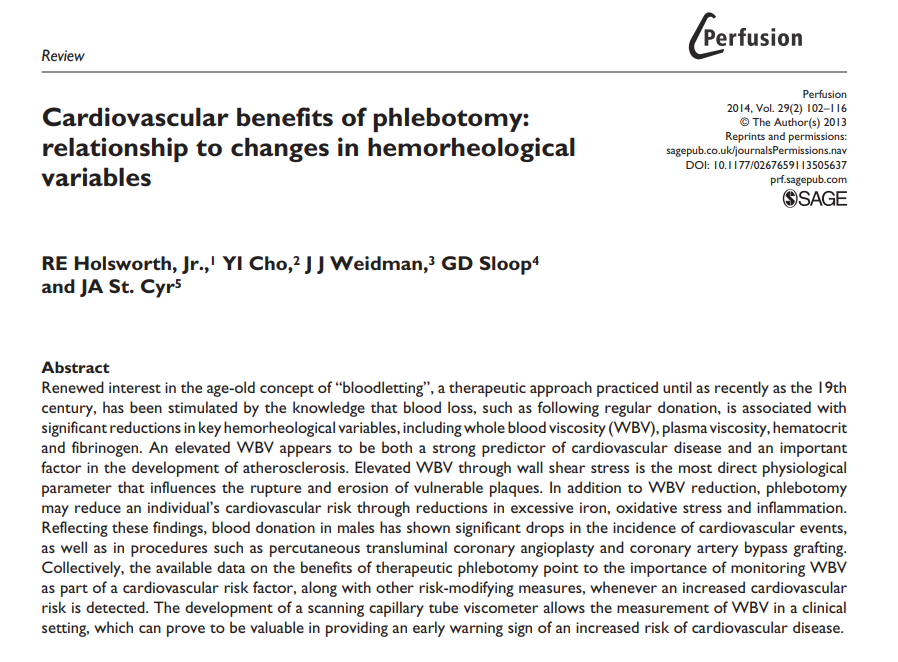
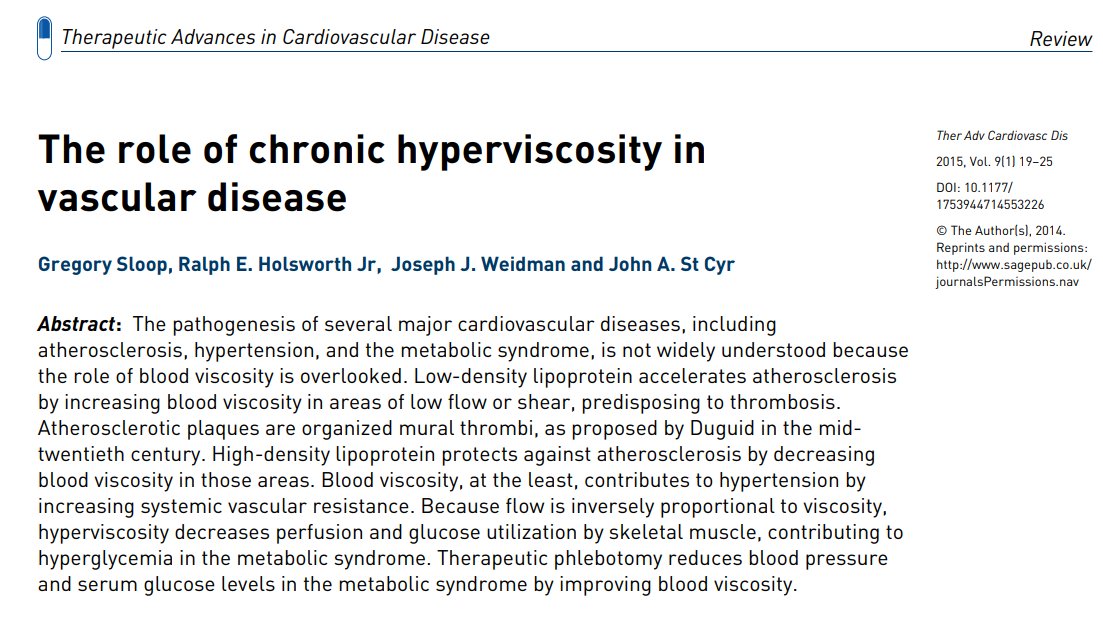
The role of blood hyperviscosity in vascular disease.
Have we been looking at the wrong risk markers all along?
Does hyperviscosity represent the true cause of heart disease?
Have we been looking at the wrong risk markers all along?
Does hyperviscosity represent the true cause of heart disease?
• • •
Missing some Tweet in this thread? You can try to
force a refresh