*Thread*
As a follow up to my previous thread on general sword construction here is one that will be focusing on blade geometry.
Here we will look at some common blade profiles and see how they effect a sword of similar thickness, length, and profile.
As a follow up to my previous thread on general sword construction here is one that will be focusing on blade geometry.
Here we will look at some common blade profiles and see how they effect a sword of similar thickness, length, and profile.
Each sword here is roughly 88cm long, 4.5cm wide, and 6mm thick at the tang. This will allow us to see how the weight and center of mass varies between each profile. The weights may seem a bit light but bear in mind there are no grips or pommels on these.
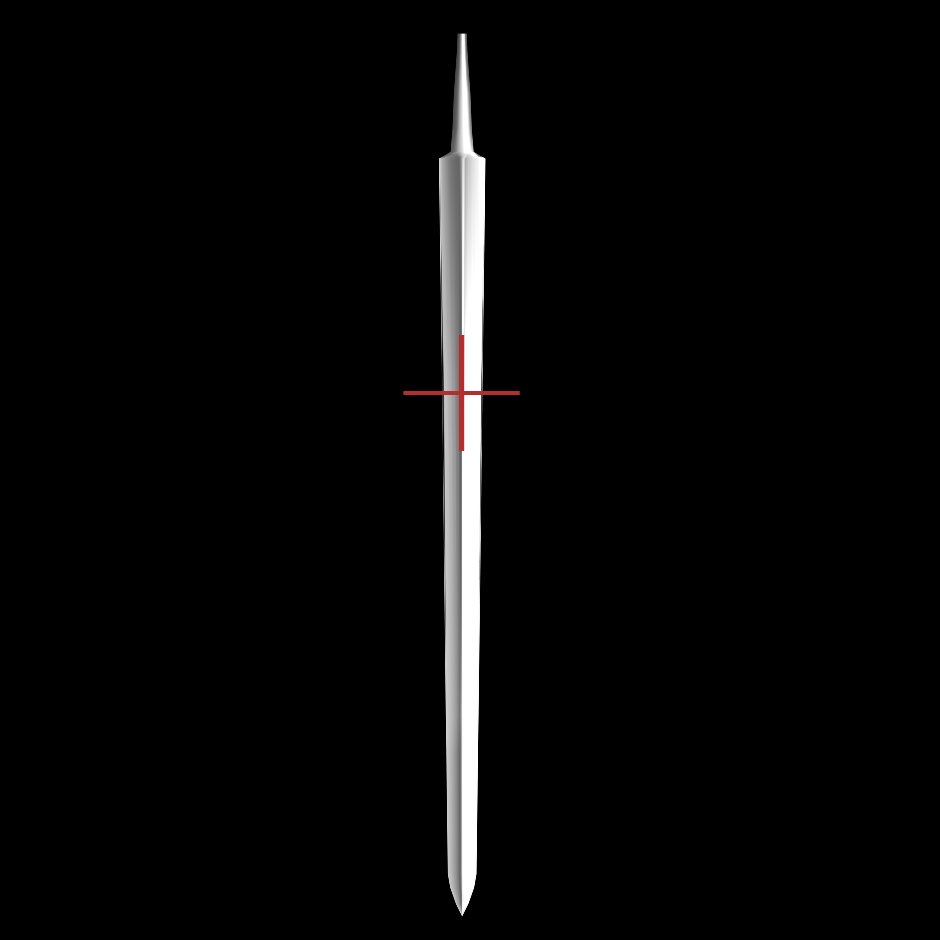
Hollow Ground
A very unique blade profile, capable of an extremely acute cutting edge, making hollow ground blades extremely sharp, while retaining rigidity by having a very thick central 'spine'. The downside to this is that the edge is relatively unsupported, and easily damaged
A very unique blade profile, capable of an extremely acute cutting edge, making hollow ground blades extremely sharp, while retaining rigidity by having a very thick central 'spine'. The downside to this is that the edge is relatively unsupported, and easily damaged
Hollow Ground stats.
The hollow ground version of our blade comes in at 462 grams, with a CoM 35cm from the tip of the tang.
The hollow ground version of our blade comes in at 462 grams, with a CoM 35cm from the tip of the tang.
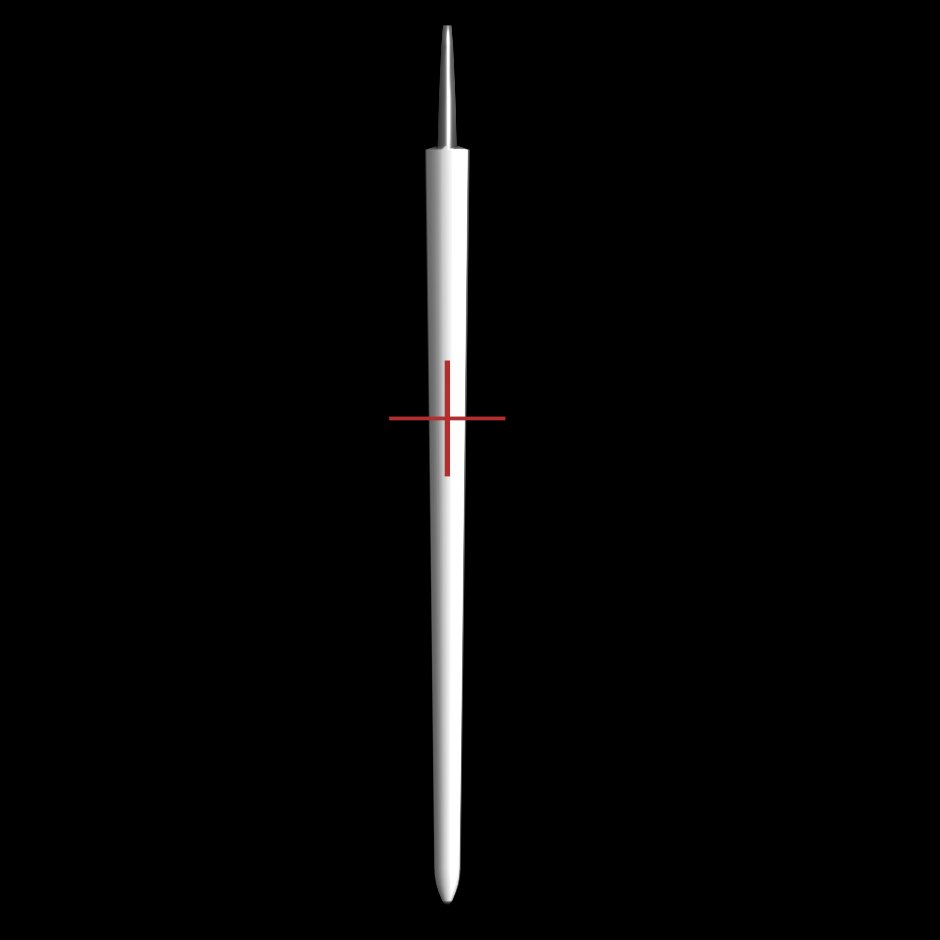
Lenticular
By far the most common blade type seen in prior to the late middle ages. Is a balance of rigidity and flexibility, very important when dealing with iron of varying qualities. The edge is very well supported and thus fairly durable.
By far the most common blade type seen in prior to the late middle ages. Is a balance of rigidity and flexibility, very important when dealing with iron of varying qualities. The edge is very well supported and thus fairly durable.
Lenticular Stats.
The lenticular version of our blade comes in at 798 Grams, with a CoM 40cm from the tip of the tang
The lenticular version of our blade comes in at 798 Grams, with a CoM 40cm from the tip of the tang
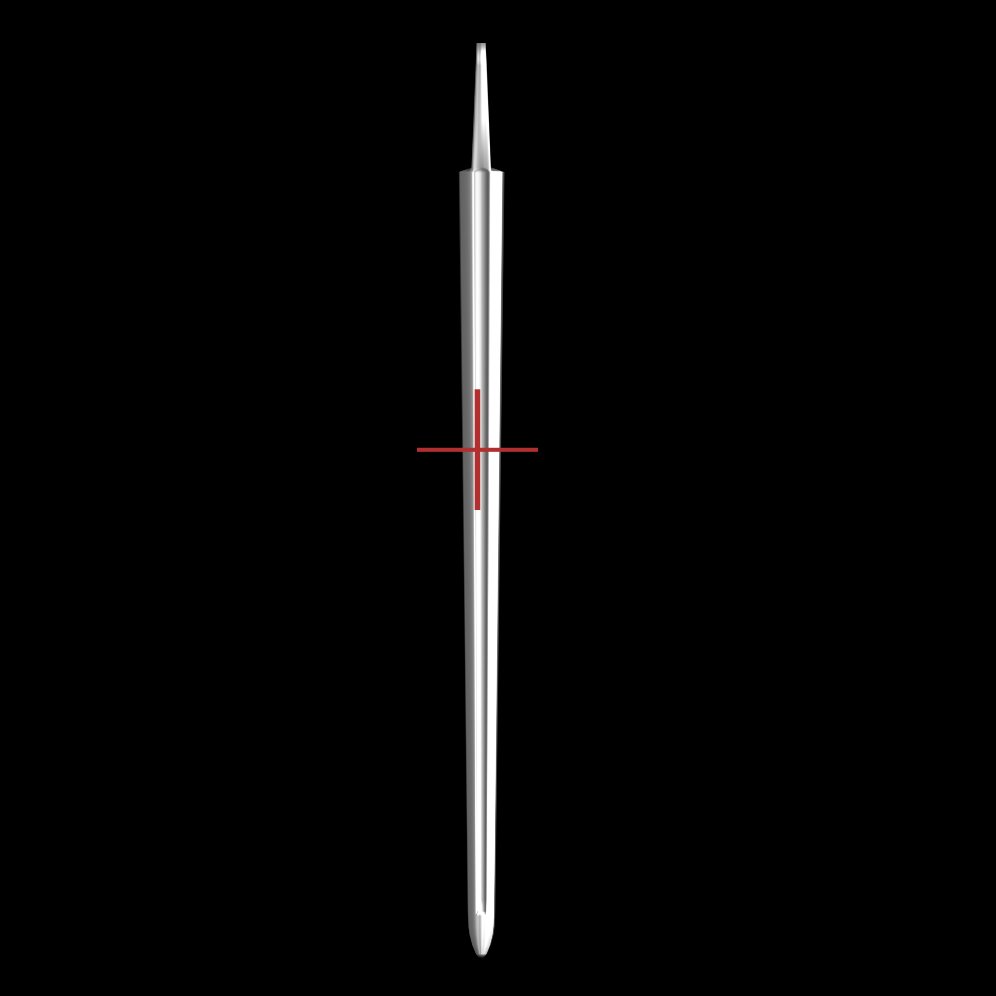
Lenticular with Fuller
This profile is the same as the lenticular, but with a fuller. A fuller (colloquially and erroneously known as a 'blood groove') serves one main purpose, to lighten the blade and conserve material, without sacrificing significant amounts of strength.
This profile is the same as the lenticular, but with a fuller. A fuller (colloquially and erroneously known as a 'blood groove') serves one main purpose, to lighten the blade and conserve material, without sacrificing significant amounts of strength.
Lenticular with Fuller stats.
The lenticular with fuller version of our blade comes in at 671 Grams, with a CoM 39cm from the tip of the tang. Note That over 120 grams have been saved with the addition of the fuller, with the CoM barely being affected.
The lenticular with fuller version of our blade comes in at 671 Grams, with a CoM 39cm from the tip of the tang. Note That over 120 grams have been saved with the addition of the fuller, with the CoM barely being affected.
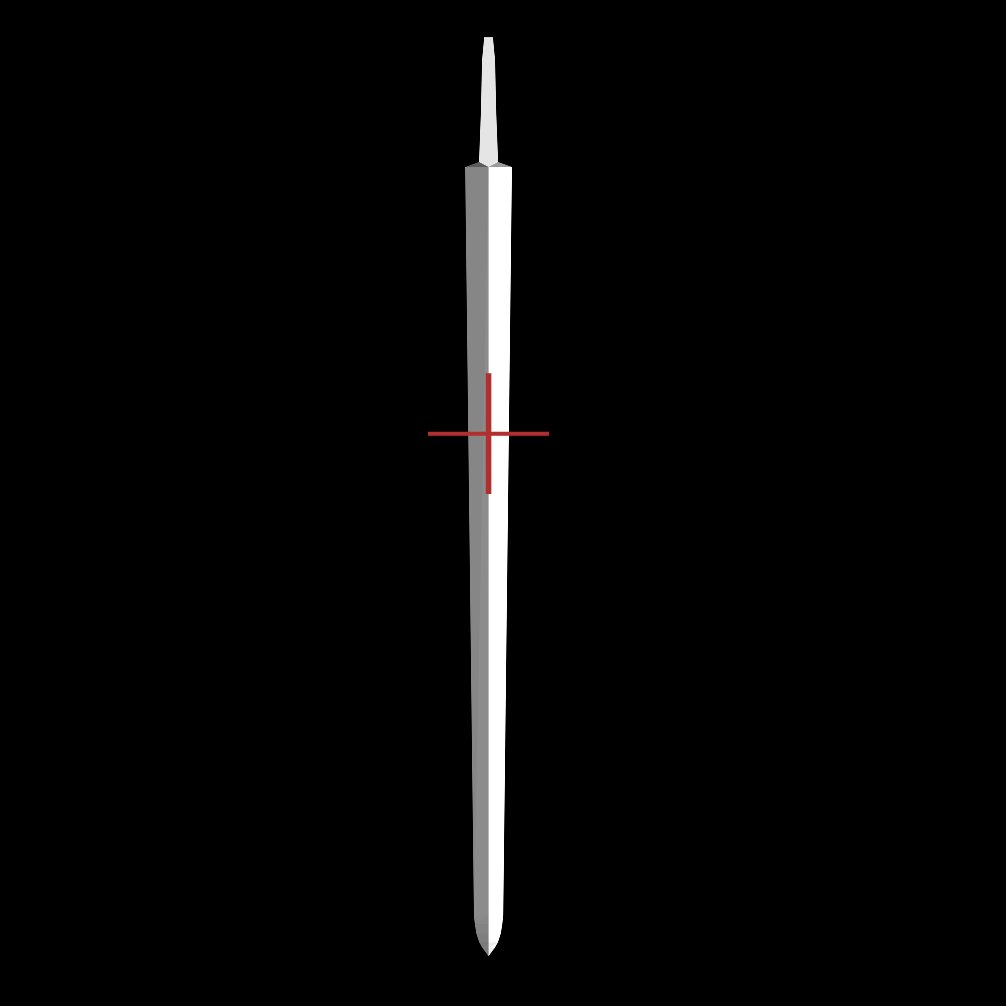
Diamond
A diamond profile provides well supported edges and a very still spine, at the cost of increased weight over hollow ground, but with a more acute cutting angle than lenticular. Diamond is a middle ground jack of all trades master of none kind of blade profile.
A diamond profile provides well supported edges and a very still spine, at the cost of increased weight over hollow ground, but with a more acute cutting angle than lenticular. Diamond is a middle ground jack of all trades master of none kind of blade profile.
Diamond stats.
The diamond version of our blade comes in at 600 Grams, with a CoM 38cm from the tip of the tang.
The diamond version of our blade comes in at 600 Grams, with a CoM 38cm from the tip of the tang.
Diamond with Fuller
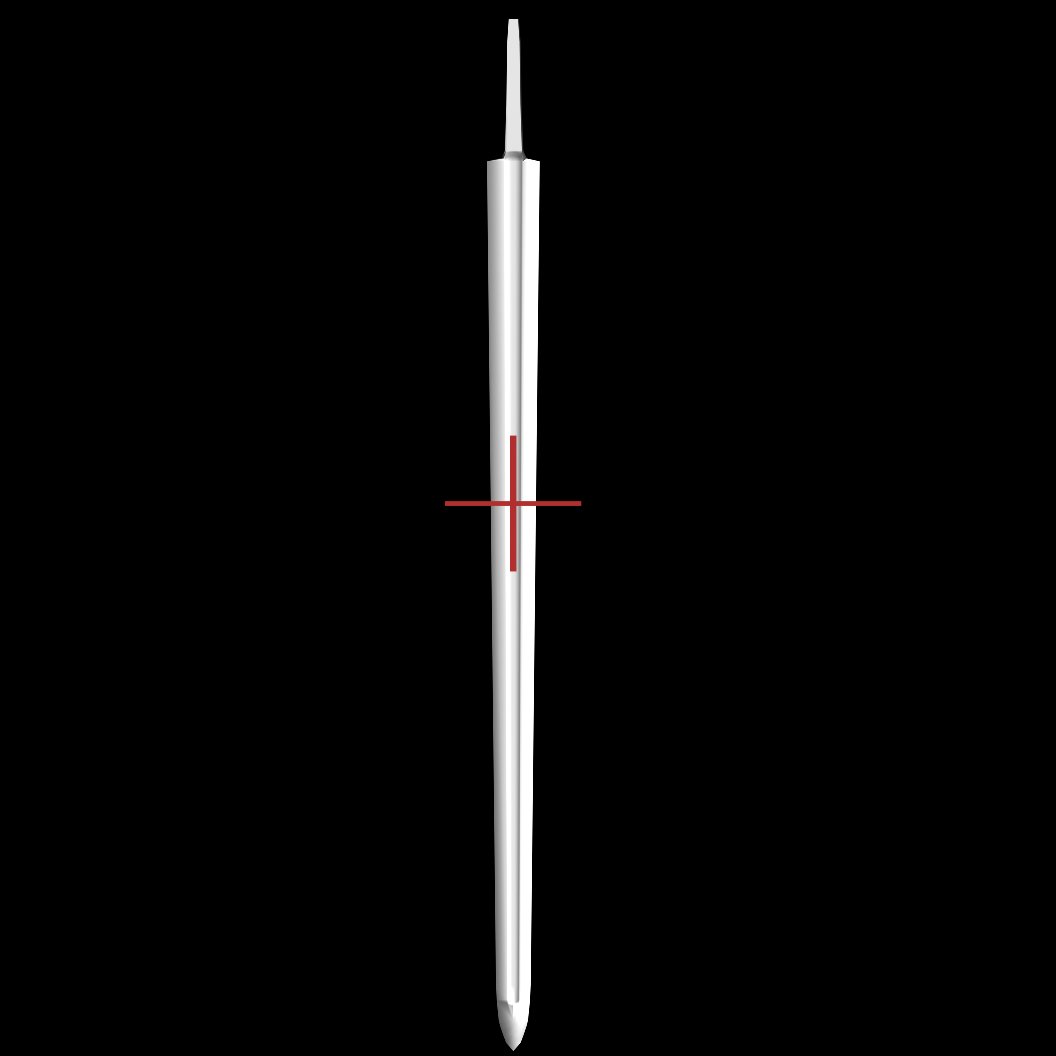
Much the same as the Lenticular with fuller, the main purpose is to decrease weight. In this instance the fuller will actually make the blade a better cutter as it reduced the resistance inherent to the diamond profile.
Much the same as the Lenticular with fuller, the main purpose is to decrease weight. In this instance the fuller will actually make the blade a better cutter as it reduced the resistance inherent to the diamond profile.
Diamond with Fuller stats
The diamond version of our blade comes in at 560 grams, with a CoM 41cm from the tip of the tang.
The diamond version of our blade comes in at 560 grams, with a CoM 41cm from the tip of the tang.
Hexagonal
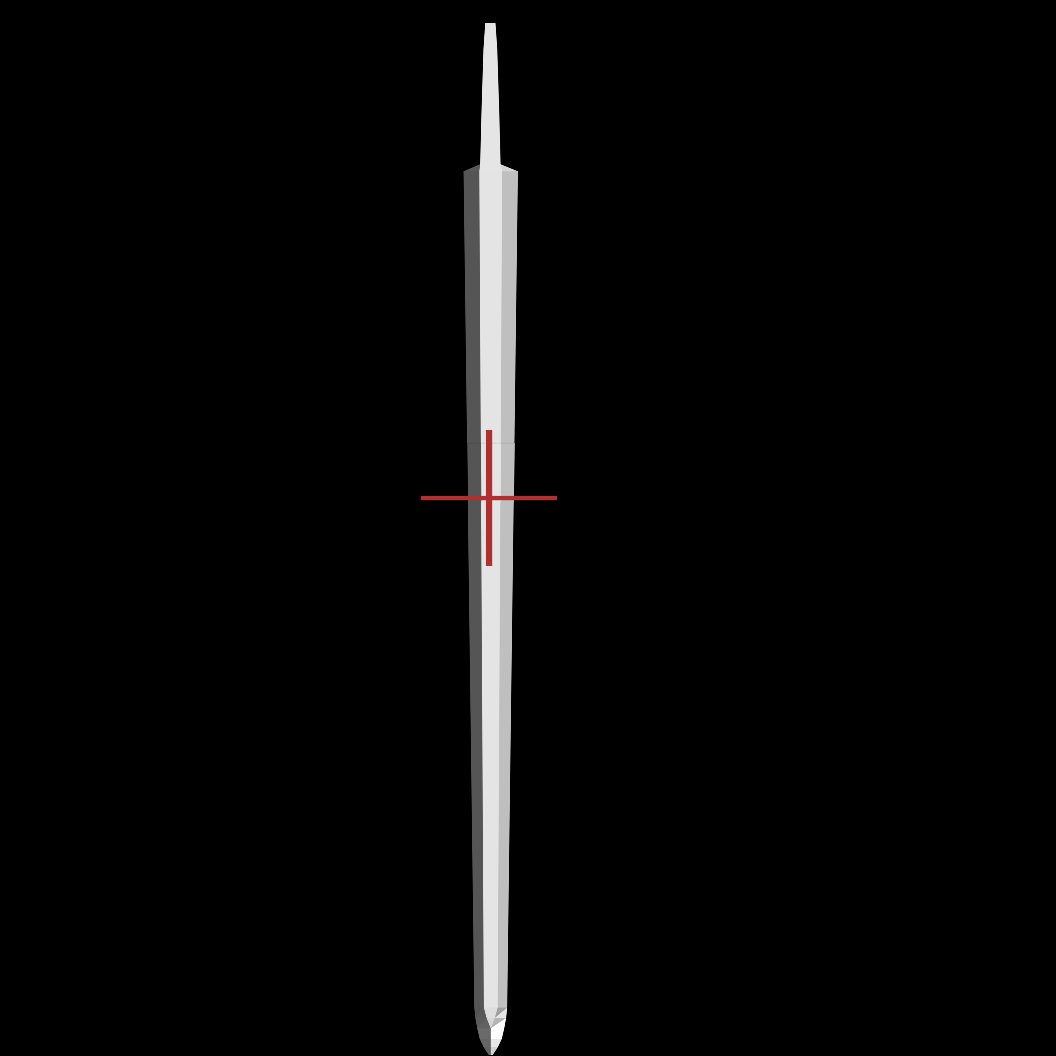
Hexagonal is by far the stiffest profile we are addressing here, and it comes at a cost, increased weight, and decreased cutting ability. The edge is extremely well supported however, and can take much abuse. Many cheap wallhangers these days will sport this profile.
Hexagonal is by far the stiffest profile we are addressing here, and it comes at a cost, increased weight, and decreased cutting ability. The edge is extremely well supported however, and can take much abuse. Many cheap wallhangers these days will sport this profile.
Hexagonal stats
The hexagonal version of our blade comes in at massive 1082 grams, with a CoM 39cm from the tip of the tang.
The hexagonal version of our blade comes in at massive 1082 grams, with a CoM 39cm from the tip of the tang.
These are not the only variations on blade profile, and I may as I feel compelled add more. Sometime multiple fullers are used etc, sometimes there is slightly more complex geometry involved combining multiple profiles.
I will also at some point write a thread on the common sword types these different profiles can be found on.
• • •
Missing some Tweet in this thread? You can try to
force a refresh