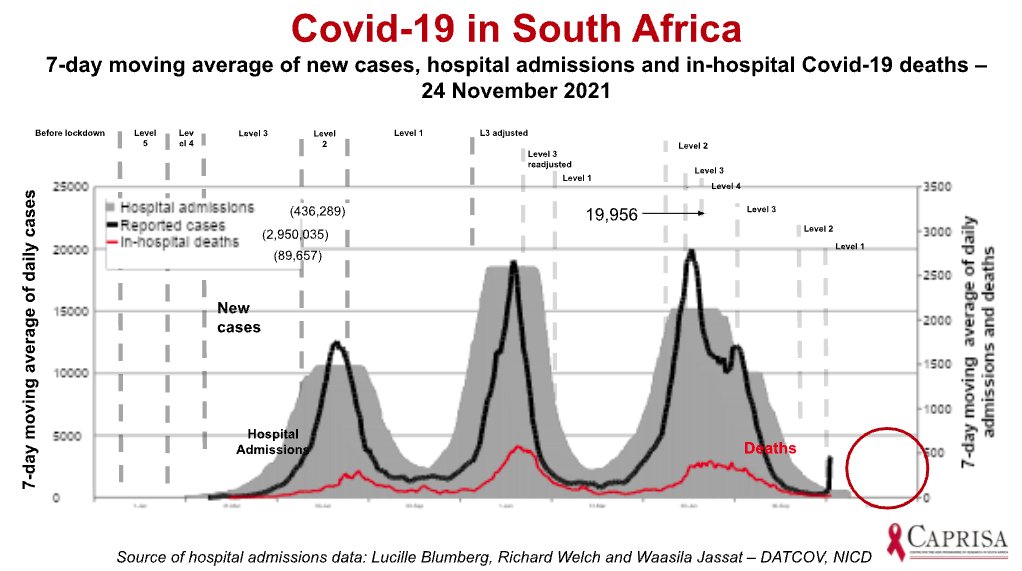
You're all going bananas about Omicron, so I think what you all should do is take a deep breath & read this balanced, informed, presentation from people on the ground (dated today). Highlights below.
Hospitalization rates has been around 10%-ish in South-Af. What we should look at is this: over the next few days (because there is a lag) is that % significantly different. It's too early to tell.
Some good news
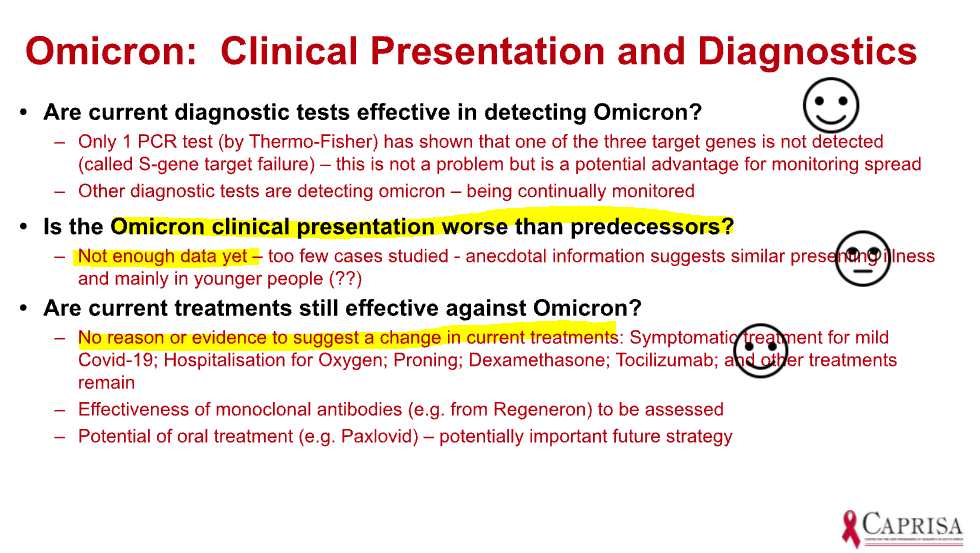
& some less good news
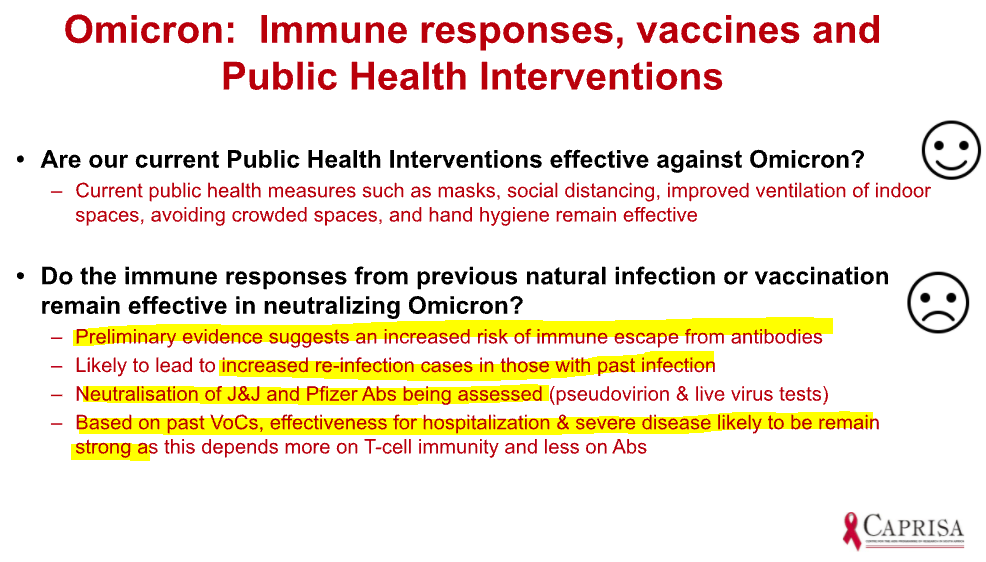
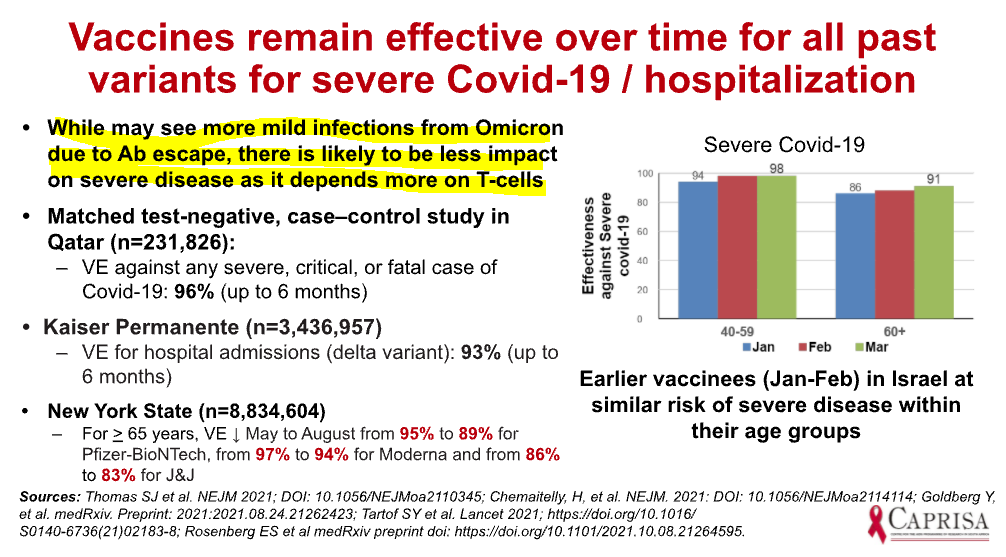
But reduced efficiency of vaccines has been seen before & it wasn't the end of civilization as we know it
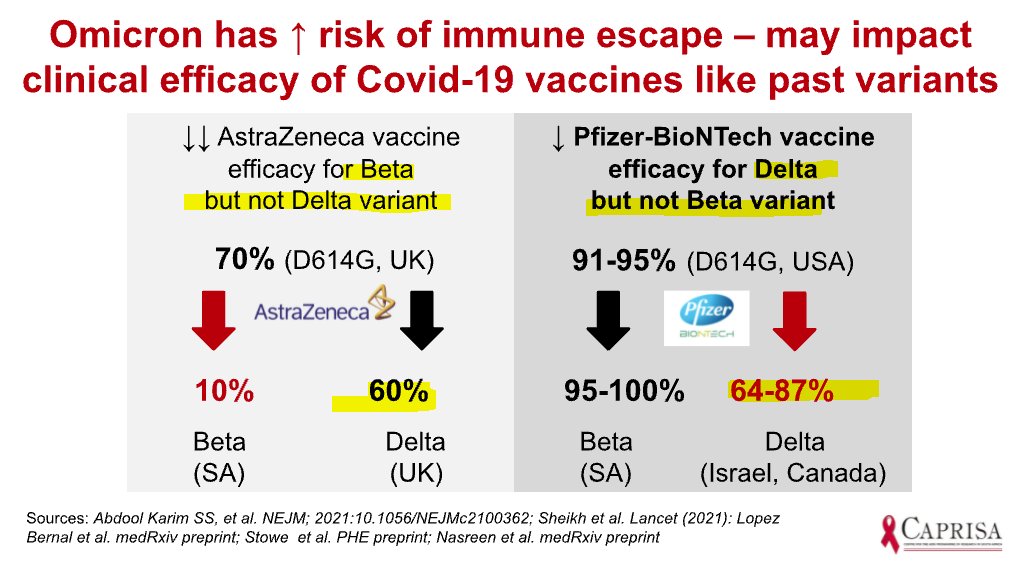
& this is probably the most important slide
• • •
Missing some Tweet in this thread? You can try to
force a refresh

This is an opportunity for a bit of bond market education😊
You’ll often read that Italy is wider than France now, or actually the opposite, with people posting various screenshots from different sources to make their point.
An old theme is coming back to haunt them: Basel 4!
Quick thread.
After almost 10y of discussion the package was finally enacted with full implementation in 2033.
Everyone felt, after many EBA reports & banks' disclosures, that impact would be mild.
But for first time banks are publishing capital ratios w/ the new rules and for DB it's ugly
How does it work? Banks are still allowed to use internal models, but the RWA (in 2030/2033) must be at least 72.5% of the standard (non internal models) RWA. ("output floors") and for DB that's a 33% increase!
CET1r would go from 13.8% to 10.35%! Ouch!
Why is the latest EC proposal on securitization a big deal for banks and how does it change the SRT market?
A slightly geeky thread - with some backround on the SRT market if you're not aware of this important market.
First what’s a SRT?
Following secular finance practice of reinventing the wheel but changing its name, the new trendy capital optimization transactions are “significant risk transfers”, but they’re just good old securitizations (invented in the 1860s 😊.)
(cash or synthetic)
The reason they’re now called SRT is a regulatory one.
The 2013 CRR (Art 244/245) allowed banks to get capital relief under some conditions, essentially that “significant risk” was transferred to someone else.
Bloomberg has some nice charts on the tariffs’ impacts.
The first one argues that tariffs on China are coming globally: too many countries will see a spike of imports from China & that's not sustainable.
The second shows GDP impacts, taking into account direct effects + indirect via trade partners (using a WTO macro model, so, you know...)
SE Asia impact is massive, -1% for EU, -1.3% Japan and -2.5% Korea. Mexico bonanza.
Some details on who’s going to stop which exports – very interesting split (especially if you try to model loan losses 😊). Overall 30% drop in US imports of goods (with retaliation modelled as 50% of US). China is -85%, Vietnam -75%, Taiwan, Japan, Korea Thailand -50%, EU -40%.