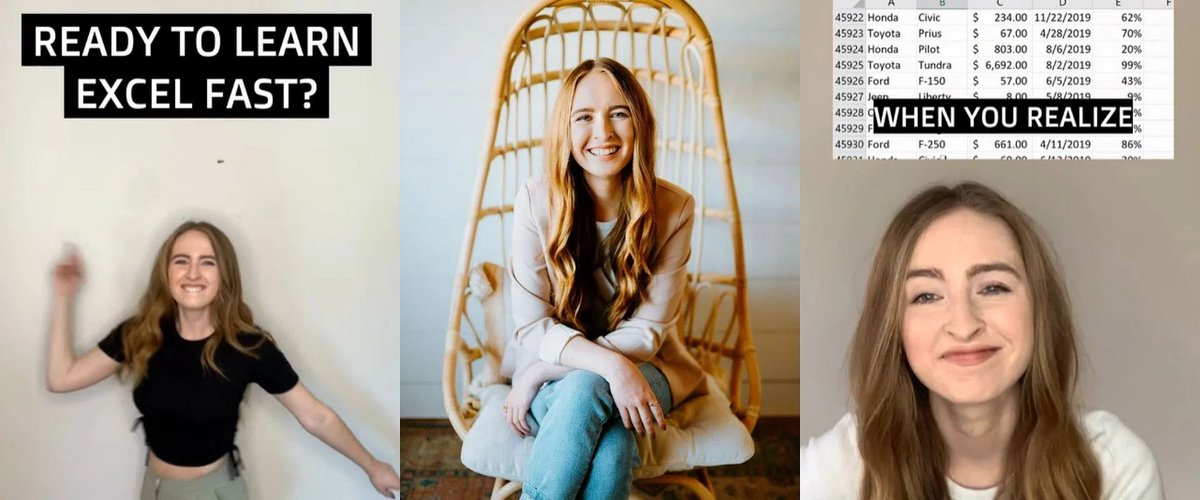
This is Kat Norton, better known as Miss Excel. She has over a million followers on TikTok and Instagram, where she markets her Excel courses.
She has 0 employees and makes up to $100,000 a day. When we think of the future of work, it might look something like Miss Excel 👇
She has 0 employees and makes up to $100,000 a day. When we think of the future of work, it might look something like Miss Excel 👇

To back up, what is it that Miss Excel is doing exactly?
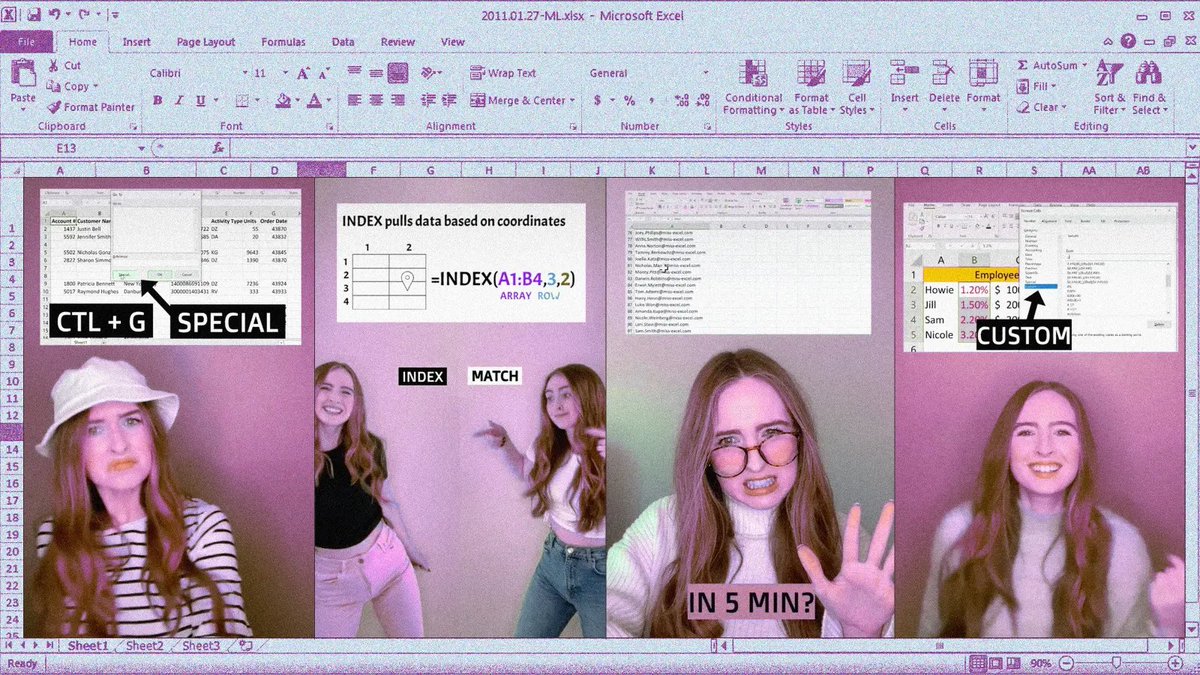
She makes TikToks sharing Excel tips. She'll use "Drop It Like It's Hot" to explain a dropdown menu, or Doja Cat's "Best Friends" to explain why Index + Match are bffs.
She's fun, energetic, and actually really helpful.
She makes TikToks sharing Excel tips. She'll use "Drop It Like It's Hot" to explain a dropdown menu, or Doja Cat's "Best Friends" to explain why Index + Match are bffs.
She's fun, energetic, and actually really helpful.
It all started in March 2020, when Kat Norton found herself living at her parents' house during COVID. She decided to download TikTok.
She joked to her mom, “Mom, I’m going to be rich and famous soon so I need you to prepare your nervous system for that.” Her mom laughed.
She joked to her mom, “Mom, I’m going to be rich and famous soon so I need you to prepare your nervous system for that.” Her mom laughed.
She created her "Miss Excel" persona and started posting on TikTok daily. Her 4th video hit 100,000 views.
On day 6, she ordered a green screen and ring light to set up in her childhood bedroom.
By week 3, one of her videos hit 3.6M views and she had 100K followers.
On day 6, she ordered a green screen and ring light to set up in her childhood bedroom.
By week 3, one of her videos hit 3.6M views and she had 100K followers.

By fall 2020, Miss Excel decided to create an Excel course to sell. She whipped up her first course and started selling it on Black Friday 2020.
By January, two months later, the course was already making more than her day job as a consultant. So she quit.
By January, two months later, the course was already making more than her day job as a consultant. So she quit.

By April 2021, Miss Excel had her first six-figure month.
Then a few months later, she had her first six-figure day.
Then a few months later, she had her first six-figure day.
She estimates 95% of her income is passive income from course sales. If she's not actively building a new course, she works ~15 hours a week.
She and her boyfriend are digital nomads, exploring a new state every month.
She and her boyfriend are digital nomads, exploring a new state every month.
What's unique about Miss Excel as a creator is that she isn't as reliant on the big platforms: they drive top-of-funnel discovery, but she monetizes through course sales. She doesn't post nearly as often as creators reliant on ads or brand deals.
She estimates her expenses at ~$500 per month.
Her stack includes:
• Her iPhone
• @thinkific to list her courses
• @stripe for payment processing
• @WeVideo for video editing
That's about it.
Her stack includes:
• Her iPhone
• @thinkific to list her courses
• @stripe for payment processing
• @WeVideo for video editing
That's about it.

Miss Excel is ambitious: she says she wants to grow her business to million-dollar months and to expand into new areas. Then, she wants to teach other people how to be a creator.
You can listen to more of her story in this great podcast.
theverge.com/22807858/tikto…
You can listen to more of her story in this great podcast.
theverge.com/22807858/tikto…
Miss Excel embodies the future of work: self-realized, flexible, digitally-native.
She says: "I came into this because I wanted to create the life I wanted for myself. I wanted freedom: financial freedom & geographic freedom. I wanted to do what lights me up every day."
She says: "I came into this because I wanted to create the life I wanted for myself. I wanted freedom: financial freedom & geographic freedom. I wanted to do what lights me up every day."

Here’s an example of her content 🔥
Follow her on TikTok at @ miss.excel and on Insta at @ miss.excel. Also she’s on Twitter too! @themissexcel
Follow her on TikTok at @ miss.excel and on Insta at @ miss.excel. Also she’s on Twitter too! @themissexcel
It’s interesting to see the controversy this generated. No, the future of work isn’t fun Excel videos on TikTok. Miss Excel embodies something broader: work that is flexible, self-directed, digitally-native, with more economic upside.
And yes, creator monetization needs to improve. Broken monetization and the power law of distribution means this kind of career isn’t accessible for most people. But that’s where web3 comes in.
• • •
Missing some Tweet in this thread? You can try to
force a refresh