Some tweets on How to Write a Better thesis Chapter 8 Outcomes and results. In Evans, @pgruba & @j_zob 3rd ed. 201410.1007/978-3-319-04286-2_8 © Springer International Publishing Switzerland 2014 

Why?
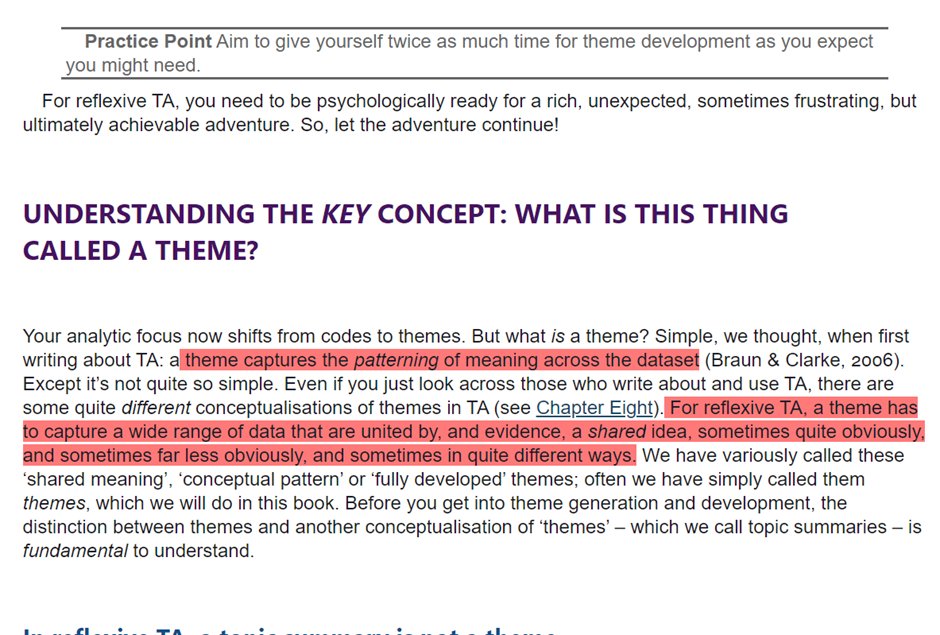
Because I'm revising my draft literature review, and working particularly on my results and discussion sections which need to be pared down.
I want to know: what is the purpose of the results section? And what about the discussion?
Because I'm revising my draft literature review, and working particularly on my results and discussion sections which need to be pared down.
I want to know: what is the purpose of the results section? And what about the discussion?
This is the chapter

Before we get there, let's back up a second.
I heard @pgruba at a subject I audited back in Feb 2019. I remember that we had to write a statement of the problem. Skimming back in an earlier section of the book, I found another Rhea @LiangRhea!
I heard @pgruba at a subject I audited back in Feb 2019. I remember that we had to write a statement of the problem. Skimming back in an earlier section of the book, I found another Rhea @LiangRhea!
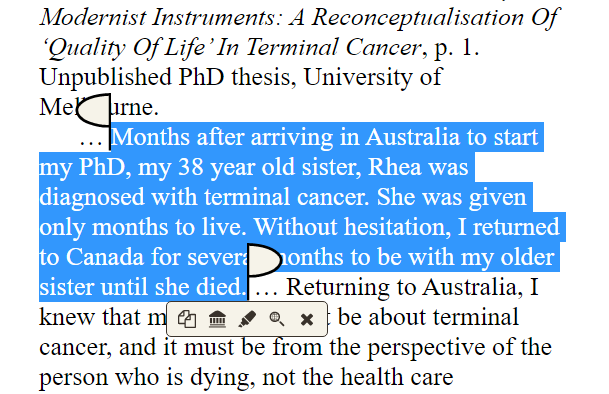
Anyway, back to the results section. It is a "logical narrative used to persuade the reader that the claims of the thesis are reasonable and are supported by evidence." In the results section we're talking about what the data looks like.
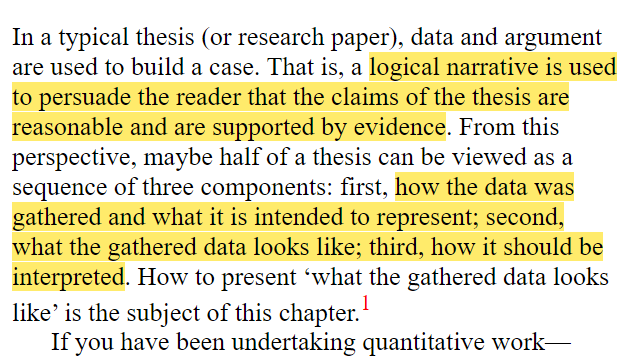
What should I leave out has been an issue for me. As I presented a couple of weeks ago, my tendency is to lose sight of the wood from the trees.
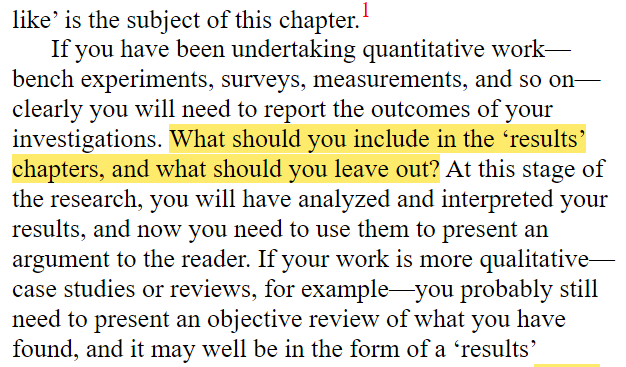
The results section is to take a "chaotic mass of information" and summarise it.
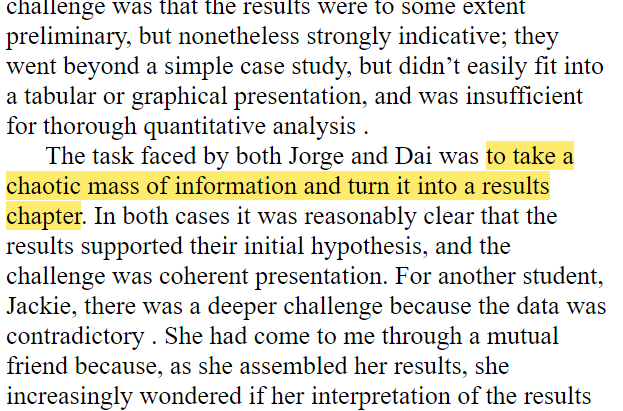
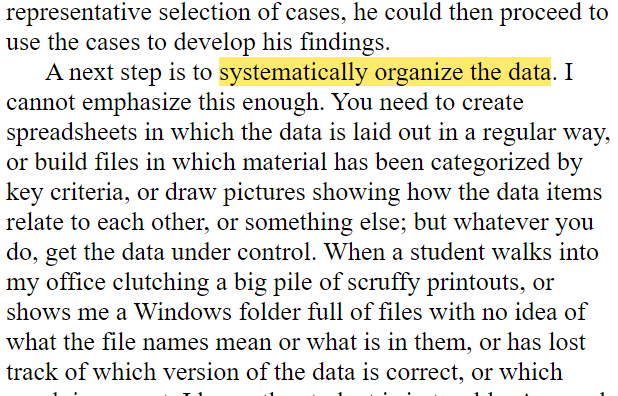
Again organisation is the key. This happened with my data extraction table.
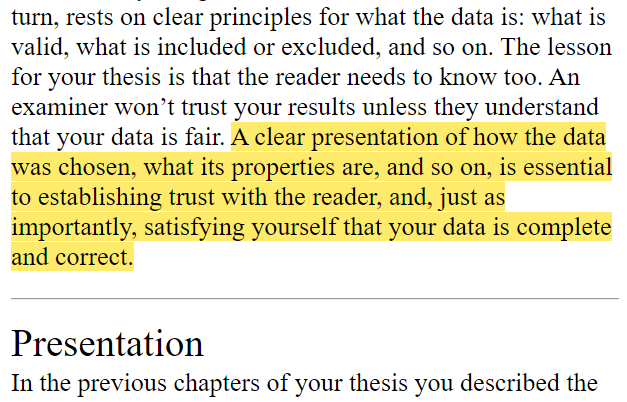
"A clear presentation of how the data was chosen, what its properties are, and so on, is essential to establishing trust with the reader, and, just as importantly, satisfying yourself that your data is complete and correct."
The purpose of the results section is to educate the reader based on the data. I'd not thought of it this way.
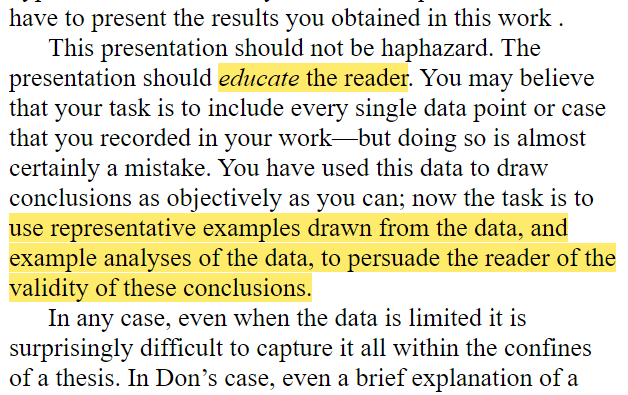
You should note issues, synthesise data, interpret. This is where I'm getting confused between the results and discussion sections. If we're analysing in results, what do we do in discussion?
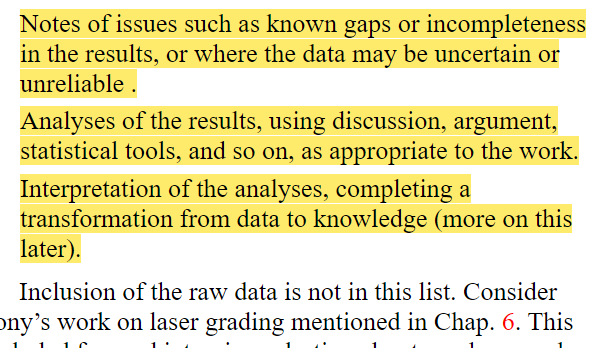
The limitations section. This is normally in the discussion.🤔
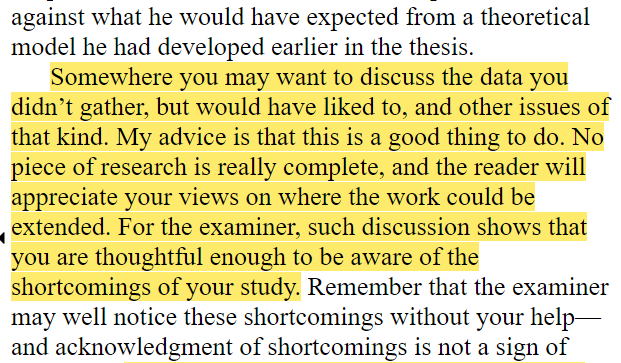
The theme of learning and discovery, even while you're writing up the results section.
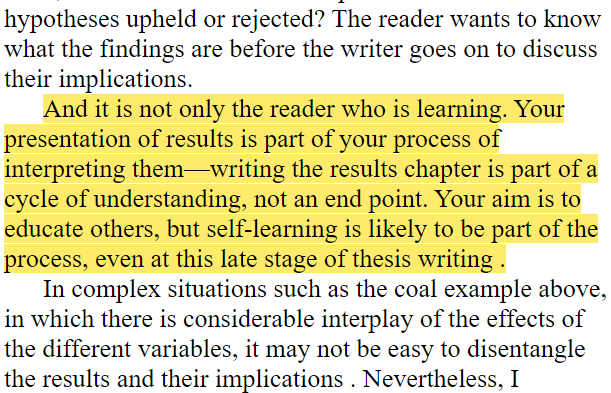
" The aim is to use your data to make a case for the proposition being explored in your thesis. "
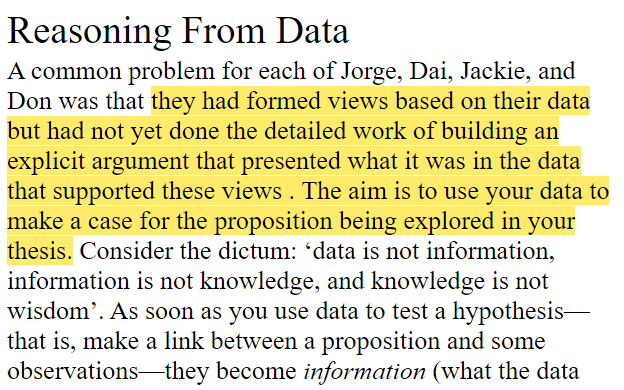
Aim of the results section is to synthesise information and data into knowledge.
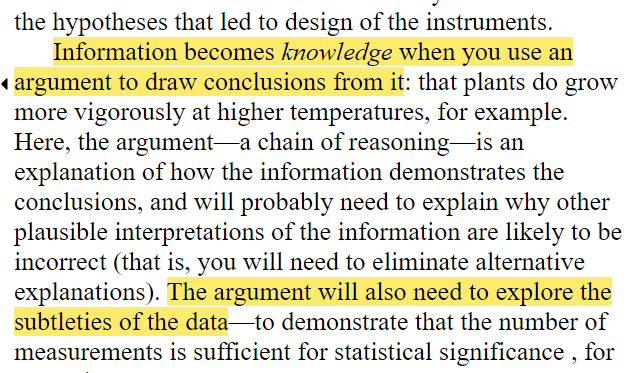
The authors go further and assert that knowledge can become wisdom. I guess I should aim for wisdom.🤣
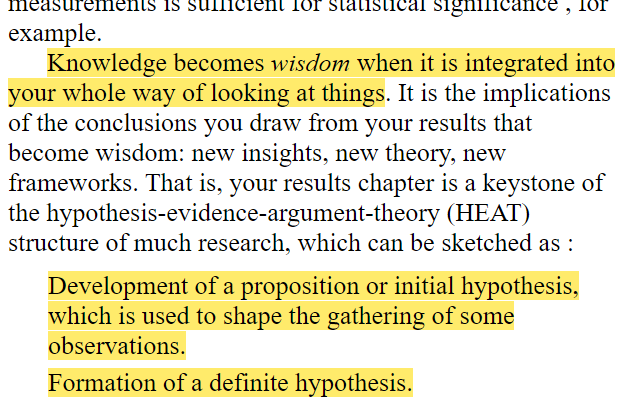
"You and the reader now know something that you did not know before you carried out your own work—you have transformed information into knowledge. At this point, stop." The theorising goes in the discussion.
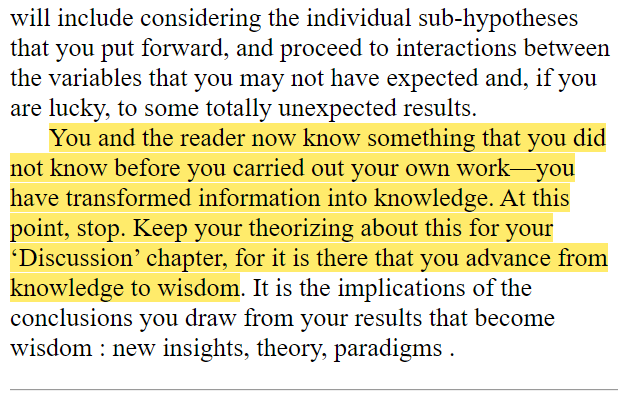
Look for exemplars in your own field
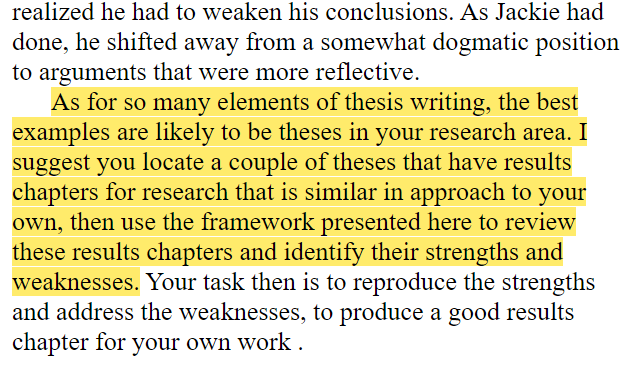
The authors think you need to write your results section in order to reflect on them. It is an iterative process.

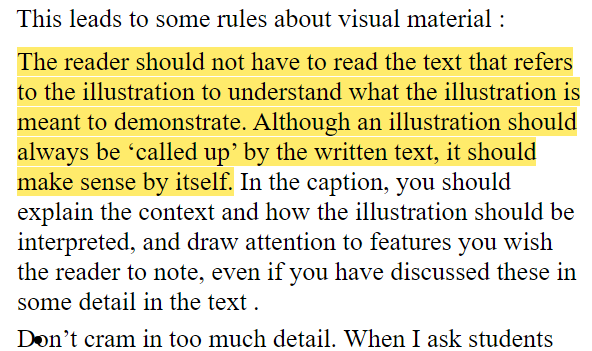
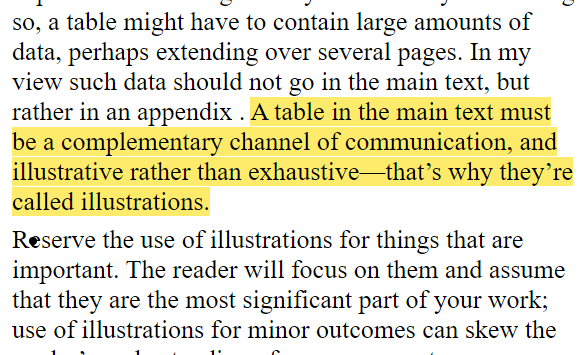
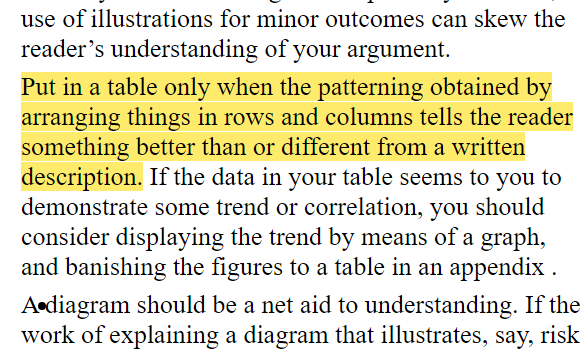
Rules on visual material:
1/You shouldn't have to read the text to understand the figure
2/The table is not just a dump of your data
3/The table should help to explain things better than a written description
1/You shouldn't have to read the text to understand the figure
2/The table is not just a dump of your data
3/The table should help to explain things better than a written description
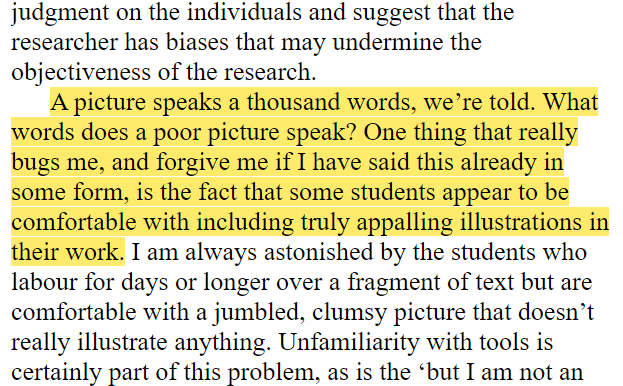
"A picture speaks a thousand words, we’re told. What words does a poor picture speak?... truly appalling illustrations"🤣
"Make sure you have used the right kind of analysis mechanism for your data. For example, tools or approaches for large data sets may be unsuitable for sparse or irregular data"
Do I need to apply some thematic or content analysis to my data?🤔
Do I need to apply some thematic or content analysis to my data?🤔
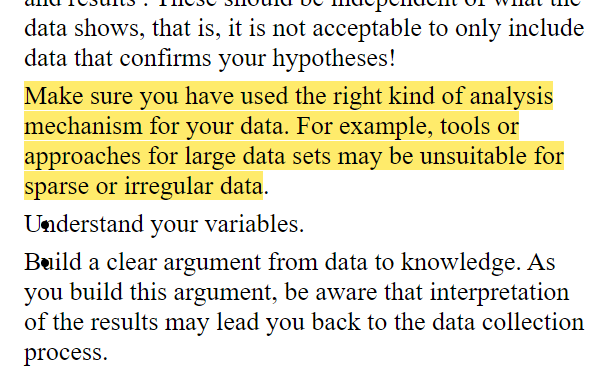
This seems like good advice:
1/ Don't include raw data
2/ Think about how you're going to display the data
3/ Be open about shortcomings and limitation
1/ Don't include raw data
2/ Think about how you're going to display the data
3/ Be open about shortcomings and limitation
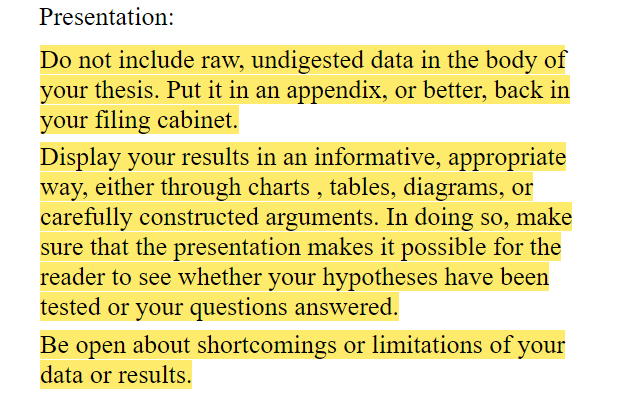
So I think I'm a little clearer now on the results section. But I think I should read the discussion chapter too. Results=Data->knowledge. Discussion=knowledge->wisdom.
@threadreaderapp unroll please.
@threadreaderapp unroll please.
• • •
Missing some Tweet in this thread? You can try to
force a refresh