I predict today’s Sunday Times story by @Gabriel_Pogrund won’t be the last time Liz Truss gets in trouble asking the taxpayer to foot the bill for her expensive tastes. She had a bit of form during her time as Trade Secretary. Let me take you through another example...(1/6)
Back in December 2020, Truss and 3 staff went on a four-night trip to Singapore and Vietnam to sign the cut-and-paste rollover agreements to maintain free trade post-Brexit. After details of the visit were published on 7th May 2021, I asked how much it had all cost. (2/6)
This was the first answer I got back, which was odd. If the only costs for the travelling party were flights and accommodation, who had paid for their meals and drinks? And why hadn’t that hospitality been declared? So my office put in an FOI on 1st June to ask them. (3/6)
We got the usual delaying tactics on the FOI. First, they said they’d respond by 27th July. Then they pushed it back again to 24th August. But before then, on 5th August, I got this email providing a 'corrected answer' to my original PQ. Can you spot the corrections!? (4/6).
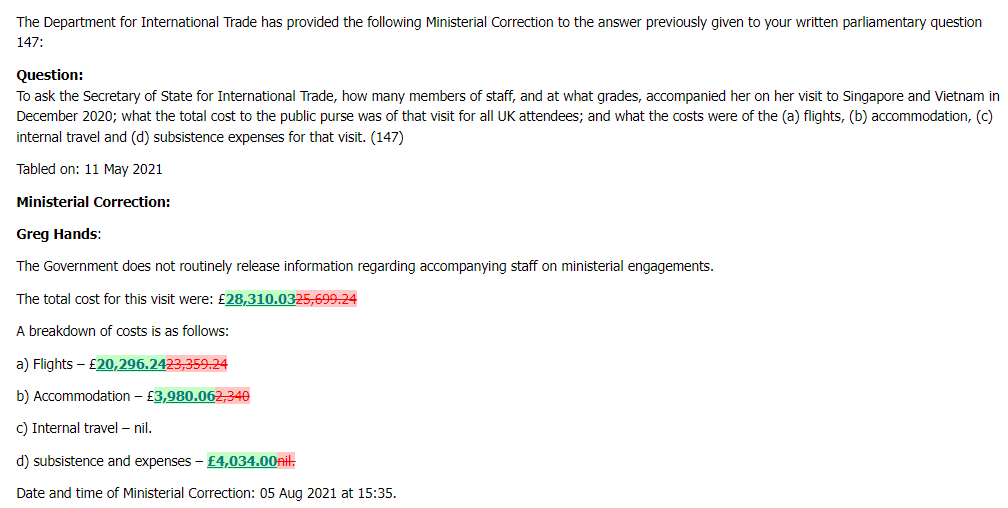
How did they go from saying there were no subsistence expenses at all, to saying the travelling party incurred expenses of £1,000 per head, equivalent to £250 per night? And why did the cost of the accommodation go up £1,640 from the first answer to the second? (5/6)
I never got answers to those questions, and some will say it doesn’t matter. But this is about character, and if Truss’s natural instinct is to hide the truth and hope no-one asks questions when it comes to small things, don’t be surprised when she does it about big things. (6/6)
• • •
Missing some Tweet in this thread? You can try to
force a refresh

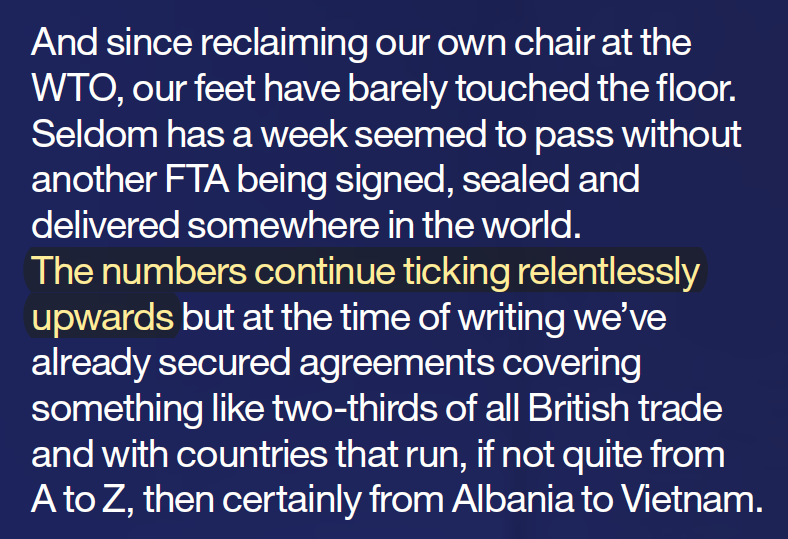
I’m only one paragraph into the government’s new export strategy – from Boris Johnson’s foreword no less – but the signs are not good. Let’s do a quick fact-check on four of the Prime Minister's points, and remember this is just the first paragraph...(1 of 6).
1. Actually, 35 weeks passed between the UK taking its seat at the WTO on 4/2/20 and the next FTA being signed – with Ukraine – on 8/10/20, part of a last-minute rush that, amongst other things, means the Ukraine deal now needs to be re-written to correct the legal errors made.
2. So far in 2021/22, we’ve seen a belated rollover deal signed with Serbia in April, and a revised deal signed with Norway, Iceland and Liechtenstein in July. That’s it. Not a single trade agreement has been signed since we left the EU that we didn’t already have inside the EU.
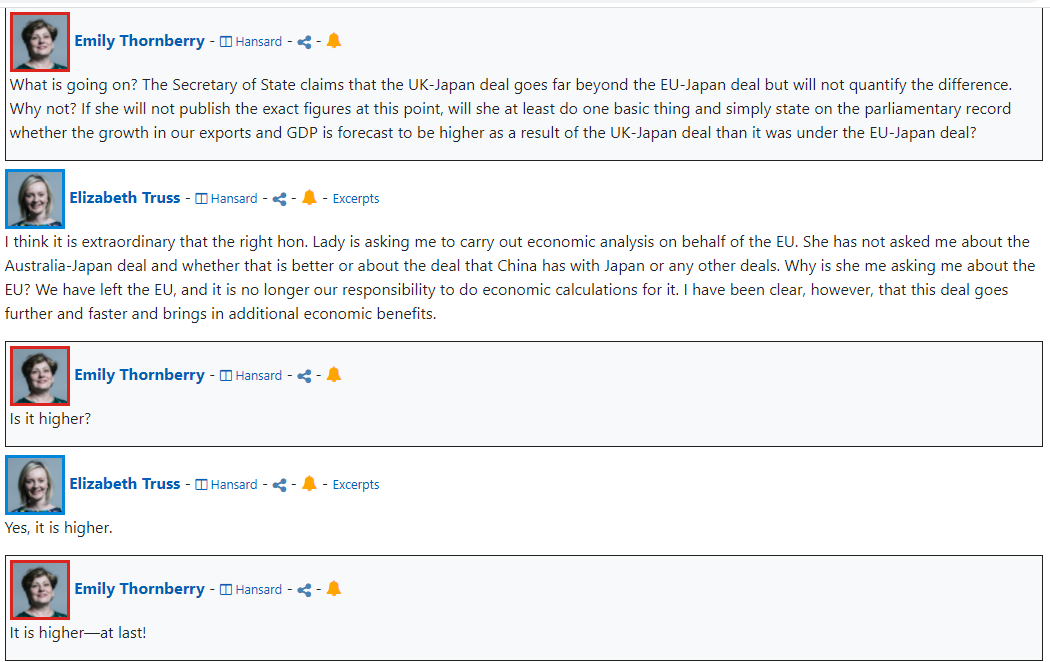
A year ago today, Liz Truss signed a post-Brexit trade deal with Japan, and subsequently told Parliament it delivered ‘higher’ benefits than our previous deal via the EU. Now I can reveal her officials advised her on how to correct that false claim, something she never did. (1/5)
The trouble started on 19th November, when I asked her in the Commons simply to quantify in pounds or percentages the difference between the benefits for the British economy of the UK-Japan deal versus the EU-Japan deal. This is how the end of those exchanges played out. (2/5)
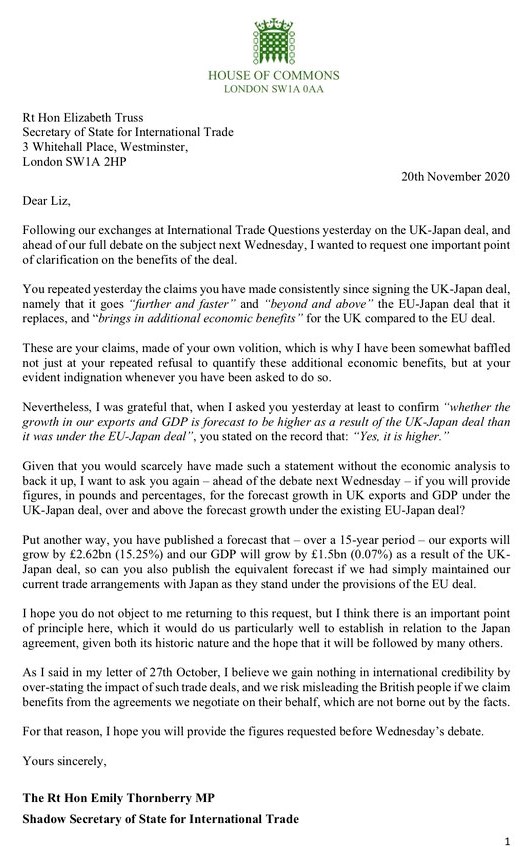
The next day, I wrote to Truss challenging the claim she’d made about the UK-Japan deal delivering ‘higher’ growth in UK exports than the EU-Japan deal, and asking her again to provide the figures to back up her claims. That letter caused quite a stir inside DIT. (3/5)
Here’s my letter to Liz Truss exposing the catastrophic negotiating blunder that risks leaving manufacturers in the UK’s new generation of freeports shut out of £35bn in export markets, as reported by the FT, the Indie and others today. A short thread to explain (1/6).
When DIT Ministers were negotiating rollover deals to maintain our free trade after Brexit, they failed to remove ‘prohibition clauses’ from 23 of those deals, which stop manufacturers who don’t pay duty on their imports from getting lower tariffs on their exports (2/6).
One of the key advantages for manufacturers based in the new freeports is that they can import components and materials duty free, transform them into finished goods, and then export them around the world. A prohibition clause inevitably scuppers that advantage (3/6).