Most wind farms in Britain will not be economically viable when existing subsidies end and will close prematurely without further revenue support, new analysis finds
ICYMI yesterday, my story… and a few thoughts… (🧵)
Firstly: the story was based on a new report by @LcpEnergy for @SSE. It proposes a series of reforms that it claims could cut the costs of net zero by £48bn. (Fair to say they'd likely also benefit SSE in the process.)
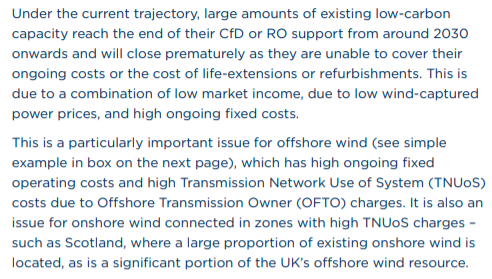
The most eye-catching finding for me is that offshore wind farms and onshore ones in Scotland (that’s a lot of them) are likely to be uneconomic when they reach the end of their existing subsidy contracts, primarily from the 2030s, and could then close
EDF says Covid construction delays mean Hinkley Point C nuclear plant won’t start up til June 2026 (had been due end 2025) & will now cost up to £23bn.
Previously announced risk of (non-Covid-related) 15 month delays & £700m cost overrun remains in addition to that.
EDF insists the latest Hinkley cost overrun reflects "a health crisis, not an issue with construction".
Says ongoing distancing means it has not "been able to bring on the extra people needed to catch up on work we postponed at the height of the crisis". thetimes.co.uk/article/edf-bl…
For the background to the Hinkley saga, here's a piece I wrote for Christmas 2017 (The One Where It Was Supposed To Be Cooking Our Turkeys).
Since then other nuclear projects have been scrapped, Hinkley costs have risen and renewables costs have fallen.
National Grid could pay EDF more than £50 million to reduce output from Britain’s biggest nuclear reactor to avert the risk of blackouts this summer 🕯🕯🕯
Another little scoop in today’s @thetimes... and another a little 🧵...
National Grid is also negotiating another unprecedented measure to shore up the system ahead of the Bank Holiday, in case it’s v sunny which could mean record low demand ☀️☀️☀️
It’s in talks with EDF over a contract to halve power generation from the Sizewell B plant in Suffolk
Scoop: National Grid warns that Britain could be at risk of blackouts on Friday.
It’s told Ofgem there’s a “significant risk of disruption to security of supply” unless it’s granted emergency powers to switch off wind & solar farms.
To keep the lights on National Grid has to keep electricity supply and demand balanced in real time.
Too much or too little power and the system becomes unstable, which can cause blackouts 🕯🕯🕯
Lockdowns due to coronavirus have caused a big drop in power demand as businesses and factories stay shut. We are using about 20% less electricity than normal. 📉
Easter Monday saw all-time record low demand and the bank holiday on Friday May 8 could be even lower.
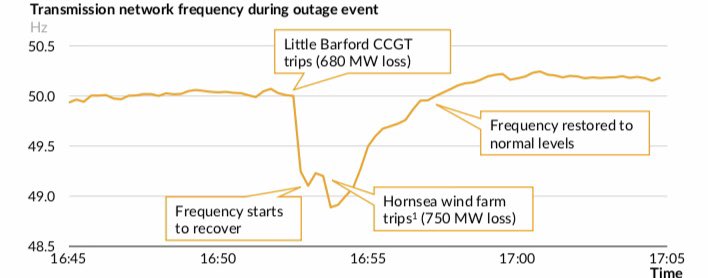
1) Both Hornsea offshore wind farm & Little Barford gas plant are believed to have failed within seconds of each other after a lightning strike to the grid near Little Barford. This caused disturbance that both should’ve been able to withstand; Hornsea had a “technical fault”
⚡️
2) These failures caused an unusually fast drop in frequency on the grid, resulting in a series of smaller “embedded” plants (wind/solar/diesel generators) automatically tripping off the system and exacerbating the supply shortage
📉
when some immediately blamed it all on wind farms)...
Subsequent analysis has also suggested this chronology, per these graphs yesterday from experts at Limejump and Aurora. Both show a drop in frequency blamed on Little Barford, a slight recovery, then further drop blamed on Hornsea.