One of the biggest productivity improvements I ever made to my blogging was when I gave up on my desire to finish everything with a sparkling conclusion that ties together the whole post
Now I embrace abruptly ending when I've run out of things to say instead
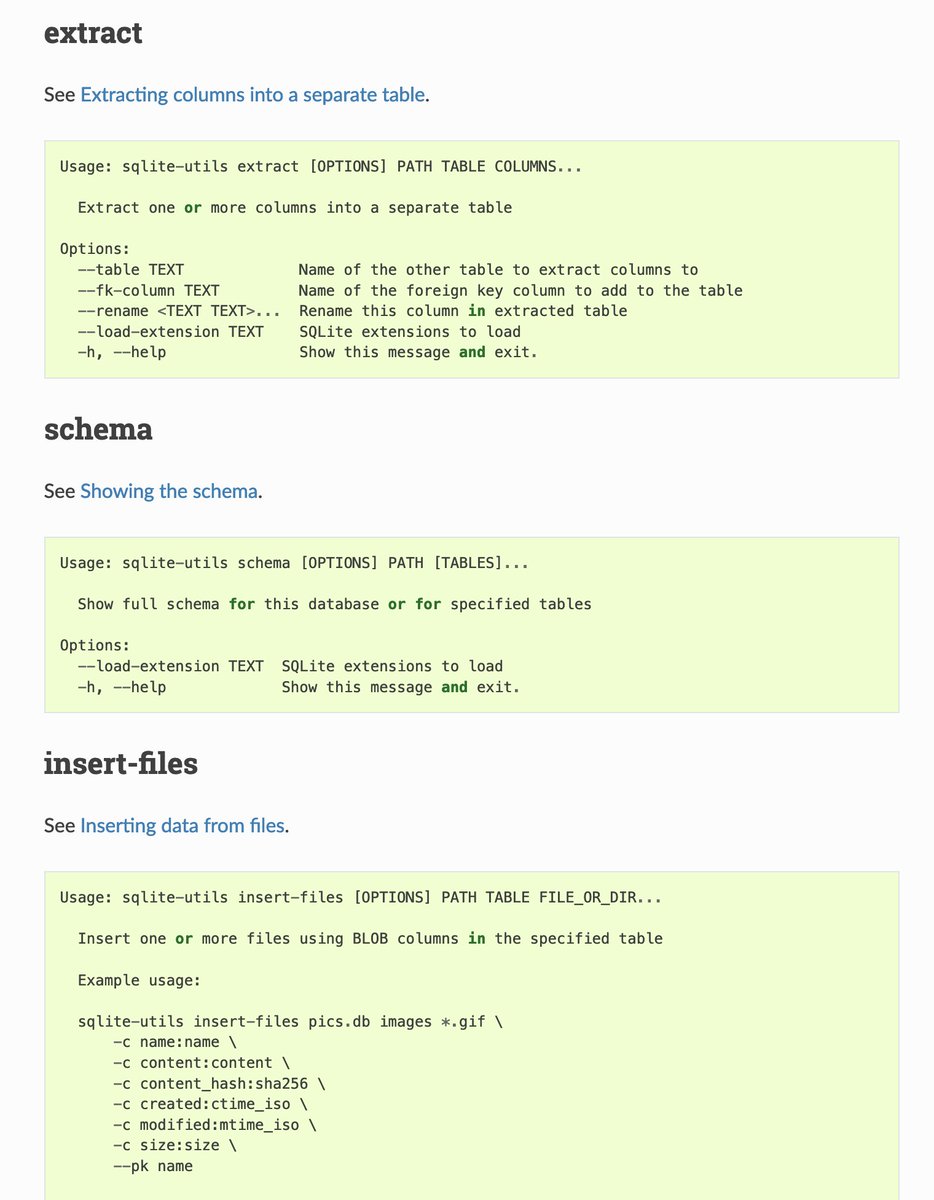
I've been solving so many documentation problems with @nedbat's cog tool recently - it's fantastic for keeping documentation automatically up-to-date, in Markdown or rST)
And here's how it works - I have a cog code block embedded in the .rst file which iterates through the commands and calls --help on each one, then writes the output to the page: github.com/simonw/sqlite-…
Final trick: my GitHub Actions test.yml file calls "cog --check docs/*.rst" to confirm that the cog scripts have been run
If the test fails, I can run "cog -r docs/*.rst" to execute them, then commit the result. github.com/simonw/sqlite-…
What’s new in sqlite-utils - annotated release notes for my SQLite Python utility library and CLI tool, v3.20 and v3.21 simonwillison.net/2022/Jan/11/sq…
A bunch of powerful new features in these releases.
The new --convert option to "sqlite-utils insert" lets you run a Python conversion function against data you are importing from JSON or CSV - and --lines lets you import raw lines of code (e.g. from log files) too
Combining the new --text option with --convert lets you load in a full unstructured/semi-structured file in one go and use a Python fragment to parse it into a list of dictionaries which then get inserted into a table
If you are using it as a CLI tool I want it to to be guaranteed to work - if you install it you should get known tested versions of those dependencies
But... if you are using it as a library I want to let you make your own decision about those dependencies - if you want to use a more recent release of one of them you should be able to do that
If I explicitly pin to tested versions will that break your ability to upgrade them?
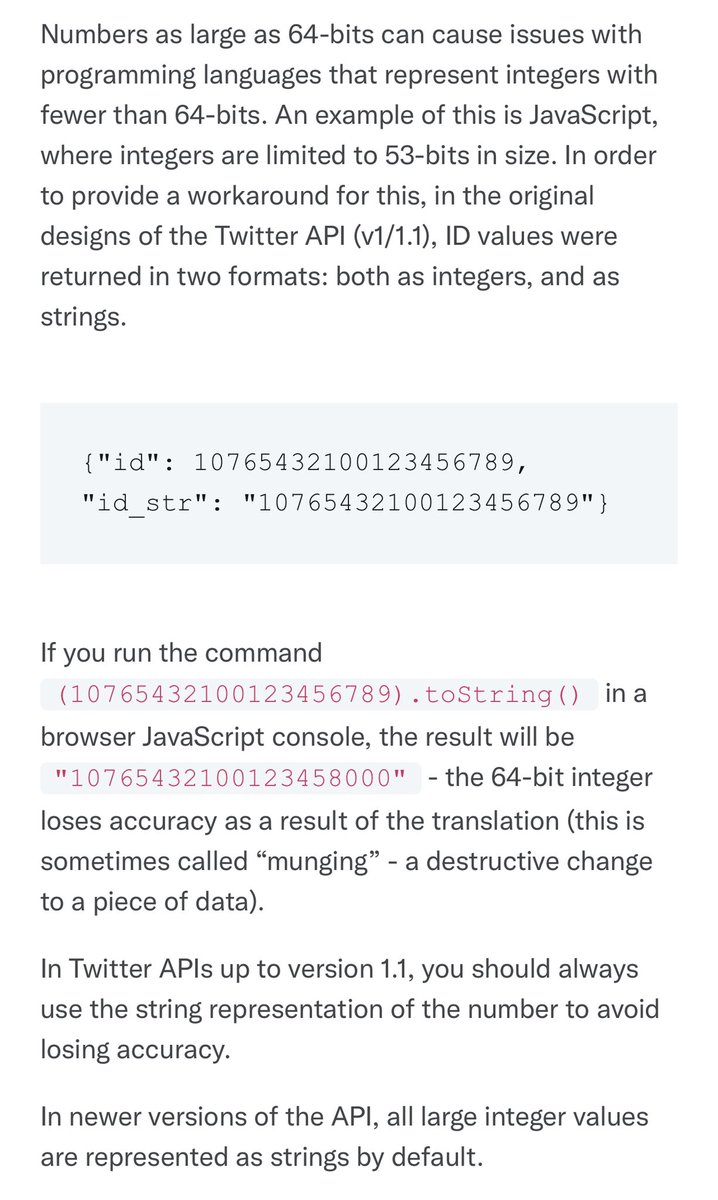
"Numbers as large as 64-bits can cause issues with programming languages that represent integers with fewer than 64-bits. An example of this is JavaScript, where integers are limited to 53-bits in size."
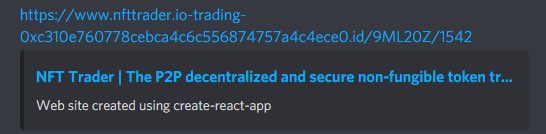
Looks like the guy who lost ~$2m of ape NFTs was hit by classic phishing
If you're going to hold a sizable portion of your net worth on anything relating to a blockchain you really do need deep personal information security knowledge
Think about the depth of knowledge needed to spot the trick in this URL
You need to understand that URLs go https:// then hostname then / then path - so you also need to understand what URLs are, and what they do, and how they can mislead
This is professional web engineer stuff
Another example of why my second biggest criticism of this proposed golden blockchain future - after the horrific environmental impact - is that it's just completely unsafe for regular people to use for anything valuable at all