
Moving mountains: The women scaling new heights to deliver safe abortion care.
Abortion pills are already saving lives in Nepal – and represent a potential health revolution for women worldwide.
Watch our dispatch by @jriggers, produced by @Harrietmbarber.
Abortion pills are already saving lives in Nepal – and represent a potential health revolution for women worldwide.
Watch our dispatch by @jriggers, produced by @Harrietmbarber.
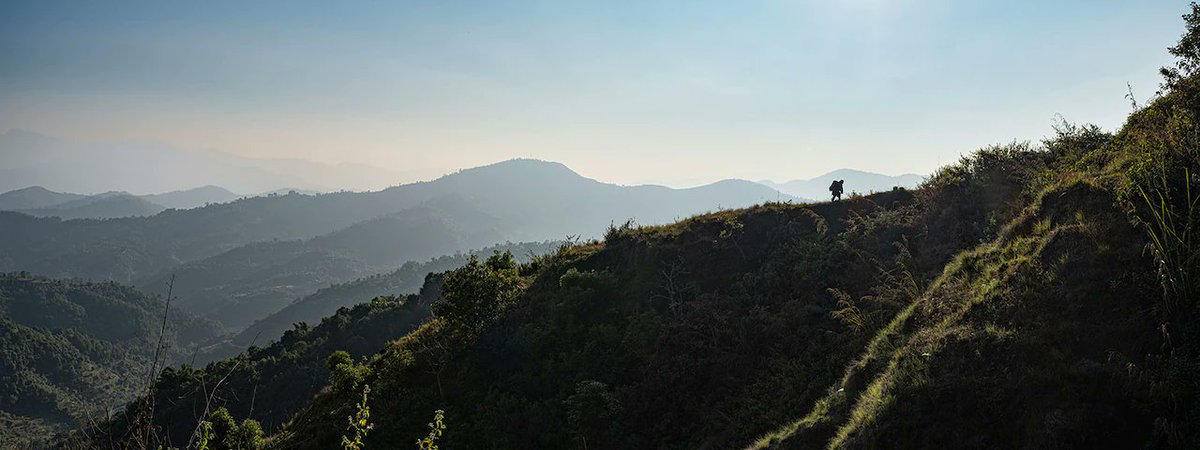
@jriggers @Harrietmbarber Every morning, Pragati Soti Khanal, a midwife, packs her huge grey and blue rucksack, ready to trek through Nepal’s famous mountains.
She delivers medical abortion drugs, which enable women to have safe terminations during the first trimester of pregnancy.
She delivers medical abortion drugs, which enable women to have safe terminations during the first trimester of pregnancy.

@jriggers @Harrietmbarber Riding in a car or bus is not always an option in this remote region though, where houses perch on mountain tops that rise above the clouds, and roads dwindle to rocky mud tracks the higher you go.
No matter; Mrs Khanal just hitches her 15kg bag on her back, and walks.
No matter; Mrs Khanal just hitches her 15kg bag on her back, and walks.

@jriggers @Harrietmbarber The abortion pills she provides, mifepristone and misoprostol, are safe and effective, with decades of data behind them. And yet, until recently, they have been underutilised globally.

@jriggers @Harrietmbarber The pandemic could change that. Nepal’s government is one of a number worldwide that made at-home medical abortion legal during the pandemic, when clinics were closed during lockdowns.

The UK also temporarily relaxed its abortion rules in March 2020, meaning women could take the pills at home without supervision.
Last month, the US ruled that its changes should be long-term, and UK legislators are considering this, too. For experts, this is a game-changer.
Last month, the US ruled that its changes should be long-term, and UK legislators are considering this, too. For experts, this is a game-changer.
Globally, around 22,000 women die of unsafe abortions every year, and seven million are injured or disabled.
The problem is far worse in low and middle-income countries, where around 97 per cent of unsafe abortions take place.
The problem is far worse in low and middle-income countries, where around 97 per cent of unsafe abortions take place.
In Nepal, before abortion was legalised in 2002, women sometimes inserted pen cartridges or broken glass into their vaginas.
At the time, unsafe abortion was a leading cause of the country’s huge maternal mortality rates: 539 women died for every 100,000 births.
At the time, unsafe abortion was a leading cause of the country’s huge maternal mortality rates: 539 women died for every 100,000 births.
• • •
Missing some Tweet in this thread? You can try to
force a refresh






