JohannesBorgen Profile picture
Jan 17, 2022 12 tweets 4 min read Read on X
As the Russia/ NATO/US/OSCE talks didn’t make real progress, it’s important to look again at this possibility. Can they cut Russia from SWIFT & would this be Armageddon for Russia?
Good & difficult question.
Let’s start with basics: what’s SWIFT? It’s simply a messaging system. A chat app if you want! But it only sends special messages designed for cross-border financial transactions for banks globally, for the 11k banks that are part of the network.
Is it possible to cut Russia from it? The US tried in 2014, and the answer they got from SWIFT was “we will not make unilateral decisions to disconnect institutions from its network as a result of political pressure”. In your face.
That’s because SWIFT is not American, of course. Actually, it’s a “cooperative society” based in
Belgium under Belgian law! Seriously! So the owners are the members of the networks, with shares reallocated on a regular basis based on flows.
So, SWIFT must follow EU laws, not US ones – which doesn’t mean it can’t disconnect a country, like it did with Iran in 2018. This was driven by US sanctions, with no obligation coming from the EU, but, again, they were not forced to do it.
What about Russia? The 291 Russian members represent 1.5% of SWIFT flows (you gotta sell that oil!), ranked 13th globally on all SWIFT messages and 6th on payment messages!
That Is a LOT of messages that could be disrupted, on both ends, and a lot of money (prob ≈800bn$/y).
Would cutting SWIFT access stop all those payments? No, but it would make significantly more difficult. There are other ways to send payments messages… including very old type stuff! (no, not carrier pigeons) but it would be difficult to convince western banks to use them.
Russia is aware of the risk and has alternative routes: SFPS (a system it designed with mostly Russian & CIS banks) and domestic payment systems that were launched after Visa & Mastercard cut them off in 2014. But Western banks would need to join.
What this suggests is that, ultimately, what matters is banning Western (US+EU+Swiss+UK) banks from dealing with Russia - cutting from SWIFT is just making those deals harder + if done only by the US, we could get the same ridiculous attempts of the EU to bypass the sanctions
Remember this?

gov.uk/government/new…

So ridiculous that it has almost never been used despite being announced with great fanfare! (the first deal was to send medical equipment to fight Covid.)
What’s the bottom line here: either you have coordinated US/EU sanctions which ban banks from trading with Russia, or you get into complicated stuff that makes transactions messy and difficult, but not impossible. And can you ban all transactions with US/EU banks?
Sure, but if they do it, I suggest you buy one of those quickly.

• • •

Missing some Tweet in this thread? You can try to force a refresh

 

Keep Current with JohannesBorgen

JohannesBorgen Profile picture

Stay in touch and get notified when new unrolls are available from this author!

Read all threads

This Thread may be Removed Anytime!

PDF

Twitter may remove this content at anytime! Save it as PDF for later use!

Try unrolling a thread yourself!

how to unroll video
  1. Follow @ThreadReaderApp to mention us!

  2. From a Twitter thread mention us with a keyword "unroll"
@threadreaderapp unroll

Practice here first or read more on our help page!

More from @jeuasommenulle

May 7
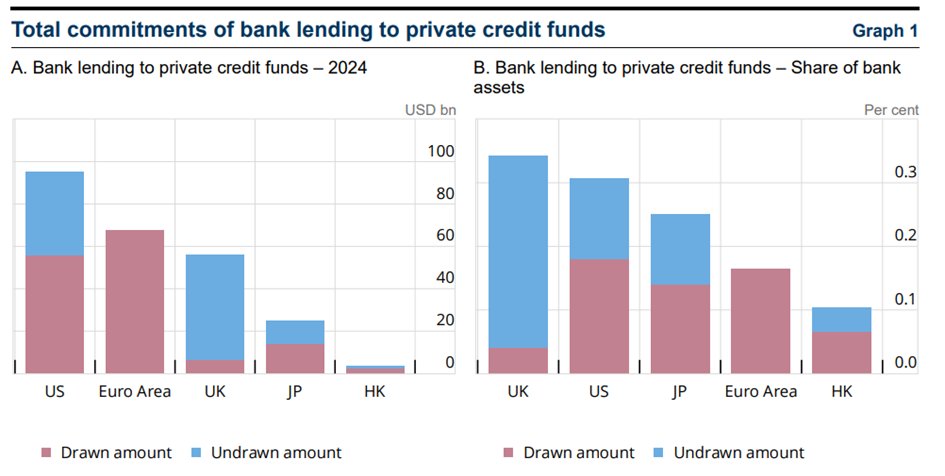
1/🧵The big banking question these days: “is private credit a systemic risk” with some comparing it to subprime crisis.

How deep in it are banks ? Data is very hard to find but luckily the Financial Stability Board just dropped its report on private credit. 9 charts that matter
2/ How big is private credit? That’s the fascinating question and the FSB is right to say we don’t know bc there’s no definition.
Estimates range from ~$1.5tn to $50tn depending on what you count.
So pick a number, any number. Image
3/ More importantly the chart we've been waiting YEARS for: how much do banks actually lend to private credit funds, globally? Answer: <0.3% of bank assets even in the UK (the "leader"). Every shadow-banking-contagion thinkpiece should reflect on this. Image
Read 12 tweets
Apr 23
1) You might have missed it but the EU just published the CMDI package – one of the most consequential pieces of bank regulation. It fixes something that has been really embarrassing about European banking regulation for more than a decade. And the impacts are huge.
2. What was the problem: the resolution framework (i.e. how do we deal with bank failures) lies on a legal pillar, the No Creditor Worse Off principle which means gvts can play with property rights ONLY if creditors would have been worse off (or =) in a bankruptcy.... BUT
3. But we had one resolution framework and… 27 different creditor hierarchies in a 27-member single market! How big a problem is this ?
Read 16 tweets
Mar 16
1/13 Fed Governor Bowman just dropped her US bank reform blueprint – on top of the “easy” headline you’ve all seen (less capital), there’s some pretty important stuff in there. A thread.
2) Something most analysts missed is that Bowman clearly wants assets BACK inside the regulated banking system. She said it multiple times. The shadow banking era had a good run, but the sheriff is back in town.
3/13 Non-bank lenders, private credit funds, money market vehicles — she's not naming names but the subtext is clear: if you're doing bank-like things outside a bank, the new rules are designed to make that less attractive. The moat is being rebuilt.
Read 13 tweets
Sep 9, 2025
This is an opportunity for a bit of bond market education😊

You’ll often read that Italy is wider than France now, or actually the opposite, with people posting various screenshots from different sources to make their point.

Why is that?
It's because different sources show different things. The bond market is much more complex than the equity market!

Here's a summary
Which one of those are correct ? Image
Image
Image
Image
Read 9 tweets
Jul 2, 2025
France is famous for wine, cheese, Versailles, football… and credit ratings.

Today I’m going to tell you how French banks will save billions of capital thanks to an old institution & a magic trick

Read till the end, it’s the wonderful story of a ruling worths tens of billions
Let’s go back to Deutsche Banks’ recent disclosure that Basel 4 will cost them 15bn of capital (with 13% CET1r assumption).

See linked thread:

It all boils down to the fact that under Basel 4 banks will have to calculate their risk exposures using the max of

i) their internal models’ calculations and

ii) 72.5% of the “Standard” (=supervisory) models, also called the output floor.
Read 16 tweets
Jun 30, 2025
Why is Deutsche stock hammered today?

An old theme is coming back to haunt them: Basel 4!

Quick thread. Image
After almost 10y of discussion the package was finally enacted with full implementation in 2033.

Everyone felt, after many EBA reports & banks' disclosures, that impact would be mild.

But for first time banks are publishing capital ratios w/ the new rules and for DB it's ugly
How does it work? Banks are still allowed to use internal models, but the RWA (in 2030/2033) must be at least 72.5% of the standard (non internal models) RWA. ("output floors") and for DB that's a 33% increase!
CET1r would go from 13.8% to 10.35%! Ouch! Image
Read 4 tweets

Did Thread Reader help you today?

Support us! We are indie developers!


This site is made by just two indie developers on a laptop doing marketing, support and development! Read more about the story.

Become a Premium Member ($3/month or $30/year) and get exclusive features!

Become Premium

Don't want to be a Premium member but still want to support us?

Make a small donation by buying us coffee ($5) or help with server cost ($10)

Donate via Paypal

Or Donate anonymously using crypto!

Ethereum

0xfe58350B80634f60Fa6Dc149a72b4DFbc17D341E copy

Bitcoin

3ATGMxNzCUFzxpMCHL5sWSt4DVtS8UqXpi copy

Thank you for your support!

Follow Us!

:(