
The bond market is talking. Very loudly.
Let me try to translate for you what it's saying.
A ''wtf is going on in fixed-income'' thread.
1/10
Let me try to translate for you what it's saying.
A ''wtf is going on in fixed-income'' thread.
1/10
Central Bankers are freaking out about inflation, and they want to be seen as reacting strongly
As a former bond investor, all you hear is ''green light to push short-term rates to🌙and test them''
And indeed: Fed Funds futures now price in more than 5 hikes in 2022
2/10
As a former bond investor, all you hear is ''green light to push short-term rates to🌙and test them''
And indeed: Fed Funds futures now price in more than 5 hikes in 2022
2/10
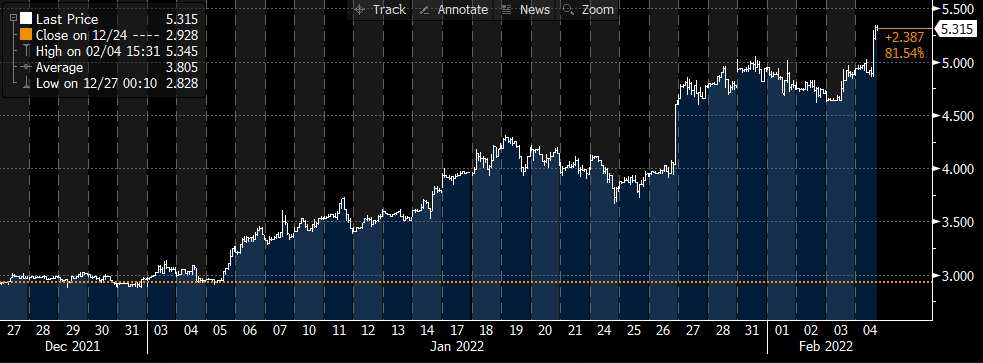
Investors often think in probability terms
While the mean outcome sits at around 5.3 hikes, the hawkish right tail is getting increasingly fatter
Markets are pricing >17% chance the Fed will hike 7+ times (!) in 2022 vs 3% prob. of 0-3 hikes
@MetreSteven any thoughts?
3/10
While the mean outcome sits at around 5.3 hikes, the hawkish right tail is getting increasingly fatter
Markets are pricing >17% chance the Fed will hike 7+ times (!) in 2022 vs 3% prob. of 0-3 hikes
@MetreSteven any thoughts?
3/10

Alright, but what's the bond market saying about the medium term then?
Fed Funds are priced to peak in early 2024 at around 1.90%, and the Fed is priced to lean towards RATE CUTS after that - basically, forward rates are inverted already few years down the road!
4/10
Fed Funds are priced to peak in early 2024 at around 1.90%, and the Fed is priced to lean towards RATE CUTS after that - basically, forward rates are inverted already few years down the road!
4/10
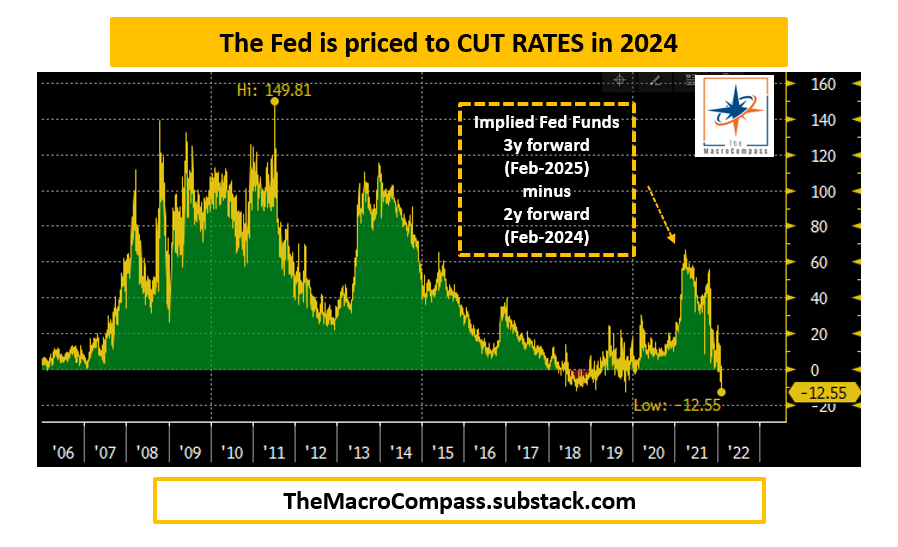
Fixed income investors are pricing a very fast & short hiking cycle: 7 hikes in 2 years and done - with chances the Fed will have to cut soon after.
This is also reflected in an inverted inflation breakeven curve: 3% inflation for a couple of years, and back to 2% after.
5/10
This is also reflected in an inverted inflation breakeven curve: 3% inflation for a couple of years, and back to 2% after.
5/10
Also, long-term (5y forward, 5y) inflation expectations have gone nowhere over the last 12 months: trading in a range between 2.1% and 2.4% based on PCE inflation.
So much for a regime change.
The bond market thinks inflationary pressures are real, but not here to stay.
6/10
So much for a regime change.
The bond market thinks inflationary pressures are real, but not here to stay.
6/10
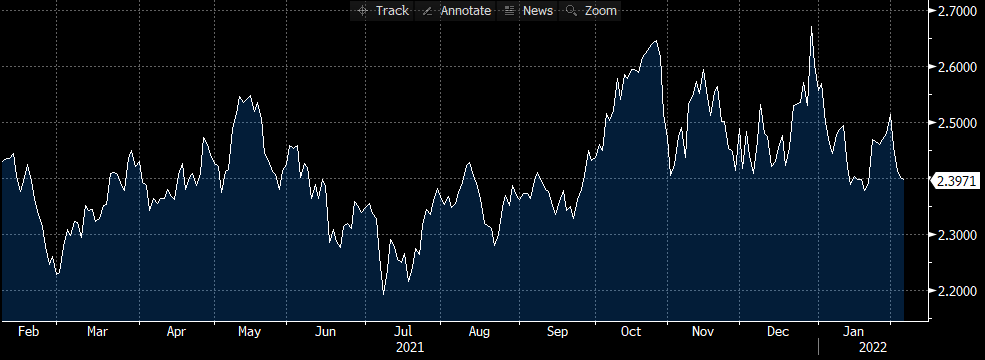
If inflation expectations trade sideways but nominal yields move, real rates go up fast.
5y US real yields moved up 65 bps in 1 month - that's really quick.
Financial conditions for the private sector are tightening, and now credit spreads have started to widen too.
7/10
5y US real yields moved up 65 bps in 1 month - that's really quick.
Financial conditions for the private sector are tightening, and now credit spreads have started to widen too.
7/10
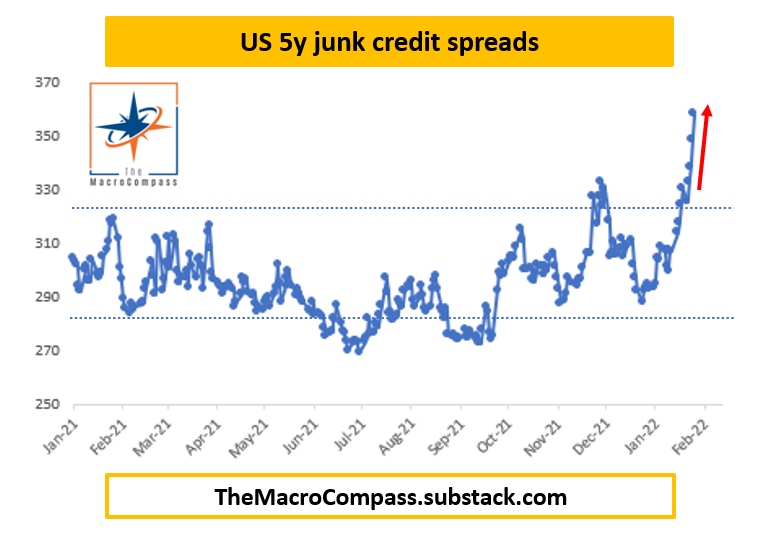
The borrowing costs for the private sector are:
Real Yields + Credit Spreads
When both go up, refinancing debt & accessing new credit becomes prohibitive if real wages haven't gone up
And they have actually gone...down
@LynAldenContact, what's your take here?
8/10
Real Yields + Credit Spreads
When both go up, refinancing debt & accessing new credit becomes prohibitive if real wages haven't gone up
And they have actually gone...down
@LynAldenContact, what's your take here?
8/10
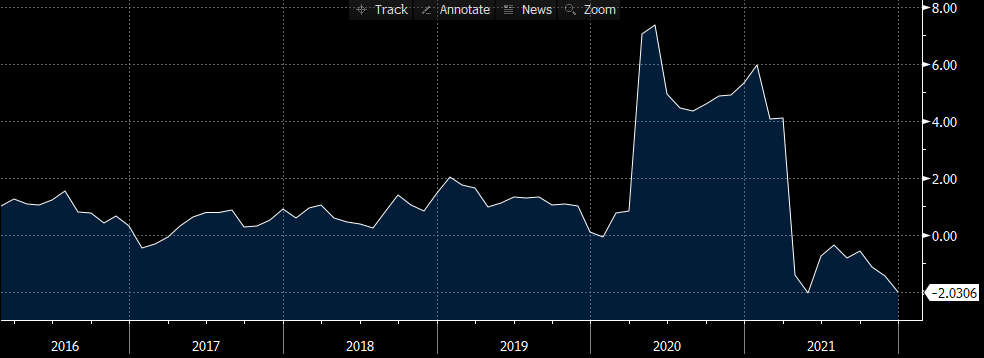
Even EU is in the same boat now, after Lagarde turned very hawkish yesterday
The 5y-30y EU curve is flattening quick as the ECB signals hikes while structural headwinds limit the upside for long-term growth & inflationary pressures.
@AndreasSteno: are they gonna hike?
9/10
The 5y-30y EU curve is flattening quick as the ECB signals hikes while structural headwinds limit the upside for long-term growth & inflationary pressures.
@AndreasSteno: are they gonna hike?
9/10
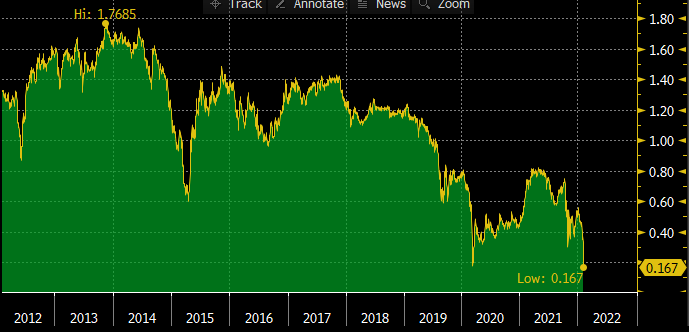
A very hawkish stance while the growth impulse decelerates = flatter curves
The risk of inversion (!) is real - but pay attention to which curve you use
I cover this & more in my primer on yield curve inversions published this week
👇
themacrocompass.substack.com/p/yield-curve-…
10/10
The risk of inversion (!) is real - but pay attention to which curve you use
I cover this & more in my primer on yield curve inversions published this week
👇
themacrocompass.substack.com/p/yield-curve-…
10/10
• • •
Missing some Tweet in this thread? You can try to
force a refresh






