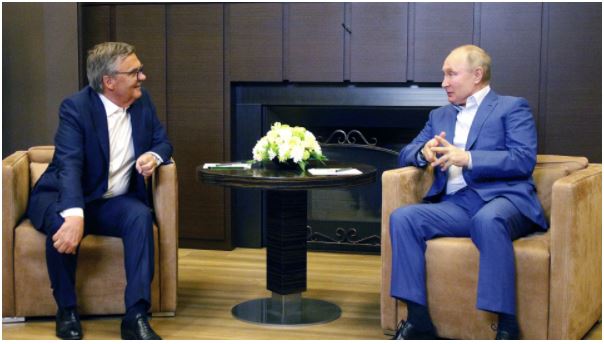
Historians and politicians agree that we have to go back to September 1939 to find anything similar to Putin’s large-scale aggression against Ukraine. >
Those who have closely followed Putin’s actions and rhetoric, know that this has been in the making for many years. >
During all these years we must not underestimate the doings of the enablers and apologists, the Gerhard Schröders of sports leaders in western nations, who have helped Putin wield his soft power and to unleash these revanchist forces. >
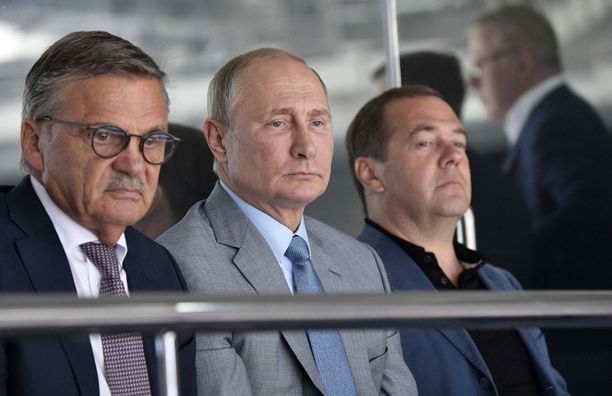
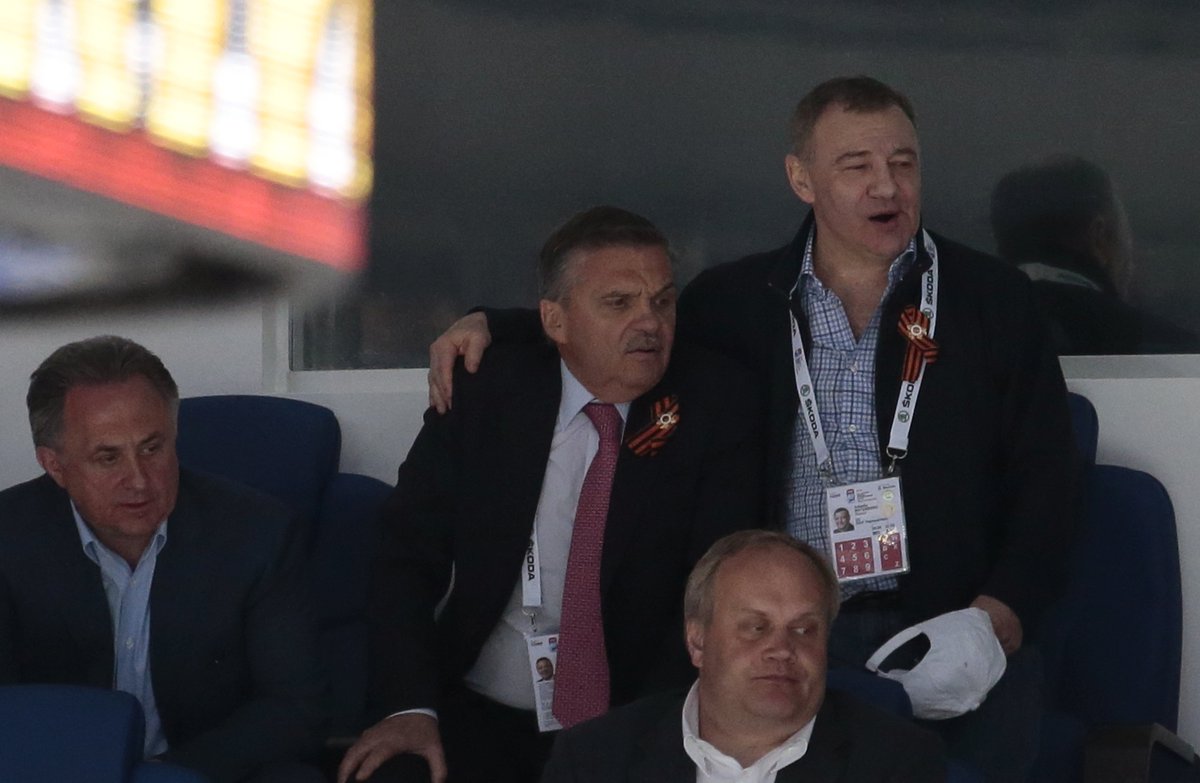
Sports dignitaries like Thomas Bach, Sepp Blatter and René Fasel have all proudly confirmed their friendship with Putin, all of them impressed with money and power. >
Is this relevant today? Yes, it is, as sport-washing has been one of the most important parts of Putin’s soft power program, where in particular hockey has played a major role. >
The KHL – where snatching clubs from western Europe has been a central part of their business model – is as much a geopolitical as it is a sport project, where Putin and Fasel were instrumental in its founding. >
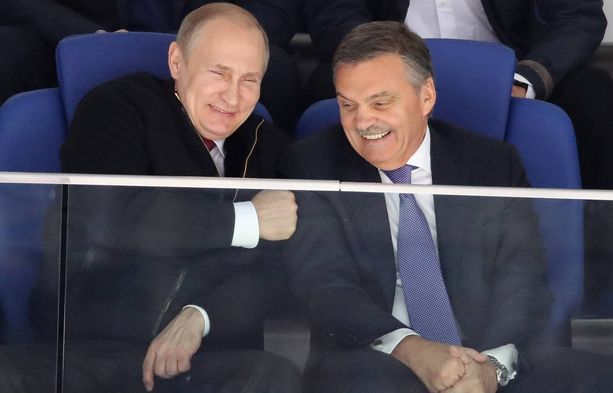
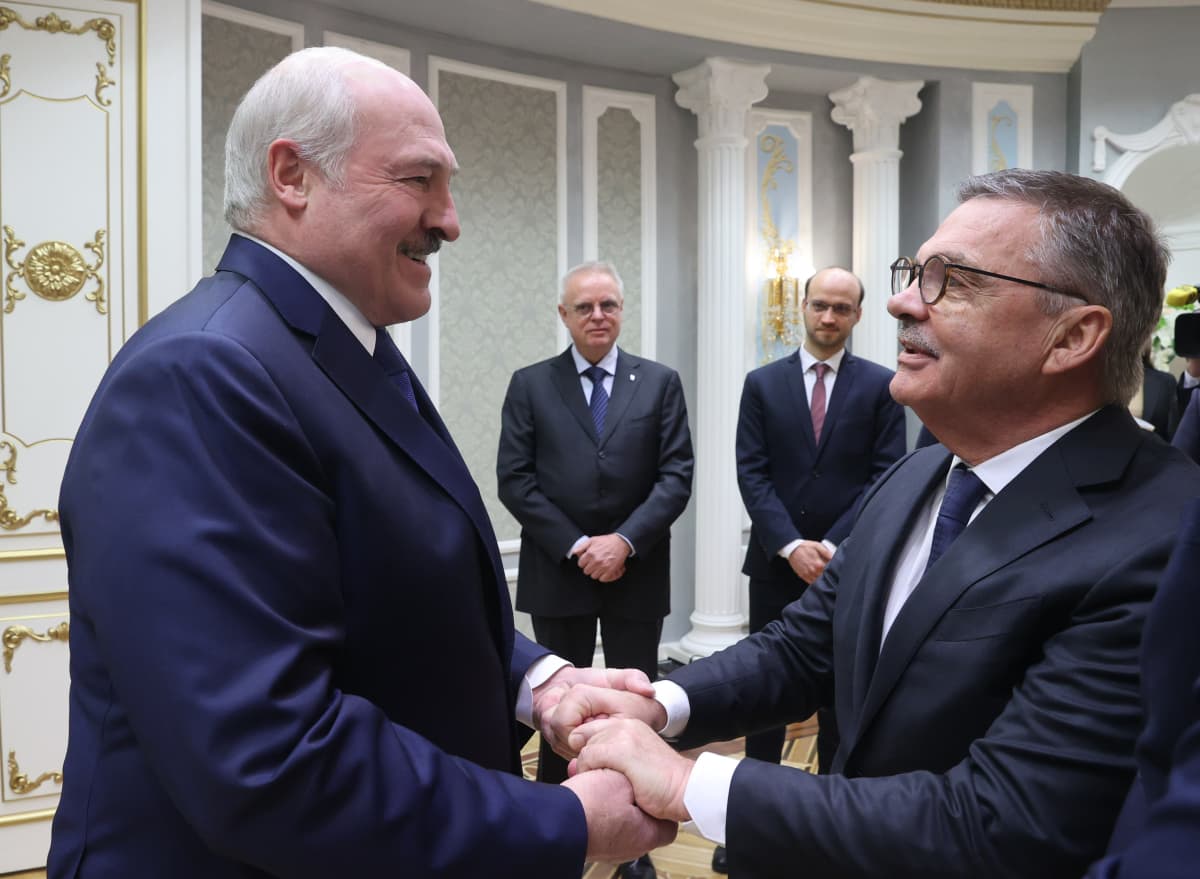
Despite Putin’s invasions in 2008 and 2014, Fasel always stayed loyal to his authoritarian friend and also fostered solid relations with Belarus’ dictator Lukashenko, under the naïve pretext of not mixing sports and politics. >
The sporting community must stand very firm, as sports plays such big role in Putin’s politics. World sport must treat Russia as it treated South Africa during apartheid and Serbia during the Balkan wars. Outright ban from all international events. >
Jokerit Helsinki owner Jari Kurri will tarnish his reputation for ever if he doesn’t pull out his Finnish club from Putin’s KHL. Signed agreements have no relevance today. EU-nation Latvia's authorities must sanction Dynamo Riga’s KHL membership. >
FIFA must ban Russia from further World Cup qualifiers and UEFA must move the Champions League final from St. Petersburg. And the IIHF must ban both Russia and accomplice Belarus from the upcoming World Championship in Finland. >
My thoughts today are first and foremost with the people of Ukraine, but also with the wonderful Russian people, those who like to be part of an open, prosperous society and who want no part of Putin. /end
• • •
Missing some Tweet in this thread? You can try to
force a refresh

🧵My take on the 50th World Juniors: >
(Photo: Micheline Veluvolu/IIHF)
2. Many rash conclusions are often drawn following one WJC, negative and positive. Bad luck in a SF shootout and you finish fourth. Some luck in the same shootout and you win gold. Chill. >
3. To really determine a trend in your development work one needs to count in the last 4 or 5 tournaments. And the point of the dev-program is not necessarily winning WJC-gold. It’s to develop players. >
1/16 🧵A thread on the issue of Olympic ice size in Milano. >
2/16 The least of the problems regarding the Olympic ice size in Milano is the length-discrepancy of 3.15 ft = 96 cm. The real issue is whether the arena will be ready for Feb 5 for the opener of the women’s tournament. >
3/16 But let’s talk about the discrepancy between the apparently agreed upon 200 ft and what looks to be 196,85 ft, as it seems that the IIHF ordered the regular length of 60 meters = 196,85 ft. >
🧵Tråd: Termen ”Recency bias” betyder att vi har en tendens att lägga större vikt vid det som hänt nyligen, snarare än att se händelser i ett längre perspektiv. >
Då jag i morgonradion hörde att Danmarks seger mot Kanada var den största skrällen någonsin i internationell hockey, tänkte jag sätta in Danmarks seger mot Kanada i ett historiskt perspektiv och ranka in den i en top-5-lista. >
Kriterierna är: Klasskillnad mellan lagen, matchens betydelse och vilket avtryck skrällen fick i hockeyhistorien. Vi kör!
1. Some comments from Canadian media, other observers, explain the Canadian failure on “that other countries are playing too”.
That was news in September 1972.
2. The reason why Team Canada had the worst result on two consecutive WJCs since 1980 & 1981 was because the team & staff grossly underperformed, not because others are playing too.
1. Tommy Boustedt, the former Swedish chief of hockey development, said: “Canada has ten times more players, ten times more rinks, ten times more coaches and ten times more money. Still, we can compete.”>
2. The hockey world has the right to have high expectations on every Team Canada, just like football expects premium quality from Brazil or basketball expects excellence from the U.S. >
Five-ringed 🧵 1. Let the game begin. The games that on average cost three times more than what they take in (economist A. Zimbalist). Games that have the most amazing “business model” – IOC gets the income, someone else is paying the bill. >
2. Every Olympics since 1960 has run over budget, at an average of 172 percent in inflation-adjusted terms, according to an analysis by researchers at Oxford University. >
3. A study conducted by the Toronto’s Ryerson University concludes that the IOC relies on revenues from broadcasting and sponsorship, just like pro sports leagues. But while the leagues pay some 50% of their revenues directly to athletes, the IOC spends 4.1% on athletes.>