I still don't think anyone appreciates the significance of Russian operations at Hostomel airport.
It's ~75 km from the river crossing at Chernobyl to the airport. Compare that to the doctrinal template of Soviet deep operations, which calls for airborne operations 80 km deep...
One purpose of airborne troops in the operational depth is to exploit any fleeting opportunities. But the main reason is to disrupt the rear of forward echelons and render their position untenable.
The breakthrough around Chernobyl was crucial, the Russians' only available mobility corridor on the right bank of the Dnieper. The crossing at Chernobyl is one of the few through the Pripyat Marshes, an otherwise impassable obstacle.
Attacks in the operational depth—or even the threat of them—can cause forward positions to collapse.
It's not at all clear what forces the Ukrainians had at Chernobyl, but it's very likely that this, rather than a madcap dash for Kiev, was the Russians' real motive.
If reports of heavy Ukrainian vehicle losses near Hostomel are true (impossible to confirm right now), then the landing accomplished this and more by forcing a counterattack in the open, either from Kiev or from elsewhere.
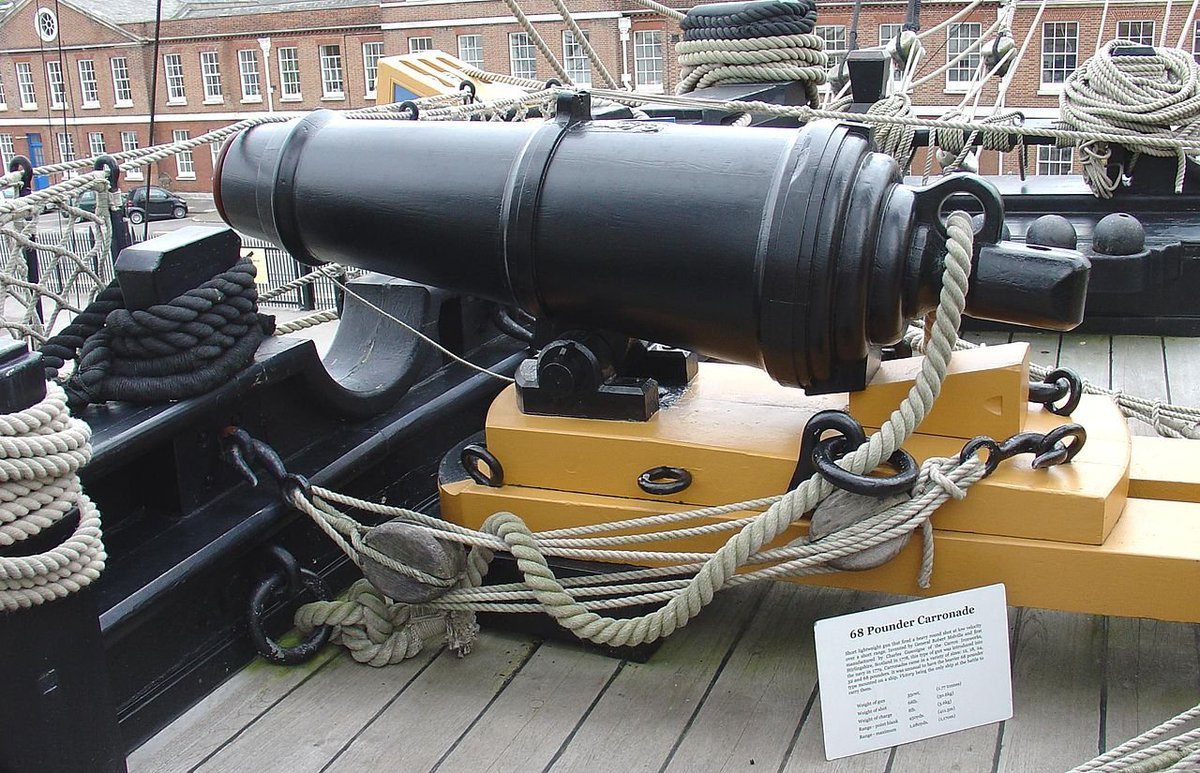
British preference for close-in naval tactics had some interesting effects on weapons development. One of the most counterintuitive was the carronade: a short-barreled, low-velocity gun that could smash through enemy ships.🧵
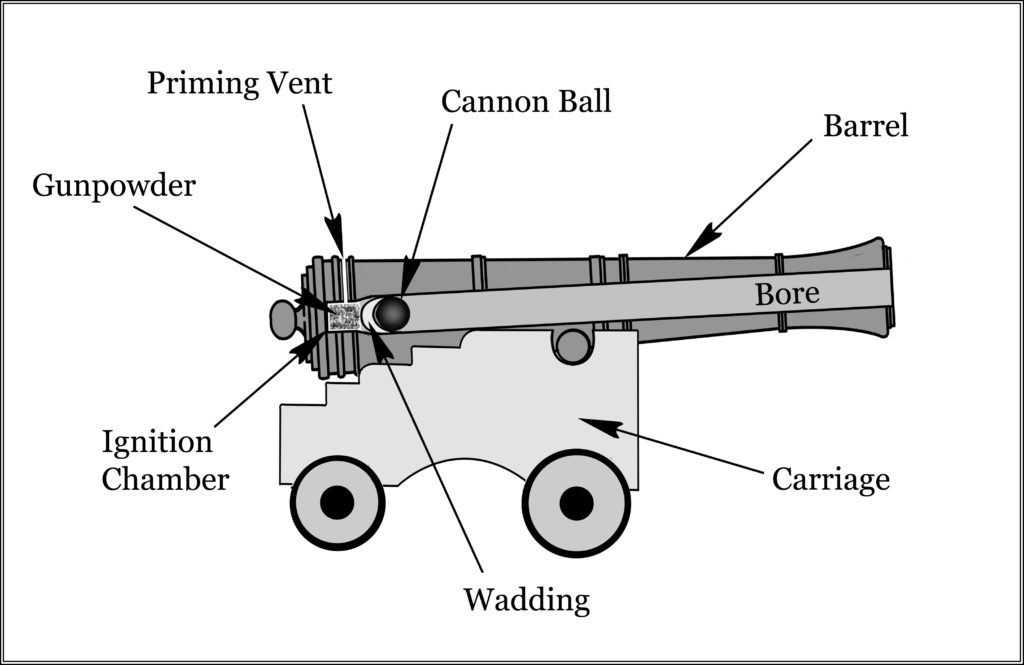
Gunpowder exerts a force proportional to the cross-section of the bore, while the total impulse is proportional to force times barrel length.
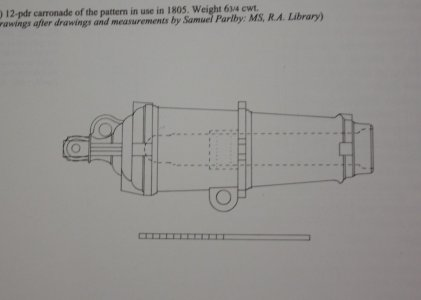
A carronade’s wide but short barrel therefore imparts the same energy as a long, narrow one. Gunmakers saw this brought many advantages.
In the first place, shorter barrels required less gunpowder, which in turn allowed the barrels to be thinner—making them much, much lighter. They could be employed in great number even on the upper decks of ships, greatly increasing the weight of a broadside.
If France lost her position in India because of naval weakness, then entry into the War of American Independence presented an opportunity to regain it.
Only the difficulty of winning sea control, combined with the loss of on-the-ground experience, frustrated these efforts.🧵
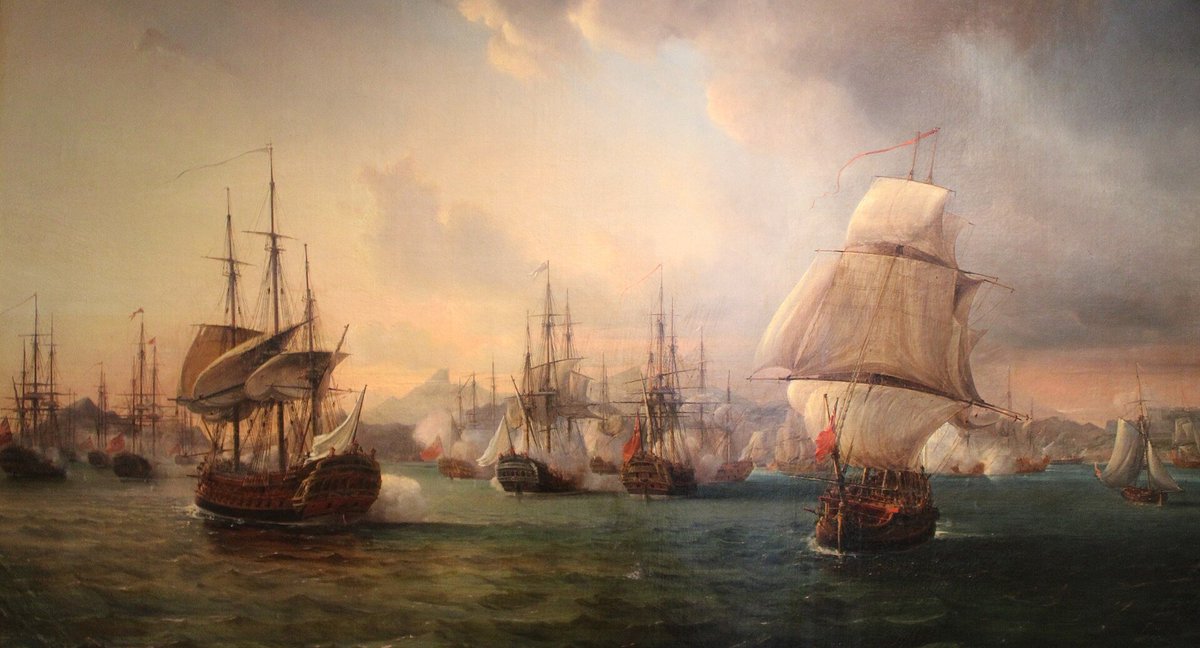
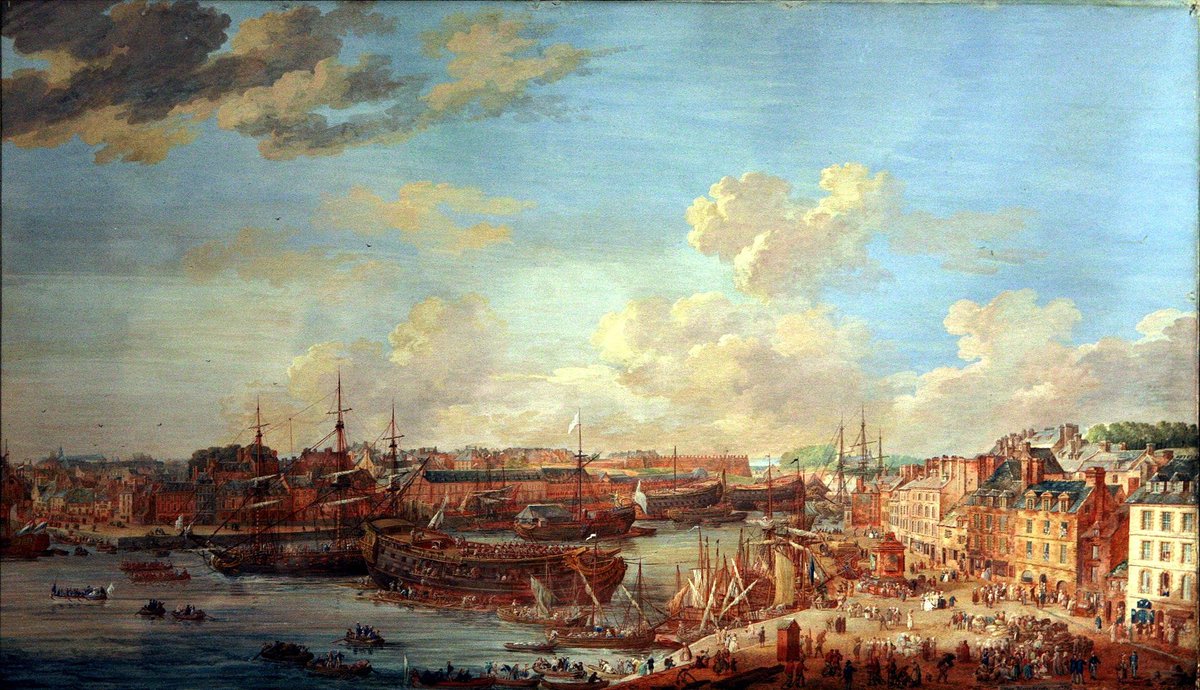
Defeat in the Seven Years’ War prompted serious military reforms in France. Much of this focused on the navy, which had seriously declined. A major shipbuilding program in the 1760s and 70s allowed France to enter the American War of Independence in 1778.
In 1781, as the Comte de Grasse’s fleet sailed to join Washington’s army for the momentous Yorktown campaign, a small squadron under Pierre-André de Suffren broke off and turned south, headed for India.
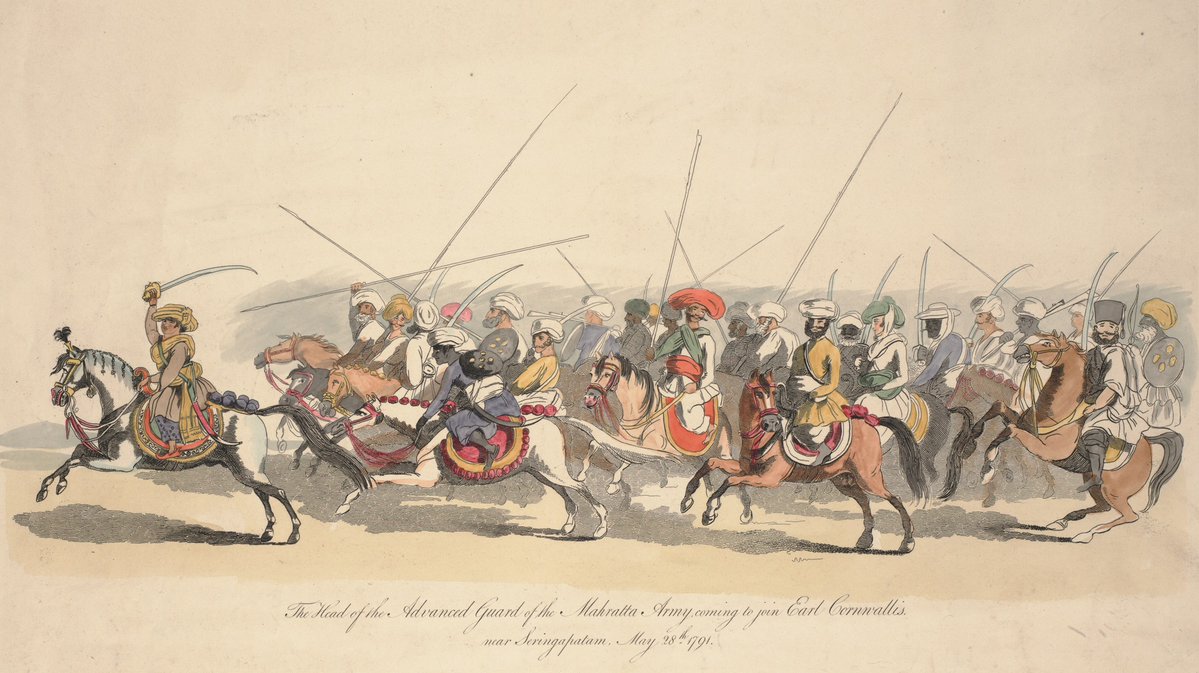
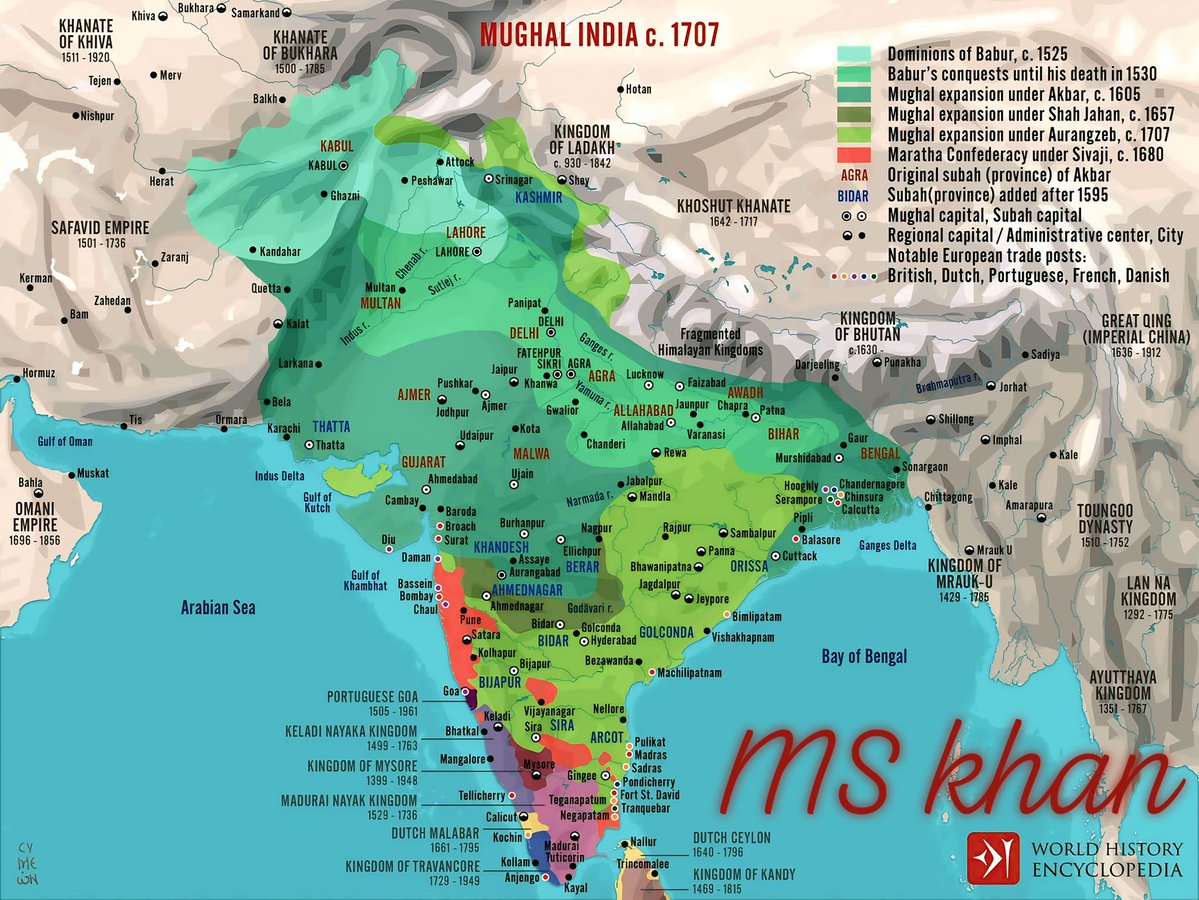
One of the most sought-after Indian allies in these wars was the Marathas. As the preeminent Hindu power during the height of Mughal expansion, they had survived by developing a strong cavalry arm—which the Europeans competed to win to their side.🧵
Mughal military power rested on their excellent cavalry, which was mounted on superb Turkic and Arabian breeds they brought in from Central Asia. At their height, they imported upwards of 100,000 horses a year through Afghanistan.
Their geographic position magnified this advantage. India is not good country for raising horses, and the Mughal power base in the northwest allowed them to cut off the supply of horses to their rivals, making it very difficult for them to source remounts.
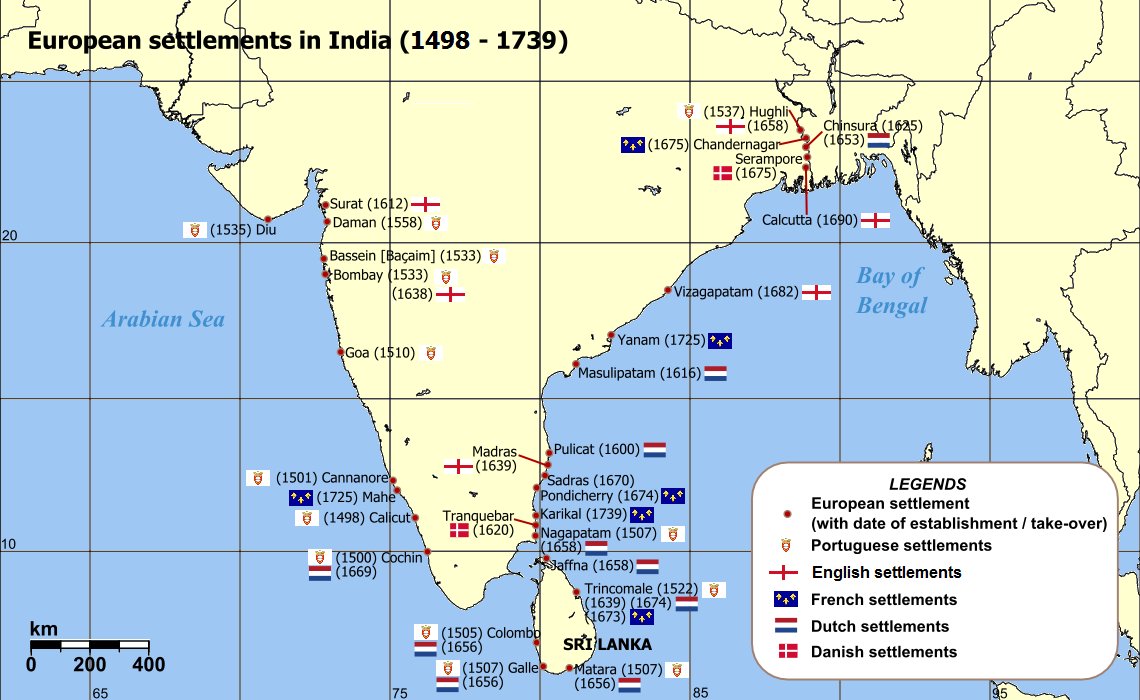
Before the 1750s, no European power had much in the way of Indian colonies—just a few scattered trade stations, dependent on the good graces of native princes.
That began to change with the Second Carnatic War, the most fascinating and complex of Franco-British wars in India.🧵
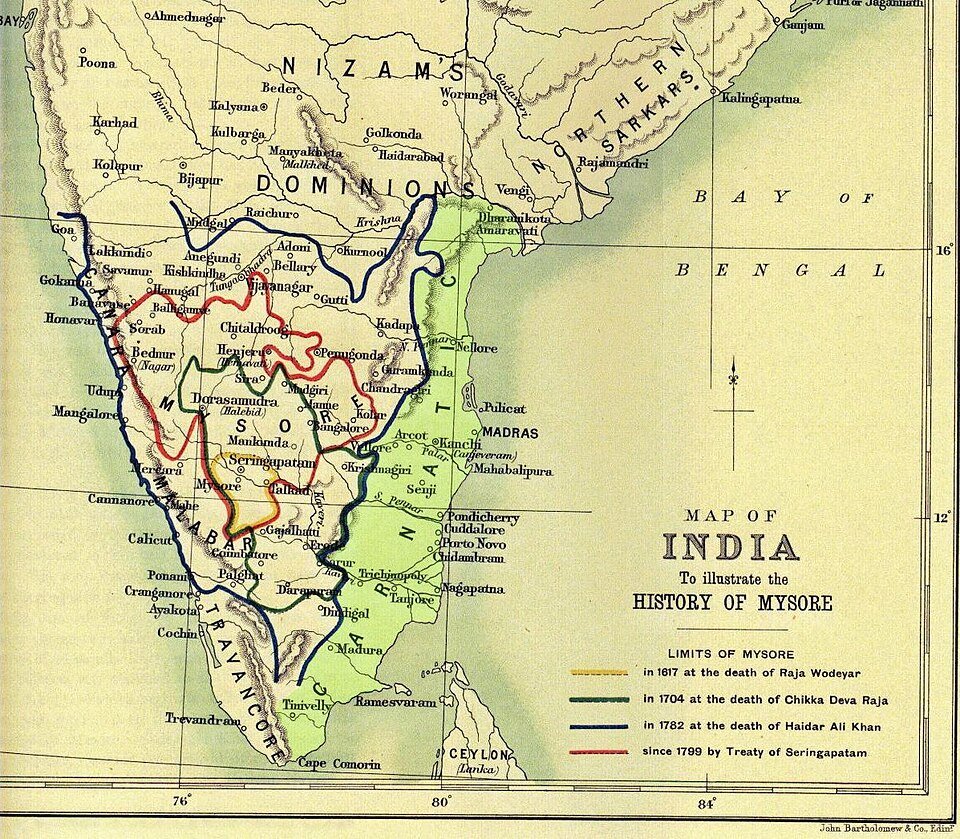
The small size of colonial possessions in India meant that when European powers went to war there, as Britain and France began doing in 1744, they usually did so as parts of larger coalitions, with native princes supplying a majority of troops.
Unlike the First Carnatic War, which was directly precipitated by events in Europe, the Second was fought purely for regional influence—both countries held several important ports in the Carnatic. What threw a wrench in things was that their home governments were at peace.
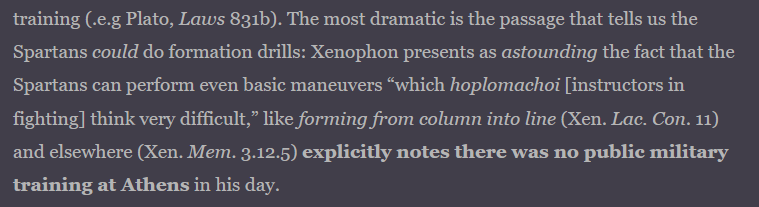
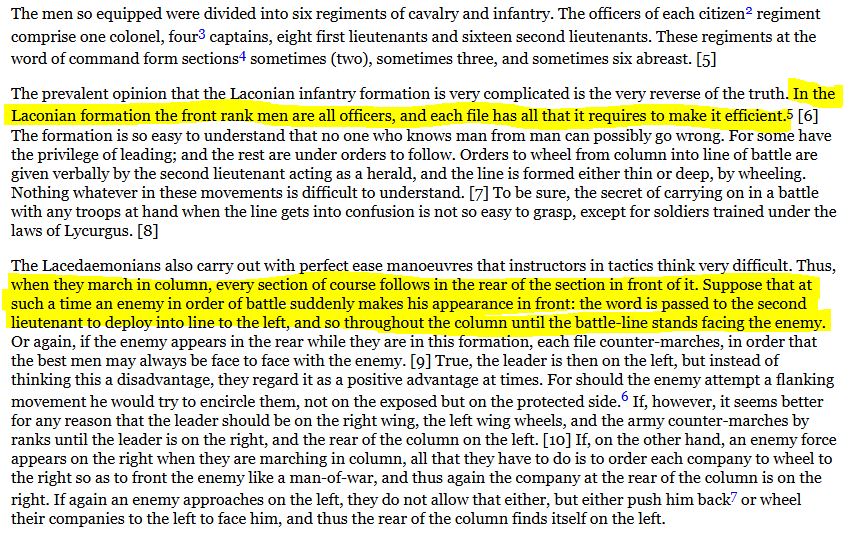
Good overview of how little weapons training and physical conditioning Greek hoplites did. But the claim that they did not drill at all, which has been floating around for some time, is absolutely NOT true, and badly misreads the sources.
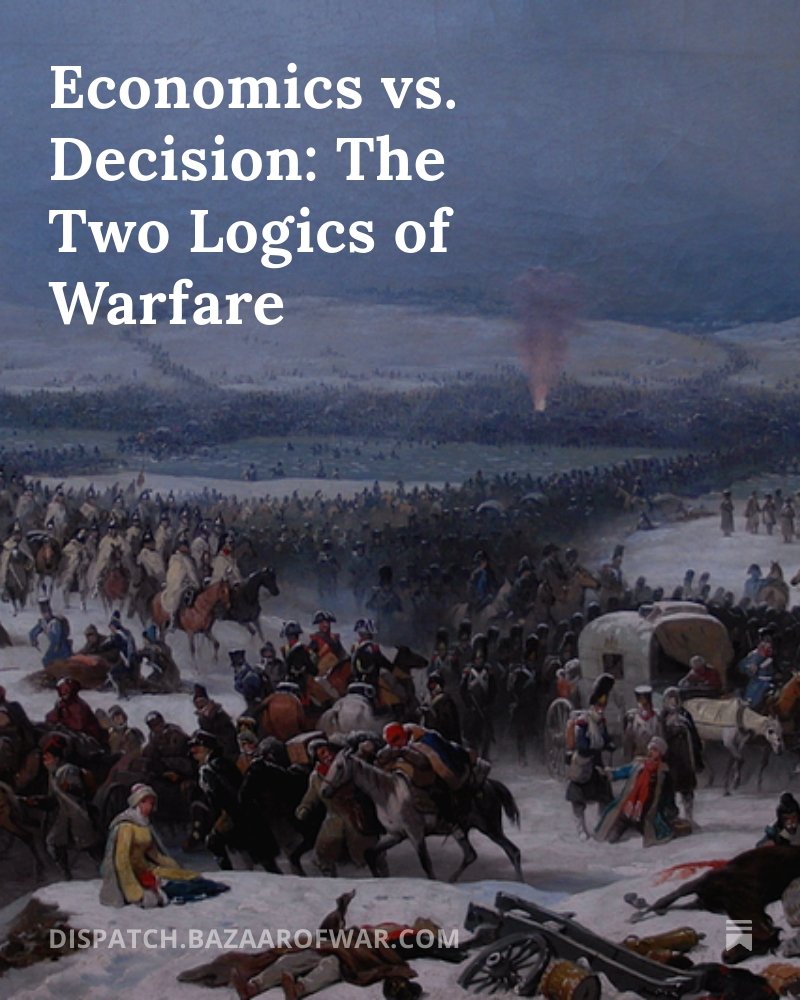
Warfare is governed by two inherently opposing logics: the “economic” logic of optimization and balance, and the logic of decision—overwhelming force at a critical point that decides an outcome. This tension runs through all levels of war.
🧵
The logic of economics encompasses purely attritional warfare, although it also extends far beyond: warfare by balance sheet, allocating forces to where they can get the best casualty ratios, while defending terrain whose capture might improve the enemy’s ratio.
This can apply to anything from tactical dispositions to force structure. Exploiting Ricardian advantage—itself a concept borrowed from economics—to maximize cost-effectiveness is an application of economic logic to grand strategy.