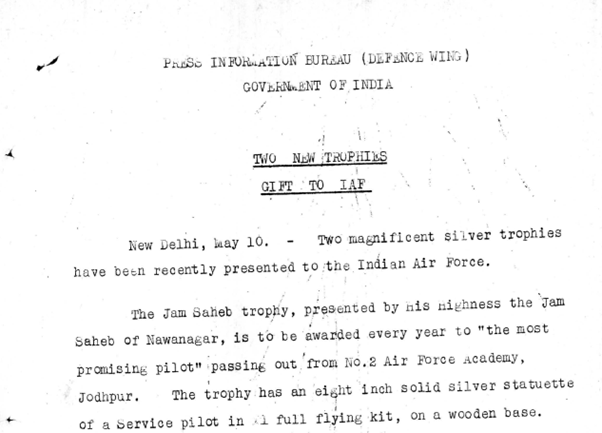
"THE RESERVE AND AUXILIARY AIR FORCES ACT, 1952", asked civil volunteers to be called up as pilots/ technicians in case of trg, aid of civil power, or @IAF_MCC service. 7 Aux AF sqns were formed between 1955-67. 220 officers commissioned. This is their story. #IAFHistory (1/16) 

First to be formed - 51 (Delhi) Aux Sqn in Nov 55 at the Safdarjung-based Delhi Flying Club. Originally on the HT-2 & Harvard, they converted to Vampire Mk52 in 1959. It was commanded by BK Stidston - Flying instructor from CFS, UK & at FIS, Chief flying instructor at AFA. (2/16)


Just Like Stidston, a number of regular IAF officers commanded various sqn's (The CO and instructors in AAF sqn were always regular IAF officers). Eg. BS Sikand (of Boyra battle fame), Alfred Anthony (4 Sqn, Burma), Chatrath (First CO 221 Sqn, VrC).(3/16)


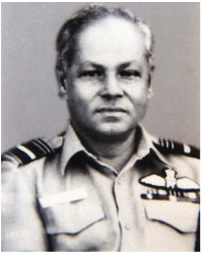
The distinction of the first AAF officer (Sevice no. AUX30001) went to Harbans Singh Jaggi. He was earlier an IAF pilot(3278) between 1945-52 and joined AAF in Mar 56 with 51 (Delhi) Sqn. His medal ribbons indicate service on the Burma Front. He would serve till 1967. (4/16)

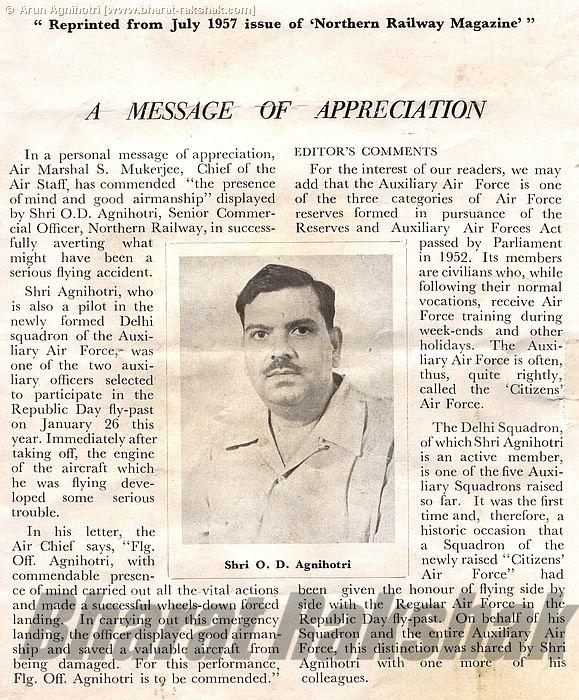
Another ex-IAF officer was OD Agnihotri (14 PC) & had served with 2 Sqn at Kohat. He joined the Indian Railways Traffic Services (IRTS) 1948 & would spend the rest of his career with the Railways. His 51 sqn album can be seen here - tinyurl.com/2t3yn2tz (5/16)

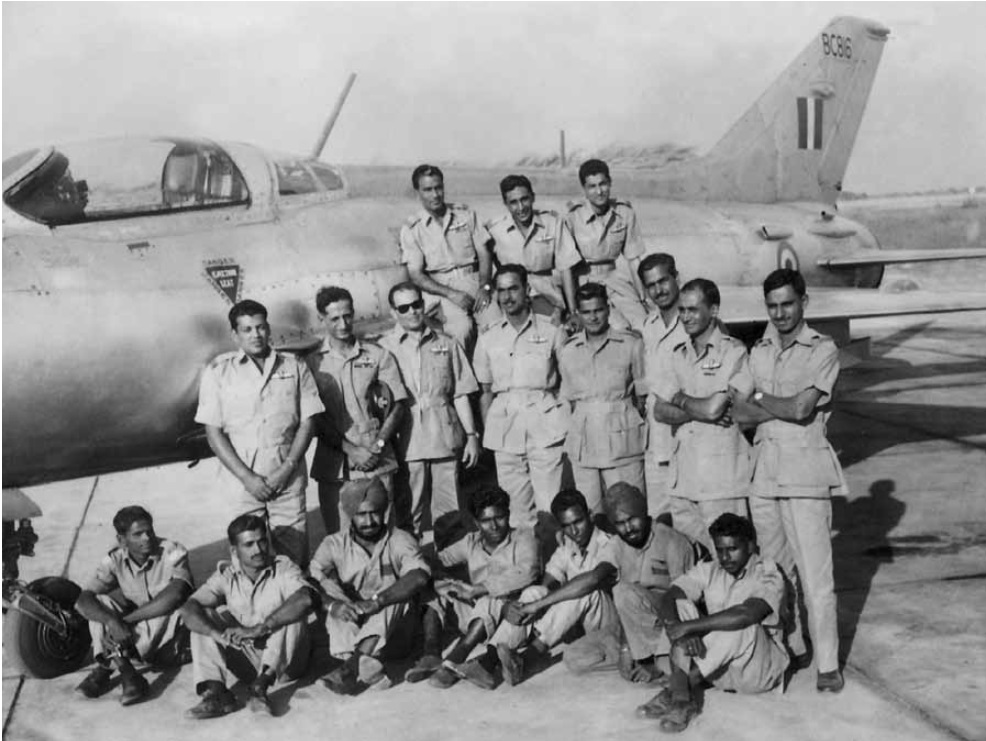
52-55 Aux AF sqn would be formed in quick succession at Bombay, Madras, Allahabad & Calcutta. not much is known about 56 & 57 Sqn. 53 (Madras) Sqn is seen here, smartly turned up. Of the AAF officers - 199 of these were pilots, 7 A&SD, 5 Tech Engineering & 9 Tech Signals. (6/16)

8 officers died in service due to fatal accidents. In all 10 accidents that happened involving AAF pilots (where aircraft was a write-off) - 3 T-6s, 3 Vampires, 2 HT-2, 1 Ouragan, and 1 Dakota. The story of Vaidyanatha Ganesan is worth telling. he received a Kirti Chakra. (7/16)

On 12 Marc 61, V Ganesan along with CR Mohan while on a Trg sortie in a Harvard was faced with an emergency due to excessive vibration of the engine. In spite of corrective action, the aircraft continued to lose height. As captain of the aircraft Ganeshan (8/16)

ordered CR Mohan to abandon the ac, which he did. As he was about to follow suit, Ganesan noticed a village in the vicinity. Appreciating that the ac, if abandoned, would crash in the village, he stayed back & maneuvered the aircraft away from the village and perished. (9/16)
F/L P Goswami would receive a Vayu Sena Medal for his role in the 1965 war as a chopper pilot doing casualty evaluation across the border and for serving a piquet under fire with the 111 HU. He was sent to Frunze Military Academy in USSR for MI-4 conversion (10/16)

F/L Rana Lal Chand Sikka was the only officer to be dismissed. On 24 June 1965, Ouragan (IC 698), flown by him was intercepted by a F-104A Starfighter near Badin in Sindh. He surrendered & landed at an open field near Jangshahi village, taken PoW, released later. (11/16)

Aux AF was not just about pilots, they had some interesting tech officers - There were three Tech Officers in 53 (Madras) Sqn. Ramani - Professor in MIT and Signals Officer Hegde, Professor in Guindy Eng College, and later Chancellor of Anna University. (12/16)

Two attained the rank of S/L - NR Batra ( PRO and AIR) and PP Sadarangani ( A&SD). PP Sadarangani was the longest-serving AAF officer from 60-80. 17 officers were transferred to regular IAF. Many of them served on till ranks of W/C, with the last one retiring in 1993. (13/16)
Notable among the regular IAF officers were Subhash Chandra Ghosal (10392), who was Flt cdr of 59 Sqn during 1971 and played a key role in training and preparing the Kilo Flight of Mukti Bahini. Otter aircraft flown by Kilo Flt had belonged to 59 Sqn (14/16)

The 1962 war forced IAF to reconsider the AAF & the AAF units were merged with 220 Sqn & 221 Sqn was born. These pilots continued to serve with various IAF units for years to come - those stories can be read here - bharat-rakshak.com/IAF/1253-des-p… and bharat-rakshak.com/IAF/1395-k-a-s… (15/16)

The rules for AAF officers to be absorbed into IAF were not favorable - They were to lose 18-24 months seniority. Being elder to the usual direct entry officers they stood little chance of going beyond Wg Cdr. Most AAF officers ended up joining civil aviation. (16/16)
• • •
Missing some Tweet in this thread? You can try to
force a refresh