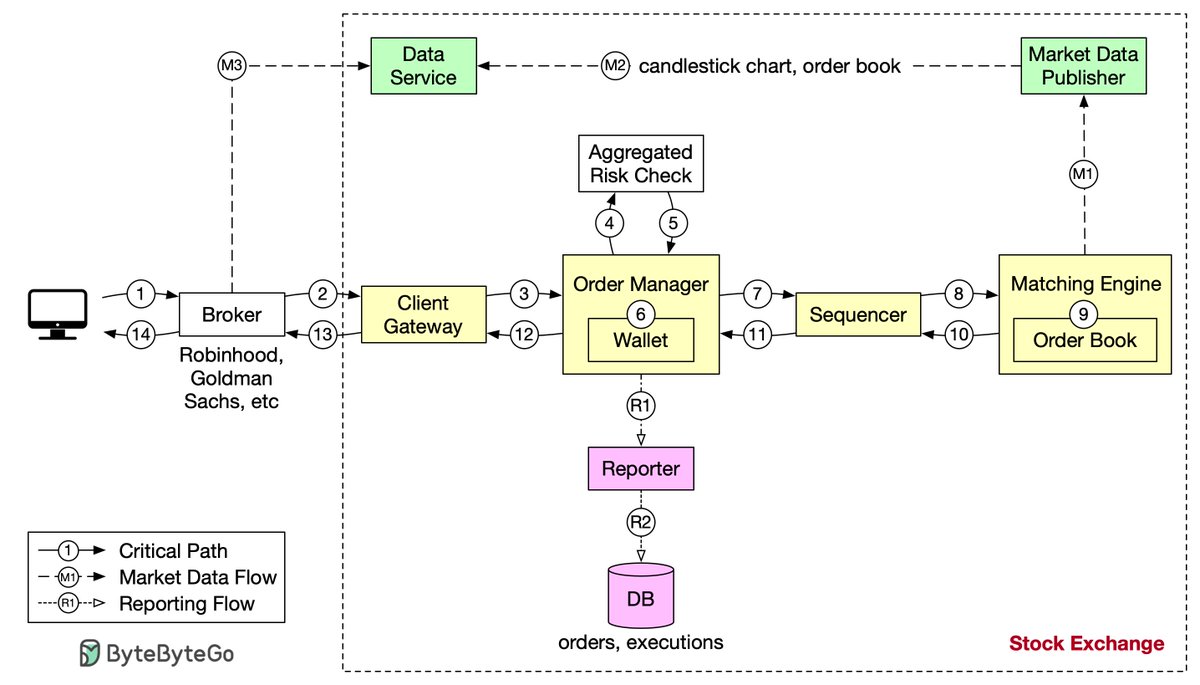
Design stock exchange. Let’s trace the life of an order through various components in the diagram to see how the pieces fit together.
First, we follow the order through the trading flow. This is the critical path with strict latency requirements. Everything has to happen fast in the flow:
Step 1: A client places an order via the broker’s web or mobile app.
Step 2: The broker sends the order to the exchange.
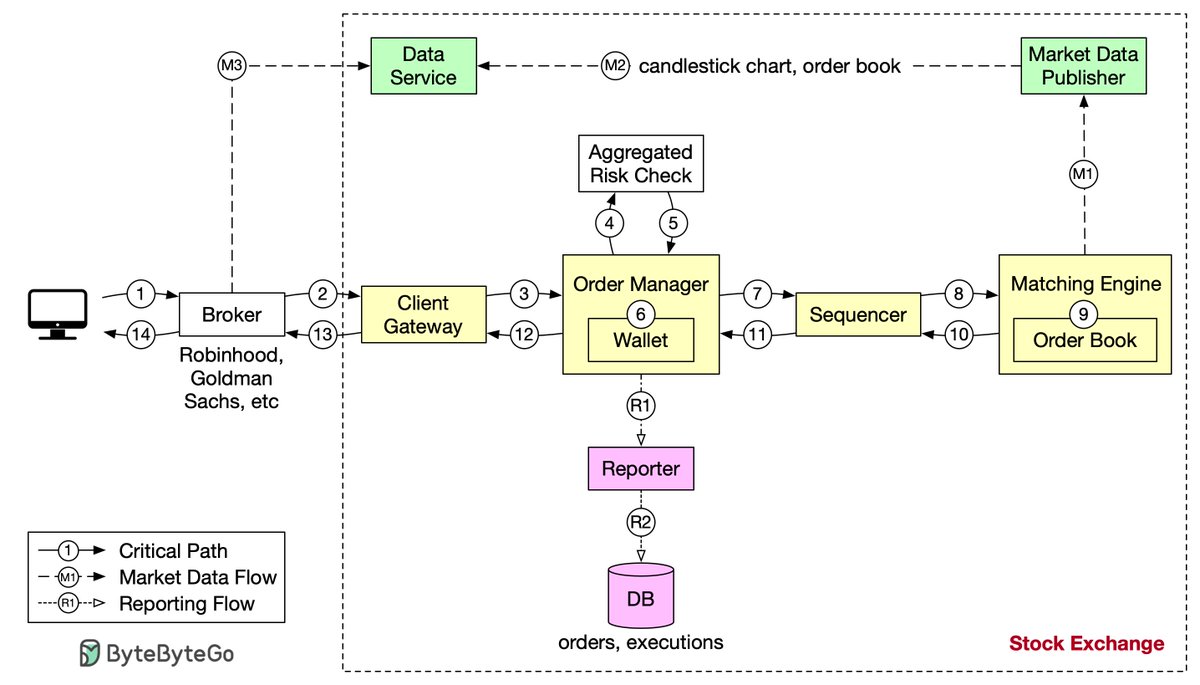
Step 3: The order enters the exchange through the client gateway. The client gateway performs basic gatekeeping functions such as input validation, rate limiting, authentication, normalization, etc. The client gateway then forwards the order to the order manager.
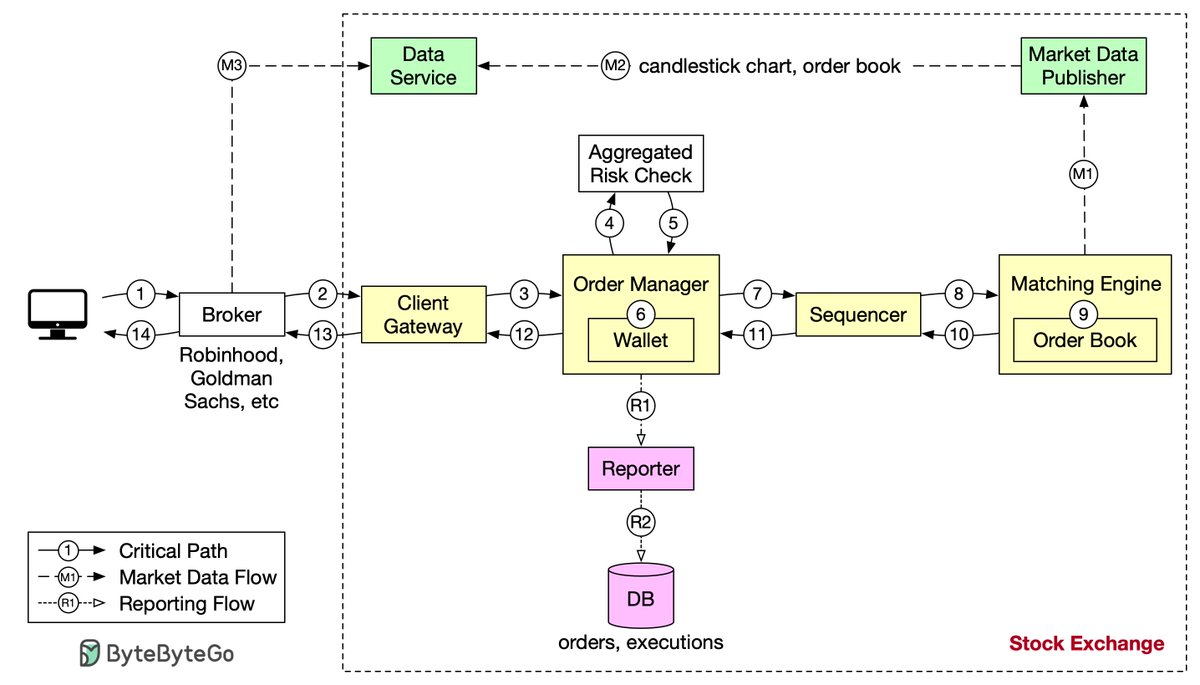
Step 4 - 5: The order manager performs risk checks based on rules set by the risk manager.
Step 6: After passing risk checks, the order manager verifies there are sufficient funds in the wallet for the order.
Step 7 - 9: The order is sent to the matching engine. When a match is found, the matching engine emits two executions, with one each for the buy and sell sides. To guarantee that matching results are deterministic when replayed, both orders and executions are sequenced.
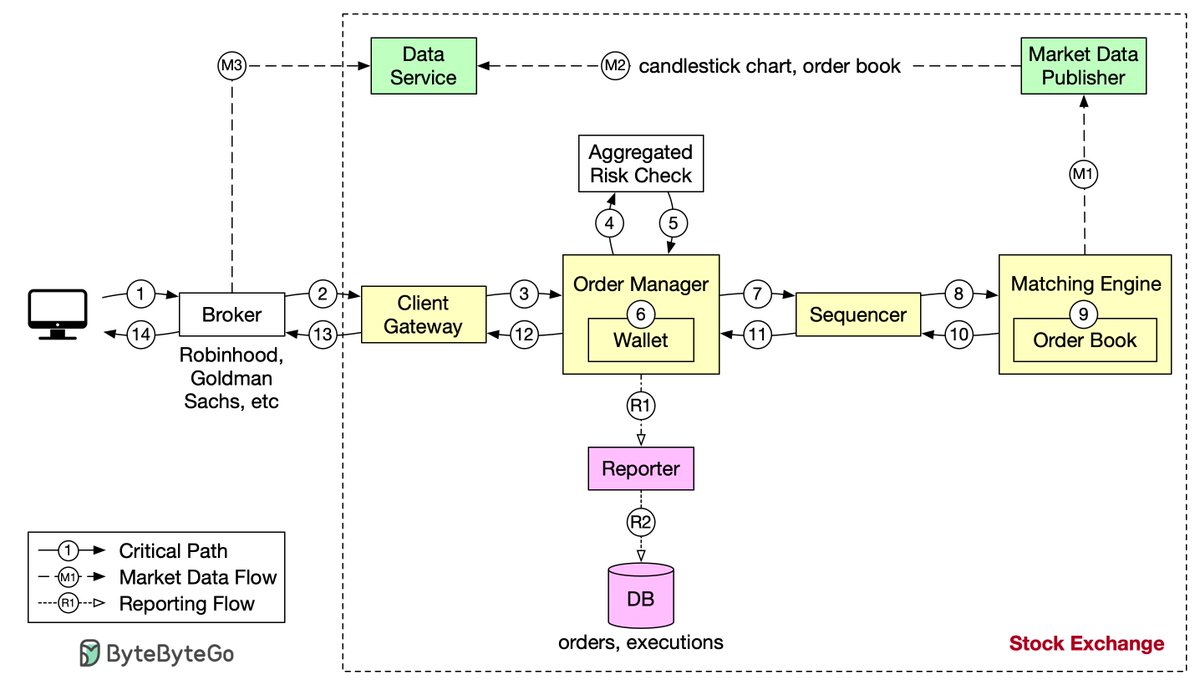
Step 10 - 14: The executions are returned to the client.
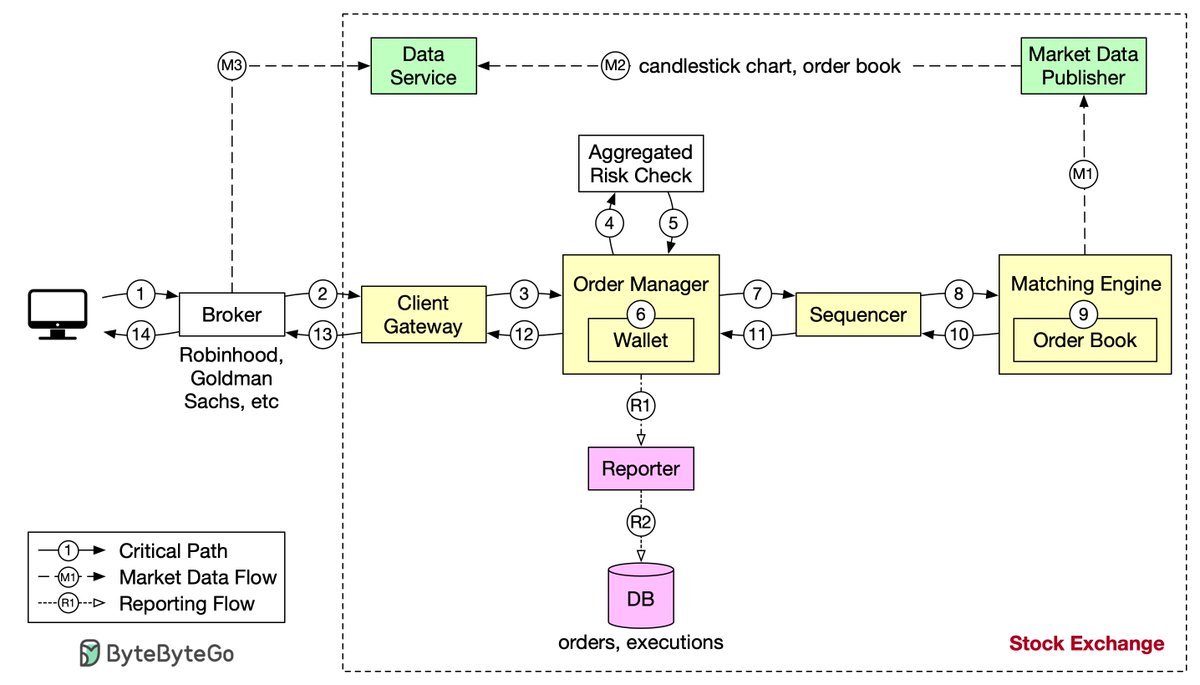
Note that the trading flow (steps 1 to 14) is on the critical path, while the market data flow and reporting flow are not. They have different latency requirements.
• • •
Missing some Tweet in this thread? You can try to
force a refresh

My new book System Design Interview - An Insider’s Guide (Volume 2) will be available on Amazon soon! It is a continuation of the system design interview book series.
Some stats about the book:
🔹 13 NEW real system design interviews with detailed solutions.
🔹 300+ diagrams to explain how different systems work.
🔹 400+ pages.
🔹 took 1.5 years to make.
My co-author @sahnlam and I have spent countless nights and weekends on the book. Our goal is to make complex systems easy to understand.
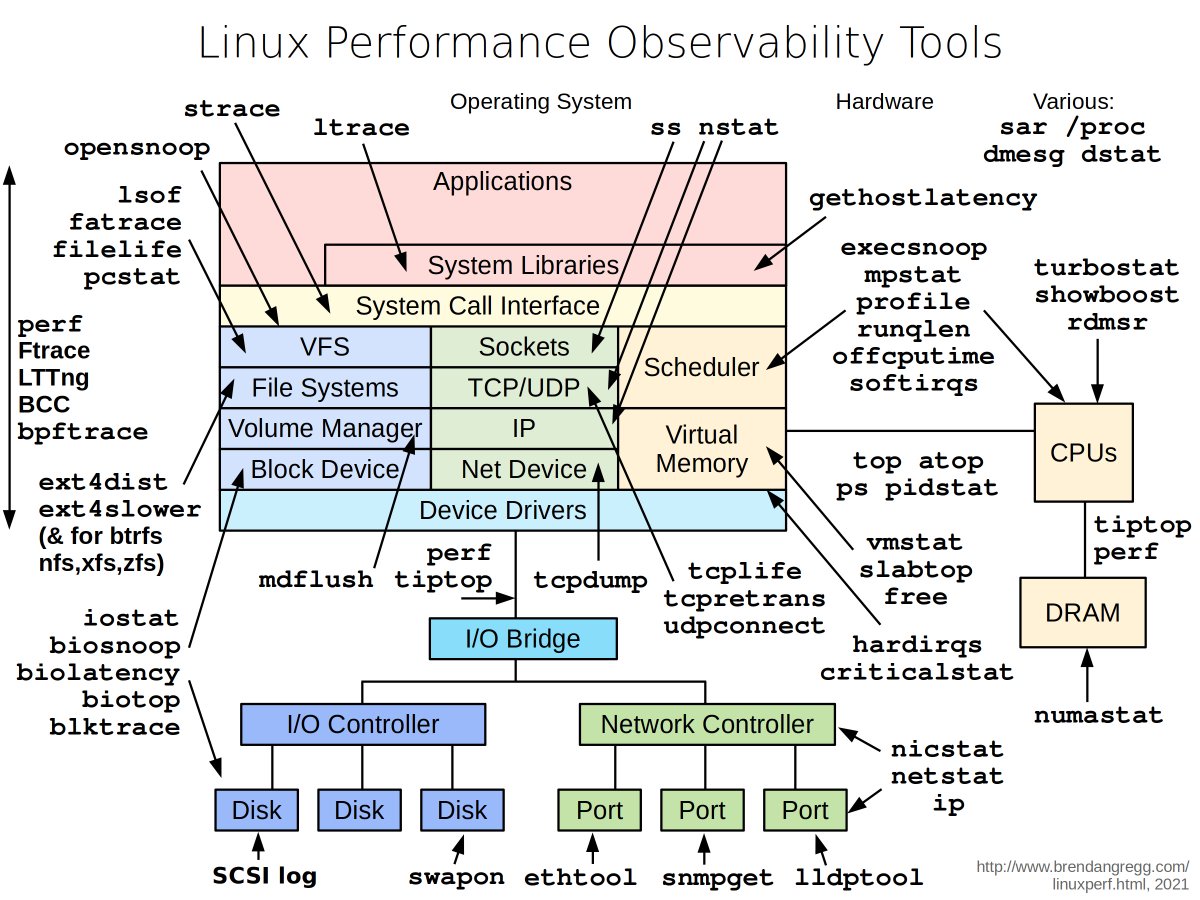
Popular interview question: how to diagnose a mysterious process that’s taking too much CPU, memory, IO, etc?
The diagram below illustrates helpful tools in a Linux system.
🔹‘vmstat’ - reports information about processes, memory, paging, block IO, traps, and CPU activity.
🔹‘iostat’ - reports CPU and input/output statistics of the system.
🔹‘netstat’ - displays statistical data related to IP, TCP, UDP, and ICMP protocols.
🔹‘lsof’ - lists open files of the current system.
🔹‘pidstat’ - monitors the utilization of system resources by all or specified processes, including CPU, memory, device IO, task switching, threads, etc.
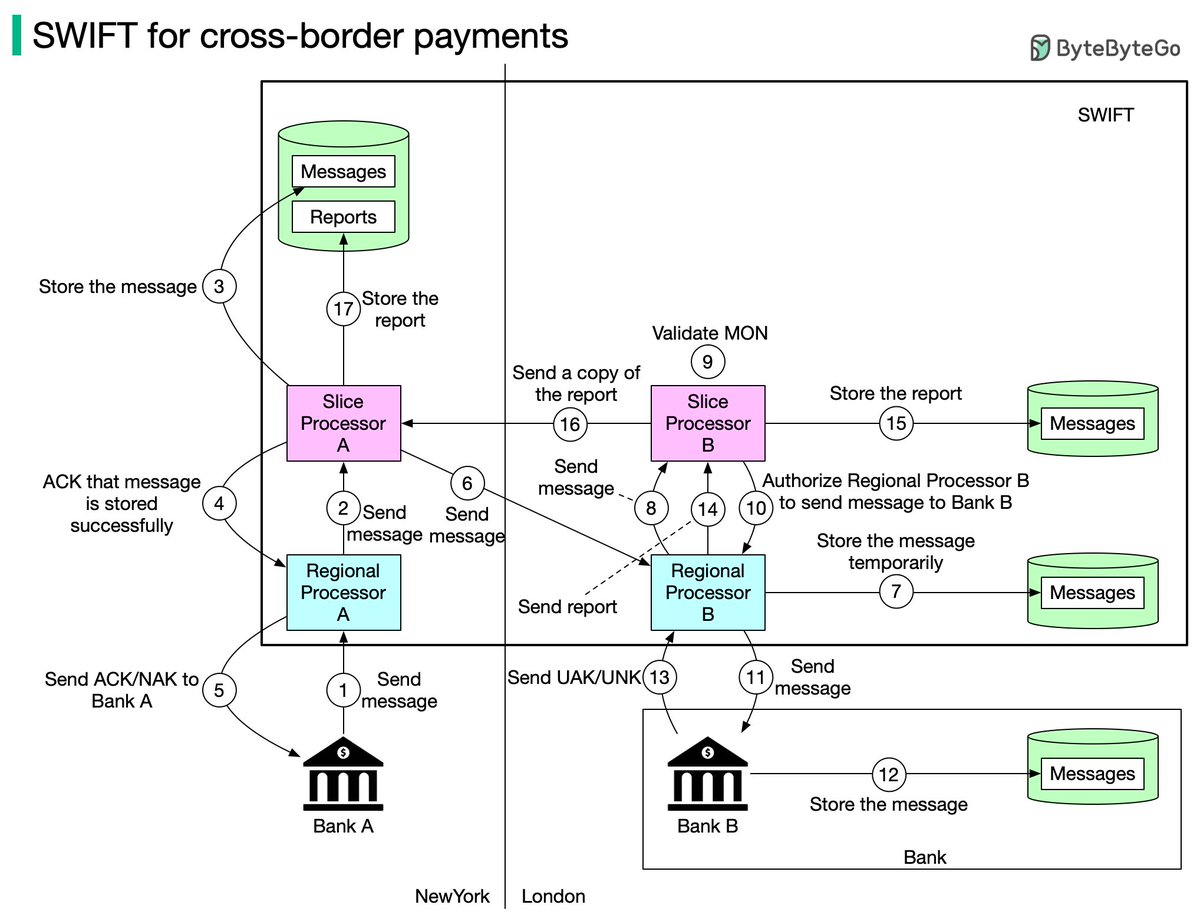
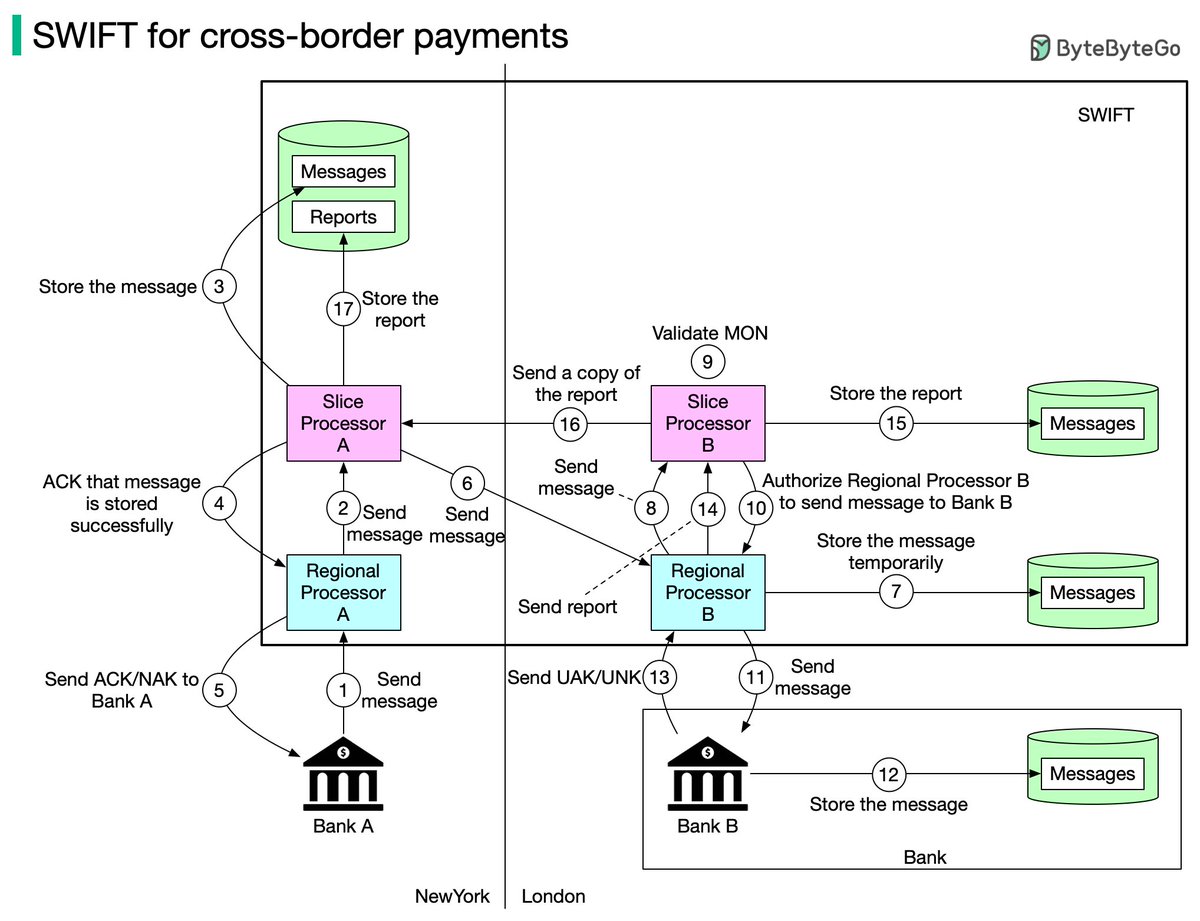
You probably heard about 𝐒𝐖𝐈𝐅𝐓. What is SWIFT? What role does it play in cross-border payments? Let's take a look.
The Society for Worldwide Interbank Financial Telecommunication (SWIFT) is the main secure 𝐦𝐞𝐬𝐬𝐚𝐠𝐢𝐧𝐠 𝐬𝐲𝐬𝐭𝐞𝐦 that links the world’s banks. 1/9
The Belgium-based system is run by its member banks and handles millions of payment messages per day. The diagram below illustrates how payment messages are transmitted from Bank A (in New York) to Bank B (in London). 2/9
Step 1: Bank A sends a message with transfer details to Regional Processor A in New York. The destination is Bank B. 3/9
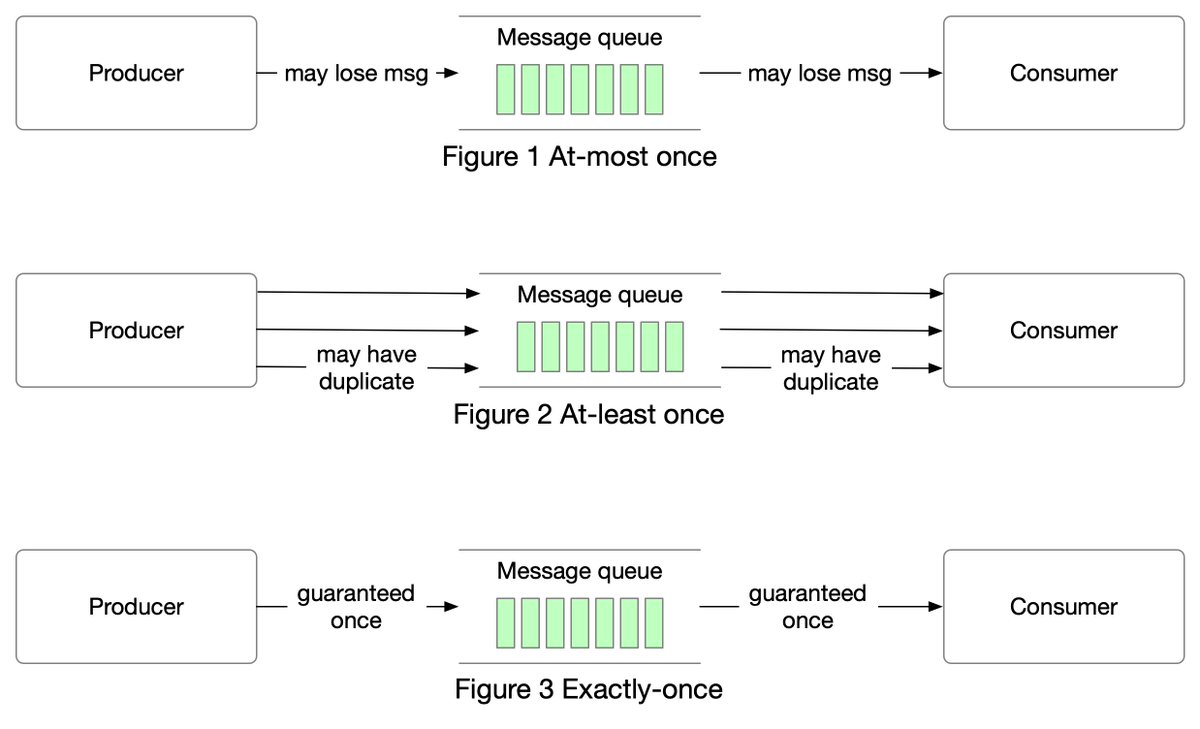
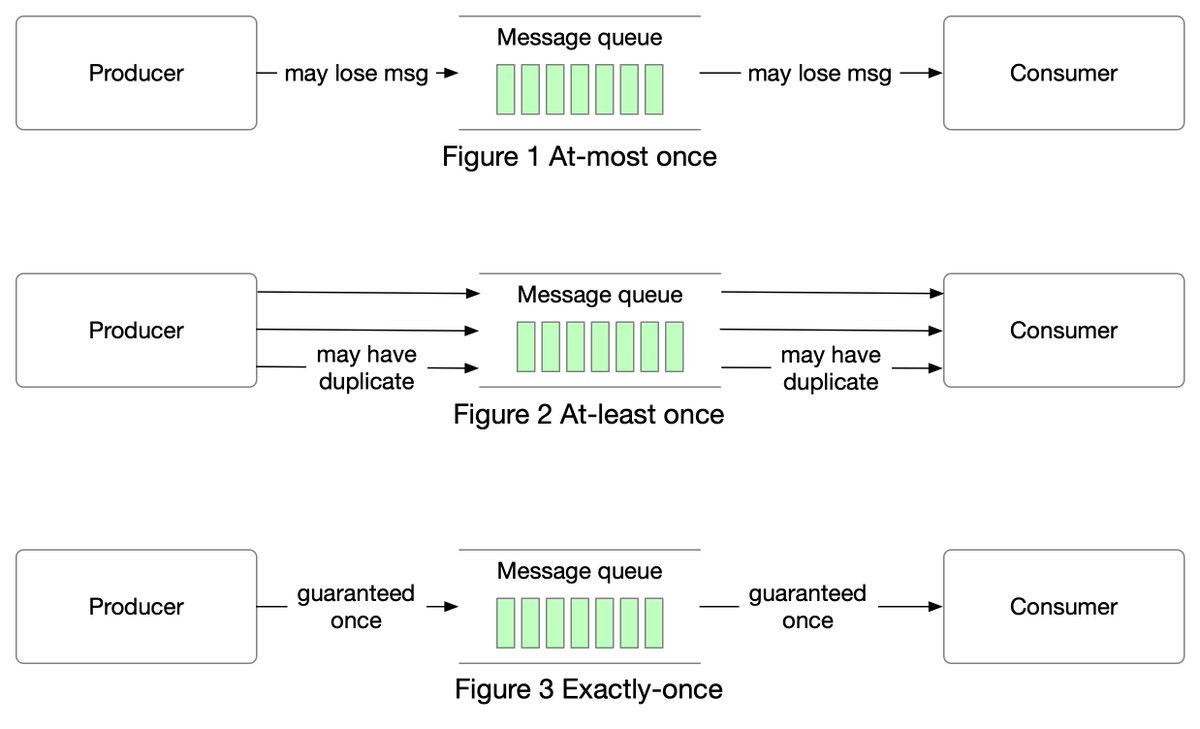
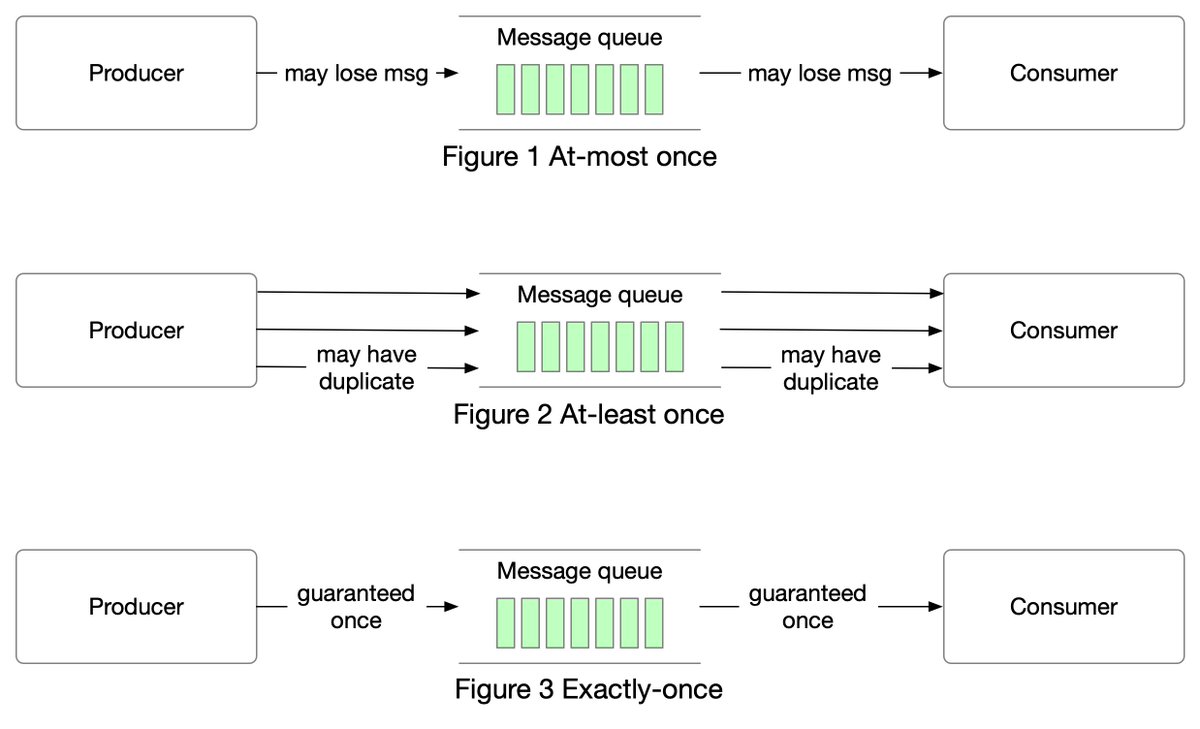
In modern architecture, systems are broken up into small and independent building blocks with well-defined interfaces between them. Message queues provide communication and coordination for those building blocks. Today, let’s discuss at-most once, at-least once, and exactly once.
𝐀𝐭-𝐦𝐨𝐬𝐭 𝐨𝐧𝐜𝐞
As the name suggests, at-most once means a message will be delivered not more than once. Messages may be lost but are not redelivered. This is how at-most once delivery works at the high level.
Use cases: It is suitable for use cases like monitoring metrics, where a small amount of data loss is acceptable.
𝐀𝐭-𝐥𝐞𝐚𝐬𝐭 𝐨𝐧𝐜𝐞
With this data delivery semantic, it’s acceptable to deliver a message more than once, but no message should be lost.
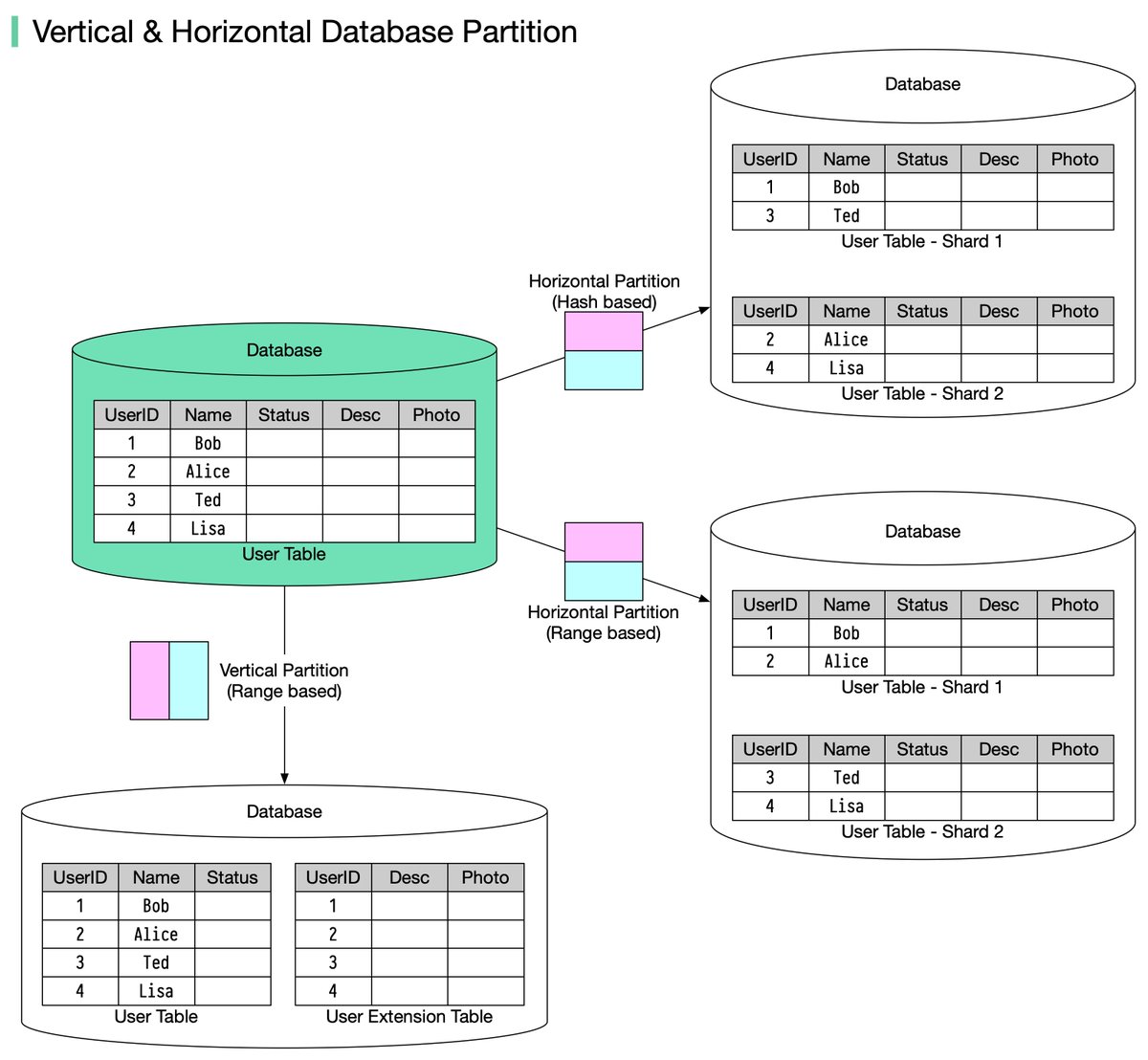
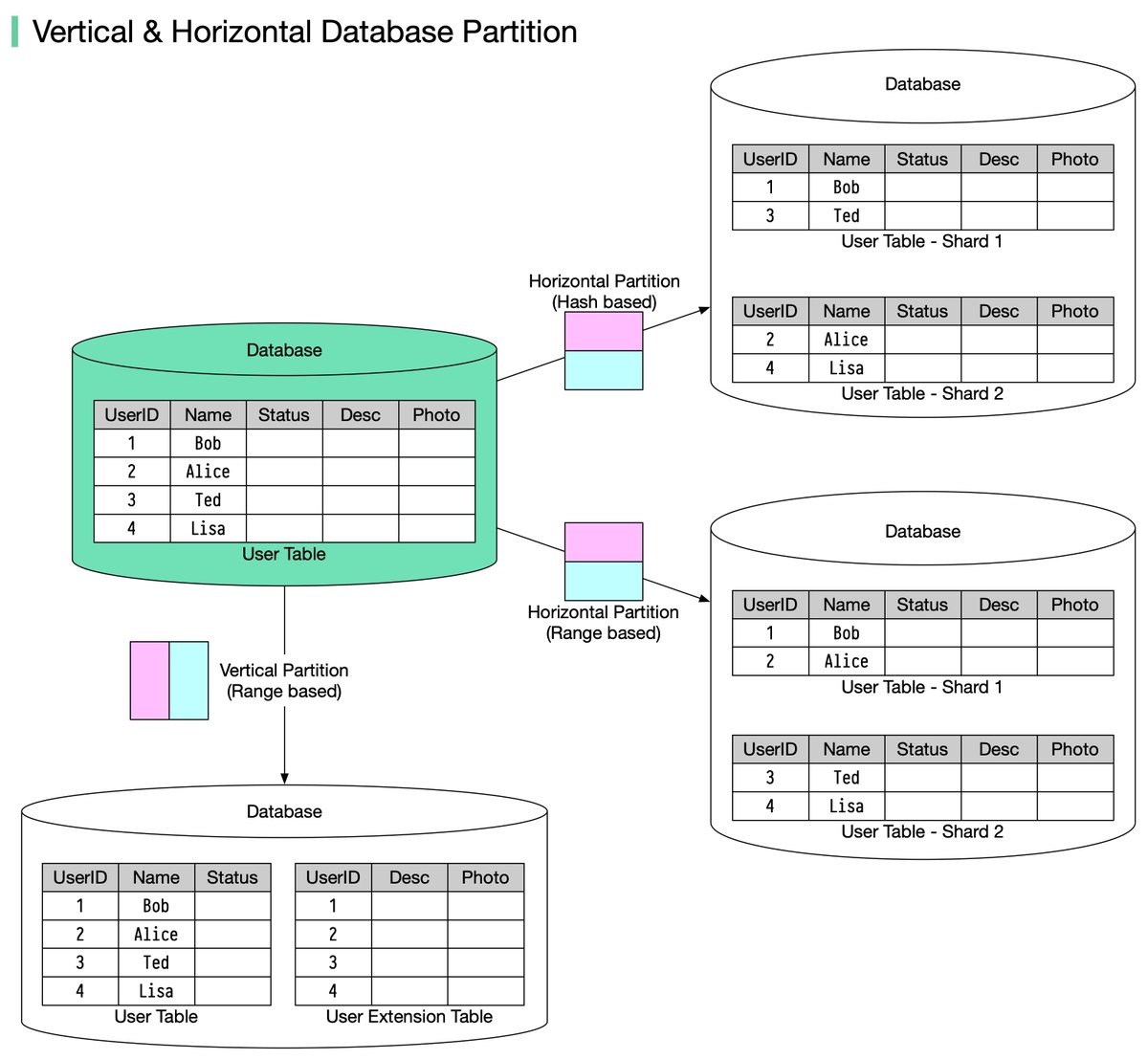
In many large-scale applications, data is divided into partitions that can be accessed separately. There are two typical strategies for partitioning data.
🔹 Vertical partitioning: it means some columns are moved to new tables. Each table contains the same number of rows but fewer columns (see diagram below).
Horizontal partitioning (often called sharding): divides a table into multiple smaller tables. Each table is a separate data store, and it contains the same number of columns, but fewer rows.
Horizontal partitioning is widely used so let’s take a closer look
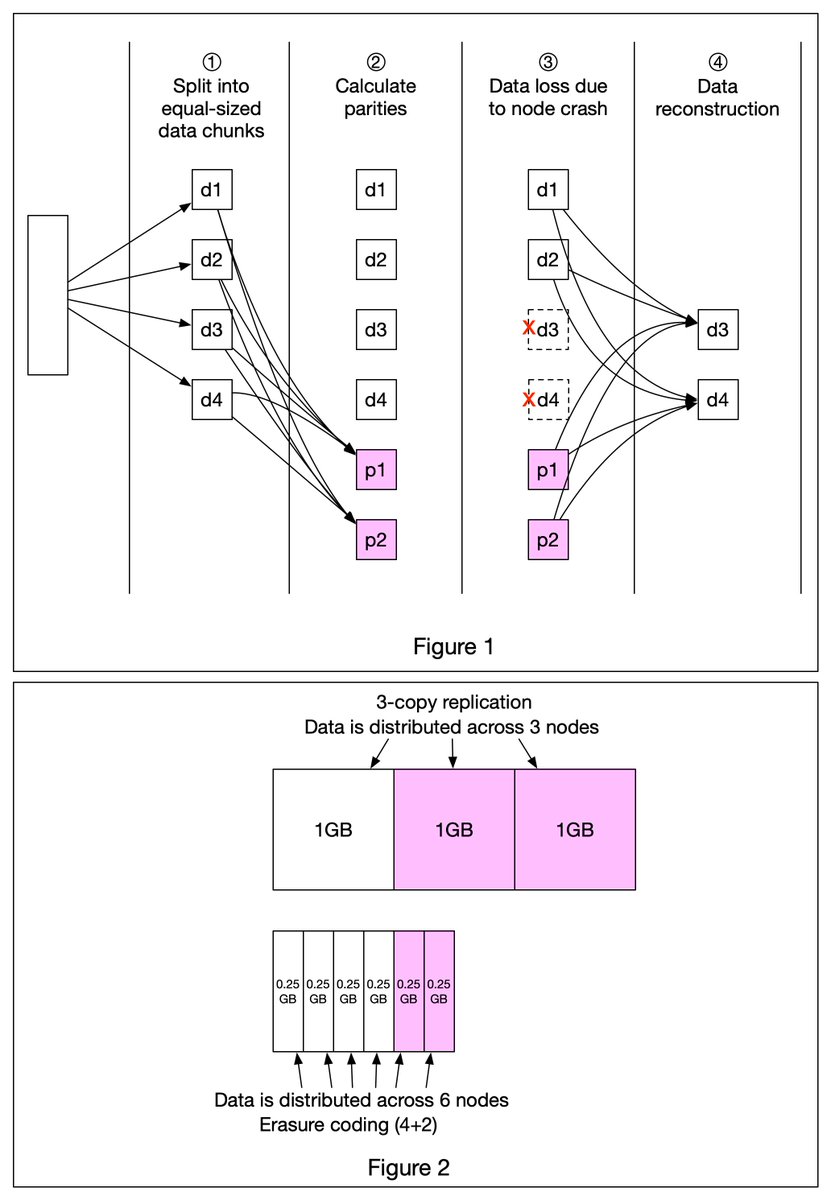
A really cool technique that’s commonly used in object storage such as S3 to improve durability is called 𝐄𝐫𝐚𝐬𝐮𝐫𝐞 𝐂𝐨𝐝𝐢𝐧𝐠. Let’s take a look at how it works. 1/7
Erasure coding deals with data durability differently from replication. It chunks data into smaller pieces and creates parities for redundancy. In the event of failures, we can use chunk data and parities to reconstruct the data. 4 + 2 erasure coding is shown in Figure 1. 2/7
1️⃣ Data is broken up into four even-sized data chunks d1, d2, d3, and d4.
2️⃣ The mathematical formula is used to calculate the parities p1 and p2. To give a much simplified example, p1 = d1 + 2*d2 - d3 + 4*d4 and p2 = -d1 + 5*d2 + d3 - 3*d4. 3/7