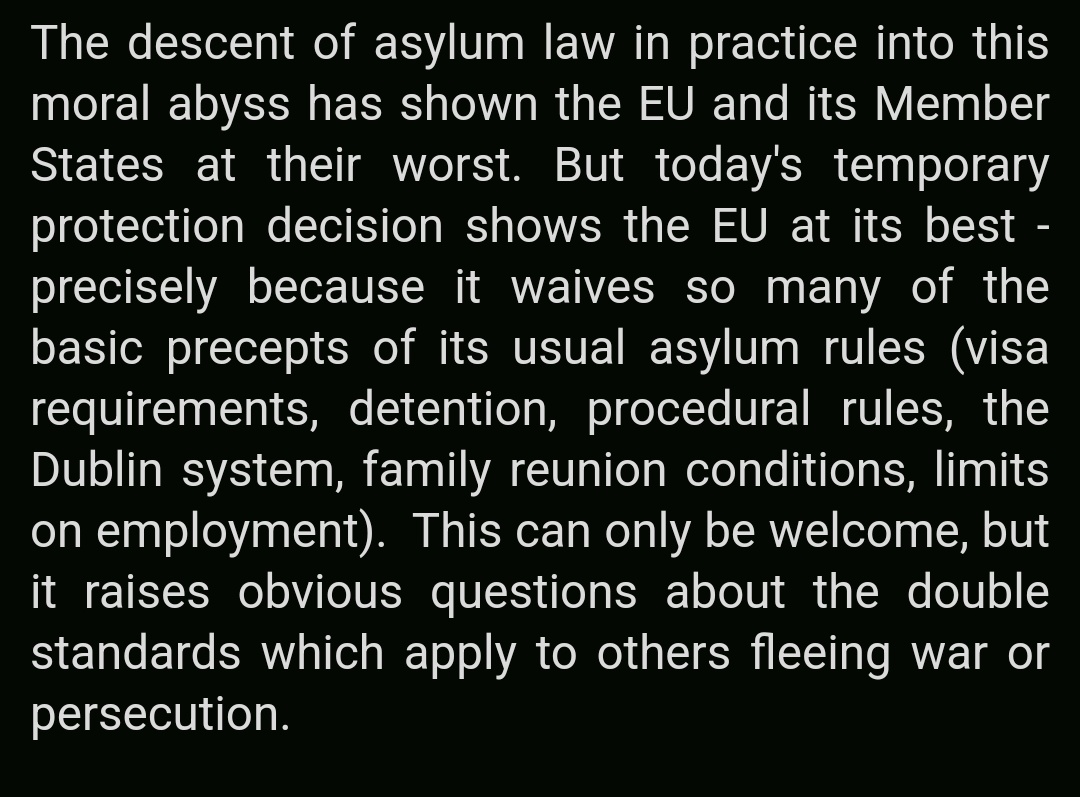
I've extensively rewritten my blog post on temporary protection for people fleeing the invasion of Ukraine, how that the EU has adopted the temporary protection law: eulawanalysis.blogspot.com/2022/02/tempor…
Thread with main points 1/
2/ Who is covered by temporary protection?
These are the core groups fully covered:
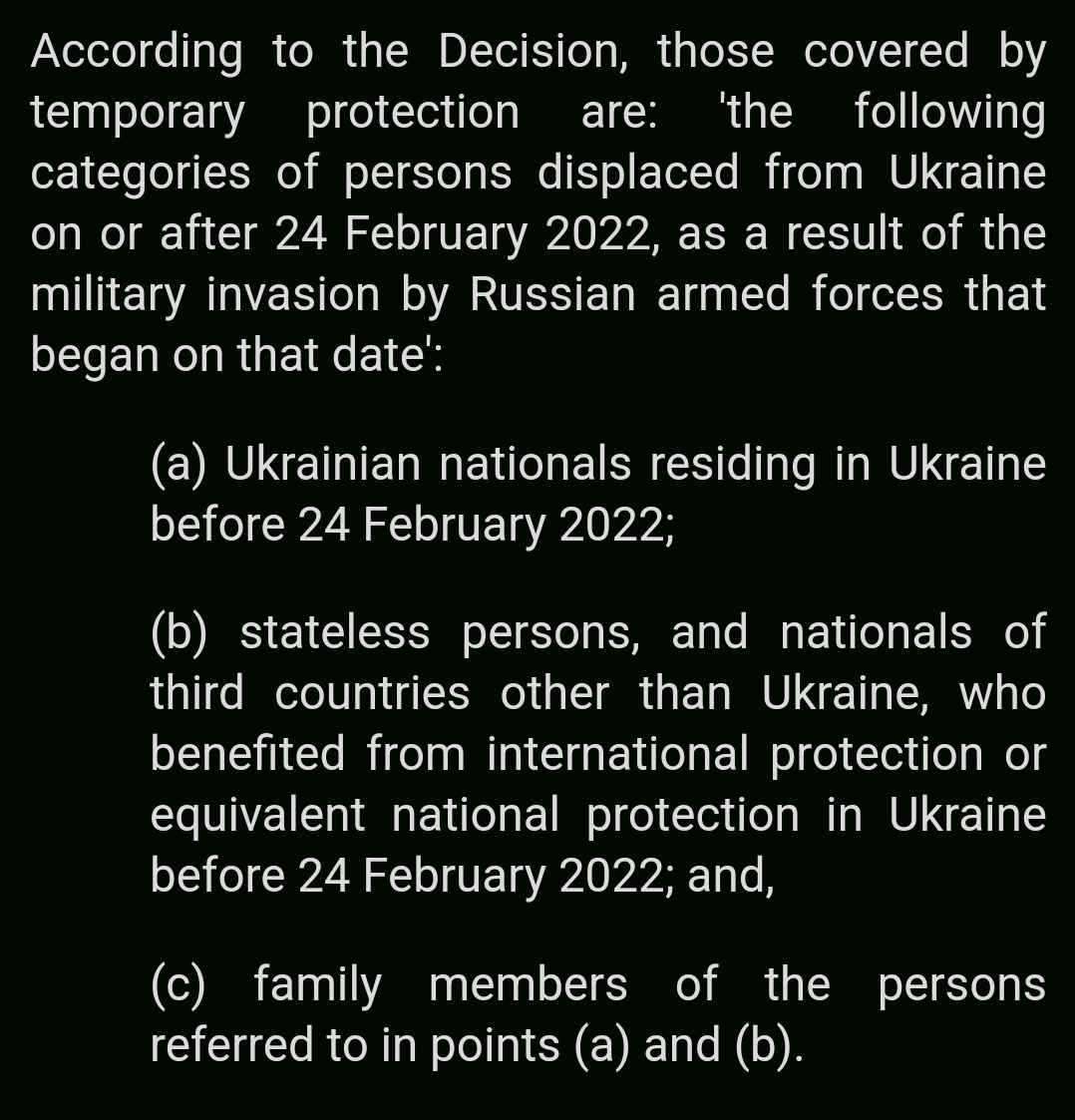
3/ A second group of people must be covered either by EU temporary protection or by adequate protection in national law (not further defined)
4/ Member States *may* apply the law to non-Ukrainians who were working or studying in Ukraine, but in any case "should" treat them fairly re crossing borders etc
5/ and a further group of people who it's optional to cover
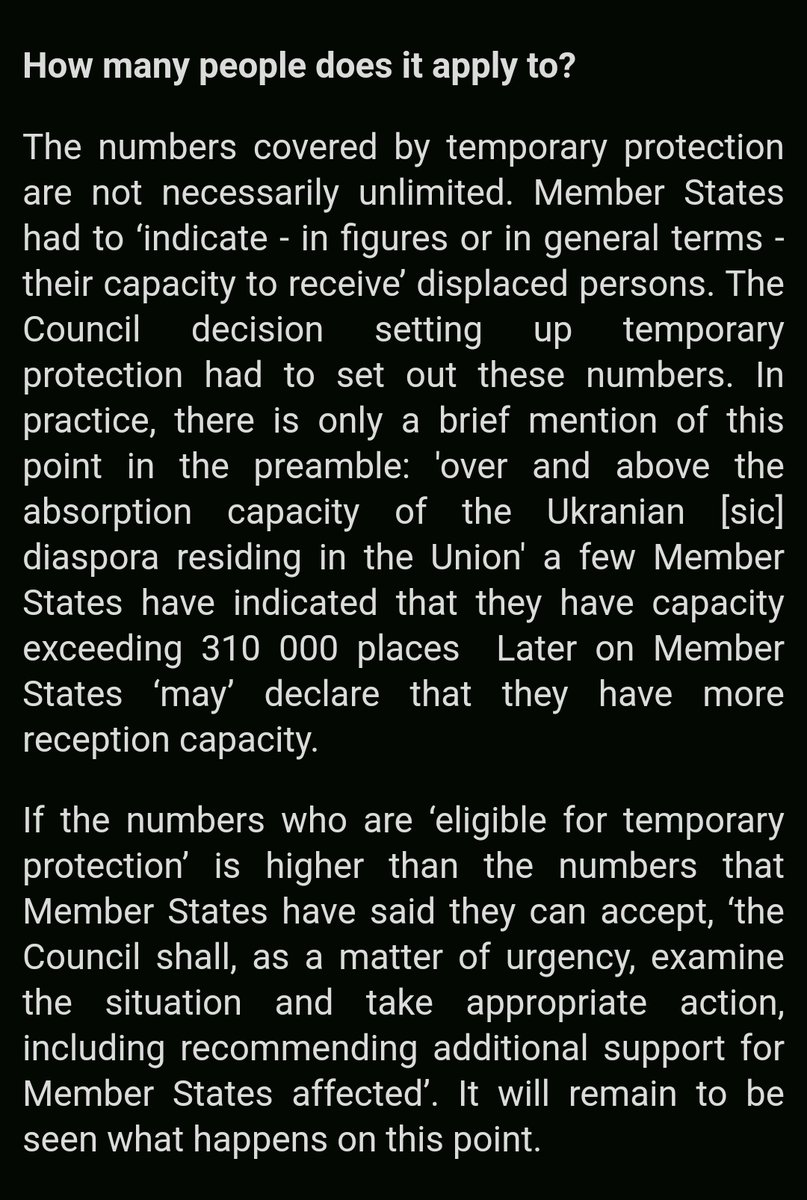
6/ The number of people who can be covered isn't explicitly capped
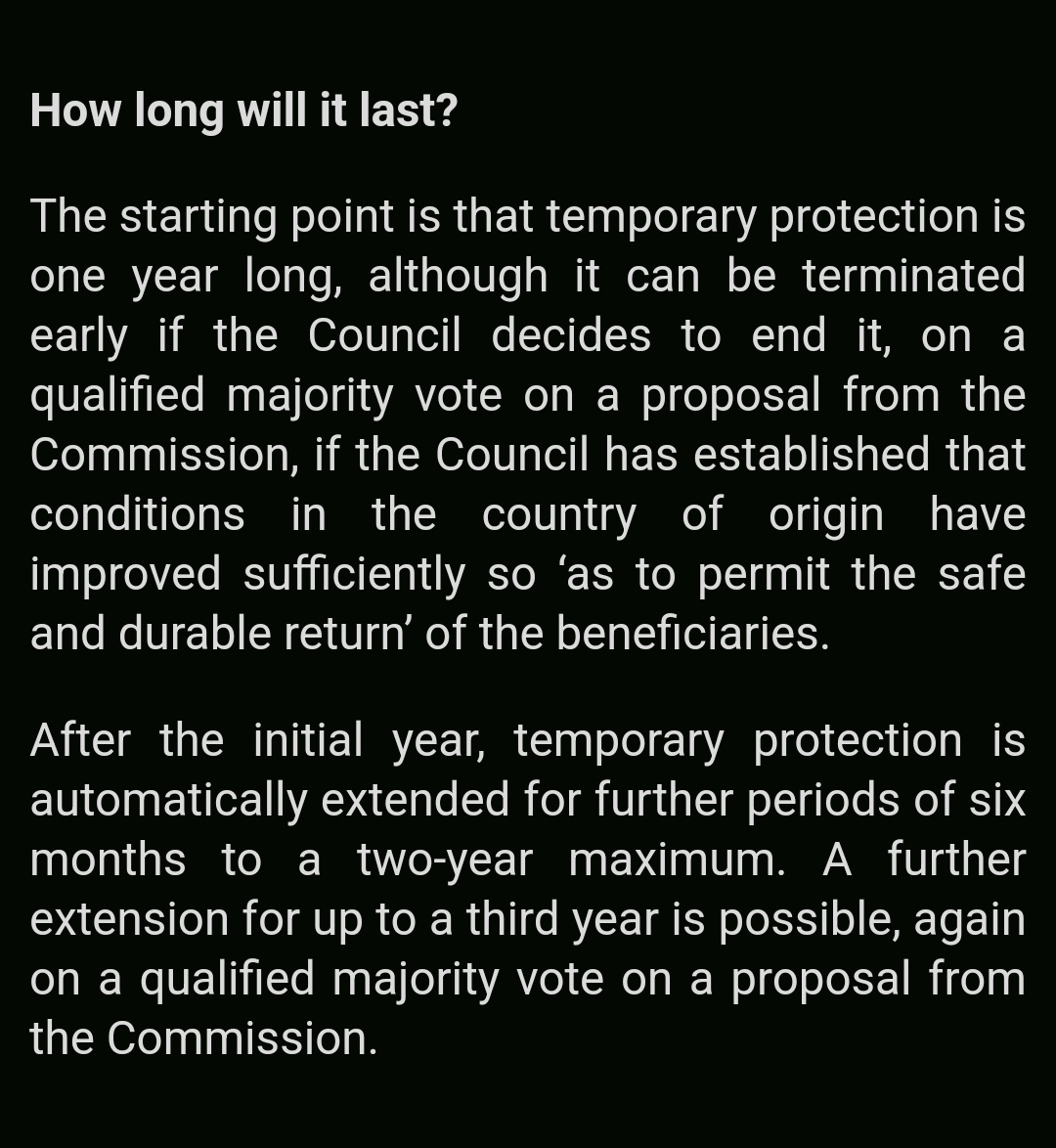
7/ How long does temporary protection last? In principle one year, might be extended to three years.
(We'll come back to what happens after it ends)
8/ What rights do temporary protection beneficiaries have?
First of all, residence permits and access to employment (although there can be a labour market priority for EU citizens etc)
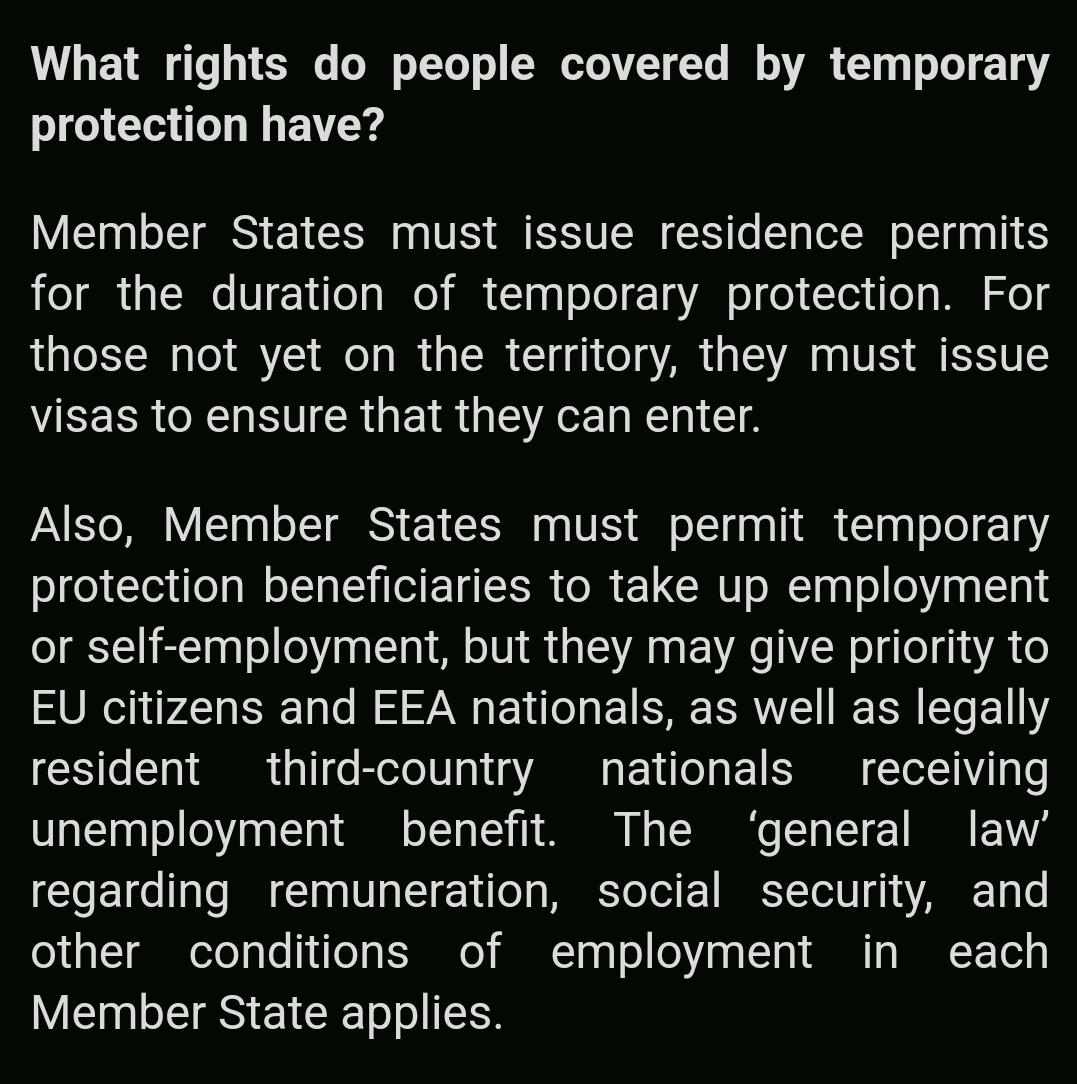
9/ Also rights to social welfare, housing, health care and education
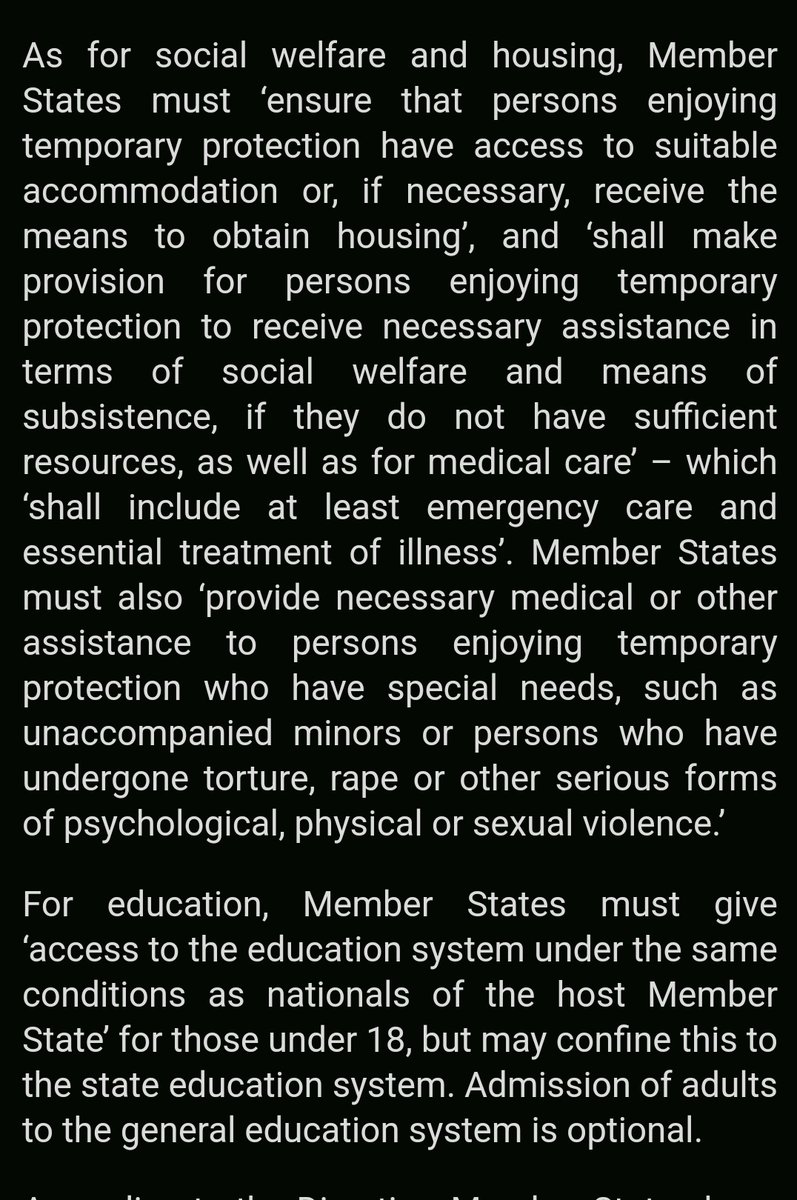
10/ I've added a section above movement between Member States. First of all, movement *before* obtaining temporary protection. The temporary protection decision simply flips the Dublin system upside down.
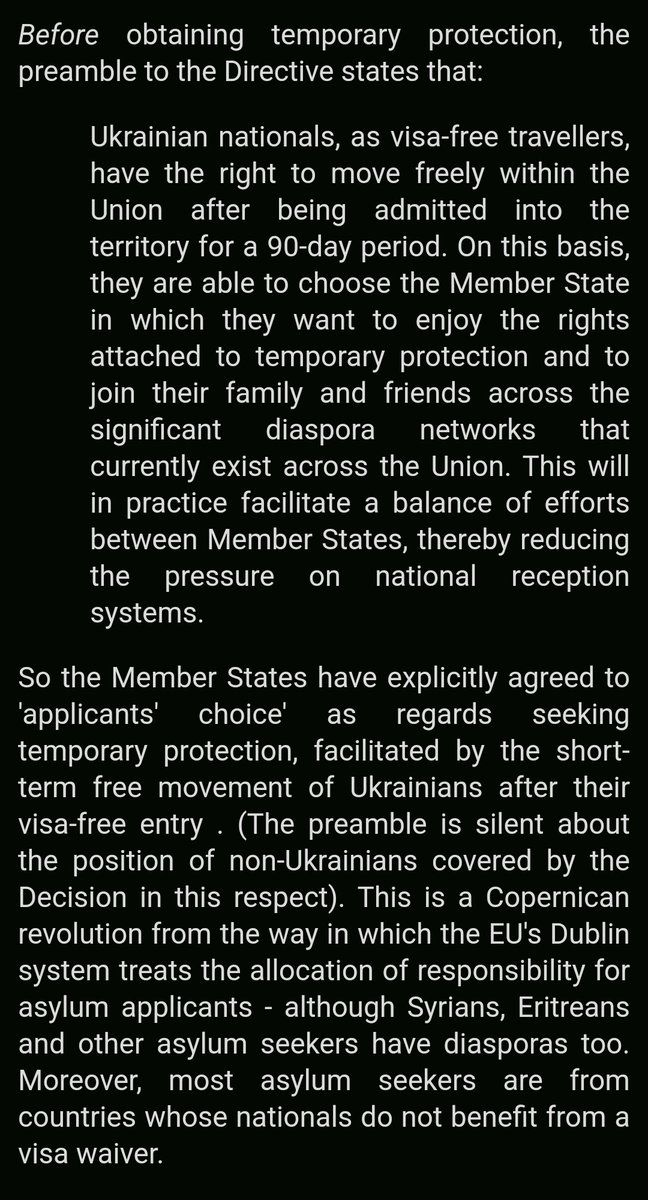
11/ After obtaining temporary protection, the Dublin system still doesn't really apply, although it's not a free movement right either
12/ Temporary protection beneficiaries can apply for asylum although it's assumed that they won't
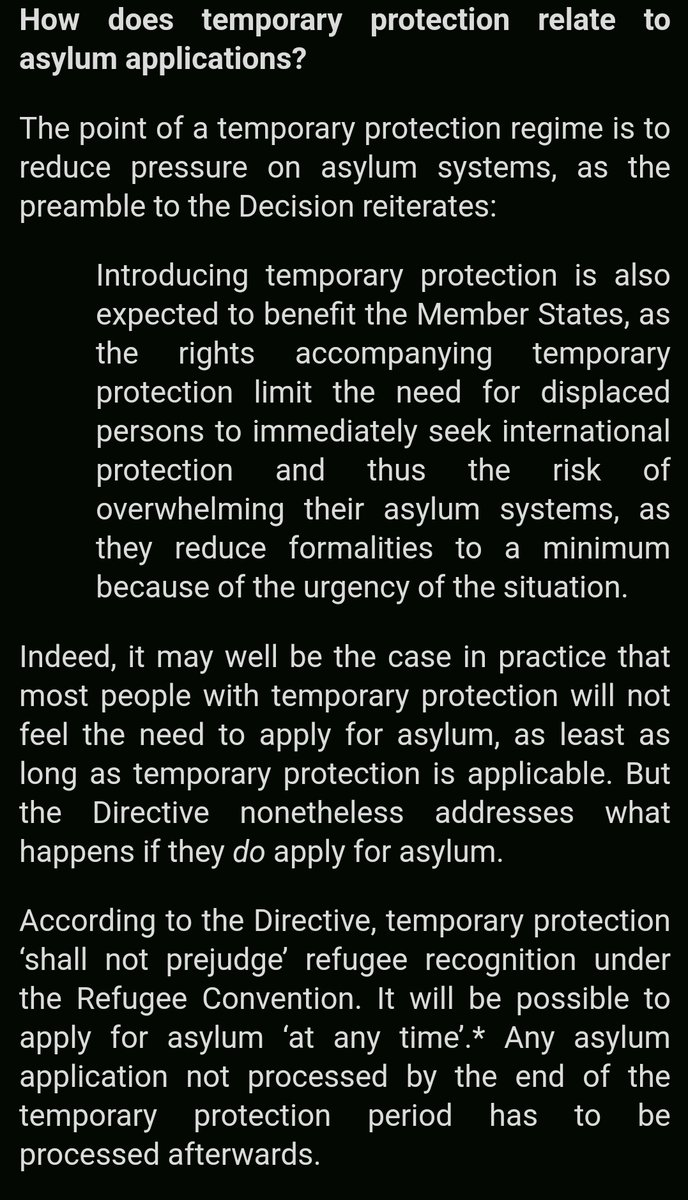
13/ At this point the Dublin system would apply, but it might be messy
14/ When temporary protection ends, the usual law applies
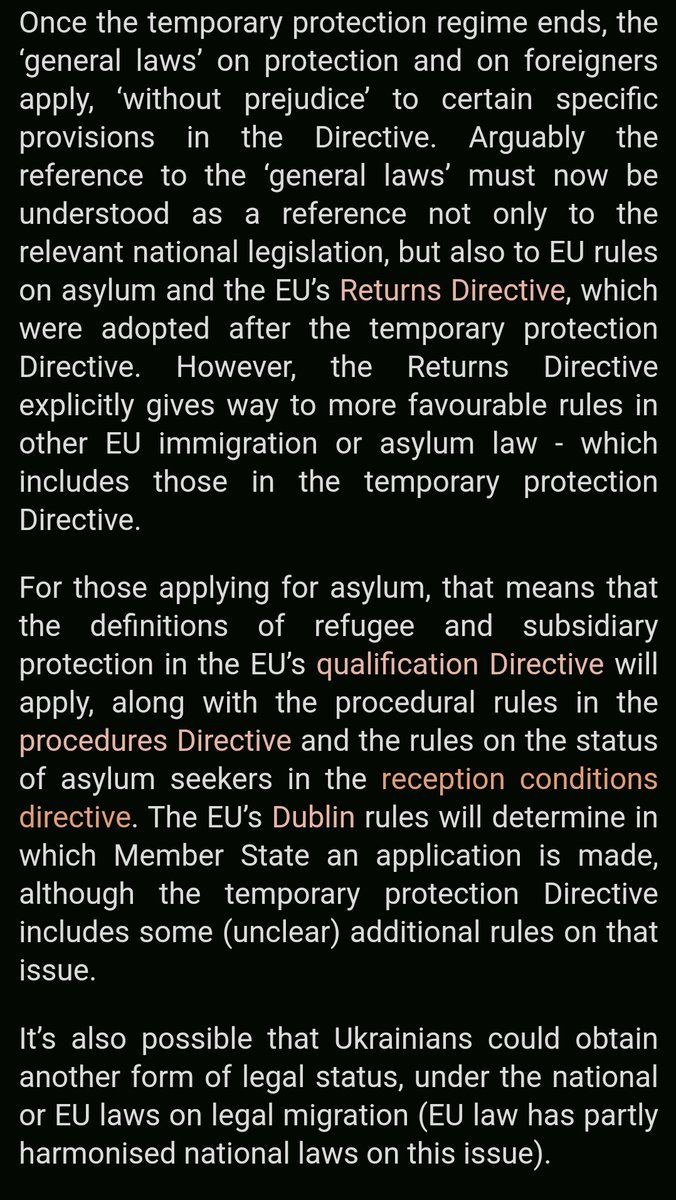
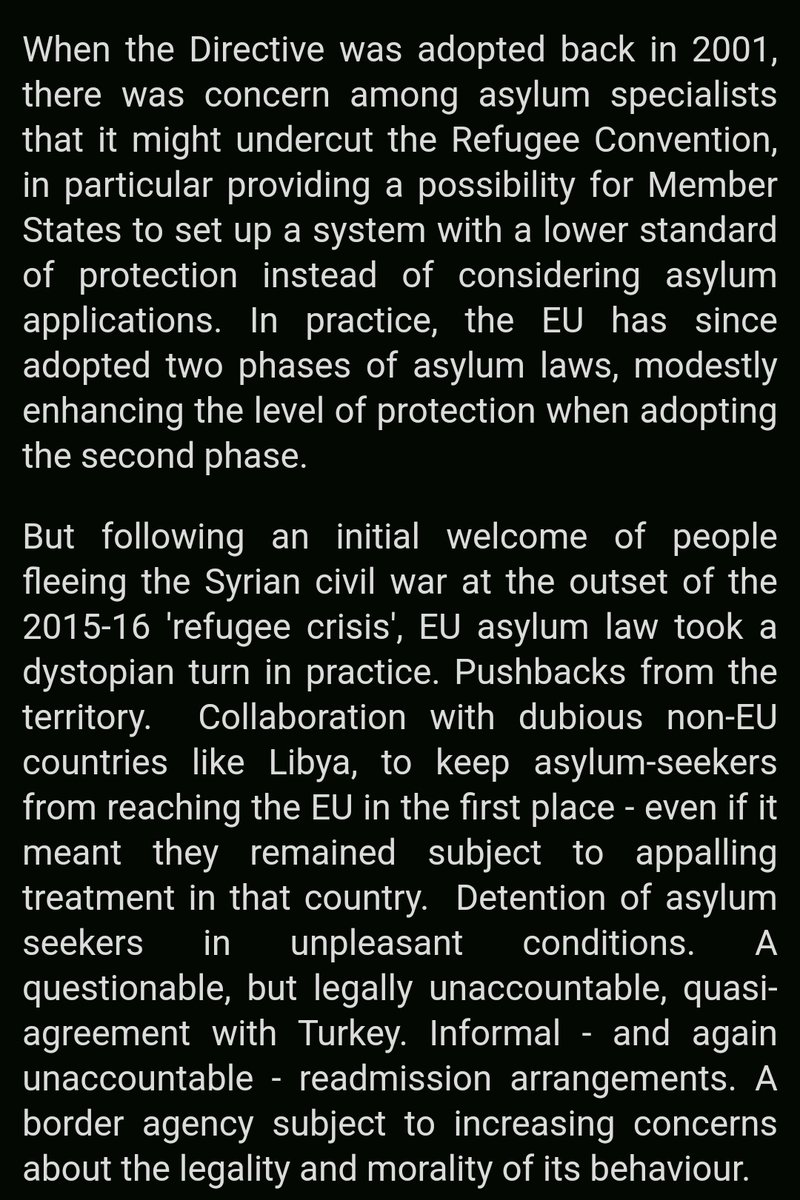
15/ Finally I have some views on how temporary protection compares to the usual awfulness of asylum law
• • •
Missing some Tweet in this thread? You can try to
force a refresh

1/ Imagine taking this guy seriously as a source of interpretation of EU law. In my field, the ultimate example of the Dunning-Kruger effect. Let's look at the claim in more detail.
2/ "illegal": Digital Services Act expressly provides for the possible negotiation of commitments from the platform
"Secret": Art 80 DSA expressly requires publication of those commitments
"Other platforms did a deal": according to the Commission, all other cases are pending
2/ "illegal": Digital Services Act expressly provides for the possible negotiation of commitments from the platform
"Secret": Art 80 DSA expressly requires publication of those commitments
"Other platforms did a deal": according to the Commission, all other cases are pending
2/ EU/UK youth mobility treaty proposal - questions and answers
Note equal treatment in tuition fees, points re traineeships, visa fees, health surcharges, application to all Member States - would UK government accept all this? (Also a question to ask Labour)
3/ EU/UK proposed youth mobility treaty - text of proposed Council decision and explanatory memo
Note it would also include family reunion (not further detailed at this point). Dispute settlement system of the Brexit deal would apply (not the CJEU) commission.europa.eu/publications/c…
2/ The context of the bill is the recently agreed Rwanda treaty. The issues in clause 1.3 *might* be enough to convince courts to change their mind on the safety of Rwanda since the Supreme Court judgment, but as we'll see it's a moot point: the bill dispenses with courts anyway.
3/ clause 1.4.b is correct: an Act of Parliament that breaches international law is still valid *domestic* law. BUT it will remain a breach of international law.
(We are likely to hear from people who do not understand these basic points)
2/ The spiel in the link confuses the two EU courts, which is not impressive. In fact the applicants in this case lost earlier in the EU General Court, then lost their appeal this year to the CJEU. And this omits to point out that the CJEU had ruled on the substance in June 2022.
3/ My comments on the previous judgment: '.
Because the Court ruled here that Brits lost EU citizenship because UK left the EU, it said this year that Brits had no legal interest to sue the EU to challenge the withdrawal agreement to get it back.eulawanalysis.blogspot.com/2022/06/its-en…
Profoundly ignorant on both points. A) the Good Friday Agreement requires compliance with the ECHR. That necessarily entails the Strasbourg Court. There's no legal route to saying that it applies but to the peace process only. 1/
2/ And the idea that it applies to the "peace process" but not "foreign nationals" is confused - for the obvious reason that some of those covered by the former ground may be Irish citizens.
3/ The Strasbourg Court jurisdiction is relevant to Northern Ireland for a very, very obvious reason: it had ruled that the UK had breached the ECHR in Northern Ireland after British courts had ruled that it had not. "Just rely on British courts" therefore misses the point.