

@washingtonpost reports billions of dollars from misconduct settlements are associated with a small number of police officers. The story gets even more interesting: high-misconduct cops create identifiable networks within departments. Here’s what we know about these networks🧵
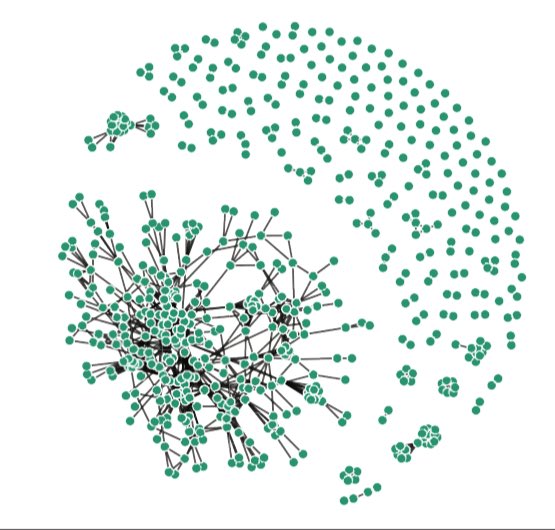
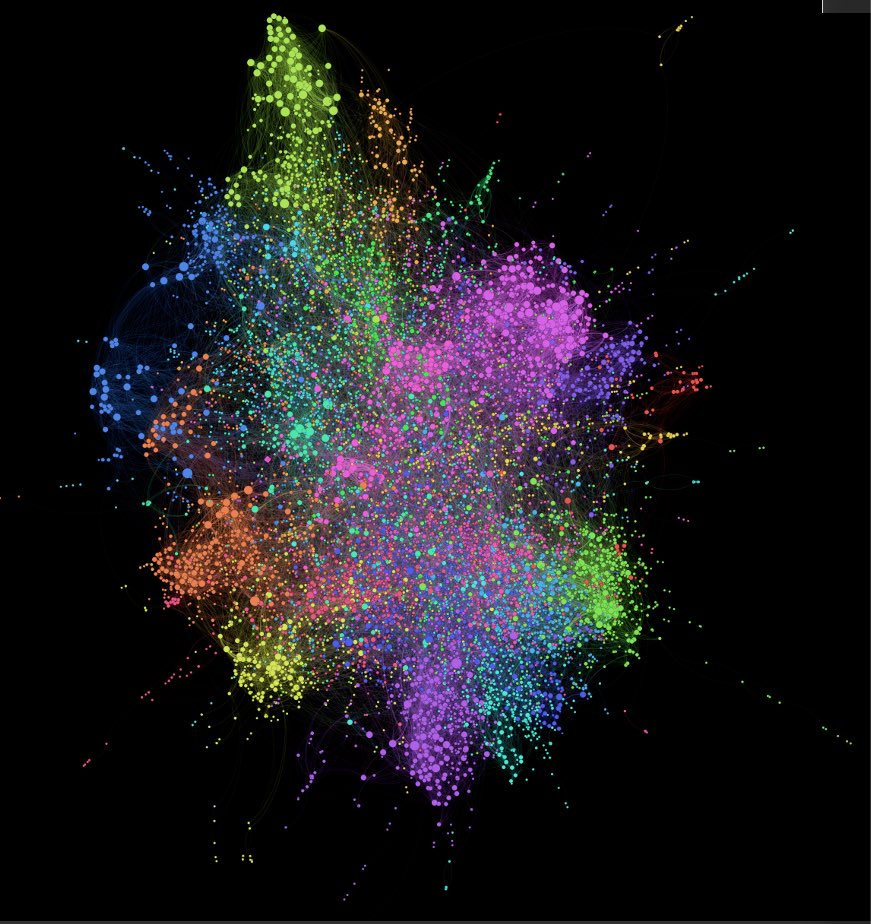
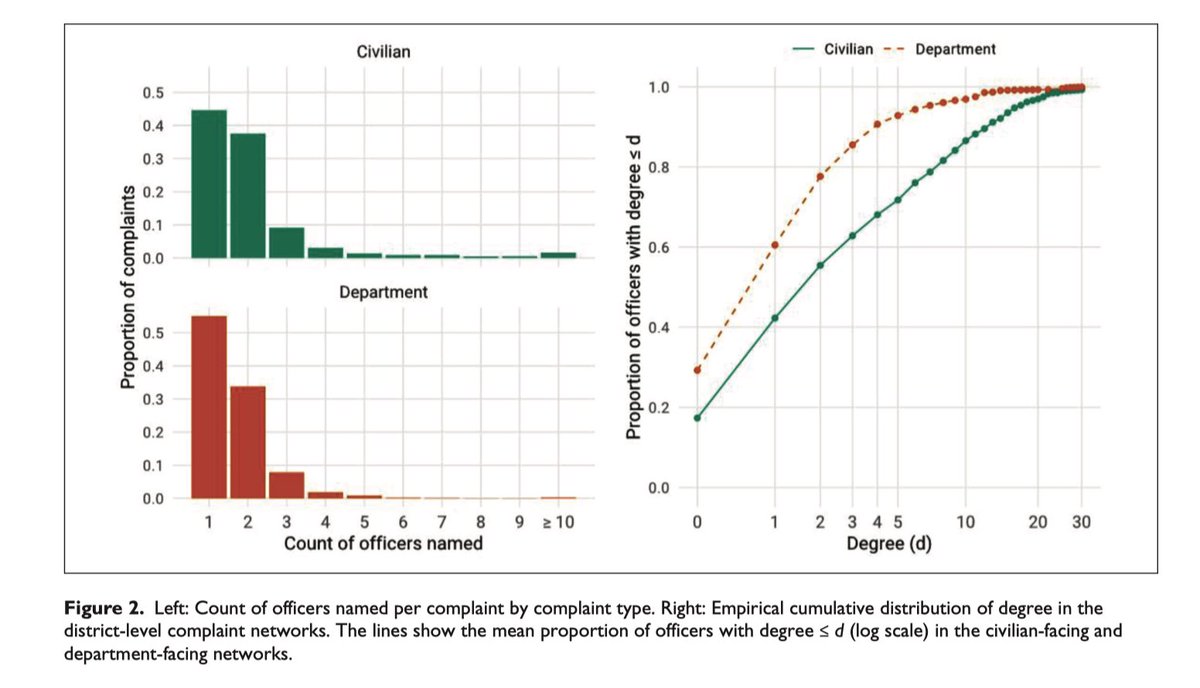
1. Almost half of all misconduct complaints in Chicago involve at least two officers and, over time, these misconduct ties string together to create identifiable networks. Which, even in a single police district, looks something like this: 
And for the whole city, the network looks something like this (colors are statistical clusters, modularity scores):
2. These networks—and the distribution of officers and behaviors in them—are decidedly non-random. journals.sagepub.com/doi/full/10.11…
3. The structure of these networks and officers’ placement in them can impact officer behaviors—including which officers fire their weapons at civilians. journals.sagepub.com/doi/full/10.11…
In a paper published in @TheAAPSS , @linda__zhao and I found that officers who shoot at civilians are often “brokers” occupying important positions between other cops and connecting otherwise disconnected parts of the the larger misconduct network
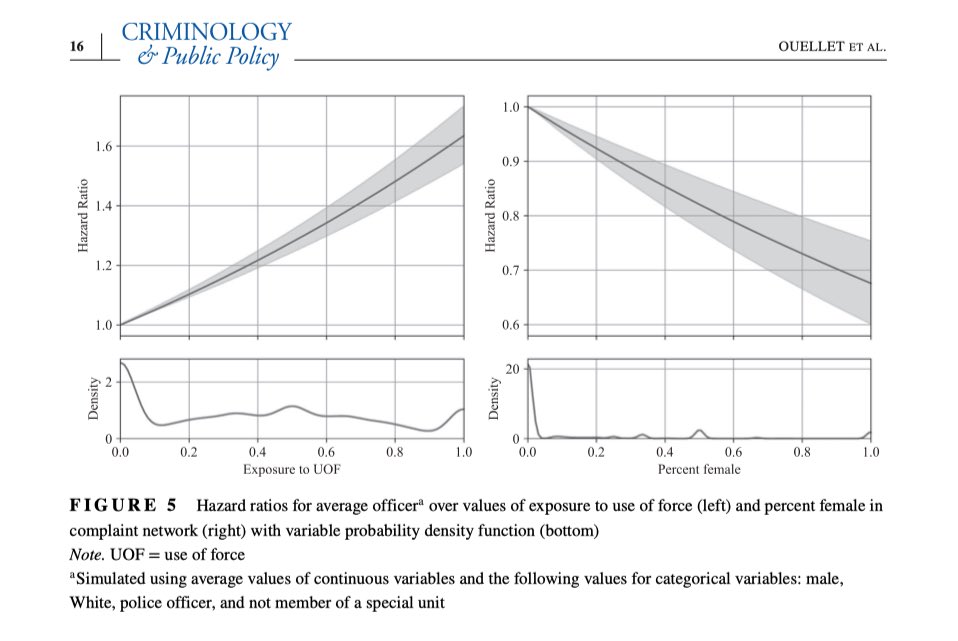
4. Some of this misconduct might be related to officers’ exposure to the misconduct of other officers earlier in their career. onlinelibrary.wiley.com/doi/abs/10.111…
In a paper with @GravelJ @sadaf_hashimi @ML_Ouellet in @CPPJournal , we found that officer involvement in excessive use of force complaints is partially predicted by having a greater proportion of co-accused peers with a history of such behaviors.
Obviously a lot left to learn, and our team at @N3Initiative are finishing up several new studies that dig deeper into these issues (a few R&Rs in the pipeline, so stay tuned).
While it’s important to understand the concentration of misconduct, the problem is much much deeper than just a few “bad apples.” Removing individual officers does not change police culture or dangerous policies and practices.
But removing problem officers—and high-misconduct officers—should be a no brianer.
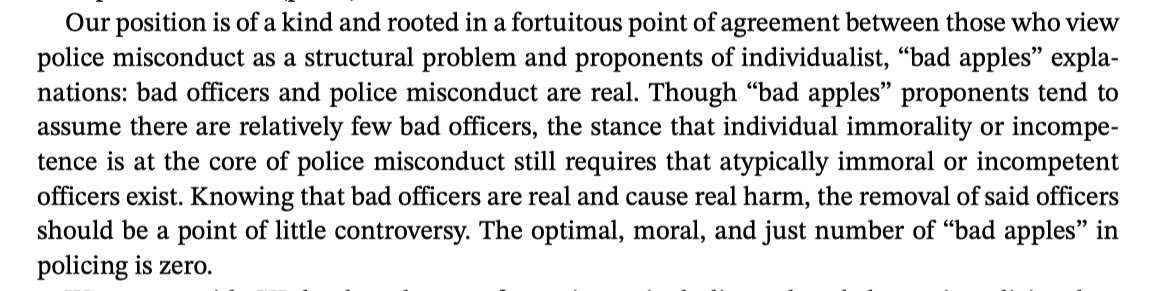
As @michaelsierraa and I noted: “Knowing that bad officers are real and cause real harm, the removal of said officers should be a point of little controversy. The optimal, moral, and just number of “bad apples” in policing is zero.” onlinelibrary.wiley.com/doi/abs/10.111…
@Thomasomas @CharlesFLehman @keithlalexander @dataeditor @HannahPThacker @invinst @michaelsierraa @IPRatNU @NUsociology
• • •
Missing some Tweet in this thread? You can try to
force a refresh



