Boeing E-4B Nightwatch in a 🧵
The Boeing E-4B is a militarized version of Boeing's 747. It is designated the National Airborne Operations Center (NAOC) and is designed to board the National Command Authority (NCA) in the event of a nuclear strike.
1/
The Boeing E-4B is a militarized version of Boeing's 747. It is designated the National Airborne Operations Center (NAOC) and is designed to board the National Command Authority (NCA) in the event of a nuclear strike.
1/

First deployed in January 1980, the E-4B is also known as the doomsday plane. It accommodates a crew of up to 112 and has an endurance of 12 hours unrefueled and a range of 6,200 miles. It is capapble of air/air refueling. The aircraft can stay aloft for up to 7 days with AAR
2/
2/
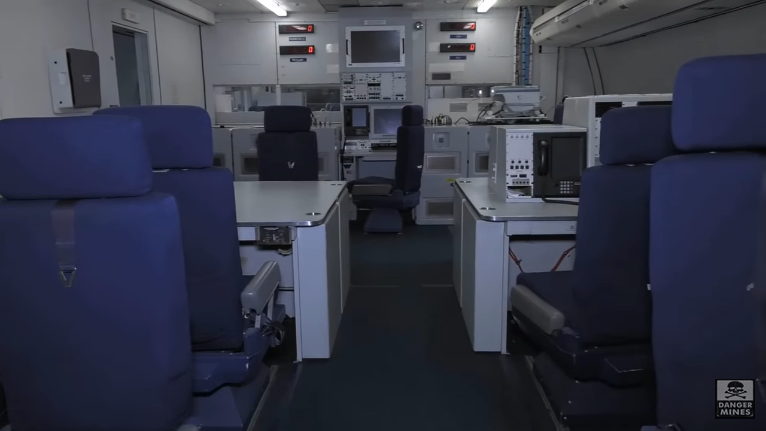
In case of national emergency or destruction of ground command and control centers, the aircraft provides a highly survivable command, control and communications center to direct U.S. forces, execute emergency war orders and coordinate actions by civil authorities.
3/
3/

The E-4B is protected against the effects of electromagnetic pulse and has an electrical system designed to support advanced electronics and a wide variety of communications equipment from VLF to UHF SatCom. (14kHz to 8.4gHz).
4/
4/

An advanced satellite communications system provides worldwide communication for senior leaders through the airborne operations center. This is facilitated by the dome on the top of the forward fuselage.
5/
5/

To provide direct support to the President, the Secretary of Defense, and the JCS, at least one E-4B NAOC is always on 24-hour alert, 7-days a week, with a global watch team at one of many selected bases throughout the world.
6/
6/

In addition to its national and NC2 mission, the E-4B provides support to the Federal Emergency Management Agency, which provides communications and command center capability to relief efforts following natural disasters, such as hurricanes and earthquakes.
7/
7/

The USAF Strategic Command operates a fleet of four E-4Bs who rotate between alert, training, and maintenance duties. Currently one E-4B is in long term maintenance in San Antonio, Tx.
8/
8/

The main deck is divided into six functional areas: a command work area, conference room, briefing room, an operations team work area, and communications and rest areas.
9/
9/

The upper deck is comprised of the flight deck, a crew rest area, and a lounge area. The flight crew consists of an aircraft commander, co-pilot, navigator and flight engineer. A special navigation station, not found on regular 747s, is also in this area.
10/
10/

The forward lower equipment room contains the aircraft's water supply tanks, 1200 kVA electrical power panels, step down transformers, VLF transmitter and SHF SATCOM equipment.
11/
11/
The E-4B is designed to survive an EMP with systems intact and has state-of-the-art direct fire countermeasures. The E-4B still uses traditional analog instruments, as they are less susceptible to damage from an EMP blast.
12/
12/

Fun fact: it takes TWO fully loaded KC-135 stratotankers to fully refuel the E-4B.
13/
13/

Source Material:
af.mil/About-Us/Fact-…
military.com/equipment/e-4b
military-history.fandom.com/wiki/Boeing_E-4
14/End
af.mil/About-Us/Fact-…
military.com/equipment/e-4b
military-history.fandom.com/wiki/Boeing_E-4
14/End
• • •
Missing some Tweet in this thread? You can try to
force a refresh