

Intro to bonds and why they are at risk.
I'll be simplifying important concepts in finance and investing and explaining how they are relevant today.
In this thread:
- What are bonds
- Risks to bonds
- Is the bond market breaking?
Let's dive in 🧵👇
I'll be simplifying important concepts in finance and investing and explaining how they are relevant today.
In this thread:
- What are bonds
- Risks to bonds
- Is the bond market breaking?
Let's dive in 🧵👇
The bond market is in a difficult place. With rampant inflation and interest rates on the rise, you will likely start seeing a lot of headlines on how monetary policy will affect bond prices.
https://twitter.com/MacroAlf/status/1502019075299594247?s=20&t=RDQf__V-IHGqJrPrrET2vQ
Debt is money that is owed by one party to another. The borrowing party will borrow the money with the condition that they will pay it back at a future date, usually with interest.
Bonds are debt instruments that are commonly used by governments and corporations to raise capital. The borrower will issue a bond, and a bank or other institution will lend the capital to the borrower, with an obligation to be paid the full amount plus interest at a later date.
The main components of bonds are:
1. Face Value, also known as par value - This is the value that the bondholder will receive at maturity.
2. Coupon rate - This is the annual rate of interest payable on the bond. Coupons are generally paid semiannually.
1. Face Value, also known as par value - This is the value that the bondholder will receive at maturity.
2. Coupon rate - This is the annual rate of interest payable on the bond. Coupons are generally paid semiannually.
3. Maturity date - Date at which the money that is loaned will be returned. Longer maturities generally offer higher interest rates.
Example:
Face value: $1,000
Coupon: 4%
Maturity: 20 years
Bank purchases the bond and pays the issuer $1,000 today. In return, they will receive coupon payments amounting to $40 every year for 20 years. At maturity, the bank will receive the face value of $1,000.
Face value: $1,000
Coupon: 4%
Maturity: 20 years
Bank purchases the bond and pays the issuer $1,000 today. In return, they will receive coupon payments amounting to $40 every year for 20 years. At maturity, the bank will receive the face value of $1,000.
The example assumes a fixed coupon rate (coupon payments will not change during the entire lifetime of the bond).
Many bonds provide variable or floating interest rates - coupon rate will adjust according to benchmark rates. If interest rates rise, so will the coupon payments.
Many bonds provide variable or floating interest rates - coupon rate will adjust according to benchmark rates. If interest rates rise, so will the coupon payments.
Bonds vs Stocks
With common stock, you own equity in a company and will receive any dividends paid by the company.
With corporate bonds, you do not own any equity. You receive only the principal and the interest, regardless of how the share price of the company moves.
With common stock, you own equity in a company and will receive any dividends paid by the company.
With corporate bonds, you do not own any equity. You receive only the principal and the interest, regardless of how the share price of the company moves.
Risks
Bonds are like any other investment in that they carry risks.
Credit / Default Risk - the company may fail to make timely payments of interest or principal. This is why the creditworthiness of the company is an important consideration. More on credit ratings later.
Bonds are like any other investment in that they carry risks.
Credit / Default Risk - the company may fail to make timely payments of interest or principal. This is why the creditworthiness of the company is an important consideration. More on credit ratings later.
Interest Rate Risk and Bond Prices - Interest rates and bond prices have an inverse relationship. When interest rates fall, bond prices go up. When interest rates rise, bond prices fall.
Why is there an inverse relationship? If interest rates rise, new bonds will be issued with higher coupon rates. So existing bonds that have lower coupon rates will be less attractive and will decline in price.
Inflation Risk - Investors who buy bonds are committing to receiving a rate of return for the time that the bond is held. As inflation increases, the real rate of the return from the bond will decrease. Current real rates for most bonds are significantly negative.
Here’s what the SEC has to say about interest rate risks: 

And here is a depiction of the historically low-interest rate environment that we are in right now:
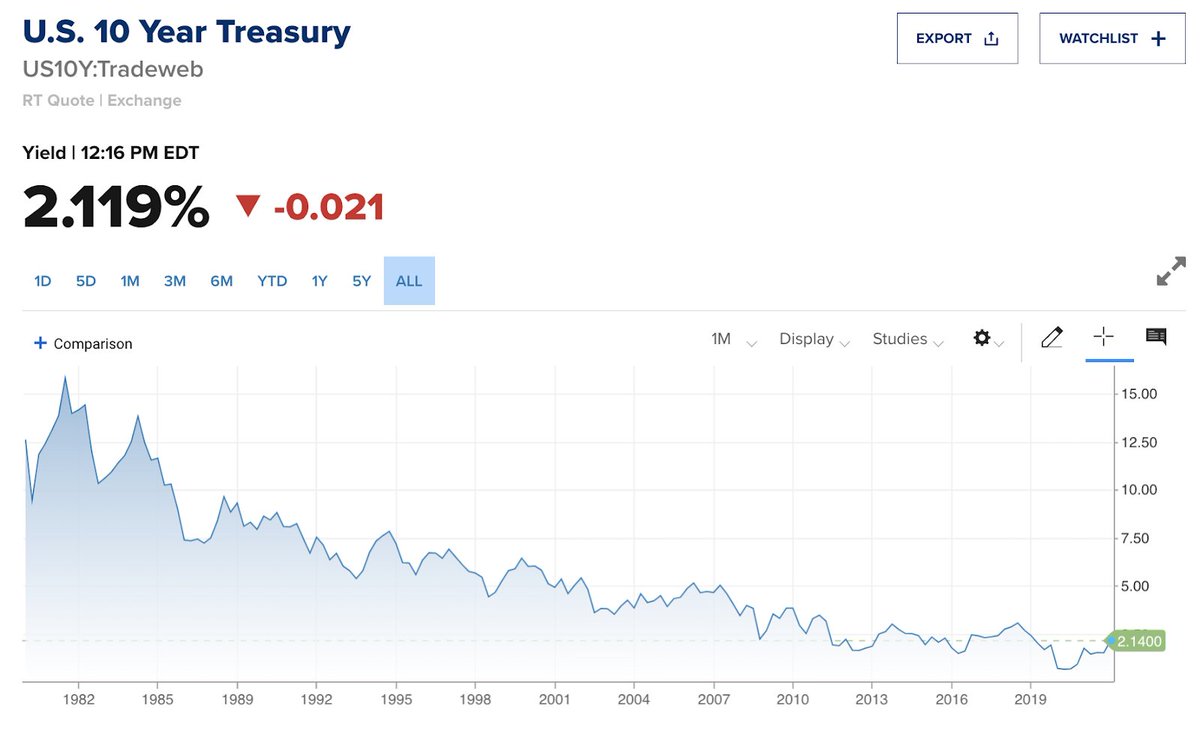
All while inflation is hitting levels that we haven’t seen in over 40 years. Inflation which is being exacerbated by geopolitical tensions and supply chain breakages that are unlikely to resolve soon.

Credit Ratings
A corporate credit rating assesses a company's creditworthiness, which shows investors the likelihood of a company defaulting on its debt obligations.
There are three main rating agencies:
1. Moody’s
2. Standard & Poor’s (S&P)
3. Fitch
A corporate credit rating assesses a company's creditworthiness, which shows investors the likelihood of a company defaulting on its debt obligations.
There are three main rating agencies:
1. Moody’s
2. Standard & Poor’s (S&P)
3. Fitch
Highest rated investments should have the lowest default risk, but also provide the lowest return. Junk grade bonds have a higher default risk but should provide a higher return due to elevated risk.
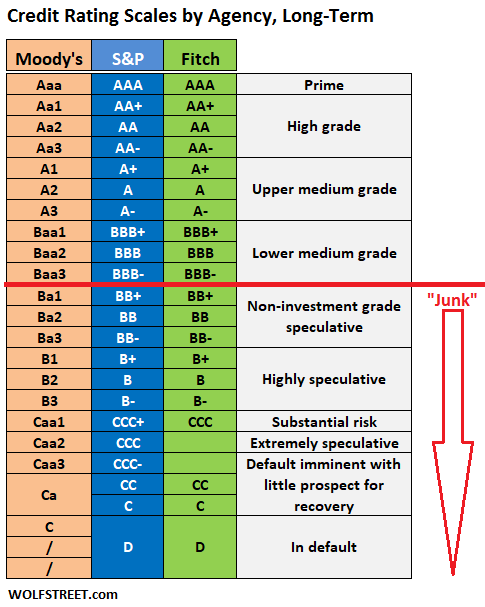
Why is this relevant now?
Many companies with poor creditworthiness have been able to take advantage of the low interest rate environment to finance their operations without having to make heavy interest payments.
Many companies with poor creditworthiness have been able to take advantage of the low interest rate environment to finance their operations without having to make heavy interest payments.
As rates rise, this could spell trouble for companies that are highly indebted, have a low cash balance and have low to no profitability.
Roughly 20% of companies in the US are “zombie” firms, meaning that they pay more in debt servicing costs than they make in profits.
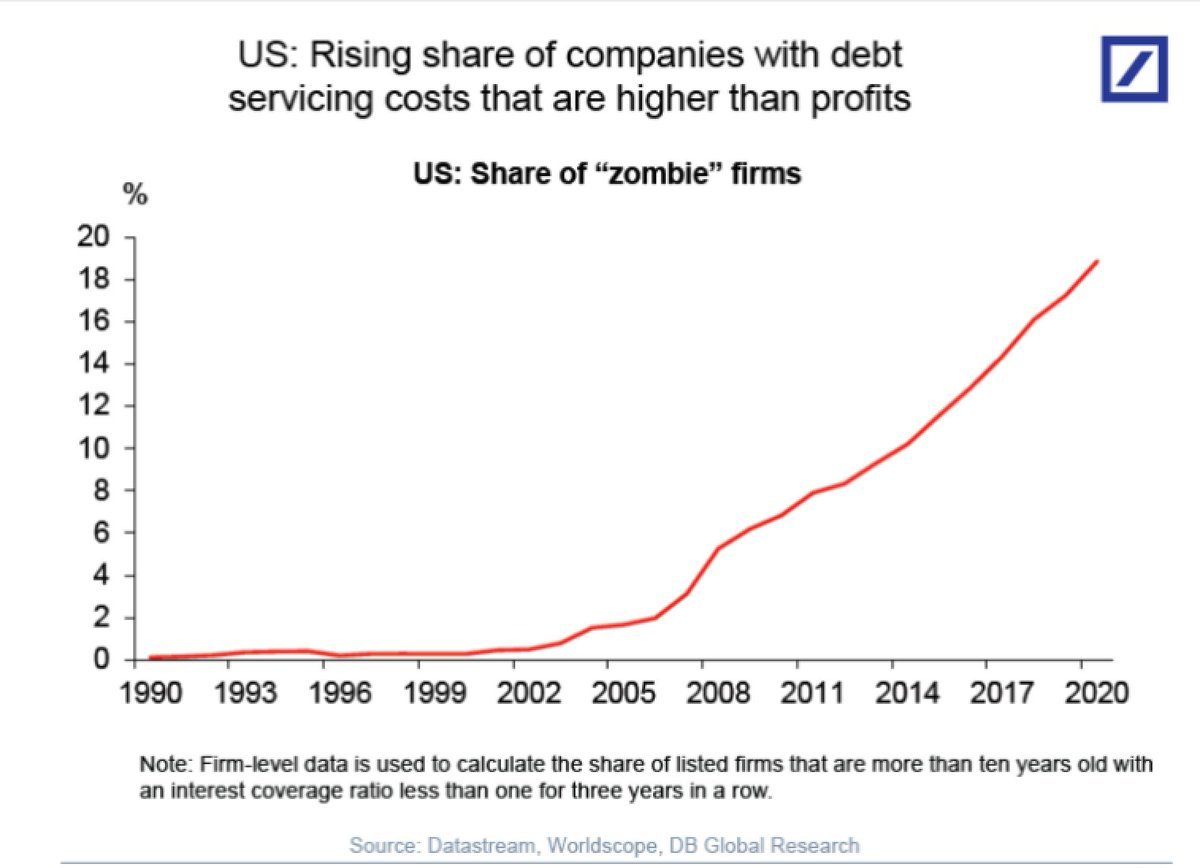
When interest rates rise, the interest payments rise, putting zombie firms in a difficult position to pay off their debt. Default risk may increase significantly for companies with weaker credit ratings, and there are a lot of them.
The Secondary Market
Bonds don’t need to be bought directly from the issuer and held to maturity. Investors can trade bonds with other investors in what’s called the secondary market.
One of the most common ways to get exposure to bonds is by buying a Bond ETF on an exchange.
Bonds don’t need to be bought directly from the issuer and held to maturity. Investors can trade bonds with other investors in what’s called the secondary market.
One of the most common ways to get exposure to bonds is by buying a Bond ETF on an exchange.
Bonds are starting to break
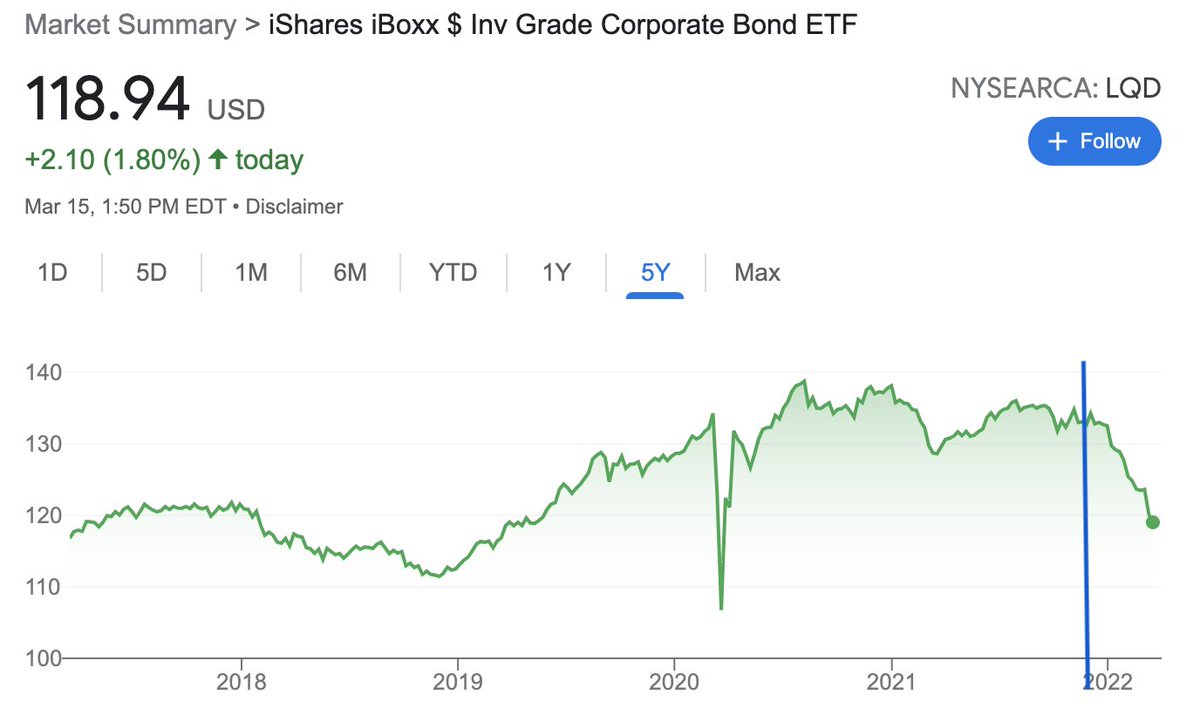
Let’s look at some Bond ETFs to see how the previously mentioned risks are starting to get priced in:
Let’s look at some Bond ETFs to see how the previously mentioned risks are starting to get priced in:
$LQD - Investment Grade Corporate Bond ETF
$HYG - High Yield Corporate Bond ETF

The blue line denotes November 30th, 2021… the day that the Fed adopted a more hawkish tone and decided to retire the word “transitory” when referring to inflation.
It only took a few weeks for these ETFs to start grinding down, as it became accepted that inflation will likely persist at elevated levels and that interest rates will be on the rise.
Final Thoughts
Bonds have been in a bull market for over 40 years, as seen by falling yields and increasing bond prices. While most investors see bonds as a safe haven, and an investment that has worked for decades, the risks today are incredibly elevated.
Bonds have been in a bull market for over 40 years, as seen by falling yields and increasing bond prices. While most investors see bonds as a safe haven, and an investment that has worked for decades, the risks today are incredibly elevated.
Bond ETFs are starting to break in the face of what seems to be an inevitable rise in interest rates, and elevated inflation that will likely get worse with global crises such as Russia’s invasion of Ukraine and continued lockdowns and supply chain disruptions from the pandemic.
It is likely that these risks haven’t been fully priced into bonds, and more pain is likely to hit this asset class in the coming months.
If you enjoyed this thread and would enjoy more breakdowns on the fundamentals of finance, please give me a follow! Retweeting the linked tweet below is greatly appreciated.
Upcoming threads:
- Credit Spreads
- Commodity Cycles
- Your suggestions!
Upcoming threads:
- Credit Spreads
- Commodity Cycles
- Your suggestions!
https://twitter.com/vishalinvests/status/1504172581745741824?s=20&t=If2uwefZLAx88rgzyroN_A
Some great accounts that are helping me deepen my knowledge about credit markets and the macro environment in general.
@MacroAlf
@lisaabramowicz1
@NorthmanTrader
@WEquilCapital
@TheBondFreak
@MacroStratChris
@dlacalle_IA
@DeanBaker13
@MacroAlf
@lisaabramowicz1
@NorthmanTrader
@WEquilCapital
@TheBondFreak
@MacroStratChris
@dlacalle_IA
@DeanBaker13
• • •
Missing some Tweet in this thread? You can try to
force a refresh



