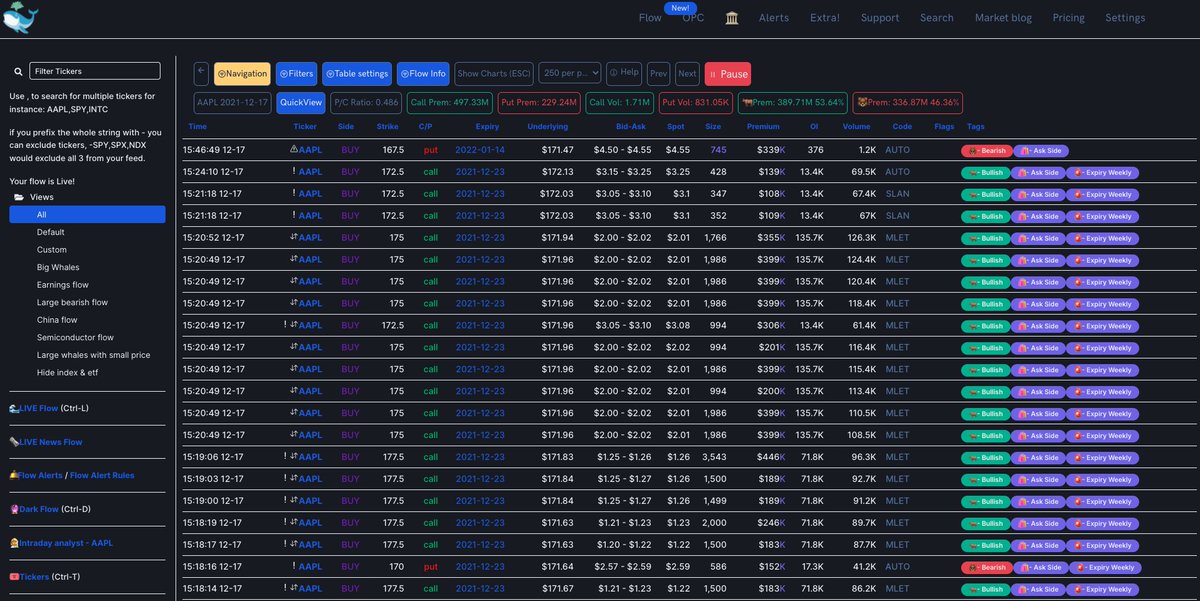
🚨Identifying Trends Thread🚨
(1/9) A trend is a pattern in which a particular asset is moving. Stocks can form bullish trends, bearish trends or assets may not have an established trend at certain times. Identifying a trend can not only result in a profitable trade, it can avoid a loss as well.
(2/9) Stocks and other assets are just perceptions of value. These perceptions can be interpreted completely differently when the asset shows a different trend. Trading is anticipating + timing these same perceptions of value before they change in either direction.
(3/9) On a broad perspective, I keep $DJI, $SPX, $RUT, $IXIC, $NYA, and $BTC at the top of my watchlist. Even though I will never add a trade solely based on these indexes, they allow me to have a general idea of how the market is doing overall.
(4/9) On a more technical perspective, I look to see higher lows across 1M candles for bullish trends and lower highs on 1M candles for bearish trends. I personally do not consider it a trend until three minutes have elapsed maintaining lower highs/ higher lows.
(5/9) Bullish trends are formed when buying volume outweighs the selling volume over the course of the trend. Bearish trends are the opposite.
(6/9) Sometimes, we notice stocks struggling to form a trend in either direction. We often call this chop. Chop is formed when there is relatively similar amount of buying and selling volume. When they are close, they basically cancel out, this prevents breakthroughs both ways.
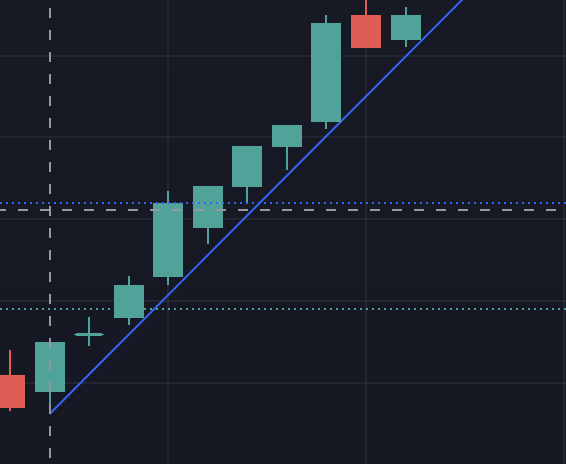
(7/9) I like to use the the “Ray” tool on @tradingview . To identify a bullish trend I like to start by placing the first point at the low of the minute where the trend begins. Next, I place the other point at the low where the trend ends. 
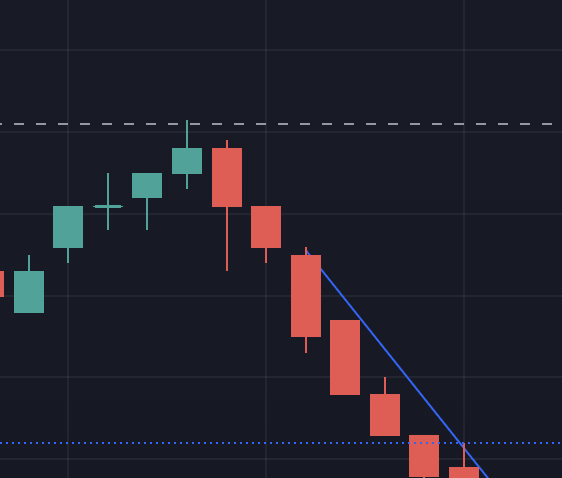
(8/9) When I am looking at a bearish trend, I like to use the same process but with lower highs instead.
(9/9) Thank you for taking the time to read! I have many more threads on the way for you guys! Feel free to share with anyone! Thank you for all of your support!❤️
• • •
Missing some Tweet in this thread? You can try to
force a refresh