What connects a town on India’s Malabar Coast, a British war hero who vanquished Napoleon and the most English of games, cricket – a thread (1/n)
An ancient spice trade hub, the town of Thalassery (erstwhile Telicheri) in Kerala, saw the arrival of the British East India Company in 1694 (2/n)
Over the next 100 years, the British consolidated their control over Thalassery until revolts by local princes and rulers in the late 18th century started undermining their supremacy (3/n)
Thus in 1800 arrived at Thalassery, fresh from vanquishing Tipu of Mysore, Col. Arthur Wellesley to take charge as the commander of Malabar, South Canara and Mysore (4/n)
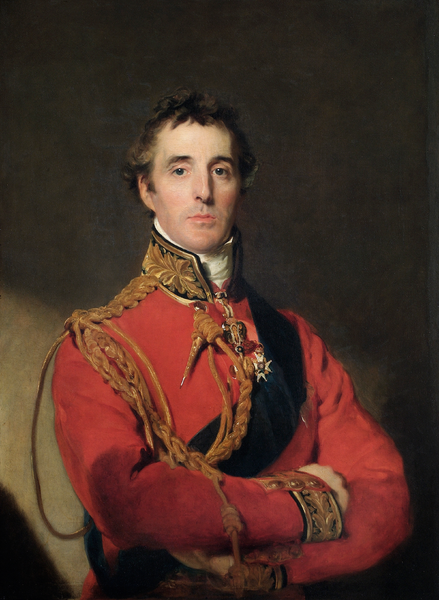
In time, he would add further laurels to his name, defeating the formidable Napoleon Bonaparte at Waterloo (5/n)
When he was not detained by affairs of the state, Col. Wellesley was, according to local folklore, often found playing cricket at the town ground with his colleagues (6/n)
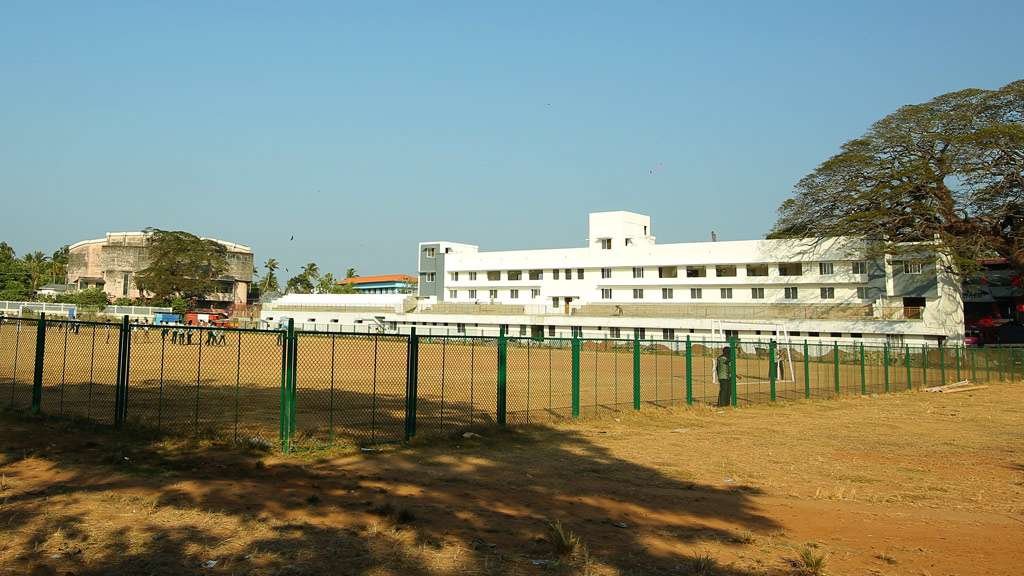
But with Thalassery not being a very large station, sometimes the Englishmen were short of hands.
And thus something very unique happened which possibly didn’t happen yet in Calcutta, Bombay or Poona (7/n)
Locals, who often stood watching Wellesley and his men enjoying a game, were frequently called up to join them. Most popular were the dhobi lads who washed clothes near the ground and the fishermen from the nearby beach (8/n)
Although Wellesley left India in June, 1804, the cricketing tradition endured at the town. Over time, some of these locals became so good at the game that when regiments were transferred out, they took their “local recruits” with them (9/n)
Verbal tales recount the exploits of some of these men like “Dhobi” Ebru who would rush back to his washing duties after putting down a few overs and “Sixer” Kunjipakki who as his nick-name suggests, was famous for his huge hits (10/n)
Then there was “Anson” Abubaker, a wicket-keeper renowned for standing right up to the stumps to even fast bowlers (11/n)
And long after Wellesley, another English hero would also have a tryst with Thalassery and its cricket grounds. Colin Cowdrey, the first man to play 100 test matches, was born in a tea estate in Ootacamund where his father was the manager (12/n)
The senior Cowdrey, an avid cricketer, was part of a planters’ cricket team who regularly came to play at Thalassery. Little Colin accompanied his father and was often found taking on bowlers with a bat usually bigger than him! (13/n)
In 1930, a cricket team owned by the Maharajakumar of Vizianagaram visited Thalassery to take on the local Thalassery Cricket Club, raising the prestige of Thalassery cricket by several notches (14/n)
In 2002, to celebrate 200 years of Thalassery Municipal Stadium, a cricket match was played between Indian and Sri Lankan teams (video link)
(15/n)
If you have ever tasted a Vietnamese cà ri, you must have felt a slight tinge of French and Indian flavours wriggling in your mouth. This melting of flavours is not by accident but by design that has a curious back story. A thread. #travellingsOftheIndianCurry 1/n
Phan Xich Long in the Phu Nhuan District is one of Ho Chi Minh City's (formerly Saigon) most bustling streets redolent of street food. The shops lined up on the streets offer up a variety of Vietnamese cuisine, one particularly interesting item being the cà ri. 2/n
The Vietnamese cà ri is, however, not considered on the same plane as other street food like phở, bún bò Huế or hủ tiếu. It’s a dish mostly eaten in the comfort of a home and has strong connections with the sub-continent. 3/n
This is the story of a forgotten newspaper that was in a league of its own, a banned daily that fueled India’s first war of independence, the indomitable Payam-e-Azadi (1/n)
On the afternoon of 29 March 1857, Mangal Pandey, a sepoy of the 34th Bengal Native Infantry in Barrackpore, rebelled against his commanders, marking the inception of the Great Indian Sepoy Rebellion (2/n)
A month earlier, Dewan Azimullah Khan, the secretary of Nana Saheb, returned from England and Constantinople with a French printing press and a great vision of publishing a patriotic firebrand newspaper (3/n)
In every Bengali kitchen, “Potol-er Dorma” is a delicacy. A thread on the remarkable journey of the dish that tells an exciting story of cosmopolitan Calcutta and landmark immigration (1/9)
Readers who have experienced Mediterranean or Balkan cuisine would already be aware of the Turkish delicacy Dolma, a family of stuffed dishes mostly served as an appetizer (2/9)
Dolma is Turkey's national dish, where traditionally grape leaves are stuffed with rice and ground meat. The word dolma comes from dolmark in Turkish, which means 'to be stuffed’ (3/9)
A short thread on how nationalistic sentiments came to engulf Madras’ theater world in the early 20th century creating a long-lasting legacy of using the stage as a medium of protest. #WorldTheatreDay 1/n
India at the beginning of the 20th century was beaming with nationalist fervor and anti-colonial sentiments and it was showing itself in all forms, especially in forms of performing arts and theatre. 2/n
Though Bengal was considered a pioneer in protests through the stage, it was not long before other regions of the country started using it as a medium. 3/n
As the cricket crazy nation heads into another cricket season, we look back at one of the first ladies of Indian cricket. The daughter of a legend and a star in her own right. A thread on the indomitable and multitalented Chandra Nayudu. 1/n
Chandra was the youngest of the three daughters of the legendary Col C.K. Nayudu from his first wife. Her love and adulation for the game must have started at an early age seeing her father, the country's test first captain play and preach the game. 2/n
Nayudu hailed from Indore, one of the largest cities in Central India and home to the princely Holkar dynasty. The city also has strong affiliations towards the game of cricket. 3/n
It was no less than a spy thriller when a fearless 22-year-old Usha Mehta from Surat ran an underground radio station to fight the British colonial forces. On her birthday, a thread on India’s bravest radio jockey, fondly known as Radio-Ben, and her secret Congress Radio. 1/n
Circa 1942 when all the prominent media were under constant British surveillance, a certain Usha Mehta emerged. She grew up highly influenced by Gandhi and was only eight when she joined the protest against the Simon commission. 2/n
1942 was a terrible time for the Indian press, as the prominent editors were forced to suppress all news on Congress activities to isolate the mass from the momentum of the freedom movement. 3/n