

Longer piece will run tomorrow or Tuesday, but until then, a few thoughts on this constitutional crisis:
Uh, post-Iftar, that is. Ramzan Mubarak 🌙
Have said for a while that it would be in keeping with Pakistan's slow but steady progress as a parliamentary republic that the PM complete his term. 21 other prime ministers came and went, and never could. The vote of no-confidence, while legal, was unprompted by any new events.
Except one: the sound of the same-page tearing. After Notificationgate, the estab put up a big banner of ‘neutrality’. We’ll find out in time, as everyone always does, how true such neutrality was. Regardless, the PTI saw this as a repudiation; N and PPP saw it as an invite.
The no-confidence resolution was submitted on 8 March.
Soon after, the PM spoke of a foreign conspiracy. Per the Speaker’s eventual ruling, Islamabad received a cable on 7 March from Pakistan’s ambassador, who'd met a foreign official.
Soon after, the PM spoke of a foreign conspiracy. Per the Speaker’s eventual ruling, Islamabad received a cable on 7 March from Pakistan’s ambassador, who'd met a foreign official.

According to the PM, the official was Donald Lu, an assistant secretary of state for South Asian Affairs in the Biden administration. We still don’t know, beyond what's implied, what exactly was in the cable.
But, as with most Drobama-Biden scolds, whatever Lu said amounted to ‘undiplomatic language’ and ‘blatant interference’, per the National Security Committee. The NSC said it would respond according to diplomatic channels. Press release here: pid.gov.pk/site/press_det…
The NSC handout doesn’t point to parliamentarians as complicit in said interference.
Per PTI voices, that's owing to the 'neutral' language.
Per PTI voices, that's owing to the 'neutral' language.
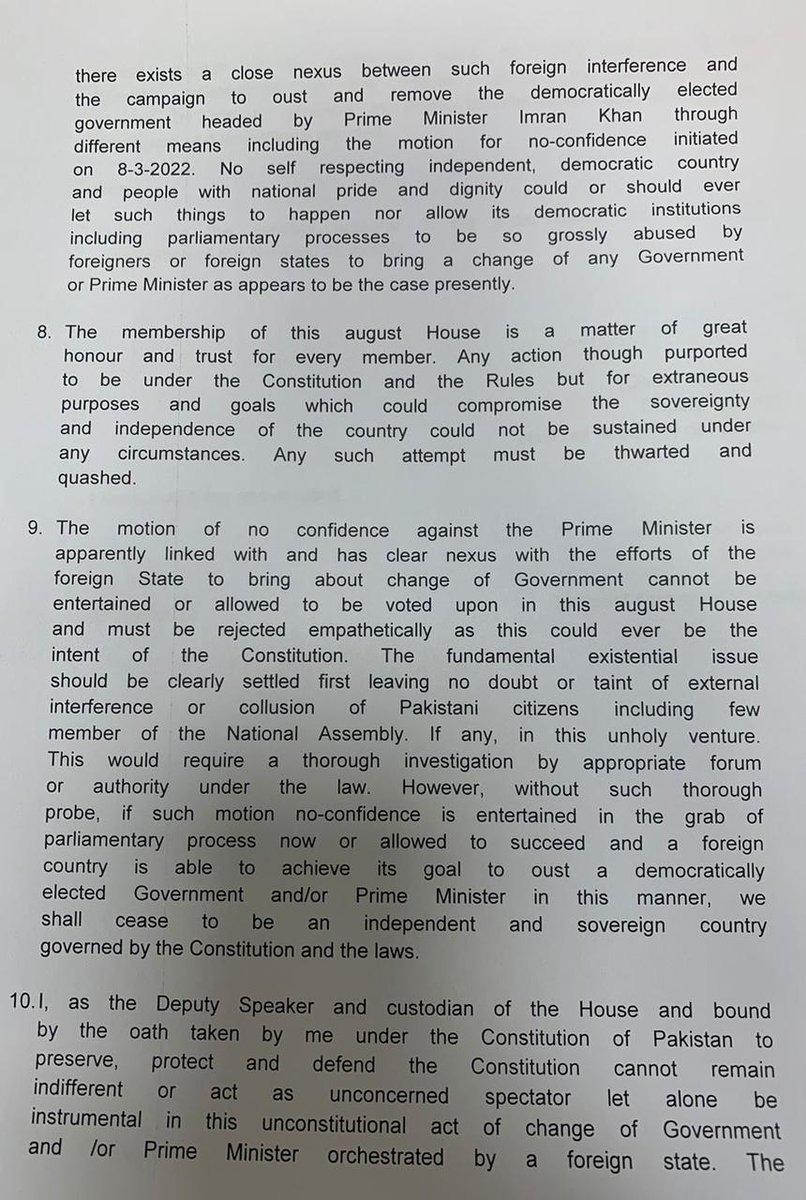
But the Speaker’s ruling doesn't go much further either. It says there’s an ‘apparent nexus’ that needs ‘to be clearly settled first’ whether Pakistanis are colluding. It calls for an investigation to determine complicity, ‘if any’ in this ‘unholy venture.’ Doesn't go beyond.
Regardless of what think-tank bros say, we have a history of foreign interference, whether it be Raymonds here or native informants there. In 2011, as determined by the Supreme Court, one ambassador-turned-useful idiot was found writing memos to the US seeking foreign occupation.
But even forgetting the domestic triggers to this vote of no-confidence – from, primarily, the same page falling apart, to Usman Buzdar in Punjab, to PTI-Sugar and PTI-Qabza screaming revenge – the Speaker himself has called it a case for further probe.
So, while it’s hardly unimaginable that the US wouldn’t like a noisy anti-American in charge, and would say so via Donald Lu type droids, neither the Speaker’s ruling nor the law minister have brought on record any material pointing to the local opposition colluding.
Why complicity is important is because the Speaker’s ruling was initiated by the law minister’s reference to Article 5 – loyalty to the state, reproduced here:
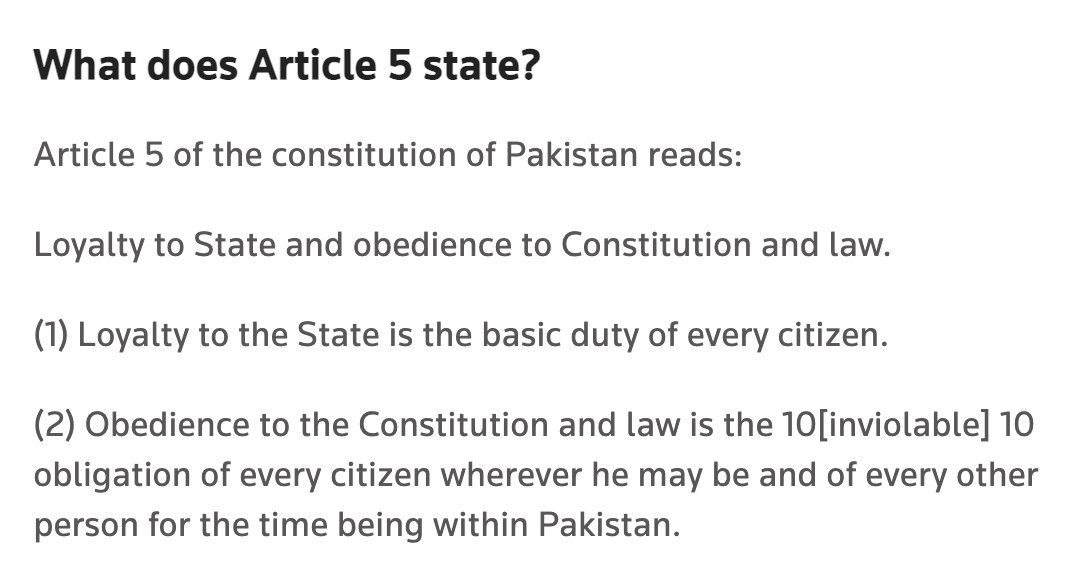
Presuming that a foreign conspiracy was set in motion to overthrow the PM, the law minister and Speaker have as yet not provided any material that links the opposition bringing a vote of no-conf. with disloyalty to the state. A probe could have been moved well before 3 April.
Investigation may have proven (or disproven) collusion.
But we only have the facts as they existed on 3 April. And accusing scores of parliamentarians of disloyalty has to be backed up with more than an undisclosed cable that so far doesn’t mention the fact of their complicity.
But we only have the facts as they existed on 3 April. And accusing scores of parliamentarians of disloyalty has to be backed up with more than an undisclosed cable that so far doesn’t mention the fact of their complicity.
Similarly, crying treason for the deputy speaker – in a land where even Pervez Musharraf’s conviction was frustrated – mocks Article 6. Treason is for when Musharraf orders mass arrests, kidnaps judges, and forces emergency. Mr. Suri's act, however disastrous, wasn't treason.
We'll turn to the Articles that actually apply.
Mainly, Article 58 (former parent to problem child 58-2-b), where the explanation is clear.
The PM cannot dissolve the assembly when 'a vote of no-confidence has been given...but has not been voted upon.'
Mainly, Article 58 (former parent to problem child 58-2-b), where the explanation is clear.
The PM cannot dissolve the assembly when 'a vote of no-confidence has been given...but has not been voted upon.'

So the PTI govt. tried a two-step counter: to get over the vote of no-confidence bar in Article 58, the Speaker would first knock it out of the assembly, and the PM would dissolve the House right after. The Speaker framed his rejection of the motion as 'internal proceedings.'
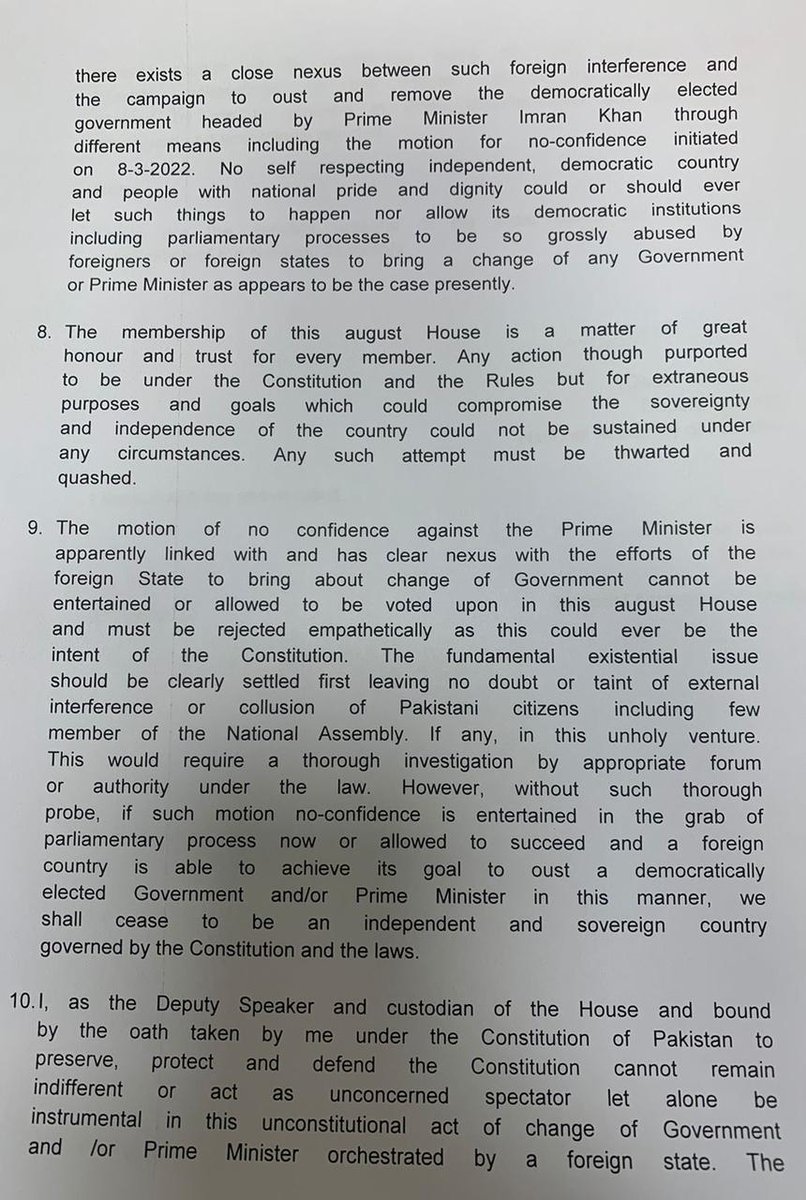
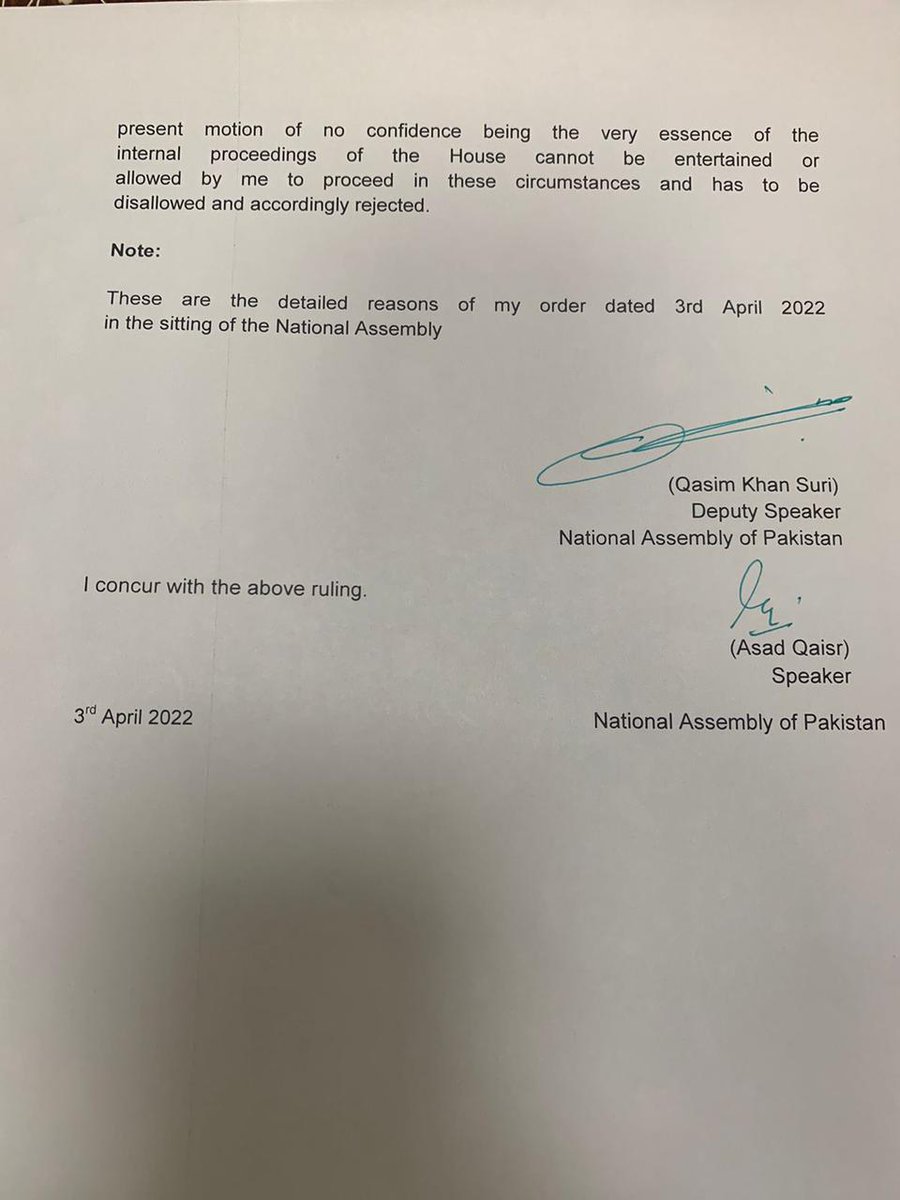
But, as made plainly clear in 58, no vote had taken place, nor did the Constitution provide for the Speaker to be able to reject such a motion.
Will take up 58, 69, constitutionality, and precedent in the actual piece for the day after. Factual overview for now. 🔼
Will take up 58, 69, constitutionality, and precedent in the actual piece for the day after. Factual overview for now. 🔼
• • •
Missing some Tweet in this thread? You can try to
force a refresh




