
1/ 15 minute Rule?
Remember that what matters is the inhalation dose (D) - which is equal to C x B x t x f
C = concentration of SARS-CoV-2 virions in breathing zone air (inside of mask if mask worn) (#/L) embedded in respiratory aerosol particles.
B = .....
Remember that what matters is the inhalation dose (D) - which is equal to C x B x t x f
C = concentration of SARS-CoV-2 virions in breathing zone air (inside of mask if mask worn) (#/L) embedded in respiratory aerosol particles.
B = .....
2/
B = Respiratory minute volume (L/min) (aerobic exercise gives a much larger B than you have reading this at your computer --- perhaps 5 to 10 x)
t = time in indoor environment shared by an infected individual (min)
f = ....
B = Respiratory minute volume (L/min) (aerobic exercise gives a much larger B than you have reading this at your computer --- perhaps 5 to 10 x)
t = time in indoor environment shared by an infected individual (min)
f = ....
3/
f = fraction of virions that deposit in respiratory system (dependent on aerosol particle size conveying virions).
The 15-minute rule is a GROSS generalization that does not account for variations in C and B across different indoor spaces.
f = fraction of virions that deposit in respiratory system (dependent on aerosol particle size conveying virions).
The 15-minute rule is a GROSS generalization that does not account for variations in C and B across different indoor spaces.
4/ It is certainly possible that with high enough C and B, one can become infected at times MUCH lower than 15 minutes and at lower C and B the time might be higher than 15 minutes (but with BA2 I would not count on the latter).
5/ The bottom line is that the probability of infection increases with an increase in inhalation dose, or conversely the probability of infection is lowered by lowering inhalation dose.
How do we lower inhalation dose? Follow the simple roadmap provided by D = C x B x t x f.
How do we lower inhalation dose? Follow the simple roadmap provided by D = C x B x t x f.
6/ We can control C, B, and t. Control C by wearing a mask (preferably everyone wearing a very good mask, e.g., N95, which dramatically reduces both emissions and uptake), increasing ventilation, adding or improving filtration (HVAC systems) and .....
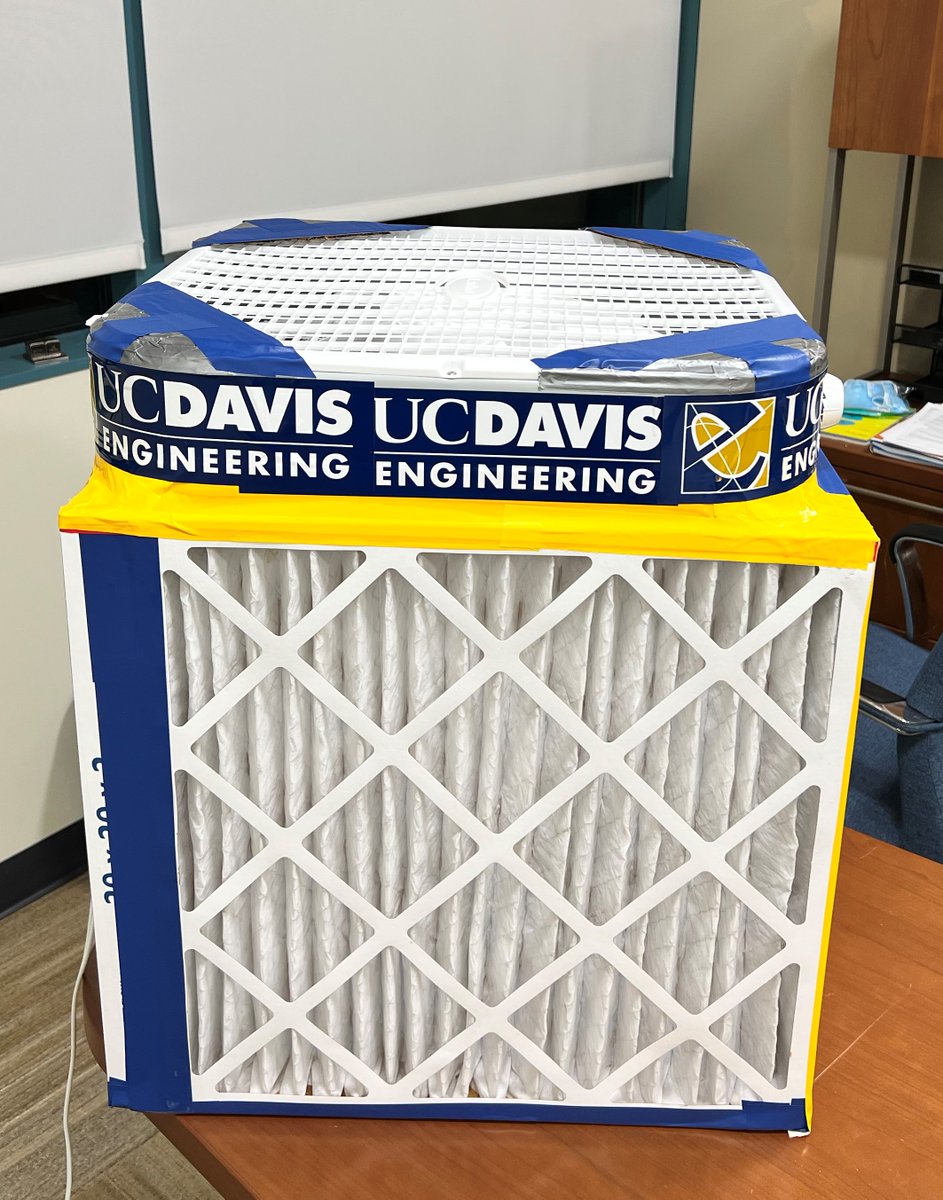
7/ right-sized portable filtration systems (HEPA air cleaners and #CorsiRosenthalBox es), employ upper-room UV where possible, and reduce the number of courses in an indoor space by testing and isolation.
8/ We can reduce B by not engaging in heavy aerobic activities with others in indoor spaces. An increasing B leads to greater emissions from an infected person and also greater uptake by someone who can become infected.
9/ And finally, reduce the amount of time, whenever possible, with others for whom you are not highly certain of infection status.
It’s been over two years since I started preaching this and about two years since laying it out in a National Academies webinar.
It’s been over two years since I started preaching this and about two years since laying it out in a National Academies webinar.
10/ Perhaps with somewhat different approaches, but w/ identical importance, many have been stating the same since that time. It’s really been very simple from the start. No rocket science. Follow the simple pathway rolled out by the concept of inhalation dose, folks.
11/ 
• • •
Missing some Tweet in this thread? You can try to
force a refresh





