Ever wondered how a billion dollar wallet trades on-chain?
This thread follows one anonymous whale through a complex $110M trade, and boils everything down into strategies that can help you guys save on gas and get better execution.
🧵 🐳
This thread follows one anonymous whale through a complex $110M trade, and boils everything down into strategies that can help you guys save on gas and get better execution.
🧵 🐳

Our mystery trader began their day with a premonition that what they really needed in this life was $BTC, not $ETH. Now was the time to make a change. Right now!
They opened @1inch, punched a swap to sell 4300 ETH for wBTC and— 💥💥 😬 whoa!
etherscan.io/tx/0x99e05d3b6…
They opened @1inch, punched a swap to sell 4300 ETH for wBTC and— 💥💥 😬 whoa!
etherscan.io/tx/0x99e05d3b6…
@1inch The whale instantly lost $250,000 to slippage on their $12M order, despite the fact nearly half of it was routed directly to @wintermute_t OTC by @1inch.
Say goodbye to that McLaren Artura or Porsche 911 GT3. Whoops.
Say goodbye to that McLaren Artura or Porsche 911 GT3. Whoops.
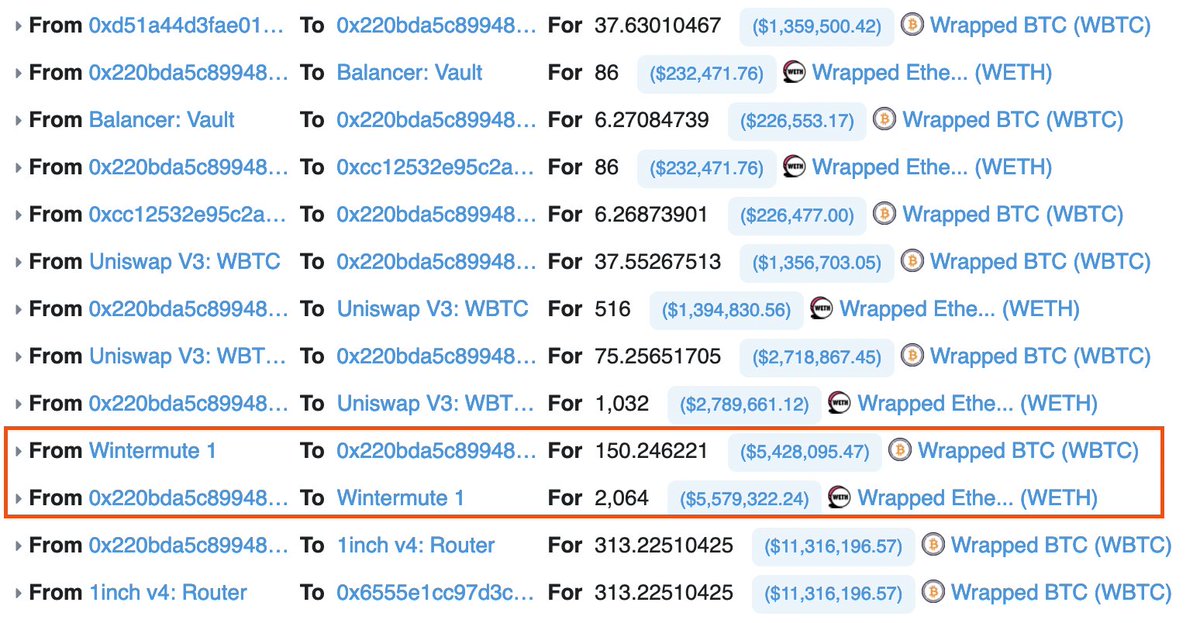
@1inch @wintermute_t MEV bots feasted, backrunning the hell out of the trade in the same block:
etherscan.io/tx/0xa40780b52…
etherscan.io/tx/0xd0f6193d1…
etherscan.io/tx/0xc1c7200f2…
etherscan.io/tx/0x24f1eddeb…
etherscan.io/tx/0xa40780b52…
etherscan.io/tx/0xd0f6193d1…
etherscan.io/tx/0xc1c7200f2…
etherscan.io/tx/0x24f1eddeb…
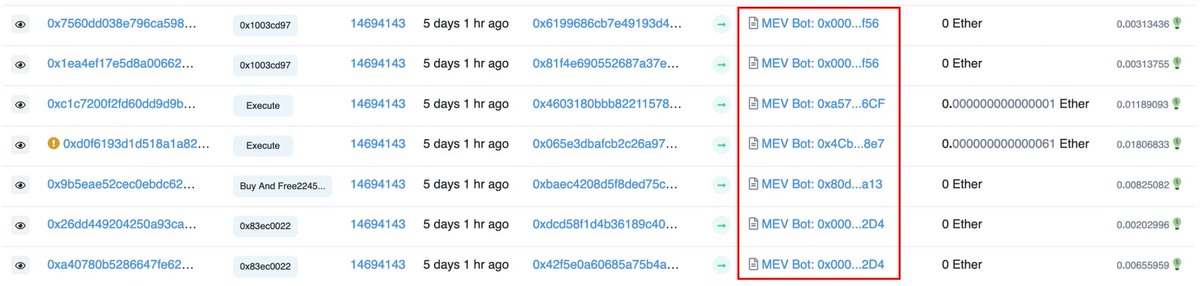
@1inch @wintermute_t At this point the whale switched to limit orders, which let you control price better, and avoid slippage.
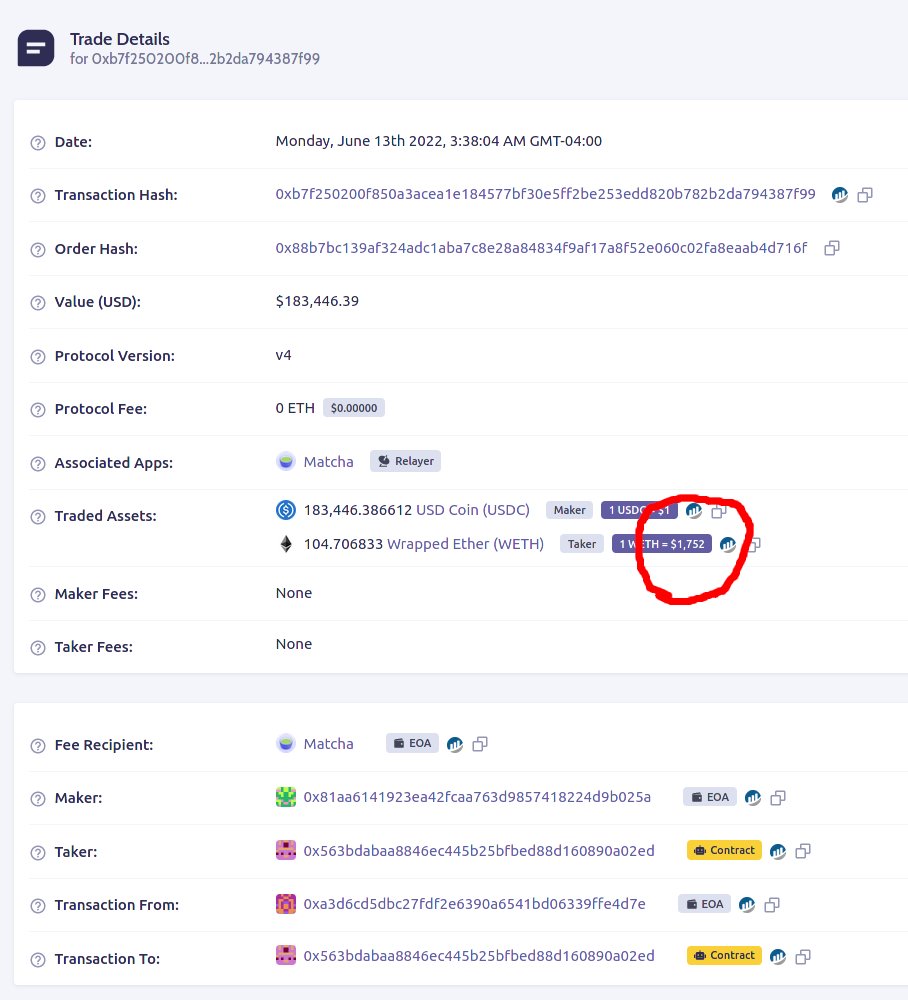
They first used a @matchaxyz limit order to swap 6205 wETH for 453 wBTC.
0xtracker.com/search?q=0x3ea…
They first used a @matchaxyz limit order to swap 6205 wETH for 453 wBTC.
0xtracker.com/search?q=0x3ea…
@1inch @wintermute_t @matchaxyz The @matchaxyz limit order was filled by MEV bots in the wild, in 58 separate transactions, over the course of 53 minutes.
The @Rook MEV bot, Ninja 🥷, actually picked up some of the arbs.
etherscan.io/tx/0x36d0a069f…
The @Rook MEV bot, Ninja 🥷, actually picked up some of the arbs.
etherscan.io/tx/0x36d0a069f…
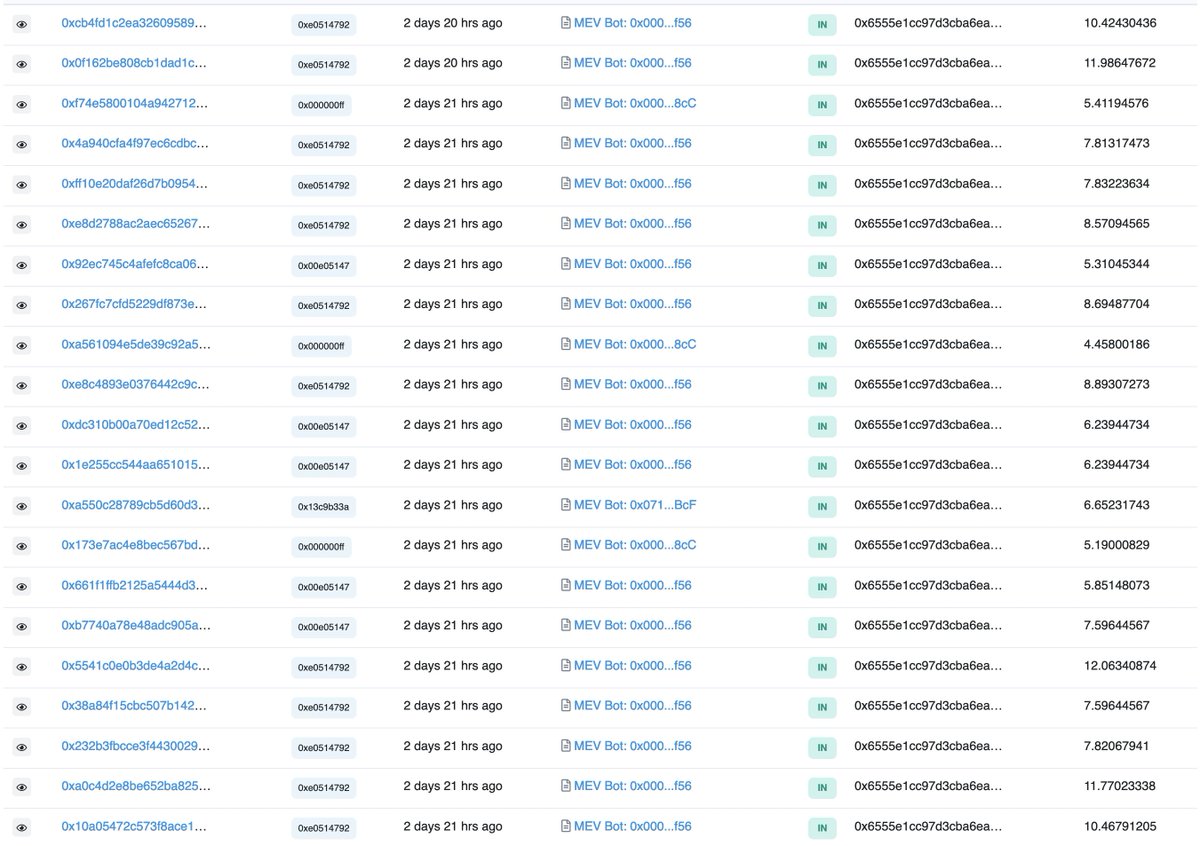
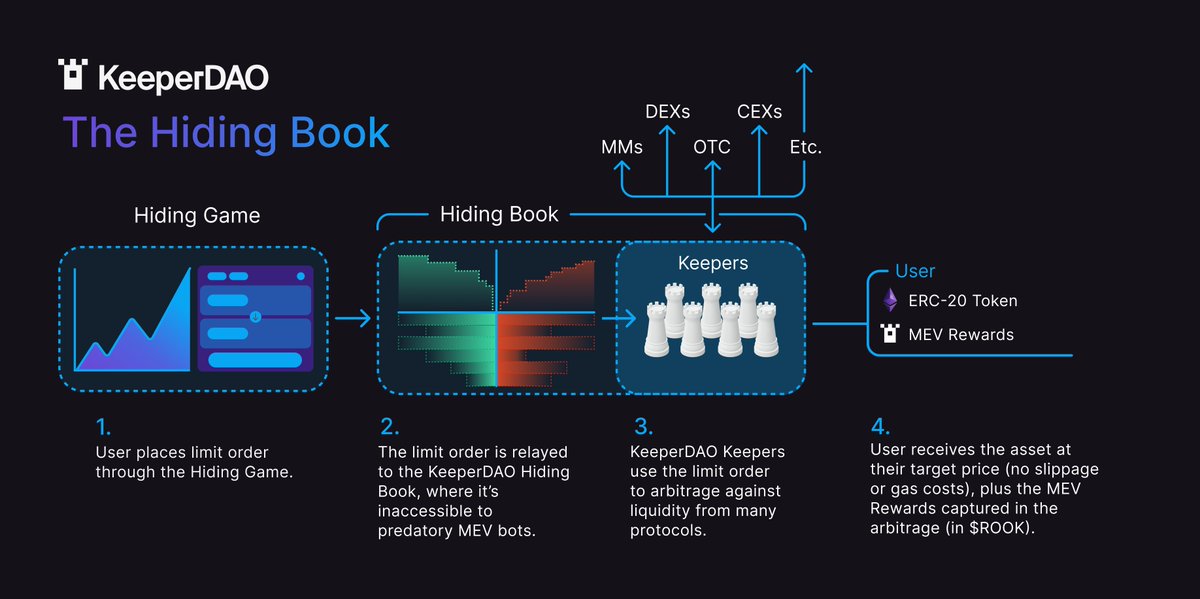
@1inch @wintermute_t @matchaxyz Looking closer, Ninja 🥷 even used the whale's @matchaxyz limit order to match against liquidity on the @Rook orderbook at app.rook.fi.
Yet again, the whale's loss was some other trader's gain.
etherscan.io/tx/0x1af4b6d58…
app.rook.fi/auctions/a_0x7…
Yet again, the whale's loss was some other trader's gain.
etherscan.io/tx/0x1af4b6d58…
app.rook.fi/auctions/a_0x7…
@1inch @wintermute_t @matchaxyz So while the @matchaxyz was an improvement, whales don’t end up whales by accident. They’re never satisfied with “good enough”.
A couple hours later, this whale submitted their first order to @Rook at app.rook.fi - 3795 wETH for 278 wBTC
api.rook.fi/api/v1/trade/o…
A couple hours later, this whale submitted their first order to @Rook at app.rook.fi - 3795 wETH for 278 wBTC
api.rook.fi/api/v1/trade/o…
@1inch @wintermute_t @matchaxyz The order was filled by @Rook keepers in 26 transactions, over the course of 92 minutes.
This time the whale’s trade EARNED 35.96179 $ROOK, around $3600 of price improvement.
This time the whale’s trade EARNED 35.96179 $ROOK, around $3600 of price improvement.
@1inch @wintermute_t @matchaxyz Satisfied at last, the whale quickly opened two more huge orders through the @Rook Protocol.
(1) A $22M wETH->wBTC swap that filled in 24 transactions over 37 minutes.
staging-api.rook.fi/api/v1/trade/o…
(1) A $22M wETH->wBTC swap that filled in 24 transactions over 37 minutes.
staging-api.rook.fi/api/v1/trade/o…
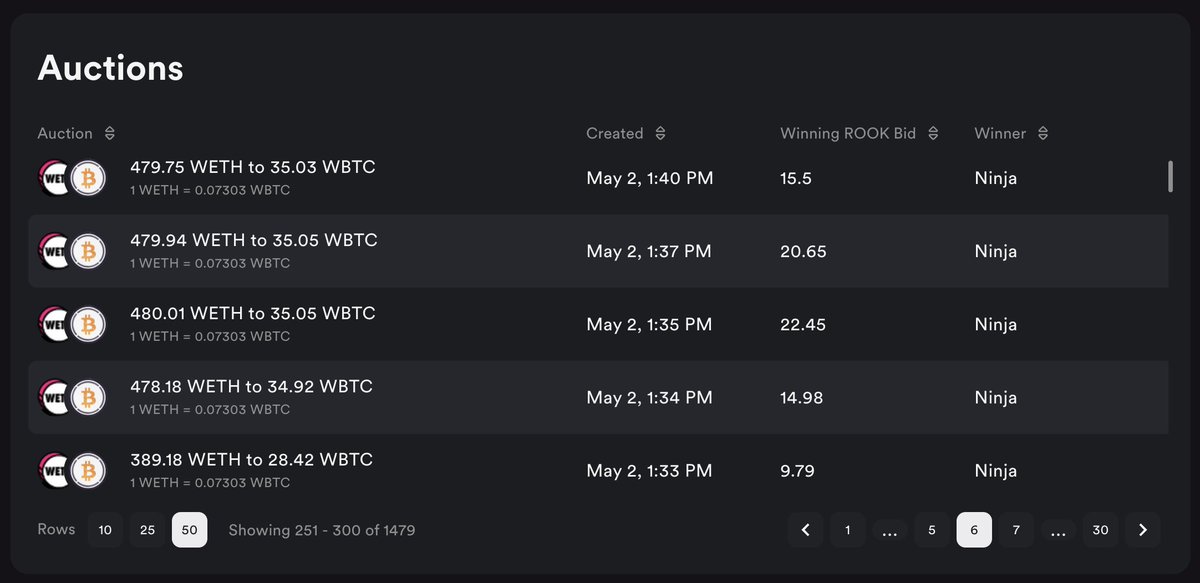
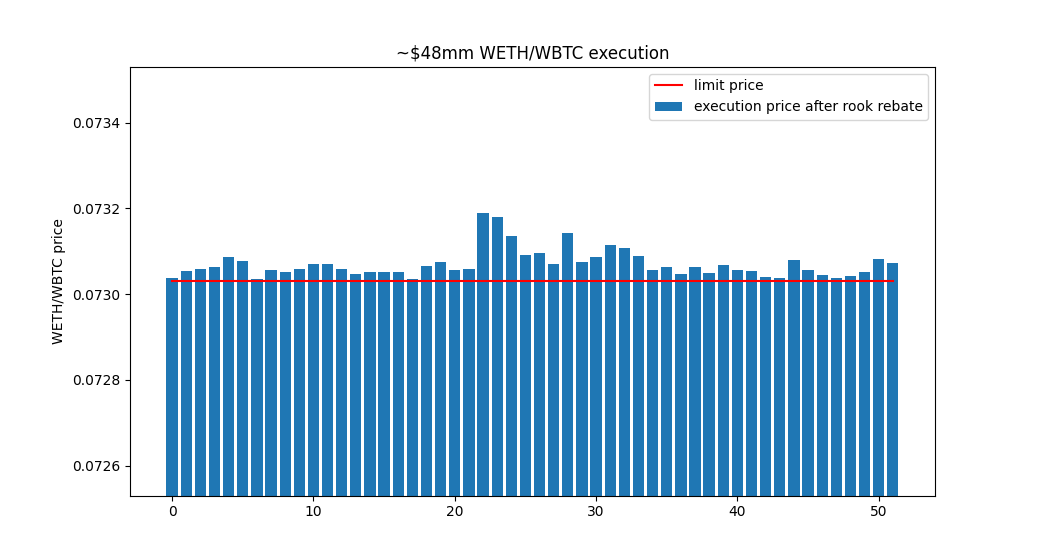
@1inch @wintermute_t @matchaxyz And (2) a whopping $48M wETH->wBTC swap that filled in 52 transactions over 97 minutes.
staging-api.rook.fi/api/v1/trade/o…
staging-api.rook.fi/api/v1/trade/o…
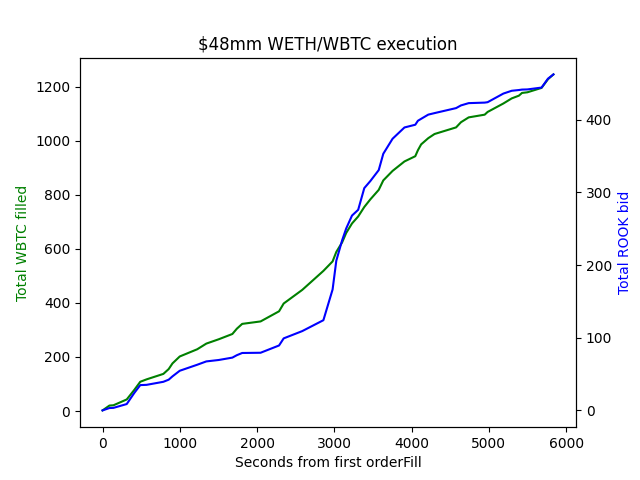
@1inch @wintermute_t @matchaxyz In total, the whale executed over $80M of volume through app.rook.fi, ~20% of on-chain ETH-BTC volume for that day.
Despite this massive size, they received laser-accurate execution, and paid nothing for it. In fact, they received ~$60,000 of price improvement.
Despite this massive size, they received laser-accurate execution, and paid nothing for it. In fact, they received ~$60,000 of price improvement.
@1inch @wintermute_t @matchaxyz tl;dr
A whale opened 3 orders for around $10M each on @1inch, @matchaxyz, and @Rook.
They got rekt on 1inch, got by with Matcha, and got paid on Rook
They sent the next $70M through Rook.
A whale opened 3 orders for around $10M each on @1inch, @matchaxyz, and @Rook.
They got rekt on 1inch, got by with Matcha, and got paid on Rook
They sent the next $70M through Rook.
@1inch @wintermute_t @matchaxyz If you want to trade institutional size on the blockchain, you need to be using @Rook. If you’re a regular trader, come use what the professionals use, it’s easy.
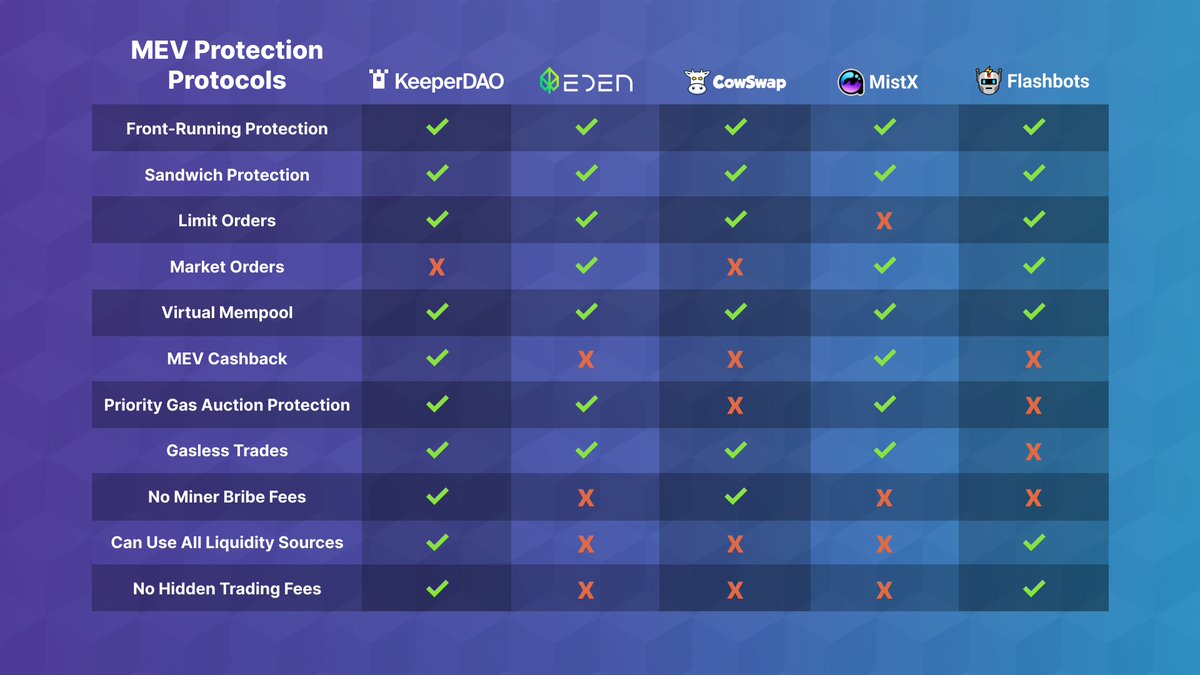
✅ MEV protection
✅ Free, no gas or fees
✅ Aggregated liquidity
✅ Price improvement
app.rook.fi
✅ MEV protection
✅ Free, no gas or fees
✅ Aggregated liquidity
✅ Price improvement
app.rook.fi
• • •
Missing some Tweet in this thread? You can try to
force a refresh