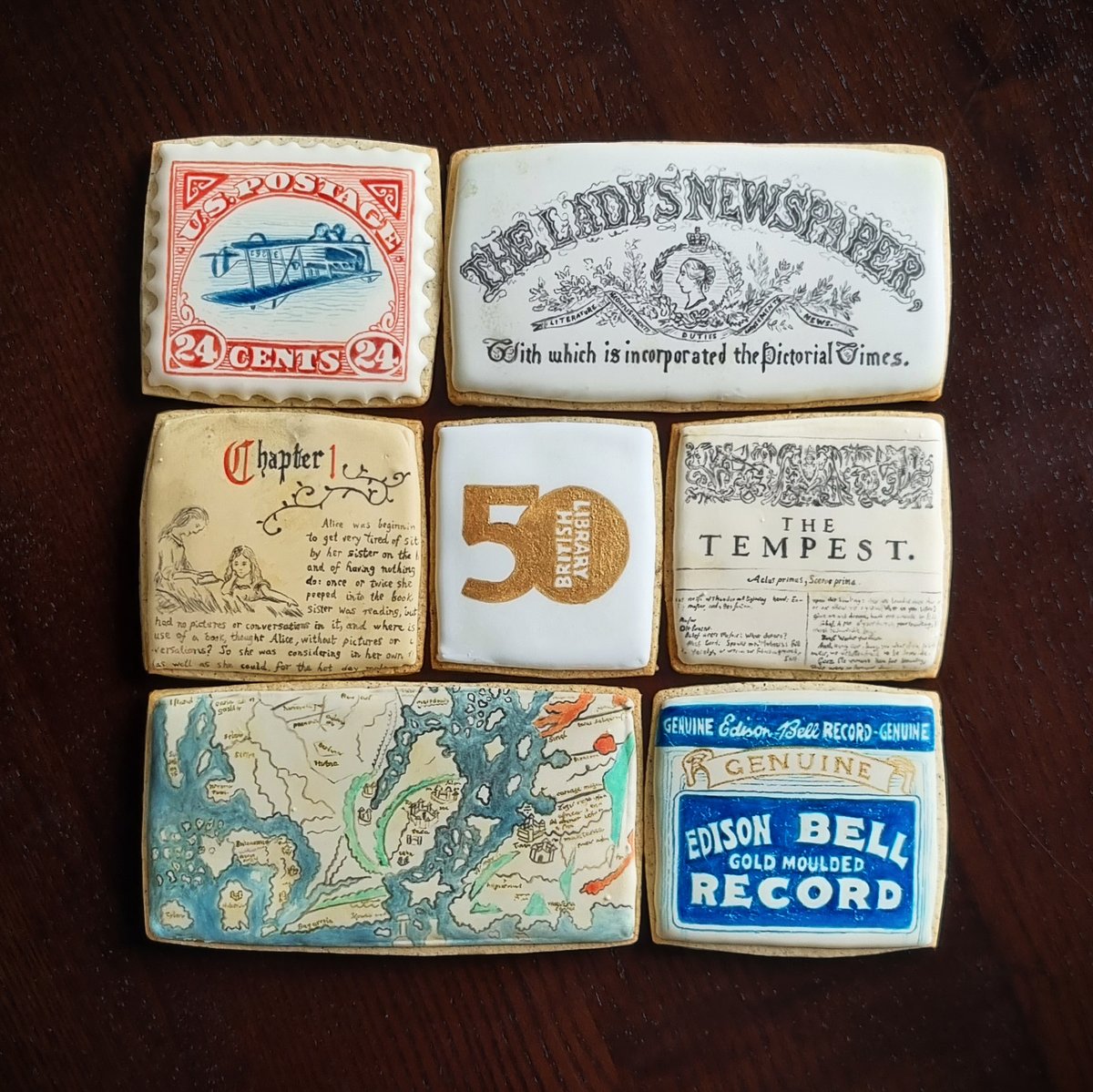
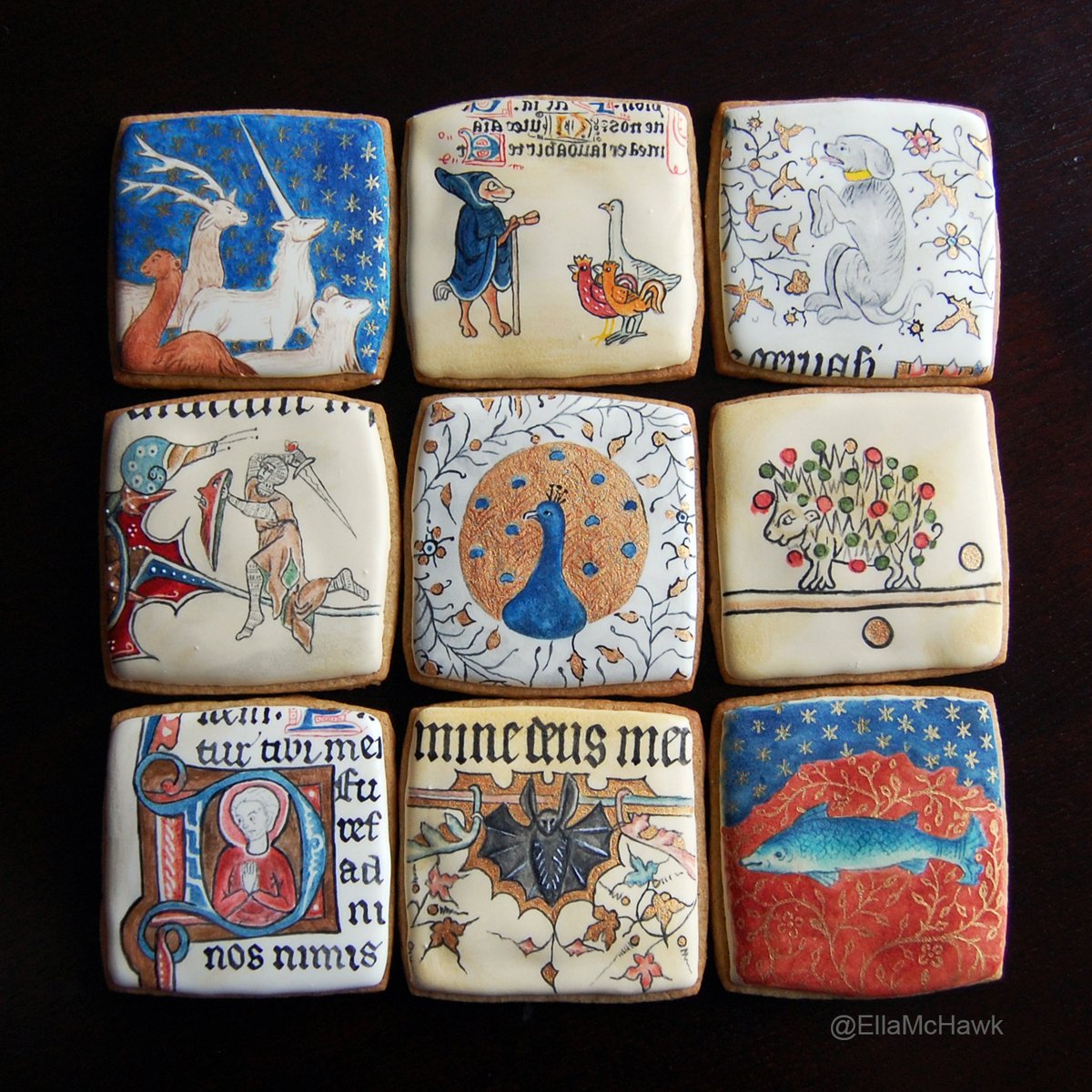
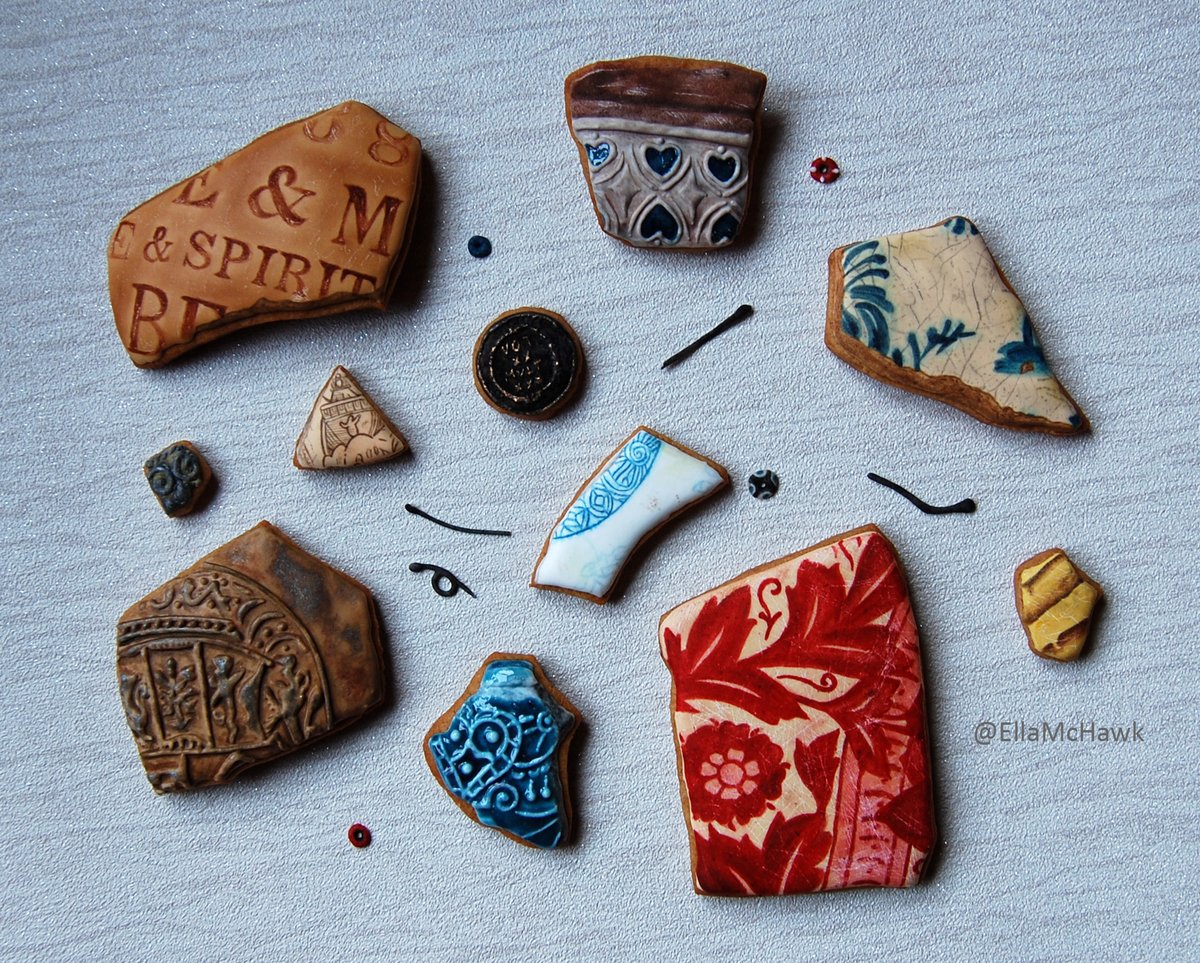
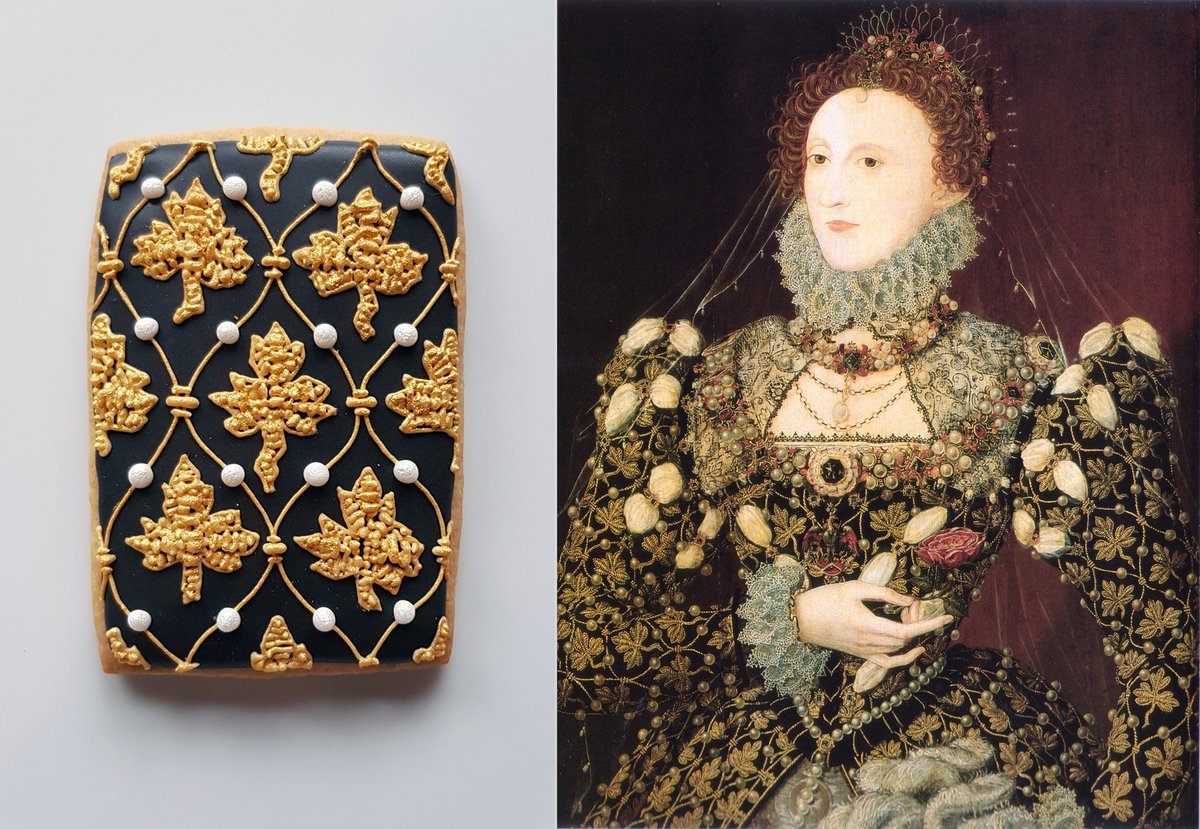
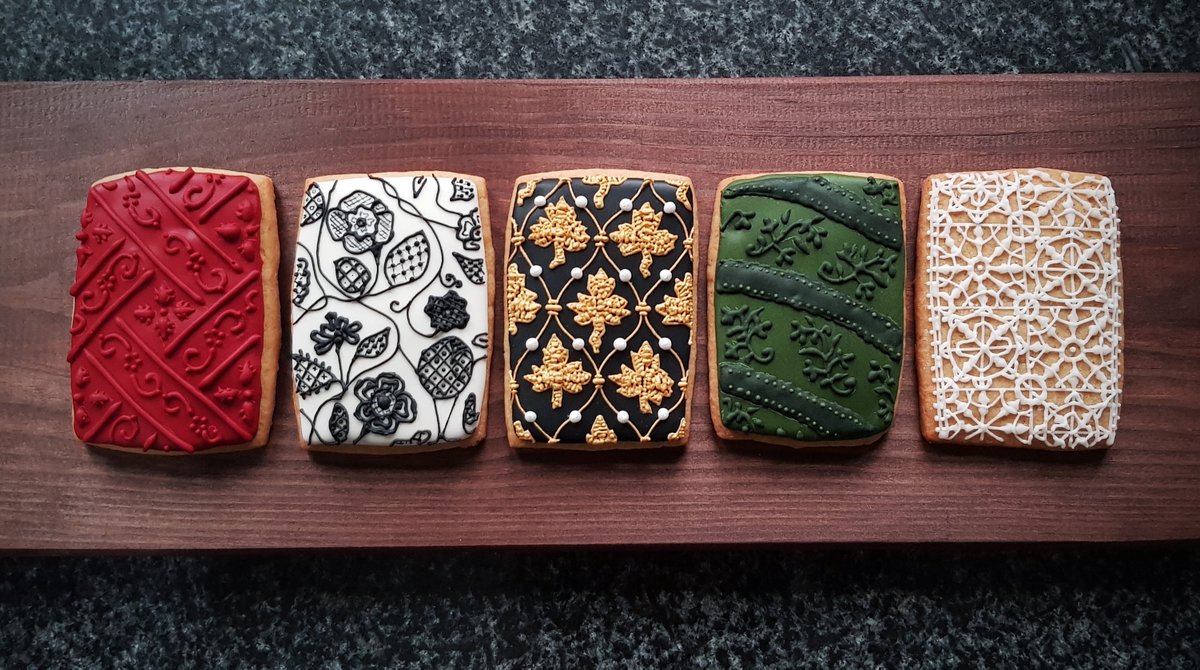
Today is National Biscuit Day!
To celebrate, here is a brief and partial history of design in England – in biscuit form. 🍪
We begin in Londinium around the turn of the 3rd century AD. These tasty tesserae recreate a mosaic that may have decorated a fancy Roman ‘motel’. (1/12)
To celebrate, here is a brief and partial history of design in England – in biscuit form. 🍪
We begin in Londinium around the turn of the 3rd century AD. These tasty tesserae recreate a mosaic that may have decorated a fancy Roman ‘motel’. (1/12)

We now travel north and fast-forward 4 centuries to 650-675 AD.
This biscuit set is inspired by gold & garnet fittings in the Staffordshire Hoard. The original items may have decorated saddles, harnesses, or bibles. These chocolate replicas go very well with a cup of tea. (2/12)
This biscuit set is inspired by gold & garnet fittings in the Staffordshire Hoard. The original items may have decorated saddles, harnesses, or bibles. These chocolate replicas go very well with a cup of tea. (2/12)

Welcome to medieval England. May I offer you a biscuit flavoured with honey, ginger & cloves?
Tiles like these ones originally decorated churches, priories, and palaces across the country. The examples biscuified here date from between c.1151 and 1540. (3/12)
Tiles like these ones originally decorated churches, priories, and palaces across the country. The examples biscuified here date from between c.1151 and 1540. (3/12)

Now for a smaller jump forward in time. We are at the turn of the 17th century, perusing interior design features from the houses of the upper middling sort.
Is this how Shakespeare decorated his home? Quite possibly. Would he have approved of biscuits? We’ll never know. (4/12)
Is this how Shakespeare decorated his home? Quite possibly. Would he have approved of biscuits? We’ll never know. (4/12)

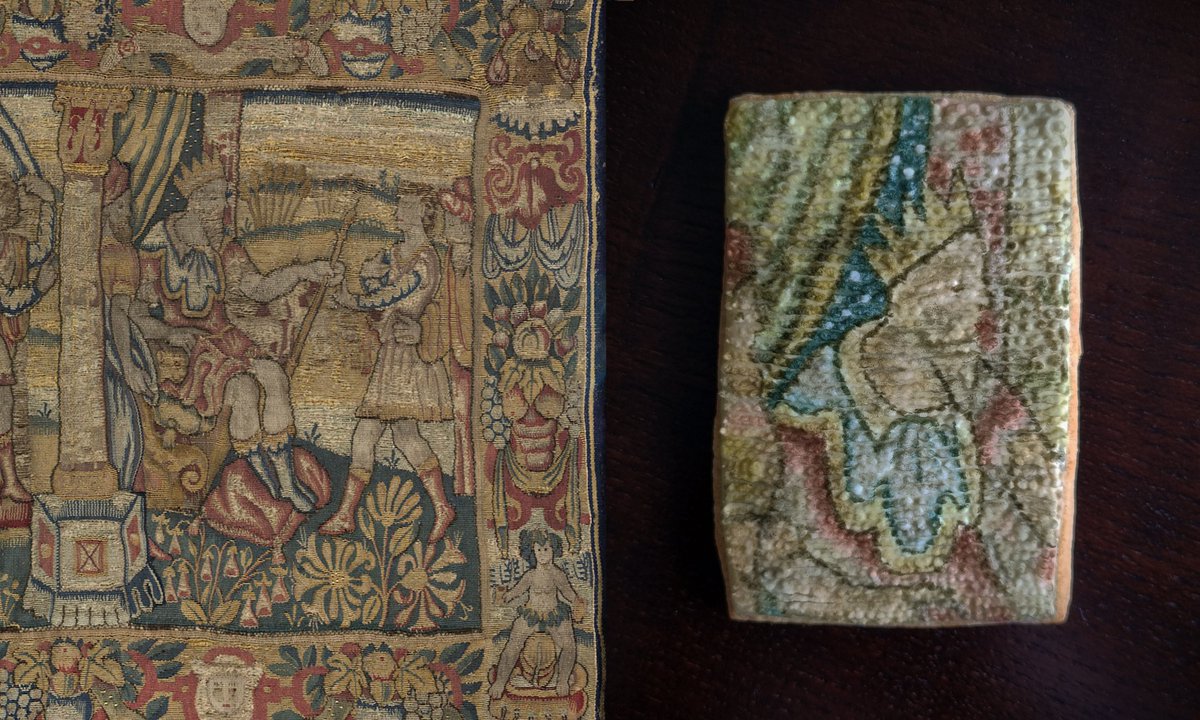
Here are some close-ups of the biscuits and their non-edible counterparts. There’s a wood carving and a tapestry panel from Warwickshire, a frieze from Canterbury, and a plasterwork ceiling from Ludlow.
Follow @AHewitt25 for more on Shakespeare’s lost interiors. (5/12)
Follow @AHewitt25 for more on Shakespeare’s lost interiors. (5/12)


How about a taste of the Neoclassical?
These glorious wall decorations can be found at Newby Hall, Yorkshire. The plasterwork & tapestries date from the late 18th century.
If it were acceptable to pipe these designs onto the walls of my house in royal icing, I'd do it. (6/12)
These glorious wall decorations can be found at Newby Hall, Yorkshire. The plasterwork & tapestries date from the late 18th century.
If it were acceptable to pipe these designs onto the walls of my house in royal icing, I'd do it. (6/12)
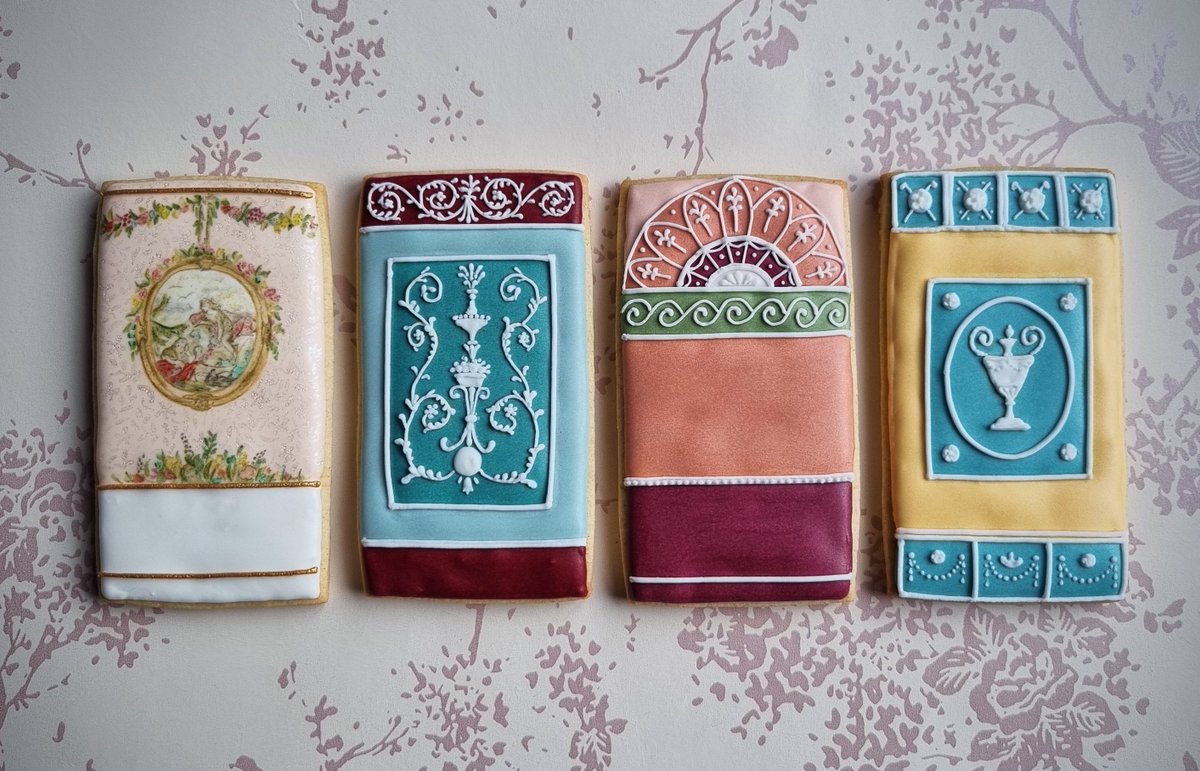
If you’re partial to a period drama and the biscuit on the far left looks familiar, that’s because Newby Hall is a filming location for Peaky Blinders.
It is a truth universally acknowledged that I will shoehorn a period drama into every biscuit thread I publish. (7/12)
It is a truth universally acknowledged that I will shoehorn a period drama into every biscuit thread I publish. (7/12)

On a related note, let’s spend a moment or two in the time of Jane Austen.
These boozy gingerbread goodies are inspired by the patterns, prints, colours, and fashions of the Georgian and Regency eras.
Made during my time as Artist in Residence at @JaneAustenHouse. (8/12)
These boozy gingerbread goodies are inspired by the patterns, prints, colours, and fashions of the Georgian and Regency eras.
Made during my time as Artist in Residence at @JaneAustenHouse. (8/12)

The Victorian period is upon us. We are in a very specific location: 186 Gwydir Street, Cambridge.
A working-class decorative artist named David Parr lived here. Between 1886 and 1927, Parr decorated his modest home with (non-delicious but gorgeous) Arts & Crafts designs. (9/12)
A working-class decorative artist named David Parr lived here. Between 1886 and 1927, Parr decorated his modest home with (non-delicious but gorgeous) Arts & Crafts designs. (9/12)

I end this thread in the town of Reading, formerly home to world-famous biscuit company Huntley & Palmers. #BiscuitTown200
Here are some brand-new biscuits inspired by Huntley & Palmers biscuit tin designs from the 1920s.
Biscuits inspired by biscuit tins? Meta. (11/12)
Here are some brand-new biscuits inspired by Huntley & Palmers biscuit tin designs from the 1920s.
Biscuits inspired by biscuit tins? Meta. (11/12)
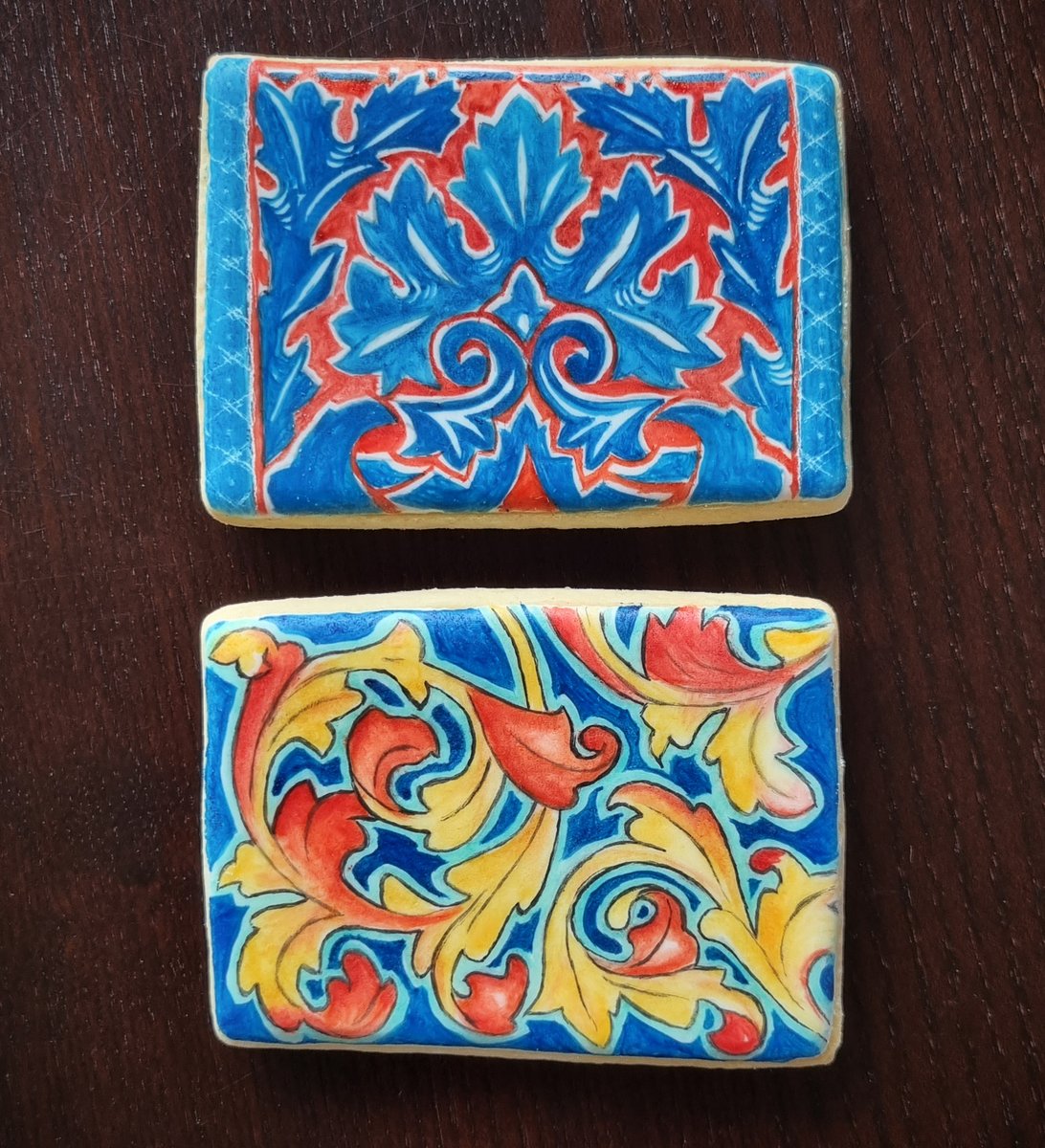
Happy National Biscuit Day! 🎉
For more biscuits, see this thread:
For details of flavours & sources, see my website: ellahawkins.com
I'm also on Instagram (instagram.com/ellamchawk) and Facebook (facebook.com/EllaMakesCakes).
(12/12)
For more biscuits, see this thread:
https://twitter.com/EllaMcHawk/status/1476135833103175686
For details of flavours & sources, see my website: ellahawkins.com
I'm also on Instagram (instagram.com/ellamchawk) and Facebook (facebook.com/EllaMakesCakes).
(12/12)
• • •
Missing some Tweet in this thread? You can try to
force a refresh