2. “The percentage of boys living apart from their biological father has almost doubled since 1960—from about 17% to 32%; now, @ 12 million boys are growing up in families without their biological father.” By time reach adulthood, @ 1-in-2 young men lived outside intact family.
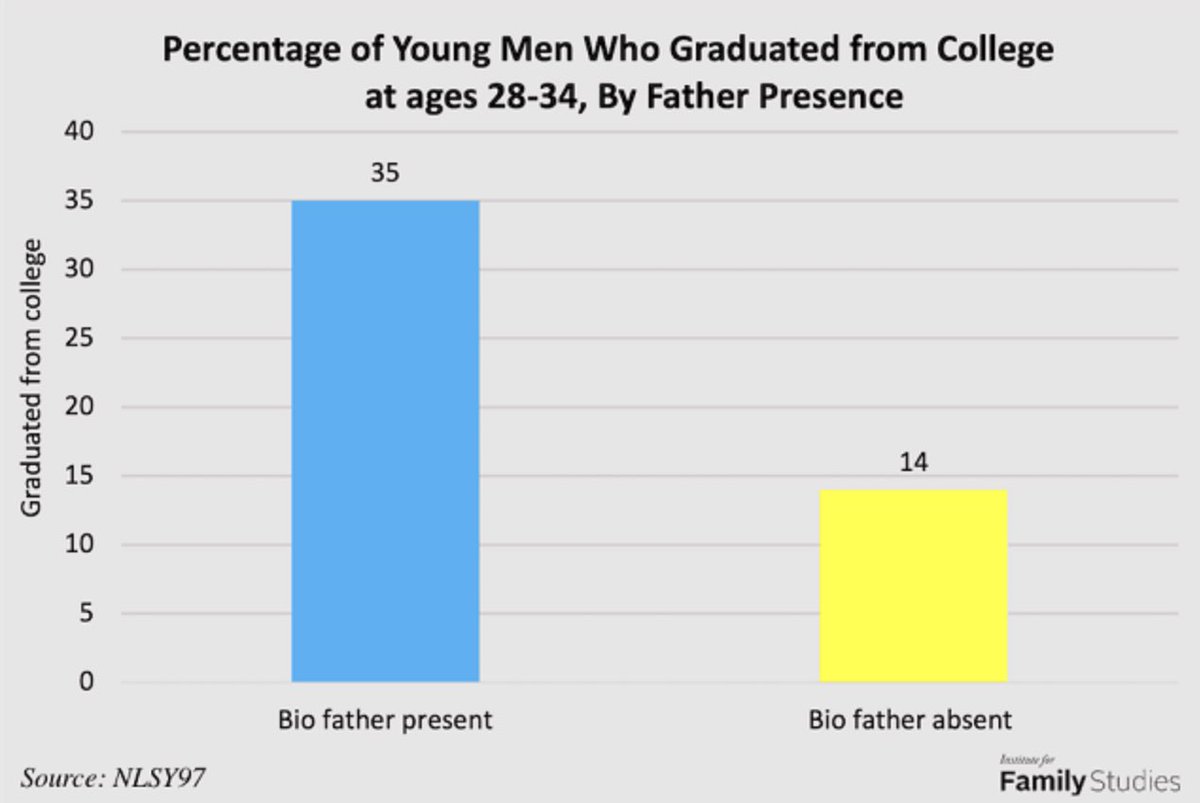
3. Young men raised apart from fathers much more likely to fall behind in school and not graduate from college. Striking difference here:
Who graduated college?
✔️ 35% of young men growing up w Bio Dad
✔️ 14% of young men growing up w Bio Dad Absent
1. NPR underlines the family factor: "Many, though not all, of perpetrators have experienced childhood traumas such as physical or emotional abuse & unstable families w/ violent, absent or alcoholic parents... most have experienced significant losses." npr.org/sections/healt…
2. There was a family angle w/ the TX shooter, who was fatherless & lived in what appears to have been an unstable home: “I think he needed mental help. And more closure with his family. And love.” washingtonpost.com/nation/2022/05…
3. One psychologist who studied 56 school shooters found that "82% of the sample either grew up in dysfunctional families or without their parents together (for at least part of their lives)." schoolshooters.info/sites/default/…
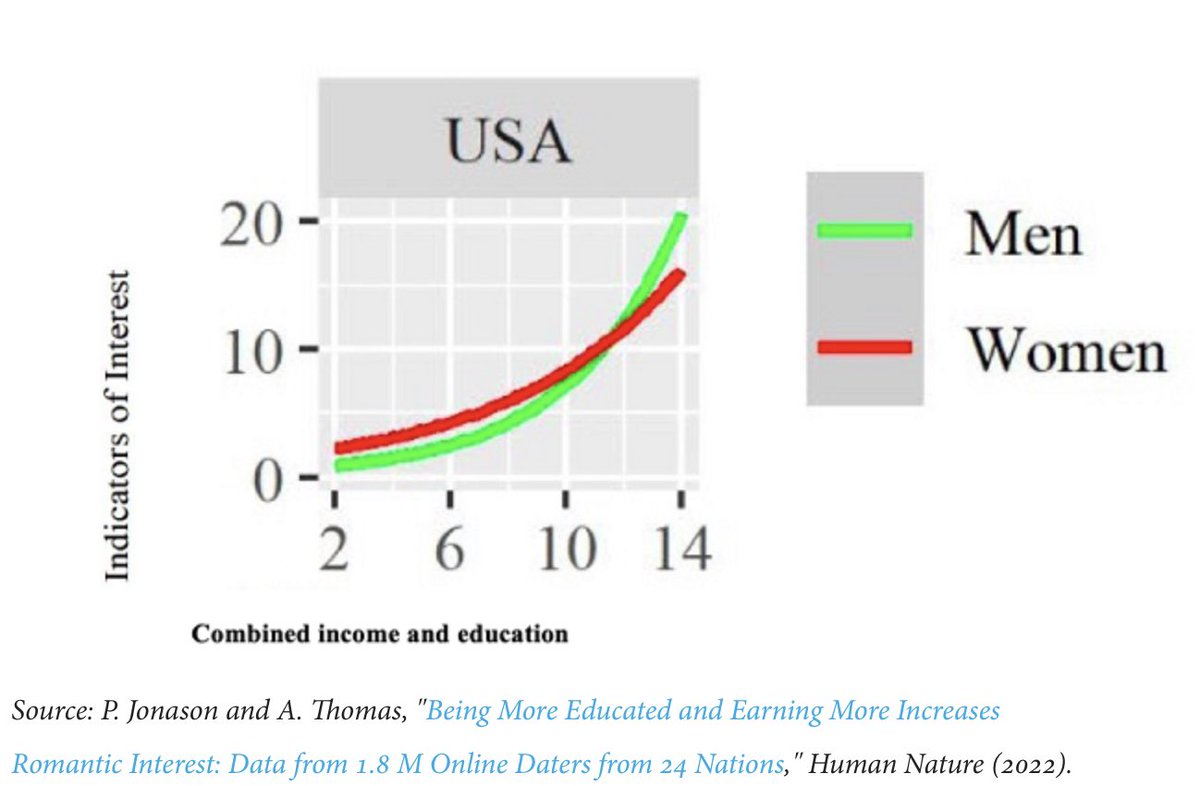
2. “Men w/ combined income/education one standard deviation greater than mean received 255%—over 3 times—more interest…
Women w/ combined income/education one standard deviation greater than mean received 103%—about double—”more interest…
Than peers one SD below mean.
3. “women in all countries received more indicators of interest than men on internet dating sites. Men in general were more likely than women to “swipe right” or the equivalent expression of interest: women received between 540% and 780% more indicators of interest than men.”
2. Most women ID as feminine in this new survey by @jmcquivey:
3. “In the study, the women who described themselves as ‘feminine’ were [also] the most likely to marry and to say they have fulfilling marriages across various dimensions, including strong personal relationships and community involvement.”
2. "Until recently, South Korean politics followed a conventional demographic pattern. The younger generation leaned liberal and the older generation leaned conservative...[but now]... men in their 20s are more conservative than men in their 70s."
3. "Unlike older men, who held to a patriarchal worldview defined by rigid gender roles, young men reject masculine duty that typically accompanies old-school sexism. Rather, they see themselves as victims of feminism &define themselves politically by sense of victimisation."