1/ [New Post] On-chain Procedural Generation
@nibnalin and @gubsheep present a new blog post on the use of procedural generation for on-chain game world building.
0xparc.org/blog/procgen
@nibnalin and @gubsheep present a new blog post on the use of procedural generation for on-chain game world building.
0xparc.org/blog/procgen
2/ Much of the of @0xPARC community works on on-chain games and autonomous worlds: @darkforest_eth, @latticexyz, @exgrasia, and more
All three of these projects use procedural generation (and Perlin noise in particular) for efficiently building rich, intricate on-chain worlds.
All three of these projects use procedural generation (and Perlin noise in particular) for efficiently building rich, intricate on-chain worlds.

3/ Why do on-chain games use procgen?
Unlike other modern games, on-chain games deal with one big constraint — storage cost!
Using procedural generation allows on-chain games to compute map tiles on-demand, saving storage costs for large/infinite maps.
Unlike other modern games, on-chain games deal with one big constraint — storage cost!
Using procedural generation allows on-chain games to compute map tiles on-demand, saving storage costs for large/infinite maps.
4/ A procedural generation algorithm is essentially a trick to compress a complex world into an executable.
Much like gamedev in the resource-constrained days of the 90s, developing on-chain worlds is an exercise in being creative & hacky with the limited compute available.
Much like gamedev in the resource-constrained days of the 90s, developing on-chain worlds is an exercise in being creative & hacky with the limited compute available.
5/ How do games use procgen?
Worlds generated purely randomly with no deeper coherence start feeling stale quickly. Without locality or progression, gameplay degenerates into pulling slot machine levers. Procgen bridges this gap — creating structured, consistent randomness.
Worlds generated purely randomly with no deeper coherence start feeling stale quickly. Without locality or progression, gameplay degenerates into pulling slot machine levers. Procgen bridges this gap — creating structured, consistent randomness.
6/ This blog post builds up to the Perlin Noise procgen algorithm, starting from simple wave functions super-positioned to create a wave that's locally consistent, yet globally random.
streamable.com/hqwrua
streamable.com/hqwrua
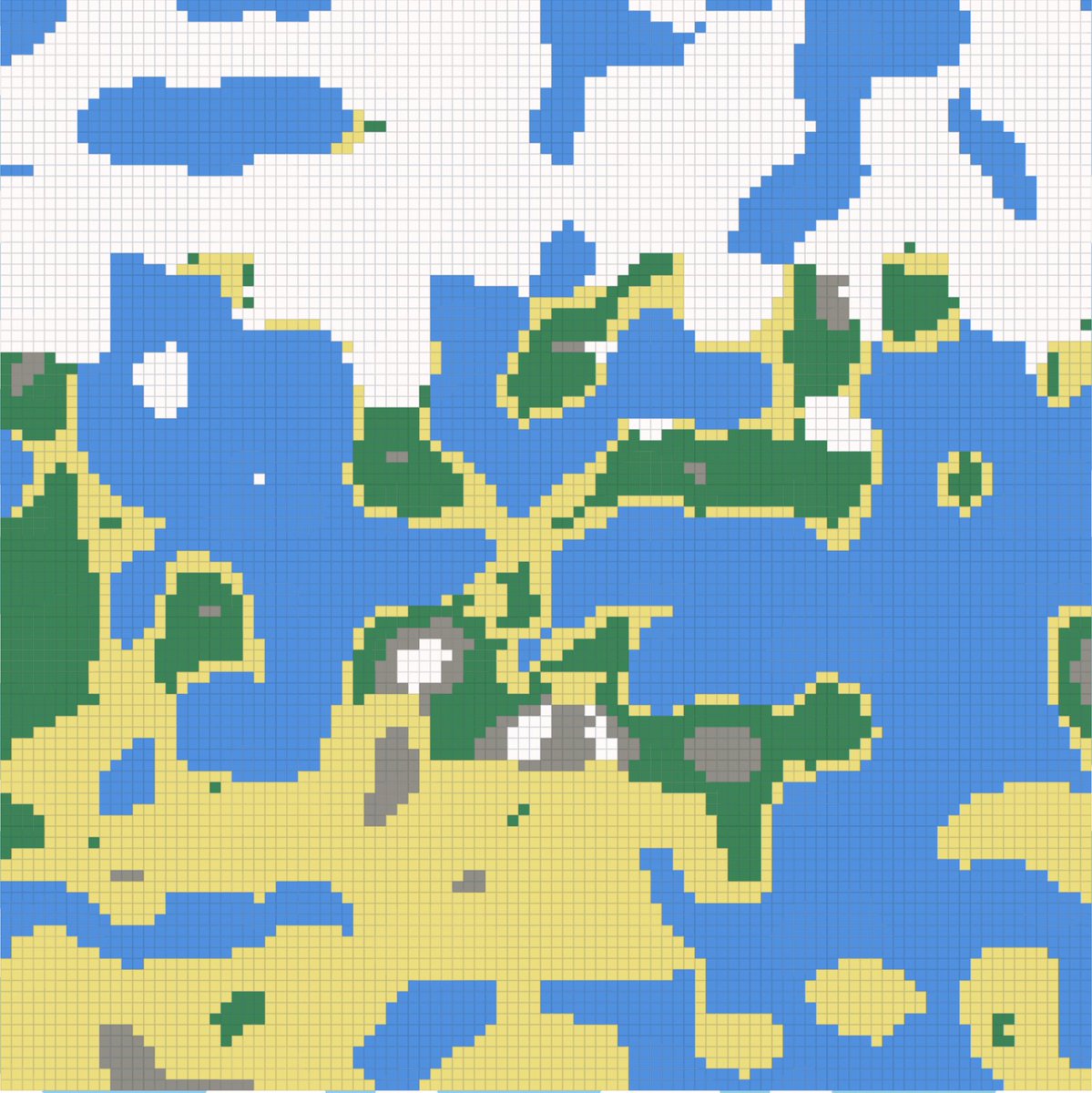
7/ Next, these wave functions are extended to 2-D grids, creating a heatmap or "terrain map." Function outputs can then be thresholded to create a blobby map resembling an archipelago.


8/ The post demonstrates how to impose other global patterns onto these on-chain worlds, exploring different tricks used to create global consistency: super-positioning handwritten functions, switching coordinate systems or simply giving maps a fresh coat of paint!
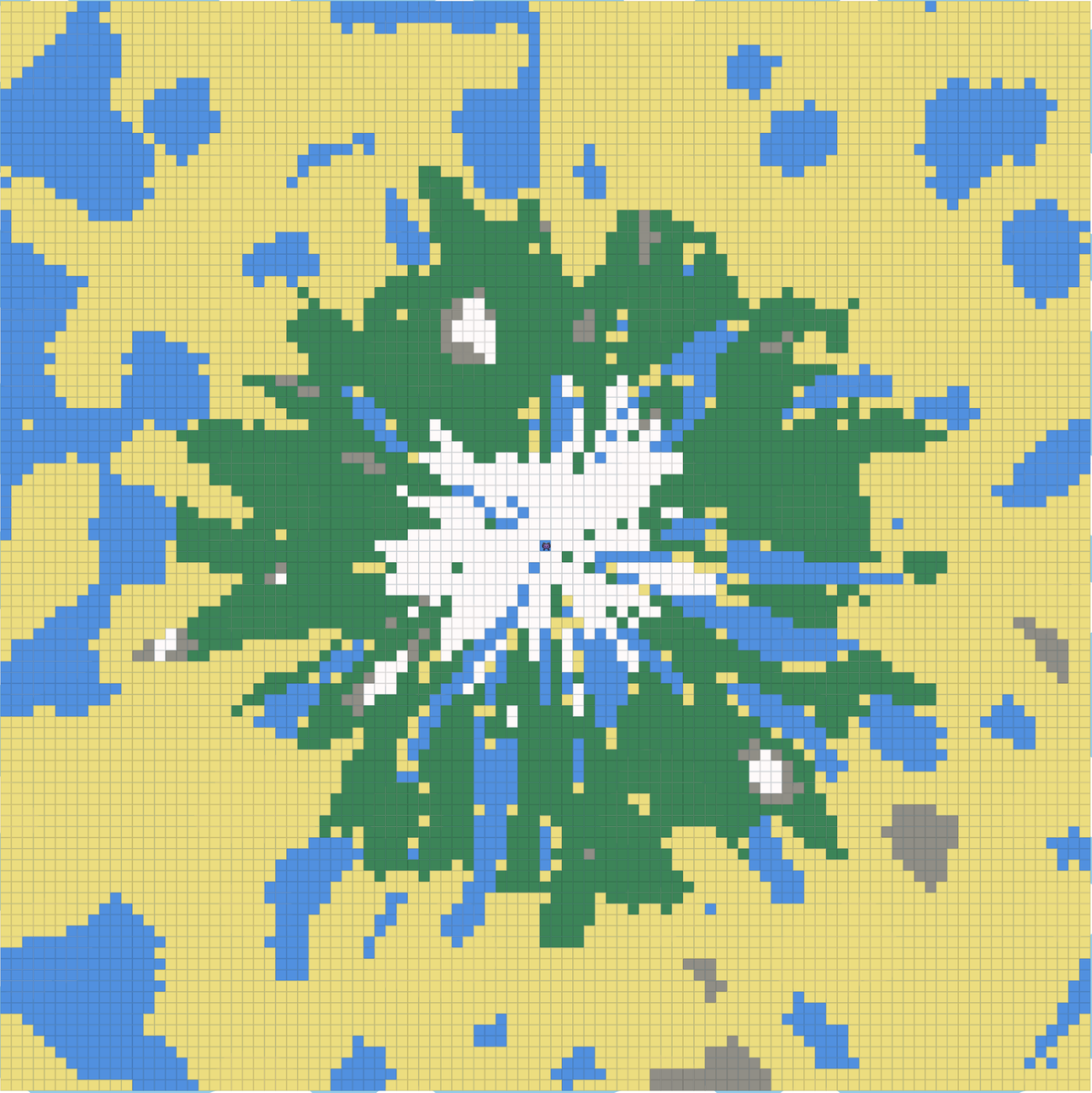

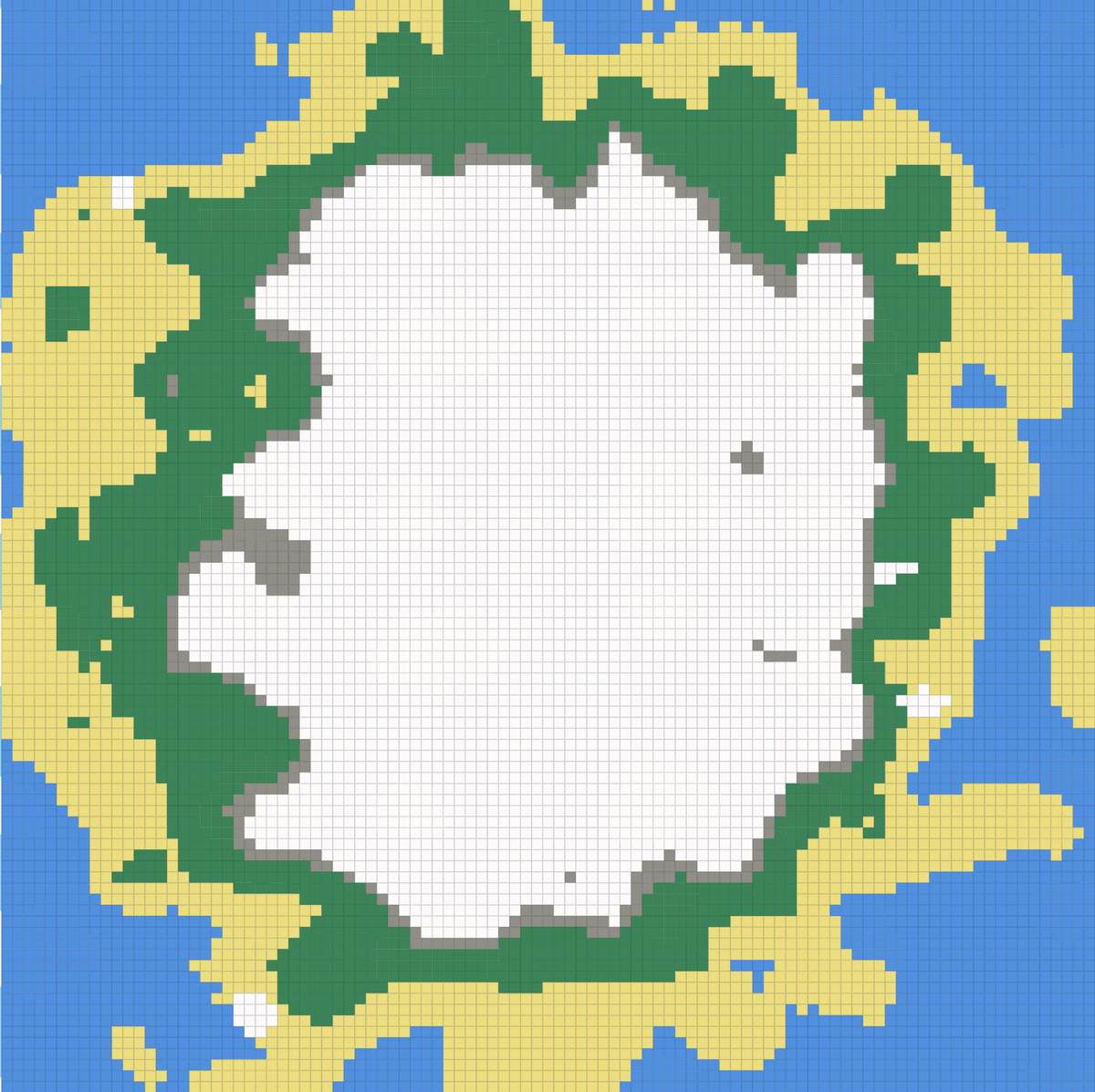

9/ All explorations in the blog are accompanied by open-source solidity and TS code demos. The blog also links readers to solidity library and ZK-SNARK circuit implementations (s/o @darkforest_eth) of Perlin Noise for use in their own experiments.
github.com/nalinbhardwaj/…
github.com/nalinbhardwaj/…
10/ We hope this blog inspires readers to explore the unique affordances of blockchains by creating their own crypto native games and building *fun* blockchain experiences.
Thanks to @alanluo_0 for introducing us to procgen and sharing many educational resources!
Thanks to @alanluo_0 for introducing us to procgen and sharing many educational resources!
• • •
Missing some Tweet in this thread? You can try to
force a refresh