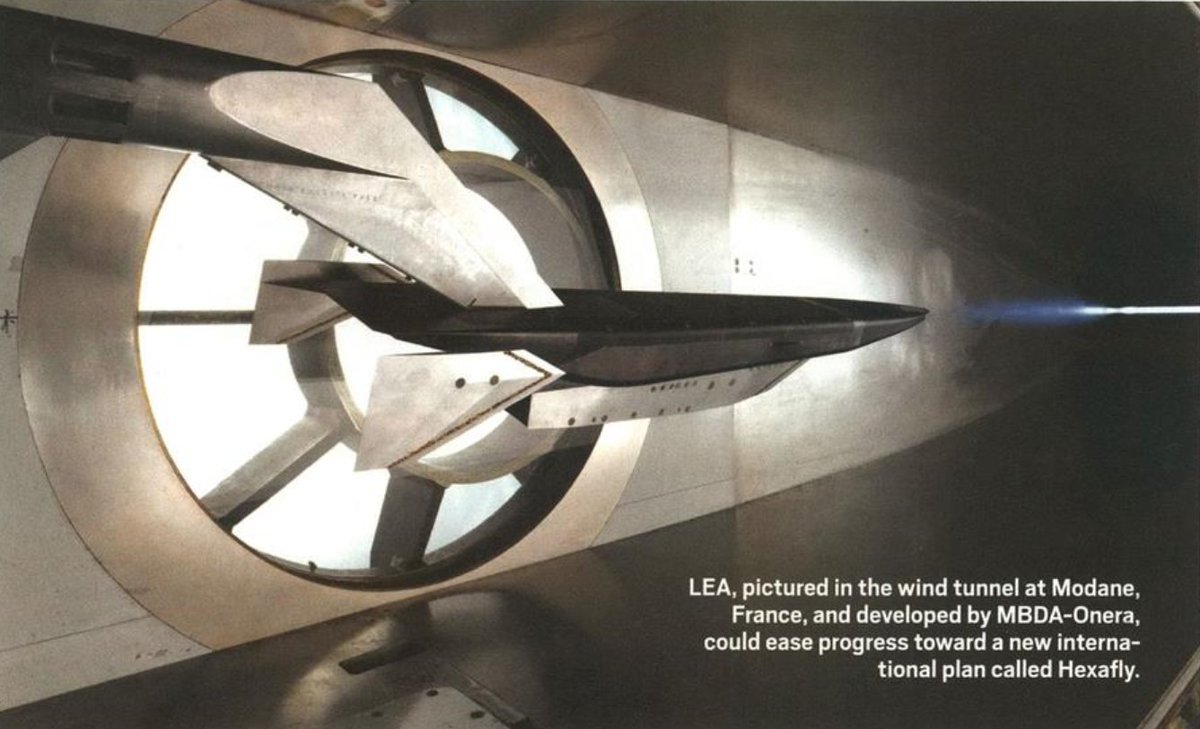
🧵THREAD on cruise missile defense, feat. @JenJudson (@defense_news), Dr. Peppi DeBiaso (CSIS, fmr. Dir., DoD OMDP), BG Paul Murray (Dep. Dir. Ops, NORAD), Stan Stafira (Chief Architect, MDA), COL Tony Behrens (Dep. Dir., JIAMDO). 
https://twitter.com/csis_isp/status/1547627334894620678
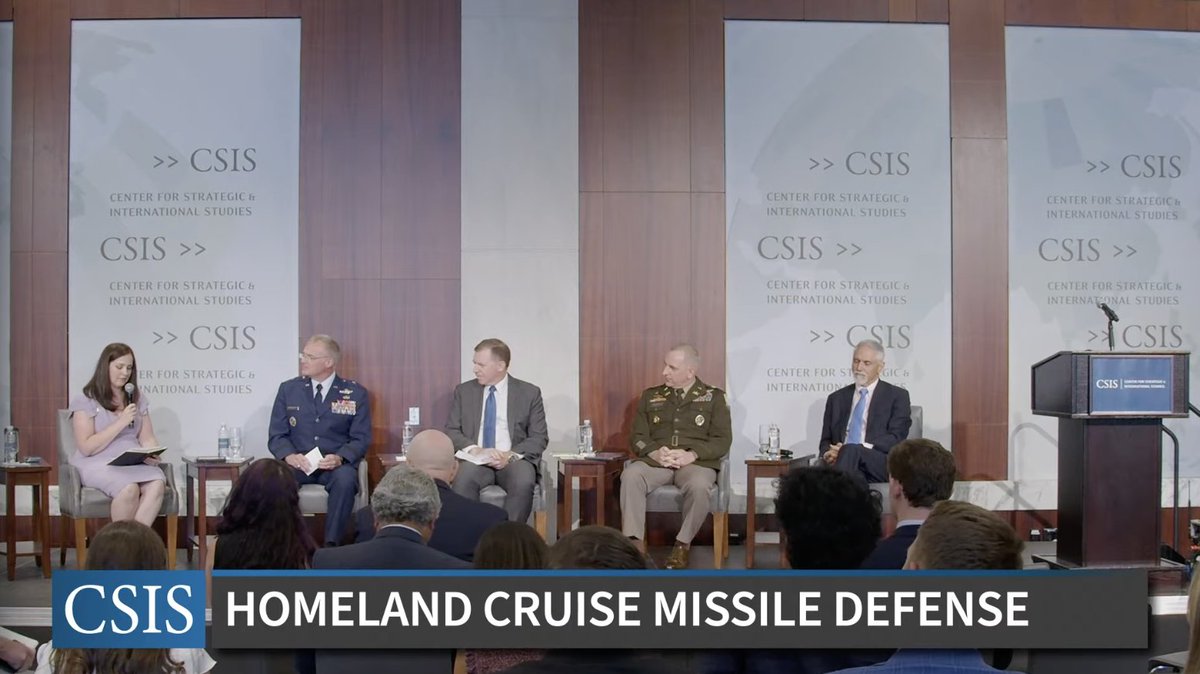
Brig. General Murray: A defense design is not a strategy, or an operational plan, a series of wishlists, but a set of concepts or roadmap that informs all those things—strategy, op plans, or procurement.

Murray: Strategy making is usually a 2-year process. But for defense designs we should use agile methodology, like software development. Fast concept iteration; NORAD conducted a design process 2 years ago. Focused on 3 time epics (phases); 2025, 2030, 2035.
Murray: Some major sprints in this process: Detailed look at the threat; was baseline for every assessment. Surveys of domain awareness capability; detecting threats early. In-depth review of logistical capabilities.
Murray: The conclusion? 4 foundational capabilities needed.
1. Domain awareness: how to see threats early
2. Information dominance: Getting readable information.
3. Decision superiority: making decisions better.
4. Global integration: scaling capability to globe.
1. Domain awareness: how to see threats early
2. Information dominance: Getting readable information.
3. Decision superiority: making decisions better.
4. Global integration: scaling capability to globe.
Murray: DoD needs culture change. A notion that homeland is no longer a sanctuary. Around when new admin came in, NORAD began study on 2030 time epic.
Stan Stafira, Chief Architect of MDA: Threats we're facing "are just not ballistic anymore" and adversaries believe it's an asymmetric advantage. In 2019, Missile Defense Executive Board Meeting held with MDA and NORAD/NORTHCOM syncing on cruise missile defense.
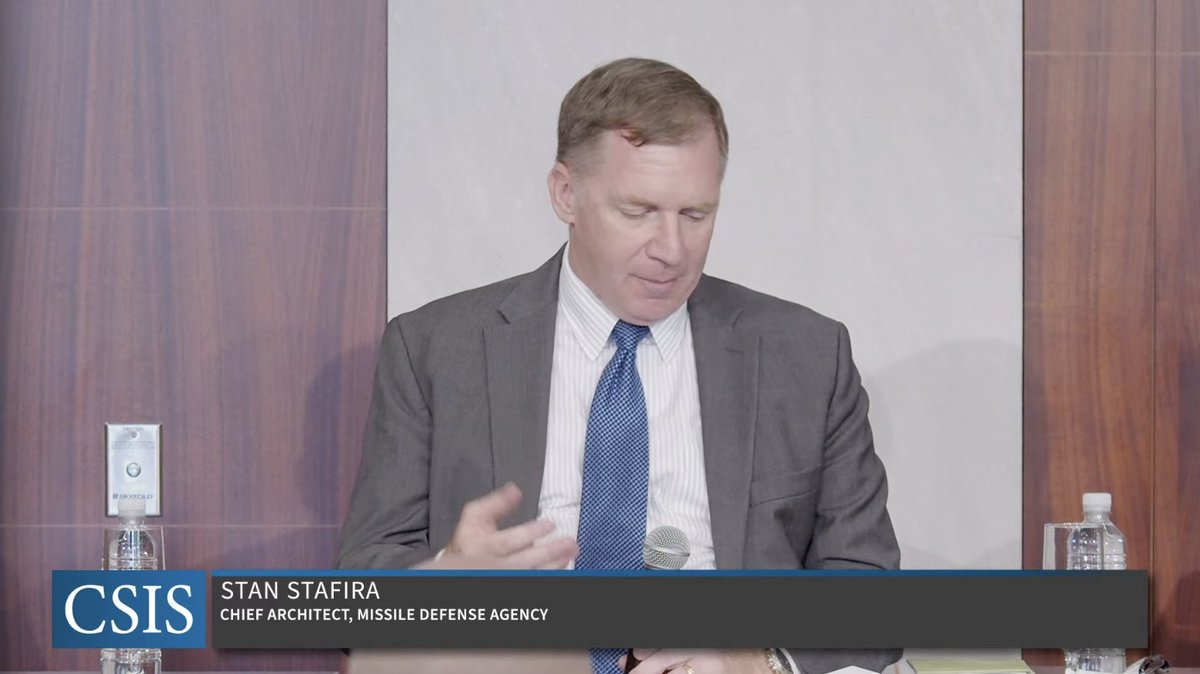
MDEB asked MDA to work with NORAD/NORTHCOM on systems engineering and hardware for CMD. Kill chain analysis, architecture development—specifically to use existing systems.
COL Behrens gives an overview of the Joint Integrated Air and Missile Defense Organization (JIAMDO), part of the Joint Staff's team for develop IAMD capabilities. Says adversaries will deploy space-based targeting, jamming. spoofing, and decoys.

Dr. DeBiaso talks about what stalled cruise missile defense for 3 decades. Many debates over what to defend, and lower urgency of threat.

DeBiaso on the why: Adversaries developing long-range cruise missiles to destroy/disrupt US logistical hubs and staging in CONUS. Plans to use conventional cruise missile strikes on homeland to disrupt U.S. power projection and raise political stakes of intervention.

DeBiaso: This characteristic of the threat helps resolve some of the thorny policy issues of where to defend. That the strategic focus is driven by threat—on where adversaries would plan to strike. And these threats are to hubs where the US generates forces for power projection.
Stafira on @JenJudson's question about Guam defense: it's a good place to learn about homeland CMD because the area defense of Guam could be applied to U.S. cities or other nodes.


Moment of levity with hiccup in Behrens' mic. Everyone hands him theirs. Behrens jokes: "This is what integration gets us"

Behrens: JIAMDO soon to develop requirements document on IAMD. It'll be updated yearly on what COCOMs demand.

PANEL 3 with @MarcusReports and industry coming up soon. Remember to submit questions:
csis.org/events/new-tim…
csis.org/events/new-tim…
• • •
Missing some Tweet in this thread? You can try to
force a refresh