Supply Side Dominance is the vision: Will they continue to gain market share?
A Thread 🧵👇
1/ Before we go deeper, let us understand the LPG Industry better
a. Upstream: Exploration and Production activities
b. Midstream: Storage and transportation of crude oil and gas
c. Downstream: Refining, production of petroleum products and processing, storage, marketing.
2/ Aegis is an integrated player of 'LPG' Logistics, with a firm hold on Midstream & Downstream segments (70% of EBITDA)
Other than this, they also provide liquid logistics (30% of EBITDA): which provides import, export, storage, and logistics of chemicals (More on this later)
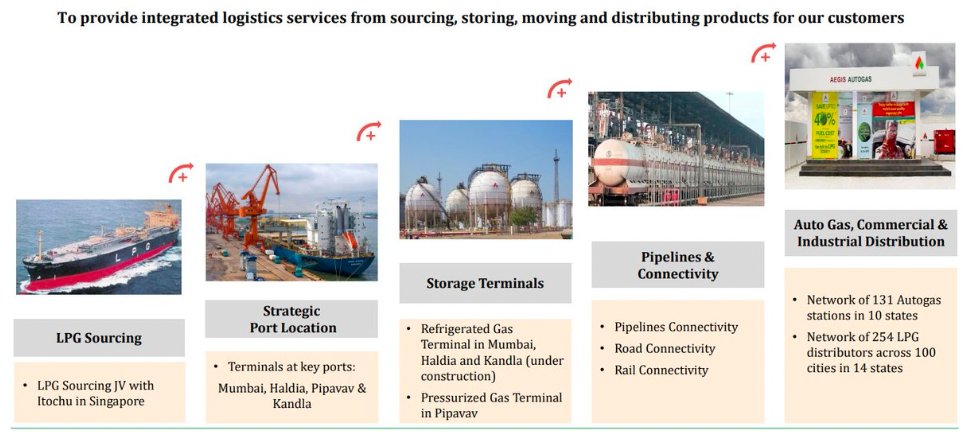
3/ They help OEMs (HPCL, BPCL, IOCL) import LPG to India
However, before we even touch imports, understand why LPG is important.
Millions of Indians die every year due to the indoor population caused by cooking with wood & dung.
4/ Watch this video to comprehend the part of LPG in global energy needs
The story of LPG:
Also, LPG is a low-carbon fuel, as it emits much less carbon dioxide than most conventional fossil fuels.
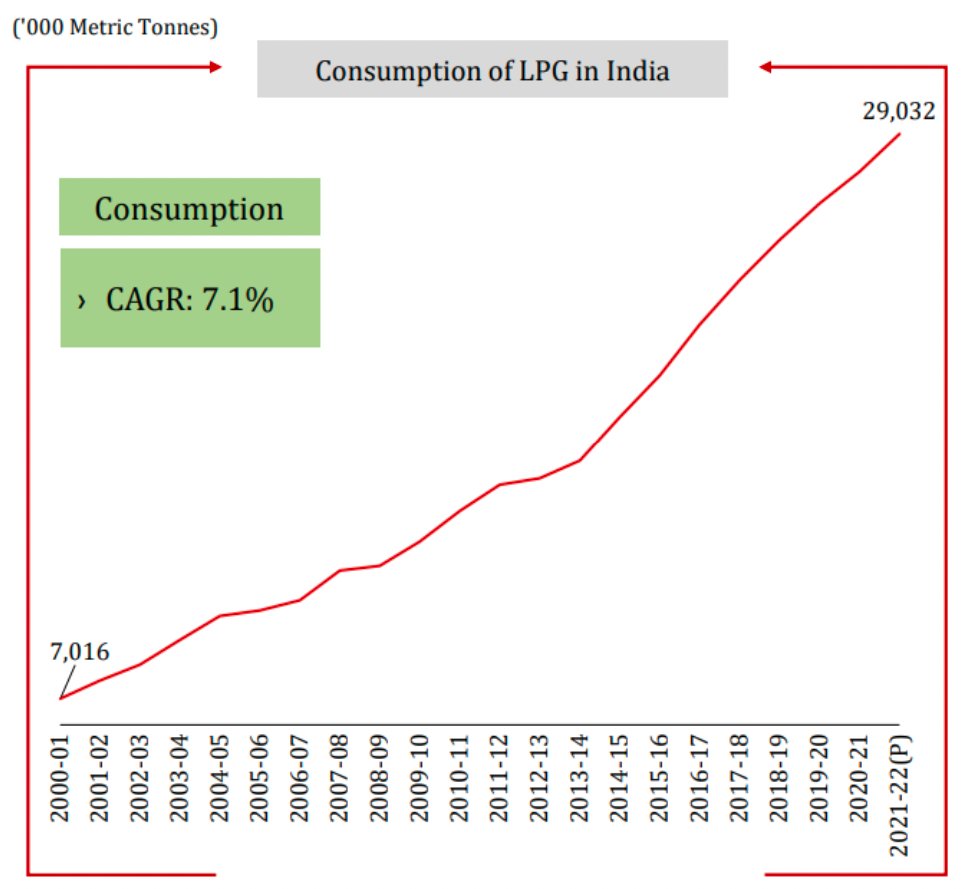
5/ This mega-trend
LPG consumption (Major boost to clean cooking) in India, growing at 7% cagr since the last 20 years 🤯
Even the government's PMUY push to increase LPG penetration has been commendable.
However, from where are we getting this much LPG from?
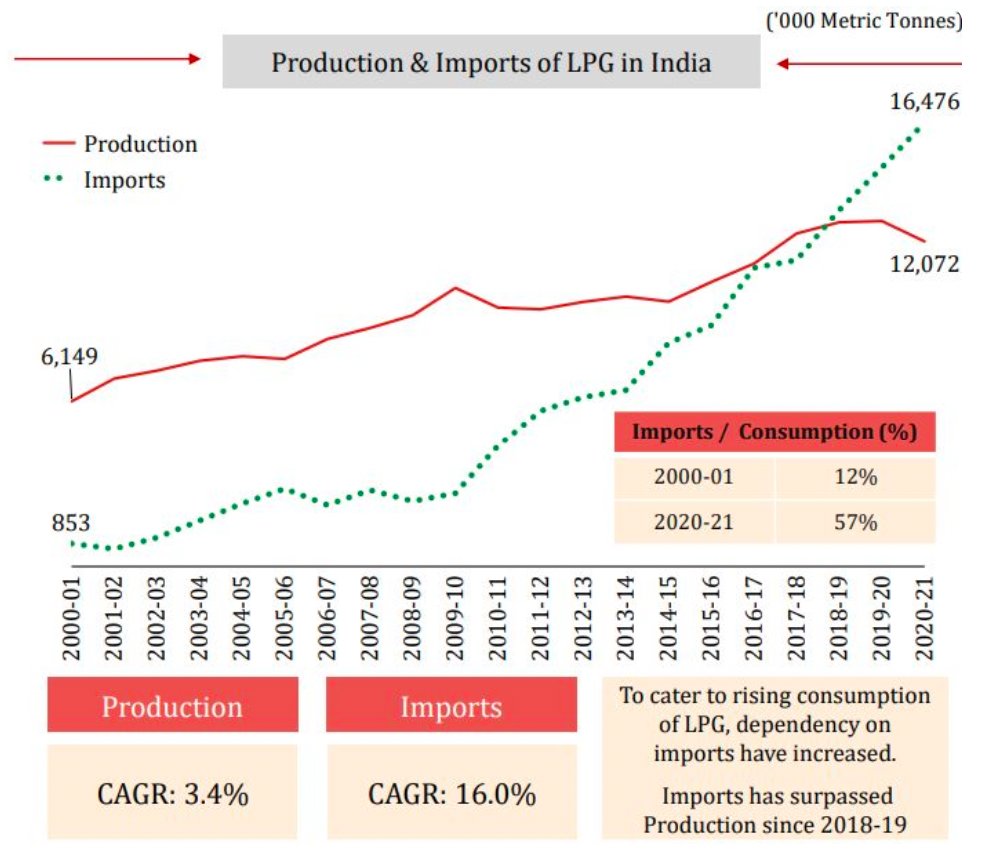
6/ Imports have been the answer.
Domestic production cagr: 3%
Imports cagr: 16%
In FY01, they made up 12% of total consumption; today, they are already at 57% & expected to increase to 70% by 2035 on a conservative basis (domestic capacity is just not keeping pace)
7/ Naturally, the finest players in the industry must benefit. We will try to understand if Aegis Logistics is the same as we delve deeper.
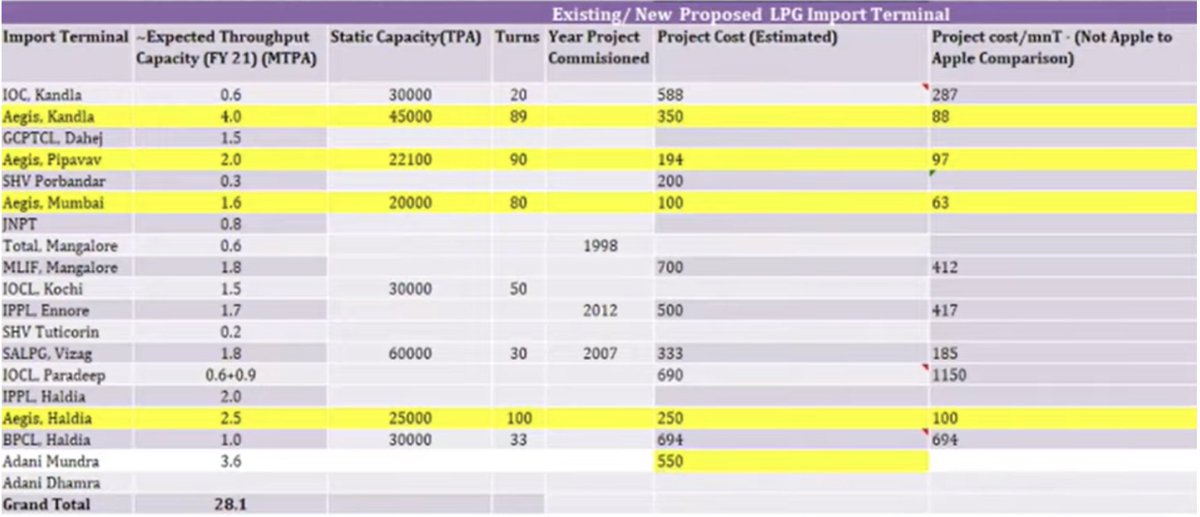
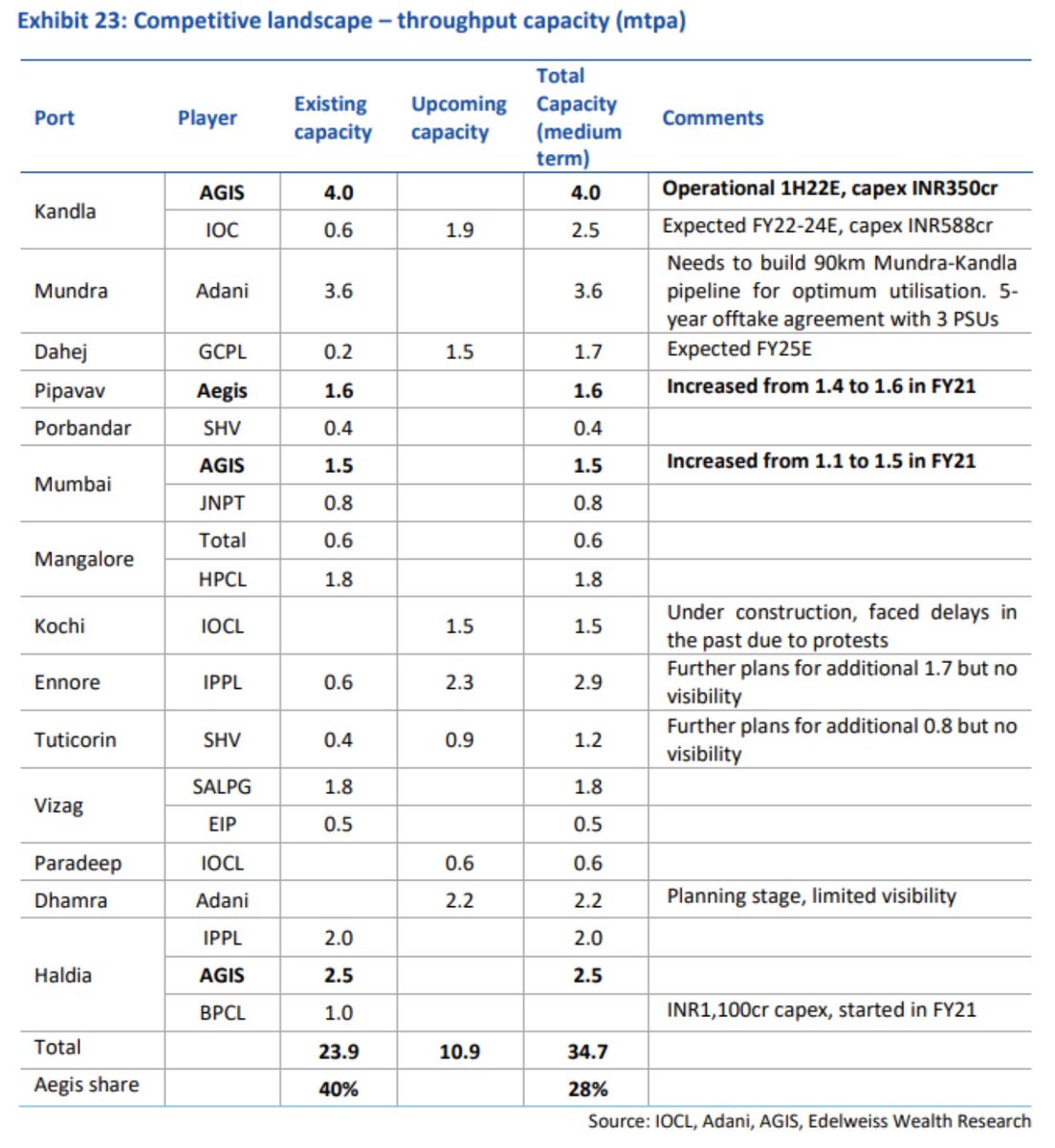
8/ They are largest private player in gas logistics with around 15-20% market share in imported LPG volumes: other large players are PSU OMCs (individually or in JV with MNCs)
See the competition, PSU to private has played out beautifully in this over the last decade.
9/ Drivers for market share gain? Efficiency
Whether be in terms of capex required to set up the same capacity: at least 1/2 or lower vs competitors
For example: They can put the same capacity that competitor puts for 500crores with just 200crs or less.
10/ Or Asset turns once it is established (Throughput) which is 80-100x of static capacity while competitors could only do 25-30x. Verify it yourself 👇
H/T Valupickr's passionate group
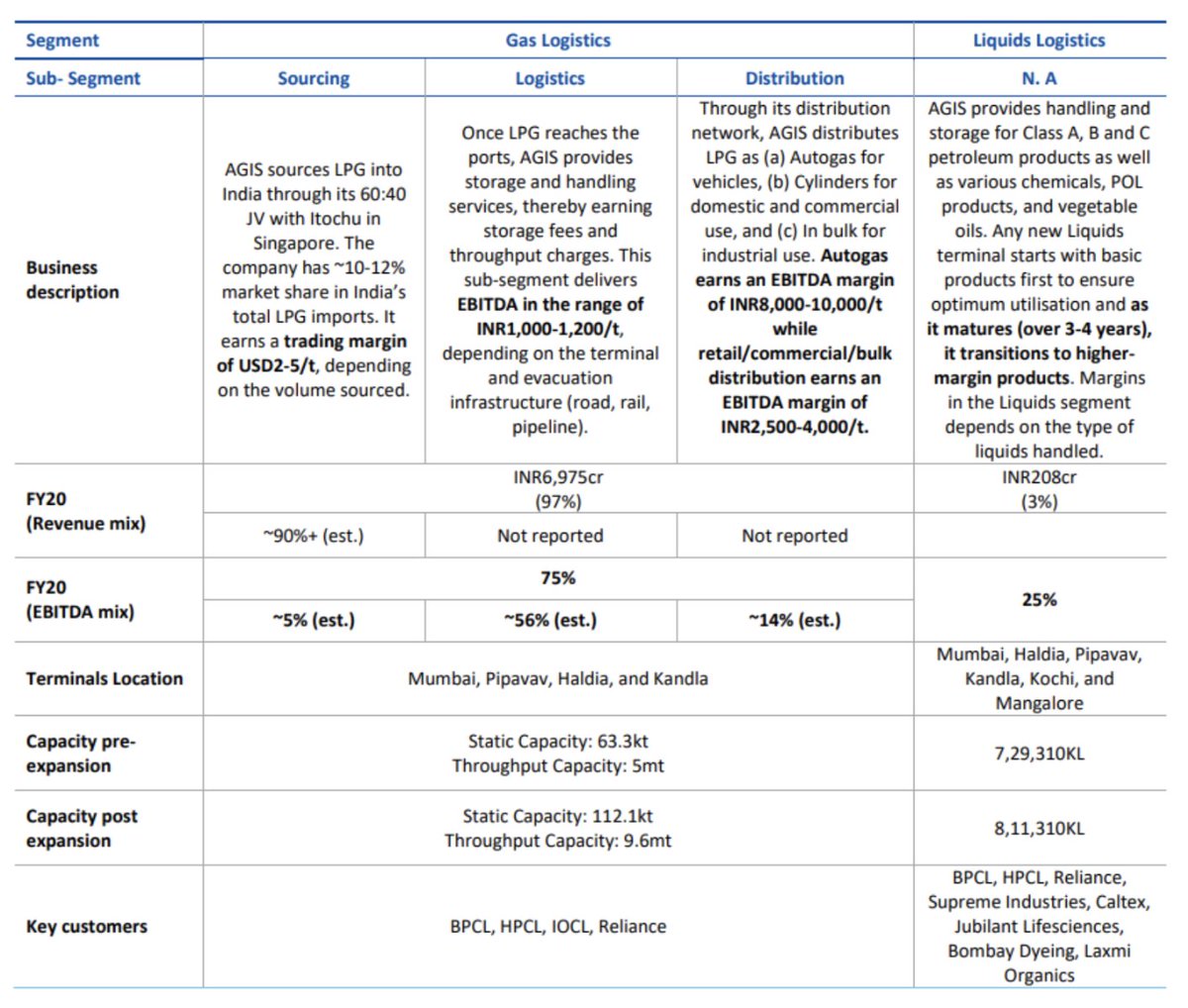
11/ LPG business has 3 parts to it.
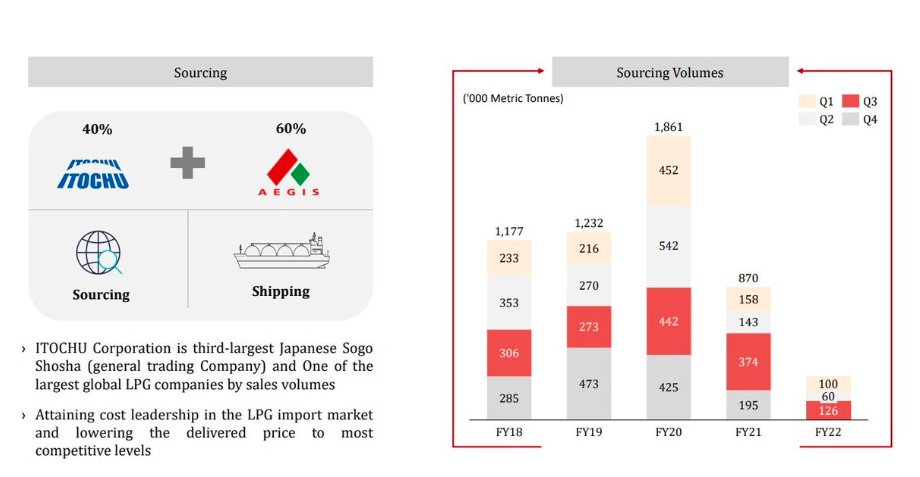
Sourcing: 90% of their Rev, very low margins (why in Aegis, you have to look at EBITDA)
Logistics: Moderate margins (majority of Aegis' EBITDA) - The above advantages show here
Distribution: Very high margins, small in terms of size today
12/ Why am I excited? With the recent developments, Aegis quality management can focus most of their bandwidth in growing the high margin distribution business.
Less than 1% market share in India; huge potential.
13/ What is this recent development?
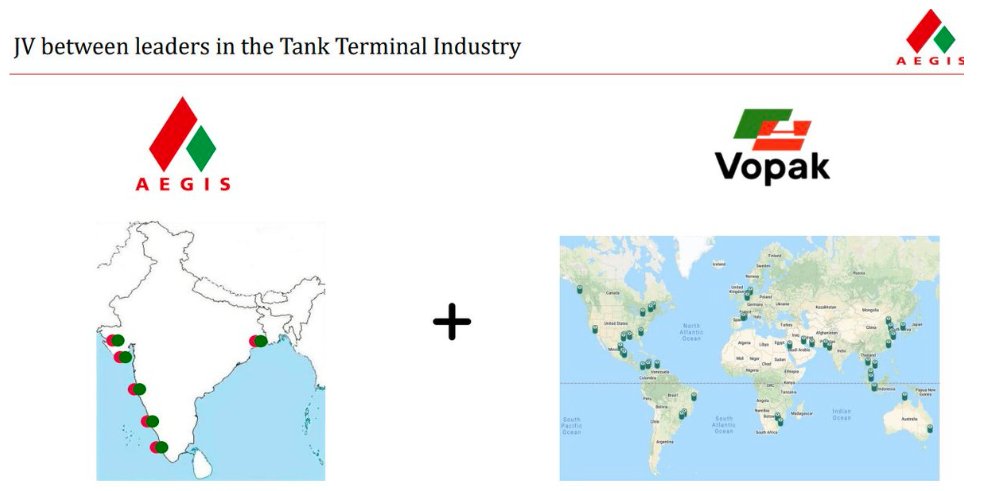
Last year, Aegis did a big deal with Vopak (a global leader in the tank storage business)
It basically meant that Aegis will transfer the majority of their terminaling & Liquid assets into a JV (51:49) with Vopak
The deal was 2 years in the making, Aegis management wanted to better position their company for upcoming decades in terms of Indian energy requirements.
15/ The standalone company (Aegis) will get 2.5-2.7K crs for the 49% of these assets
& As per the terms, JV will invest 2.5-4.5K crs into the terminaling & Liquid business capacity in the next 5 years; which is near 2x of their current gross block
16/ IMHO, It is a win-win for both
Aegis gets the financial power to put 5-10x larger capacities in faster times (remember the supply side dominance that I mentioned) & other storage technologies that Vopak will bring
Vopak gets the relatively fast growing indian market
17/ Before I talk about the exceptional management, let's understand the liquid business (A cash cow: 30% of EBITDA)
Aegis offers storage facilities of chemicals on long-term contracts and on a spot basis for traders.
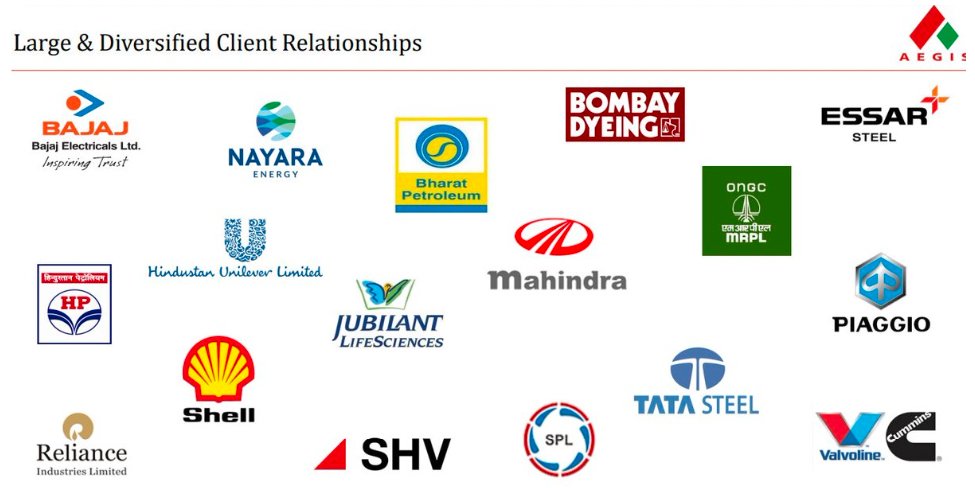
40-year-old client relationships here
18/ One caveat about this biz, is that it is a super high margin business (60-70% EBITDA)
Starts with lower margins in the initial years as they normally deal with bulk chemicals; which increases to higher margins after 3-5 years as specialty chemical contracts come in
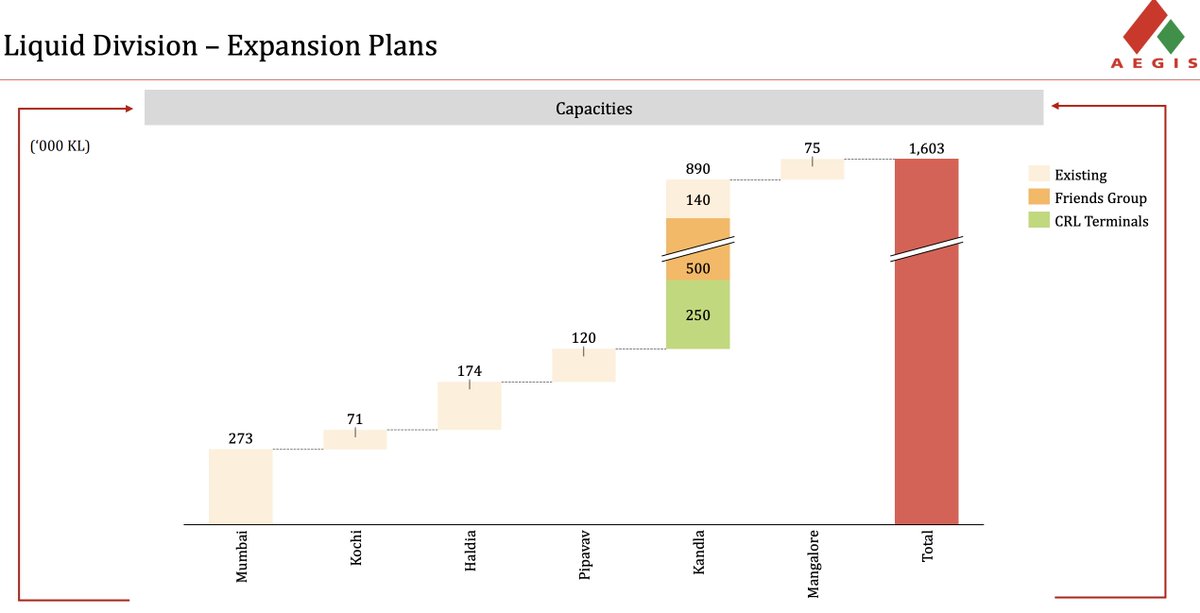
19/ With the recent augmentation of their liquid capacities through 2 acquisitions at throwaway prices (at 3-5x EV/EBITDA as per my calc.)
Becoming the biggest player -> Best economics -> Lowest prices -> Higher market share (A common theme that you will see with Aegis)
20/ LT financials are a good indicator of management quality
Business has performed rather well: need to see EBITDA before ESPP (10 year cagr: 20%+)
They introduced a huge ESOP scheme (5% dilution) for their president-level employees (impacting bottomline in FY20 & FY21)
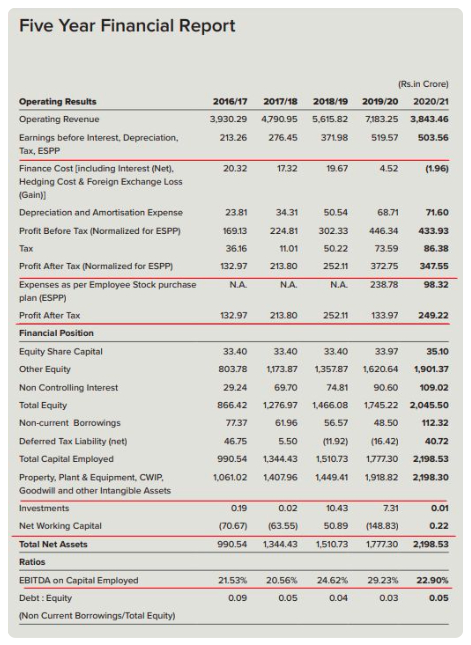
21/ The company has consistently grown its asset base (will discuss further); WC requirements are negligible | Internal accruals enough to fund this major capex (very low debt)
ROCE has consistently been above 20%, but what will be the earnings drivers (Drivers of the stock?)
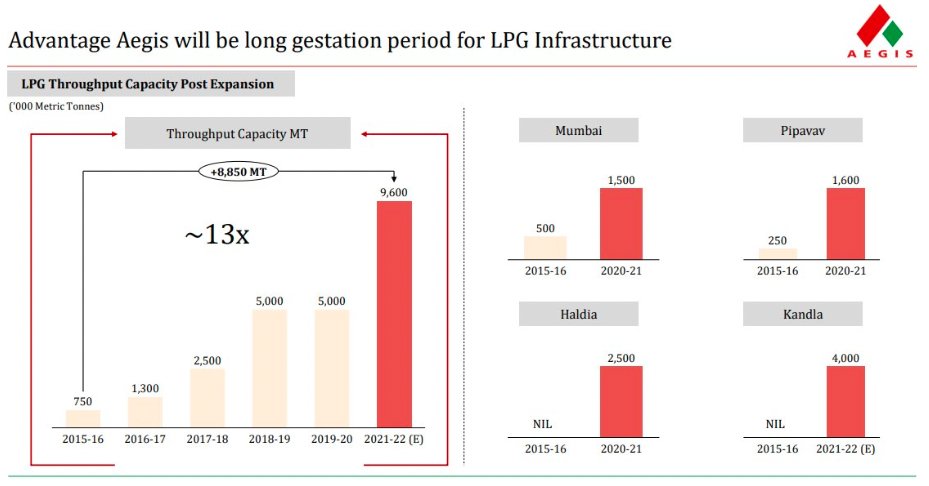
22/ Capacity expansion has literally been on steroids this past 5 years
Whether be it on Gas Terminaling (where they increased the static capacity by 4x & Thoughtput by 13x) or Liquid business (You saw before)
On the Gas side, biz is still at 30% utilization.

23/ With the Vopak deal, the growth in earnings might look subdued for the next 1-2 years, but the business should continue to scale up in volumes big time in the next 5-7 years (amount it takes to scale up new gas capacities)
However, why is the stock down 50%?
24/ One, market didn't like the valuations for the Vopak deal (Higher expectations)
As John Maynard Keynes wrote, “Human nature desires quick results, there is a peculiar zest in making money quickly, and remoter gains are discounted by the average man at a very high rate."
25/ Also, the ramp-up of the past capex has already been slower than previously expected (COVID), so little confidence since then of more capex (2.5-4.5K crs)
A potential 50-80% holding company discount which if it applied here is a risk (prevalent in Indian markets)
26/ 2nd was a mishap that happened on Sep 21': Untimely demise of the Managing Director, Mr. Anish K. Chandaria: the visionary who built the company along with his brother Mr. Raj Chandaria
The changes in the strategic direction of the company due to this is key trackable.

27/ All of these events played a key role in changing perception about the stock
However, as investors, we need to ask the key question: Has there been a structural change in the business? I do not think so.
The current price is a big discount to what I would attribute as fair.
28/ Other Strengths for the business includes:
Strong customer relationships with PSUs for decades (Extremely sticky)
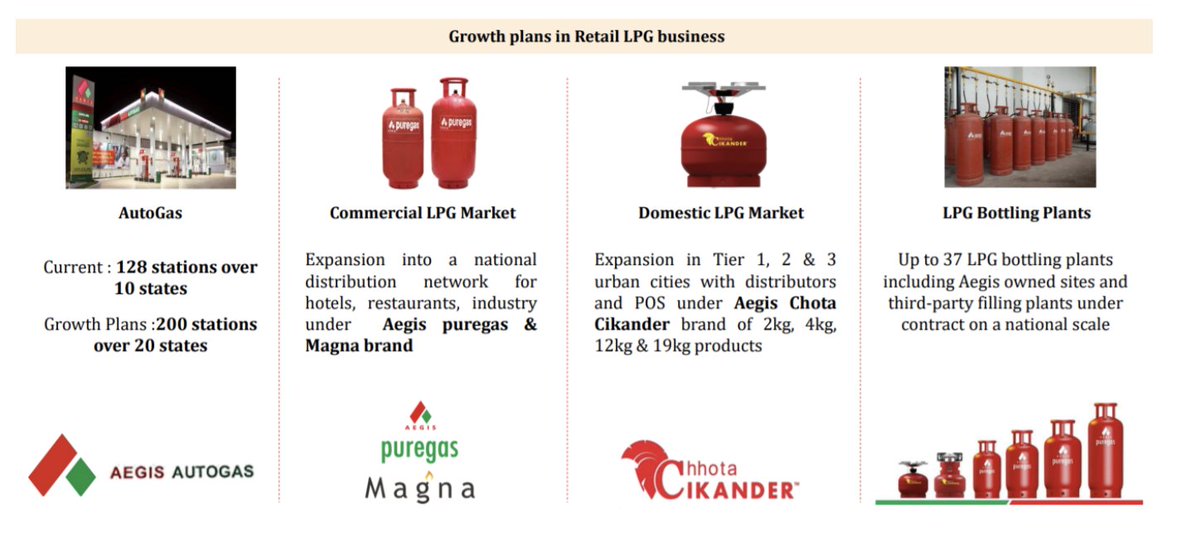
Focus moving to the highest ROCE businesses like the retailing where sky is the limit.
29/ Terminals are strategically located in key ports (the land is scarce here, think moat); additionally placed to benefit from the major pipeline infrastructure in India (most efficient way to transport)
Also, a huge reinvestment potential as we discussed in the megatrend part.
30/ Liquid Cargo Business: Stable Cash Cow which will continue to grow at higher rates given more capacities & higher value addition in the later years.
+ Fortress balance sheet & epic cashflows to fund the incremental capex requirements.
31/ Opportunities:
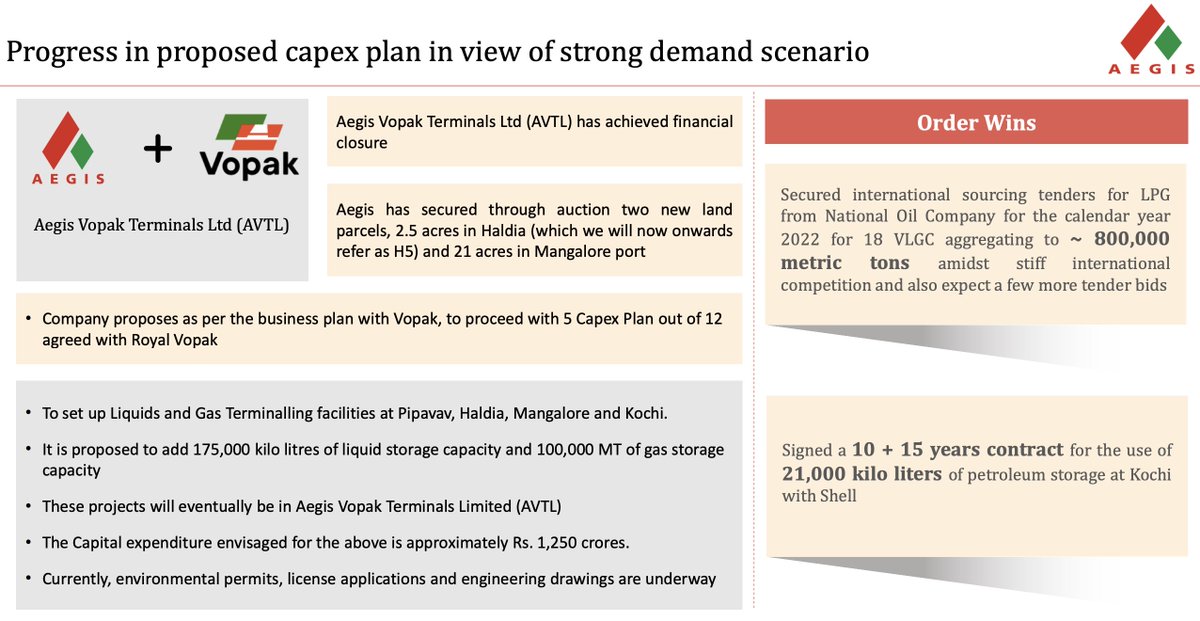
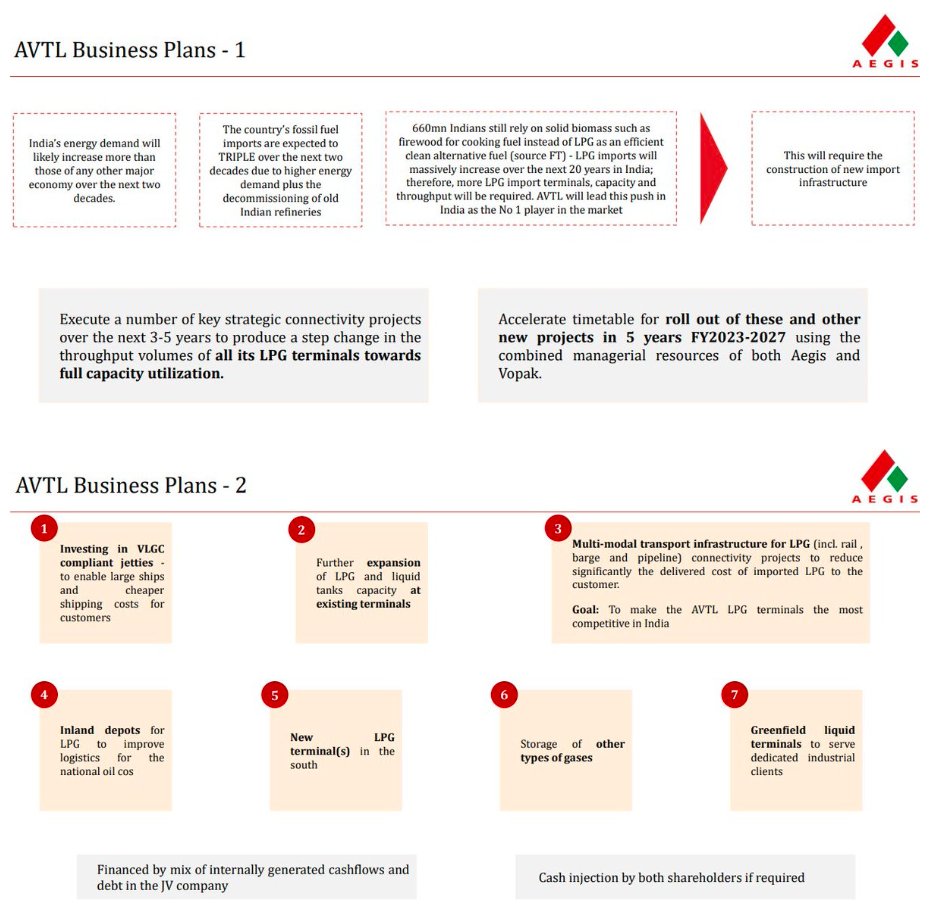
As already discussed, the huge LPG import growth with the rising Indian economy: With their efficiency metrics & now a much better reputation (after JV with Royal Vopak); can continue to gain market share at a decent pace.
Order Wins+ Capex are already on 🔥
32/ Additionally, just check out the technological capabilities of Royal Vopak.
The positive optionalities whether be it new gases, LNG (minimum investment size of a billion dollars), or renewable energy are limitless.
Imagine the scale Aegis can reach 🚀
33/ No business is without it's risks
The management spreading themselves too thin (already a bit visible in the struggling sourcing business) 👇
With the JV's ambitions, there is a huge mountain to climb by the top management to ensure sufficient capacity utilization.
34/ High gestation business whether be it LPG (5-7 years to reach throughput) or Liquid business (to go from bulk petrochemicals to high-value products takes 3-4 years)
Returns will be visible over years
Do you have the capacity to suffer or do you prefer to buy the breakout?
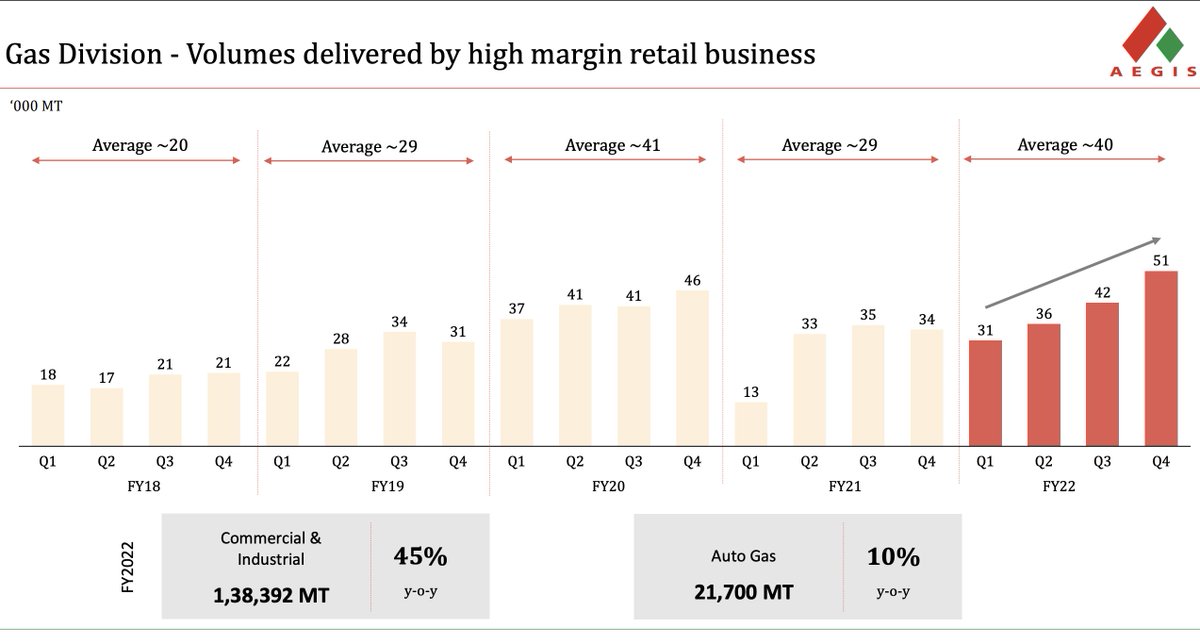
35/ Big dreams for the most lucrative retail autogas business: Execution has been a laggard here due to the weak OEM support & other demand related challenges
However, other retail engines continue to fire as Aegis has reached ATH volumes recently.
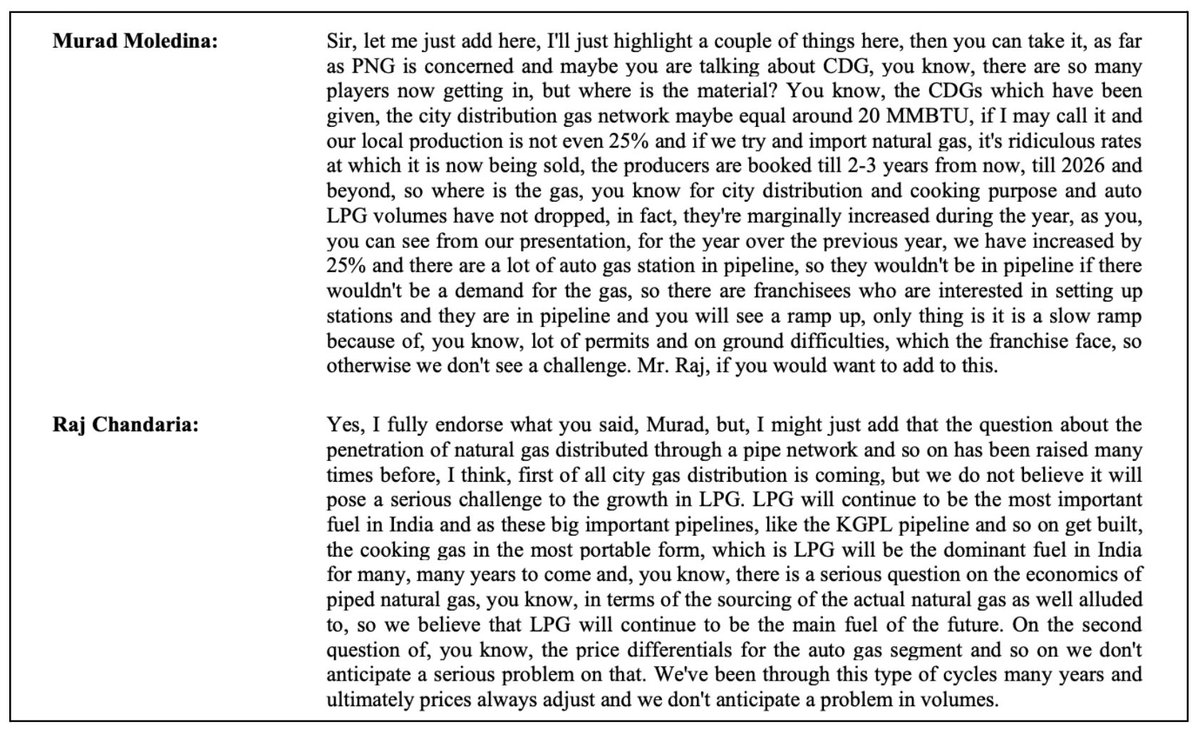
36/ One of the most talked about risk: PNG taking over LPG: why is it not a long term threat?
Not financially viable to set up the dense infrastructure required & it has been clarified multiple times in the concalls (the latest one 👇)
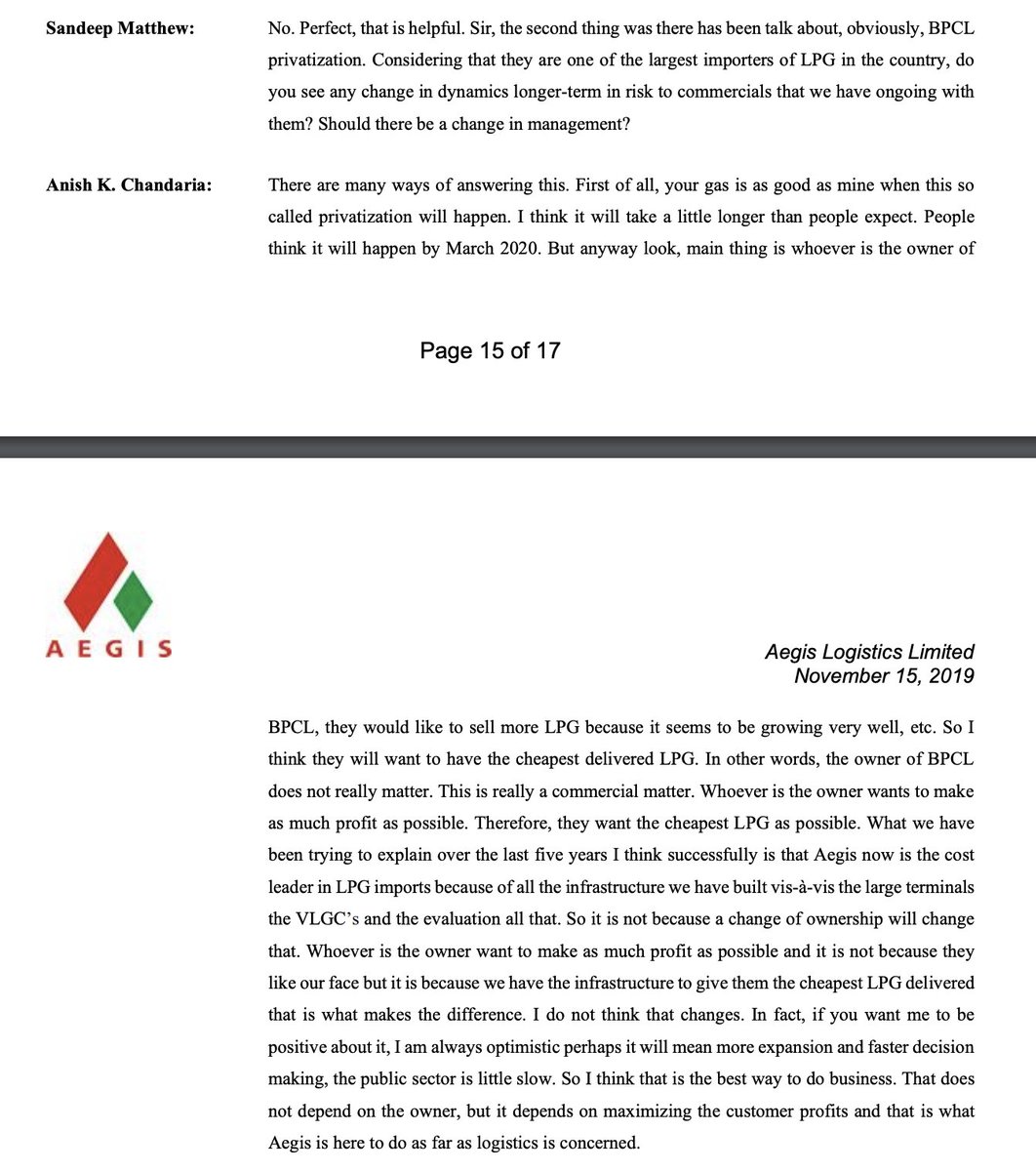
37/ BPCL privatisation: Here’s what the late MD had to say on why is it not an issue:
Aegis is the cost leader & even to set up one's own terminaling capacity takes 5 years. But, do they have the expertise to run it? Not that simple if you have read the thread till now.
37/ Now, Let's discuss real threats:
Indian economic slowdown: short to medium-term impact.
As we have seen with COVID. The main issue with this for Aegis is the huge incremental capacity that they are coming up with, the Opex with no revenues is a risk. Also, Cyclones.
38/ Changes in government policy with regards to subsidised pricing of LPG and its substitutes like CNG.
Major competitors (Adani) & customers (OMCs like HPCL, BPCL, IOCL) can scale up their terminals+ Liquids division &undercut Aegis: High Impact, low probability.
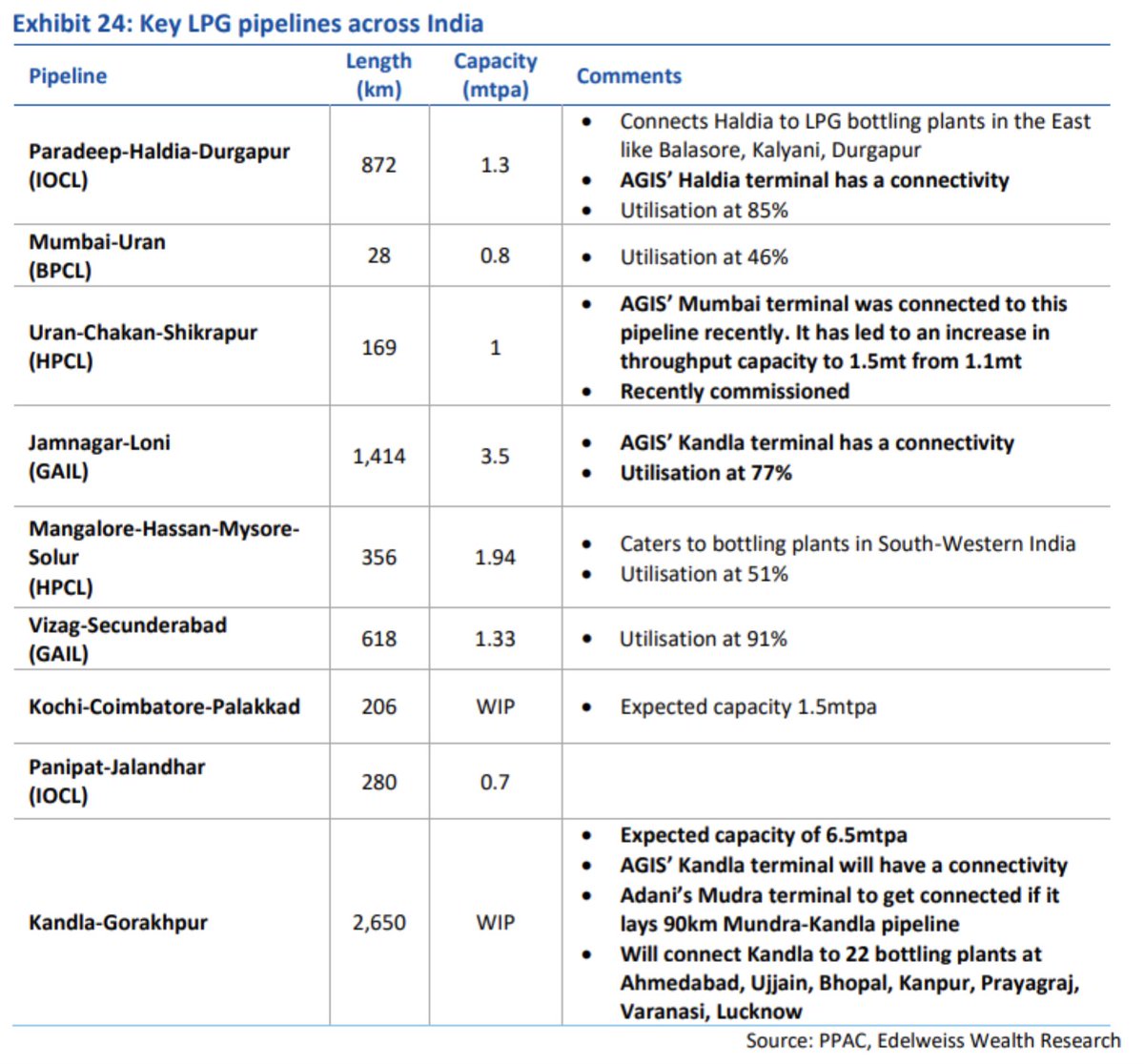
39/ Another risk is a delay in deploying pipelines by the government (plays out from time to time)
The Kandla-Gorakhpur pipeline will be a key driver of long-term growth. The ramp-up of the Kandla terminal (4mtpa capacity) to optimum capacity will be dependent on this pipeline.
40/ Valuations & Conclusion
With 10-12x FY22 EBITDA (Pre-Vopak), a lot of optionalities are not built-in into the valuations & thus this company continues to pique my interest.
Lastly, A amazing slide on the company from a recent Valupickr presentation
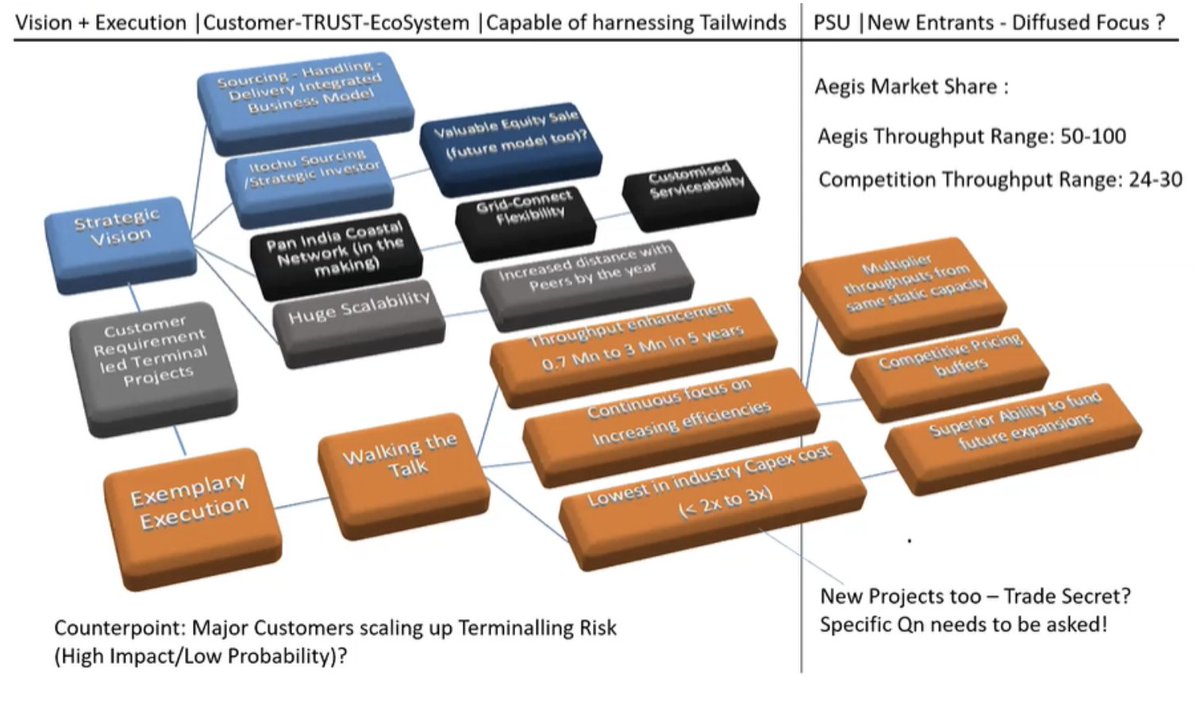
41/ The real Moat: The Oil & gas sector requires specialised infrastructure at key ports such as specialised berths, fire-fighting equipment, pipelines, transit storage and handling facilities and above all, safe and environmentally responsible handling practices.
42/ The terminalling, retail, and distribution industry in India has many participants, but only a select few possess the necessary technical and safety credentials, as well as the infrastructure to benefit from the long term prospects.
End.
• • •
Missing some Tweet in this thread? You can try to
force a refresh

Many of them didn't. Your great-great-grandmother was probably drinking opium for her nerves, sold at the corner shop as cheap as a pint of beer. It was called laudanum, a mix of opium and alcohol that doctors handed out for anxiety, sleeplessness, and "women's troubles." Mothers fed it to crying babies. The babies often stopped crying because they stopped breathing.
The men drank. By 1830 the average American was putting away almost two bottles of liquor a week. Whiskey cost less than coffee or milk. People started their day with a shot and ended it with another. Toddlers drank from their parents' rum mugs.
ADHD has a long paper trail. A Scottish doctor described kids who couldn't focus in 1798. By 1846 there was a popular German children's book about a boy called Fidgety Philipp who couldn't sit still. In 1902, a London children's doctor named George Still wrote a famous paper on the same kids and called it a "defect of moral control." Same kid, three different centuries.
Depression and anxiety had old names too. Melancholia, hysteria, the vapors. Treatments included bloodletting, ice baths, and chaining people to a wall. By 1937, American mental hospitals held 451,672 patients and took up more than half of every hospital bed in the country. Inside the walls, about 1 in 10 patients died each year.
Then came the lobotomy. Between 1949 and 1952, around 50,000 Americans were strapped to a chair while a doctor hammered an ice pick through the thin bone above their eye and wiggled it around inside their brain. It took about ten minutes. Sixty percent of the patients were women. About 1 in 20 died from the procedure. Many of the ones who lived came out with no personality left. The man who invented the procedure won a Nobel Prize.
Britain's male suicide rate hit 30.3 per 100,000 in 1905. The lowest rates ever recorded in British history are happening right now.
Plenty of our ancestors didn't make it. They drank themselves dead. They overdosed on shop-bought opium. They got locked in asylums and never came out. They had picks driven through their eye sockets. They killed themselves in numbers we don't see today. The conditions were always there. The treatments just used to be worse than the disease.
Part 2. Bayer invented heroin. The same company that makes your aspirin today trademarked the name in 1898 and sold it over the counter as cough syrup for twelve years, claiming it was non-addictive. Doctors prescribed it for asthma, tuberculosis, headaches, and “women’s troubles.” The ads showed happy children drinking it for their colds.
Heroin wasn’t the only drug at the corner pharmacy. Coca-Cola was invented in 1886 by an American Civil War veteran who came home addicted to morphine and went looking for a substitute. He found one. The original recipe had about 9mg of cocaine per glass, and it was marketed as a “nerve tonic” that could cure depression, anxiety, and exhaustion. Cocaine stayed in Coca-Cola until 1903.
For depression itself, the prescription was mercury. Doctors handed out “blue mass” pills, small pellets of pure mercury mixed with honey and rose petals. A single daily dose contained roughly 9,000 times the mercury the EPA allows today. Side effects included rage attacks, hand tremors, tooth loss, and slow cognitive decline. The pills were sold as cures for “melancholy.”
After the American Civil War, somewhere between 45,000 and 400,000 veterans came home addicted to morphine. Many wore leather pouches around their necks holding morphine sulfate tablets and a hypodermic needle. The army gave it to them on discharge. Doctors called the condition “soldier’s disease.” The men also came back with what doctors called “soldier’s heart,” now diagnosed as PTSD. The treatment for both was more morphine.
You could order all of this through the mail. The Sears Roebuck catalog sold a heroin kit for $1.50: two vials of heroin, a syringe, two needles, and a carrying case, delivered to your door. They sold cocaine for the same price. A pack of cocaine toothache drops cost 15 cents and came in a box decorated with smiling children.
Cocaine was recommended for sinus problems, alcohol withdrawal, and fatigue. People with asthma inhaled opium smoke. The cure for insomnia was chloroform or bromides. Bromides, taken often, sometimes caused a toxic psychosis. Pharmacies stocked all of it, no prescription needed, until 1906, when a new law forced them to start listing the ingredients on labels.
Ancestors took medication constantly: mercury for depression, cocaine for anxiety, heroin for asthma, morphine for everything else. The drugs were just sold next to the toothpaste.
A Belgian psychiatrist watched 400 movies over 3 years to find the most realistic psychopath ever put on screen. Out of 126 fictional killers he studied, the most clinically accurate was Bardem's Anton Chigurh in No Country for Old Men.
Samuel Leistedt is a forensic psychiatrist who's interviewed convicted murderers his entire career. Asked who Chigurh reminded him of, he named two professional hitmen from his own practice. His words: "Cold, smart. No guilt, no anxiety, no depression."
The paper came out in the Journal of Forensic Sciences in 2014. Leistedt and a colleague diagnosed every famous film psychopath against clinical criteria. Take Hannibal Lecter, with his eerie speeches and dinner-party manners, way too theatrical for any actual psychopath. Patrick Bateman from American Psycho was pure fantasy. Norman Bates from Psycho had a completely different mental illness. Movie killers usually shout. Real ones are quiet.
Bardem almost said no to the role. He told the Coen brothers: "Listen, I'm the wrong actor. I don't drive, I speak bad English, and I hate violence." The Coens replied: "Maybe that's why we called you."
Then they stripped his dialogue. In Cormac McCarthy's novel, Chigurh talks a lot about fate and free will. In the film, he barely speaks. The Coens wanted him to feel like he came from another planet, modeled on the alien arrival in The Man Who Fell to Earth, the 1976 David Bowie movie.
His weapon is a captive bolt pistol. Farmers use it to stun cattle before slaughter, one quiet thud and the cow drops. McCarthy gave him that gun for a reason. Chigurh sees the humans around him as livestock.
Then the haircut, what finally convinced Bardem to take the role. Tommy Lee Jones, who plays the sheriff, brought a book to set. Inside was a photo from the 50s or 60s of some guy in a Mexican border-town brothel with a strange bowl cut. The Coens showed it to their stylist Paul LeBlanc and said: make Javier look like that. Strange and unsettling. LeBlanc mixed medieval English warrior cuts with the Beatles-era mop top.
Bardem hated wearing it. He fell into a depression over it. Fellow actors said he could barely leave his hotel. But every morning he told LeBlanc the hair was working. Every morning it pushed him deeper into the character.
The coin toss scene with the gas station owner, the one everyone remembers, was shot in just a couple of takes. Bardem was thrown by how fast it went. "I was like, what? Really? After months of preparing this is it?"
He swept that year: Oscar, BAFTA, Golden Globe, Screen Actors Guild, Critics' Choice. First Spanish actor to win an Academy Award.
Out of nearly a century of cinema and 126 fictional killers studied by practicing psychiatrists, the most accurate portrayal of a psychopath came from a Spanish actor who couldn't drive, hated violence, and was so depressed about his haircut he could barely leave the house.
Follow @anishmoonka for daily stories across science, history, psychology, culture & AI.
—————
Sources:
Leistedt & Linkowski 2014 study on psychopathy in cinema, published in Journal of Forensic Sciences (primary source): onlinelibrary.wiley.com/doi/10.1111/15…
Science News breakdown of the Leistedt study, including the “cold, smart, no guilt, no anxiety, no depression” hitmen quote: sciencenews.org/blog/gory-deta…
Far Out Magazine on Anton Chigurh being voted the most realistic psychopath, with Leistedt’s direct quotes on the character: faroutmagazine.co.uk/anton-chigurh-…
SlashFilm on Bardem’s Vanity Fair interview about the haircut, his depression over it, and the photo origin story: slashfilm.com/963589/javier-…
SlashFilm on the Coens stripping Chigurh’s dialogue and the “from Mars” / Man Who Fell to Earth casting logic: slashfilm.com/1148606/preser…
Part 2. Carter Burwell wrote 16 minutes of music for No Country for Old Men. Six of those minutes are end credits. Strip them out and a two-hour thriller has about ten minutes of score across every shootout, every chase, every coin toss.
The Coens did this on purpose. Sound editor Skip Lievsay told the New York Times in 2008 that the standard Hollywood thriller cues the audience with music. The score tells you when to feel scared. The Coens wanted that gone. "The idea here was to remove the safety net," Lievsay said. The viewer is stuck in the room with the violence with nothing to lean on.
Joel was skeptical at first. Ethan pushed the no-music idea, and Joel only agreed after they watched the first edited version of the film together. He later told the Times, "It pretty much told us that we didn't need any."
The music that does exist is built to be invisible. Burwell scored the film with electronic tones and singing bowls, the metal cups Buddhist monks rub for meditation. In the gas station coin toss scene he tuned an ambient hum to 60 hertz, the exact frequency a refrigerator buzzes at. The audience hears it as room noise. Several reviewers walked out swearing the scene had no music at all.
The weapons got the same treatment. For the captive bolt pistol, sound designer Craig Berkey used a pneumatic nail gun. He told an interviewer in 2007 he never researched real cattle guns. "I wasn't looking for authenticity."
The silenced shotgun is the strangest mix in the movie. Berkey layered three sounds. A low "thwump-pop" he found on a stray production recording from one of the scenes. A short rising tone made from a sped-up servo motor. And a sped-up, reversed recording of a woman screaming. None of those would work alone. Stacked together they make a sound your ear cannot file as a gunshot. The Coens picked the version that made the movie.
Burwell almost did not submit the score for an Oscar. He felt it was too short to count, and probably too sunk into the sound design to be called music. Miramax pushed him to submit. He was not nominated. The film won four Oscars without him.
The motel shootout is the proof. Almost no dialogue, almost no music, just footsteps on carpet, breathing, and a stop sign blowing in the wind outside. People still talk about that scene almost twenty years later. The silence is the reason.
Researchers at the University of Bergen ran a study comparing 213 Sudanese men. Half brushed their teeth with a chewed tree root. Half used a regular plastic toothbrush. The tree root group came out with healthier gums and less plaque.
That stick is called a miswak. The WHO has been quietly recommending it since 1986. In 2011, scientists at Sweden’s Karolinska Institute finally cracked the chemistry.
The active ingredient is benzyl isothiocyanate, a natural plant defense compound from the same family of sulfur molecules that give cabbage and mustard their sharp bite. The compound punches through the outer wall of bacteria that cause gum disease. From there, it dismantles the chemistry that keeps the bacteria alive. The Karolinska team isolated it by running root extracts through a chemical analyzer that identifies individual molecules.
The stick comes from the Salvadora persica tree, which grows in dry parts of Africa, the Middle East, and India. Inside the wood you also find natural fluoride, a gentle abrasive called silica that polishes off plaque, sulfur compounds, and tannins that tighten gum tissue. A separate team at Sweden’s University of Gothenburg ran another trial. They soaked the sticks in a fluoride solution. The fluoride left in the test group’s saliva came out higher than what people got from regular fluoride toothpaste.
A more recent systematic review pulled together a stack of randomized trials. Miswak on its own controlled plaque about as well as a regular toothbrush. Used alongside the toothbrush, it actually beat brushing alone on both plaque and gum inflammation scores. The Princess Nourah University trial from 2024 complicates that. Over two weeks, the miswak group’s plaque held steady while the toothbrush group’s dropped further. And gums in the miswak group got noticeably worse for people who sawed at their teeth too hard. Aggressive horizontal scrubbing tears at the soft tissue along the gum line.
One stick costs under 10 cents in the regions where the tree grows, and a single twig lasts for weeks. In sub-Saharan Africa, herbal toothpastes built around miswak and neem (another bitter chewing-stick tree) made up over a quarter of toothpaste sales in 2023.
The honest caveat is that Western dental literature treats the miswak as an add-on rather than a replacement, mostly because reaching the back molars with a stick is awkward. Used correctly, with soft perpendicular brushing along the gum line and no aggressive sawing, it does what a toothbrush does and adds a low-grade antibiotic on top. For most of human dental history, this is what cleaning your teeth looked like.
Part 2. Researchers at the University of Arkansas examined the teeth of Hadza hunter-gatherers in Tanzania. The men still living in the bush, eating wild food and brushing with chewing sticks, had cavities on 52% of their teeth. The women in those same camps had cavities on just 16%.
The difference is honey. The Hadza get about 15% of their yearly calories from wild honey. The men go further. When they leave camp to forage, that proportion explodes. Field studies tracking what they ate on hunting trips found honey made up 85% of the calories they consumed before returning home.
Honey is roughly 80% sugar. The bacteria that cause cavities don’t care whether the sugar comes from a soda can, a bag of white flour, or a wild beehive. Streptococcus mutans, the main cavity-causing microbe in the human mouth, ferments all of them into the same acid. That acid dissolves enamel. Cavities are the receipt.
The bush women don’t eat honey. They eat fibrous tubers and wild plants, and the grit on those tubers actually scrubs their teeth while they chew. Among Hadza women who had moved to villages and adopted a maize-heavy diet, the cavity rate jumped from 16% of teeth to 42%.
The Hadza bush men are not outliers. The average American adult brushes twice a day with fluoride toothpaste and still walks around with 9 teeth out of roughly 28 that are decayed, missing, or filled. That works out to about a third of every American mouth. The Hadza bush men have cavities on more than half of theirs.
The pattern repeats across populations. Pre-agricultural hunter-gatherers in Neolithic China had cavities on around 3% of their teeth, while intensive millet farmers in the same region jumped to 14%. The carbohydrate load on the bacteria is what moves the rate. Brushing helps at the margins but doesn’t determine the outcome.
The miswak helps. So does fluoride toothpaste. The Hadza bush men use the chewing stick the WHO has been recommending for forty years, and they still have cavities on more than half their teeth, because they love honey. You cannot brush your way out of a diet that gives bacteria a steady supply of fuel.
The musty wet-rag smell on damp clothes is bacteria. A bug called Moraxella osloensis lives on your skin, gets onto fabric every time you wash, and once that fabric stays damp past 4 hours, it starts doubling. What you're smelling is the acid it leaves behind as waste.
Japanese researchers at Moriyama University figured this out in 2012. They counted 10 times more of this bug on smelly towels than on clean ones. It survives any wash below 60°C, or 140°F. Most people wash much cooler.
The fungi behind athlete's foot, ringworm, and jock itch also live on damp clothes. A 2010 paper from the Hohenstein Institutes in Germany found that about 10% of the infectious material jumps from a contaminated piece of clothing to a clean one just by sitting in the same laundry basket. And wet fabric passes 200 times more bacteria to your skin than dry fabric.
Then there's the air. One wet load of laundry releases about 2 litres of water, around half a gallon, into the room. The UK's Centre for Sustainable Energy ran the numbers: drying one load in a small bedroom, around 10 by 10 feet, pushes humidity to roughly 96%. A tropical rainforest sits between 77 and 88%. Mould starts growing at 60%.
The fungus that loves these conditions is Aspergillus fumigatus. Professor David Denning at the National Aspergillosis Centre in Manchester has treated patients who developed a chronic lung infection from inhaling spores that grew in bedrooms where wet laundry was drying on the radiator. His team estimates 87% of UK homes dry their clothes indoors during winter.
So a shirt that didn't quite dry has live bacteria still multiplying on it. The air around it is wetter than a rainforest. And the fungi growing in that air are the same ones hospitals treat for invasive lung infections.
Your washing machine cleans the dirt. Your dryer kills the bugs.
Follow @anishmoonka for daily stories across science, history, psychology, culture & AI.
—————
Sources:
Moraxella osloensis as primary cause of laundry malodor — Kubota et al., Applied and Environmental Microbiology, 2012 journals.asm.org/doi/full/10.11…
Dermatophyte transfer between fabrics in laundry baskets — Hammer, Mucha & Hoefer, Mycopathologia, Hohenstein Institutes, 2010 link.springer.com/article/10.100…
Indoor laundry drying and humidity load — Daisy Winter, Centre for Sustainable Energy, via BBC Gardeners World gardenersworld.com/news/the-truth…
Aspergillus fumigatus from indoor wet laundry — Prof David Denning, National Aspergillosis Centre, University of Manchester manchester.ac.uk/about/news/why…
Bacterial transfer rates from wet vs dry fabric to skin — Mackintosh & Hoffman review summarised in European Tissue infection-risk report europeantissue.com/wp-content/upl…
Part 2. Damp clothes feel colder because they actually are: water against your skin pulls heat from your body 25 times faster than air does. That half-dry shirt you just took out of the dryer is dragging your core temperature down whether you notice or not.
Princeton’s Outdoor Action program has the numbers. Normally your body loses about 2% of its heat through direct contact with surfaces. Wet clothes push that loss up to 10-15%. Combined, the effect is enough to cause hypothermia at 60°F. The UK recorded 132 hypothermia deaths across the summers of 2008 to 2010.
Hikers have a one-word warning: cotton. Cotton can absorb up to 27 times its weight in water. Once it gets wet, it loses its insulating air pockets, holds moisture flat against your skin, and dries slower than any synthetic. In 2005, a hiker in the Alaska Range was found dead from hypothermia in early autumn. The state trooper’s report flagged that his entire outfit was cotton.
Evaporation does its own damage. Every gram of water leaving a wet shirt pulls about 2,400 joules of heat from your body. A T-shirt damp with 100g of moisture costs you roughly 58 calories of warmth before it fully dries. Your body fights this by shivering, pulling blood away from your hands and feet, and releasing stress hormones.
A shirt that comes out of the dryer still slightly damp will keep cooling you for hours as it dries. Sit in a 68°F office in that shirt and your body is fighting heat loss the whole time.
Dry cotton, synthetics, and merino wool all trap warm air against your skin. Wet fabric does the opposite. It pulls heat out.
Drying a shirt does two things: it removes the water, and it keeps your body at 98.6°F.
In the 1970s, David Premack wondered if a chimpanzee could be taught to ask a question. He taught Sarah 130 plastic word-tokens. She answered his questions easily. After years of work, she had never asked one of her own. Sixty years later, no signing ape has.
A four-year-old human asks about 25 questions an hour. Paul Harris at Harvard counted them: kids ask their parents around 40,000 questions between ages two and five.
Premack even worked out a method for teaching an ape to ask. Hide a snack the chimp expects. Wait for her to sign "where is it." He never bothered running it on Sarah. She spent her sessions answering his questions, never asking her own. A normal kid, he pointed out, asks "what that? who making noise? when Daddy come home?" on a loop.
Washoe the chimpanzee, the first one taught American Sign Language, knew 250 signs. She could request food. She could sign her name. She once saw a swan and called it "water bird," a sharp invention for an animal she had no sign for. She never asked what the swan was, or where it came from, or anything else.
Koko the gorilla knew about 1,000 signs. Kanzi the bonobo understands more than 3,000 spoken English words. Nim Chimpsky, Herbert Terrace's chimp at Columbia (named to mock the linguist Noam Chomsky), strung 125 signs into more than 20,000 combinations. His longest stretch was "give orange me give eat orange me eat orange give me eat orange give me you." He never asked a thing.
Joseph Jordania, a researcher in Melbourne, thinks this is the line between us and them. To ask a question, you first have to know that the person across from you knows something you don't. Apes do not seem to get to that step, even after a lifetime of being talked at by humans.
Human kids cross that line around their fourth birthday. Apes never do.
Part 2. Ayumu the chimpanzee can glance at nine numbers scattered across a screen for one-fifth of a second, then tap them in numerical order from memory. He has been doing this since 2007. Most university students fail.
Tetsuro Matsuzawa has been running these tests at Kyoto University for decades. The numbers flash on a touchscreen for 210 milliseconds, then disappear. Your eyes cannot scan the screen in that time, so you guess. Ayumu just looks and remembers. He hits roughly 80% of the time. University students hit around 40%, and they do not improve much with practice.
While we tried to teach apes to talk, they were doing things we cannot. In southeastern Senegal, primatologist Jill Pruetz watched chimps make spears. They break off a green branch, strip the leaves, and sharpen the tip with their teeth. Then they jab the spears into hollow tree trunks to stab small primates called bushbabies that sleep inside during the day. Pruetz documented 22 of these attacks. The hunters were mostly young females. No one had ever recorded a non-human animal making a weapon to kill another vertebrate. The paper came out in 2007, the same year as the Ayumu memory paper.
In 1970, Gordon Gallup put a chimp in a room with a mirror, marked its forehead with red dye while it was asleep, and watched what happened when it woke up. The chimp touched its own forehead, not the mirror. Chimps, bonobos, and orangutans pass this test. Gorillas usually fail it. Most monkeys never figure it out, no matter how long they have with a mirror. Human babies start passing around eighteen months.
An ape can pull a snapshot off a screen in 210 milliseconds. Make a tool that kills. Recognize itself in glass. We were measuring the wrong thing.
A 19-year-old in France went into a coma for 3 weeks. To her, it lasted 7 years. She gave birth to triplets, named them, and lost one shortly after birth. She woke up and asked the nurses where her children were.
Doctors see this often in intensive care. They call it ICU delirium, and it hits about 37% of patients there. For people on a breathing machine for weeks, the rate climbs to nearly 9 in 10.
The drugs that keep ICU patients unconscious push down the deepest sleep stages, where the brain normally files away the day. When the drugs ease off, all that suppressed dreaming floods back at once. Meanwhile, the brain stops double-checking reality. So the brain just builds, stacking vivid detail on vivid detail. Half an hour of dream time can feel like a whole year of life.
The grief follows her out of the coma. The brain regions that handle emotional pain are the same ones that hurt when you lose someone in waking life. Memories don’t come with a “this was real” tag. So the love a mother feels for children who never existed lives in the same place as the love for kids who did. Grief counselors handle these losses the way they would the death of an actual child, because to the brain, they are the same.
A novelist named Caroline Leavitt wrote about her own coma for Psychology Today in 2021. She said waking up felt like being “pulled violently” from one world to another. Drug-induced comas like hers leave the brain active enough to dream. In trauma comas, the brain mostly goes dark.
In Rick and Morty there’s an arcade game called Roy where you live a whole life in an afternoon. The brain runs the same game on its own. All it needs is a breathing machine and 3 weeks.
Part 2. Up to 7 in 10 ICU patients leave the hospital with memories of being kidnapped, drowned, or tortured by the staff. None of it happened. The memories feel sharper than anything from their actual lives, and many never stop believing it really did.
The same scenes show up across thousands of patients. They wake up sure that the nurses were trying to poison them. They remember being held underwater while doctors leaned over them. One patient in a 2020 case study believed a staff member was a witch mixing potions. Another, a 53-year-old man on a ventilator for 30 days, described every dream as drowning or strangulation.
The ICU itself provides the raw material. A ventilator tube does feel like a hand at your throat. The wrist restraints that stop patients from yanking out tubes do feel like being tied down. Nurses leaning in to adjust equipment can look like attackers leaning over a body. Add the drugs and the delirium, and the threat becomes the only story the brain can tell.
Even years later, the memories stay vivid. About 20% of ICU survivors develop PTSD, and the delusional memories drive it more than the actual illness. Most patients don’t tell anyone, because saying it out loud sounds insane. Some live for years convinced their care team tried to kill them. They know rationally it didn’t happen but cannot shake the feeling.
There is a fix. It’s called an ICU diary. Family members and nurses write down what’s actually happening each day while the patient is sedated. When the patient wakes, they read what really took place. In a 2010 randomized trial of 352 patients, this single change cut new-onset PTSD from 13% to 5%.
If a loved one ever lands in intensive care for more than 3 days, ask about a diary. It costs nothing. And it saves them from a haunting they may never talk about.