This painting is 400 years old.
Long before Picasso or Munch there was an artist so unique he transcended genre and style.
His name was El Greco...
Long before Picasso or Munch there was an artist so unique he transcended genre and style.
His name was El Greco...

Domenikos Theotokopoulos was born in 1541 on the island of Crete, which was then part of the Venetian Republic.
He later became known as El Greco, simply meaning "The Greek".
Crete was the centre of post-Byzantine art, and El Greco first trained as an Orthodox Icon painter.
He later became known as El Greco, simply meaning "The Greek".
Crete was the centre of post-Byzantine art, and El Greco first trained as an Orthodox Icon painter.
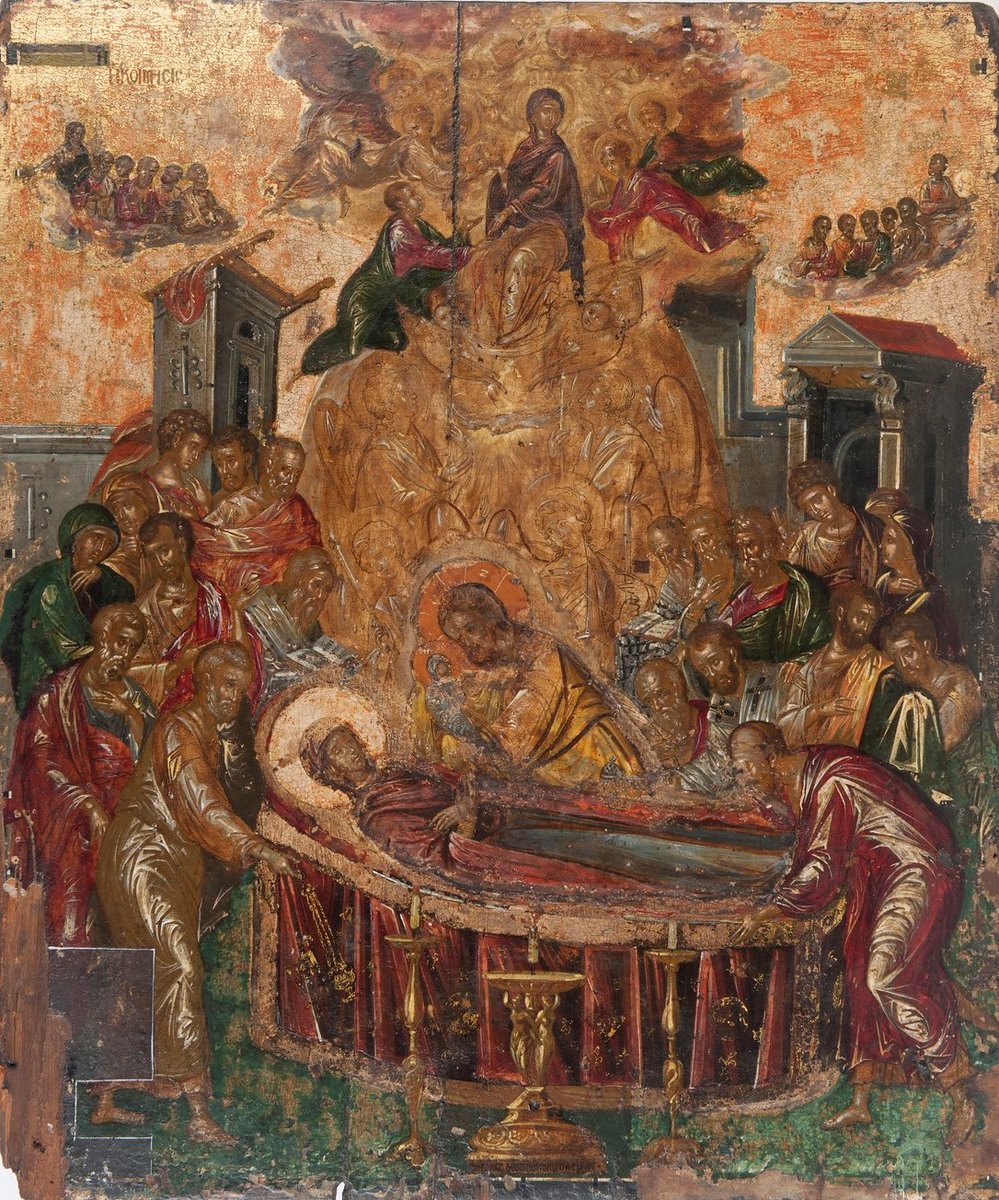
You can see this influence in his earliest works, such as the Dormition of the Virgin, from 1565.
It was painted in the Cathedral at Hermoupolis and represents the mix between Byzantine Icons and Late Italian Renaissance style which was typical of Cretan art at that time.
It was painted in the Cathedral at Hermoupolis and represents the mix between Byzantine Icons and Late Italian Renaissance style which was typical of Cretan art at that time.
In about 1567 El Greco moved to Venice, where he caught the tail end of the Late Renaissance and was influenced by Mannerist painters such Tintoretto and Titian.
Here you can see his move away from the unnatural perspectives of Byzantine art to a more realistic style.
Here you can see his move away from the unnatural perspectives of Byzantine art to a more realistic style.

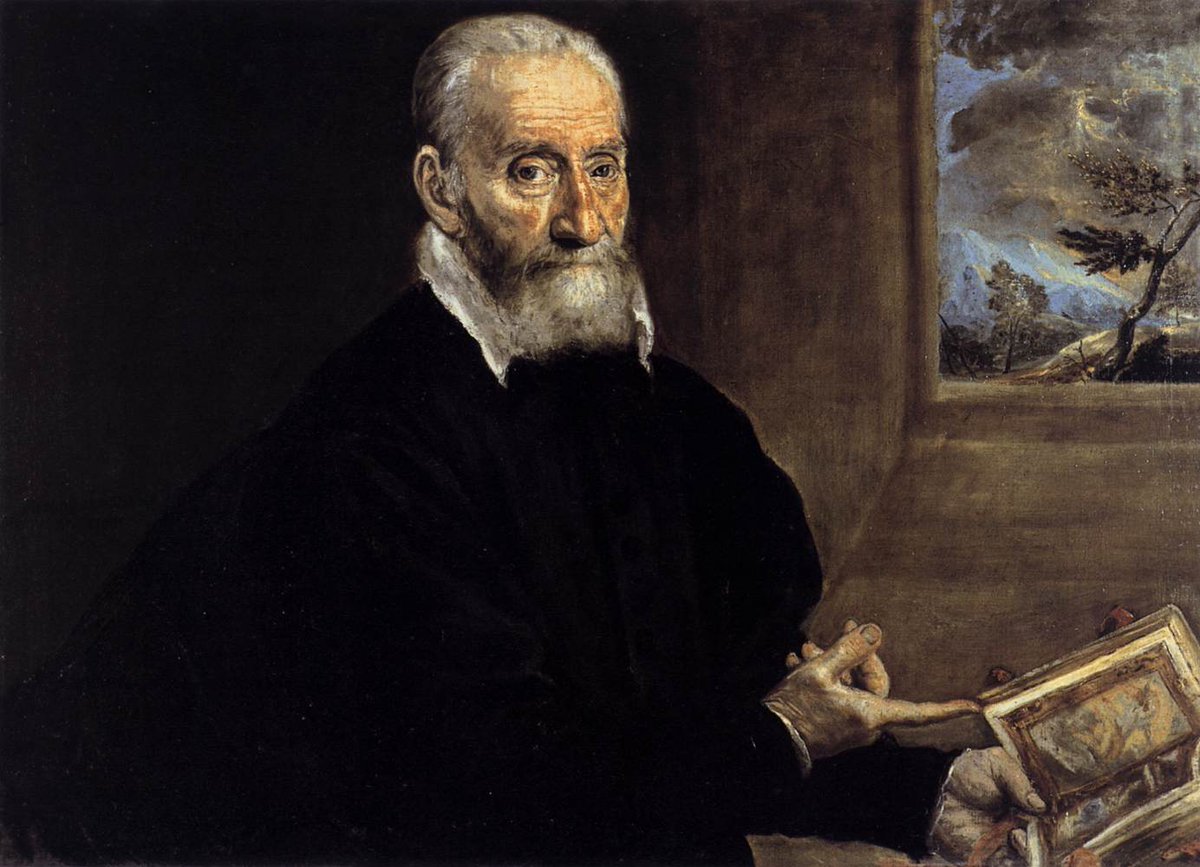
Shortly afterwards he moved to Rome, and during his stay there he painted this Portrait of Giulio Clovio, in 1570.
El Greco had already undergone a huge artistic evolution in a short span of years.
No doubt a sign of things to come.
El Greco had already undergone a huge artistic evolution in a short span of years.
No doubt a sign of things to come.
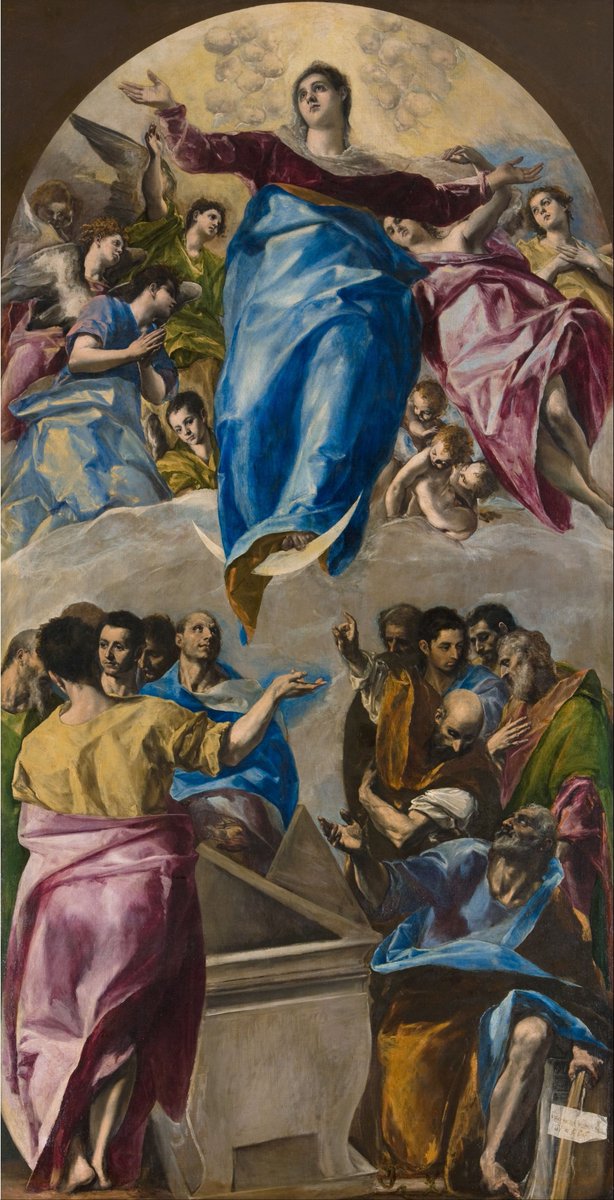
In 1577 El Greco moved to Spain, where he would live for the rest of his life and reach full stylistic maturity as an artist.
This is the Assumption of the Virgin (1579) in which you sense a nascent originality emerging.
This is the Assumption of the Virgin (1579) in which you sense a nascent originality emerging.
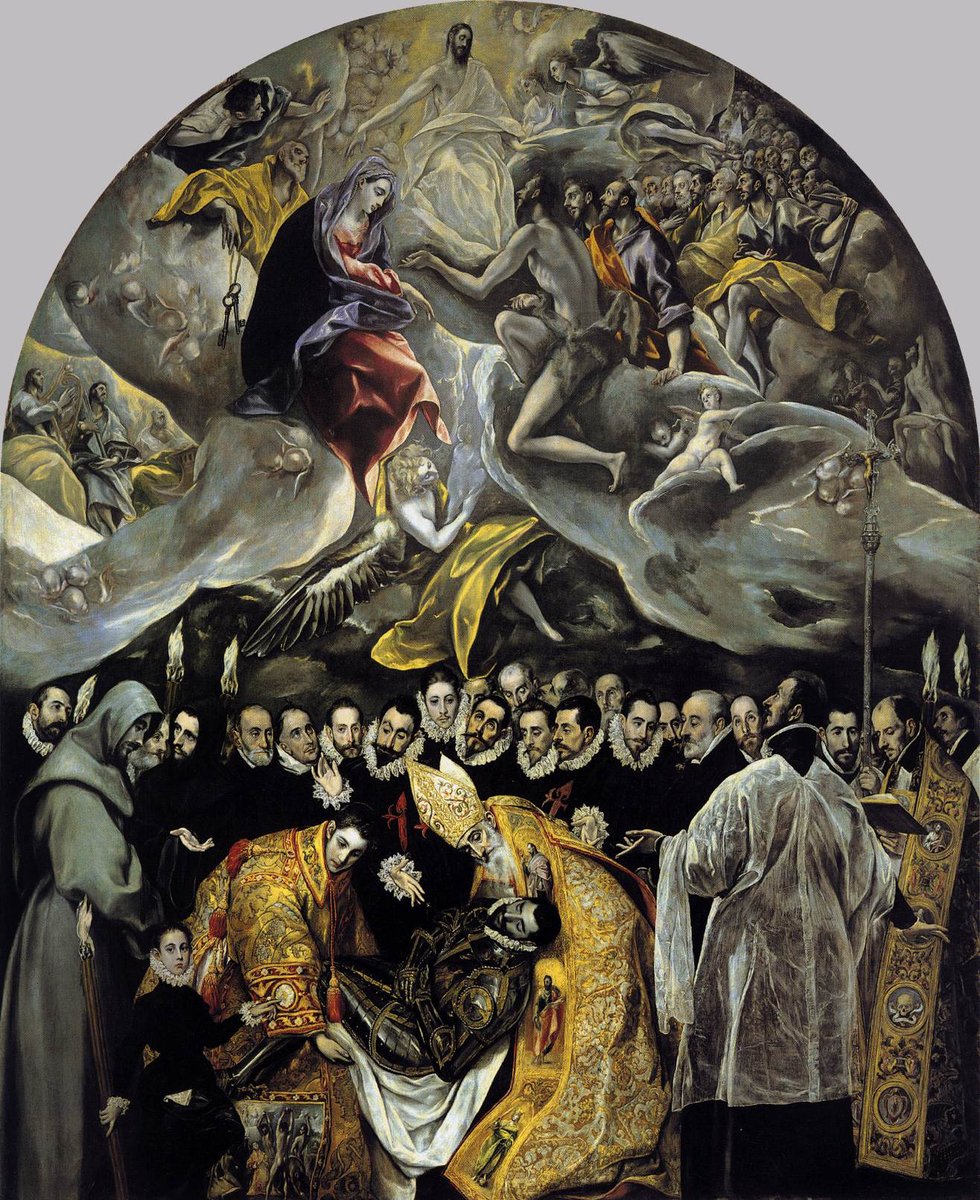
And here is The Burial of the Count of Orgaz, completed in 1588.
The elongated limbs of the figures depicted was typical of Mannerist style, but the blend of extreme realism in the lower section with the heightened expressionism of the upper section was something new.
The elongated limbs of the figures depicted was typical of Mannerist style, but the blend of extreme realism in the lower section with the heightened expressionism of the upper section was something new.
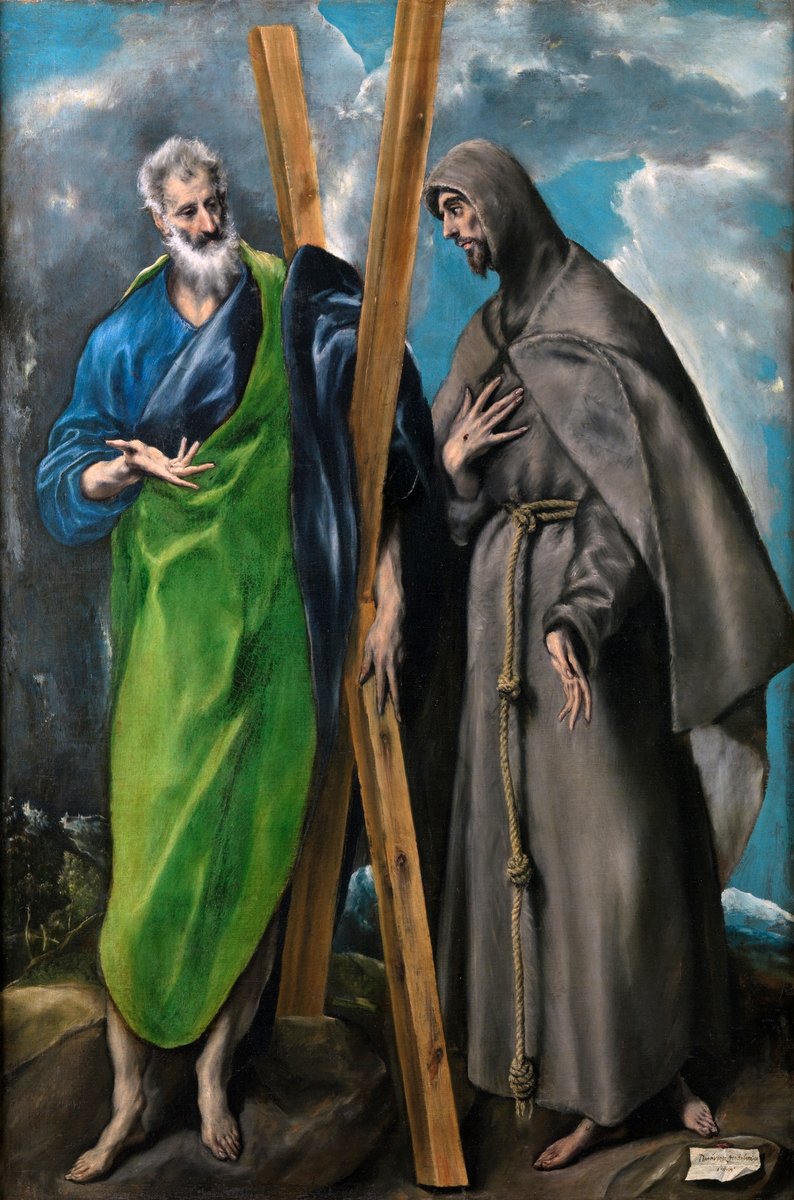
In St Andrew and St Francis, from 1595, you can again see El Greco's Mannerist roots in the elongated forms of the two saints.
And yet El Greco's choice of colours and textures gives it a startlingly modern atmosphere.
He was moving beyond realism.
And yet El Greco's choice of colours and textures gives it a startlingly modern atmosphere.
He was moving beyond realism.
View of Toledo (1600) is rightly one of El Greco's most famous paintings.
Its vibrant colours, intensity, and dramatic atmosphere have much in common with Expressionist landscapes of the early 20th century, over 300 years later.
Its vibrant colours, intensity, and dramatic atmosphere have much in common with Expressionist landscapes of the early 20th century, over 300 years later.

For comparison, consider Jan van Goyen's View of Arnhem (1646).
It was a few decades later than El Greco's, but it gives you an idea of what other landscape paintings of the time looked like.
It was a few decades later than El Greco's, but it gives you an idea of what other landscape paintings of the time looked like.

And soon El Greco started to break free of any existing artistic style.
In The Immaculate Conception (c.1610) you can see his total transition away from Renaissance realism and towards a fully proto-Expressionist style.
In The Immaculate Conception (c.1610) you can see his total transition away from Renaissance realism and towards a fully proto-Expressionist style.

El Greco's late career was littered with sui generis masterpieces of timeless fascination.
Like Laocoön, painted sometime towards the end of El Greco's life in 1614.
This was done three centuries before the eras of Surrealism, Cubism, and Expressionism.
Like Laocoön, painted sometime towards the end of El Greco's life in 1614.
This was done three centuries before the eras of Surrealism, Cubism, and Expressionism.

The Annunciation is a similarly expressive painting which showed just far how El Greco had moved beyond artistic standards of the day.

For context, consider The Calling of Saint Matthew (1600) by the extraordinary Caravaggio.
This should give you some idea of El Greco's originality.
This should give you some idea of El Greco's originality.

And at last we come to The Opening of the Fifth Seal, created not long before the end of El Greco's life.
This painting is from the earliest years of the 17th century.
Astonishing.
This painting is from the earliest years of the 17th century.
Astonishing.

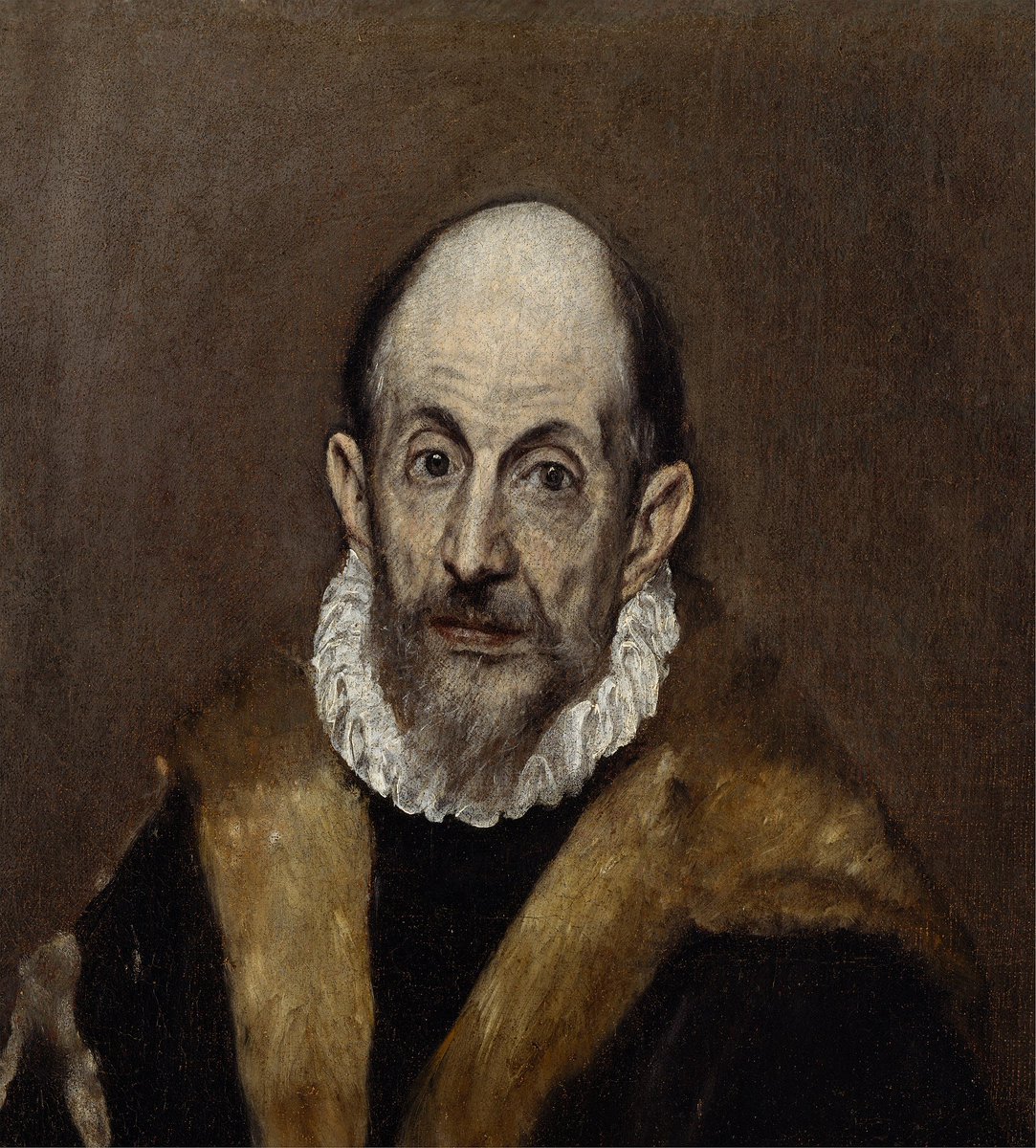
And here is the man himself, Domenikos Theotokopoulos, in a self-portrait from around 1600.
And that was how he signed his paintings - not as El Greco!
One of the great icons of artistic and creative originality. We can all learn something from El Greco.
And that was how he signed his paintings - not as El Greco!
One of the great icons of artistic and creative originality. We can all learn something from El Greco.
• • •
Missing some Tweet in this thread? You can try to
force a refresh