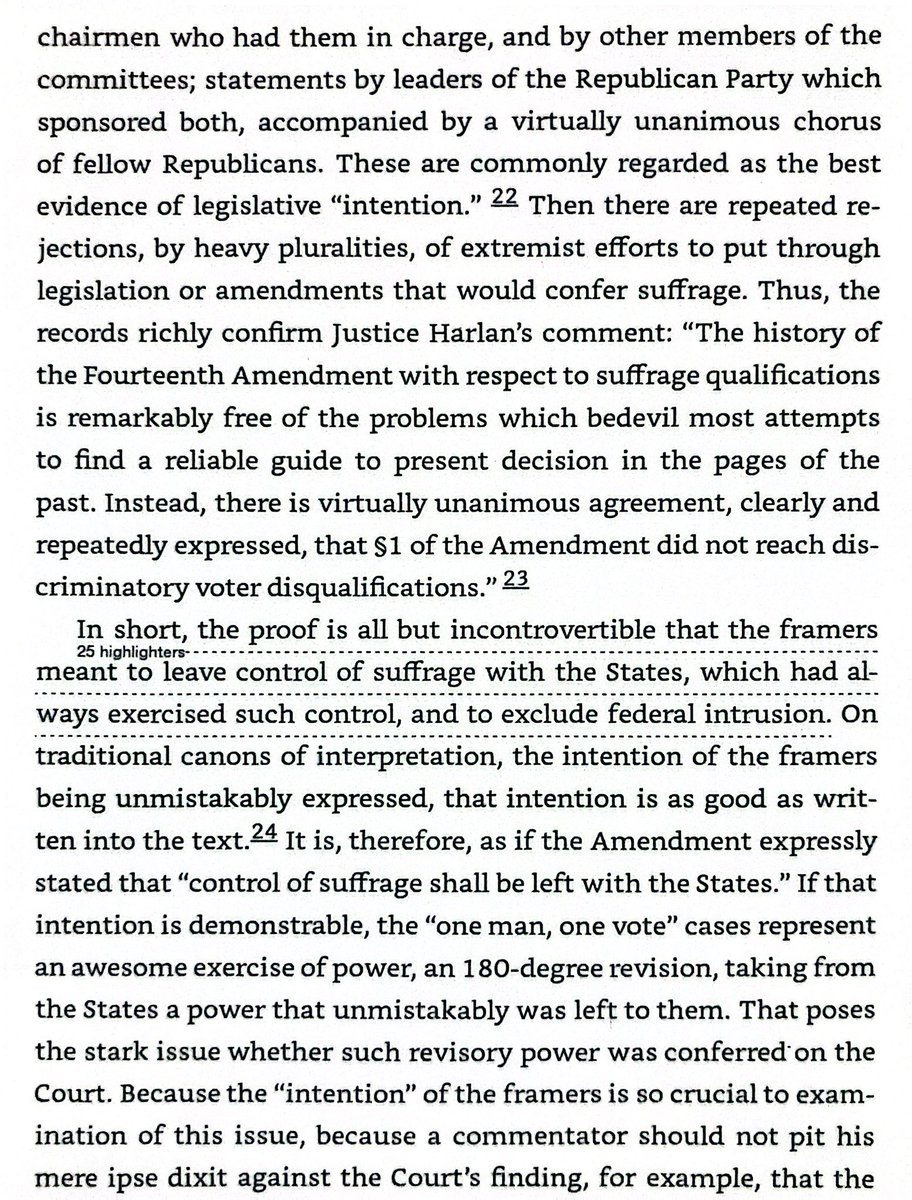
Thread with excerpts from “The Affirmative Action Empire: Nations and Nationalism in the Soviet Union, 1923-1939” by Terry Martin 
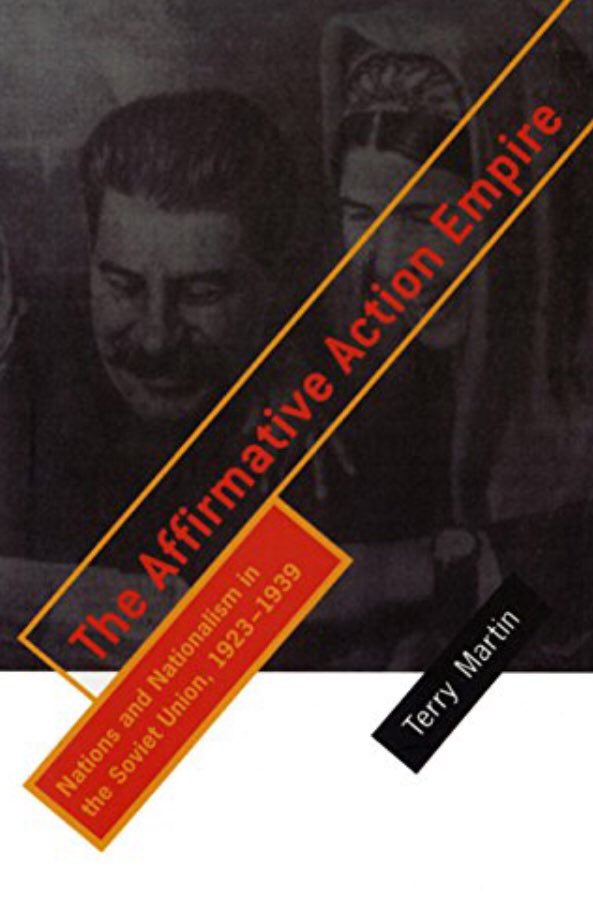
March 1919’s Eighth Party Congress featured dispute between those critical of national self-determination (Pyatakov & Buharin) and those who supported the democratic & defensive nationalism of the oppressed (Stalin and Lenin).
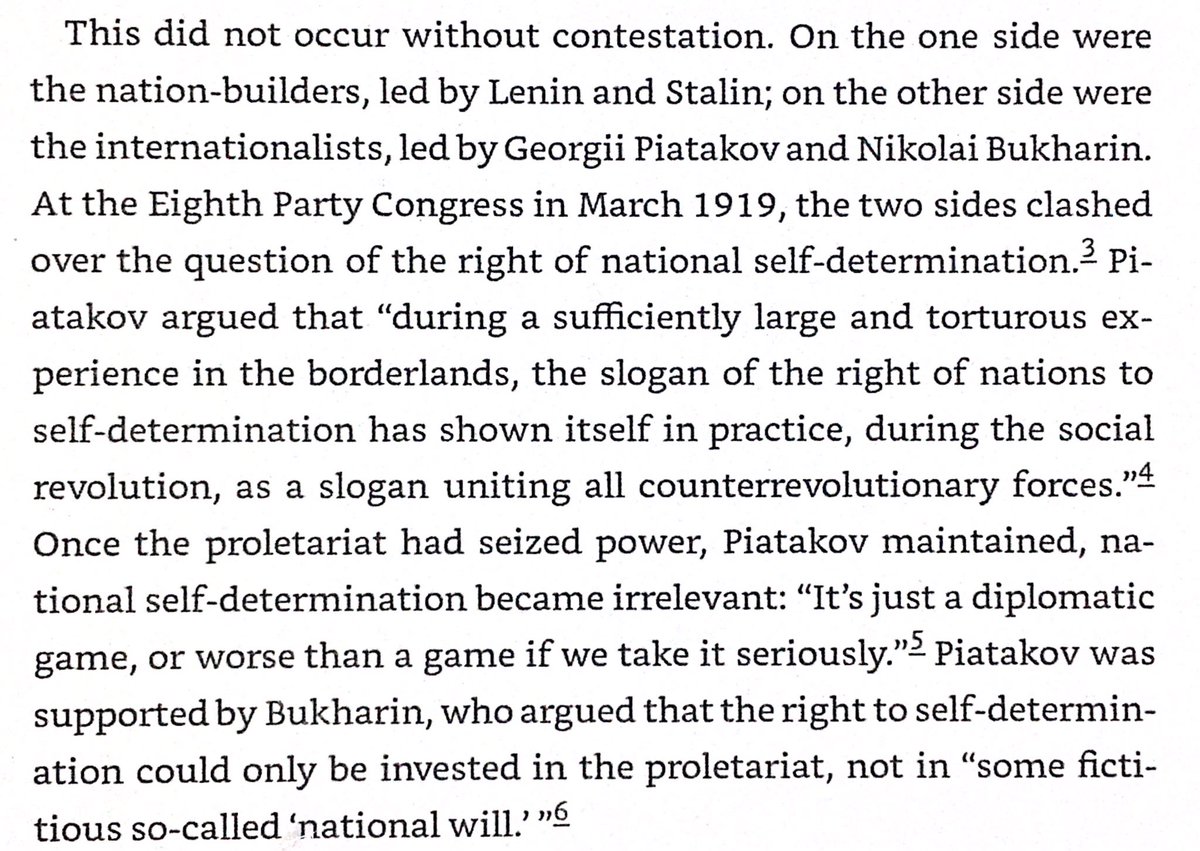
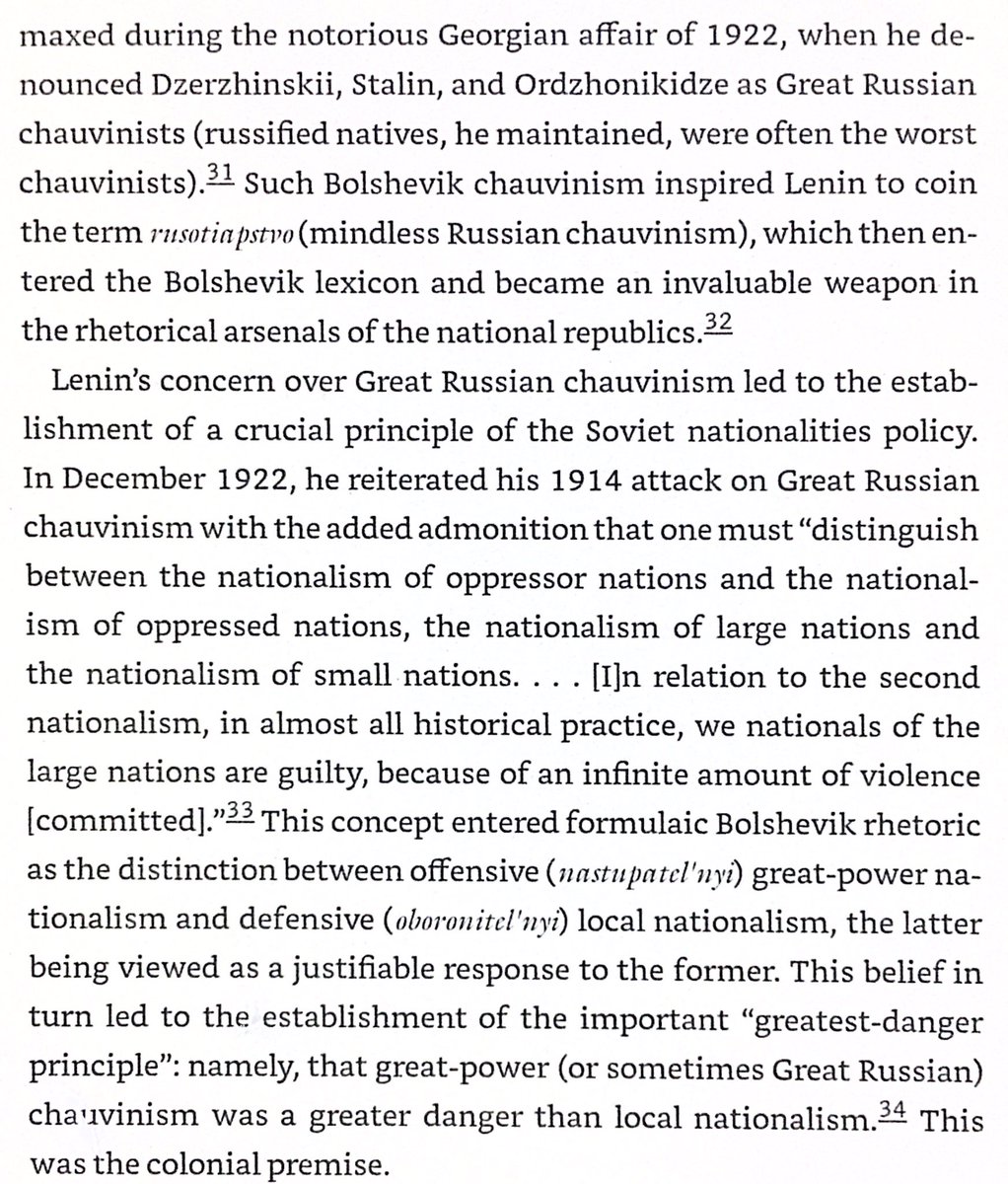
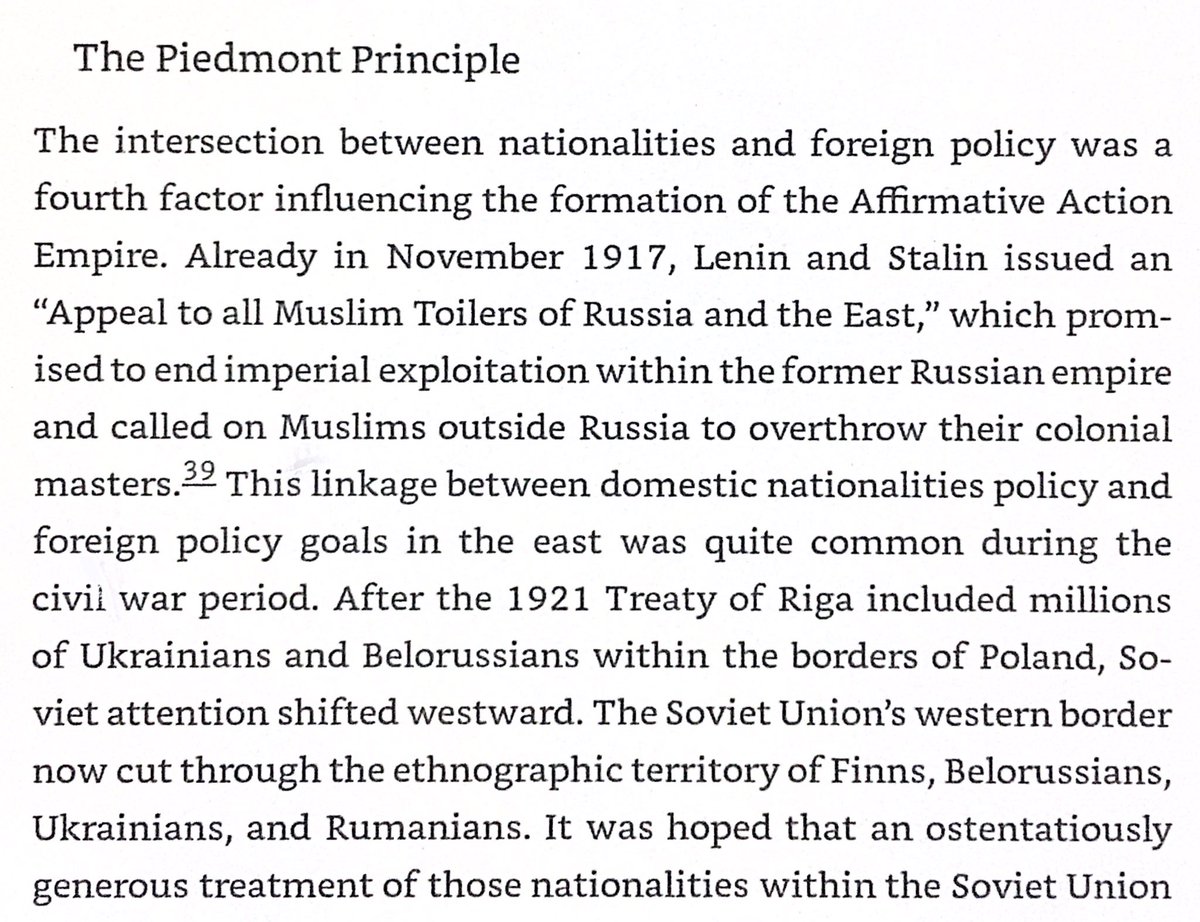
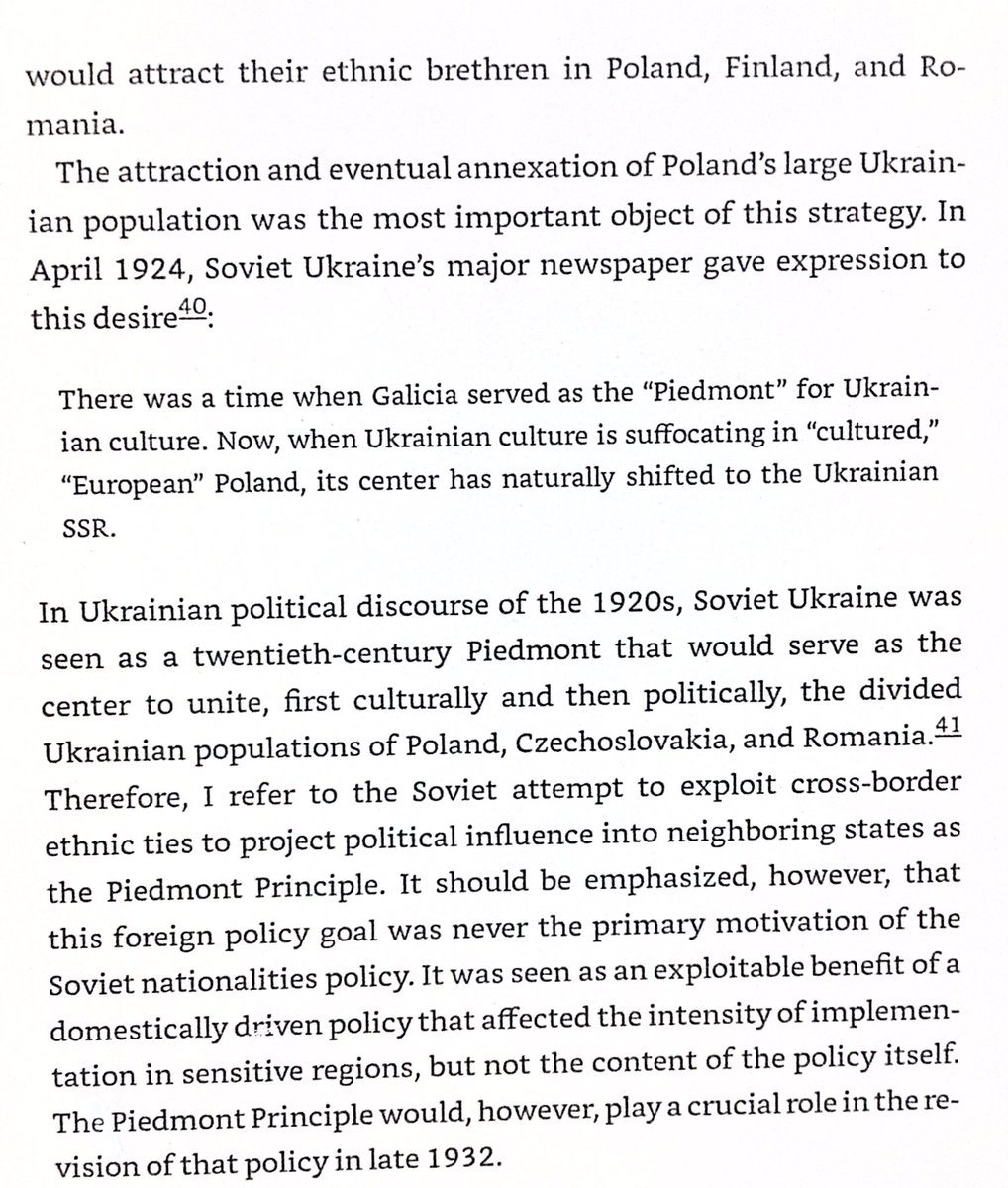
Soviets believed they could leverage the international connections of the many peoples of the USSR to deliver their foreign coethnics to communism. This partly drove a domestic Soviet push to develop those people’s cultures.
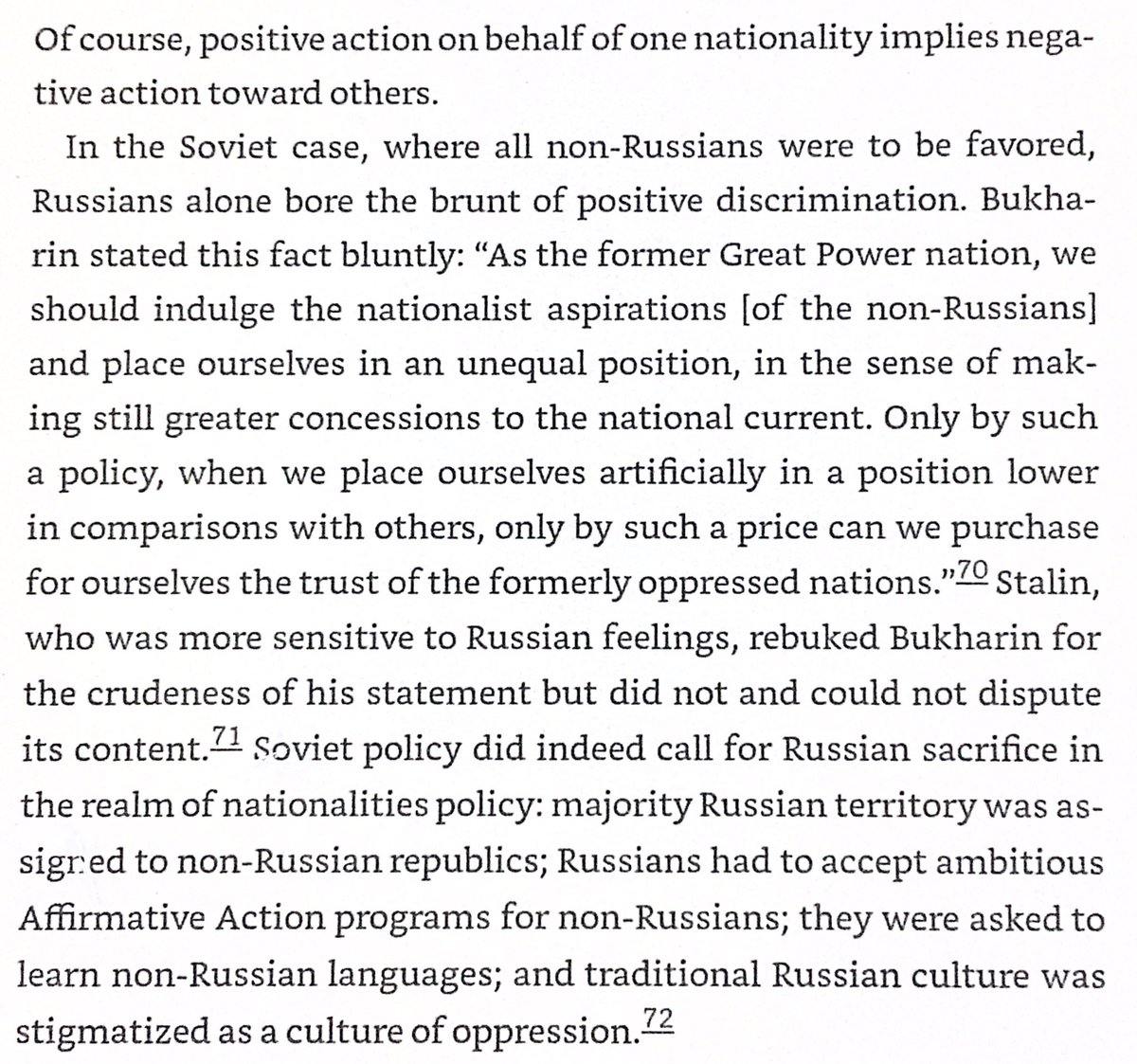
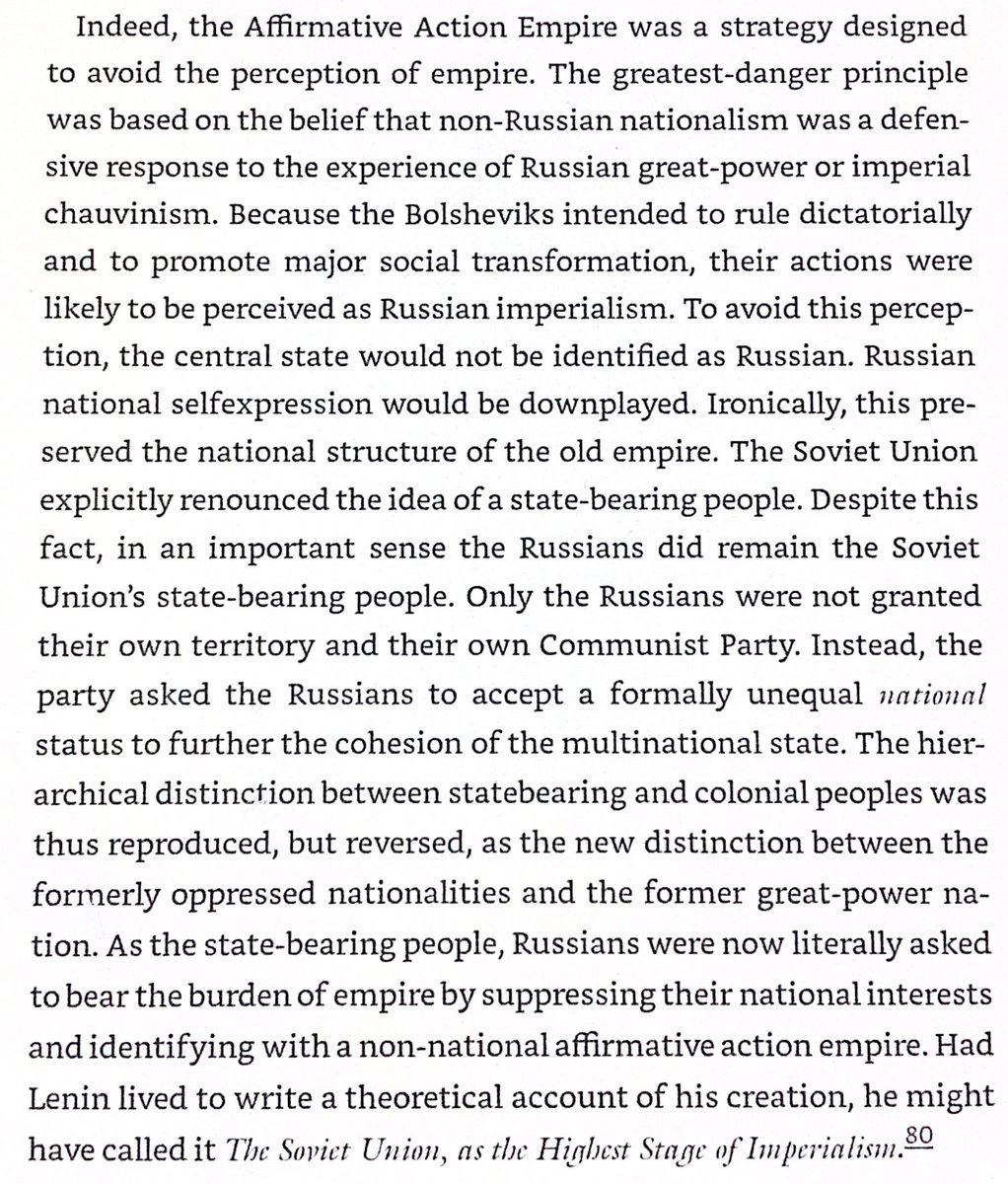
Russians had their culture stigmatized as oppressive and suffered ethnic discrimination in the early Soviet Union. They were also denied their own territory & own communist party. They bore the burden of empire while suppressing their own national interests.
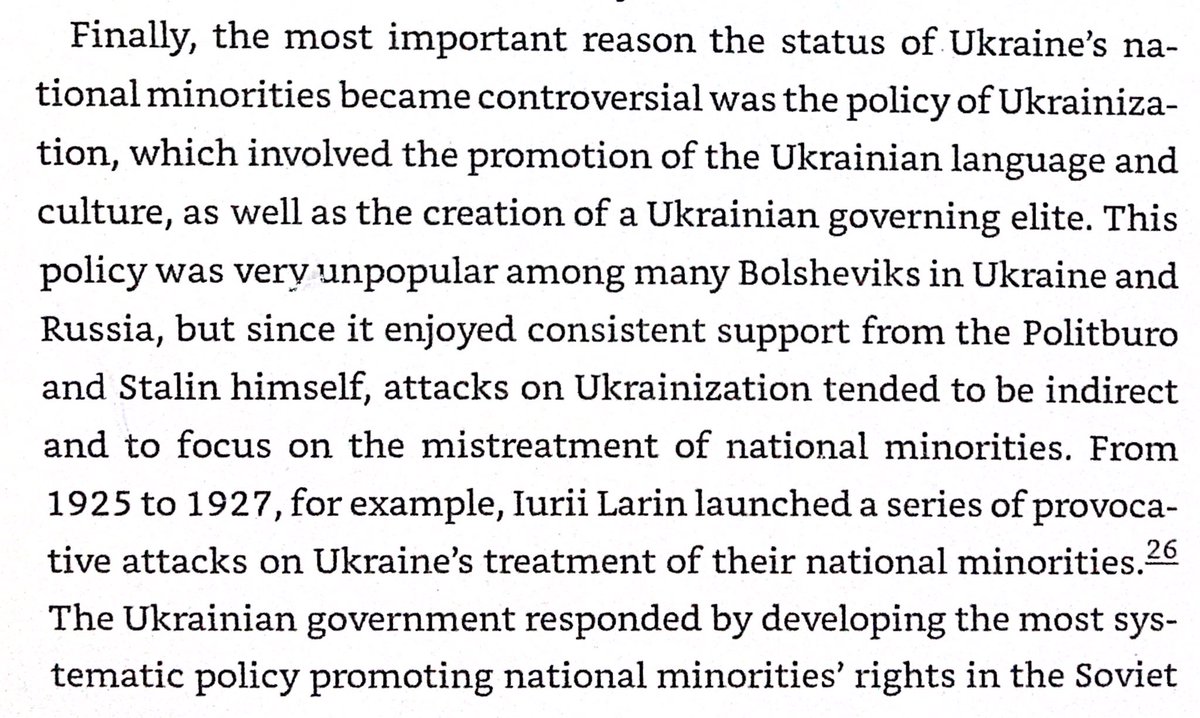
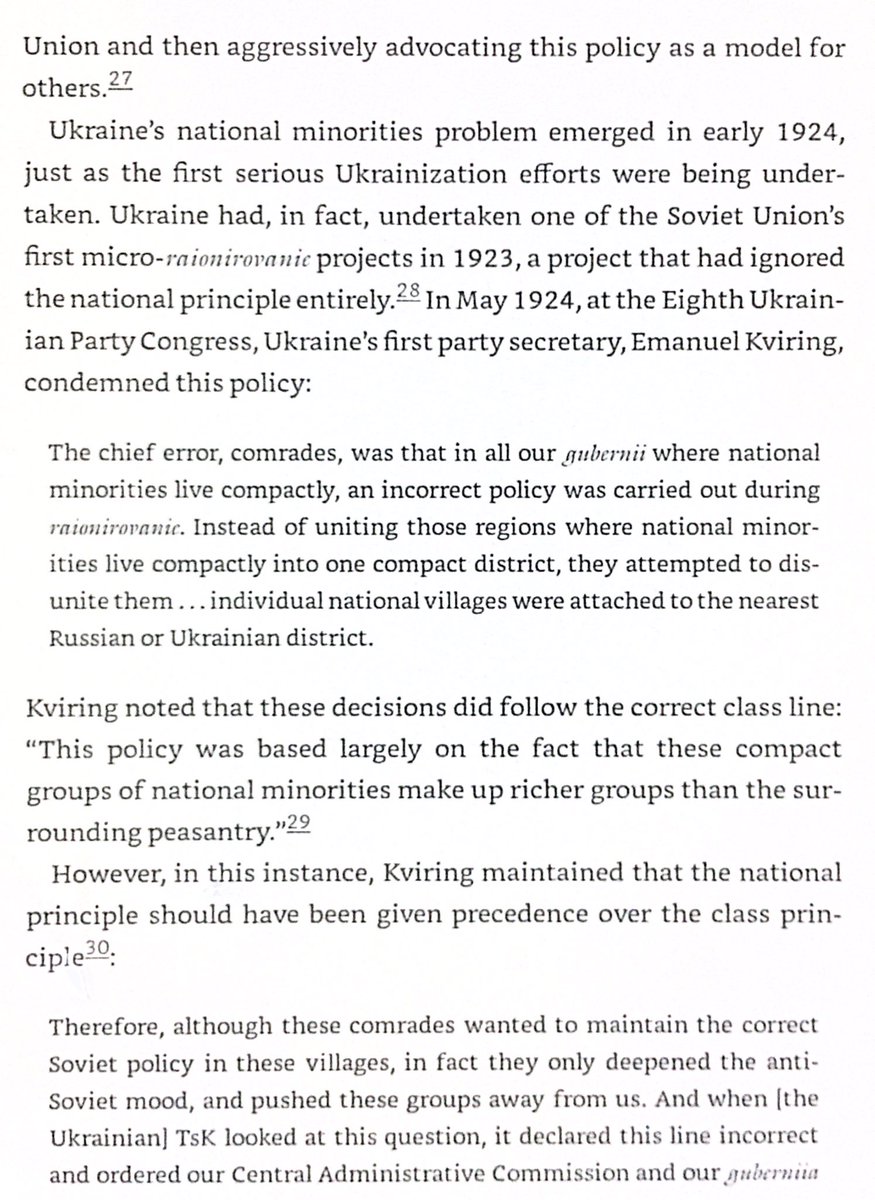
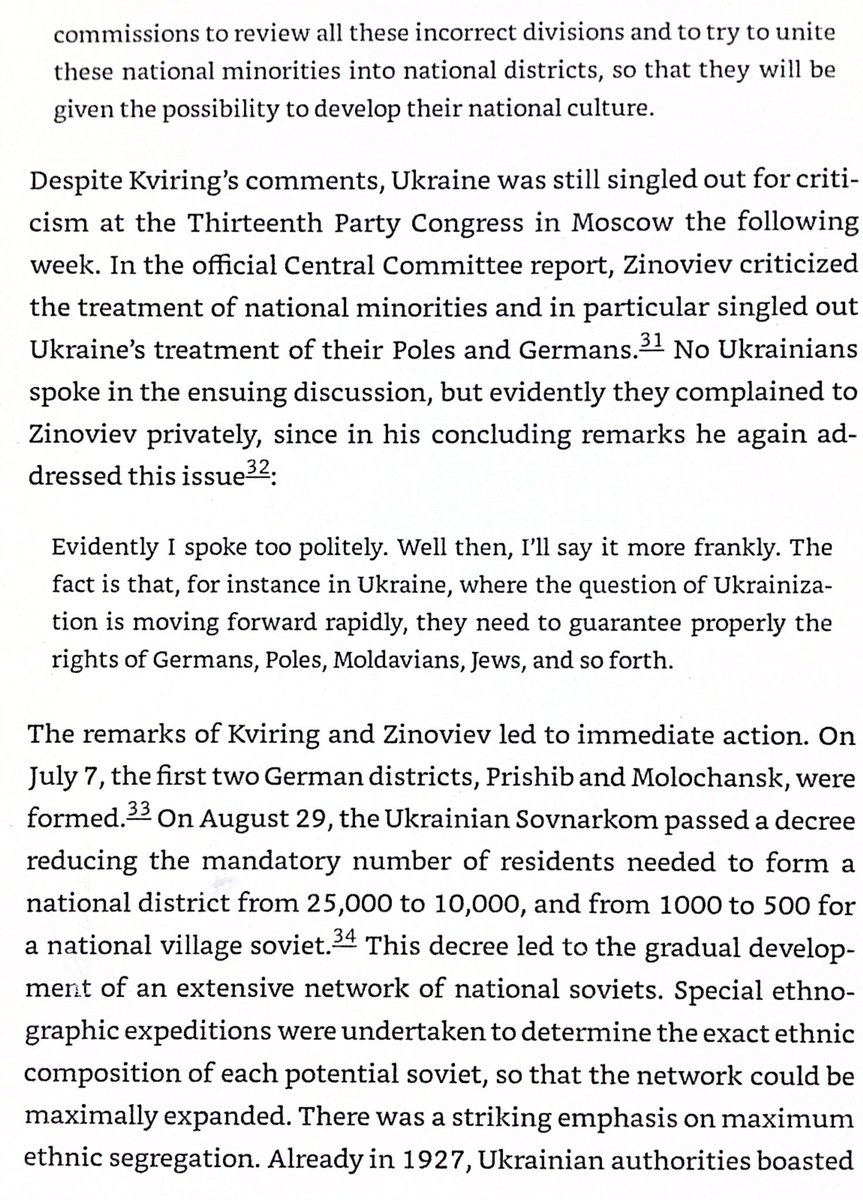
Ukrainianization couldn’t be attacked by critics directly in 1920s, so they had to argue that Soviet Ukraine treated the non-Russian minorities like Germans & Jews poorly. The status of Russians in Soviet Ukraine was unclear, & Soviets feared it could be explosive to discuss.
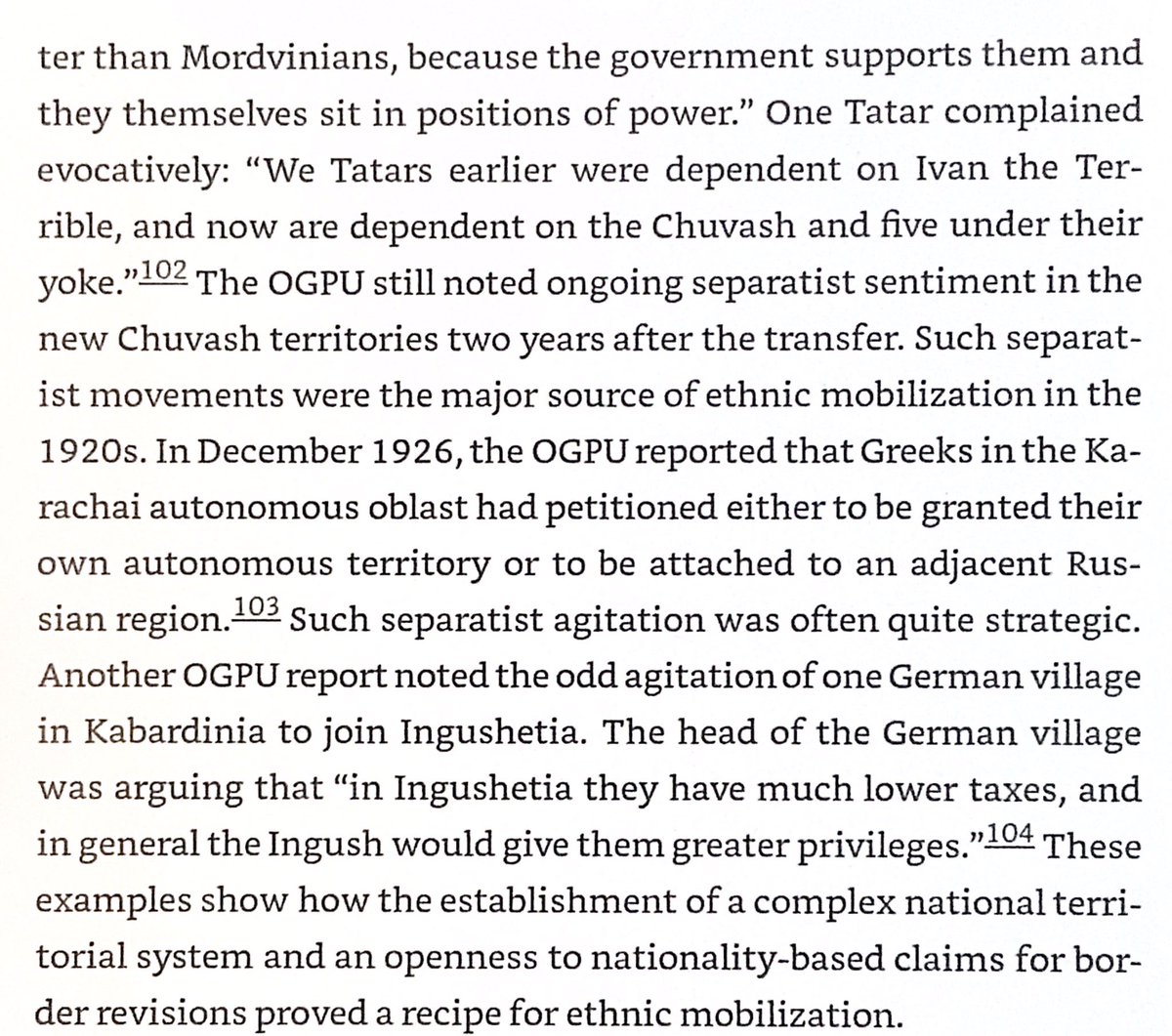
Soviet nationalities policy encouraged ethnic mobilization by offering financial aid, patronage opportunities, and educational advantages to culturally backwards peoples.
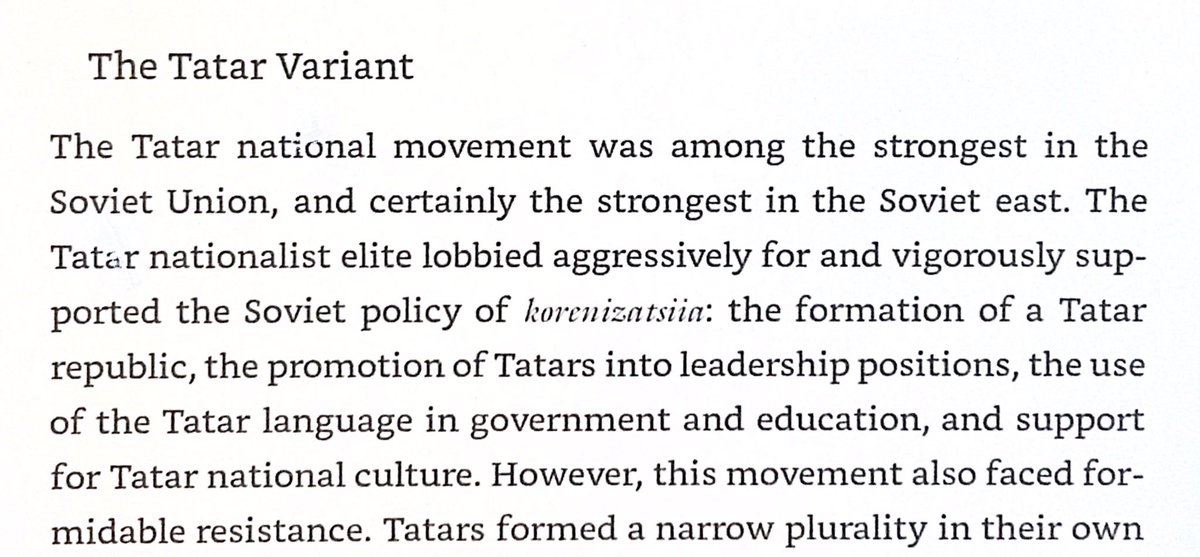
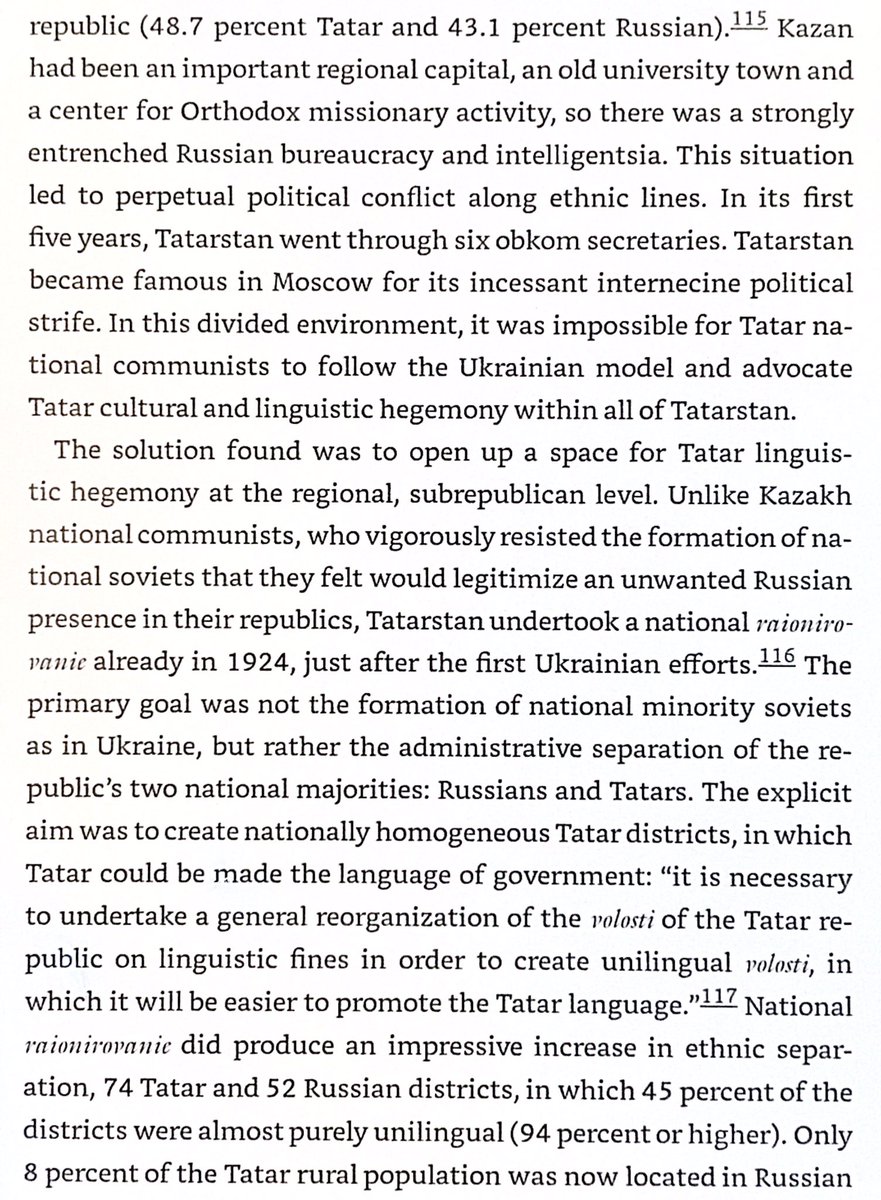
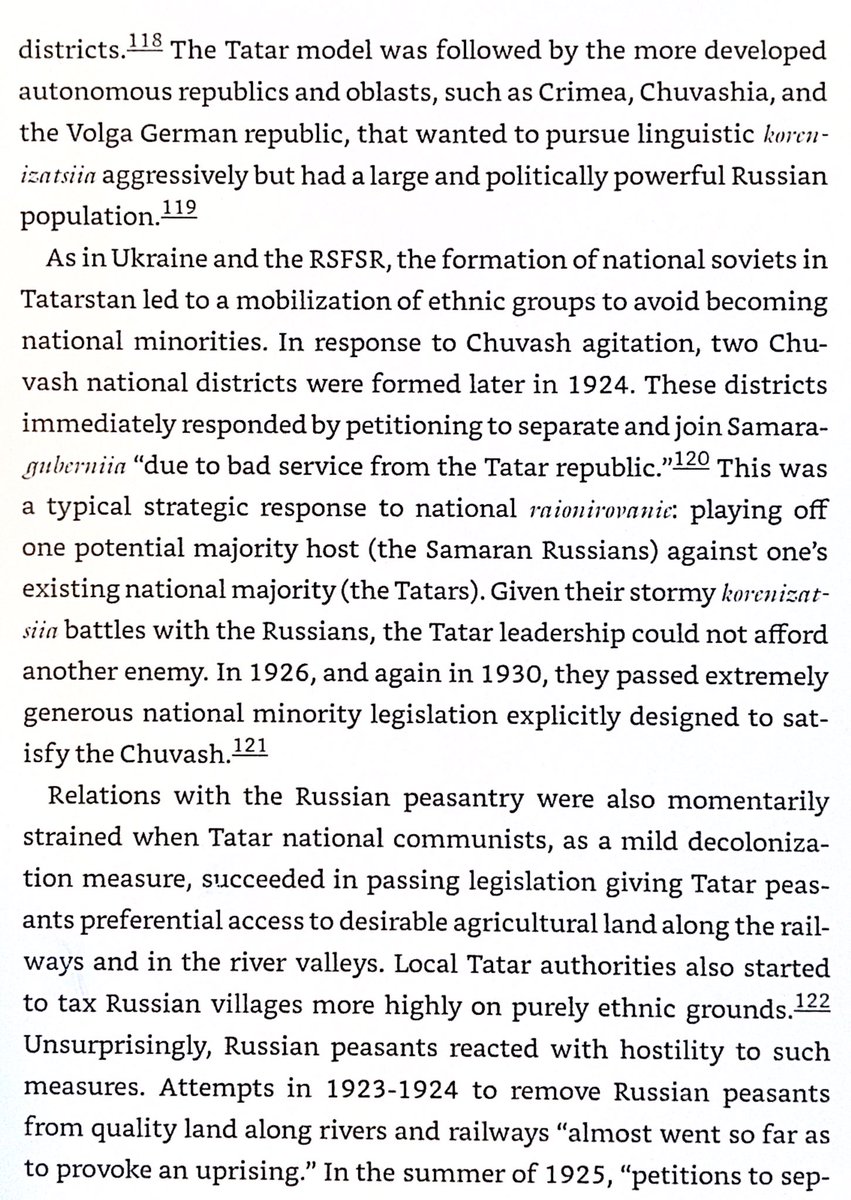
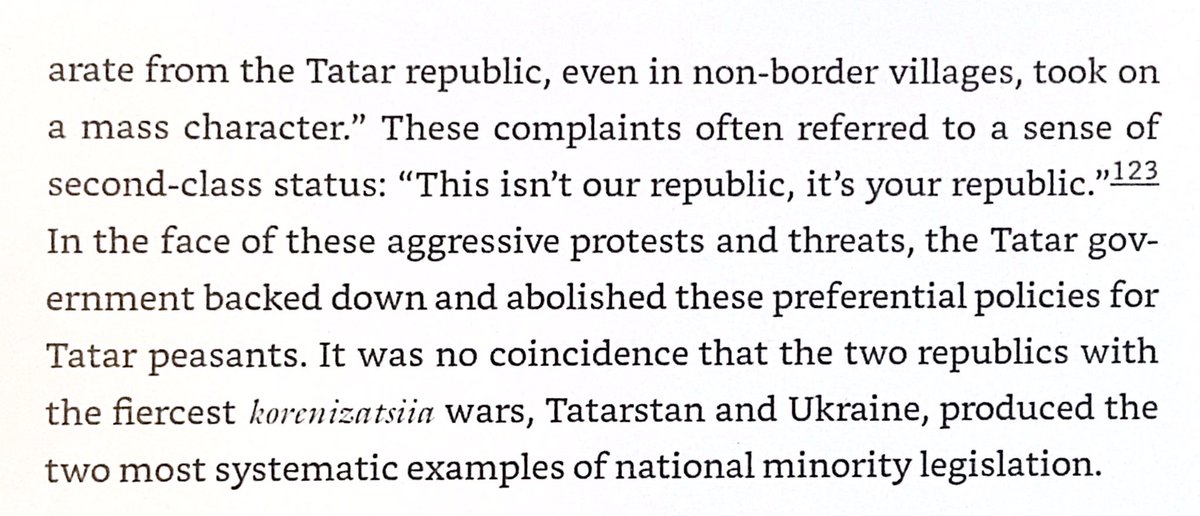
Volga Tatars were only a plurality of Tatarstan’s population & they didn’t control the region’s main city of Kazan. Attempts to consolidate Tatar power & set up ethnic privileges failed, so the Tatars focused on strengthening Tatar language & government in rural Tatar areas.
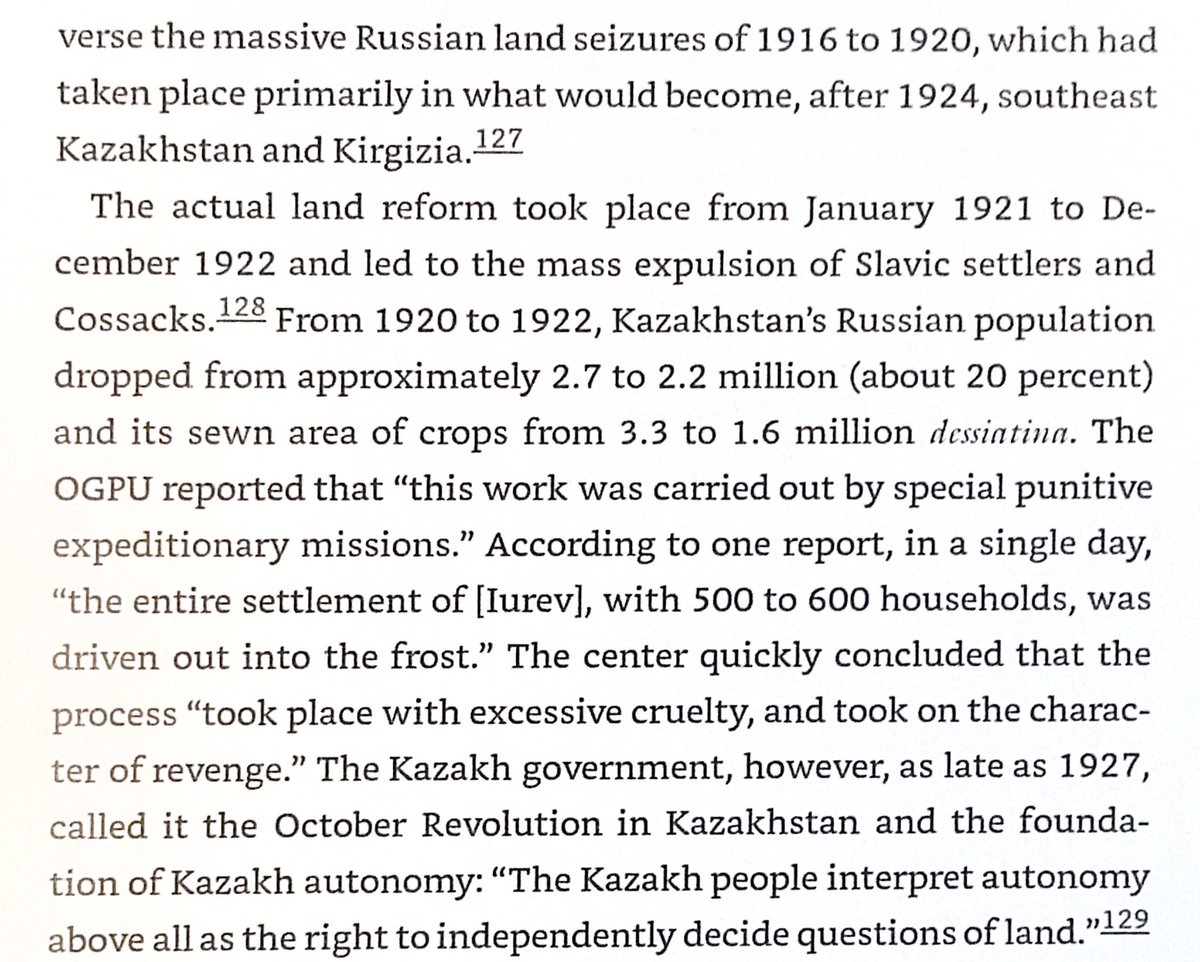
Even though ethnic Russians in Kazahstan had supported the Soviets in the Russian Civil War, the Soviets expelled a fifth of Kazahstan’s Slavic population in 1921-1922. The OGPU carried out the expulsions with cruelty.
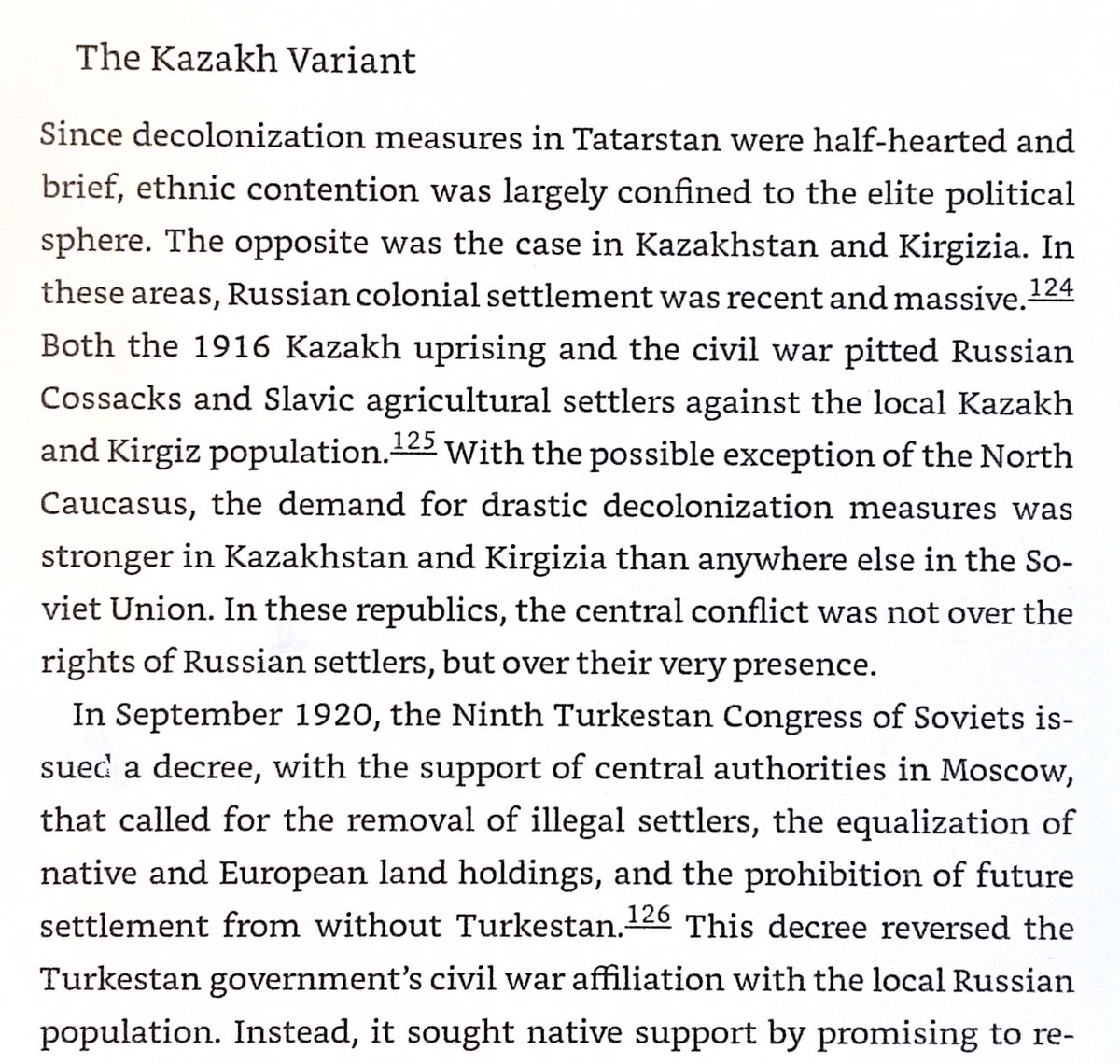
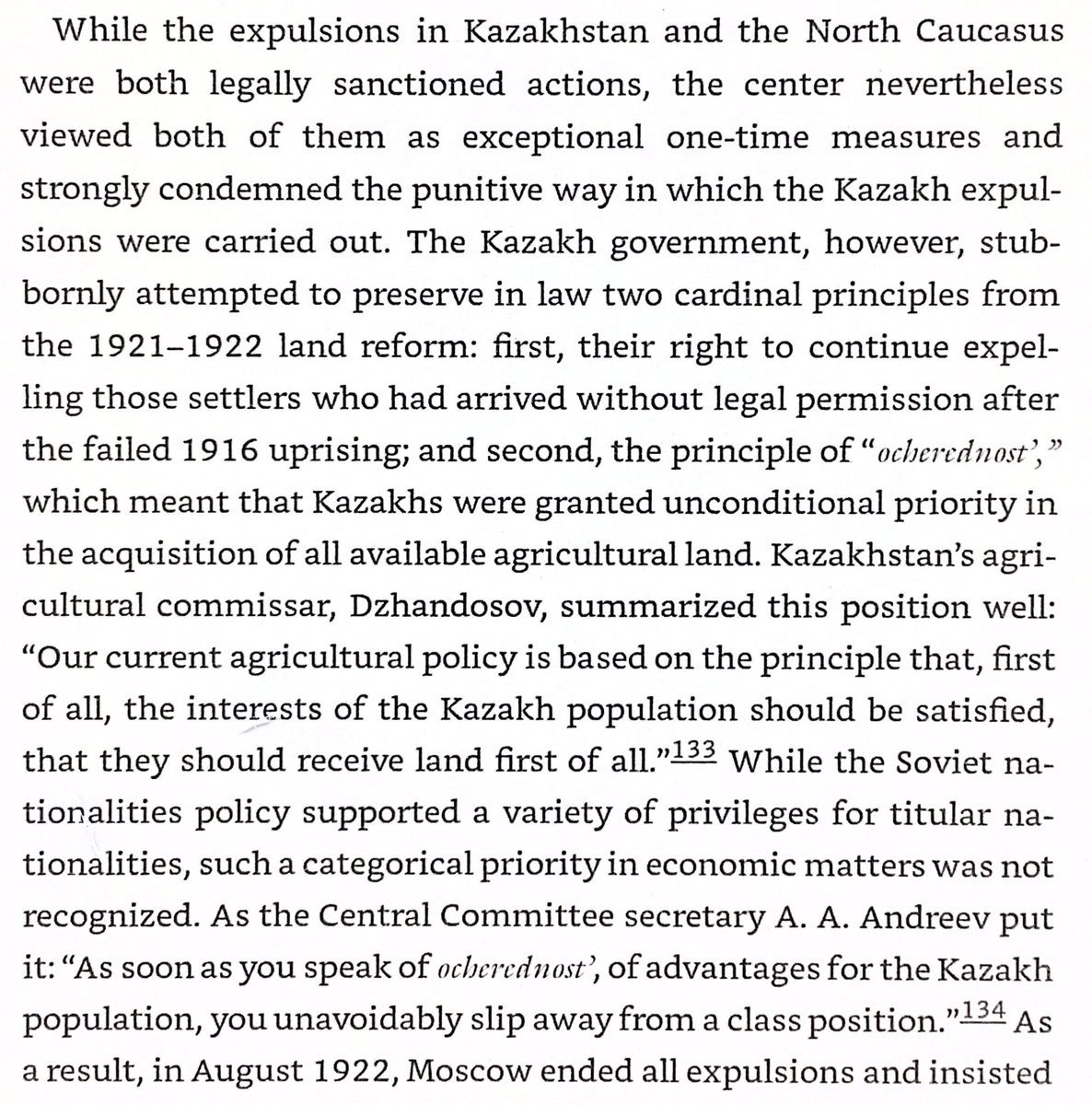
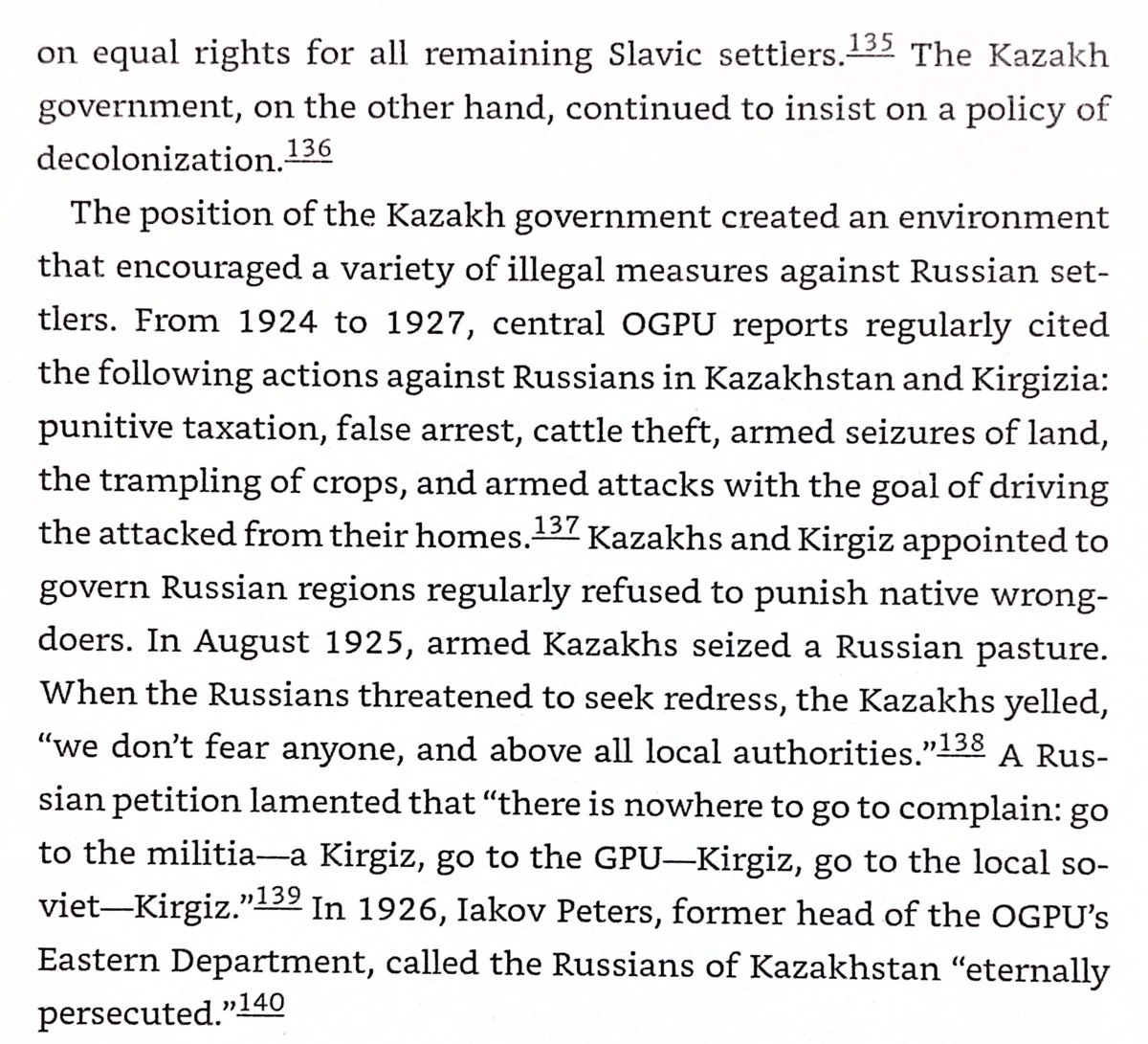
Soviet Kazah government was anti-Russian, and pushed for Kazahs to be given a privileged position in Kazahstan. Moscow saw that as a nationalist position & un-communist, & insisted on equal rights for all. Kazahs obeyed, but turned blind eye to anti-Russian crime.
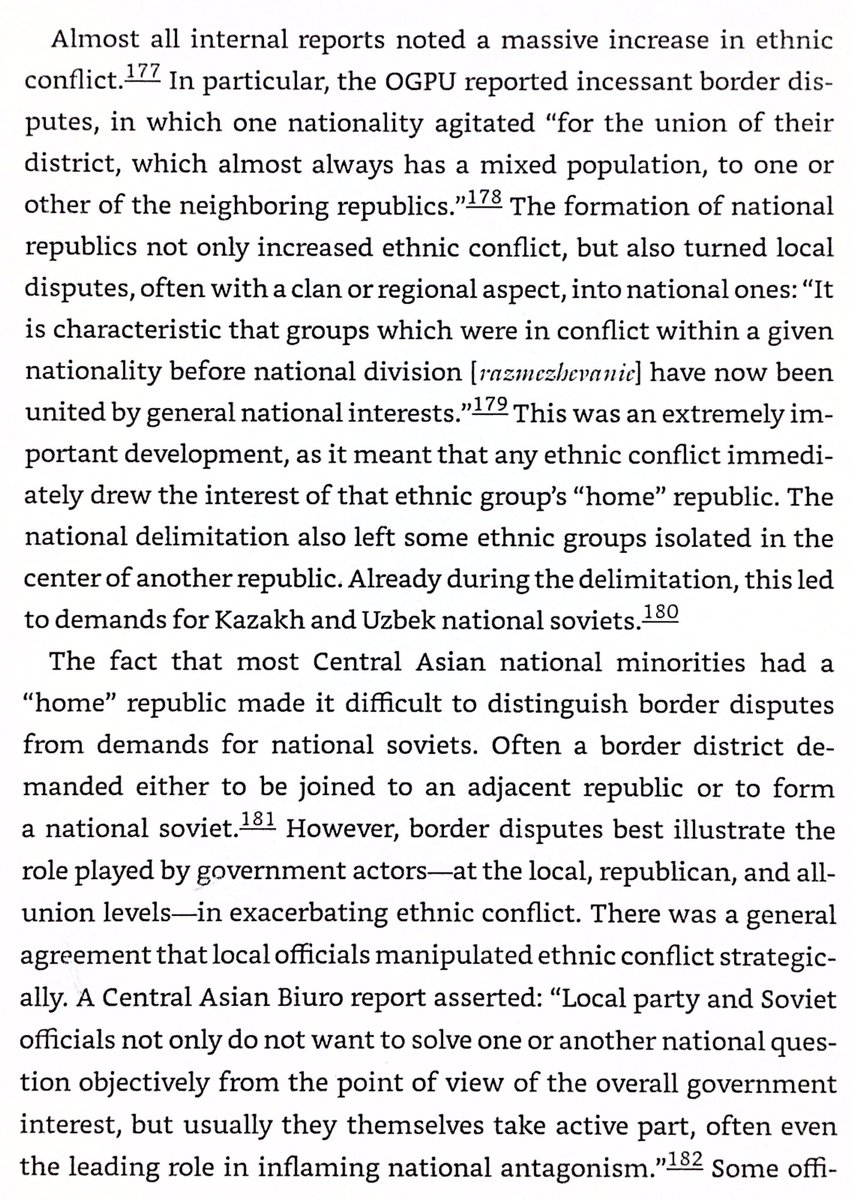
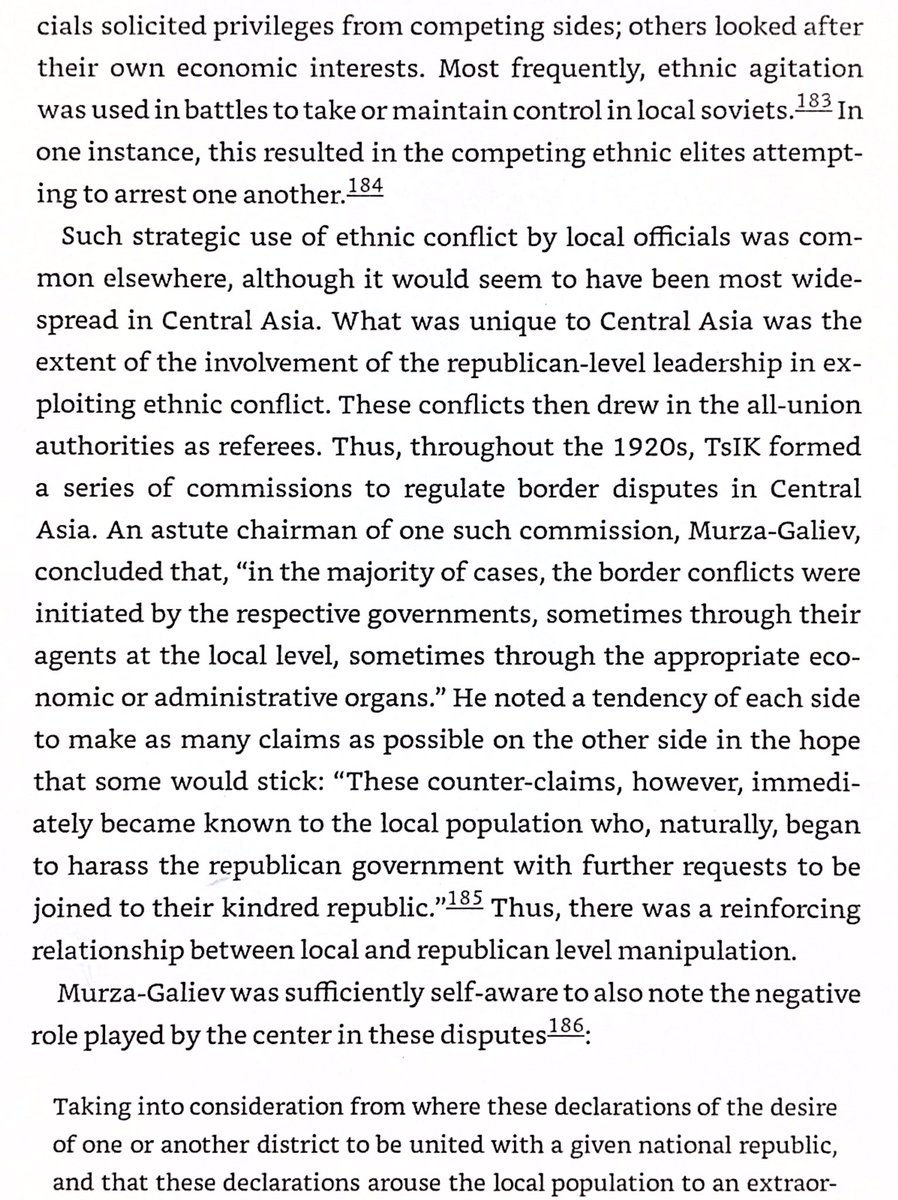
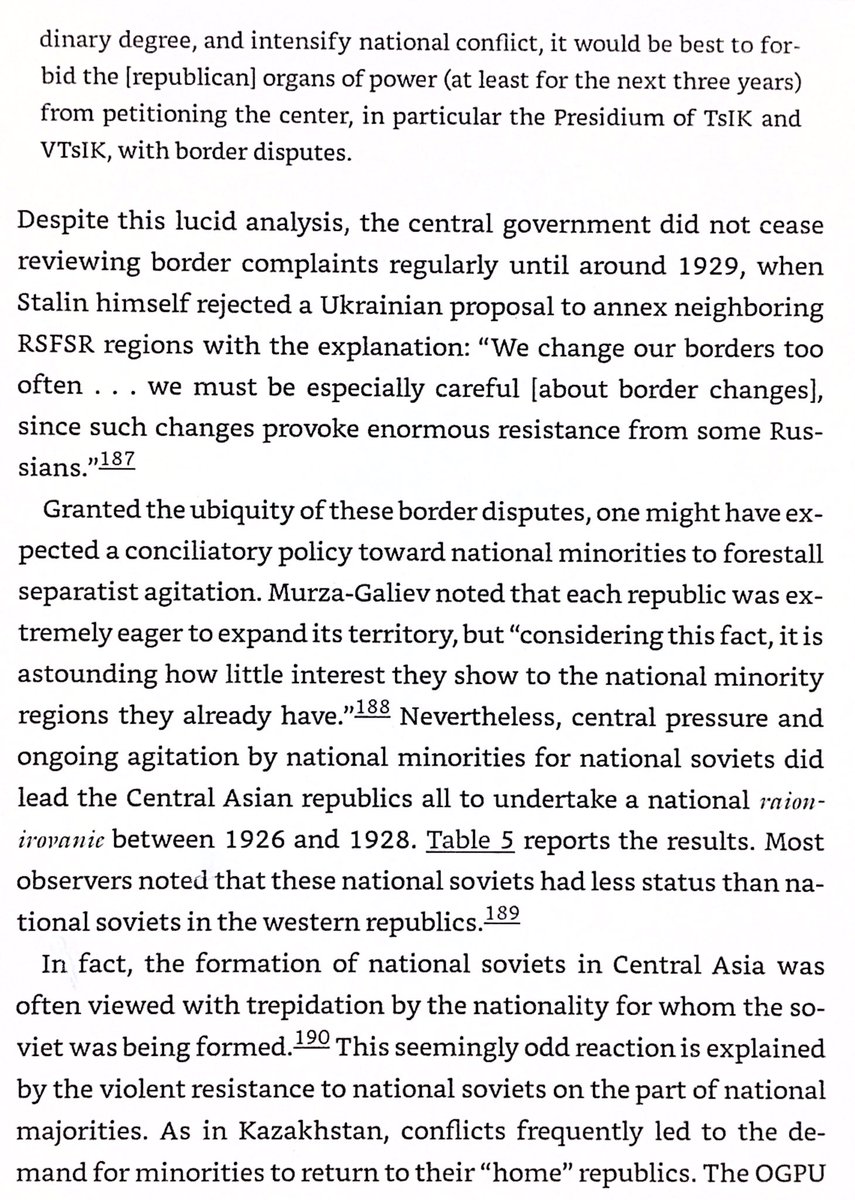
Tajiks, Uzbeks, Turkmens, & Kirgiz were intensely concerned about the borders of their republics & constantly feuded (often violently) with each other. Moscow had to constantly referee.
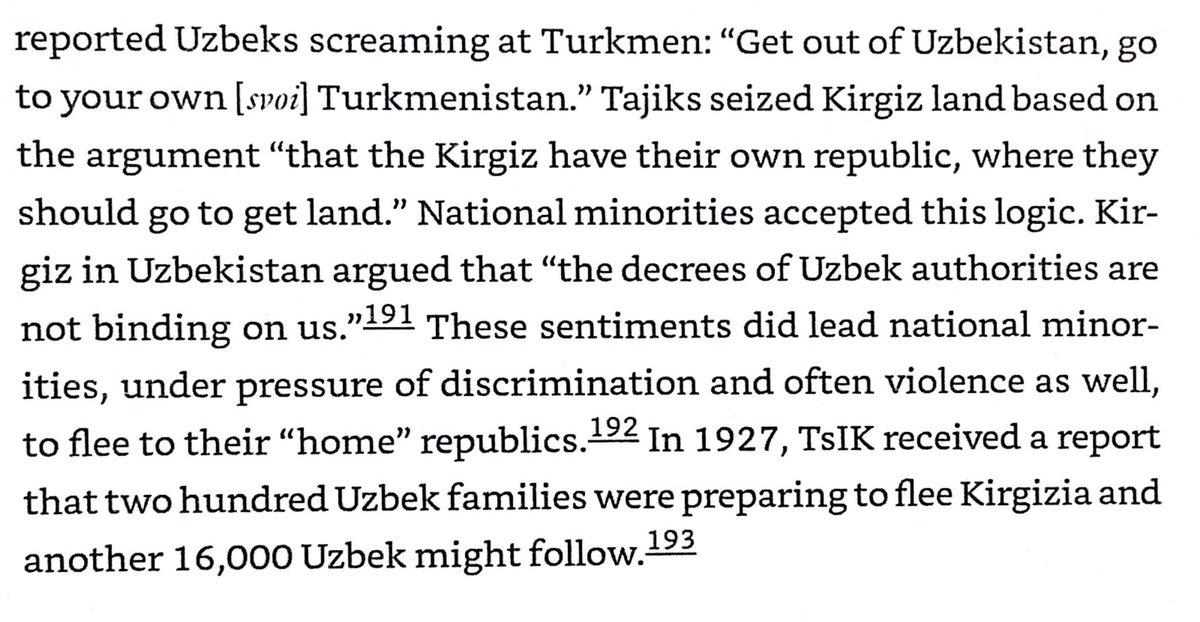
Some ethnic minorities in Soviet Central Asia decided to transmogrify into the majority ethnicity in order to keep their lands & avoid discrimination. Kurds declared themselves Turkmen, & Tajiks declared themselves Uzbeks. Soviet Tajikistan wasn’t created until 1929.
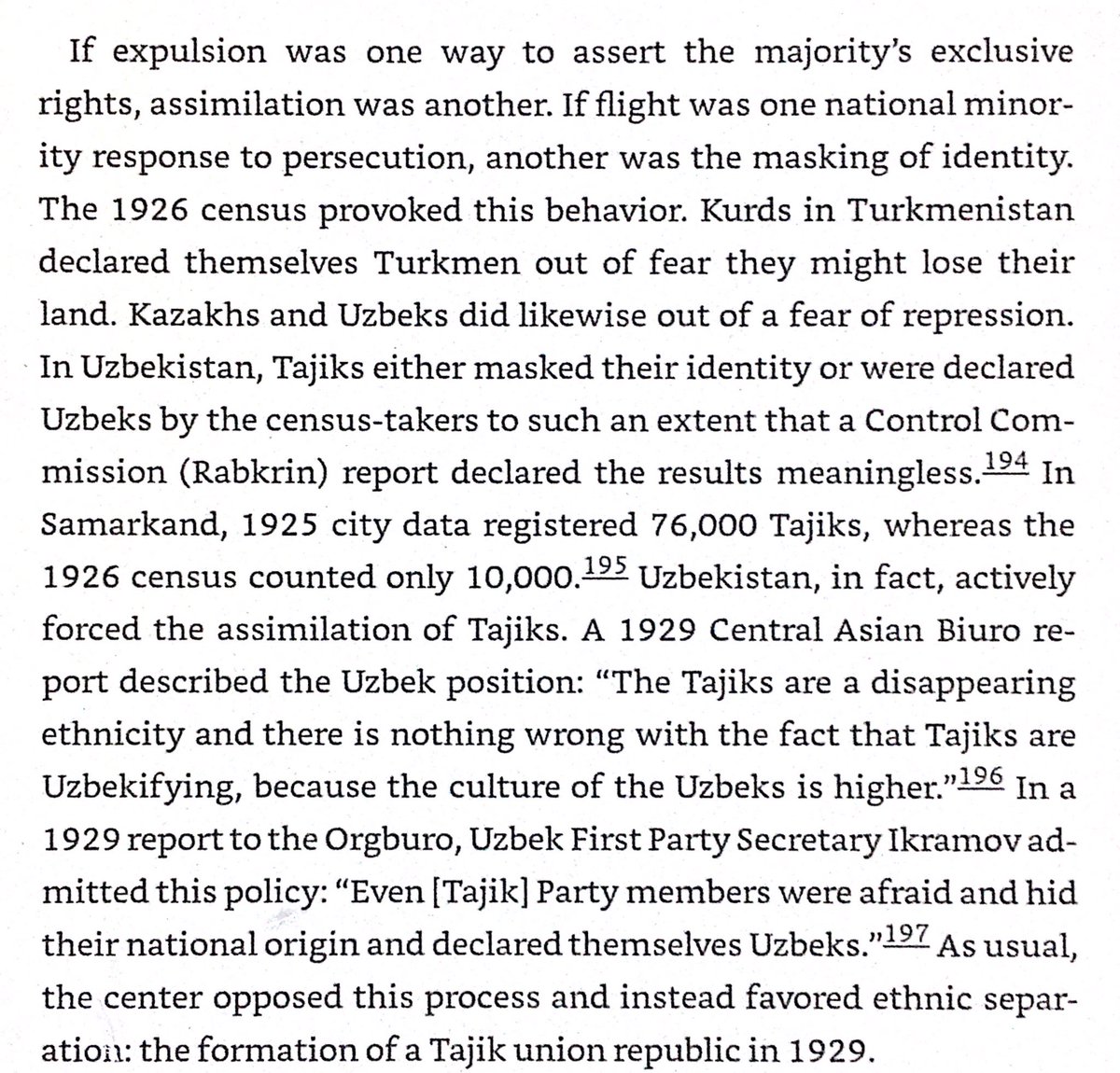
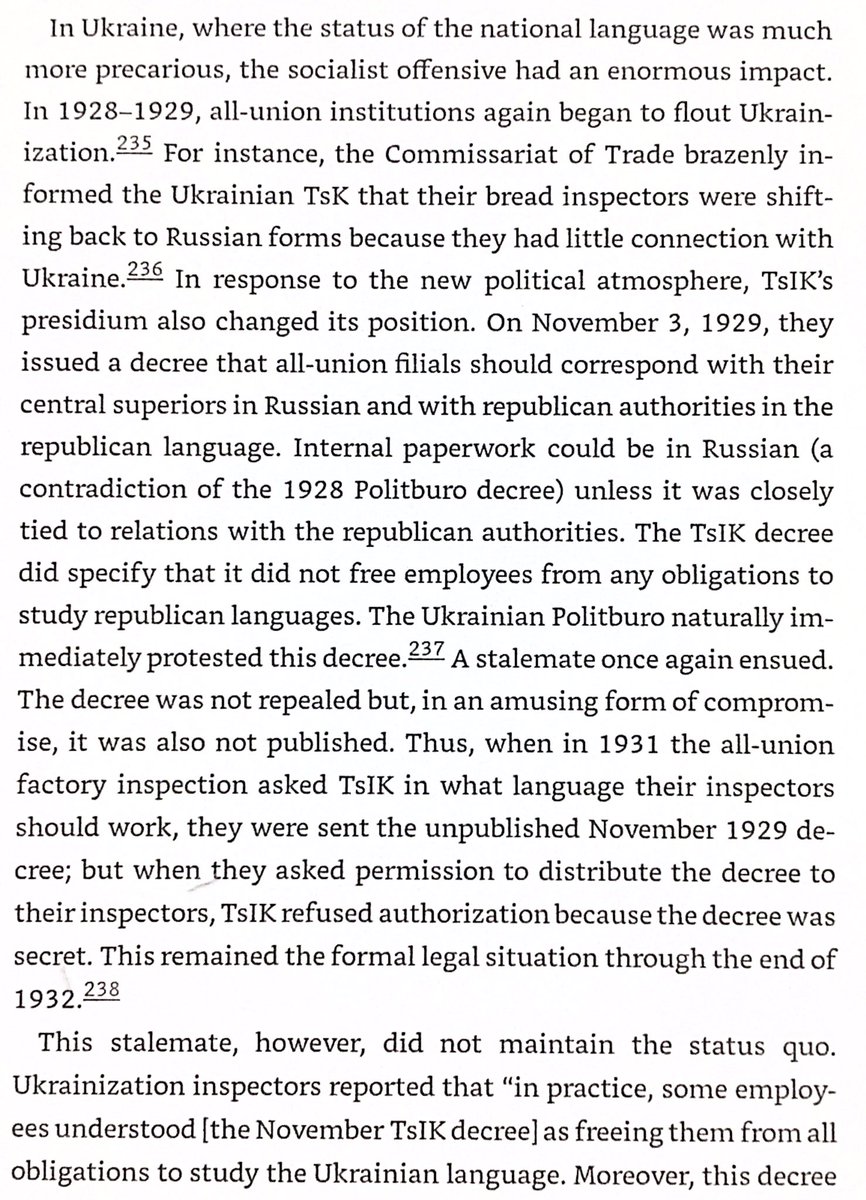
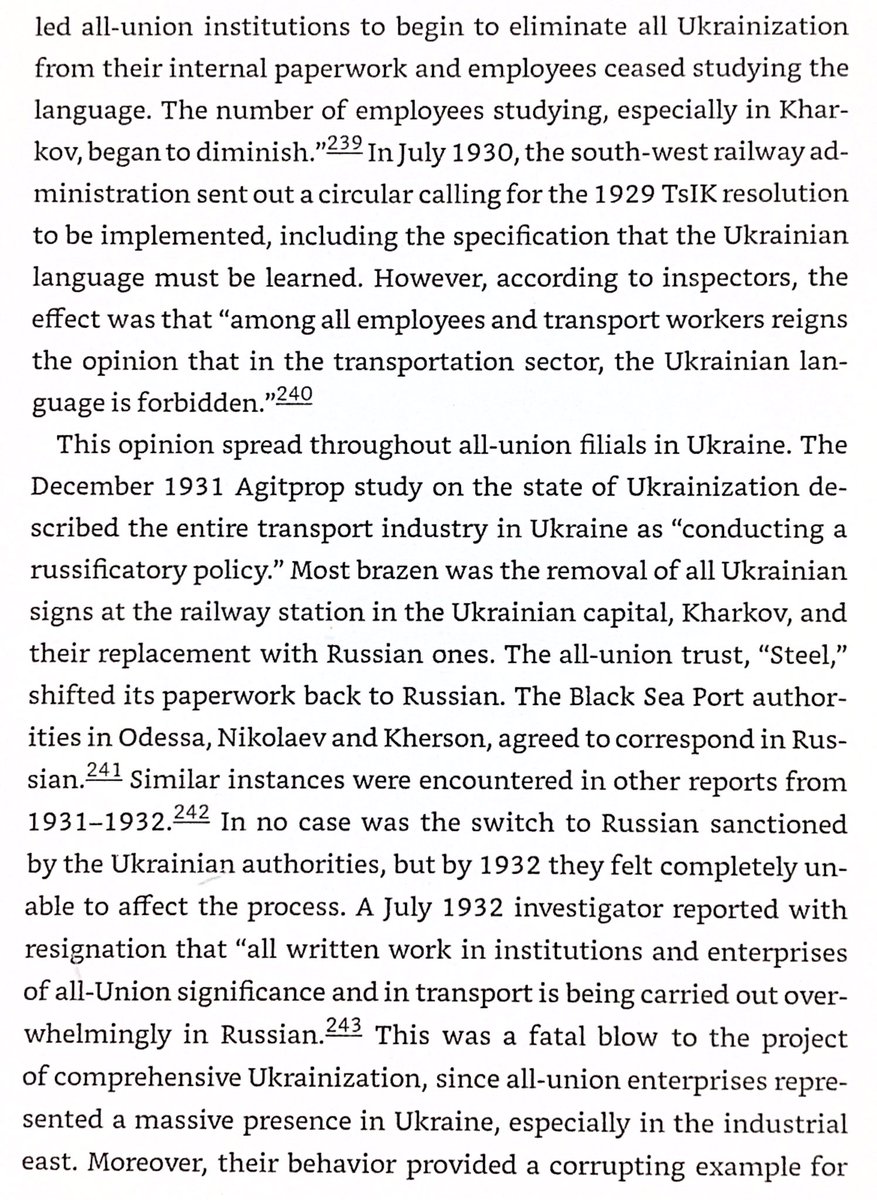
Union-level institutions started to ignore Ukrainization measures in 1928. By 1932 Union-level institutions in Ukraine had overwhelmingly reverted to Russian. Kosior’s replacement of Kaganovich as Ukraine’s party secretary accelerated this - Kosior couldn’t speak Ukrainian.
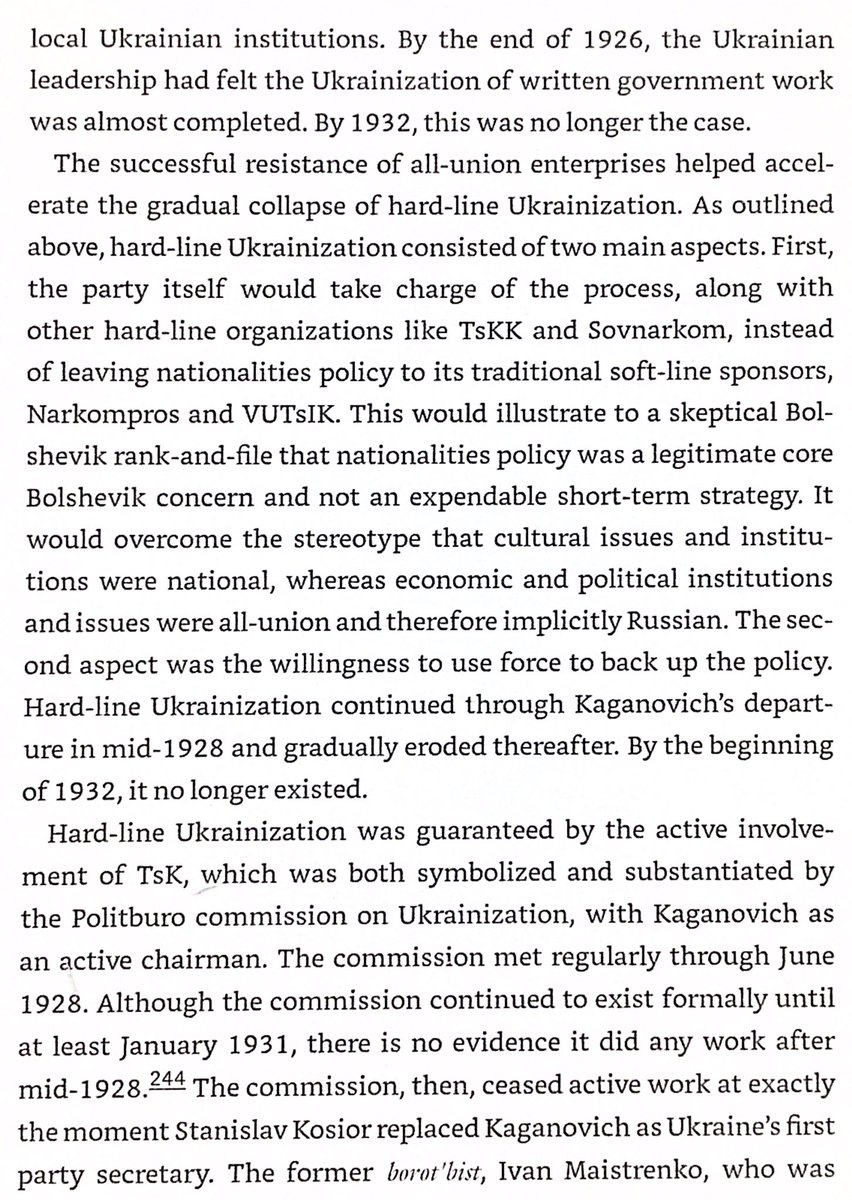
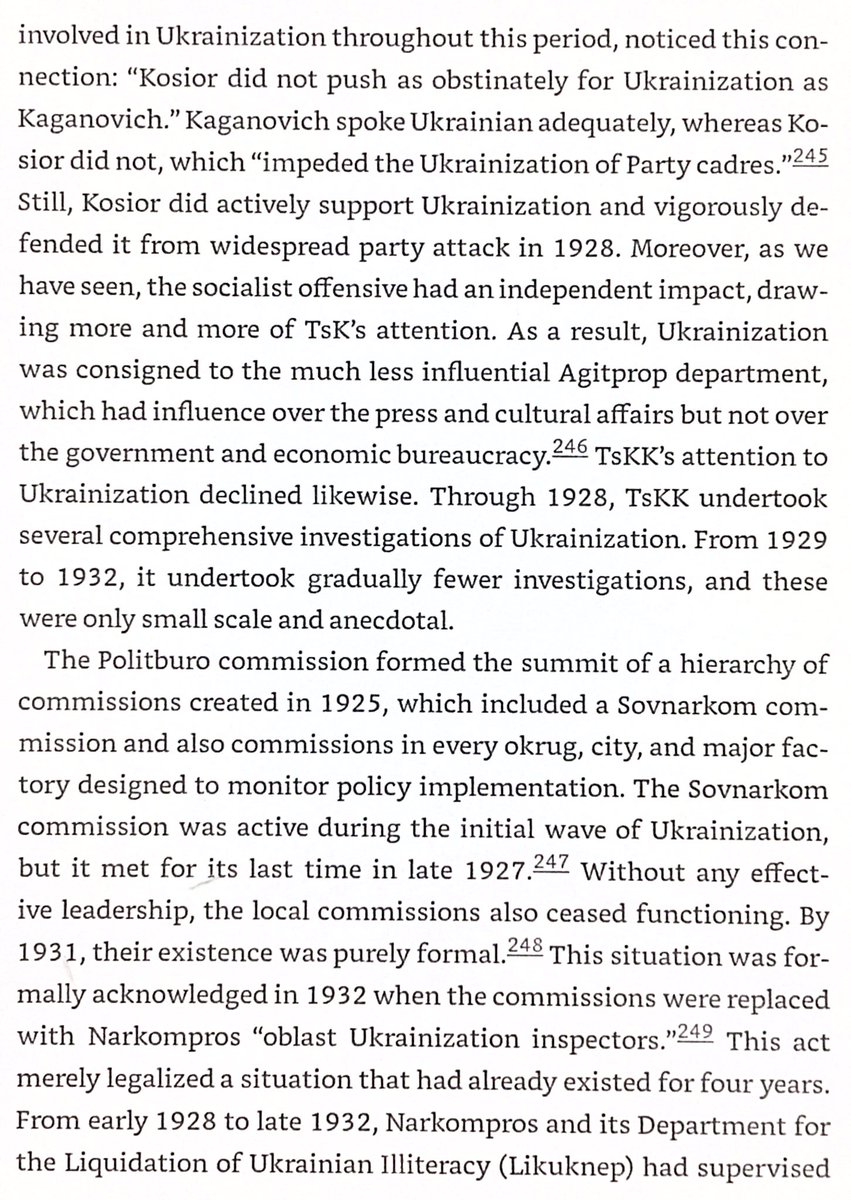
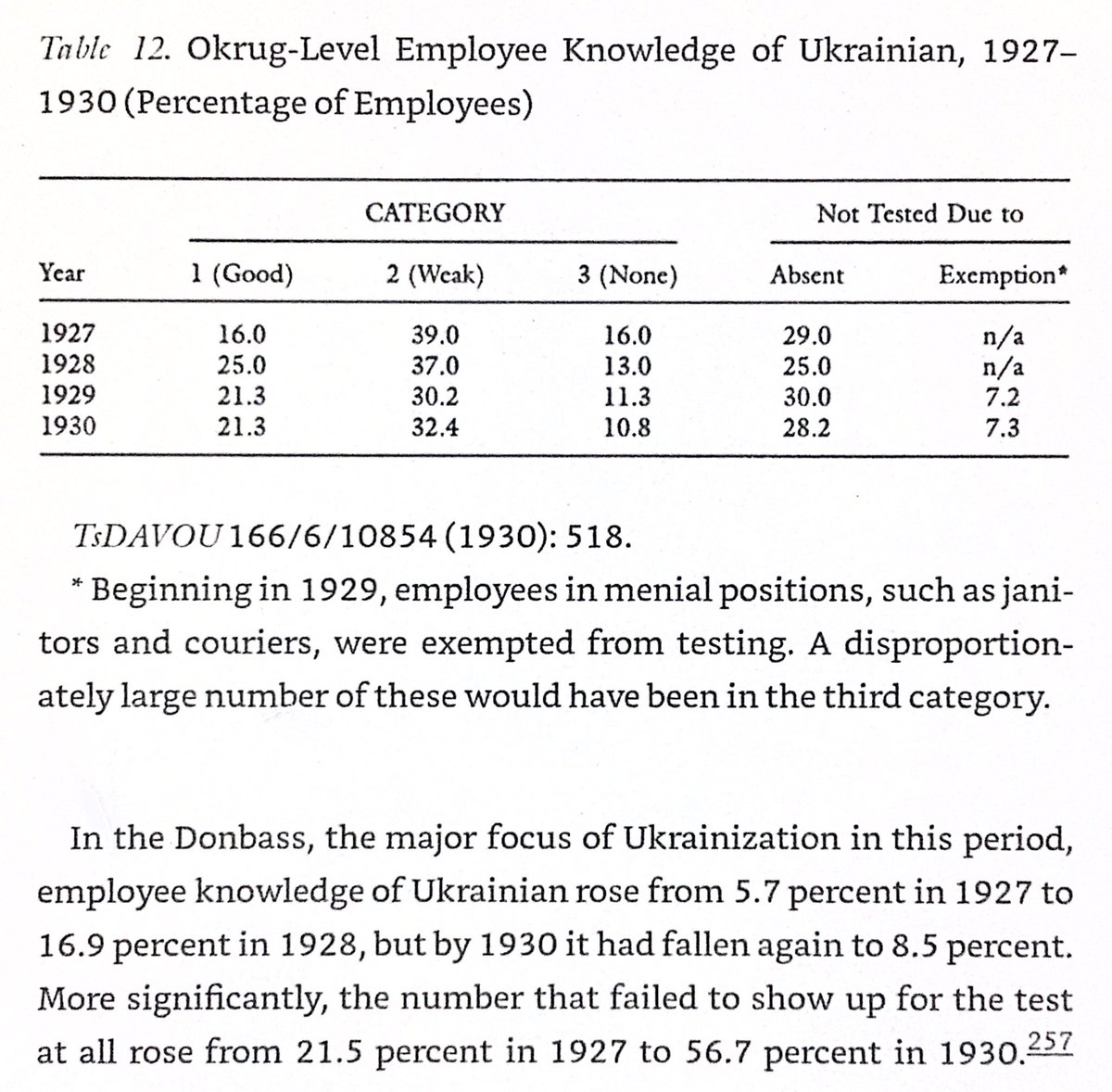
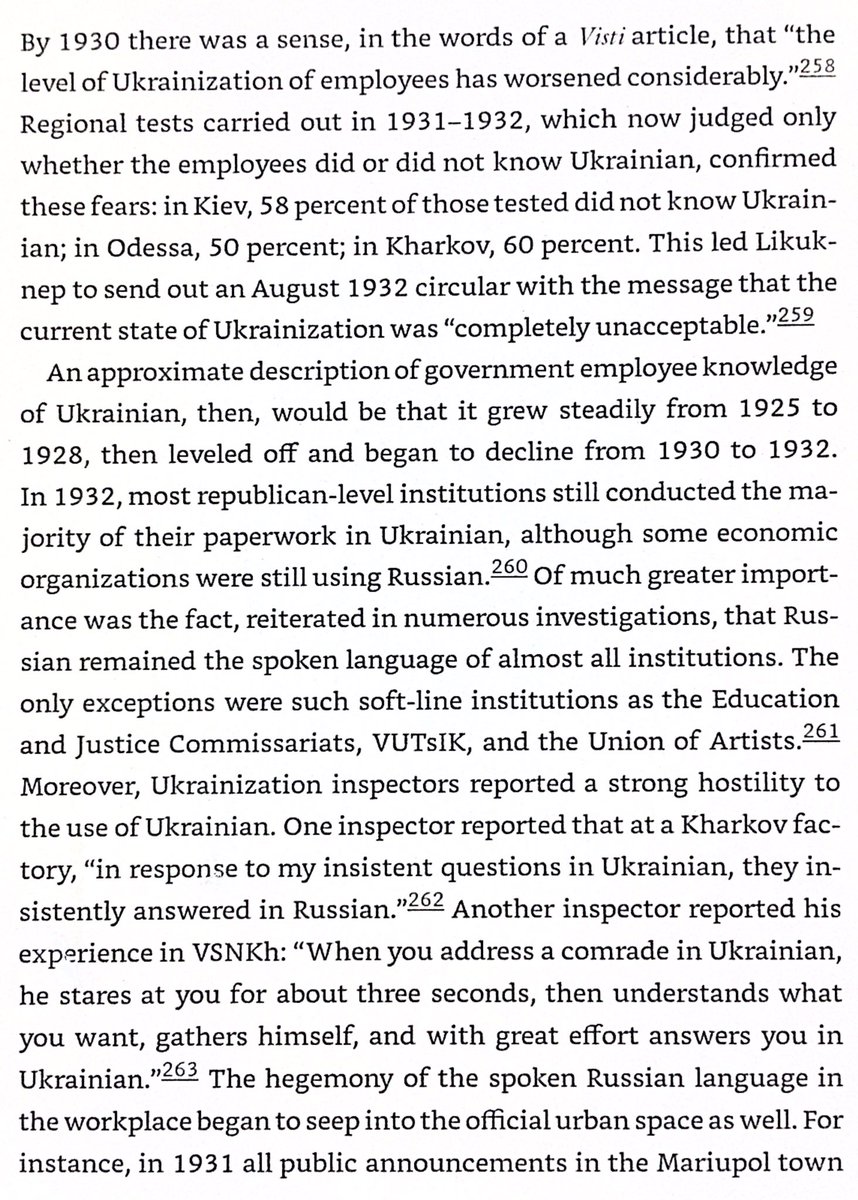
Less than 10% of workers in the Donbass in the 1930s knew Ukrainian. Ukrainian language was also known by only a minority of workers in Kiev and Kharkov.
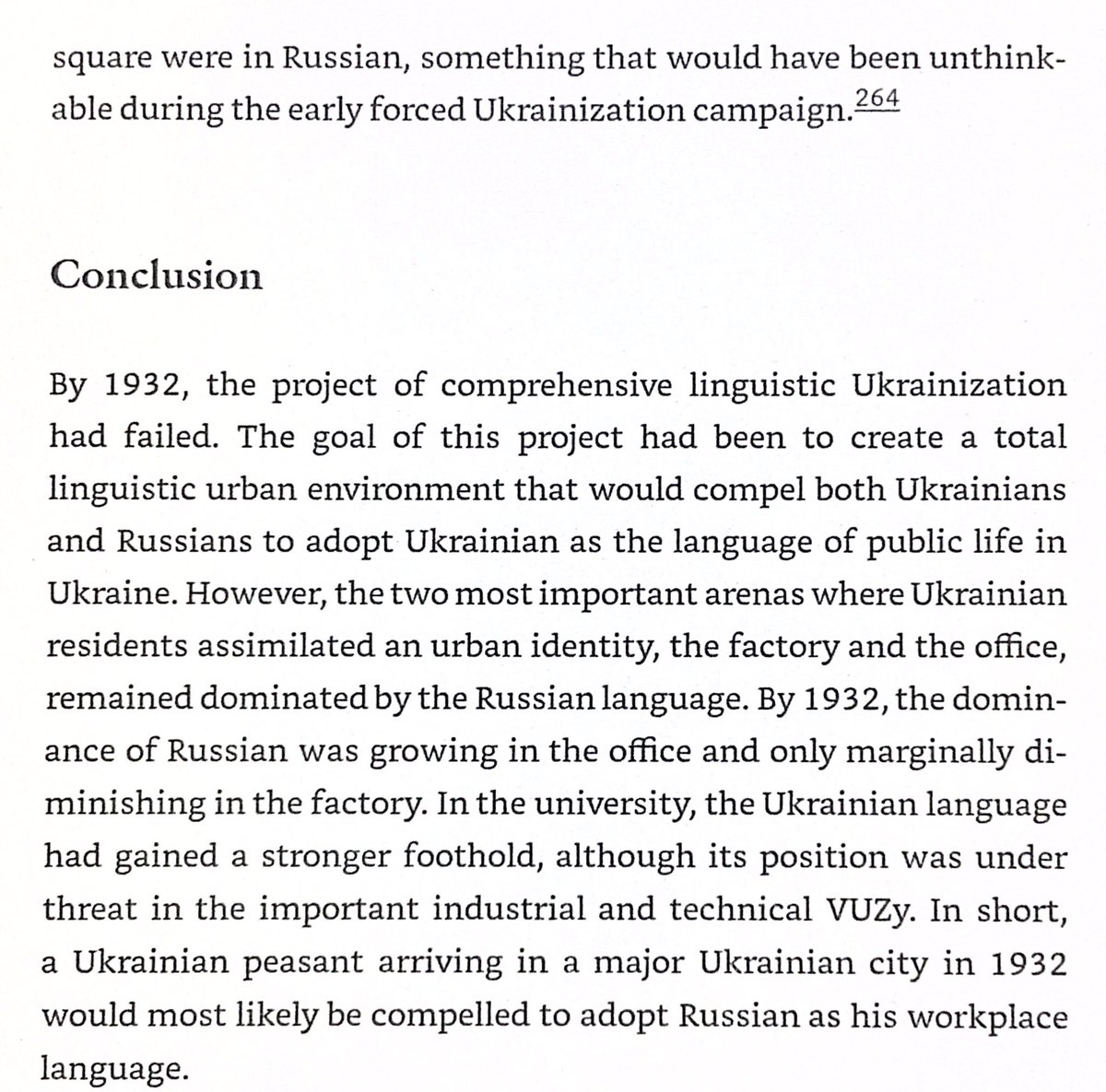
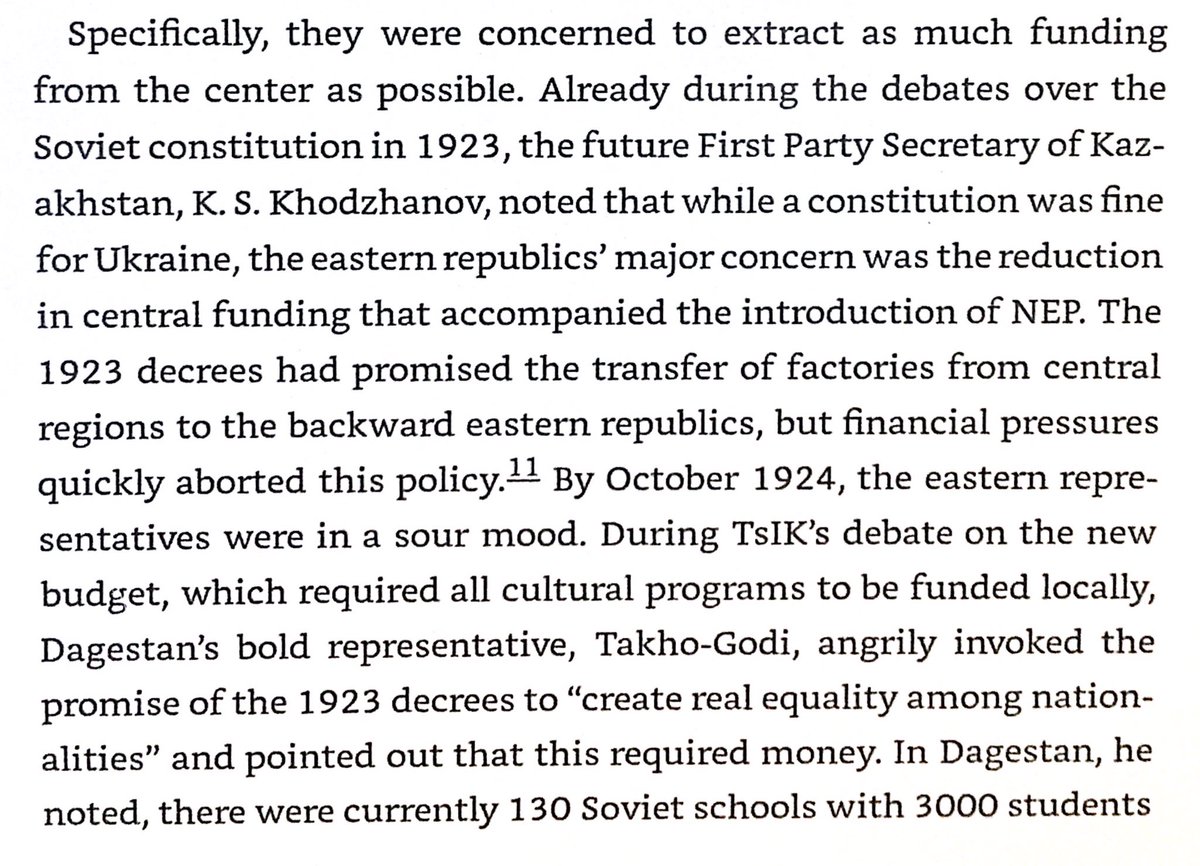
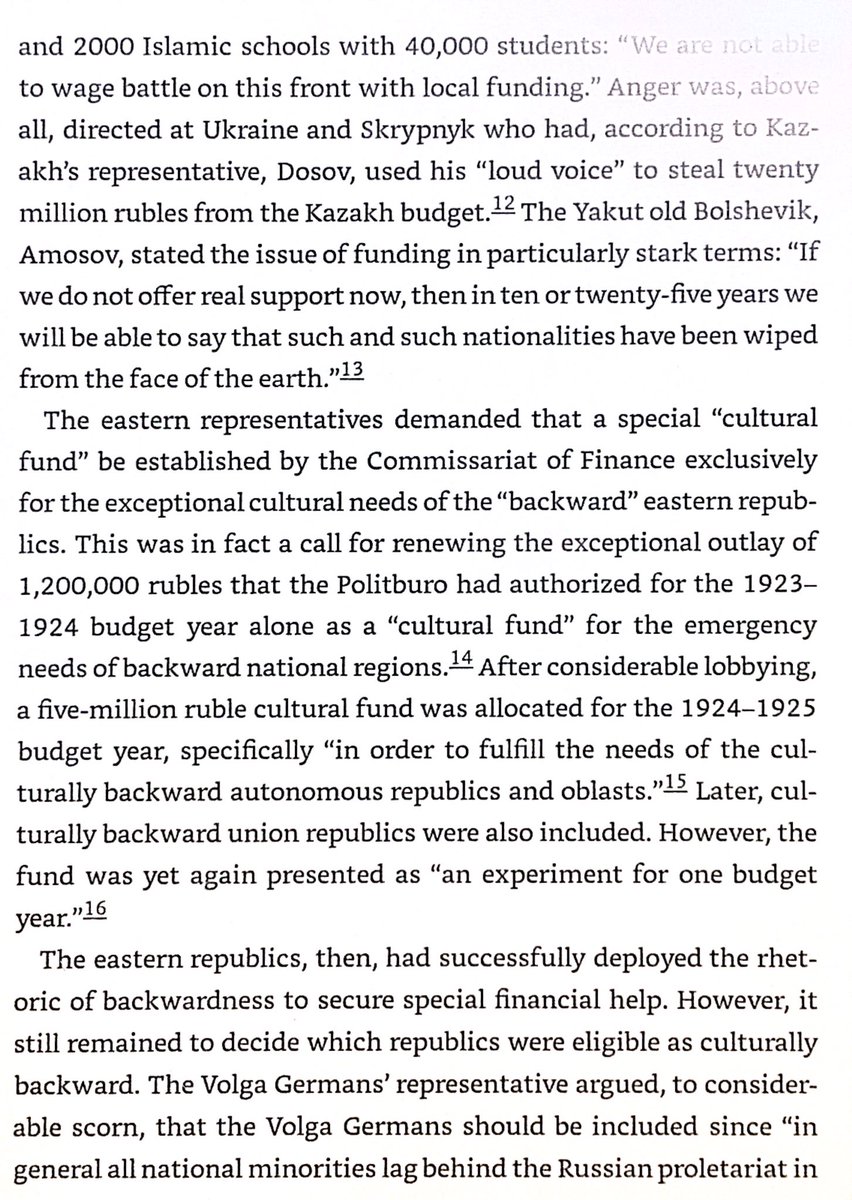
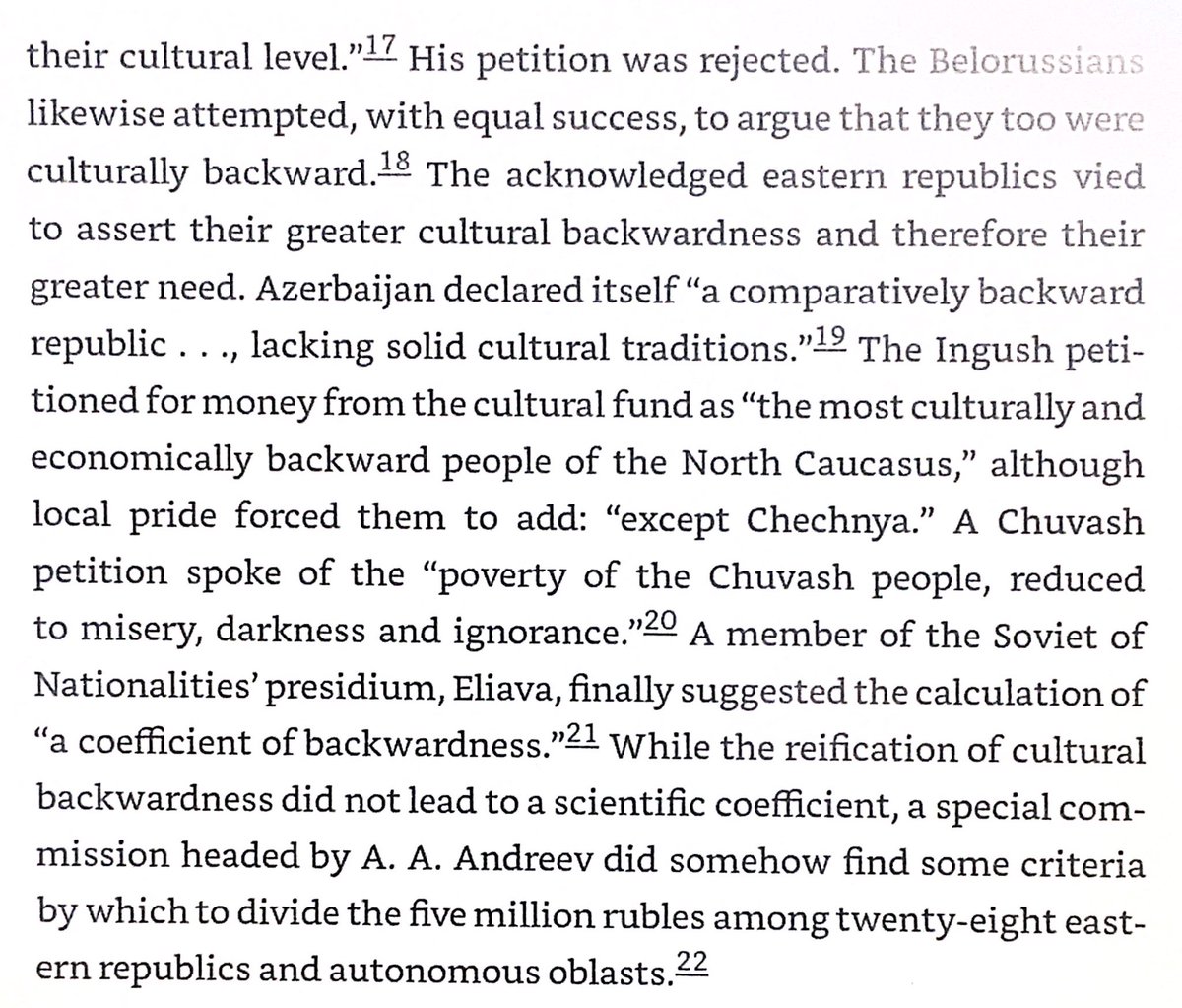
Soviet Union created a cultural fund in 1923-1924 budget to alleviate cultural backwardness. Groups argued that they were backwards to get the fund’s money. The Ingush even argued that they were the most backwards people in the Caucasus, except for the Chechens.
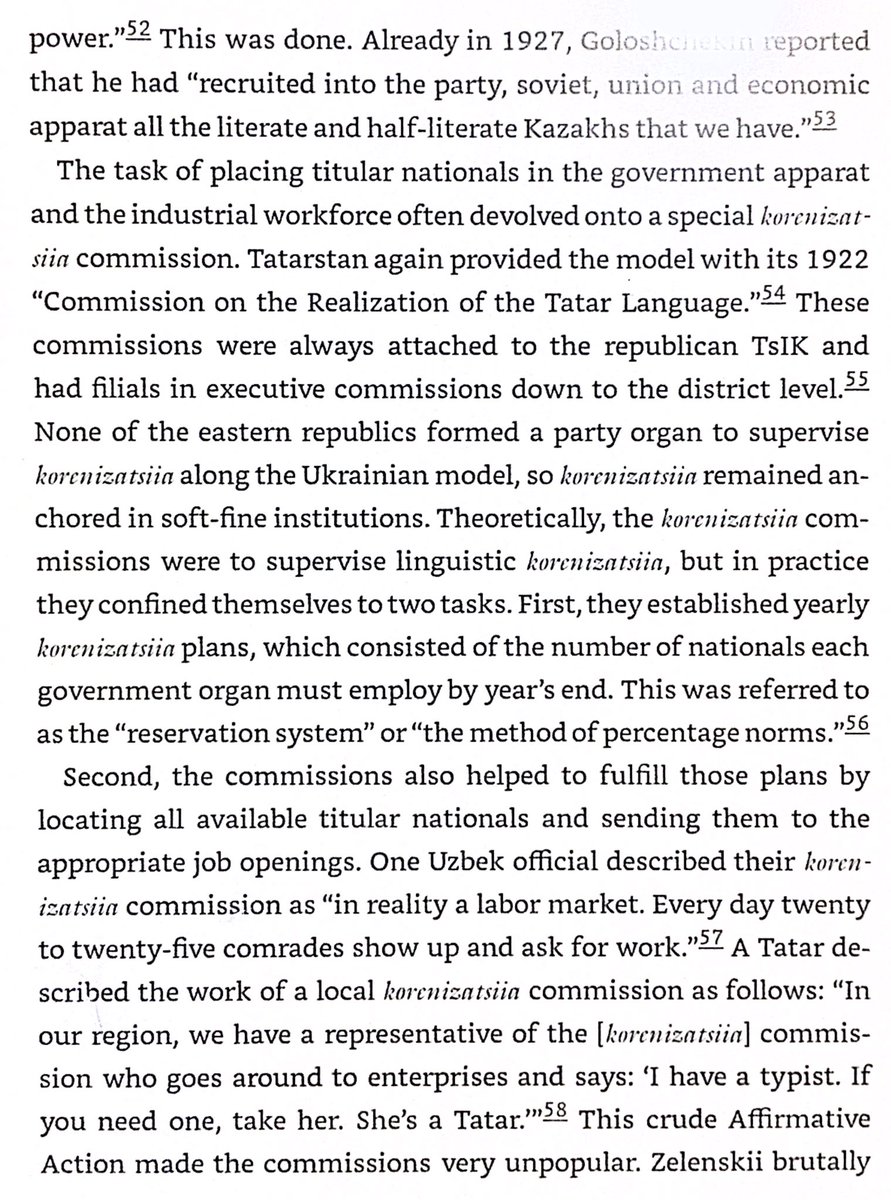
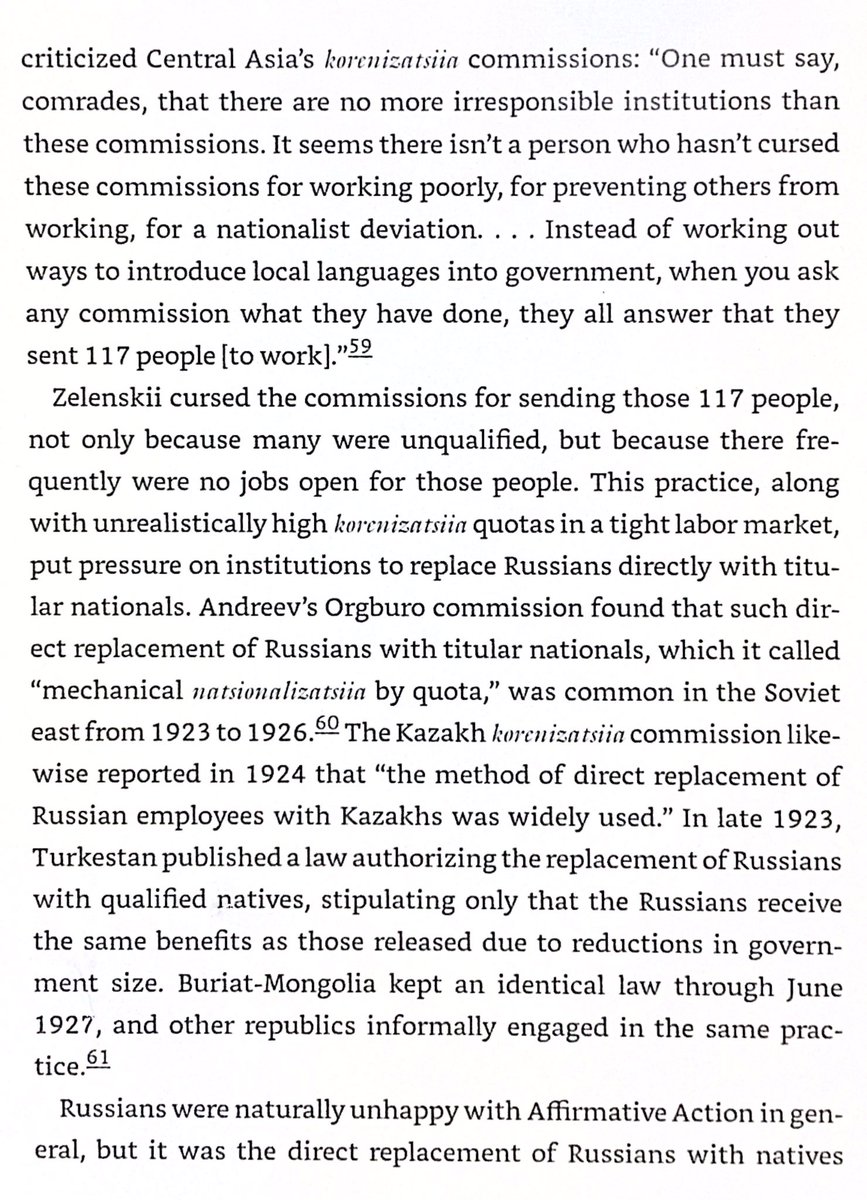
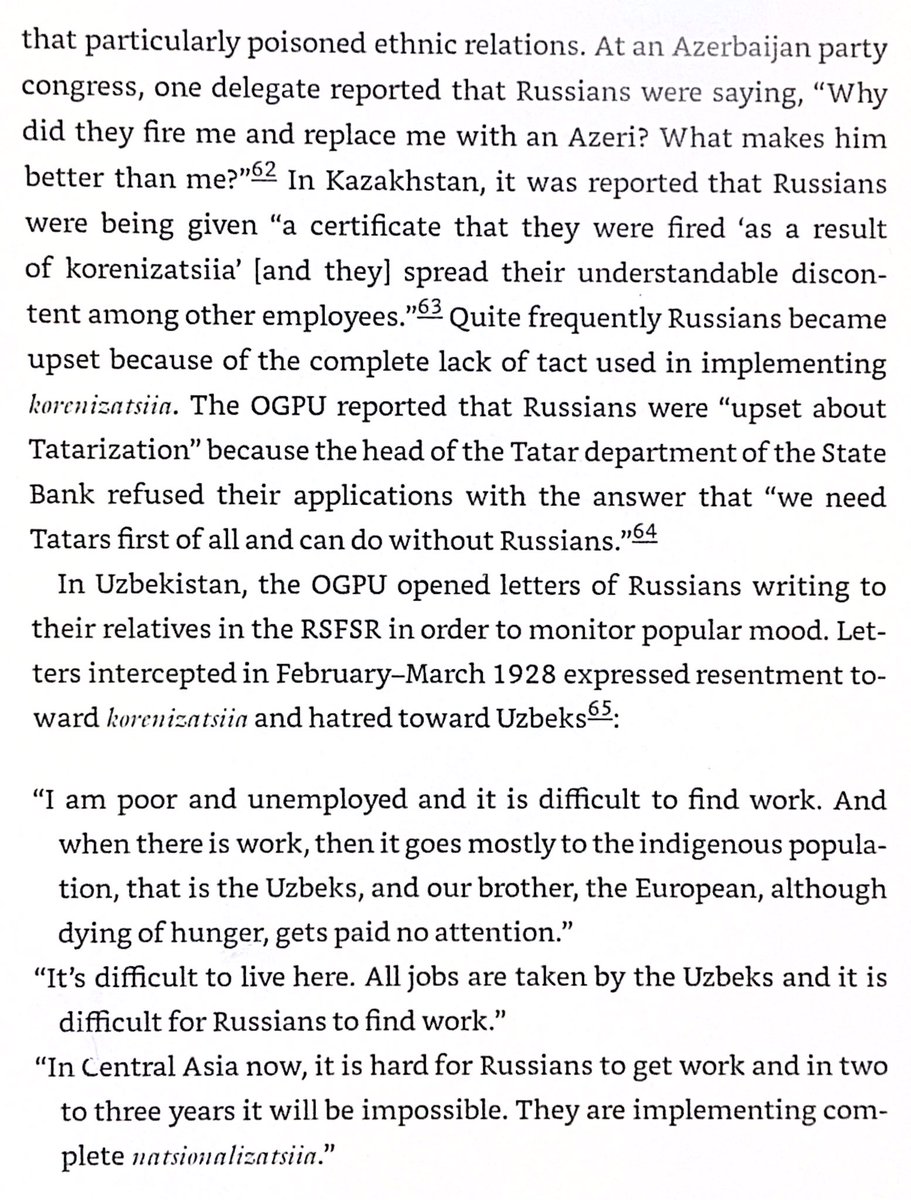
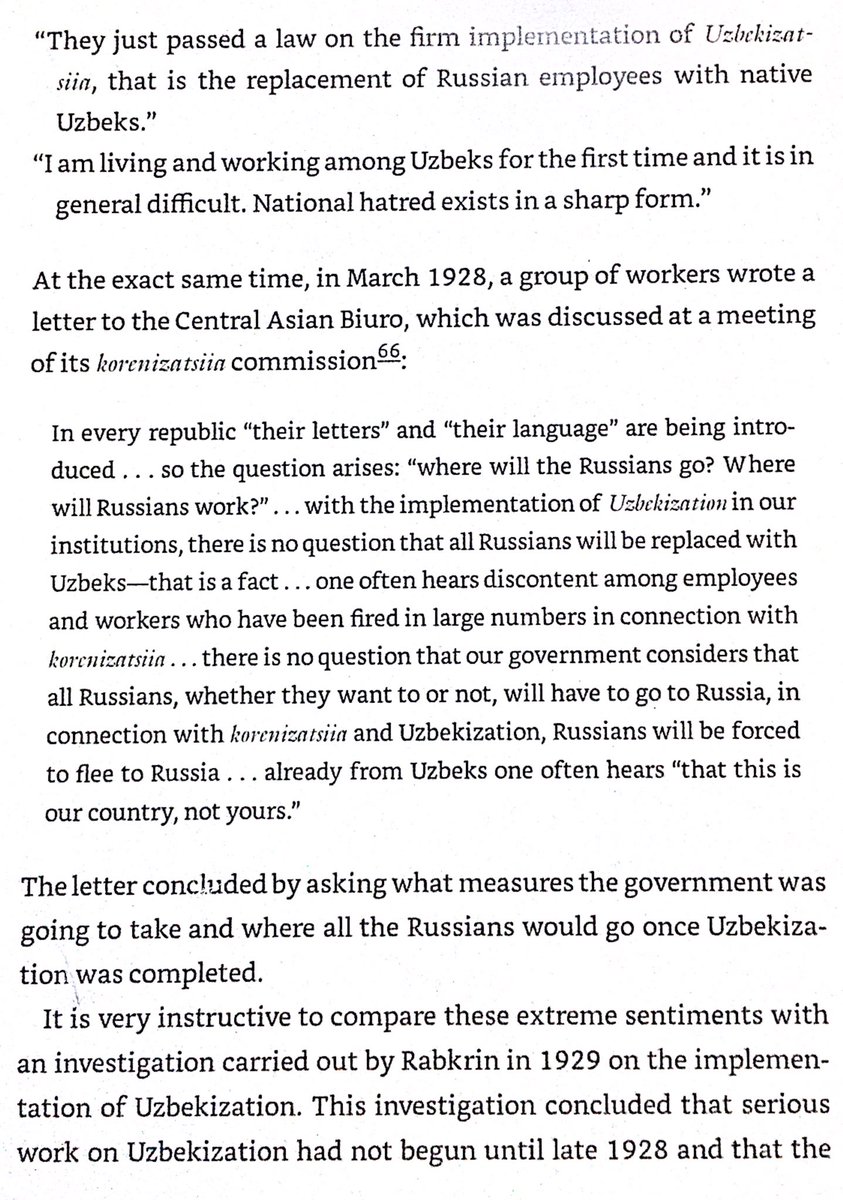
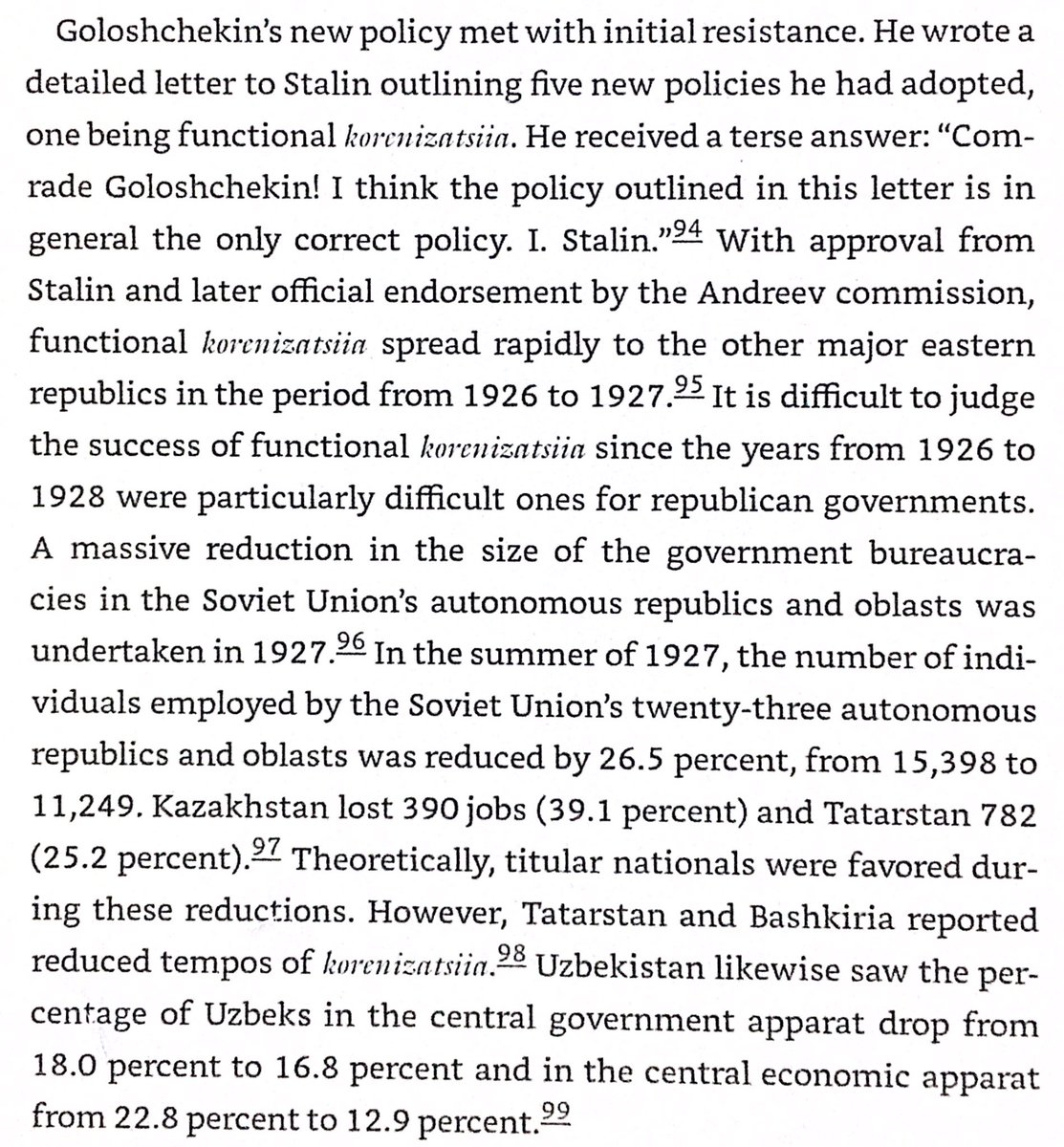
Soviet indigenization committees in the 1920s set ethnic representation targets for the government to reach and recruited members of underrepresented groups for work. Since organizations became overstaffed as a result, ethnic Russians were fired to make places for others.
USSR cut spending on the republics 1927-1928, hurting the bureaucracies and indigenization programs.
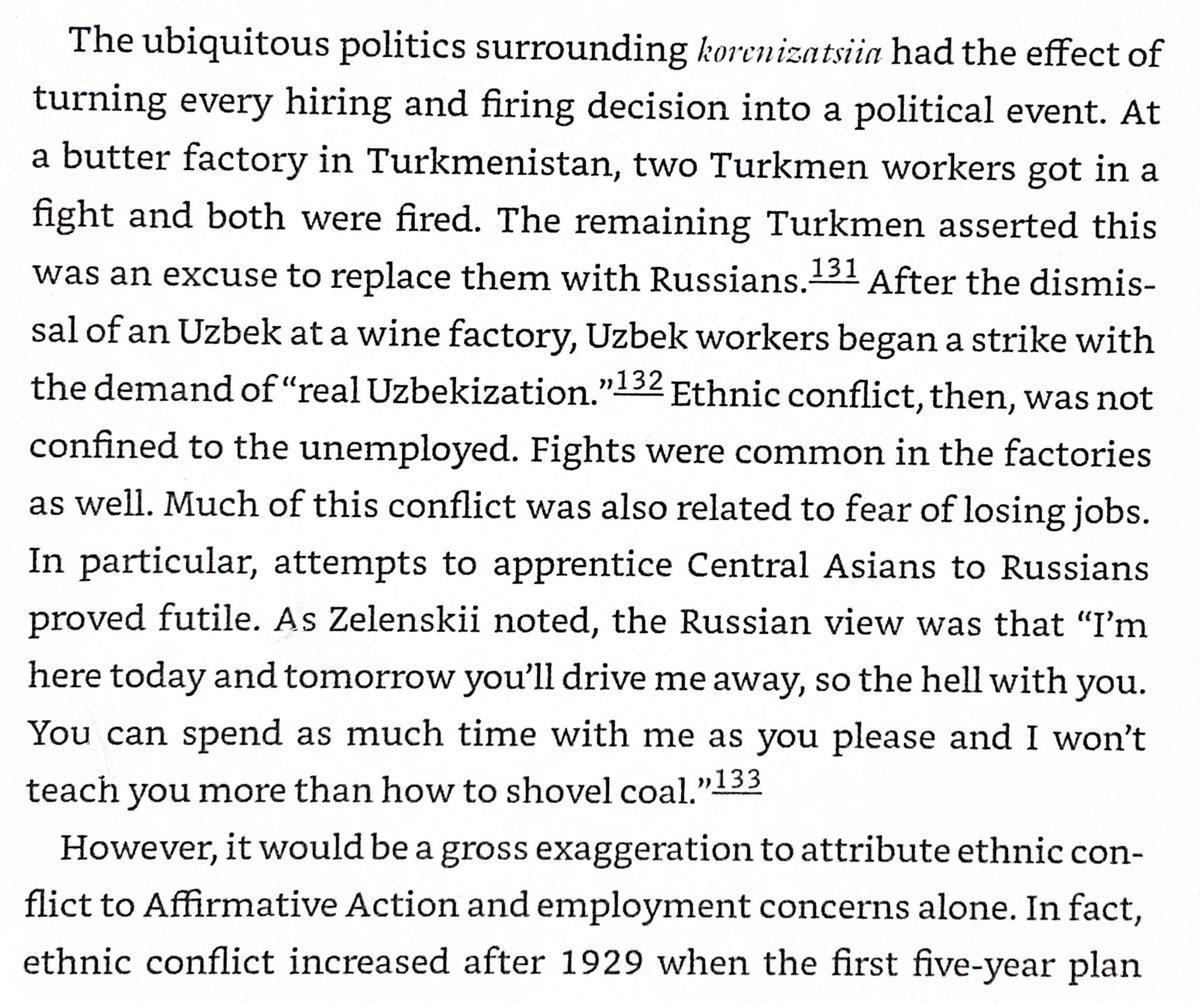
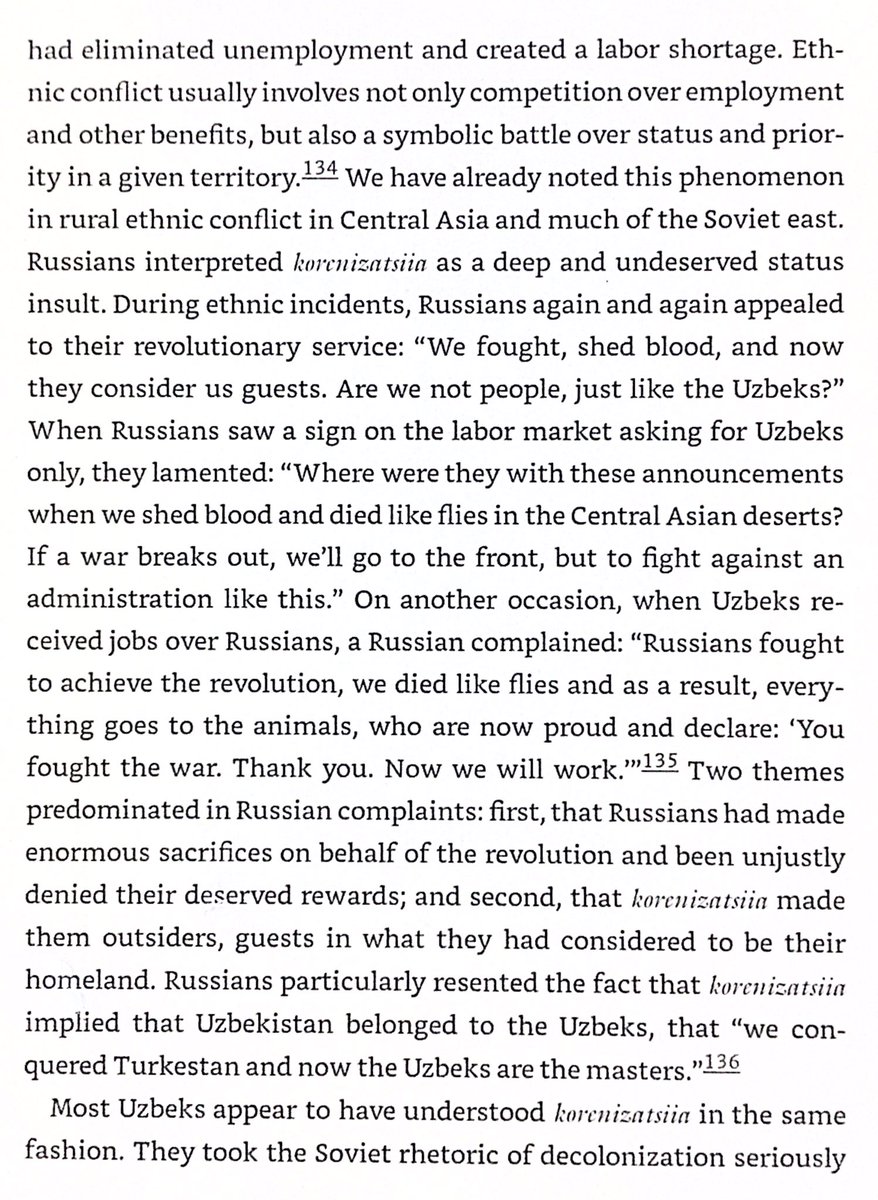
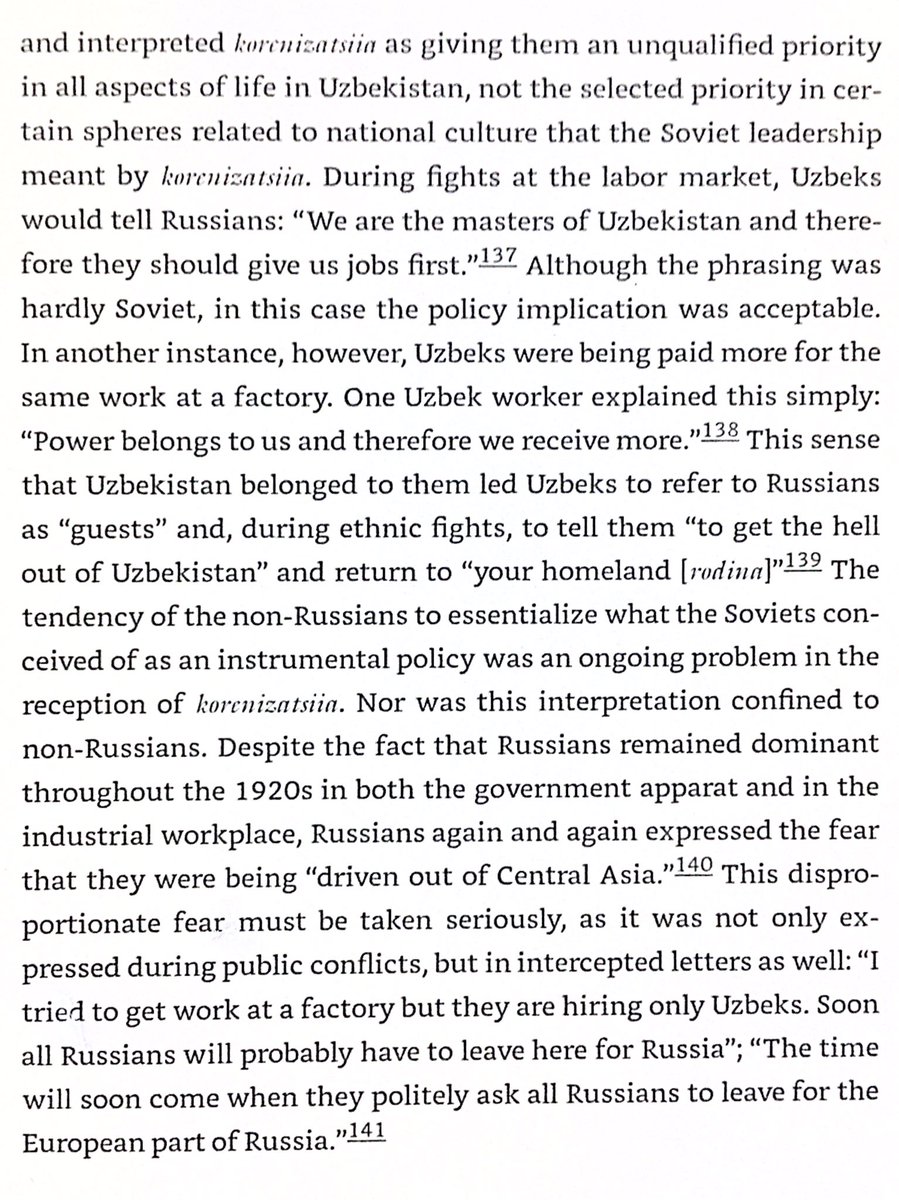
In Soviet Uzbekistan, indigenization programs were understood as a betrayal by ethnic Russians and as a victory by the Uzbeks in spite of communist ideology emphasizing unity of working class.
Sultan-Galiev, the Tatar proponent of Moslem National Communism, had ties to the Basmachi insurgency in Central Asia. Revelation of these ties enabled Stalin to have Sultan-Galiev arrested in 1923.
Soviet Belarus had weak national consciousness, to the point that some peasants objected to Belarusian identity by insisting they were Russians in Belarusian language. 1920s indigenization program in Soviet Belarus was successful in spreading Belarusian to bureaucracy & media.
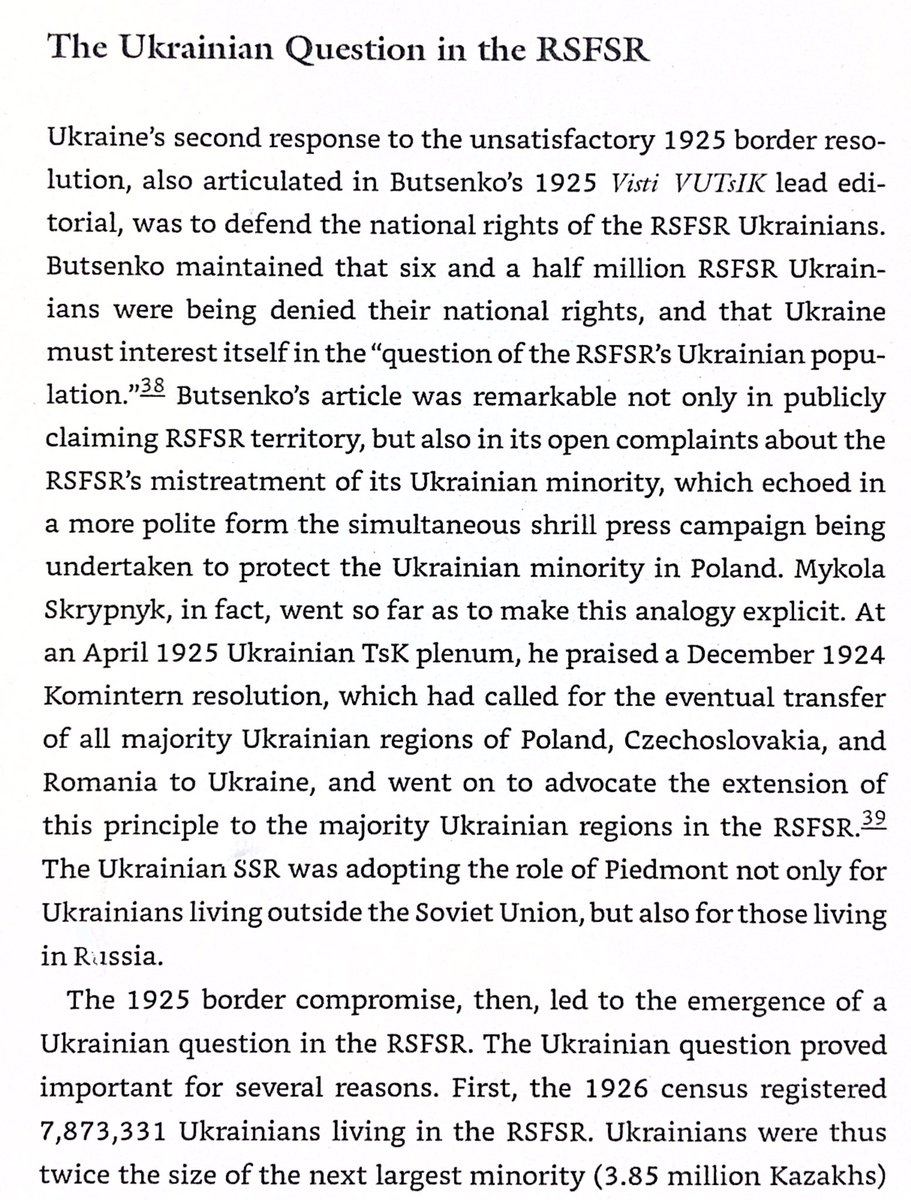
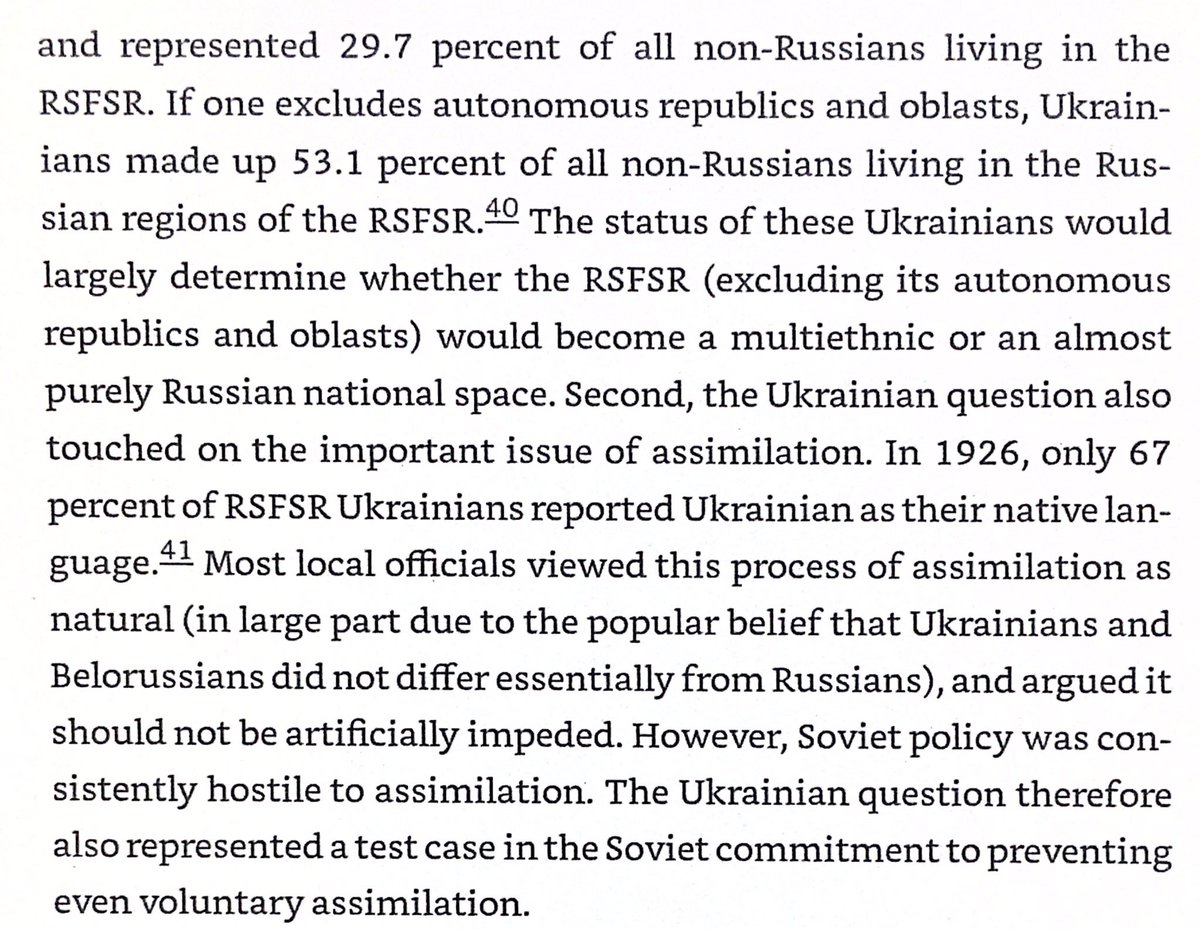
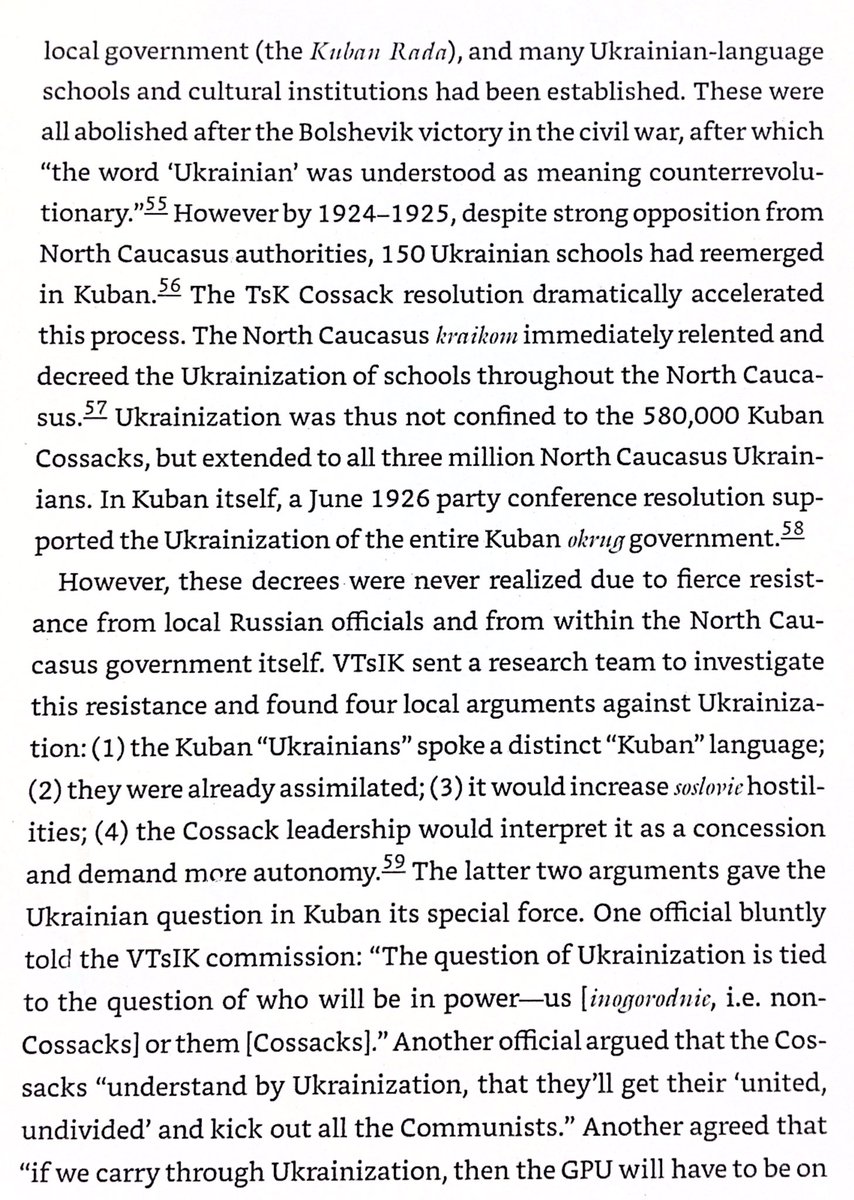
6.5 million Ukrainians lived in 1925 Soviet Russia, & were a majority of the population in Voronezh, Kursk, & under certain definitions the N Caucasus kray. Soviet Ukraine wanted to annex the majority Ukrainian parts of Russia. Only 2/3rds of Ukrainians in Russia spoke Ukrainian.
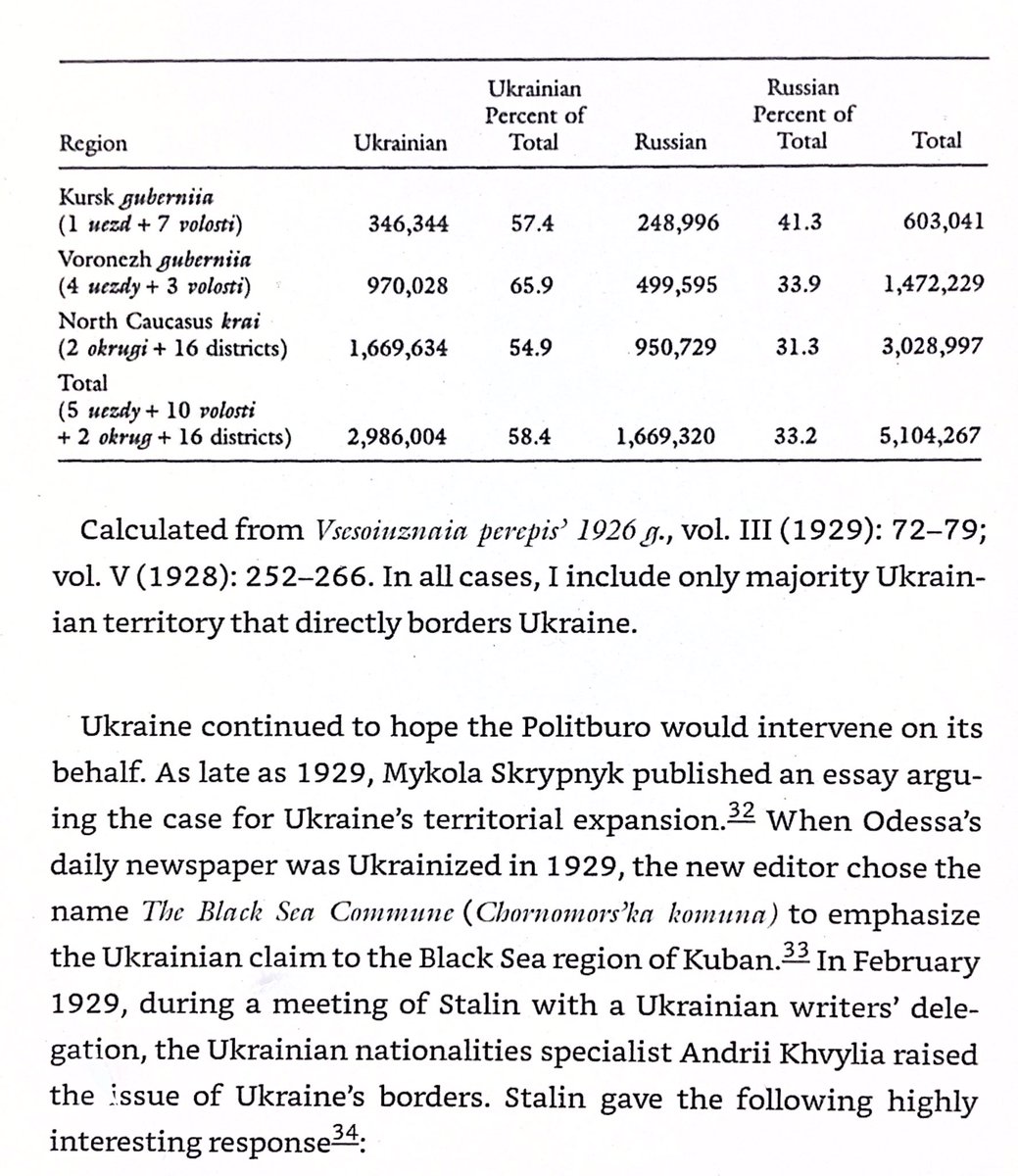
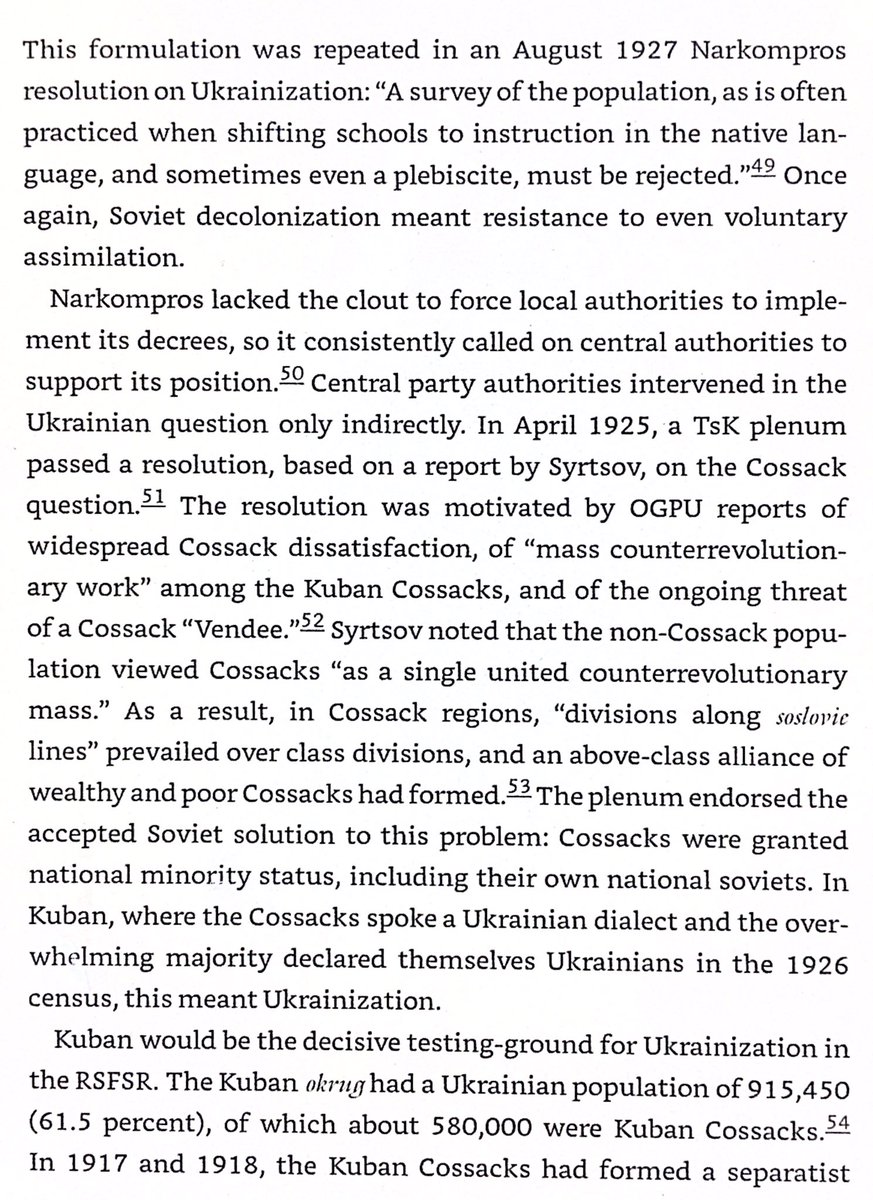
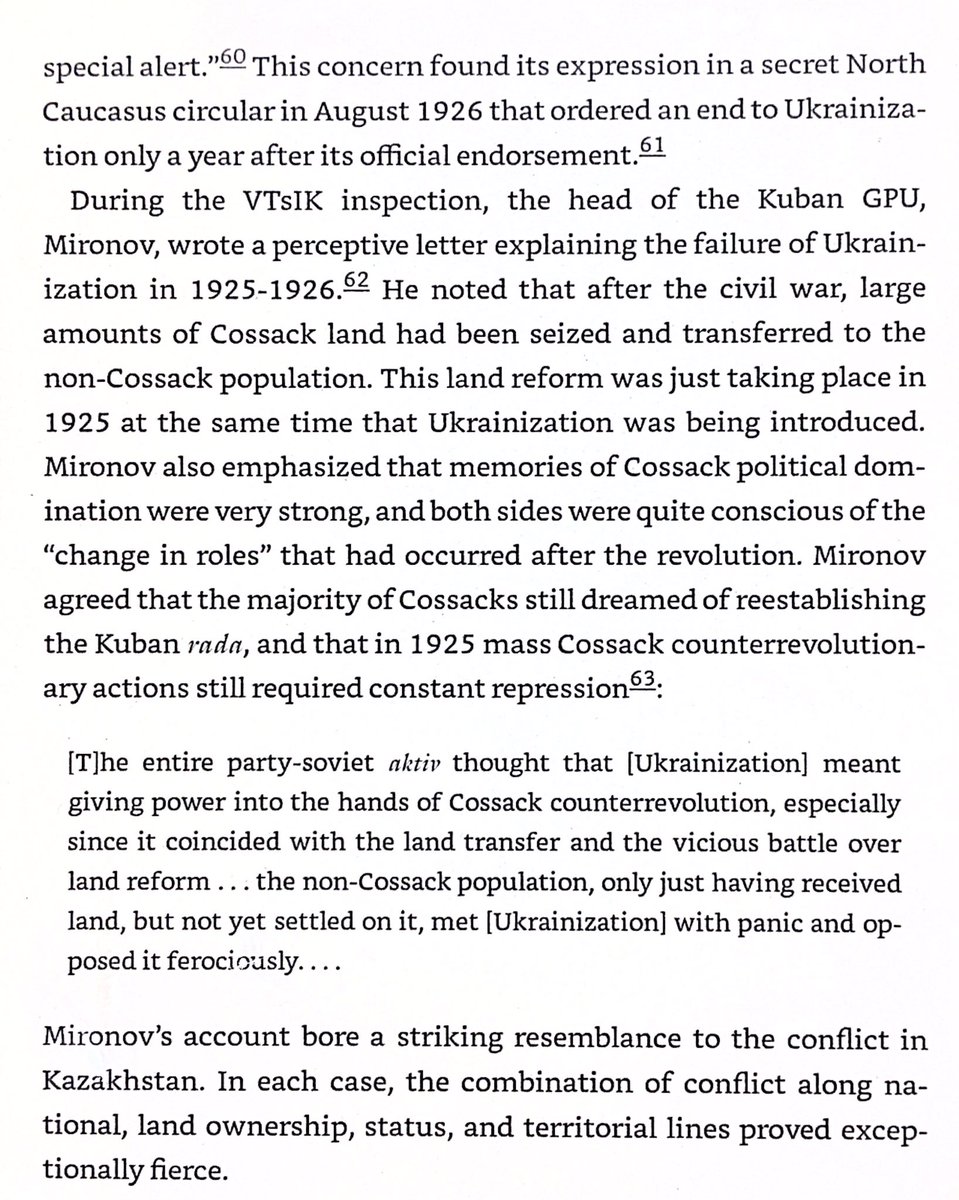
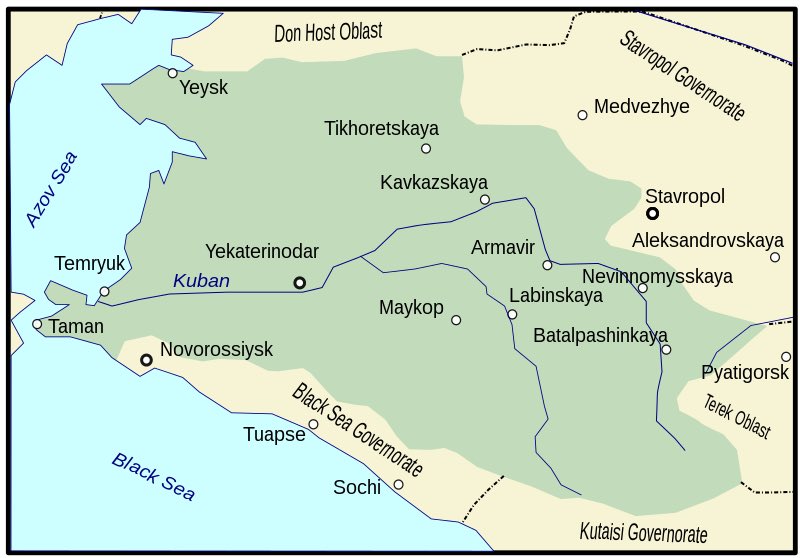
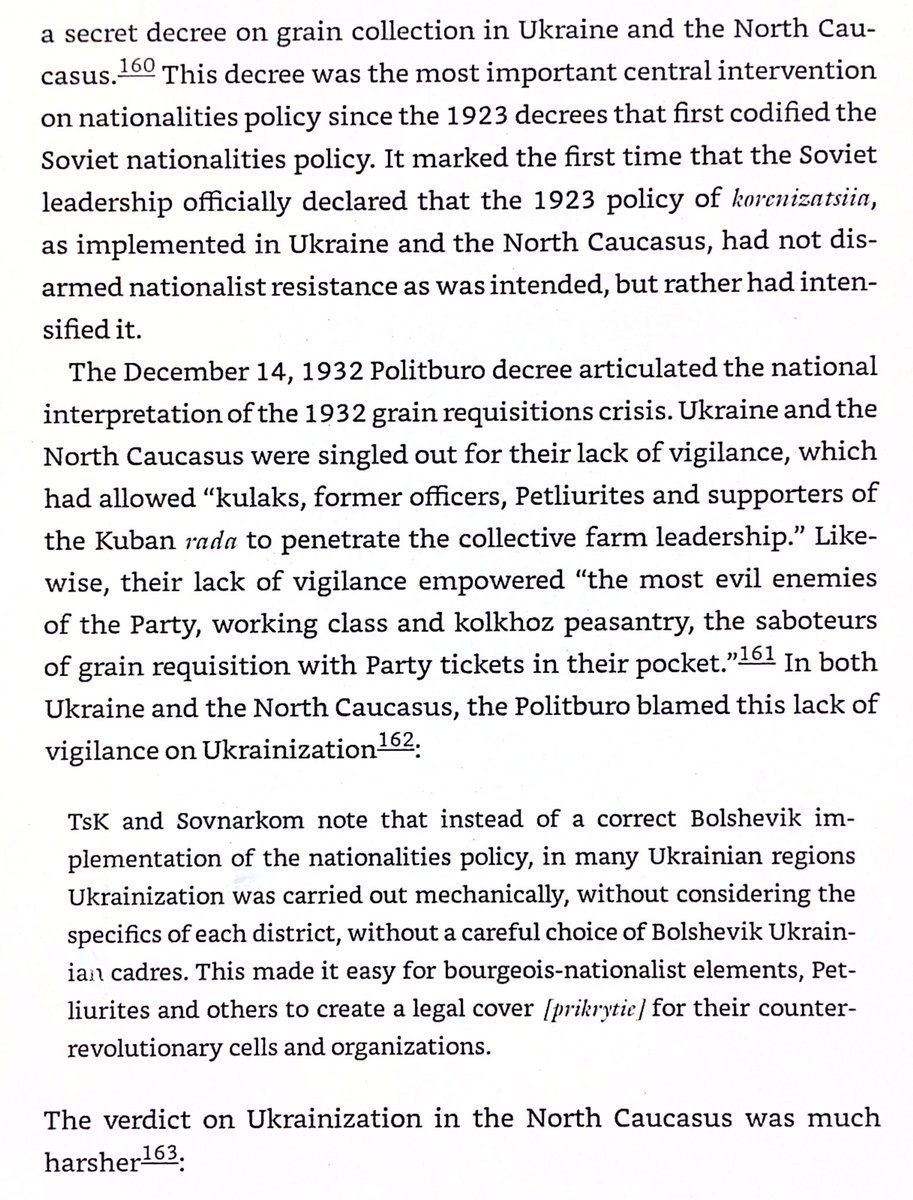
In 1925 Soviet government endorsed establishment of Cossack national soviets in the Kuban. Kuban Cossacks identified as Ukrainian in 1926 census. In 1926 Soviet government changed its mind & ended Ukrainization in N Caucasus due to Cossack separatism & need for repression.
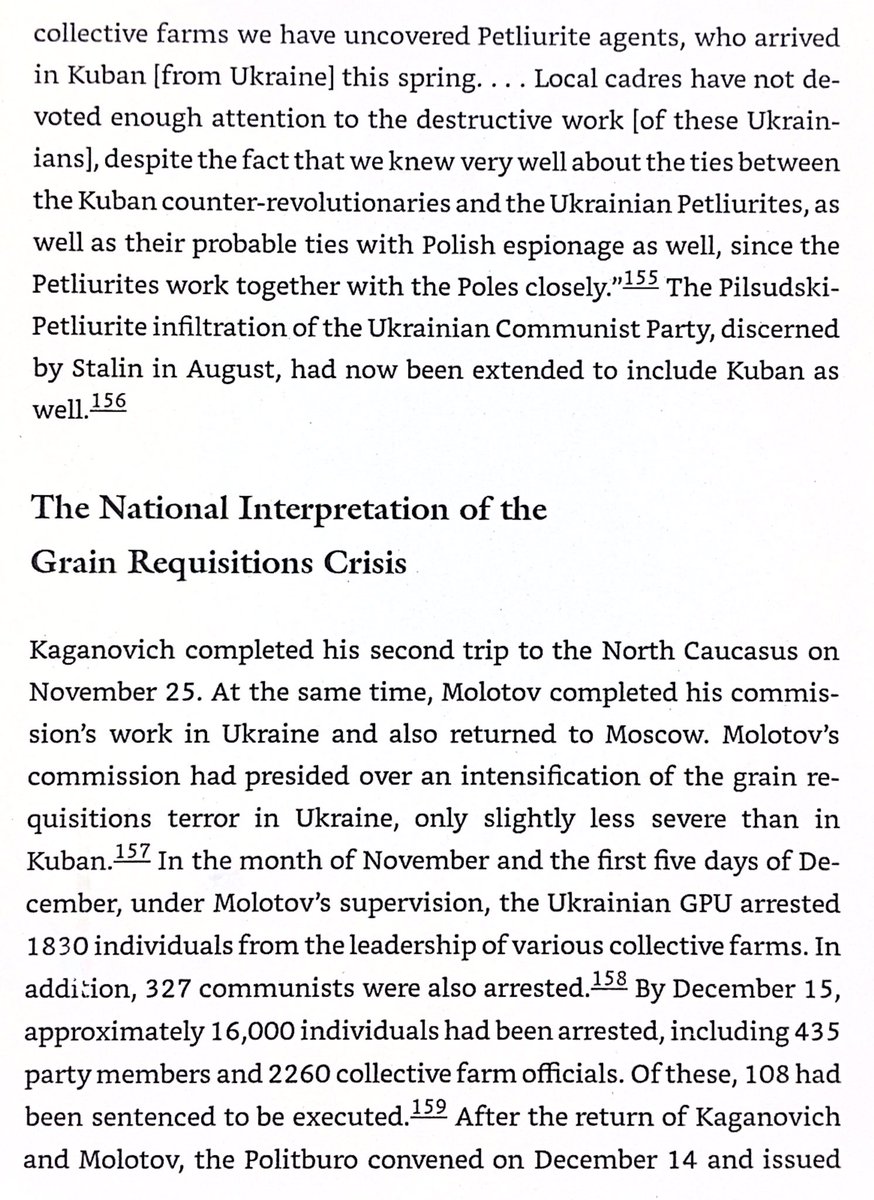
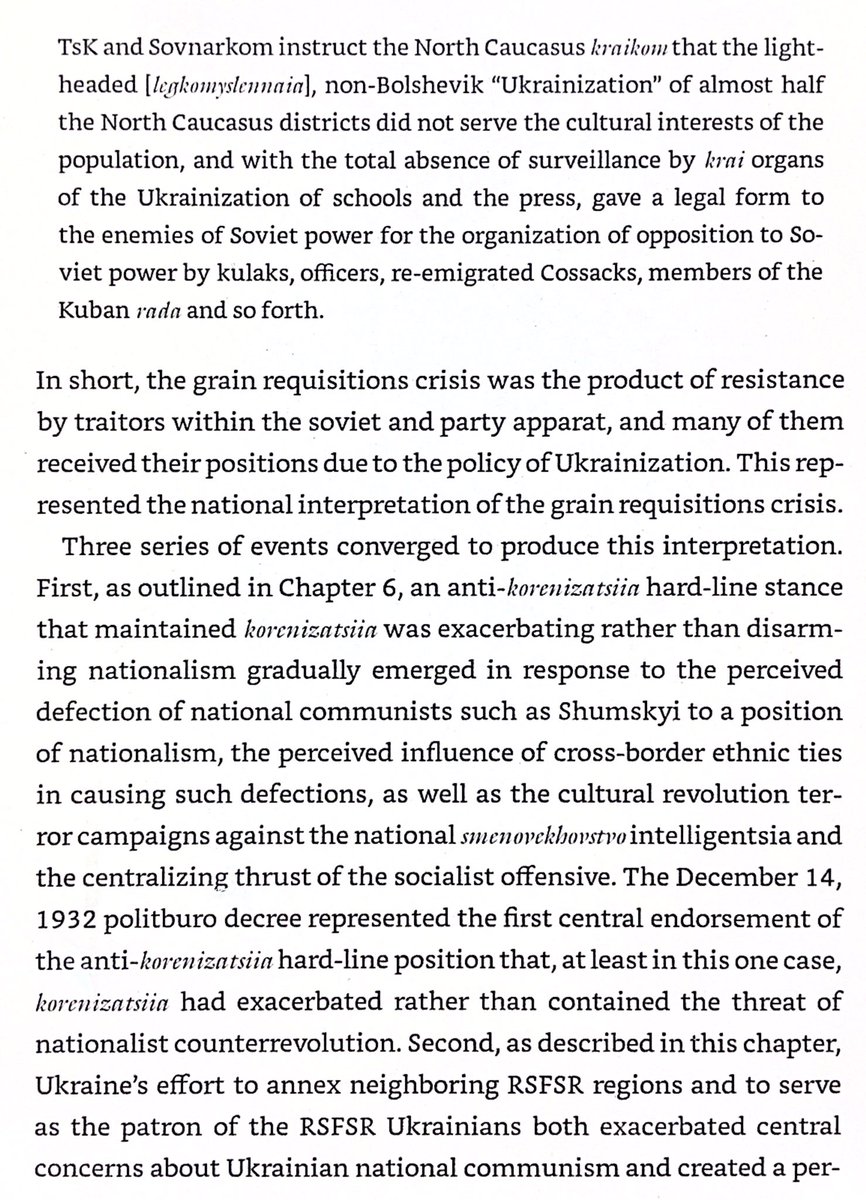
The Soviet government’s turn against indigenization in Ukraine & the Kuban happened in 1932 after the failures of collectivization led to protests & revolts. Failures were chalked up to nationalist/reactionary/foreign sabotage & subversion.
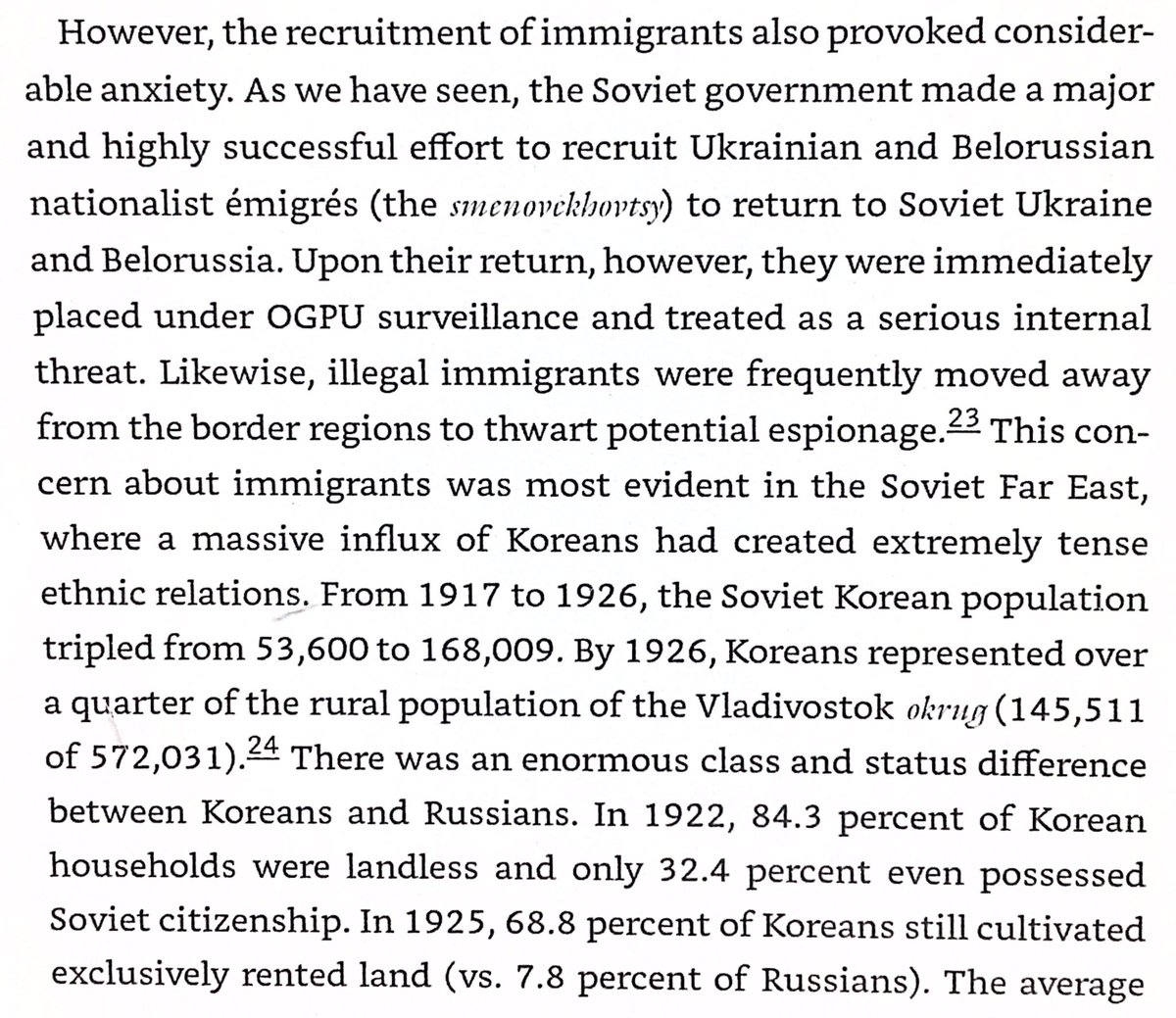
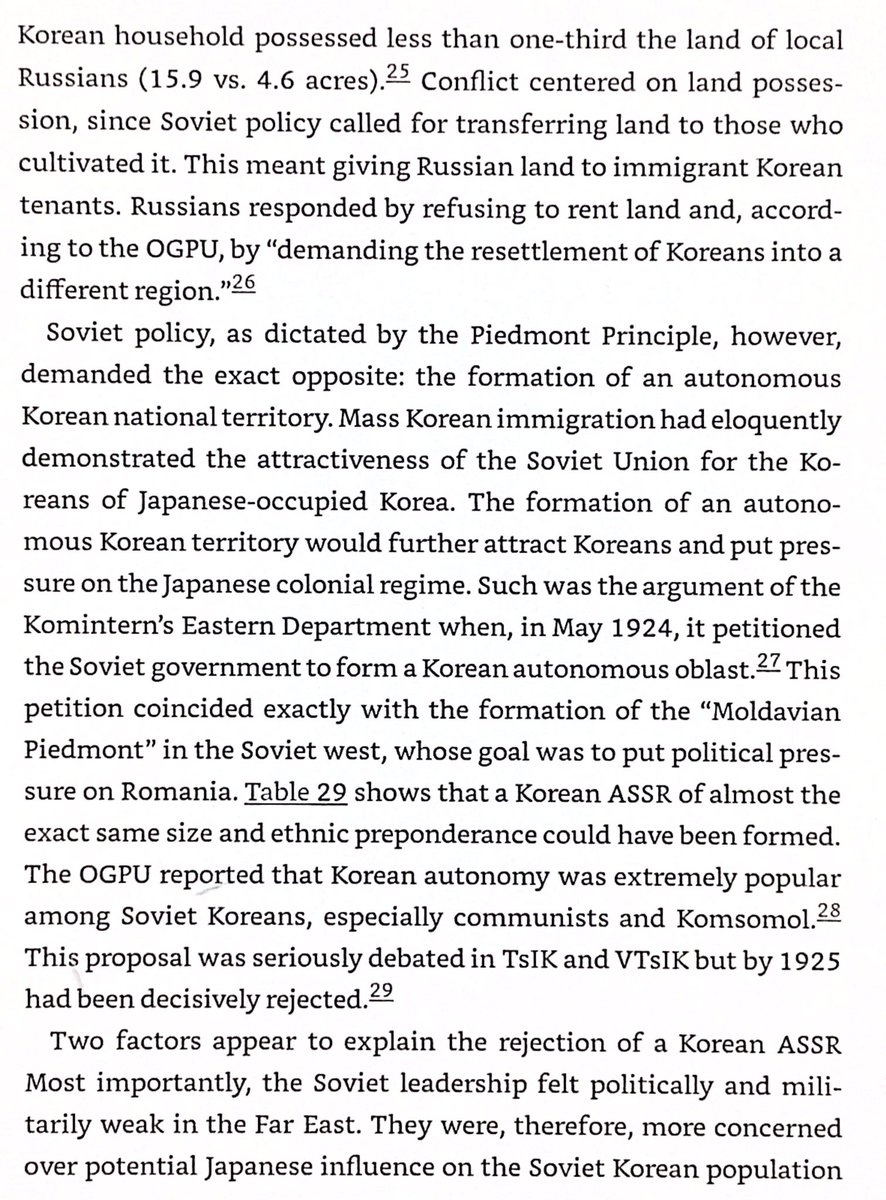
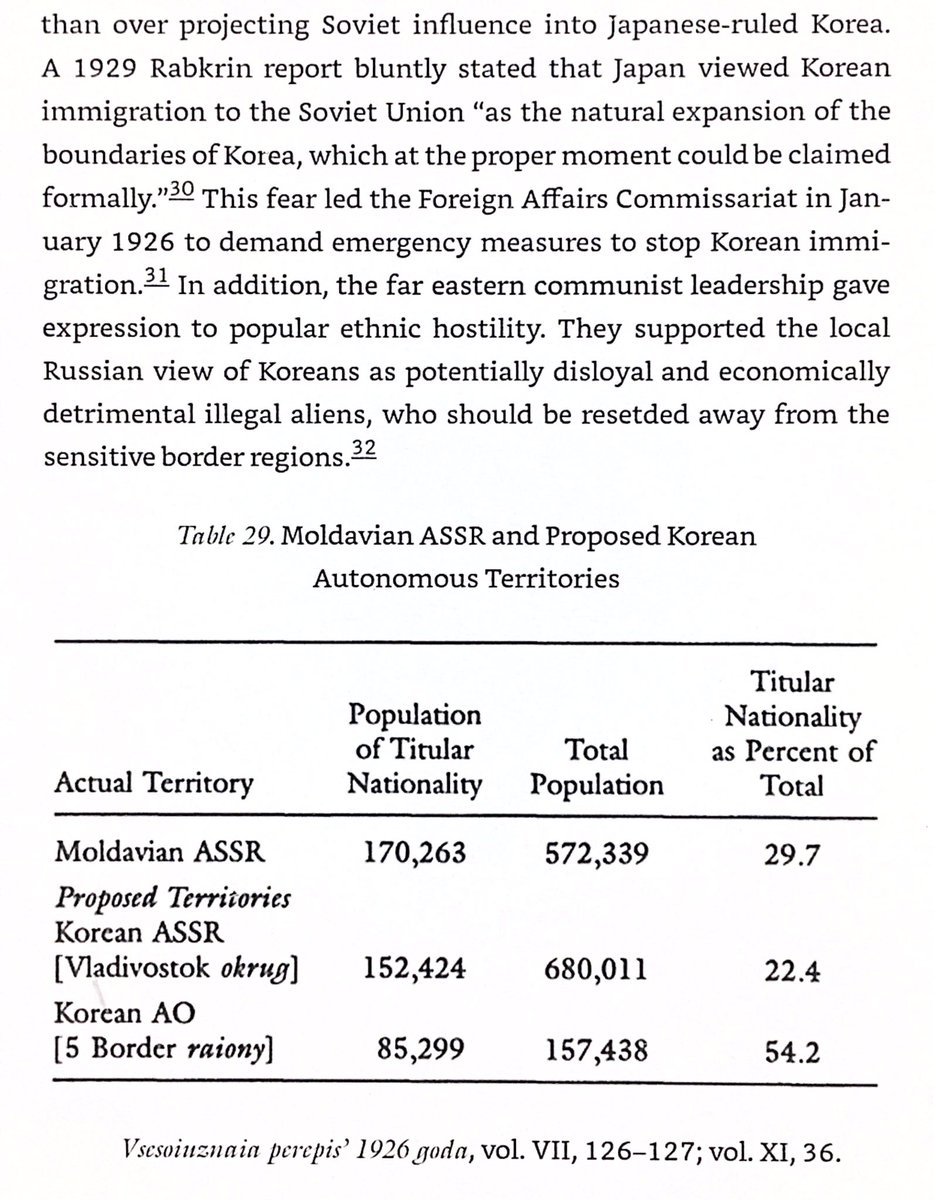
USSR’s Korean population tripled from 1917 to 1926, largely due to immigration. There were plans for a Korean oblast in far east to put pressure on the Japanese. However, local communists didn’t trust the Korean immigrants so the Koreans only got a national region & some soviets.

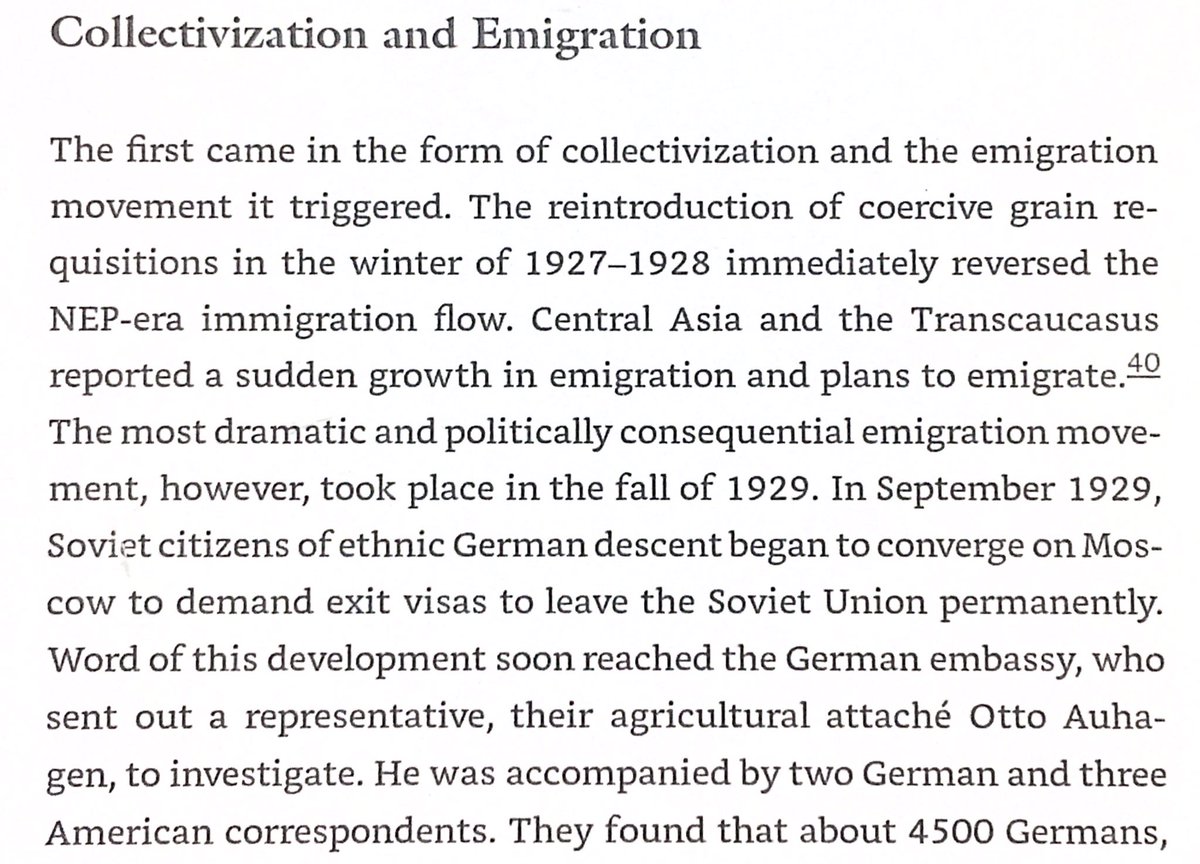
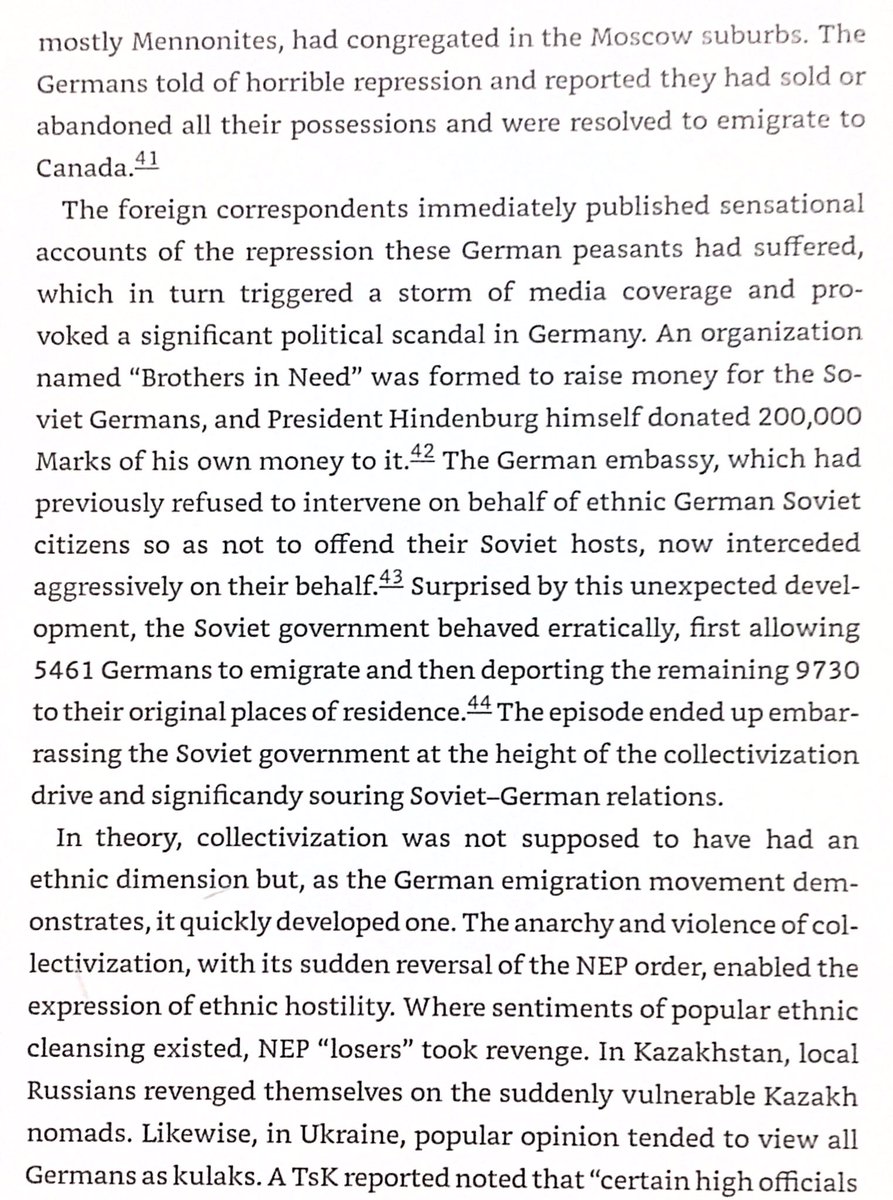
Collectivization had an ethnic element. Some Poles, Germans, & Kazahs were deemed kulaks for their success under the NEP. Germans abroad protested the Soviet government for its treatment of Germans in the USSR as a result - including Hindenburg.
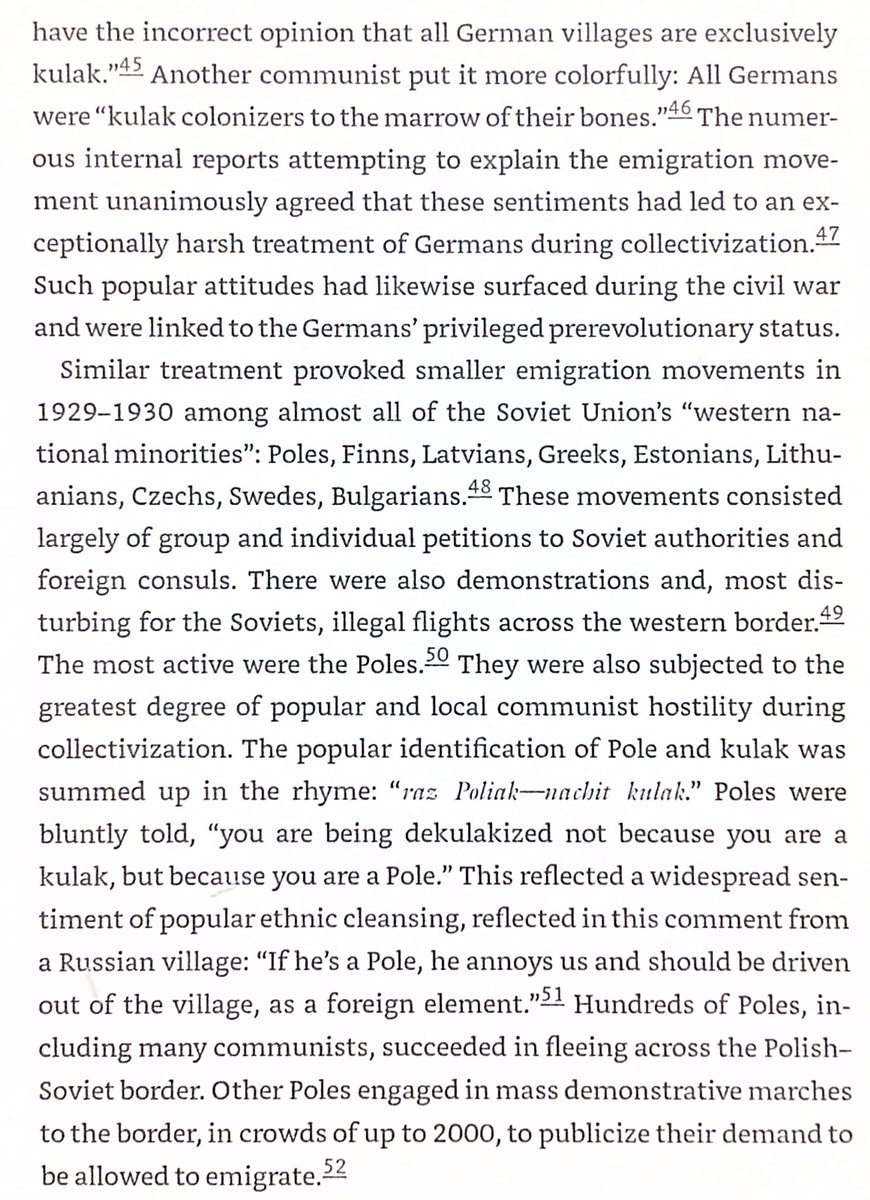
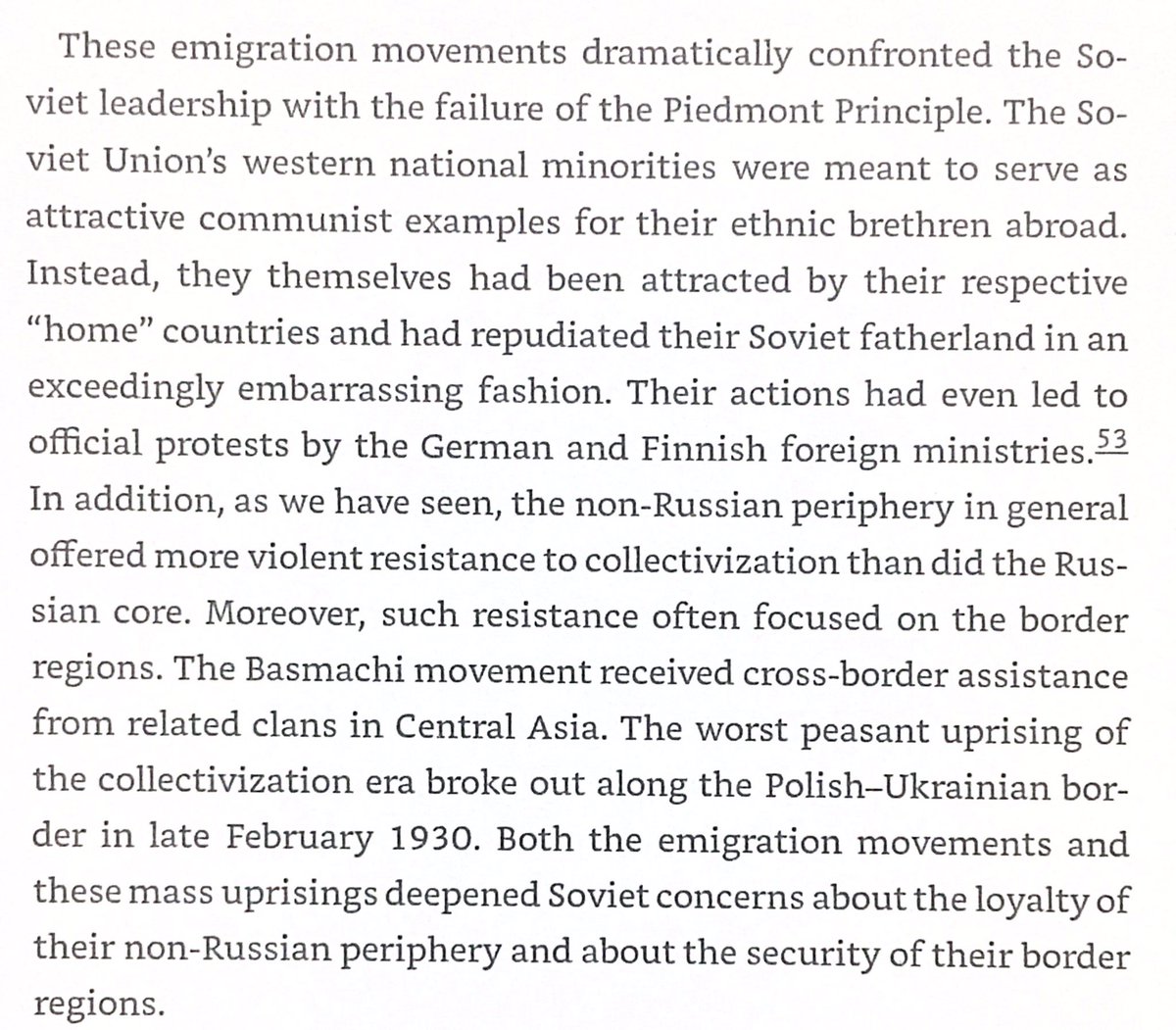
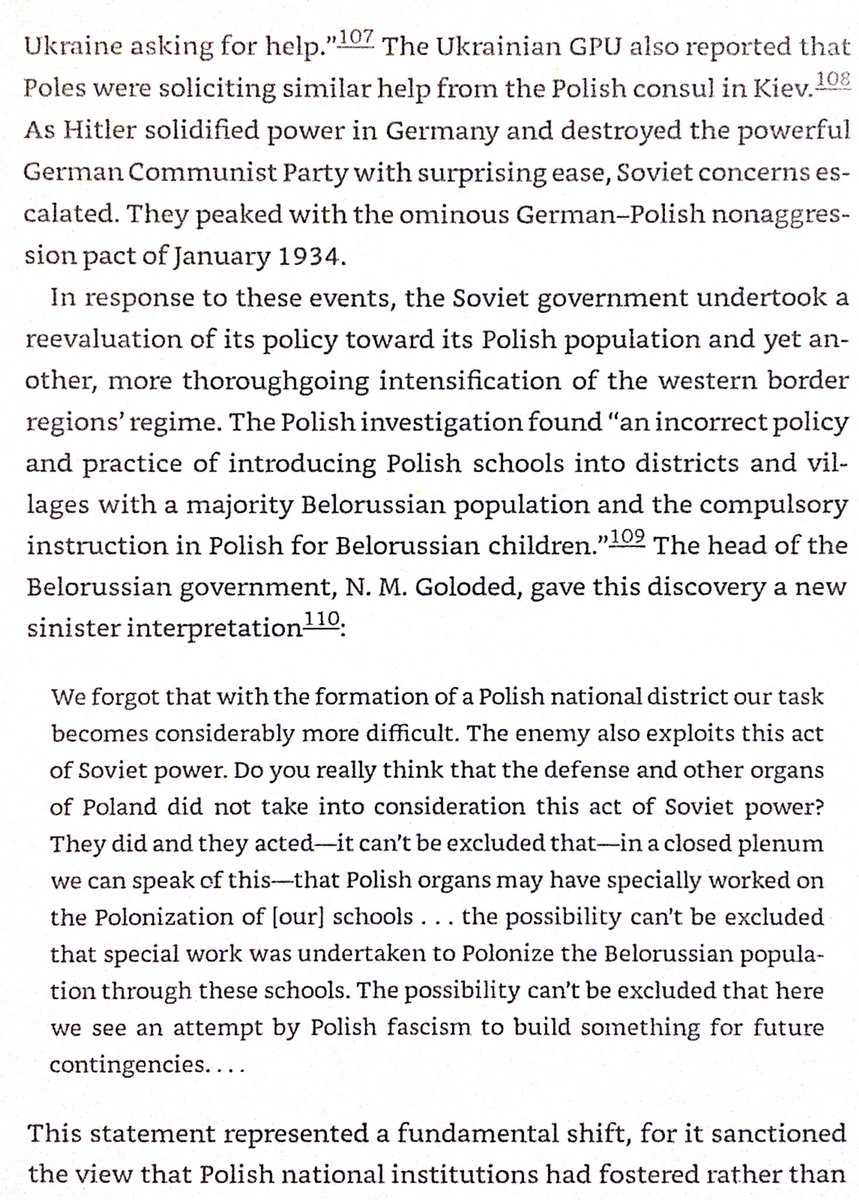
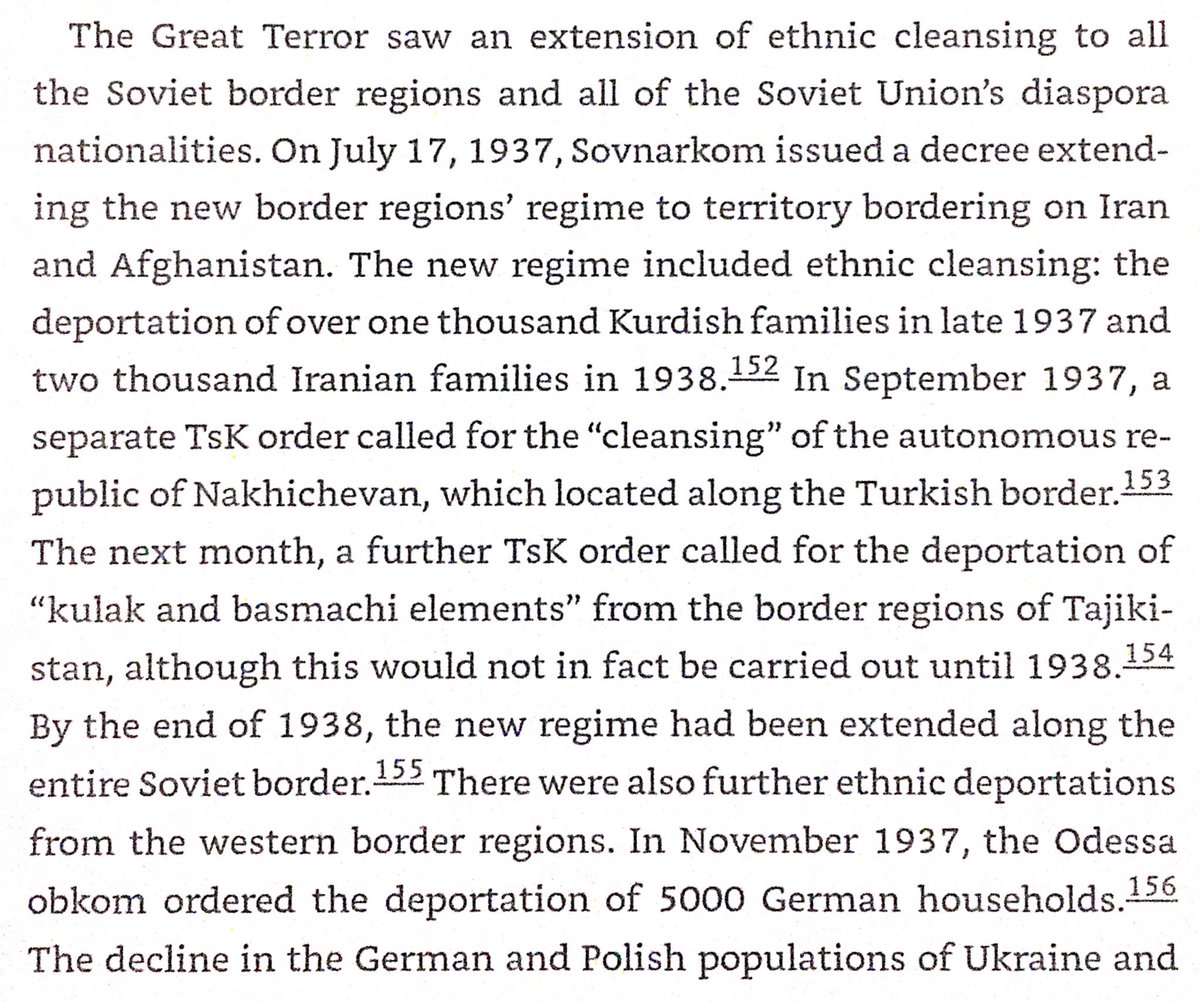
The new German government in 1933 immediately expanded ties with the German soviets in USSR, & Poland expanded its ties with Polish soviets as well. USSR was worried by the foreign outreach & Polish-German non-aggression pact, & deported tens of thousands of Germans & Poles east.

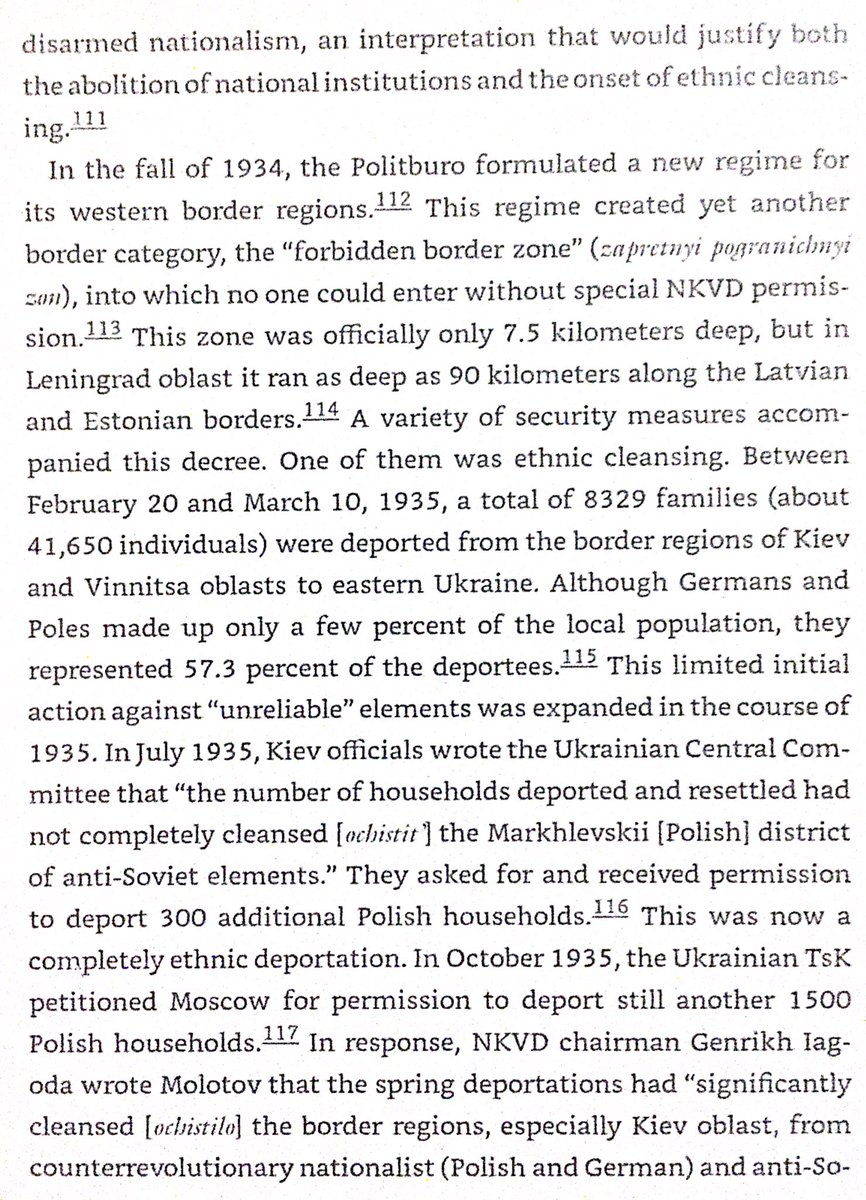
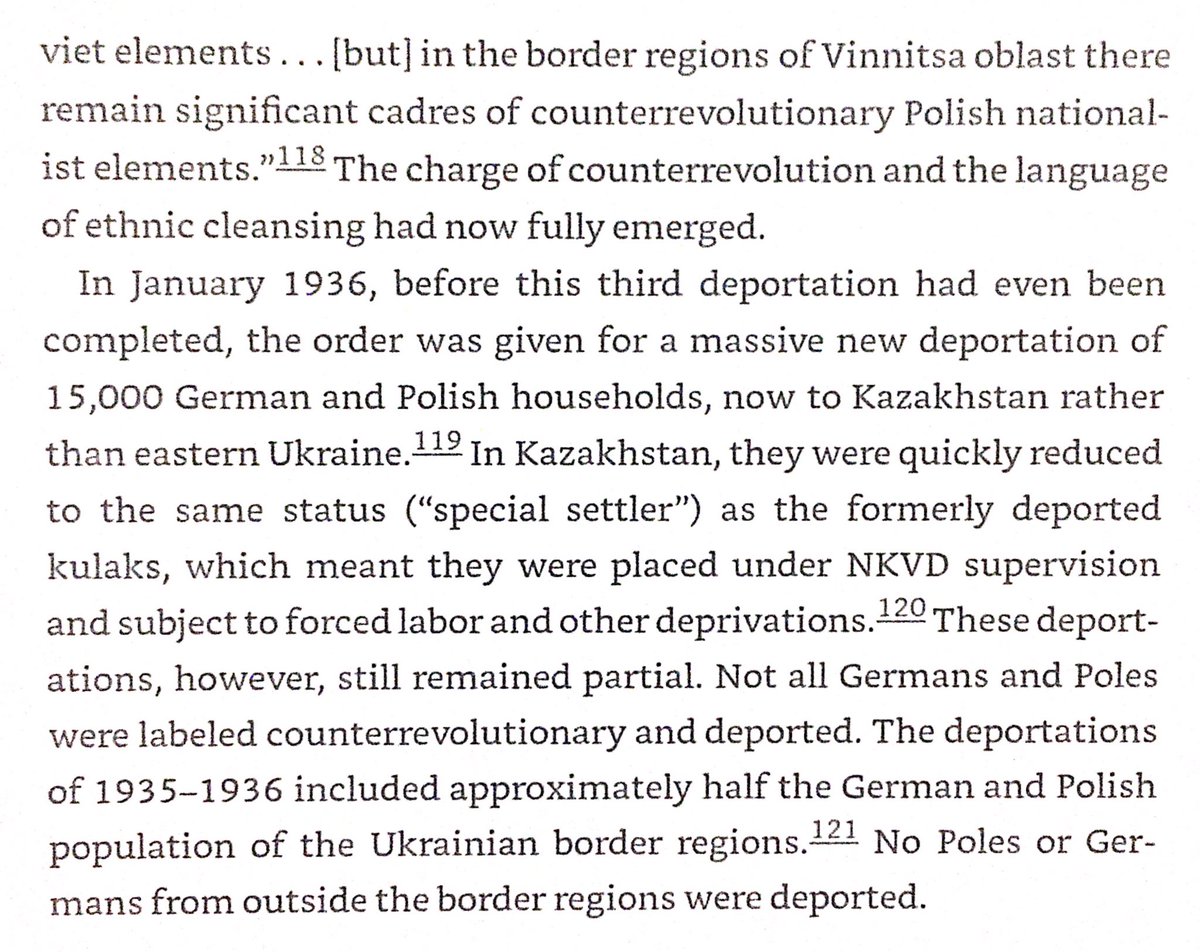
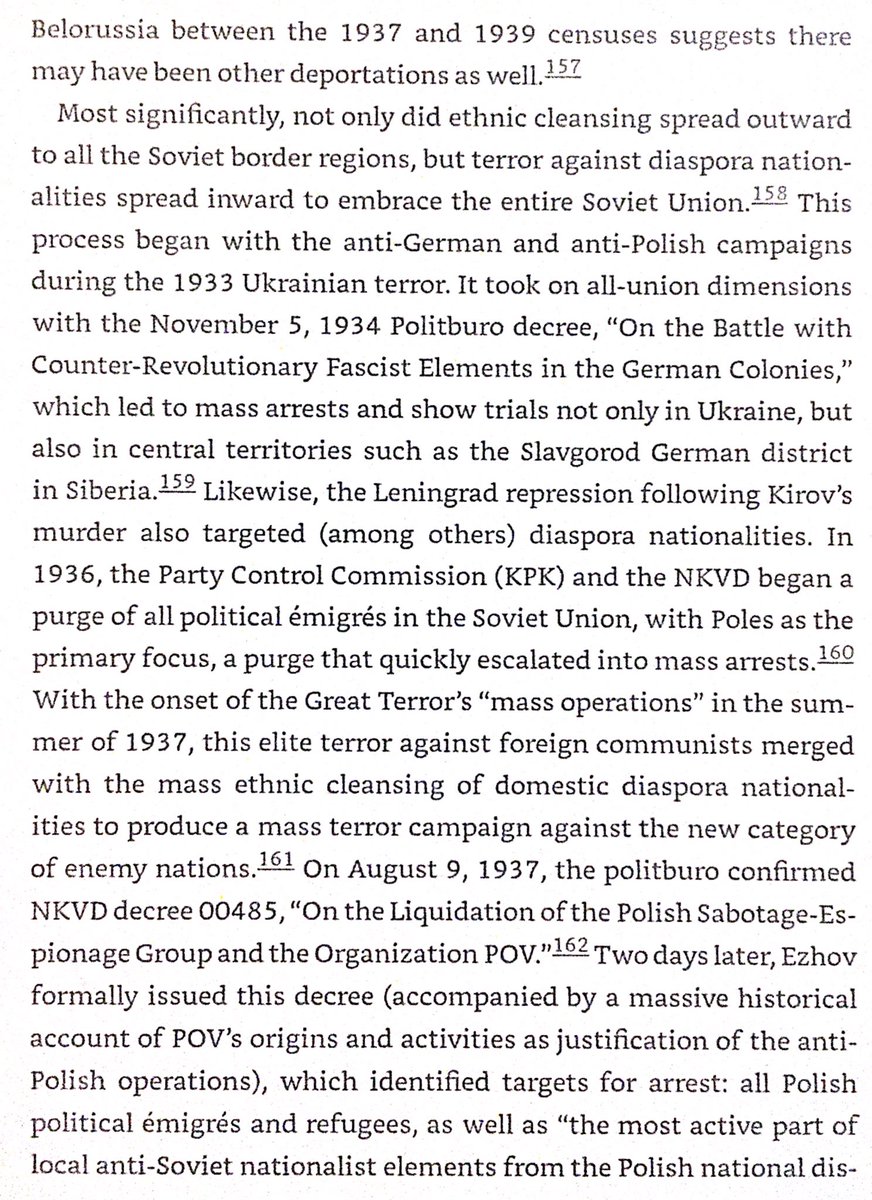
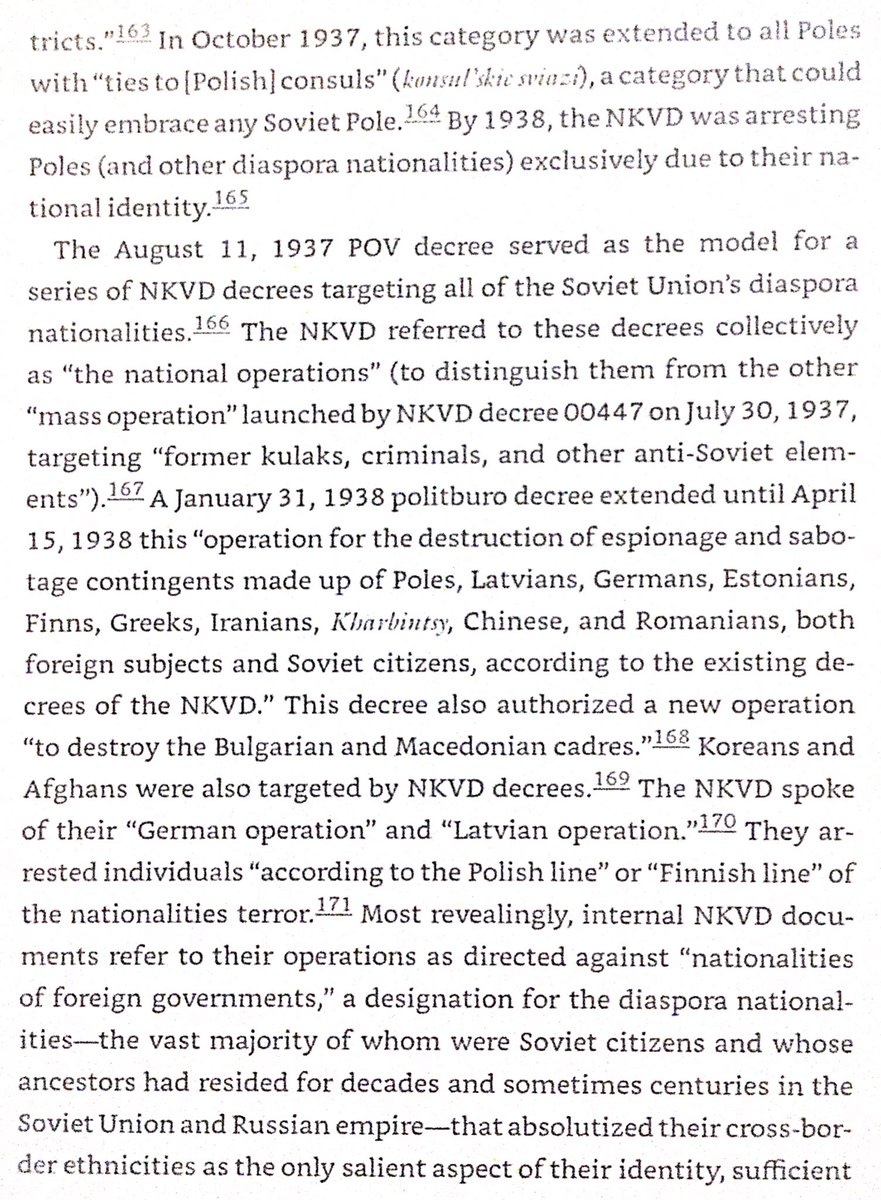
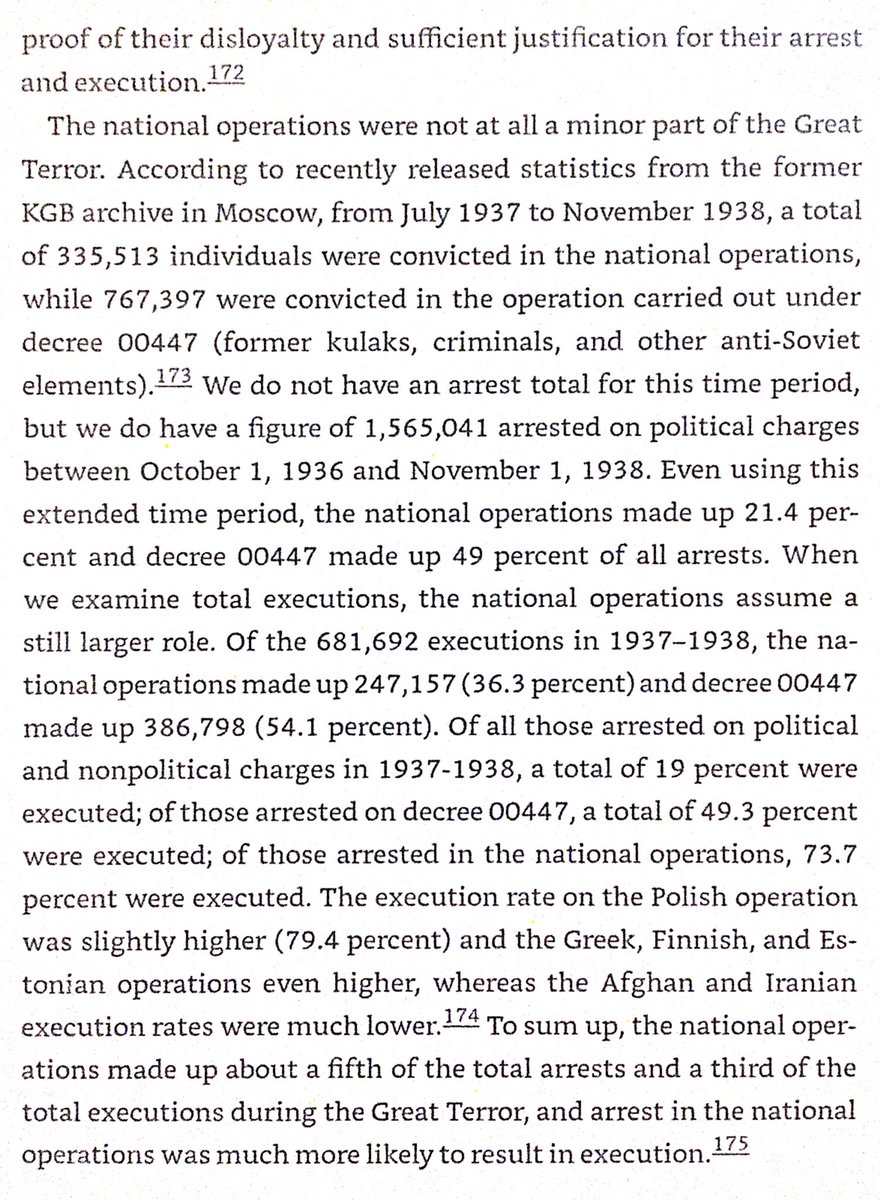
The 1936-1938 Great Terror included a number of national operations aimed at supposedly disloyal ethnicities in the USSR, including 🇵🇱 🇱🇻 🇩🇪 🇪🇪 🇫🇮 🇬🇷 🇮🇷 🇨🇳 🇷🇴 🇧🇬 🇲🇰. The victims of those purges were a fifth of total arrests & a third of total executions in the Great Terror.
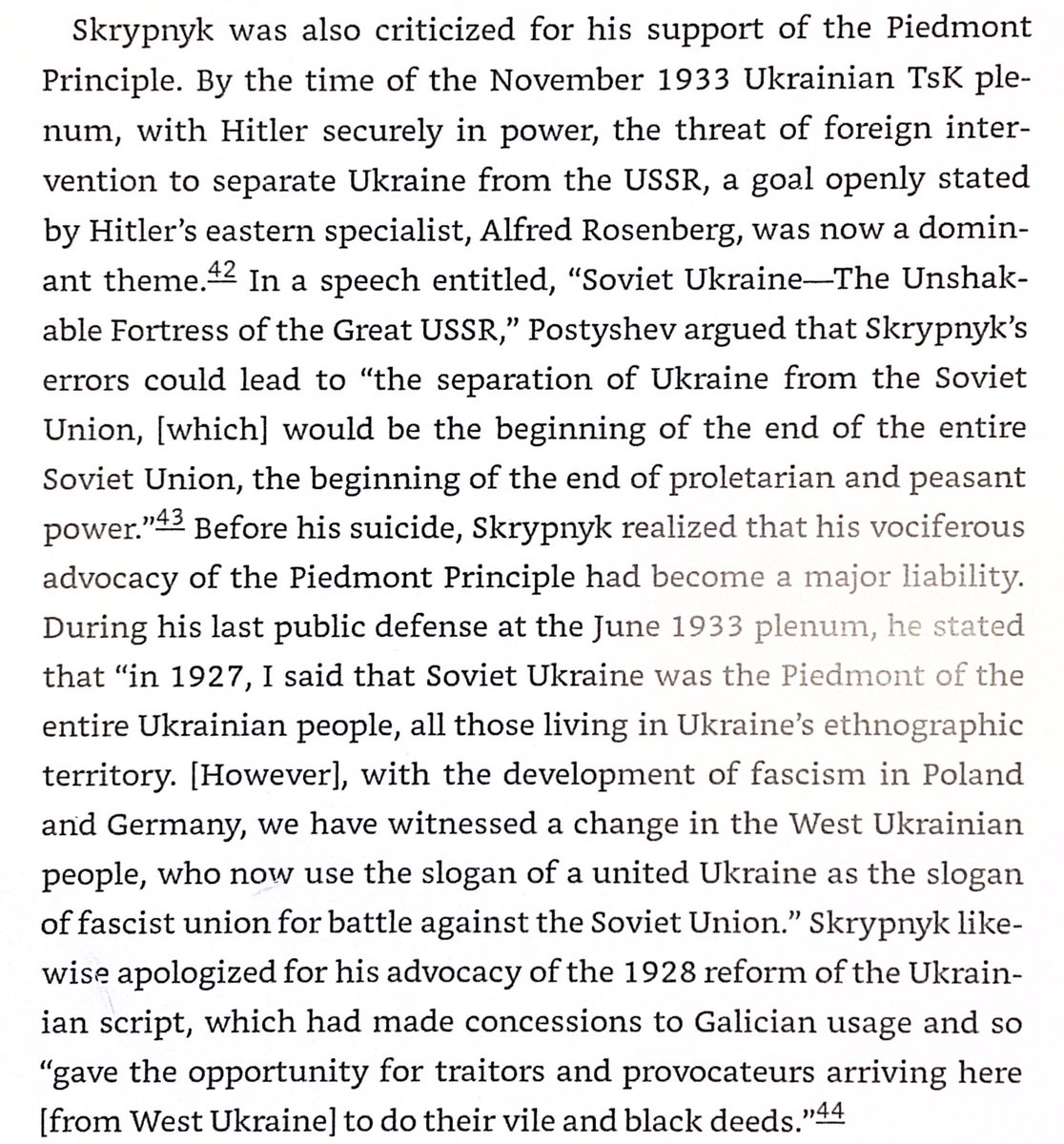
NS German international theorist Rosenberg’s support of an independent Ukraine severely undermined the position of Ukrainian national communists like Skrypnyk after 1933.
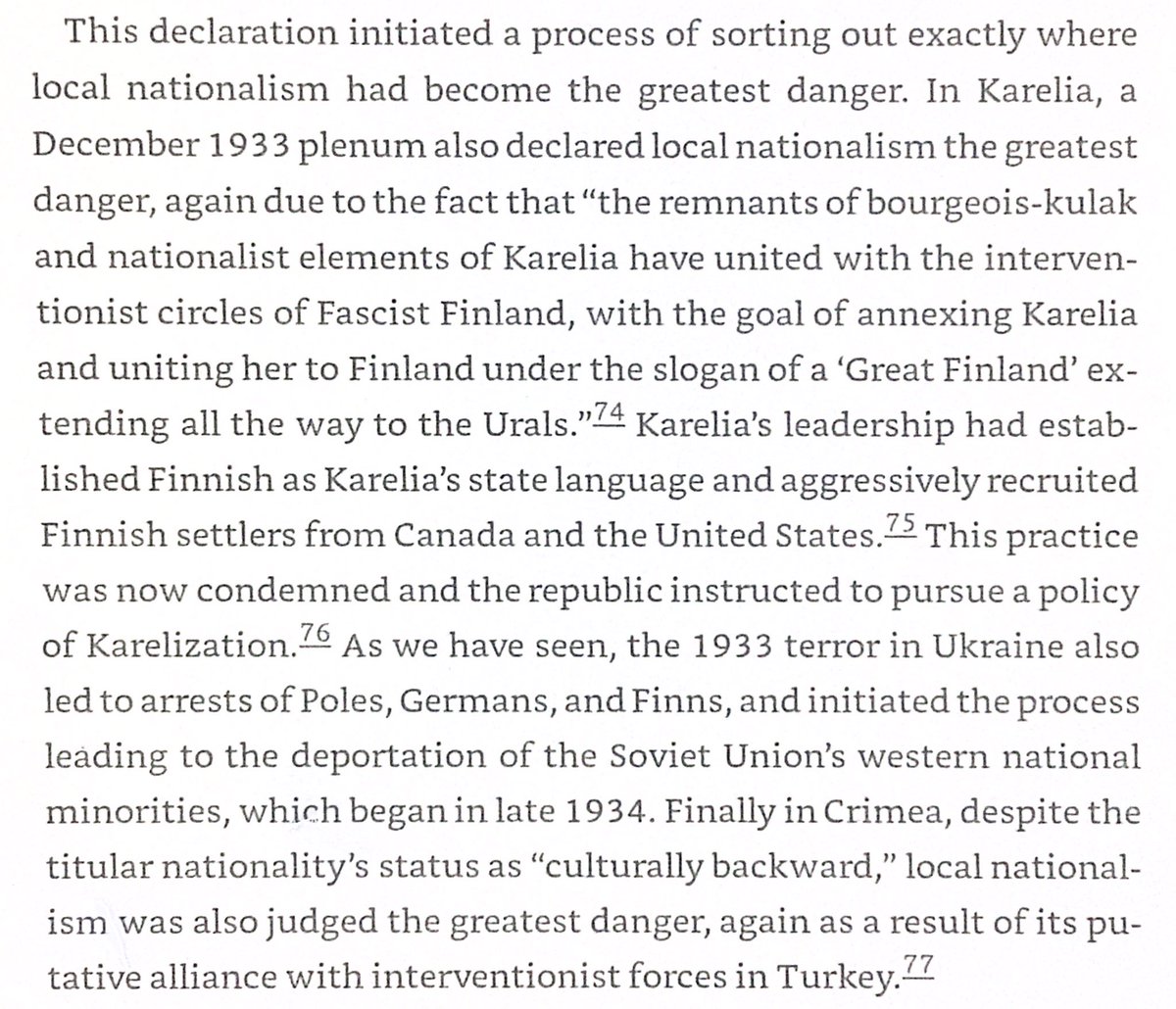
Indigenization was continued in Karelia after 1933, but in Karelian rather than Finnish terms. Finnish settlers had been recruited by the local communists from as far as Canada & America.
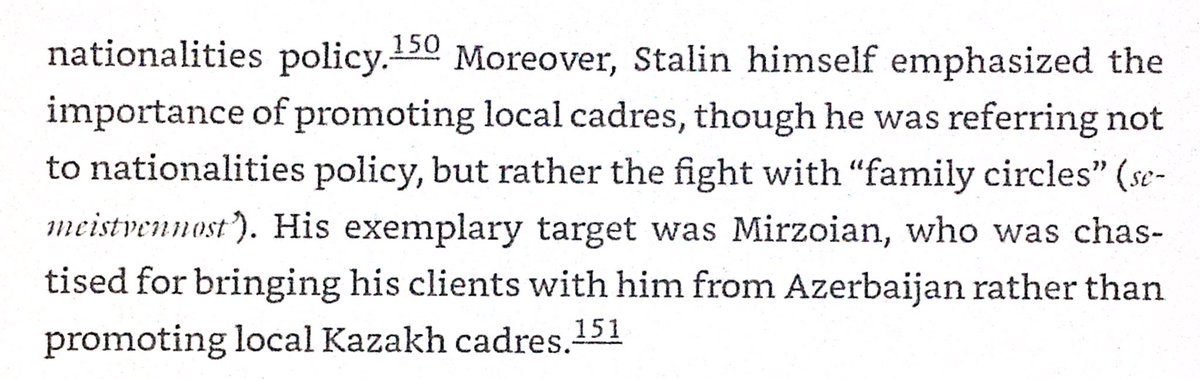
Stalin declared that debate over Russian chauvinism & local nationalism was pointless & should be decided on individual basis in relation to state security in January 1934. Odessa, Lugansk, & Donetsk quickly switched back to using Russian after Ukrainization apparatus was purged.
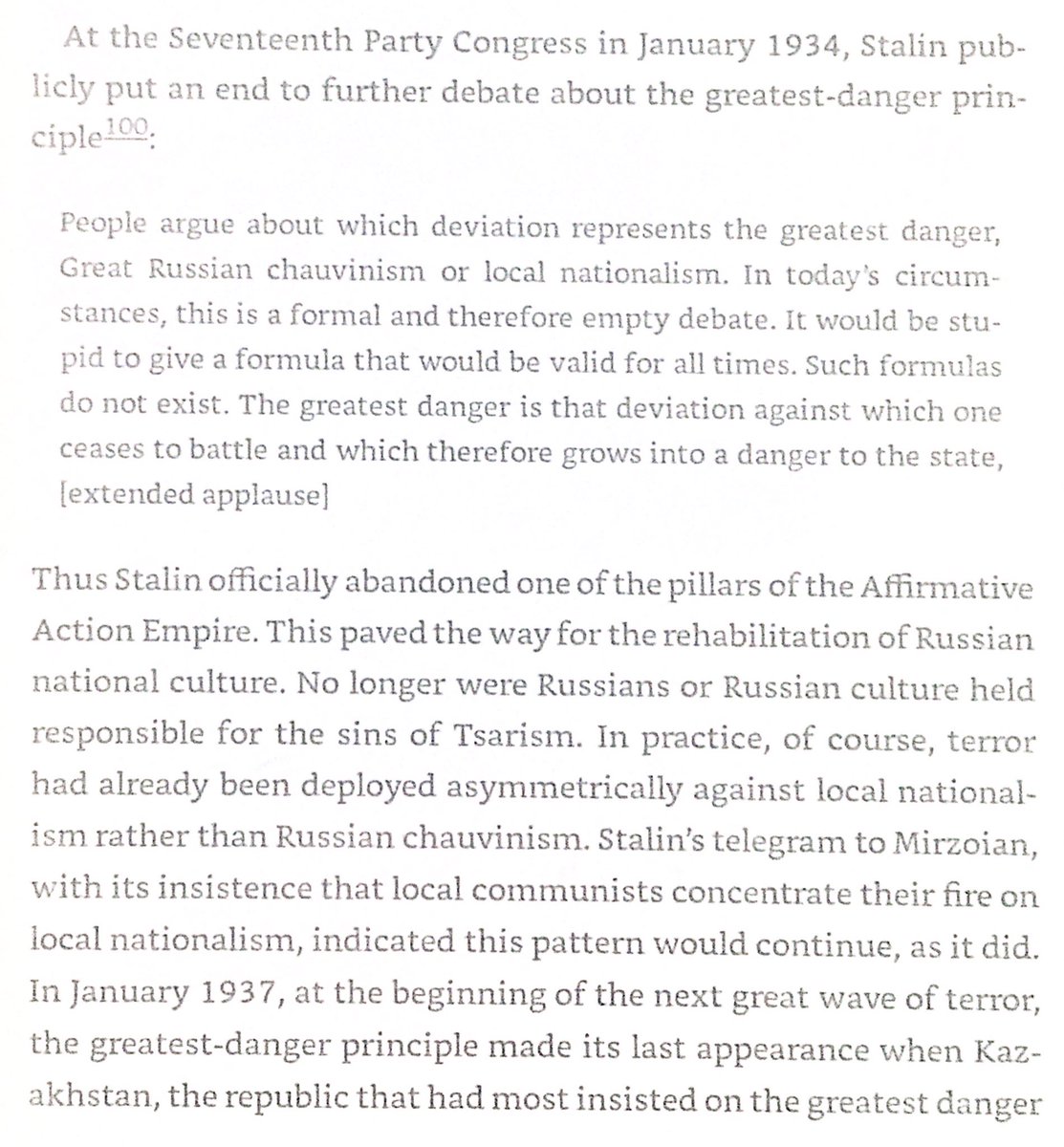
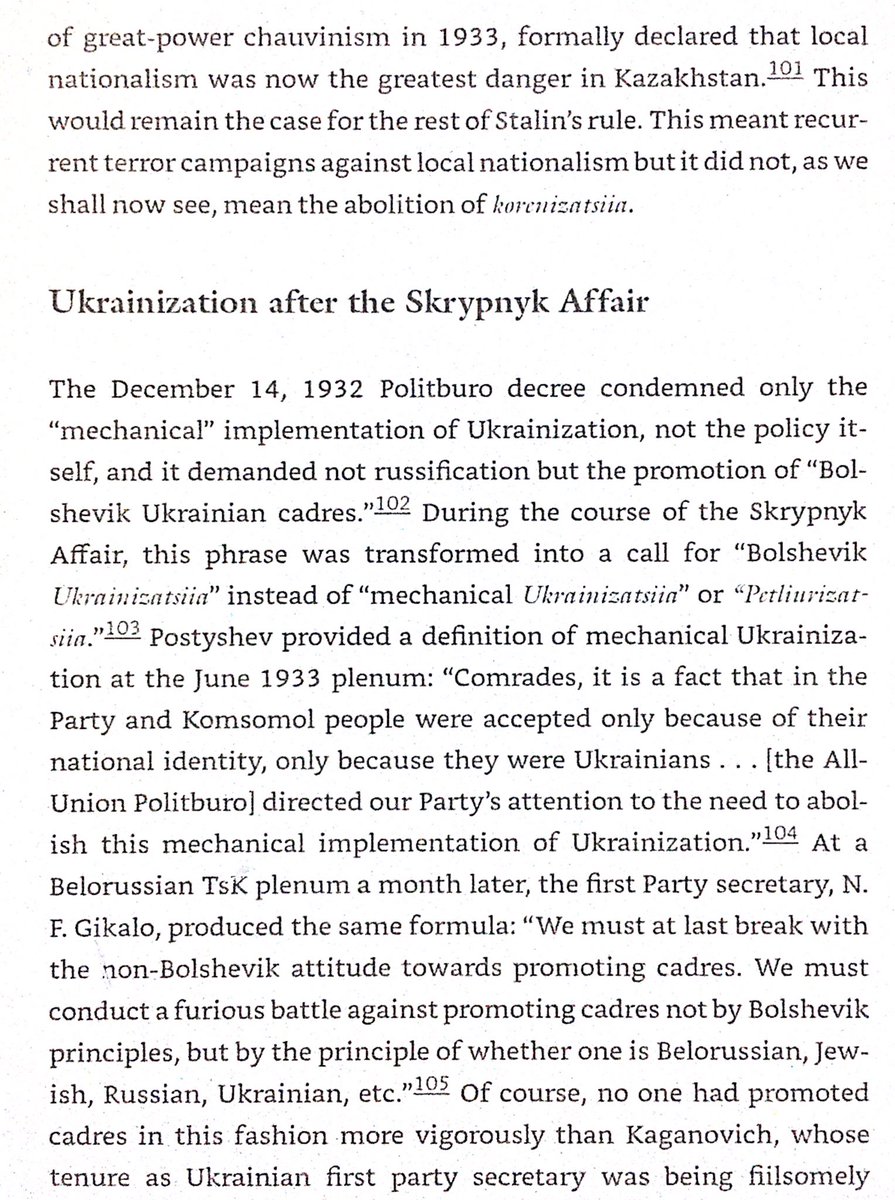
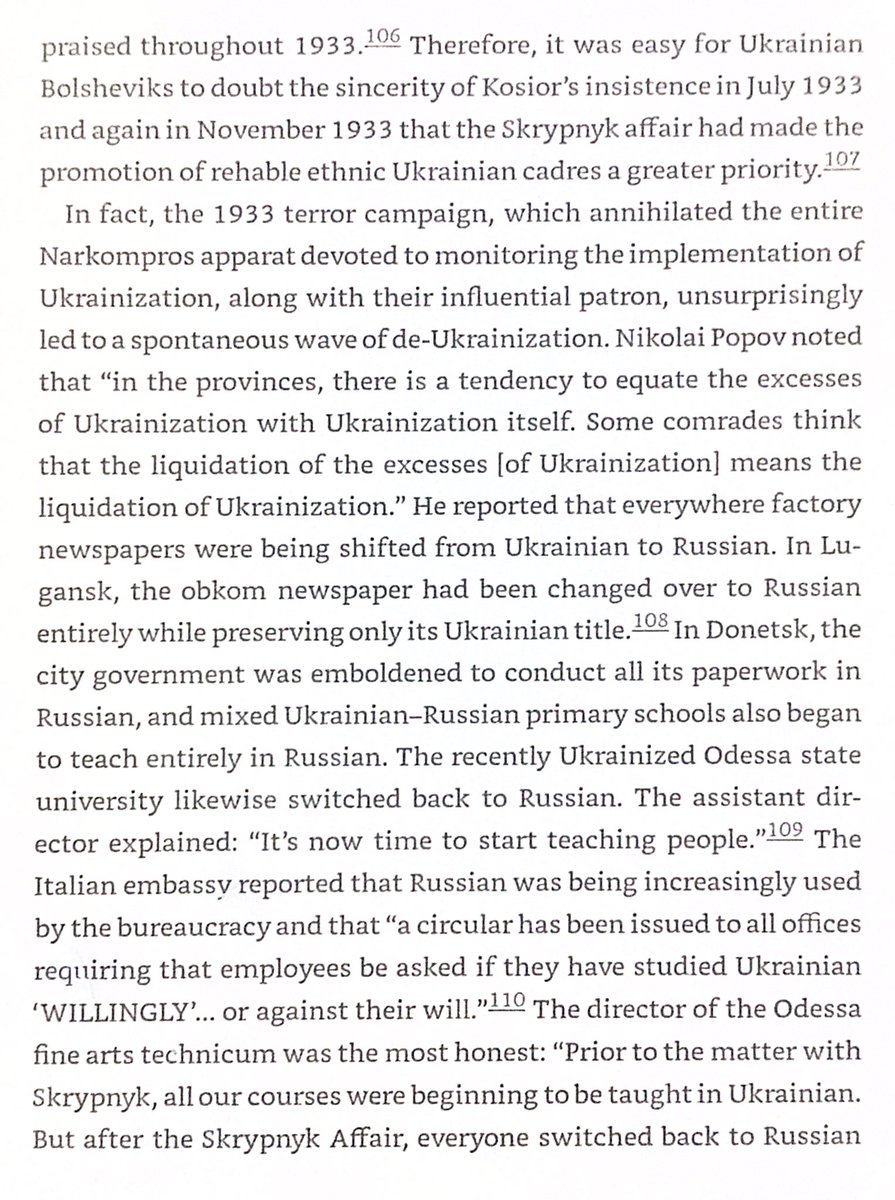
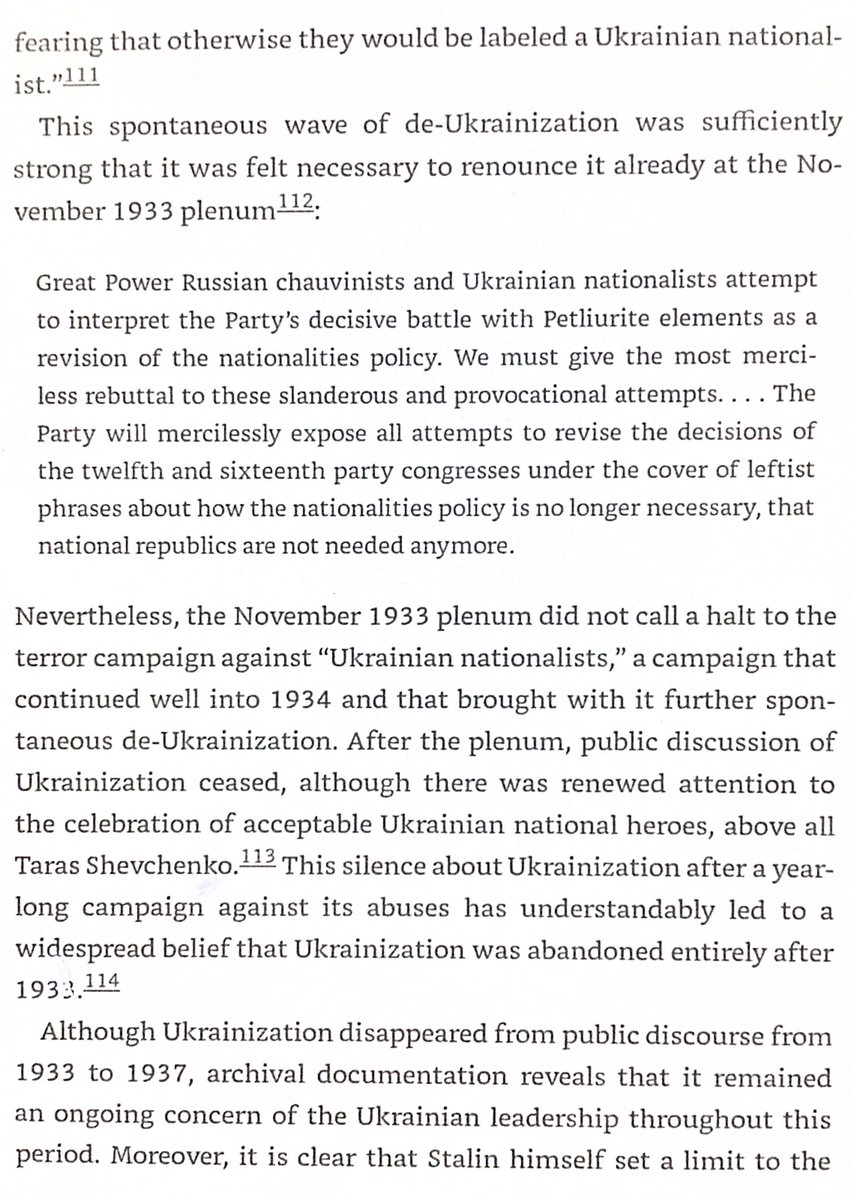
An Armenian who had run Azerbaijan was later appointed to rule Kazahstan. He brought his friends to rule Kazahstan with him, and as a result was purged by Stalin: en.m.wikipedia.org/wiki/Levon_Mir…
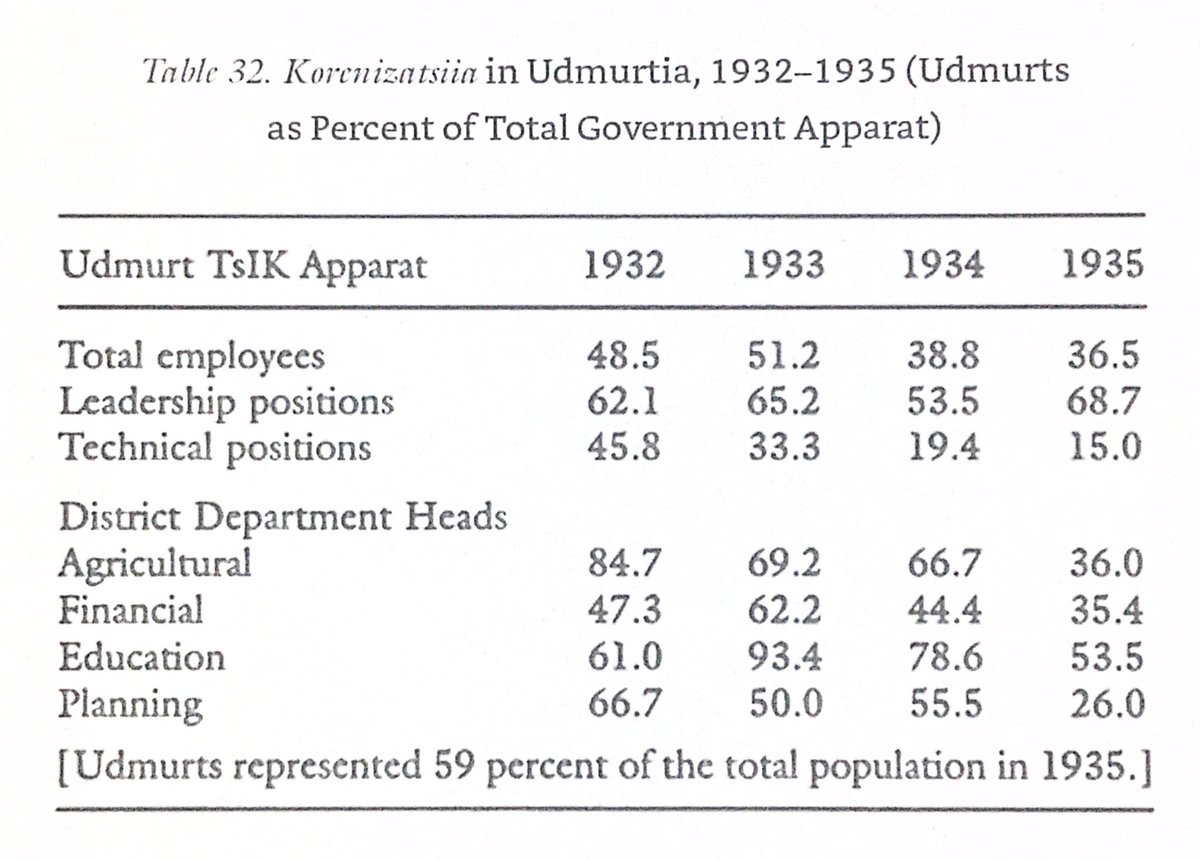
As elsewhere, indigenization peaked in Udmurtia in 1932, when the Udmurts were about 59% of population but 62.1% of leaders.
Indigenization (in the sense of proportional ethnic representation in leadership of titular nationality) was most successful in Buryatia. It was least successful in Yakutia.

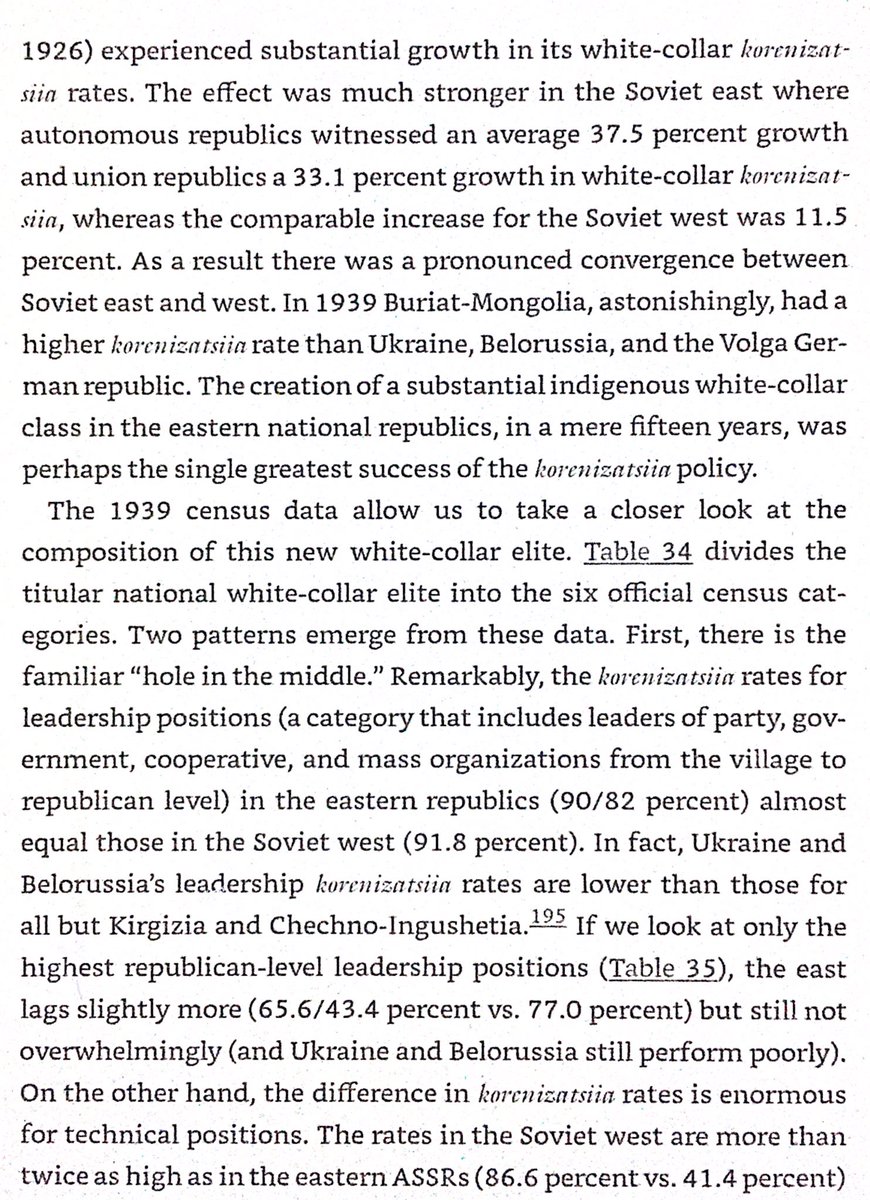
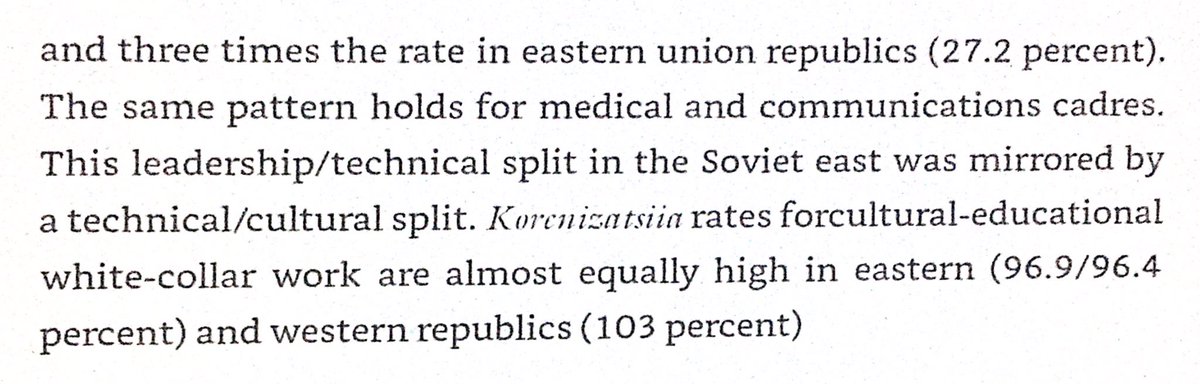
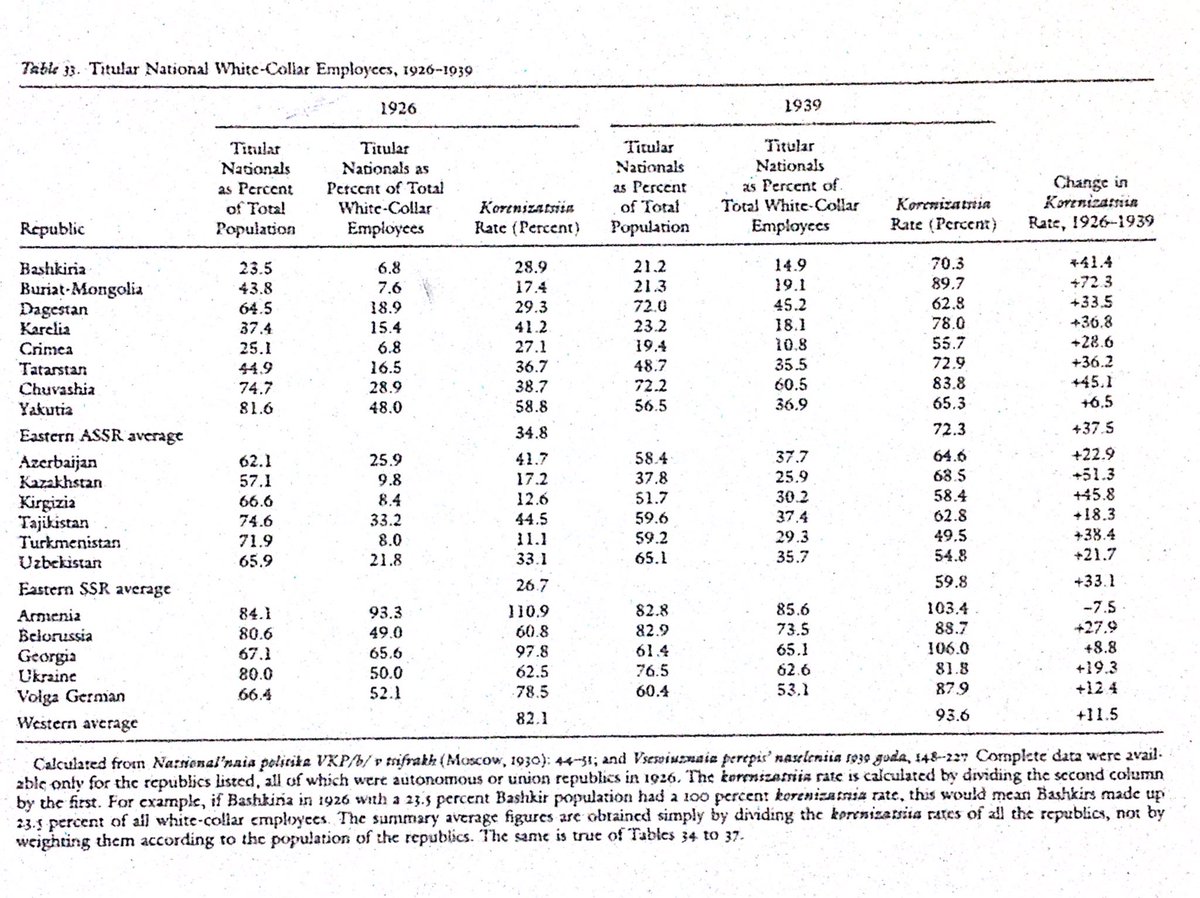
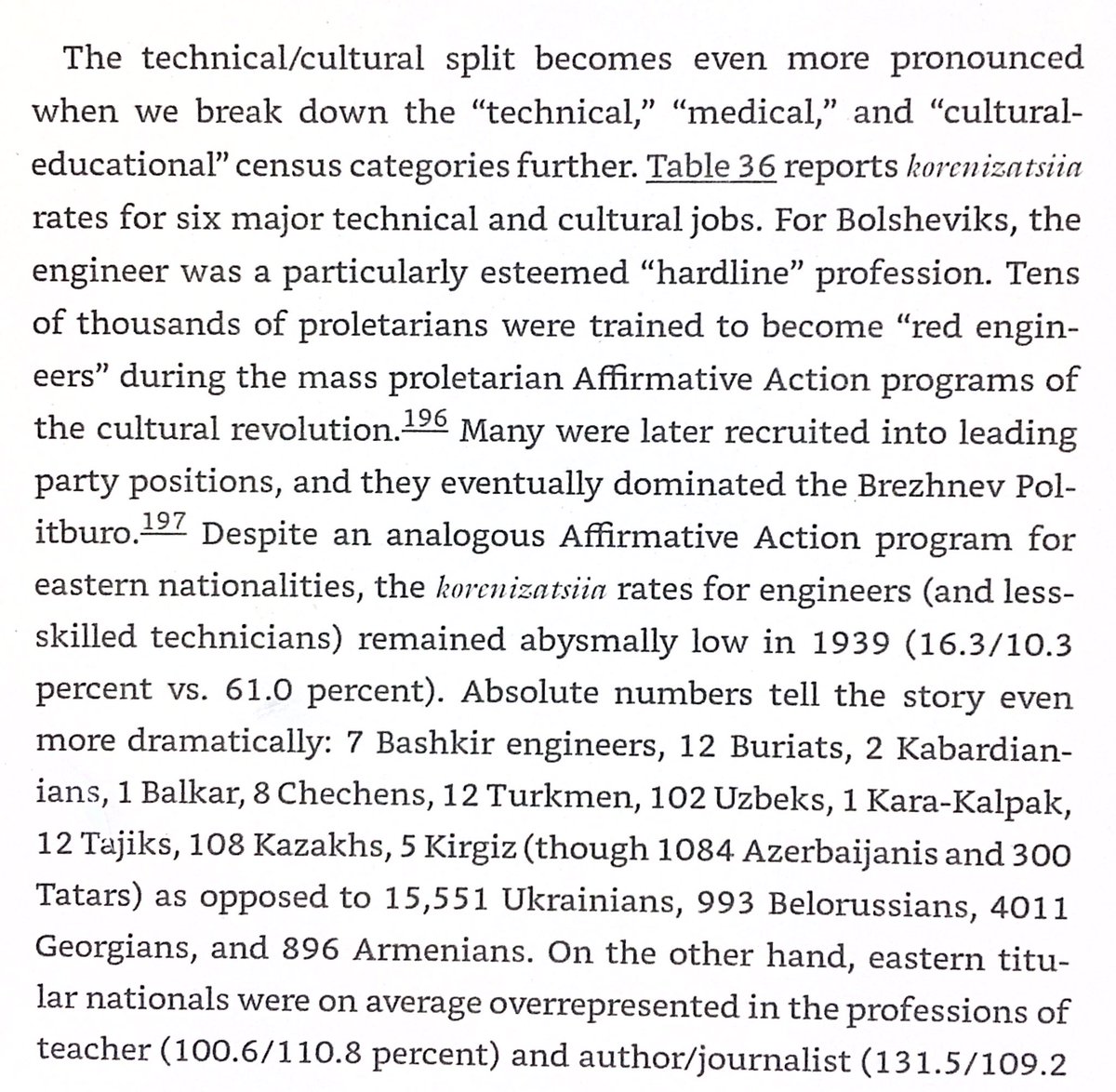
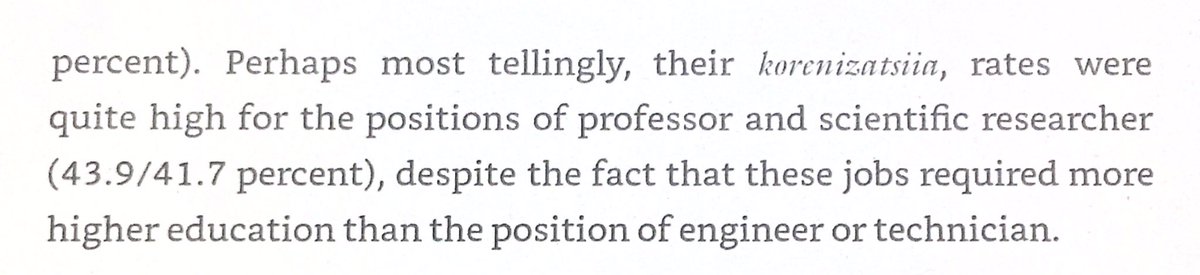
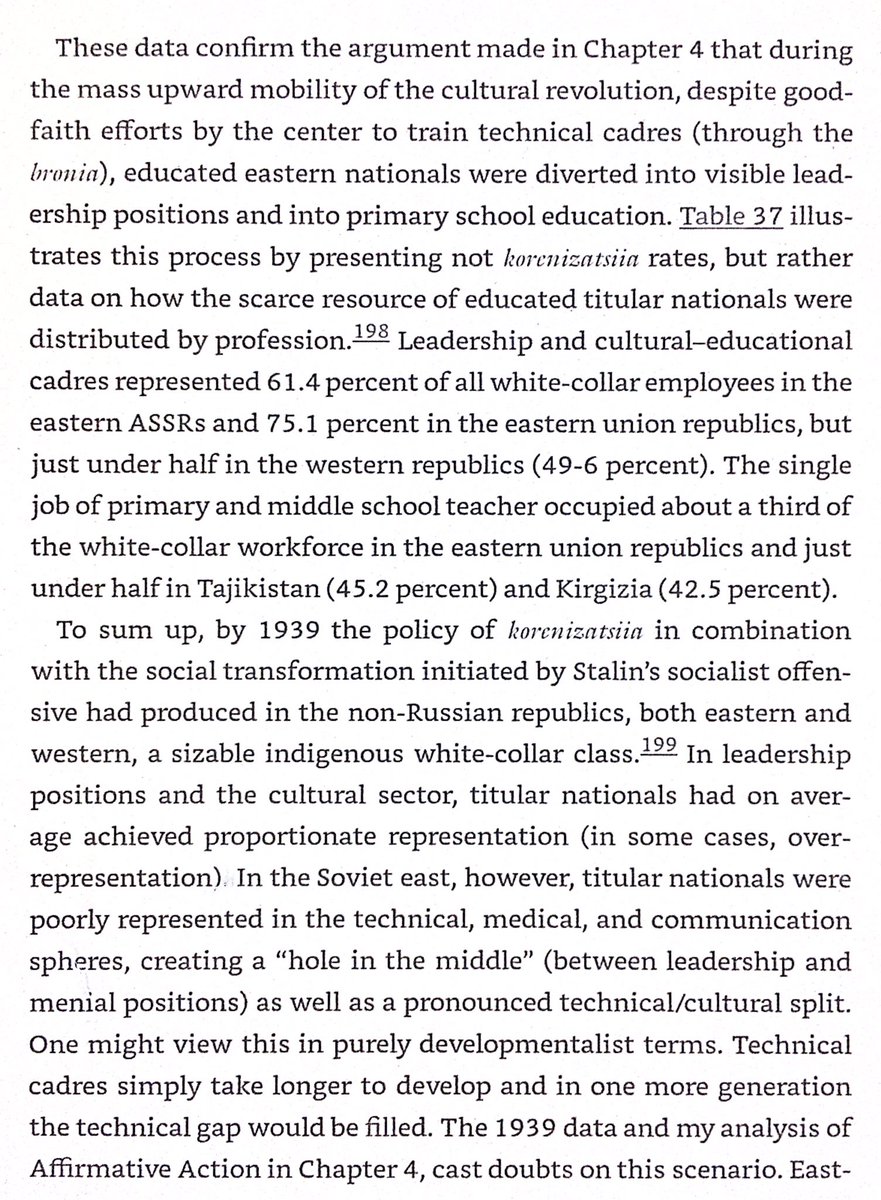
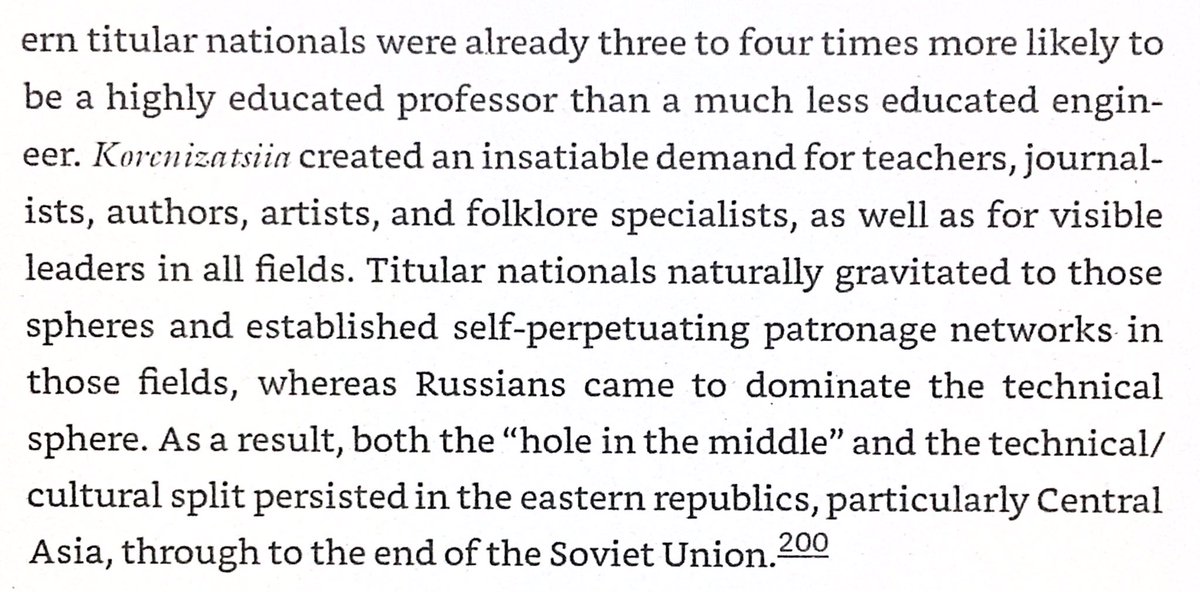
Indigenization programs drove talented indigenous people into education, academia, culture and politics. As a result, technical fields remained dominated by Russians in the east to the end of the USSR.
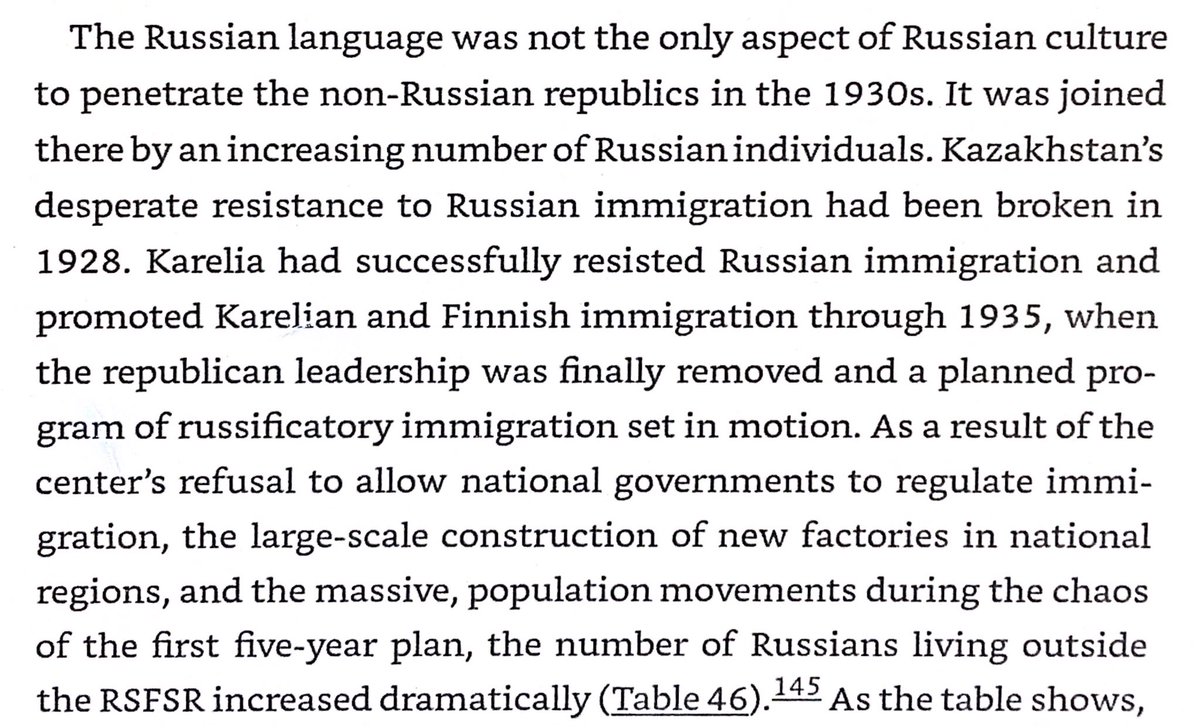
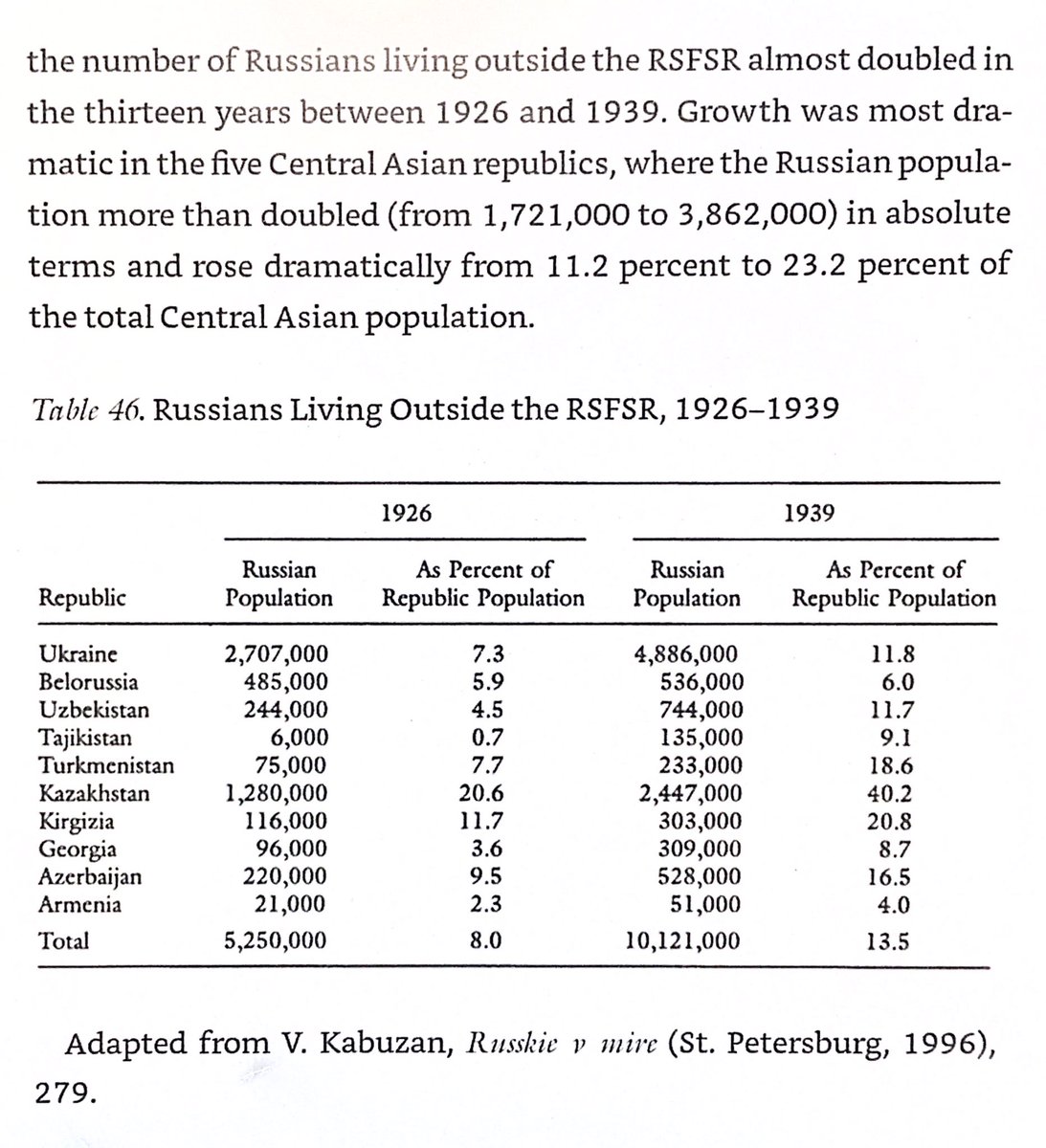
Kazahstan’s resistance to Russian migration was broken in 1928, causing their Russian population to almost double by 1939. Karelia was Russified by migration after the local pro-Finnish leadership was removed.
• • •
Missing some Tweet in this thread? You can try to
force a refresh