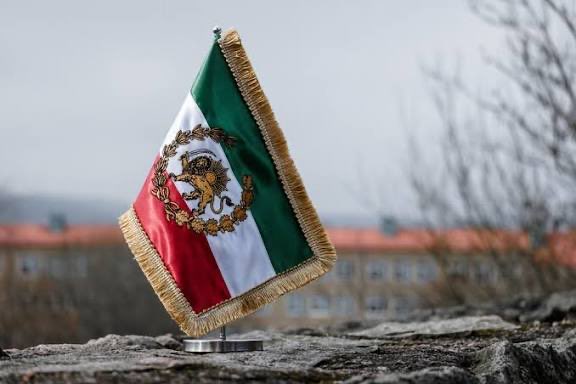
🧵The horrific attack today on author Salman Rushdie has its ideological roots in radical Islamic fundamentalism. In the modern era, organized political movements aligning themselves with these ideas began in the late 1920s with the creation of the Muslim Brotherhood.
This was formed by Hassan al-Banna in Egypt in 1929. In Syria, Antoun Saadeh (the self styled ‘fuhrer’) founded the Syrian Social Nationalist Party in 1932. Meanwhile, Ahmed Hussein was preparing to found the Young Egypt Party in Egypt in 1933.
The Nazis closest ally in the entire MENA was another political figure Amin al-Husseini, the Grand Mufti of Jerusalem. He had already incited the murderous anti-Jewish riots of 1920 in Jerusalem and Hebron before he became leader of the Palestinian Arab nationalist movement.
al-Husseini would go on to support Hitler’s plan to exterminate the Jews and planned to establish concentration camps near Nablus vimeo.com/322604709
His nephew, the Egyptian Yasser Arafat, would become the leader of the PLO. Ion Pacepa, the highest ranking intelligence officer ever to have defected from the former Soviet bloc, described the relationship between Arafat and the Soviet Union webhome.weizmann.ac.il/home/comartin/…
The development of modern, radical Islamic fundamentalism was supported by both the Nazis and subsequently the post WWII Soviet Union, while today Putin continues to support the fundamentalist Iranian regime as he seeks control in the Middle East reuters.com/world/putin-vi…
Ayatollah Khomeini, architect of the 1979 fundamentalist Islamic Revolution in Iran, certainly played a part in the 1981 assassination of Anwar Sadat, Egypt’s president and peace maker with Israel arabnews.com/node/1826191/m…
‘Iran’s constitution even says the task of the Islamic Revolutionary Guard Corps (IRGC) is to spread the rule of God on earth and to build a unified global society based on the struggle to liberate the oppressed of the earth.'
The Iranian constitution continues that ‘the task of Iran’s foreign policy is to support “legitimate jihad.” ‘
These fundamentalist ideas distort more tolerant Islamic teachings but have taken hold within a number of violent groups ciaotest.cc.columbia.edu/olj/meria/zed0…
Many Nazi war criminals were also given refuge in Arab countries after WWII where they were allowed to influence radical fundamentalist groups through their work in government, military and propaganda roles …degruyter.com/document/doi/1
Previously unavailable archive material has now confirmed the true extent of Nazi collaboration with fundamentalist Arab Islamic organisations cambridge.org/core/journals/…
In summary, the Nazis supported & trained radical fundamentalist organisations such as the Muslim Brotherhood and the Palestinian Arab nationalist movement, while the Soviet Union & KGB did the same for organisations such as Fatah, Islamic Jihad & Hezbollah
Sadly there are several other forms of ideological fundamentalism in the world that seek power through violence and oppression. The common thread is that they all attempt to remove legitimate questioning, discussion, difference of opinion, individuality and the right to choice.
Obviously the Middle East has also been of great importance to the British & The USA. After WWII, as Soviet Communism sought to gain influence in the Arab world, the British and Americans launched counter propaganda cambridge.org/core/journals/…
The MENA is obviously a geo-politically complex region, but the existence of violent fundamentalism anywhere is a concern for people everywhere.
The shifting tensions and allegiances relating to Sunni and Shia majority states in the Middle East only adds to the complexity of addressing this problem carnegieendowment.org/files/3-13_Bad…
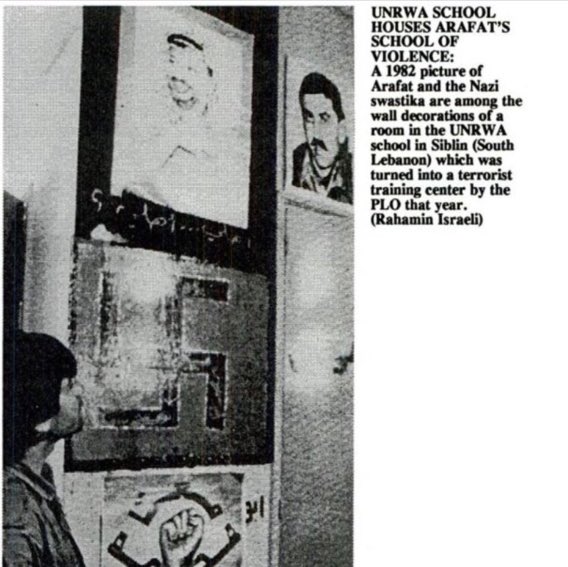
And these pictures of Arafat and Nazi symbolism at a UNRWA school in Lebanon 1982 show the continued spread of extremist ideology
It is clear that ideologies from both the far right and far left have been employed in an attempt to destabilise & delegitimise the State of Israel tabletmag.com/sections/histo…
• • •
Missing some Tweet in this thread? You can try to
force a refresh

When you hear about Iran, Syria, Ukraine, Greenland, Venezuela, the Chagos Islands, Taiwan etc….are you left feeling confused ? Can’t join the dots ? Then let’s take a quick walk through the major trade routes, waterways and chokepoints of the world. All will become much clearer ……. 🧵
1. Time is money, resources drive industry, strategic territory is leverage.
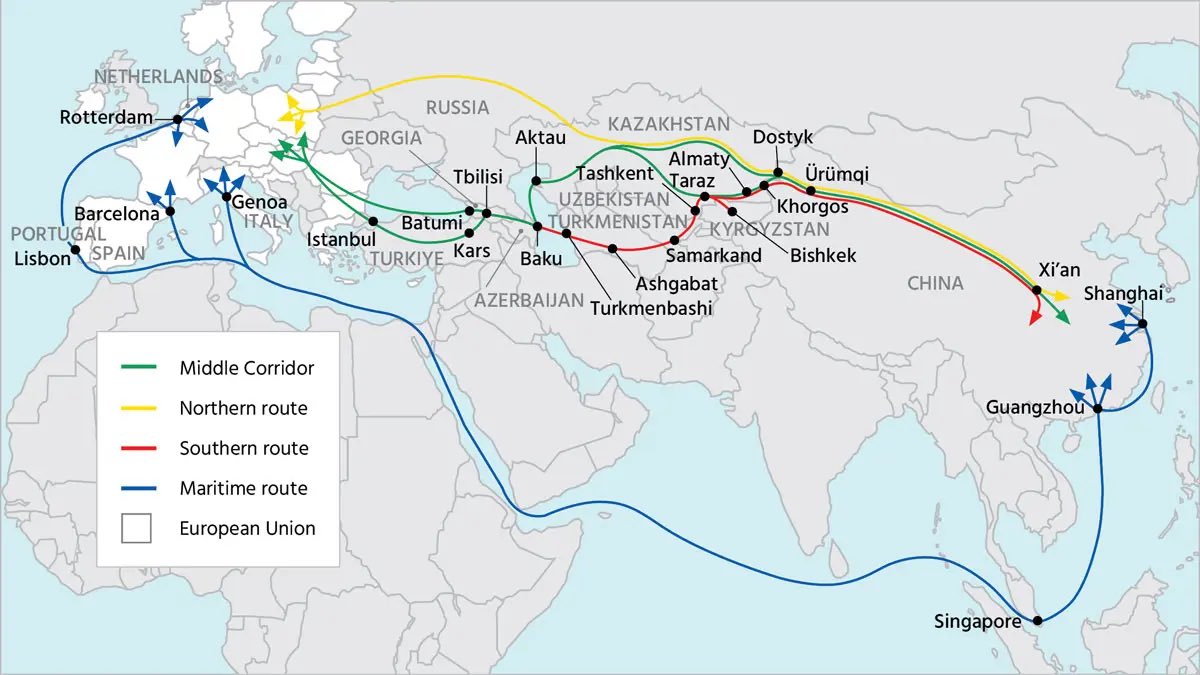
For example, moving goods from China to Europe varies greatly by method: Air freight takes 3-10 days (fastest but costliest), rail freight offers a middle ground at 14-22 days, while sea freight is best for bulk but takes the longest at 30-40+ days.
See map 1 below
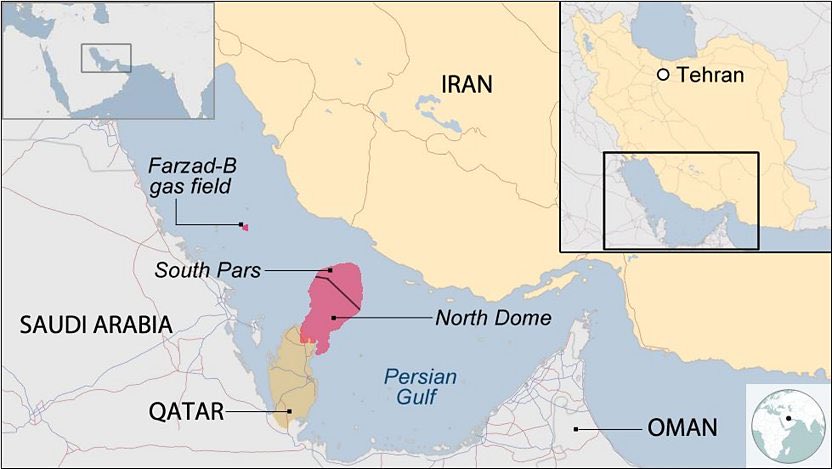
2. Approx 20-30% of global oil trade passes the Strait of Hormuz. Along with the Suez Canal (connecting the Red Sea to the Mediterranean), it’s a critical chokepoint impacting Western energy security and global markets.
No oil and gas, no industry.
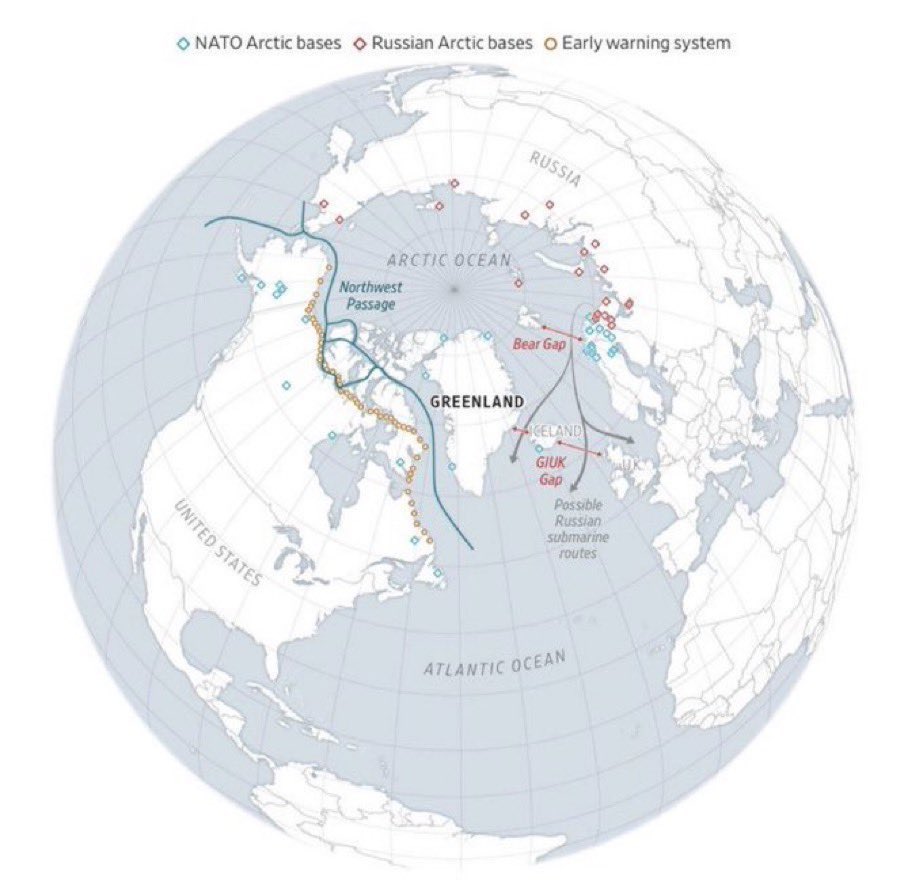
3. The Arctic Ocean provides critical waterways for faster transport of goods and military assets. This is why Greenland has become such a point of contention for both trade and defense.
It is pure stupidity to suggest that the West should just sit back and allow Iran's violent Islamic regime to continue its reign of tyranny. Here are 5 reasons why :
1. Iran controls the Strait of Hormuz, through which approx 20-30% of global oil trade passes. It’s a critical chokepoint that Iran could disrupt at anytime, impacting Western energy security and global markets.
2. Iran has enormous oil and gas reserves. A stable or cooperative Iran would enhance Western access to diversified energy sources, while instability raises prices and supply risks.
3. The Iranian regime (along with Qatar), trains and funds the so-called "Axis of Resistance" (Hezbollah in Lebanon, Houthis in Yemen, Islamist militias in Iraq/Syria, Hamas/Islamic Jihad in Palestinian Territories). It is directly opposed to Western values of secular democracy and law. These forces have frequently attacked U.S. troops and they disrupt efforts to stabilize the Middle East and counter terrorism.
4. Iran’s nuclear program encourages a regional arms races, directly endangering Western allies like the UAE and Israel.
5. Iran aligns with Russia and China, which gives the regime alternatives to Western controlled routes (e.g. International North-South Transport Corridor) and allows it to bypass sanctions.
In addition to the points above, there is no suggestion of The U.S. occupying Iran. There are structures in place within Iran that can allow a transition to a constitutional monarchy and democratic parliament.
The idea that the West should no longer have any military involvement with other countries is naive, over-simplistic and fails to acknowledge the important distinction between short-term intervention and long-term imperialist ambition, or the consequence of leaving power vacuums that will inevitably be filled by those with malign agendas (ie Iran, Qatar, Russia).
For example - Saudi Arabia is now in advanced talks with both Somalia and Egypt on forming a new military and security partnership focused on the Horn of Africa.
With Iran involved in fighting elsewhere, the Saudis are now showing a willingness to support Muslim Brotherhood terrorist groups and increase their regional influence, creating tensions with the UAE in the process.
Hezbollah is a a worldwide criminal organization that combines jihadist terrorism with drug trafficking and business dealings with Venezuelan drug cartels.
Qatar maintains a close relationship with Iran, Hezbollah's primary and long-standing patron.
Meanwhile, Turkey (another major supporter of Hamas), serves as a major transit hub for cocaine originating from or routed through Venezuela (ie from Colombia), primarily destined for Europe.
Multiple reports and seizures link Venezuelan cocaine shipments to Turkish ports, with rising cocaine busts in Turkey coinciding with strengthened Turkey-Venezuela ties under Erdogan and Maduro.
Allegations (e.g. from Turkish mafia figure Sedat Peker) claim political connections facilitated new routes via Venezuela after disruptions in Colombia.
To connect the dots further, some independent analyses (e.g. Global Organized Crime Index) describe Qatar as an emerging or strategic transit point for cocaine, primarily via air routes.
Transnational networks (Latin American, African) use it for shipments from South America (often via Kenya/Nigeria) destined for Asia, Europe, or other Gulf states.
1. The Pope is asked about concerns over Islamic immigration in Europe. He then cites Lebanon, a country that has been destroyed by Islamist militias, as a good example of tolerance and cooperation.
2. Militants from the Palestine Liberation Organization (PLO) established a significant autonomous presence and "state within a state" in Southern Lebanon and Beirut after their expulsion from Jordan in 1970–1971. This presence became a major factor in the Lebanese Civil War.
3. On January 20, 1976, PLO militants and allied Lebanese left-wing forces attacked the Maronite Christian town of Damour. Hundreds of people were massacred and the remaining inhabitants were forced to flee, making it one of the first instances of ethnic cleansing in the war.
The Ottoman Empire was an imperial power that ruled over a wide range of territories and people 🧵
1. The Ottomans abducted Greek and other Christian children through a practice known as the devşirme (Ottoman Turkish for "collecting", usually translated as "child levy" or "blood tax"). This was a system of forced recruitment for the Sultan's army (specifically the elite Janissary corps) and bureaucracy, primarily in the Balkans and Anatolia, from the 14th to the 17th centuries.
2. The Process of the devşirme was ruthless, highly organized and designed to create an elite class of soldiers and administrators who would be fiercely loyal only to the Sultan, as they had no familial ties to other existing Turkish nobility who might attempt to gain influence or seize power.
3. Muslims were strictly forbidden from the system, though some Muslim families actually tried to smuggle their sons in later due to the high social mobility it offered.
The selected boys were gathered in large cohorts and marched to Constantinople (Istanbul). They were often dressed in red to prevent escape and, upon arrival, they were forcibly converted to Islam and had their Christian names and identities erased.