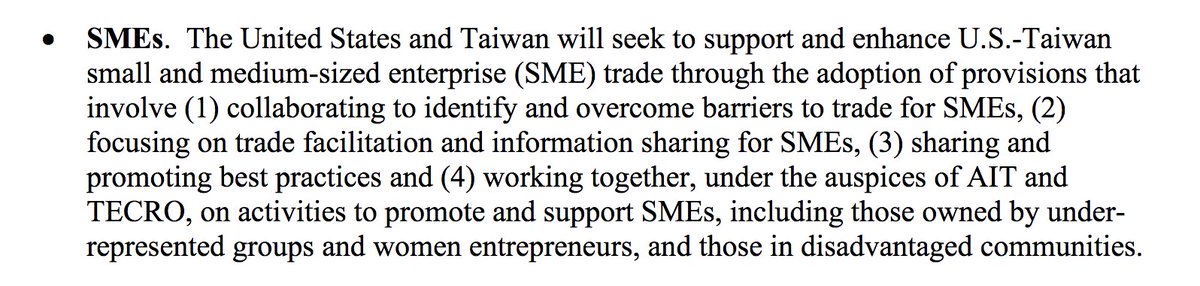
Yesterday, @AmbassadorTai argued that the Biden administration’s trade protectionism advances the goal of racial equity.
I don’t want to be disrespectful or combative but that’s dead-wrong.
Trade liberalization, not protectionism, advances racial equity. Thread 1/
I don’t want to be disrespectful or combative but that’s dead-wrong.
Trade liberalization, not protectionism, advances racial equity. Thread 1/
Tai’s main piece of evidence is data showing that non-white workers have seen esp. fast wage growth during the recovery. That’s true (and good!) but there’s no evidence that was in any way attributable to Biden admin protectionism. 2/
whitehouse.gov/cea/written-ma…
whitehouse.gov/cea/written-ma…
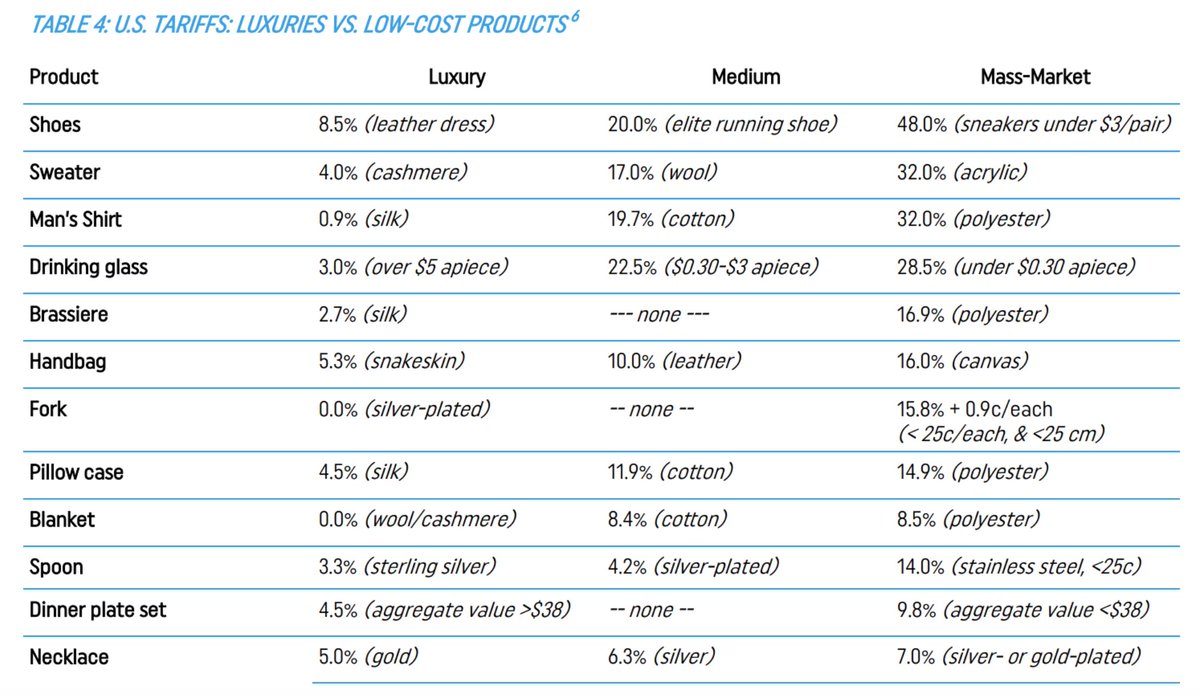
In contrast to the paucity of evidence that protectionism helps Black and Hispanic citizens, there is clear evidence that it in fact hurts them. First, tariffs are a highly regressive tax. In part this is because they’re esp. high in food and clothing. 3/ 

Even within product categories, tariffs are higher for mass-market goods than luxury goods. As @EBGresser's report also points out, those tariffs aren’t even effective at promoting greater employment. 4/
progressivepolicy.org/publication/tr…
progressivepolicy.org/publication/tr…
Meanwhile, the U.S. long-standing tariffs on Canadian softwood lumber make it more expensive to build new housing. That is extra bad for Black Americans who need new housing now to build wealth seeing as they were locked out of that by redlining, racism, etc. 5/
So let’s just stop and take note of the fact that protectionism makes it harder for Black and Hispanic citizens to put food on the table, buy their kids back-to-school clothes, and build wealth via housing. Lots of equity going on there. 6/
African-American make up a disproportionate share of auto sector workers, and contra to conventional wisdom, that sector has been helped a lot by globalization and greater access to export markets. 7/ @JGodiasMurphy
uschamber.com/assets/documen…
uschamber.com/assets/documen…
Nor is protectionism generally directed toward helping Black employment. Take the steel industry for example. It receives a significant amount of protectionism. It’s also 88% white. That’s not a coincidence. 8/
bls.gov/cps/cpsaat18.h…
bls.gov/cps/cpsaat18.h…
.@A_Guisinger has done some very cool research showing that white Americans support protectionism at higher levels went they believe the beneficiaries of it are white and support it less when they think the beneficiaries are Black. 9/
washingtonpost.com/news/monkey-ca…
washingtonpost.com/news/monkey-ca…
There is not a one-off result. Other research shows that white voters’ racial anxiety is connected to anti-globalization attitudes and to the Trump administration’s protectionism. 10/
piie.com/system/files/d…
piie.com/system/files/d…
And speaking of Trump. His trade war w/ China (that the Biden admin has continued) is estimate to have cost the average American family over $1200 just in 2019. Obviously, that’s a bigger hit to less economically privileged families. 11/
thirdway.org/memo/trumps-co…
thirdway.org/memo/trumps-co…
Moreover, Black and Hispanic voters consistently express strong support for free trade. 71% of non-white voters see trade as more an opportunity than a threat (that’s 15% higher than whites), and they support NAFTA at higher rates than whites as well. 12/
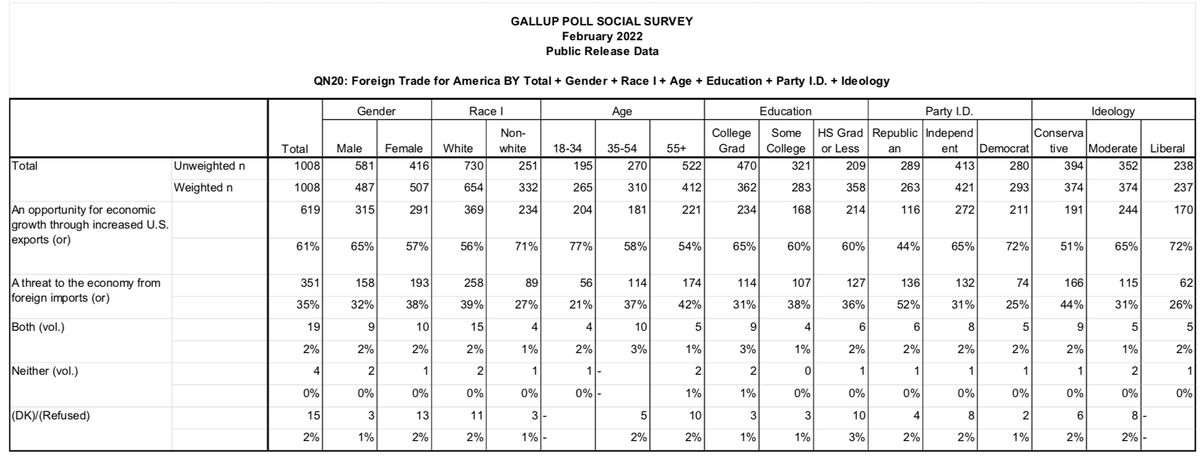
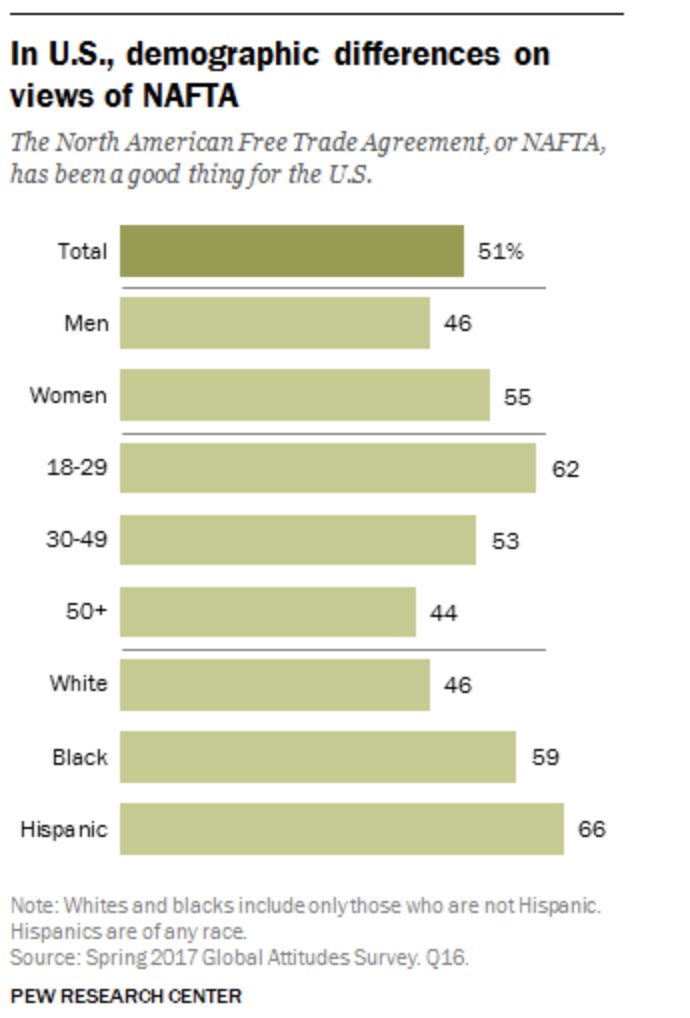
To put it bluntly, Black and Hispanics are pretty clearly saying they want more trade but the forces of protectionism are marginalizing their voices. 13/
If we look internationally, some of the people most hurt by trade barriers are sub-Saharan African farmers. Trade liberalization would help them a lot. Getting the EU, US, and Japan to lower their ag. subsidies is what a truly equitable trade initiative would look like. 14/
And this is to say nothing of the fact that free trade has lifted billions of people globally (most of them non-white) out of poverty. 15/
And all of this is before we’ve even gotten to the fact that trade is hugely beneficial to people who work in services and women disproportionately work in services, so this is a gender equity issue too. 16/
So yeah, if we're really going to have an equity-oriented trade policy, we should have a free trade oriented trade policy. End/
• • •
Missing some Tweet in this thread? You can try to
force a refresh