1. Over the weekend I took 1st place in Scott Alexander's anonymous book review contest. My entry was about the Sapient Paradox, which asks: since humanity is over 200,000 years old, why did civilization take so long to get started? A 🧵 erikhoel.substack.com/p/the-gossip-t…
2. The lesser-known cousin to Fermi's Paradox ("Where are all the aliens?"), the Sapient Paradox asks "Why were we stuck in prehistory?"
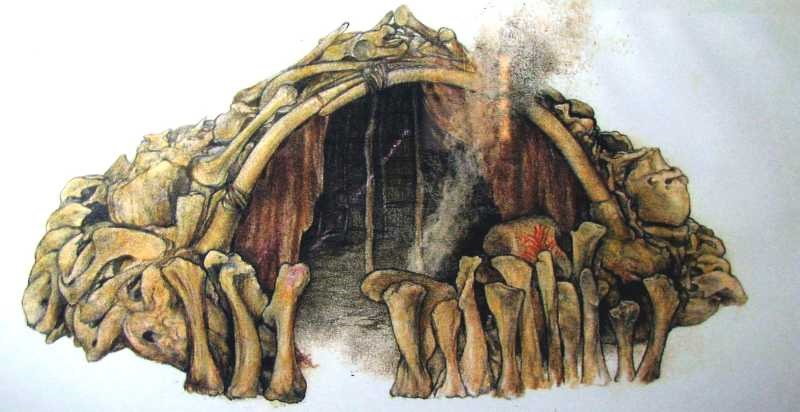
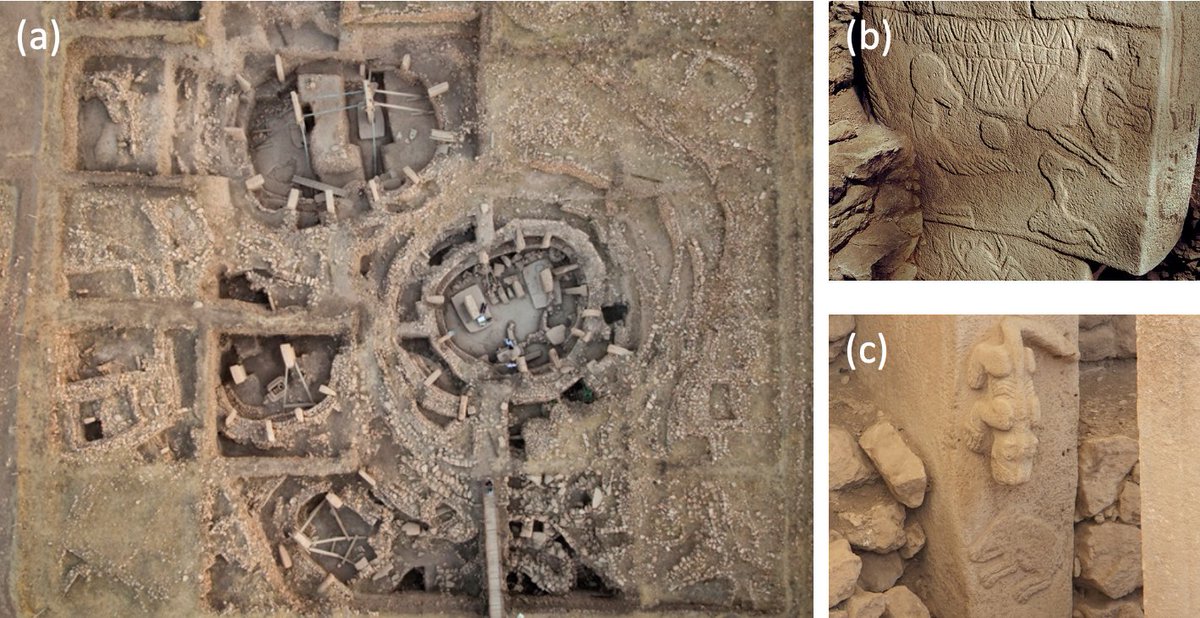
Ritual mammoth houses made of bones are some of the earliest structures at 15,000 BC. Göbekli Tepe is 9,000 BC! Where'd ~190,000 years go??
Ritual mammoth houses made of bones are some of the earliest structures at 15,000 BC. Göbekli Tepe is 9,000 BC! Where'd ~190,000 years go??
3. Last year The Dawn of Everything by David Grearber and David Wengrow (the Davids) made a huge splash in reframing early human history, and they attempt to address the Sapient Paradox amazon.com/Dawn-Everythin…
4. The goal of The Davids is to rewrite human history away from the standard progression of hunter-gatherers -> agriculture -> unequal and hierarchical societies. Instead, they argue early humans lived in all sorts of arrangements, from extreme egalitarianism to chattel slavery
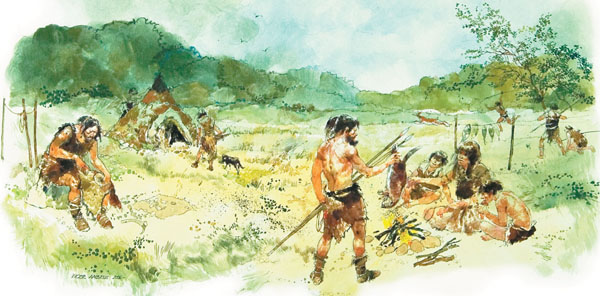
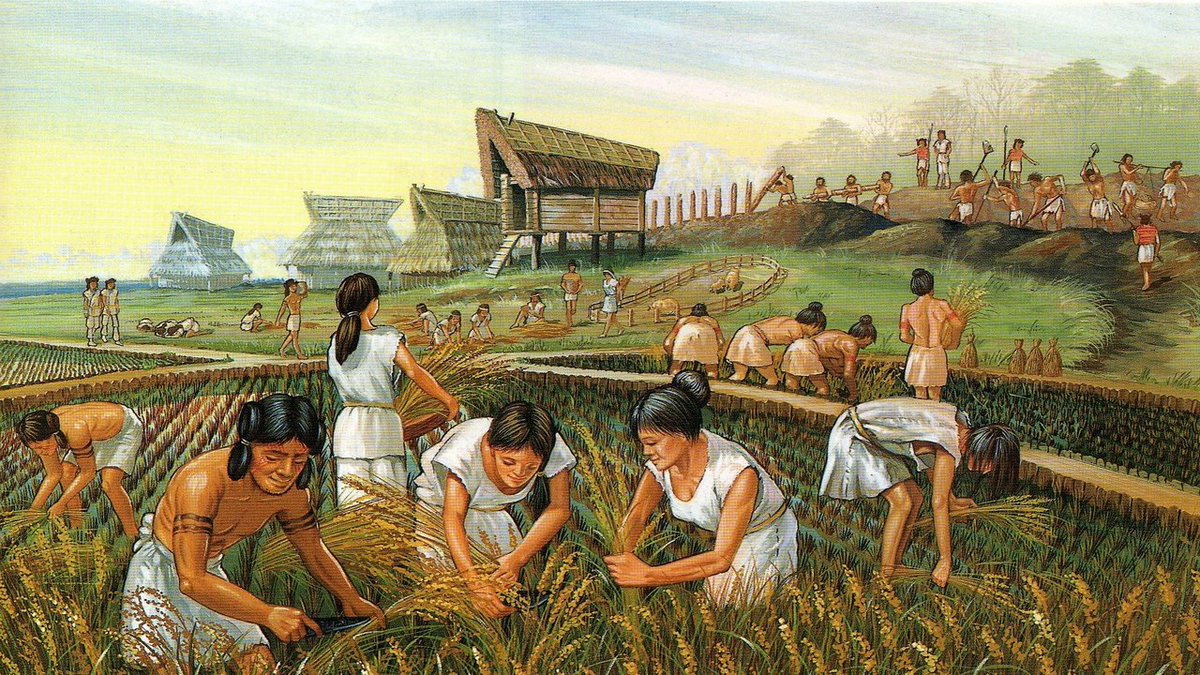
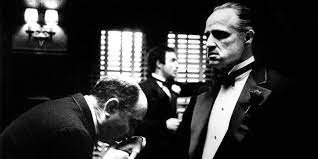
5. As an example, consider two Native American regions of foragers in 500 BC. On the Northwest Coast they kept chattel slaves (as big a % of the pop as the USA did), and their aristocracy resembled Mafia dons, with strict codes of honor and patronage relationships
6. Right to their south were the Yuroks, a much more peaceful, ascetic, and egalitarian people, who kept few slaves. Again, this is 500 BC, in a foraging and pre-agricultural society. And yet we see political and cultural differentiation.

7. The Davids argue that the assumed homogeneity and underestimation of more "primitive" people goes back a long ways. Consider, e.g., how in 1700s in France it became vogue to write critiques of society through the eyes of an outsider, a trend started by the writer Lahontan
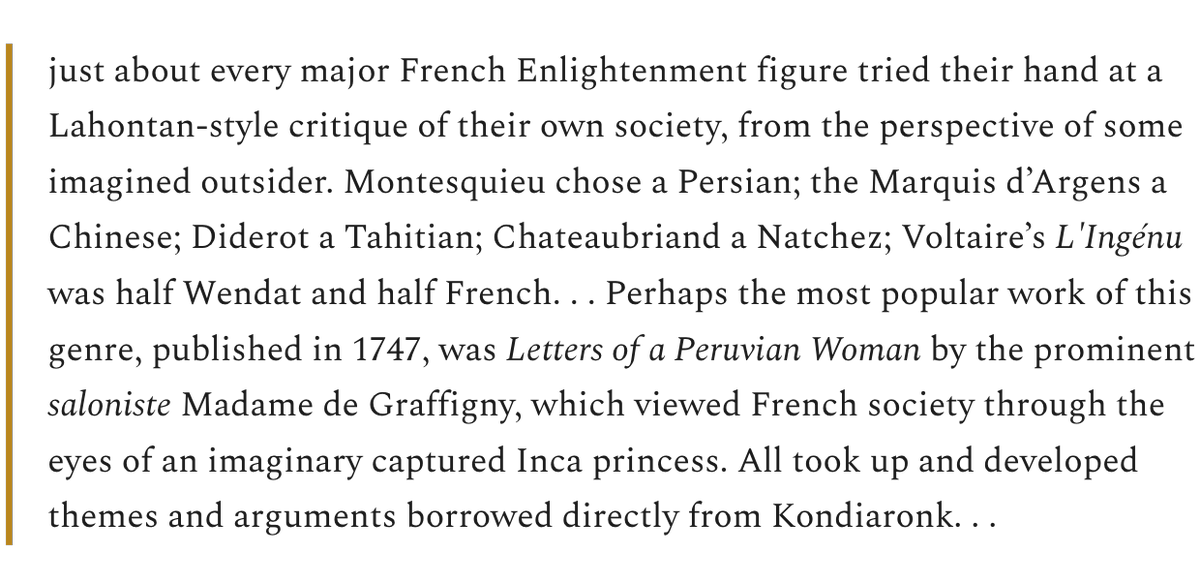
8. Traditionally this has been thought of as Europeans giving critiques of Europe via non-European mouthpieces. But Lahontan's writing was based on a real Native American, Kondiaronk, a Wendat politician, who likely had been to France
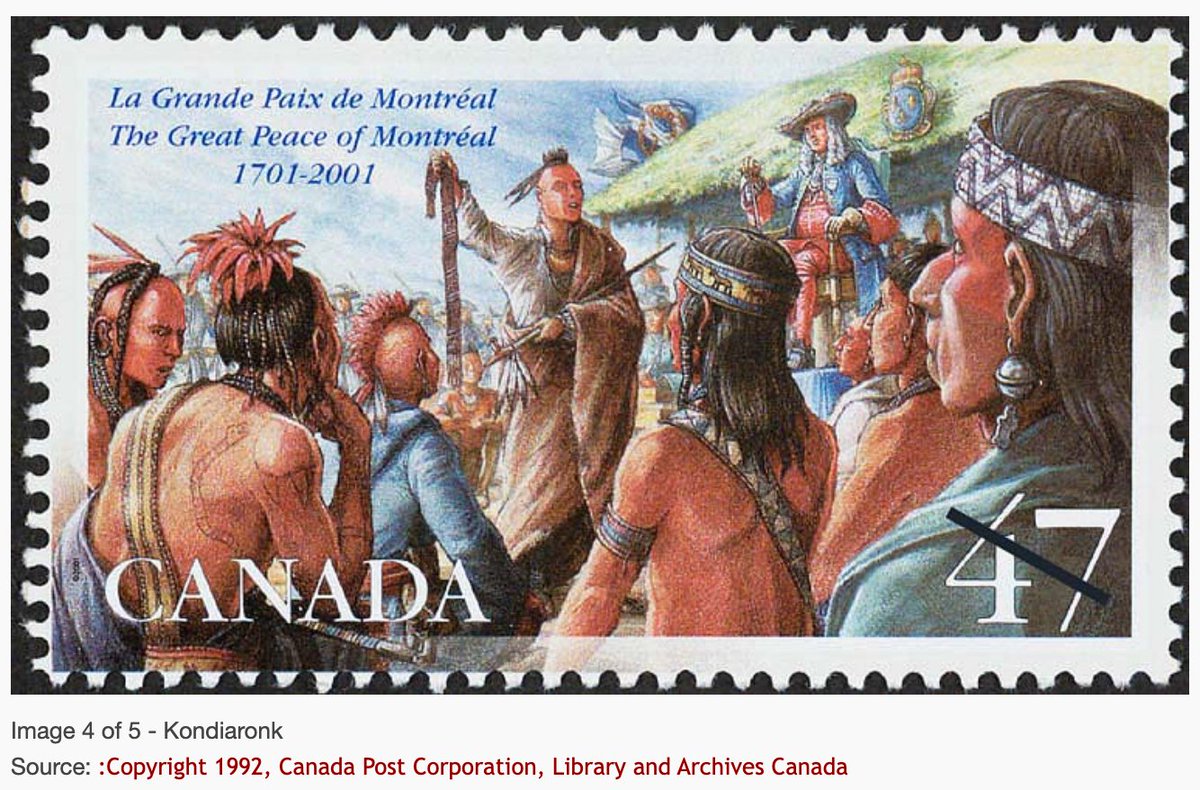
9. All the eye-witness accounts say Kondiaronk was an incredibly articulate critic of the injustices of European life. The implication is that many of the progressive critiques of European culture actually stem from criticisms that Native Americans themselves made
10. But while the Davids do provide good evidence for political differentiation, as well the underestimation of the political self-awareness of foragers / pre-agriculture peoples, they don't actually solve the Sapient Paradox. In fact, they make it worse!
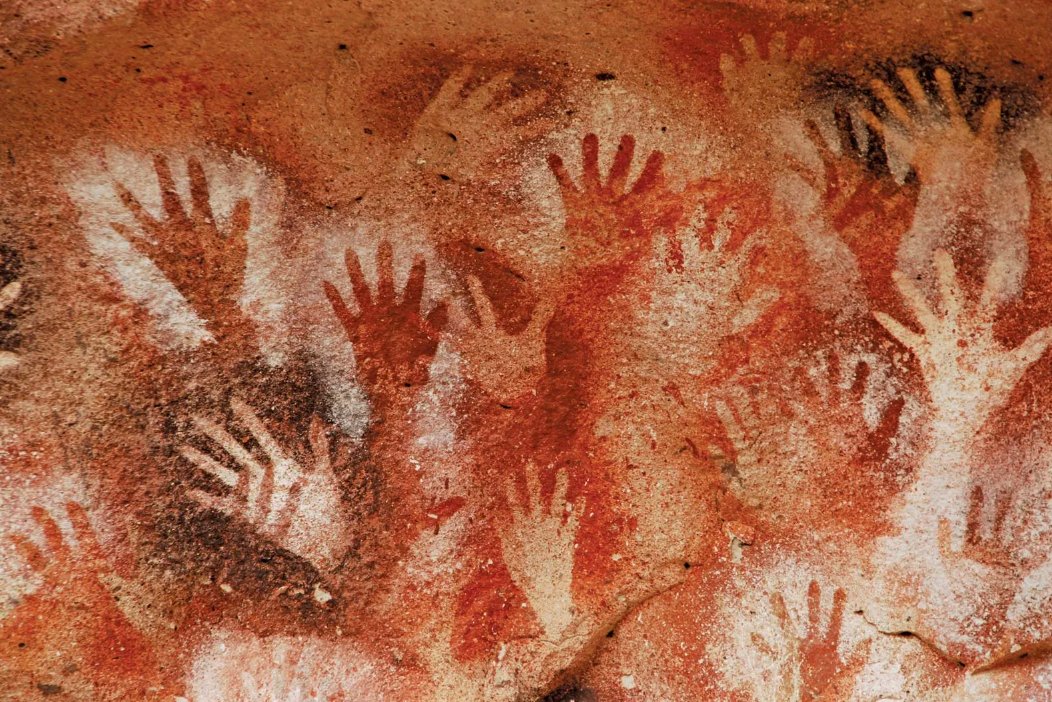
11. Humanity explodes in differentiation around 10,000 BC. But if before that everything had been a patriarchy, or a matriarchy, or egalitarian, or hierarchical, human societies should mostly evolve similarly, having started in the same place. But that's *not* what we see.
12. So now we need a theory of prehistory that explains some sort of "great trap" of history wherein it is very difficult for civilization to get started, and yet, at the same time, how this starting state immediately leads to a diversity of societies, politics, and forms.
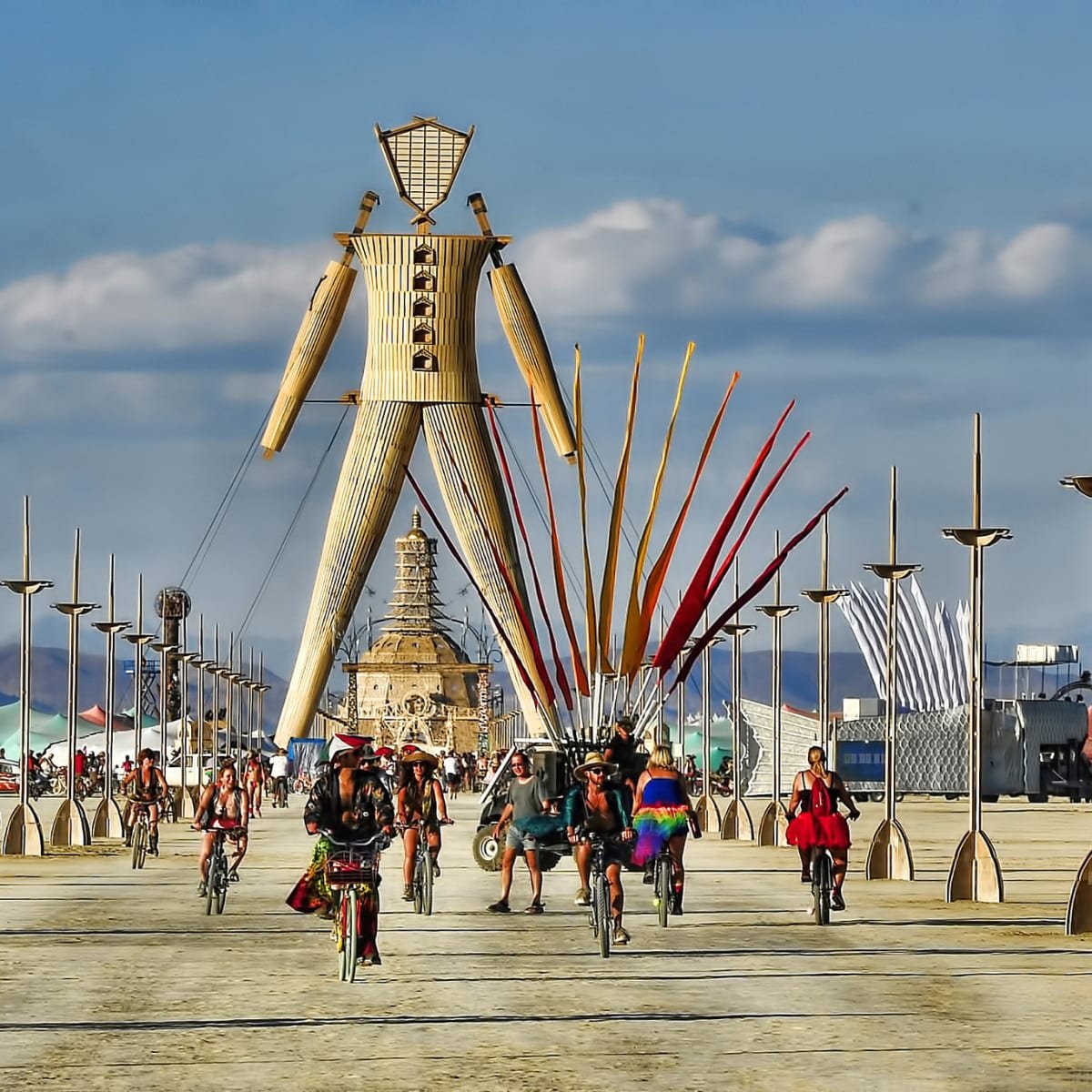
13. If we conceptualize what living in 50,000 BC would be like in today's terms, Rousseau's view would be Burning Man, Hobbes' view a bunch of warring gangs, and the Davids a deliberating city council filled with Kondiaronks. But what if all these are wrong?

14. After all, the message of The Dawn of Everything is that people are people. But unlike what the Davids want, most people aren't Kondiaronk. He was exceptional. Most people are . . . like the people you knew in high school

15. The metaphor isn't perfect, but I think it's better than "biker gangs" or "Burning Man." Entering a new tribe in 50,000 BC might look more like the infamous lunch table scene from Mean Girls (just replace clothing with furs and beads)
16. Because it sure looks like the main preoccupation of prehistorical societies was being popular. Early societies operated on seasonal changes, informal hierarchies, and theatrical laws. And even people like "chiefs" were just the dudes who threw the best potlatches
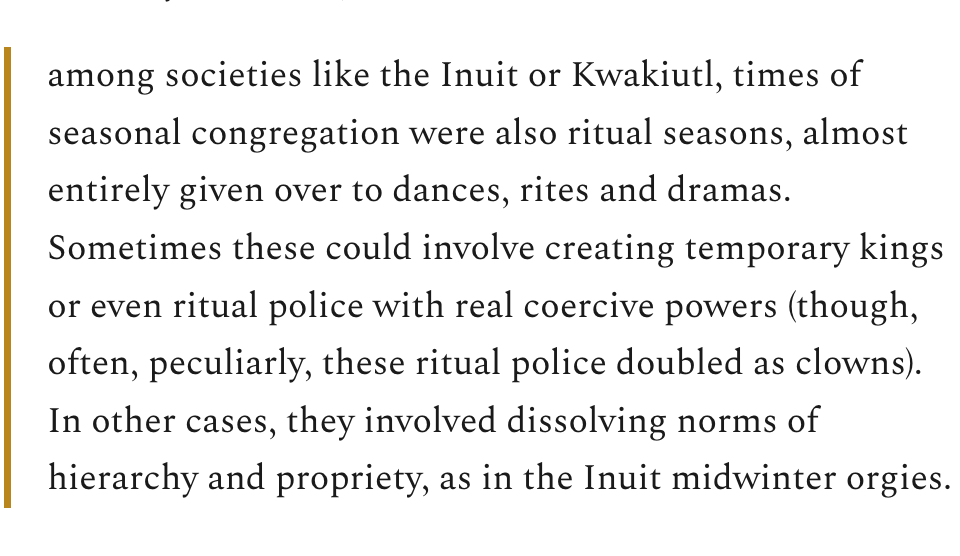
17. Even wampum wasn't originally used to keep track of material debts, but rather social ones
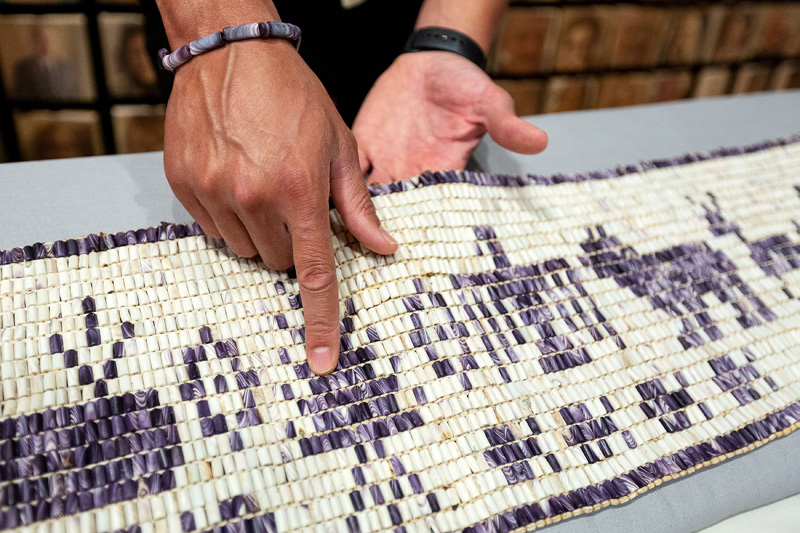
18. The origins of money itself might be to keep track of reputations, not private property. Why? Because humans can only keep track of around ~150 social relationships, a phenomenon called Dunbar's number
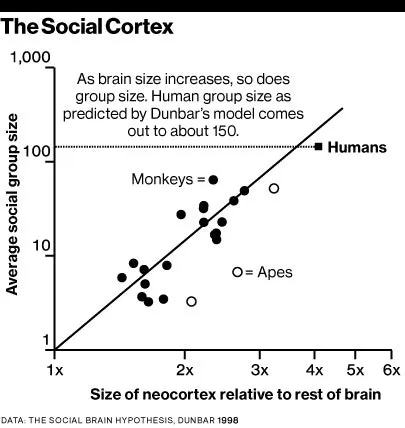
19. If humanity's "initial prehistorical state" was just who-sits-with-who raw social power (after all, there are no *formal* powers yet) then due to Dunbar's number raw social power can only organize societies of a certain size

20. Dunbar has an entire book on gossip and social power, which he, like most of anthropology I've read, gives a positive valence to. Gossip is good at detecting cheaters, for instance. But just raw social power alone is a terrible way to organize society!
21. Our paragons of civilization are precisely those who formal powers render immune to gossip and social pressure. Tenured professors or Supreme Court Justices have lifetime appointments *for that reason*


22. So maybe the Sapient Paradox is because we were in a "gossip trap" of raw social power, and everything went to reputation management, and humans lived in separate "high schools" for hundreds of thousands of years until forced to invent civilization by Dunbar's number
23. A speculative theory, for sure. But if it's true, then we should be very worried that social media allows us to escape Dunbar's number. We can, once again, organize society by raw social power. Like crabs in a bucket, we can pull each other down via online mobs
24. Of course we gravitate to "cancel culture" as a way of online life - it's our innate evolved form of government! The invention of social media was basically Zuckerberg accidentally summoning the Elder God that was humanity's first form of social organization
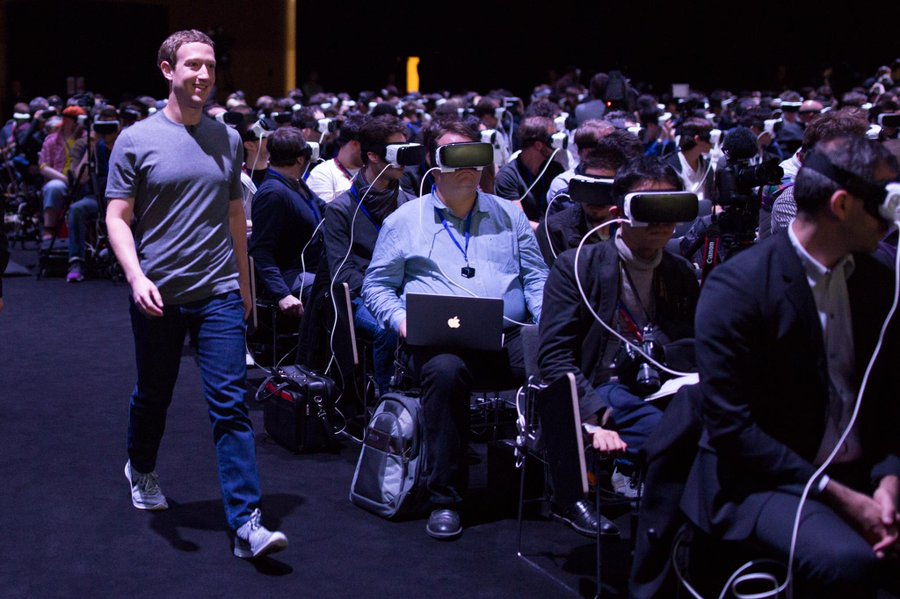
25. After all, how much formal power is there left in the world? Is there any institution stronger than social media? We go to war because of social media, we elect via social media, and we destroy people via social media. It's the gossip trap of prehistory resurrected.
26. I don't know how to beat the gossip trap and save civilization, but I do know that "The first step in avoiding a trap is knowing of its existence." And I think this is root of the issues that @jonathanchait, @sapinker and many others have pointed at as eating our institutions
27. Fin. If you enjoyed this thread, please consider signing up for my (free) Substack, which publishes deep-dive essays about different topics once a week erikhoel.substack.com
• • •
Missing some Tweet in this thread? You can try to
force a refresh