The McCaskeys have been planning this since Mugs Halas death. In 1979, the Brizoiara family owned 8% of the Bears, Mugs owned 20%, Virginia McCaskey 21% and the grandchildren 43%. When Mugs died, his kids owned 28% of the team, making them the most powerful shareholder.
Virginia was the executor of Mugs estate since the Halas children were 11 & 13. In 1981, Virginia reorganized the Bears ownership with her father 87-year-old football player George Halas. It gave Virginia control by giving her the voting rights for the 51% of the grandkid’s stock
George Halas died in 1984, Virginia again reorganized ownership. She devalued the Halas kids stock by turning their shares from Class A to C. The Halas’ lost their representation on the board.
As the executor of Mugs estate, Virginia was legally required to represent the best interest of Christine & Stephen Halas. Virginia took their voting rights, devalued their stock and kicked them off the board. She never even told the Halas kids of the reorg. Then shit hit the fan
In 1986, the Halas kids filed 3 lawsuits: 1. Against Virginia for improper use of executor powers 2. Breach of fiduciary duties by the Kirkland & Ellis law firm 3. Wrongful death against the fire, police departments & many others that they participated in a cover up of Mugs death
Halas vs McCaskey lawsuit, Halas won but lost. The judge ruled that the executors breached their responsibilities by not telling the kids but said they didn’t harm the kids interests. Halas was given the satisfaction of outing her Aunt Virginia. But they received no compensation
In the Kirkland & Ellis case, Halas won but lost again. The court ruled that they had conflicting interests by representing the Bears & McCaskeys. During the team’s reorg the firm acted in bad faith by failing to inform the kids guardian attorney.
The firm was found guilty but Kirkland & Ellis’ actions and contracts could not be undone. The Halas kids would never reclaim their inheritance because of what the firm did. In a separate lawsuit, the firm was found guilty of fee-gouging the Halas kids, overcharging them by $500k
The final lawsuit against the fire & police departments, Medical Examiner, Hospital, NFL & Rozelle. The suit accused the parties of overlooking the possibility that Mugs was killed. The outlandish suit seemed to be stunt to gain control of the team but it uncovered crazy evidence
Illinois law requires an autopsy in sudden deaths, but no such autopsy was done on Halas. Mugs body was exhumed, they found the brain, heart, lungs, kidneys, spleen, gall bladder and spinal cord were removed. To identify the cause of death the autopsy must examine & weight organs
After the discovery of removed organs, the Halas lawyers wanted the doctors, paramedics & police to testify. The motion was denied. Although the doctors, paramedics and police were the ones responsible for not performing the first autopsy. At this point, the case was dead.
The kids were forced to sell the stock to the McCaskey’s for $17 million. The Bears are now worth $5.8 billion, the Halas stock would be worth $1.6 billion. 2 years later, the McCaskey’s sold the Halas stock for $30 million. The family made a 76% profit off the Halas stock.
The McCaskeys owed $50 million to the government on the estate. They went to court and won. They were not required to pay the $50 million and were given $1.4 million. An unprecedented result, especially for the same group of people that were not able to protect the Halas kids
• • •
Missing some Tweet in this thread? You can try to
force a refresh

Bears Stadium Situation
Part 9-Pritzker’s Dilemma
The stadium is delayed until at least 2026. Pritzker controls $2B+ in funding. Arlington offers short-term relief but hides major costs. Chicago brings political heat now but long-term gain. His choice will define his legacy 🧵
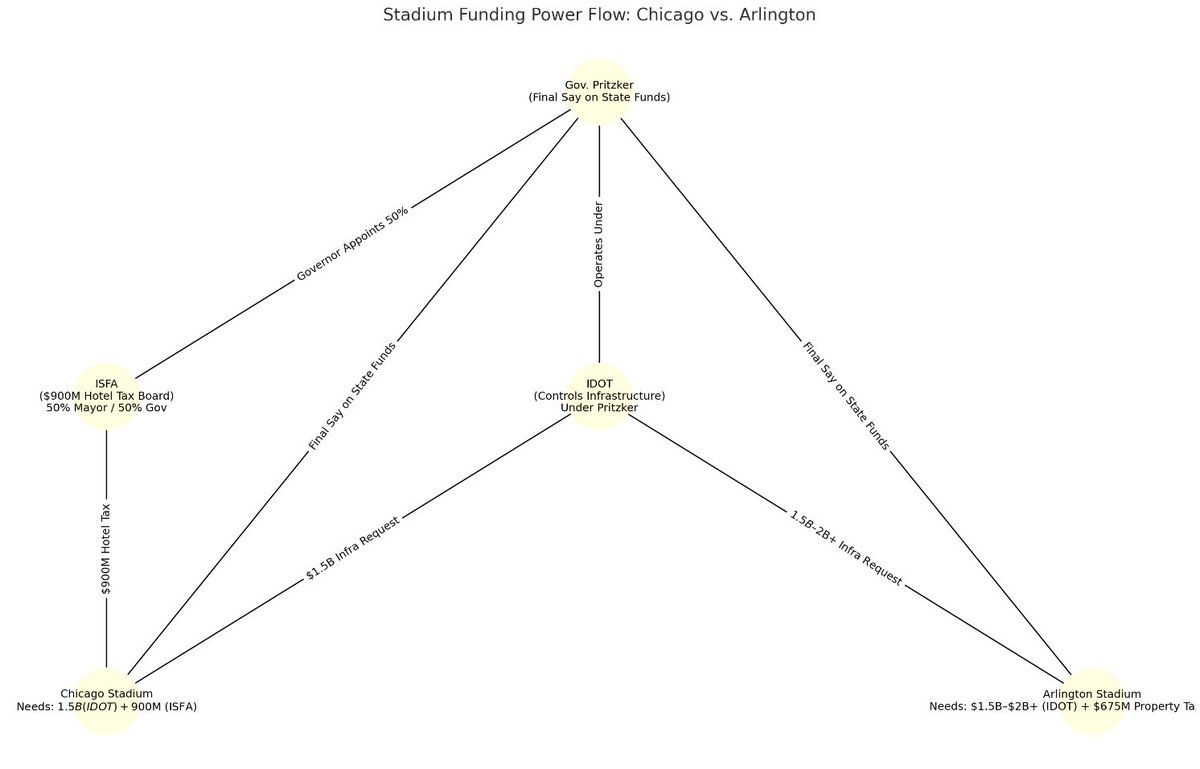
Pritzker holds the power because both Chicago & Arlington need $2B+ in state funds. He can veto it. IDOT, under Pritzker, controls infrastructure. Chicago’s $900M hotel tax goes through ISFA, a board split between mayor and governor—but Pritzker has final say at the state level
Arlington offers short-term political cover: no tax hike, private optics, less noise. But it’s misleading—$675M in state aid was already rejected, and a traffic study shows $1.5B more needed for roads. The hidden public cost rivals or exceeds Chicago’s.
Bears Stadium Situation
Part 8
Worst Option: Arlington
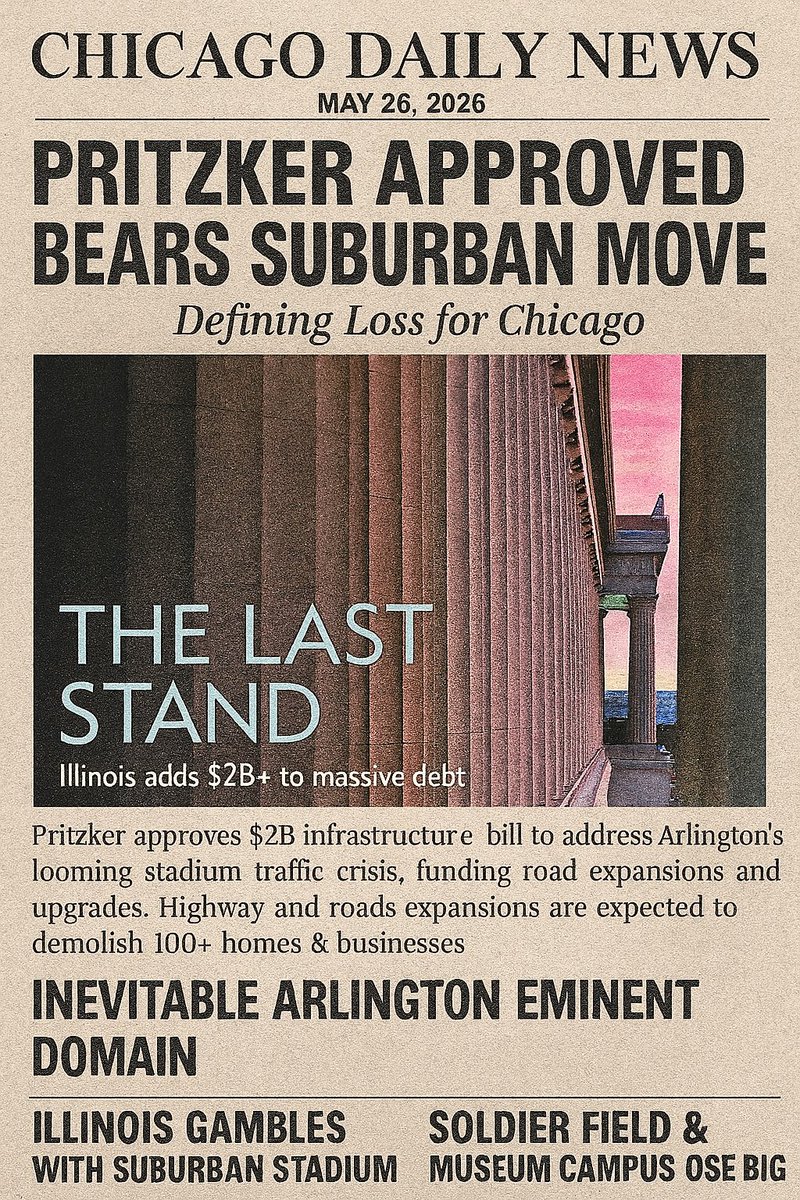
Relocating to Arlington may sound appealing, but the reality is far worse. The plan triggers massive road expansion, traffic gridlock, private home demolitions & billions in public costs, all for a stadium far from most fans
Moving the stadium to Arlington is a logistical mess, 70–75% of Chicagoland lives south of it. For Thursday or Friday night events, 70,000 fans would all drive from one direction into heavy traffic rush hour traffic. A massive scale road expansion would be needed.
The biggest obstacle is the 290/90 Interchange, where most of Chicagoland would converge to reach Arlington Park. It’s already dangerously congested. It would need a flyover interchange. The last two flyovers in Chicagoland cost $800M each and averaged 8 years to build.
Bears Stadium Situation
Part 7
Best Option: Chicago Lakefront
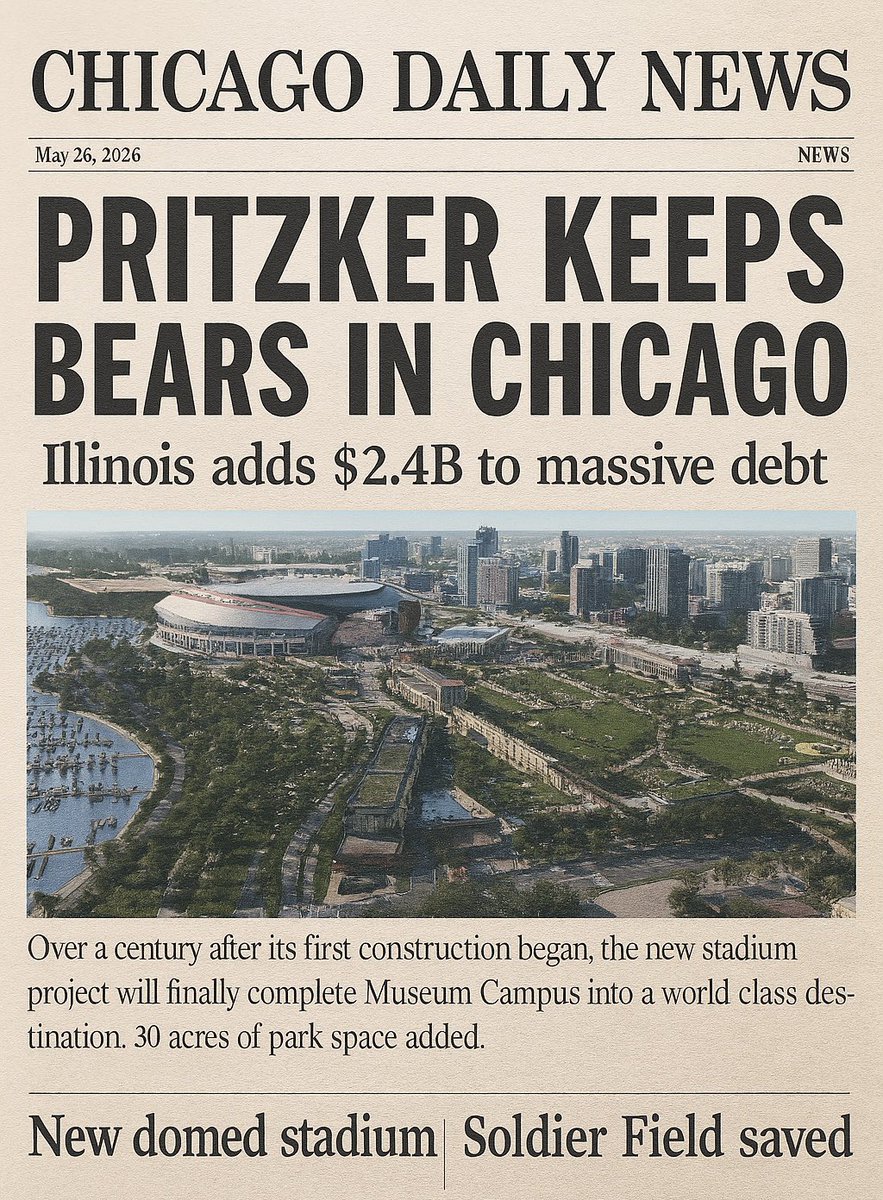
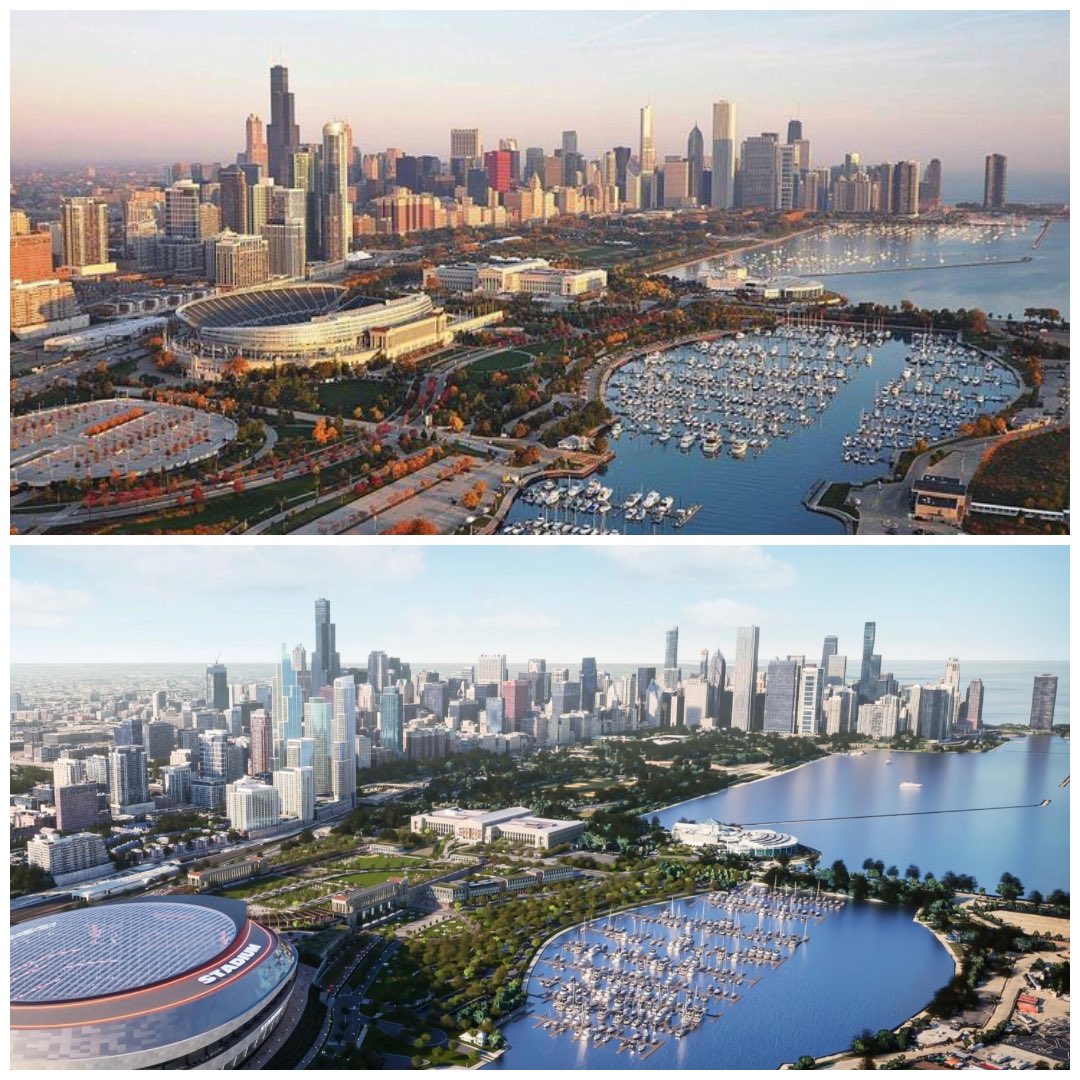
Soldier Field’s botched upgrades, lost revenue, underuse led to Chicago’s 2024 plan. This is a true fix: iconic design, year-round events, food district, strong ROI, added green space that unifies Museum Campus
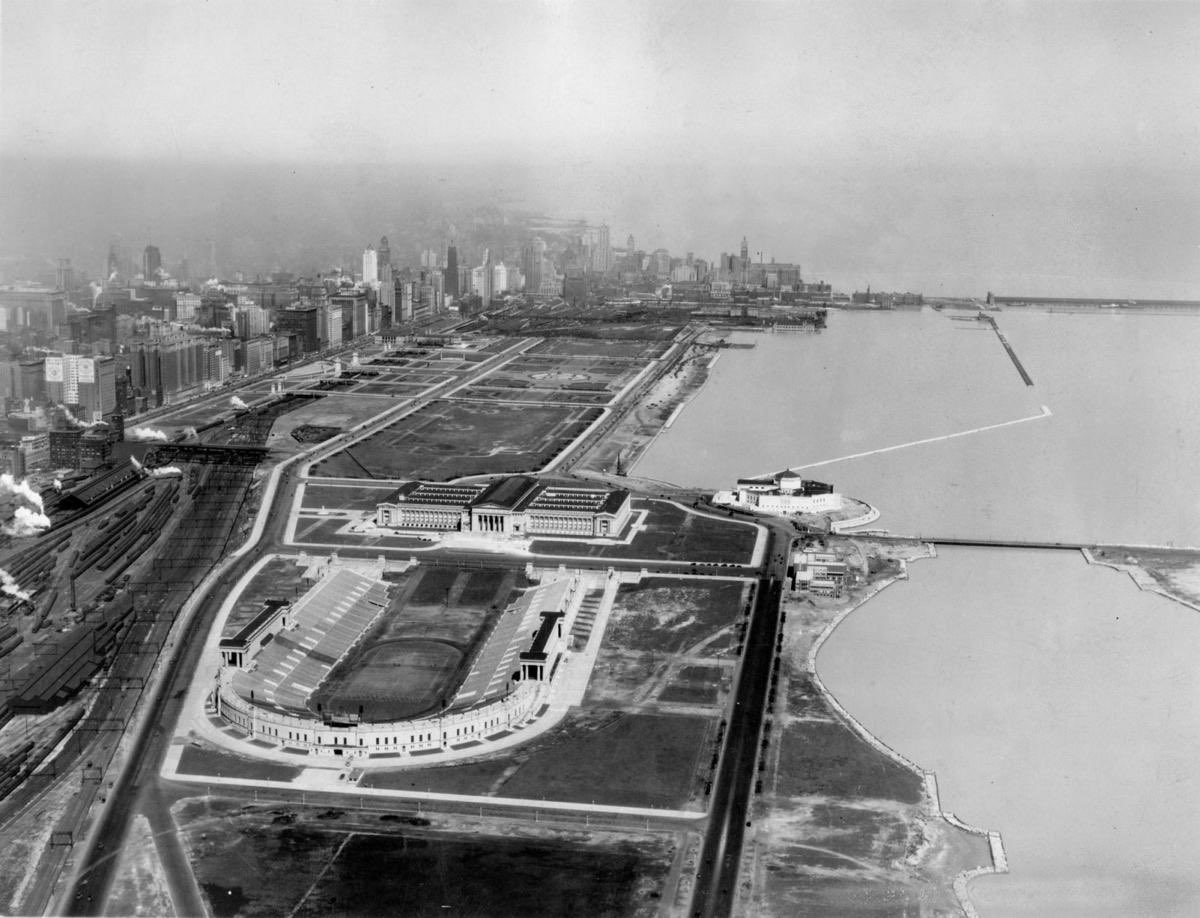
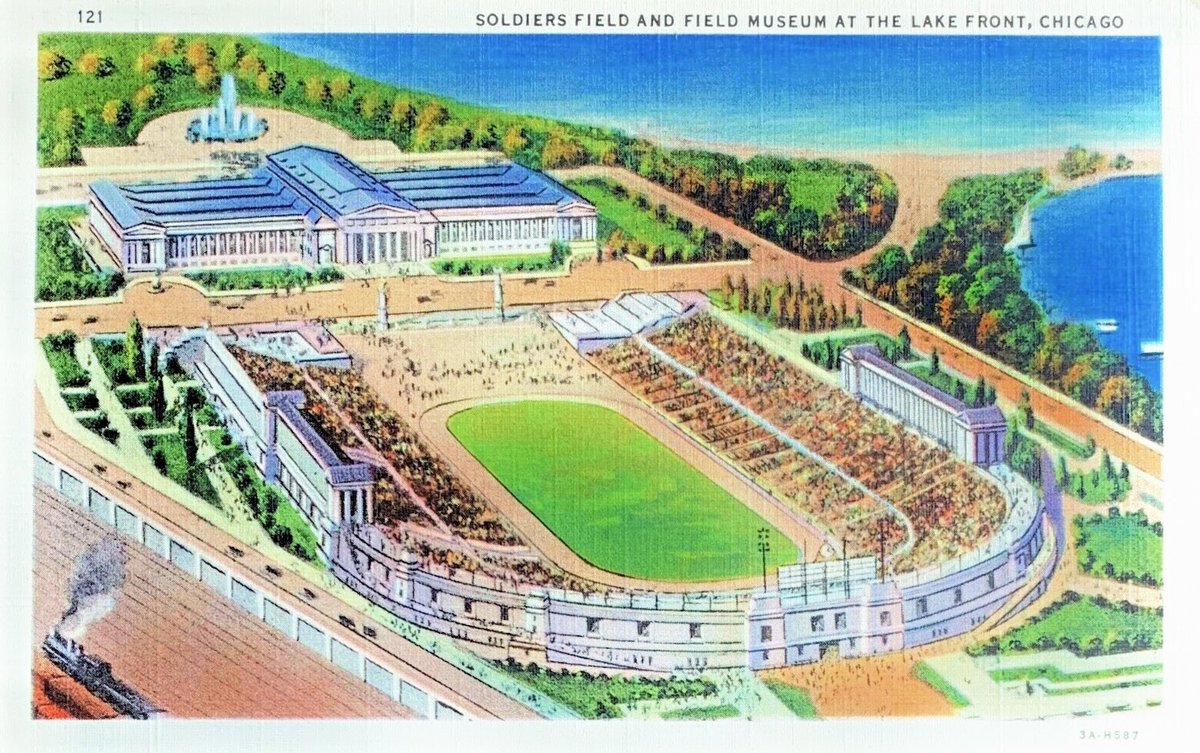
Soldier Field was flawed from the start, built too close to the Field Museum, then expanded even closer. Its iconic columns were awkwardly pushed to the south, off-center, giving the grandstand an unbalanced, asymmetrical look that never quite felt right.
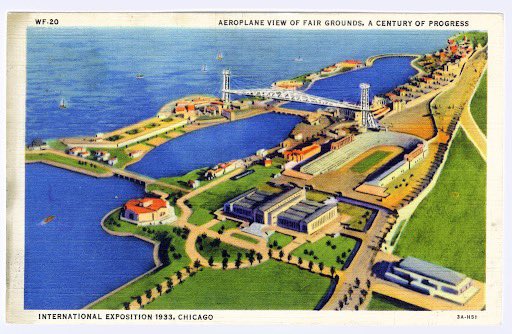
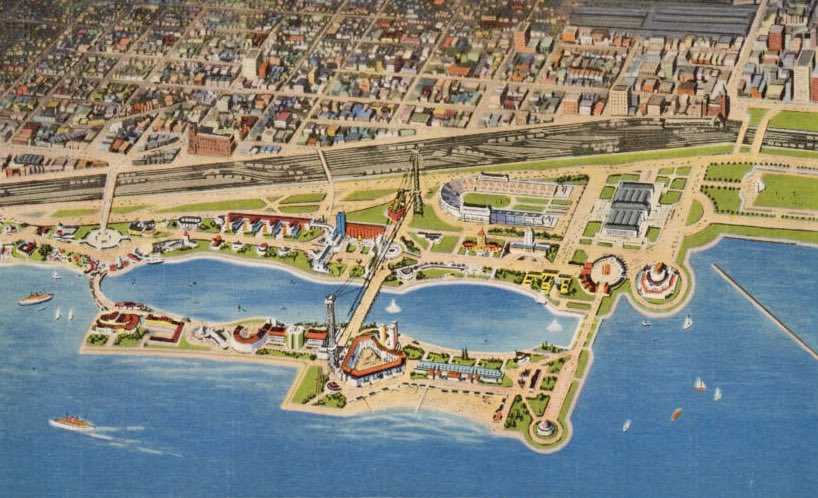
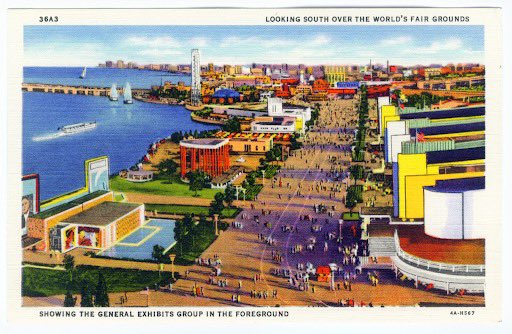
Soldier Field was built for events like the 1933 World’s Fair, but the rest of the year it served as an open field, a public playground outside the Field Museum. Over time, renovations closed it off. The 2024 plan returns to the original 1933 vision.
Bears Stadium Situation
Part 6: Economics
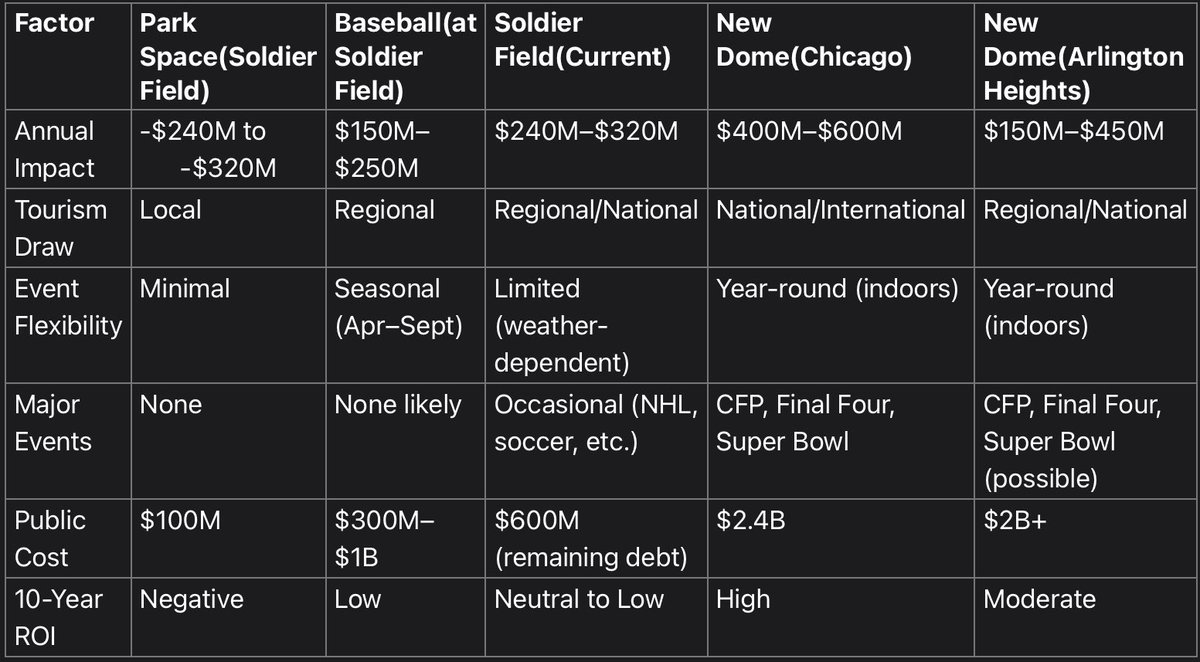
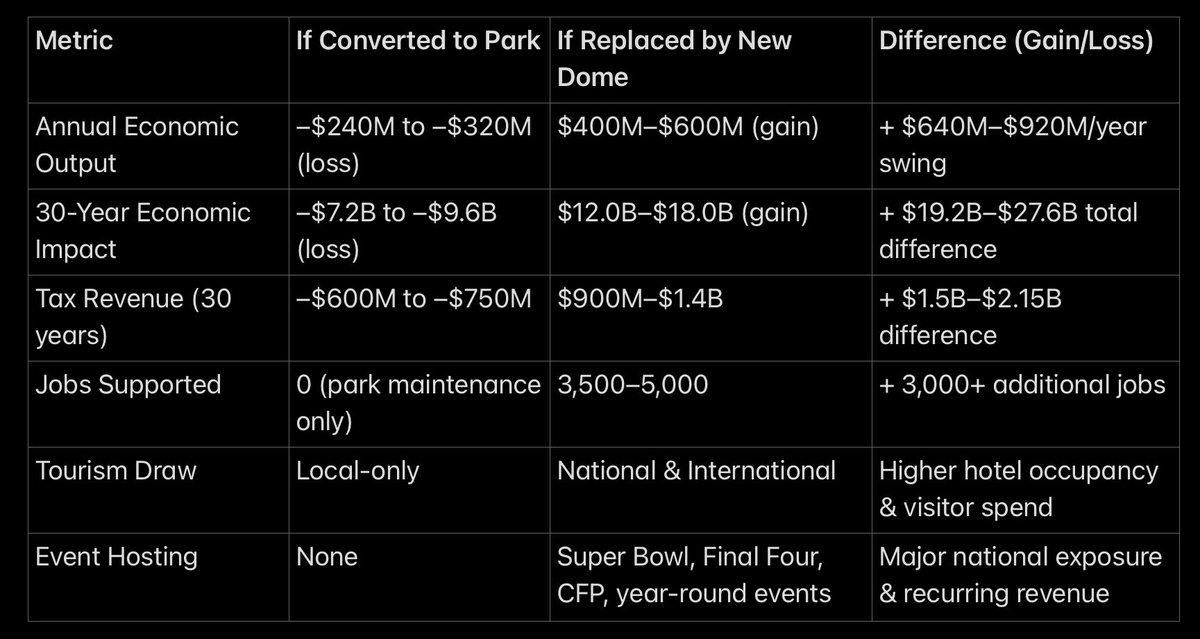
Both Arlington & Chicago plans need major public funding, leaving the final call to Gov Pritzker. He’s open, if taxpayers benefit. The strongest case for either site is economic impact, the numbers clearly favor a new domed stadium in CHI
Soldier Field to Park
Converting Soldier Field to park space would be an economic disaster. The difference between a new domed stadium and a park is massive. It’s up to $1B in lost local economic activity per year, with no major events, tourism or tax revenue to offset the impact
Retrofit Soldier for Sox
Probable cost: $600M (range: $300M–$1B)
A 30,000-seat ballpark could bring in $150M–$250M/year, as a seasonal venue, which has limited economic impact. It’s a costly fix that doesn’t solve broader area challenges or unlock long-term economic potential.
Bears Stadium Situation
Part 5: True Funding Projections
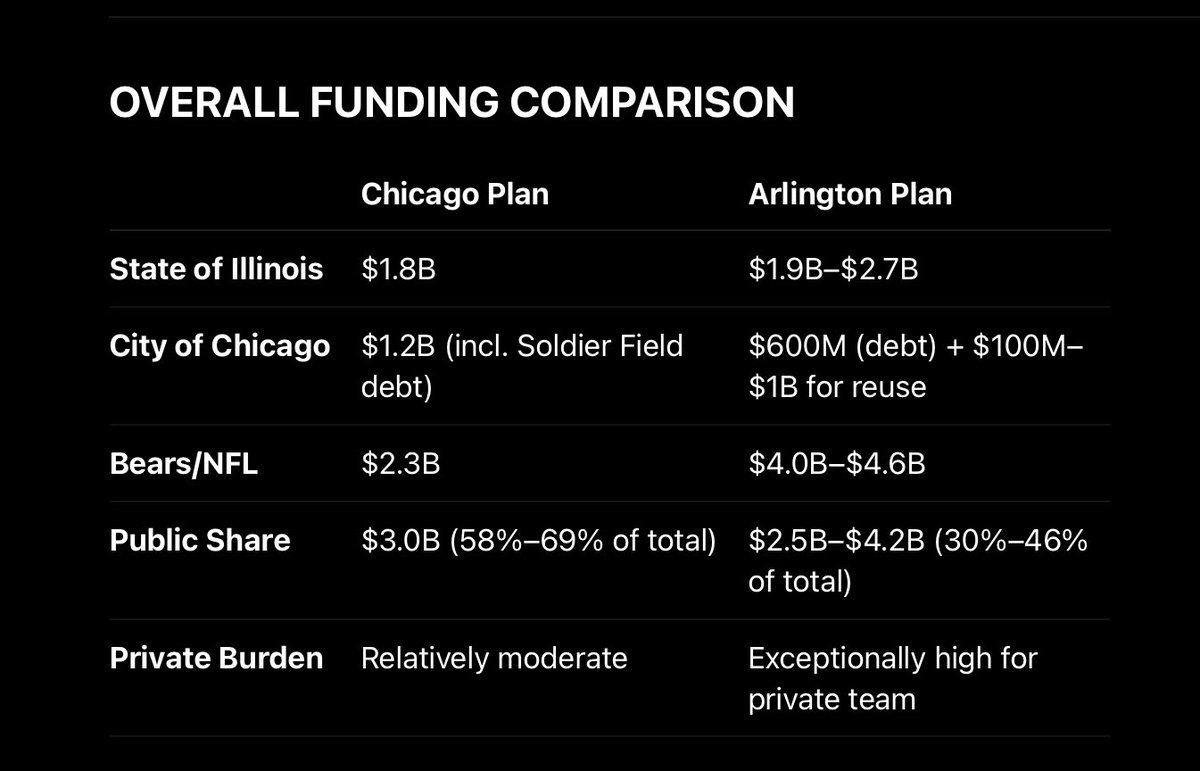
Arlington may seem privately funded, but taxpayers could face $2.5B–$4.2B for roads, subsidies & Soldier Field’s future. Chicago’s plan starts at $3B but could hit $5B if refinanced like the 2002 Soldier Field deal.
Chicago Lakefront Stadium Funding
Total Project Cost: $4.7 billion
- Stadium: $3.2 billion
- Infrastructure & Soldier Field Redevelopment: $1.5 billion
Arlington Heights Stadium Funding
Total Estimated Cost: $6.6B – $8.0B
•Stadium Construction: $2.3B
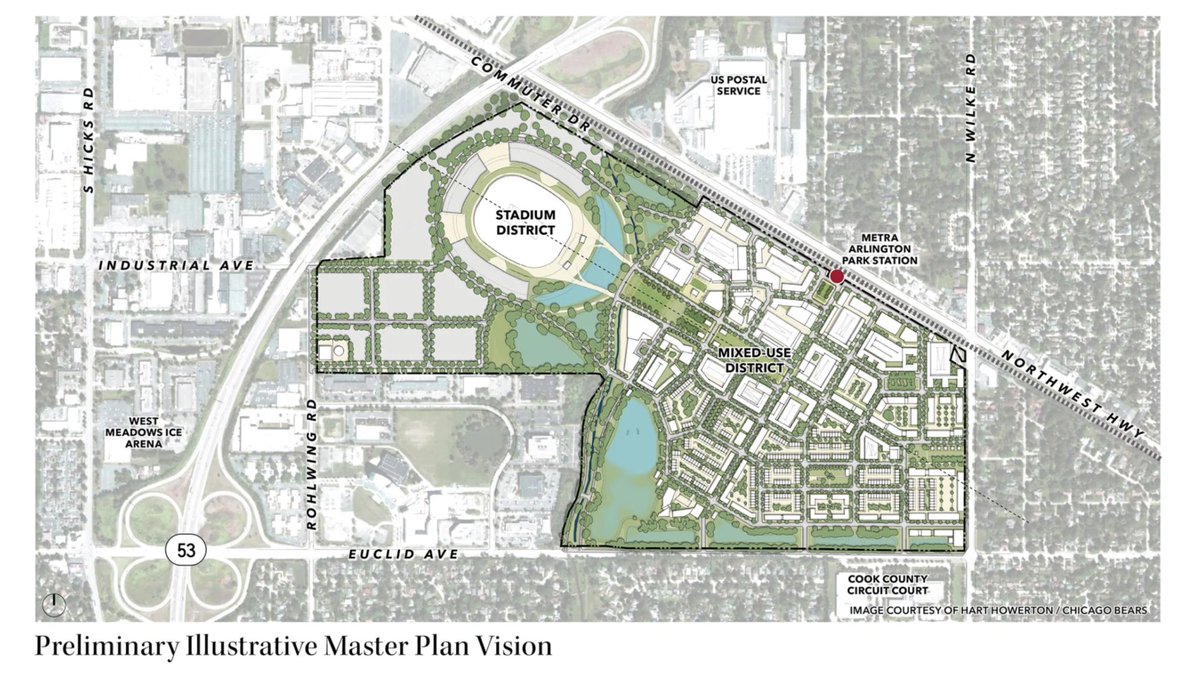
•Mixed-Use Development (326 acres): $2.7B
•Surrounding Infrastructure: $1.5B – $2.0B
•Soldier Field Renovation (Chicago): $100M – $1B
Chicago Bears Stadium Situation
Part 4: Timeline
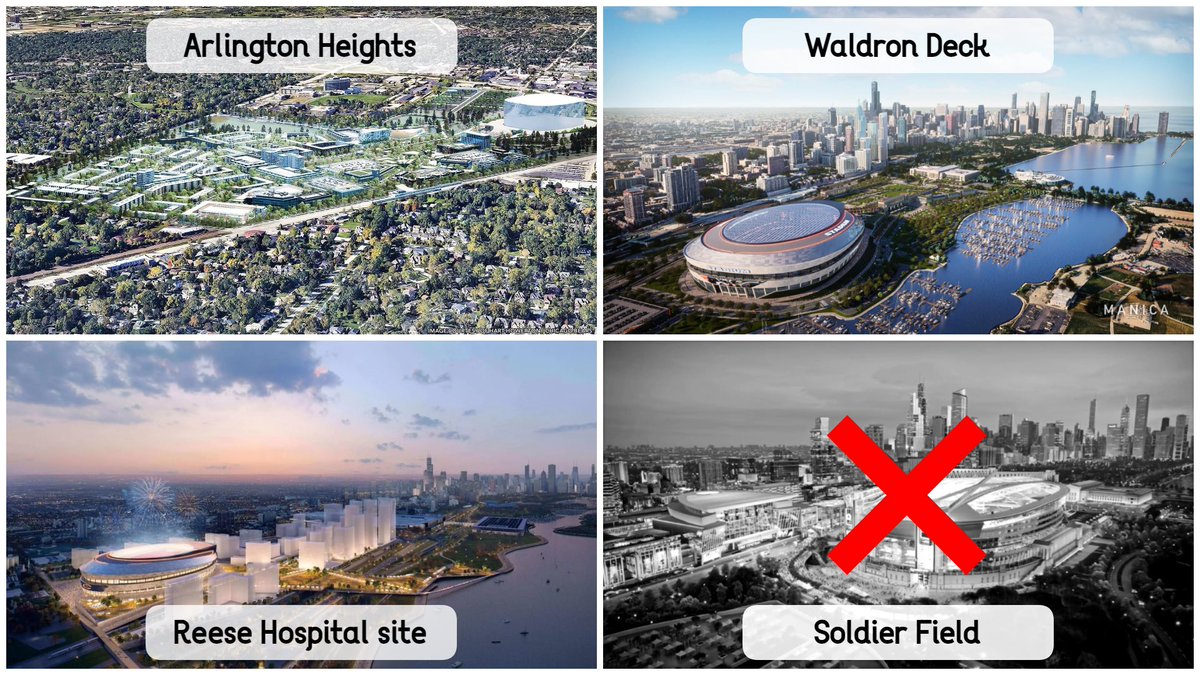
4 years in, the Bears still have no stadium deal. Arlington remains the frontrunner. Soldier Field is out. Two new lakefront sites are in play. One thing is certain: the Bears have just 30 games left at Soldier Field before moving
September 2021
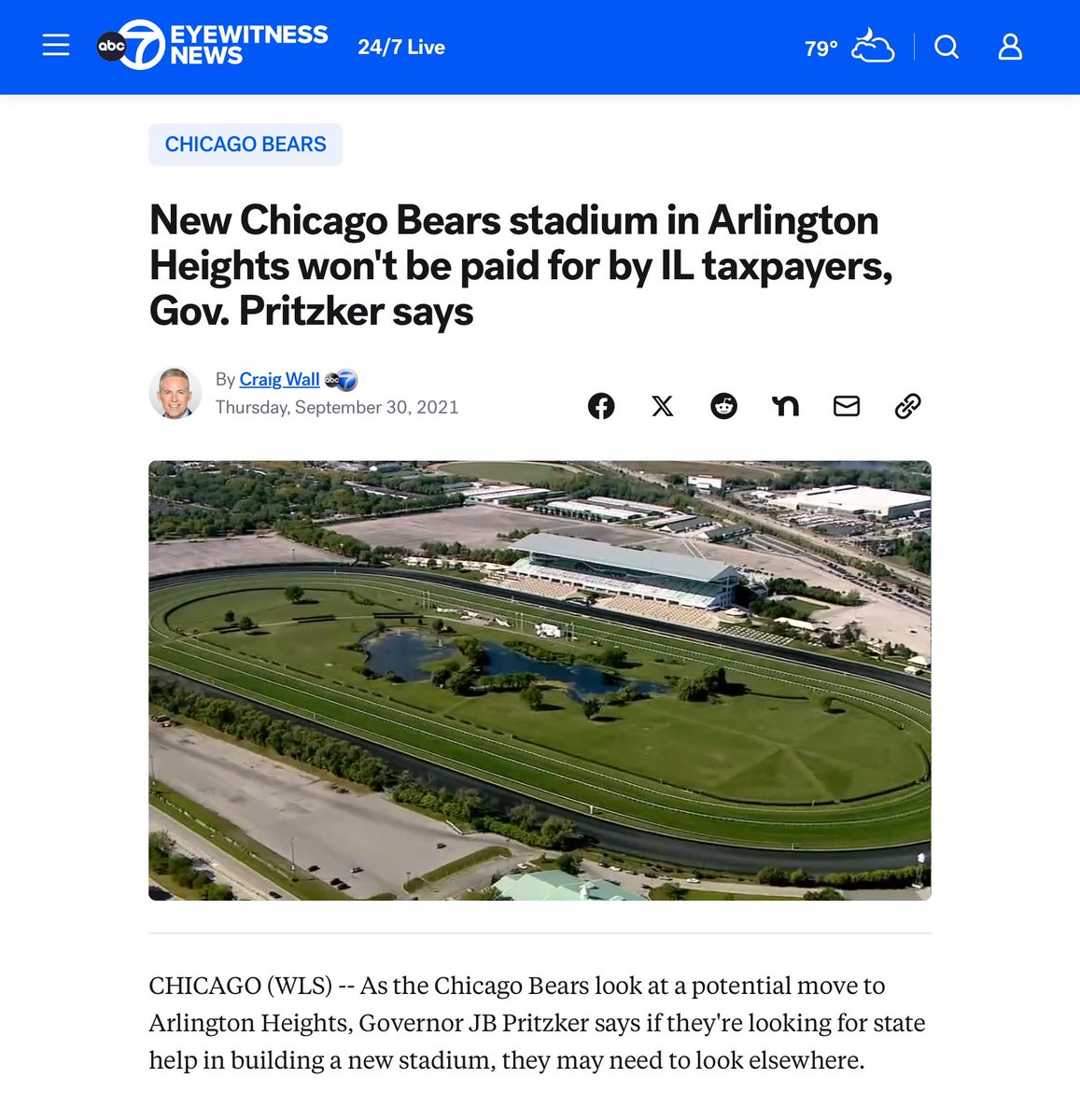
The Chicago Bears announce an agreement to purchase a 326-acre site in Arlington Heights, signaling their intent to build a new stadium. Illinois Governor J.B. Pritzker publicly states he will not use state funds to finance a professional sports stadium.
July 2022
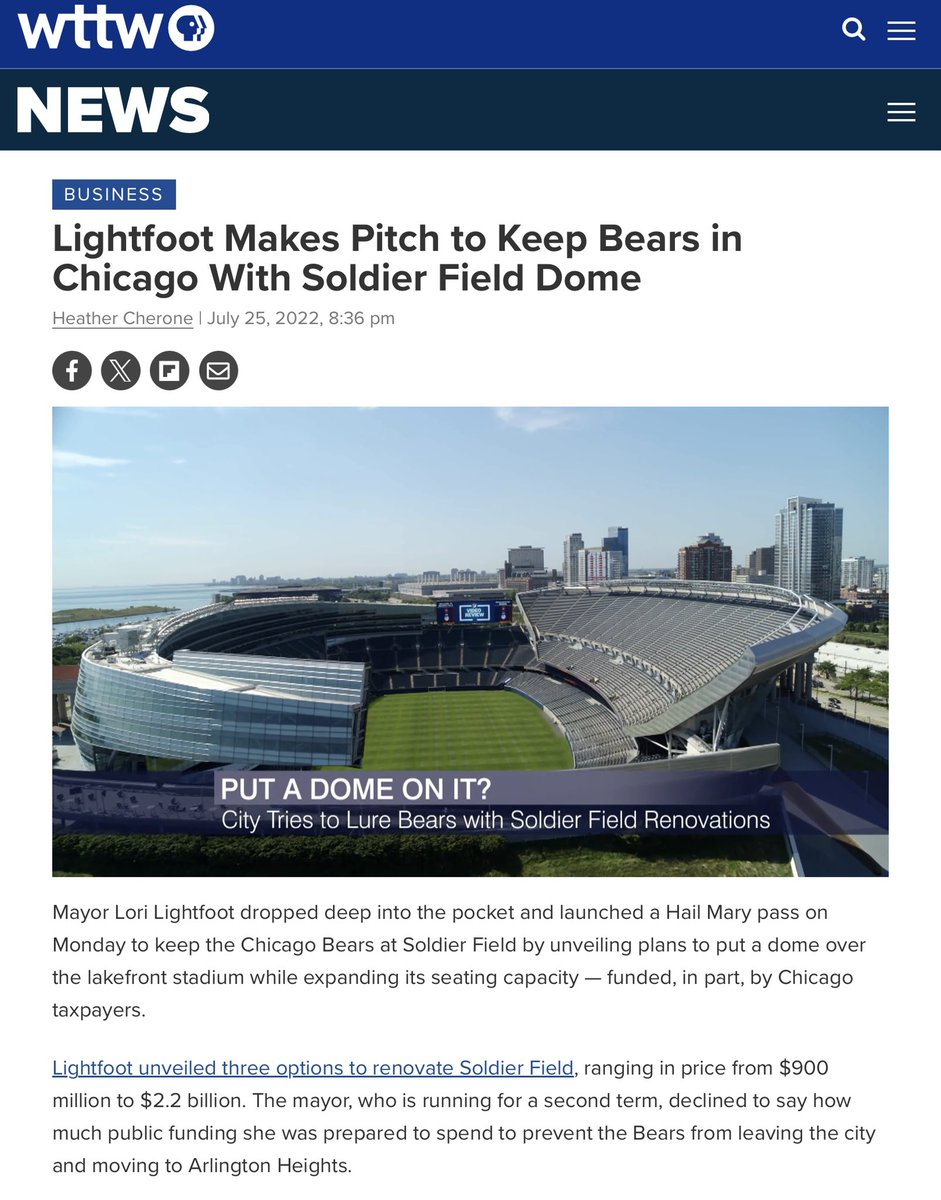
Chicago Mayor Lori Lightfoot unveils a $7 billion proposal to renovate Soldier Field, including a long-needed transit hub. The Bears reiterate their lack of interest in staying at Soldier Field.