Let's talk about this #Gadgetbahn: the Padova t̶r̶a̶m̶ guided bus.
Firstly, let's get the important question out of the way... What is it?
If the branding of the system is to be believed, it's a tram. Spoiler alert: it isn't.
If the branding of the system is to be believed, it's a tram. Spoiler alert: it isn't.


Because a glance under the sideskirts and at the roadway reveals that the branding is fibbing: the vehicles are supported on rubber tyres, and the single steel rail only acts as a guideway.


This means: it's a bus, as confirmed by the #NotAMetro sorter.

But if it looks like a tram, many of you might think: so what if it has rubber tyres?
The system is certainly popular with locals...
The system is certainly popular with locals...


It has well-built stations that enable level boarding, and (as @Kevin_D_Tennent and I will talk about in a future #RailNatter) it provides the psychological benefits of a permanent way that trams do but buses don't.


BUT there are fundamental issues that get to the heart of why specification *is* important, and all of these relate to the lack of steel on steel.
The big one: capacity. Run any more frequent a service and the infrastructure, even when reinforced as in Padova, crumbles to bits.
The big one: capacity. Run any more frequent a service and the infrastructure, even when reinforced as in Padova, crumbles to bits.
The mass of the vehicles is conveyed on the wheels. And the guideway means that the wheels are in pretty much precisely the same place on the road for every vehicle passage.
That limits the number of services to no more than about ten an hour for a fairly short vehicle.
That limits the number of services to no more than about ten an hour for a fairly short vehicle.
In Padova, even with the addition of a reinforced roadway, the current frequency (8.6 services an hour) is breaking up the road surface and requires regular, costly repairs.
Limited frequency means limited capacity. No more than 2000pphpd, which a reasonable bus service can do.
Limited frequency means limited capacity. No more than 2000pphpd, which a reasonable bus service can do.


(System capacity is measured in pphpd, which stands for "passengers per hour per direction" - THE critical measure of the effectiveness of any passenger transport system.)
The consequence of the extra reinforcement is that the cost of the Padova Translohr installation ended up being around €105M in 2022 prices.
The cost of the tram project that Translohr purported to be cheaper than to win the contract? €105M in 2022 prices.
The cost of the tram project that Translohr purported to be cheaper than to win the contract? €105M in 2022 prices.
Given that this system has every other feature that a tram has, including OLE, the only ostensible benefit is in saving the cost of laying one extra rail which, in every case, has been shown not to be a saving at all.
So capacity is sacrificed, but what else?
So capacity is sacrificed, but what else?
Let's talk energy efficiency.
Rubber wheels means about 10x the rolling resistance of steel on steel. This means that, though it uses about the same energy to accelerate (50Wh per pax), it requires 10x as much to cruise (100Wh vs 10Wh per pax for trams).
Rubber wheels means about 10x the rolling resistance of steel on steel. This means that, though it uses about the same energy to accelerate (50Wh per pax), it requires 10x as much to cruise (100Wh vs 10Wh per pax for trams).
Sadly, nobody has published a direct comparison of energy efficiencies, but the above numbers should make clear: it isn't better.
How about ride quality?
It's no better than a regular bus. Very much NOT smooth.
It's no better than a regular bus. Very much NOT smooth.
Safety? Operators have suggested that the Translohr guideway system has a tendency to cause derailments by its inherent design. Before the formal service started, five derailments took place on the Padova system.
My last point, and a big reason I push back on this stuff: Translohr and the GLT system are proprietary.
If you want to repair or expand the system, you're locked into a single supplier. They can charge what they like and if they cease operation, you're stuck.
If you want to repair or expand the system, you're locked into a single supplier. They can charge what they like and if they cease operation, you're stuck.

Regular trams? You can get anyone to lay the tracks. You can buy trams from anyone. You don't need to hoard spares for a dying technology to keep people moving in your city.
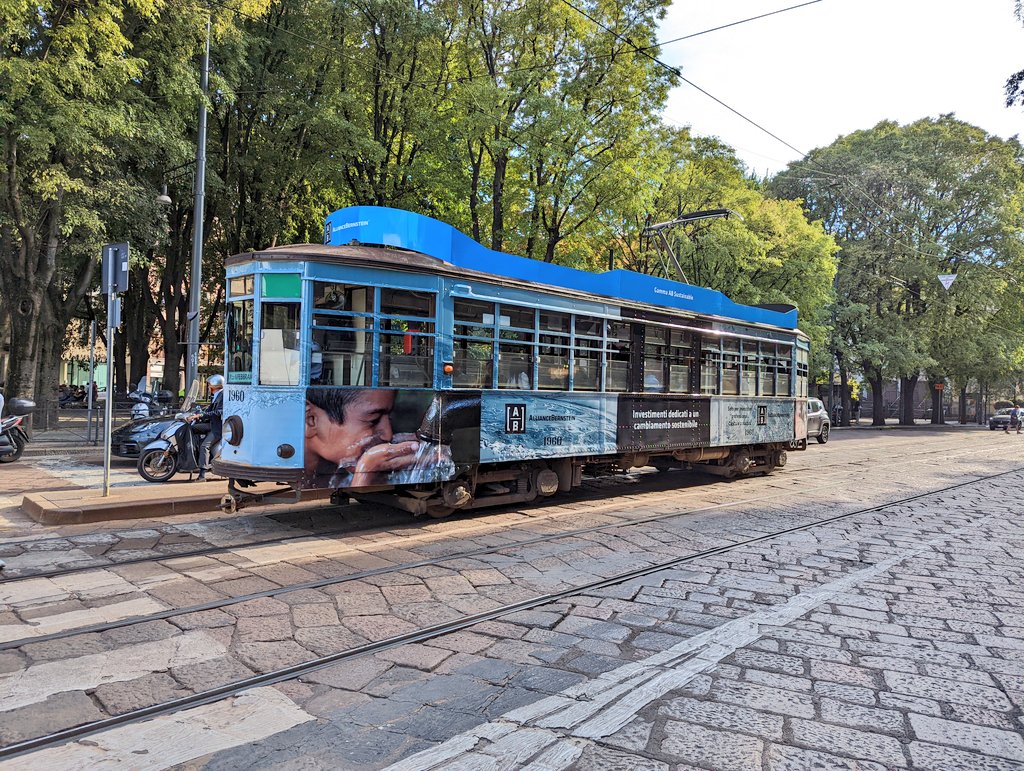


(Translohr and the Bombardier Guided Light Transit or GLT (both now owned by Alstom) are the only technologies of this type in operation outside of China.)
Another consequence of this is that it delays the expansion of systems - only one supplier means a slower pipeline of work. Translohr's failings have also delayed expansion in Padova - where other systems have been ripped up, Padova are sticking with it 😔
https://twitter.com/ChittiMarco/status/1571144400398594048?t=pP6tzLNTGvNX8y64dSQa5g&s=19
My conclusion to all this? ALWAYS ask what problem a proprietary system is solving.
When you (eventually) get a response, be it from Translohr or Tesla or the @BoringCompany or @HyperloopTT or whoever, interrogate their numbers (in most cases, they won't have any).
When you (eventually) get a response, be it from Translohr or Tesla or the @BoringCompany or @HyperloopTT or whoever, interrogate their numbers (in most cases, they won't have any).
At which point: 🚮
This is the rule of thumb: in essentially all cases, we've solved transport technology. We need to get on and build more of what we know.
So if someone's pitching something new, treat them with extreme suspicion.
This is the rule of thumb: in essentially all cases, we've solved transport technology. We need to get on and build more of what we know.
So if someone's pitching something new, treat them with extreme suspicion.
• • •
Missing some Tweet in this thread? You can try to
force a refresh