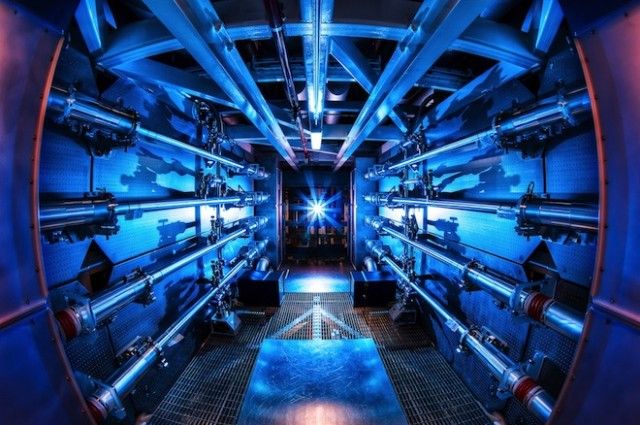
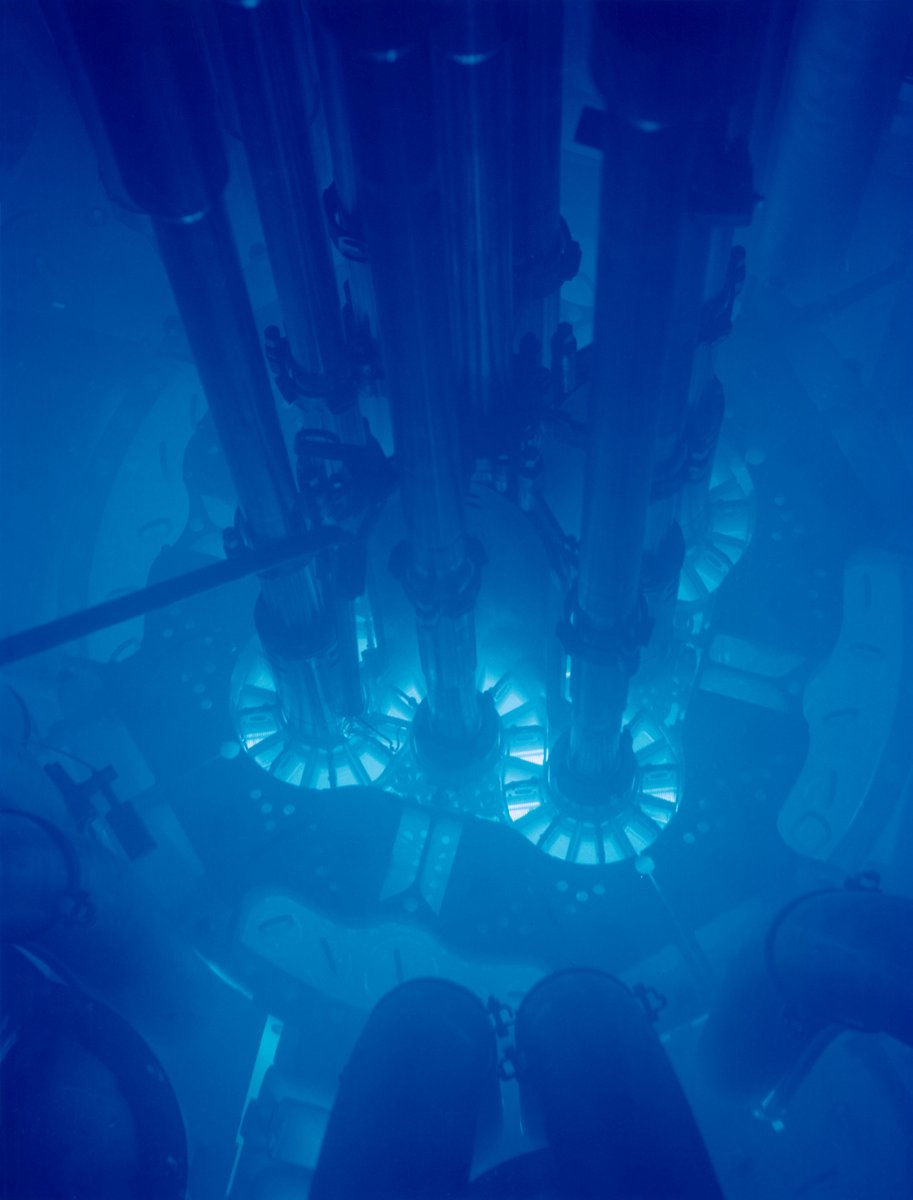
So last year I made a thread about my least favorite reactor, the tokamak fusion/fission hybrid. Today I want to tell you about my favorite oddball reactor that competes with that terrible design, the accelerator driven subcritical reactor (ADSR)! 🧵1/20 

This concept probably will never make any economic sense, but it does have some interesting engineering/physics characteristics! The idea is also very old, with the first references coming from Lawerence himself in the 50s. 2/
The basic premise is this, a powerful particle accelerator is used to generate neutrons via spallation inside of the core of a reactor. The reactor is subcritical (i.e. it can't sustain a chain reaction), but the accelerator neutrons cause many fission reactions. 3/
Then the heat is turned into electricity and a portion of that power is fed back into the accelerator to keep the whole machine rolling! Typically the accelerator of choice is a ~1 GeV proton beam since those are quite good at making neutrons efficiently. 4/
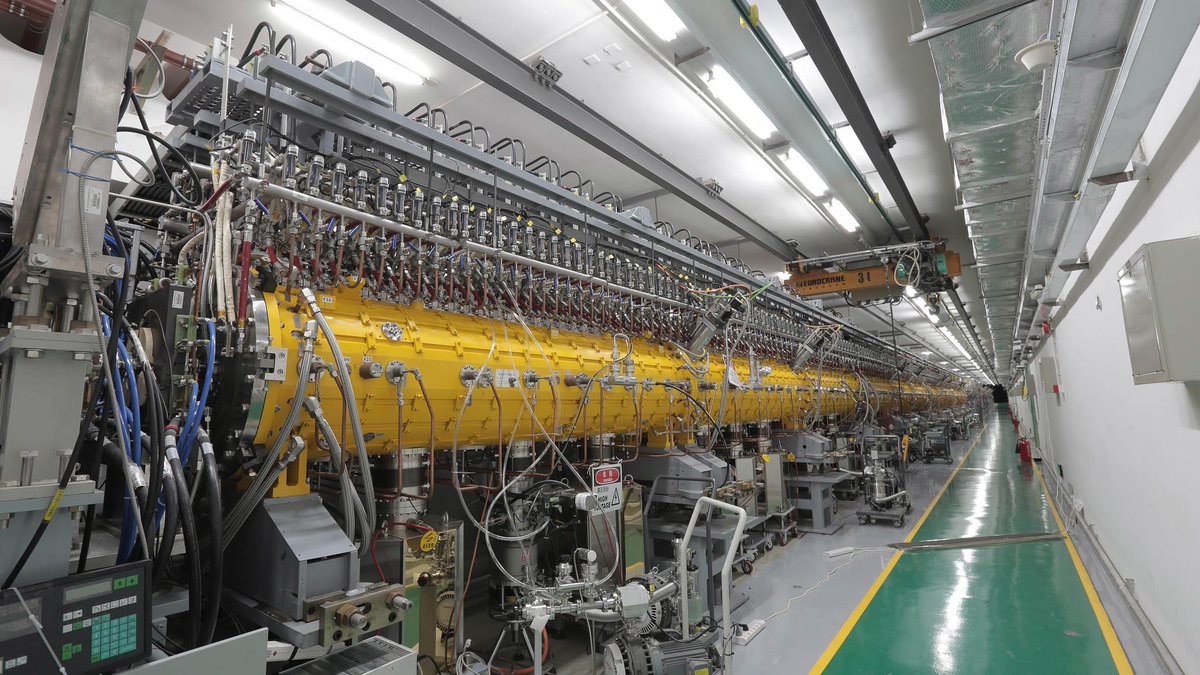
There are a couple of interesting advantages to this concept that are worth discussing, but the obvious disadvantage is the accelerator! Such a machine would not be cheap (~$1B) or small (~0.5 km), but at least modern tech makes them reliable (>0.9% CF). 5/
The advantages are:
1) No possibility for a criticality accident since the reactor can't go critical. It *can* still melt though! Decay heat is always something to watch. Most ADSR designs rely on molten fuels to handle accelerator damage, which would also help with melting. 6/
1) No possibility for a criticality accident since the reactor can't go critical. It *can* still melt though! Decay heat is always something to watch. Most ADSR designs rely on molten fuels to handle accelerator damage, which would also help with melting. 6/
2) Easy reactor control via accelerator tuning. An accelerator can be changed in operating parameters in milliseconds, so in theory no control elements are needed for an ADSR. I am not sure how much this really matters but it is neat! 7/
3) Fuel cycle agnostic. There are ADSR designs that use LEU, NU, thorium, LWR spent fuel and mixes of the various options! The flexibility with the accelerator provides a lot of neat options. 8/
There is even a proposed design that starts with NU and Th and self breeds! It takes 2 years to get to maximum power generation, but that is a neat trick if you ask me! 9/
4) Efficient waste burning. Now this *IS* really interesting! ADSRs can efficiently consume minor actinides as well as some fission fragments! The incredibly high neutron flux (>10^16) and ultra-hard to thermal spectrum can even burn annoying waste like Tc-99. 10/20
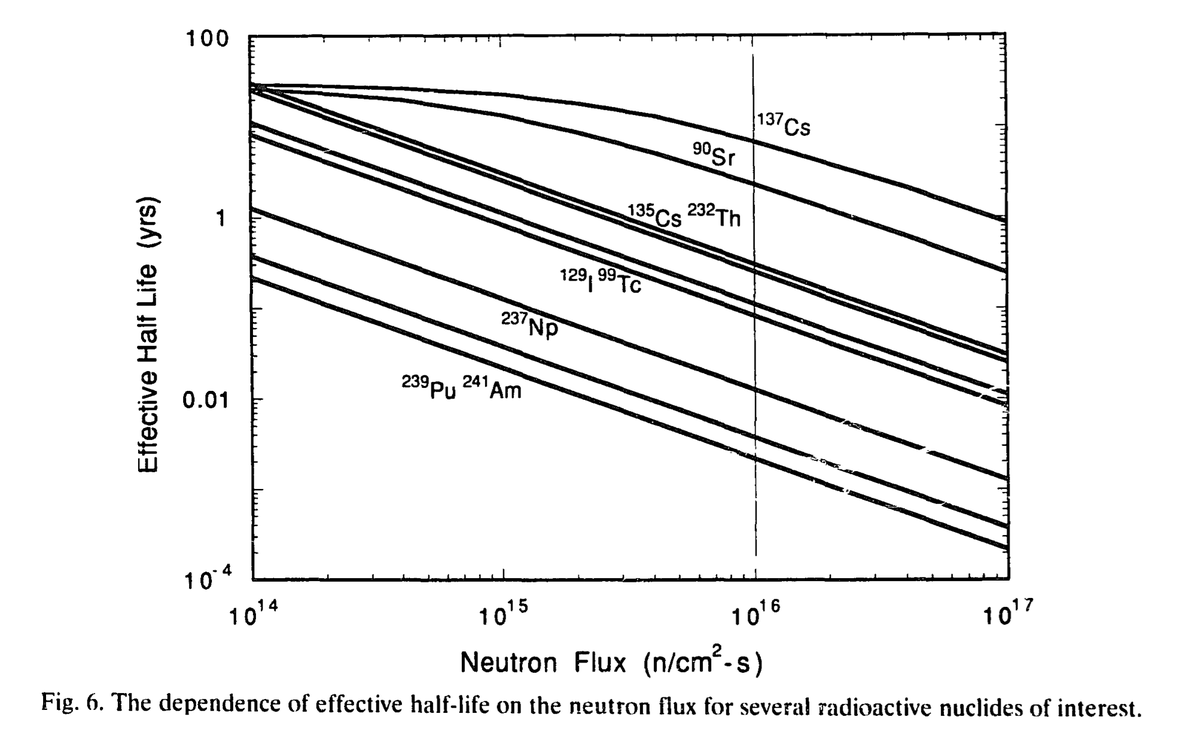
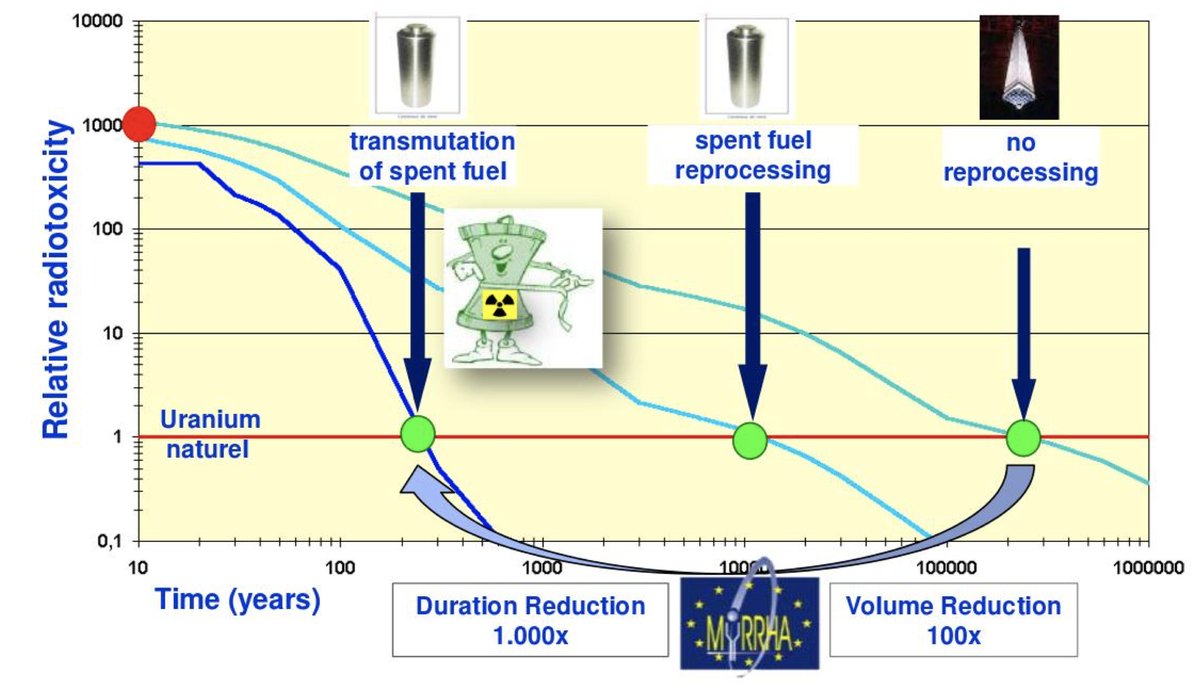
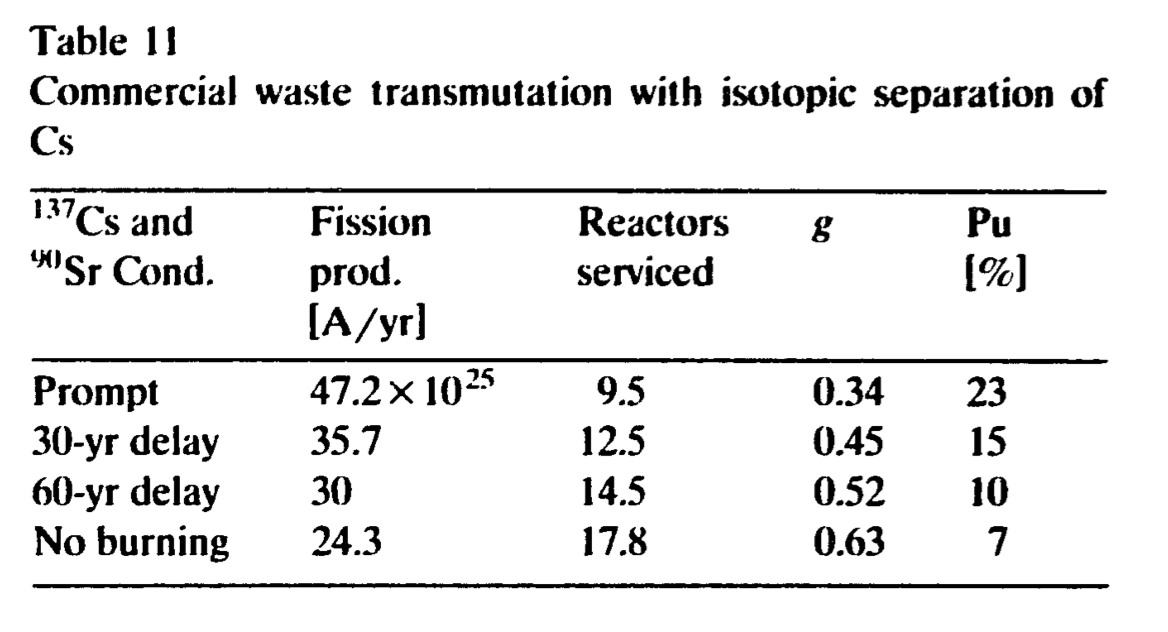
The consumption of fission fragments and minor actinides from traditional reactors is one use case pitched for ADSRs. Typically something like 10 LWRs can be "serviced" by a single ADSR, while making power on top of it! 11/20
Now you might be saying "Wait, that sounds like the fission/fusion hybrid!? What makes this ADSR special?". Great question! There are 4 really important differences that make ADSRs interesting and fusion/fission hybrids silly in my opinion. 12/20
First, accelerators exist RIGHT NOW and are highly reliable and efficient devices. We have neutron producing accelerators that efficiently make >10^16 flux and operate with 90% CF. No fusion reactors currently exist, so getting to a hybrid will be harder comparatively. 13/20
Second, accelerators can send their beam into the fission core from far away. The expensive part is perfectly safe and not being irradiated! A fusion/fission hybrid has to keep the magnets/other fusion stuff right in the thick of it getting banged up! 14/20
Third, accelerators have little to no stored energy! Magnetic fusion reactors can store tons of TNT worth of magnetic energy that must be kept safe from a quench while being irradiated and heated! Accelerators may have a couple MJ at most in magnets that are safe. 15/20
Fourth, we have built ADSRs already and are building more! The MYRRHA project in Belgium is the largest project, but Japan has built a test ADSR and you can even argue that experiments with U, Pu or Th in front of beams count. Technically I have operated one! 16/20
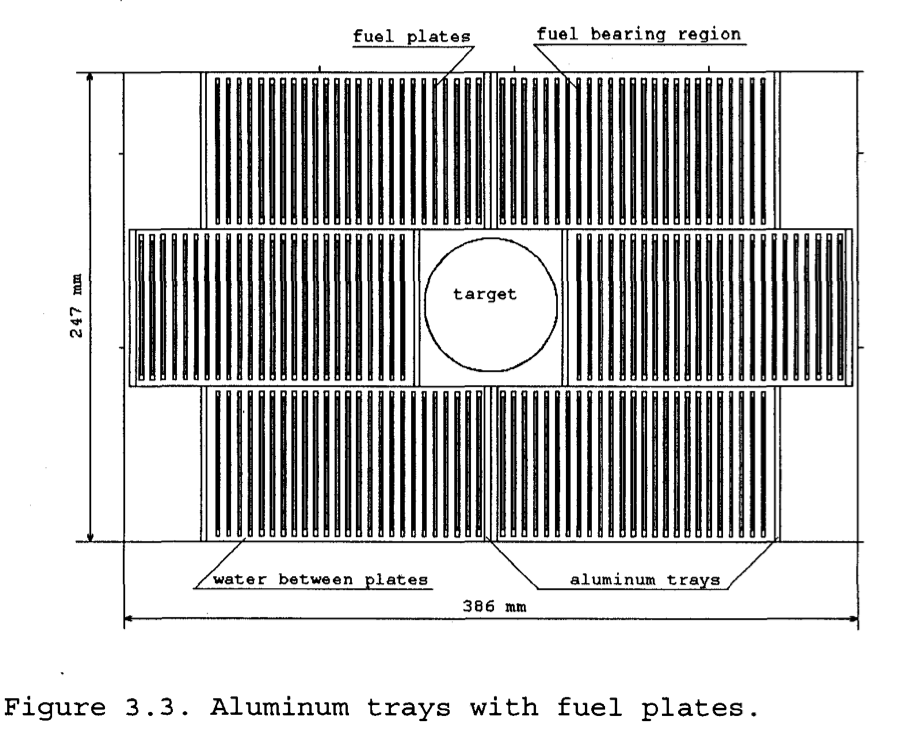
My alma matter even built a proper ADSR using our subcritical assembly and a 40 MeV electron LINAC! Electrons make high energy gamma rays that then cause fission. It isn't efficient, but it sure is compact! 17/20 inis.iaea.org/search/search.…
Now you might be thinking "Well this sounds great, let's build one!". There are a couple hold-ups to get over. First and foremost is cost... This plot is ADSR cost/sodium fast reactor cost vs accelerator efficiency for various reactor k's. Notice how it never gets to 1... 18/20
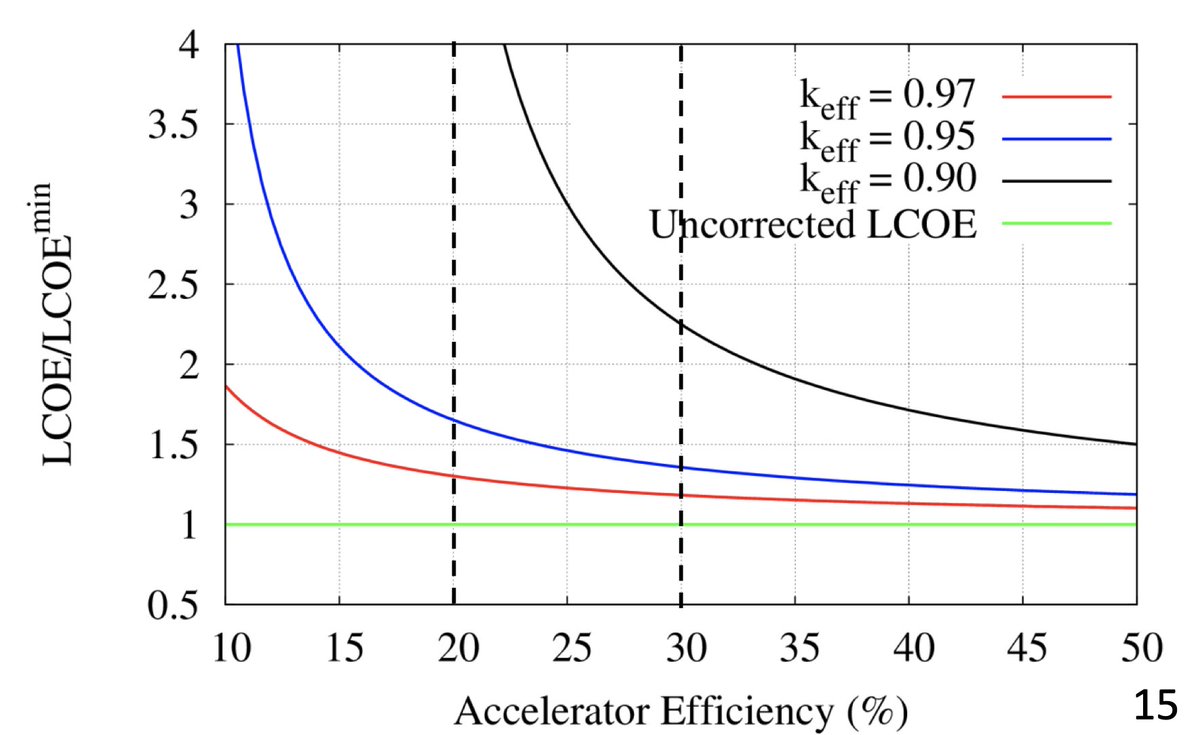
The added cost and complexity of the accelerator is just hard to overcome! We also need to drive efficiency up quite a bit to be competitive! Although accelerators *can* hit >40% efficiency (>80% in theory), most aren't there right now. We also need way more current! 19/20
So over-all the ADSR is a really neat idea, but I am not sure if we will ever see a commercial version. There surely will be more R&D versions built though! For certain isotope production schemes they may also be of interest. 20/20
References to check out!
sckcen.be/en/expertises/…
osti.gov/etdeweb/biblio…
indico.cern.ch/event/509528/c…
indico.cern.ch/event/509528/c…
indico.cern.ch/event/509528/c…
info.ornl.gov/sites/publicat…
large.stanford.edu/courses/2013/p…
sckcen.be/en/expertises/…
osti.gov/etdeweb/biblio…
indico.cern.ch/event/509528/c…
indico.cern.ch/event/509528/c…
indico.cern.ch/event/509528/c…
info.ornl.gov/sites/publicat…
large.stanford.edu/courses/2013/p…
• • •
Missing some Tweet in this thread? You can try to
force a refresh