

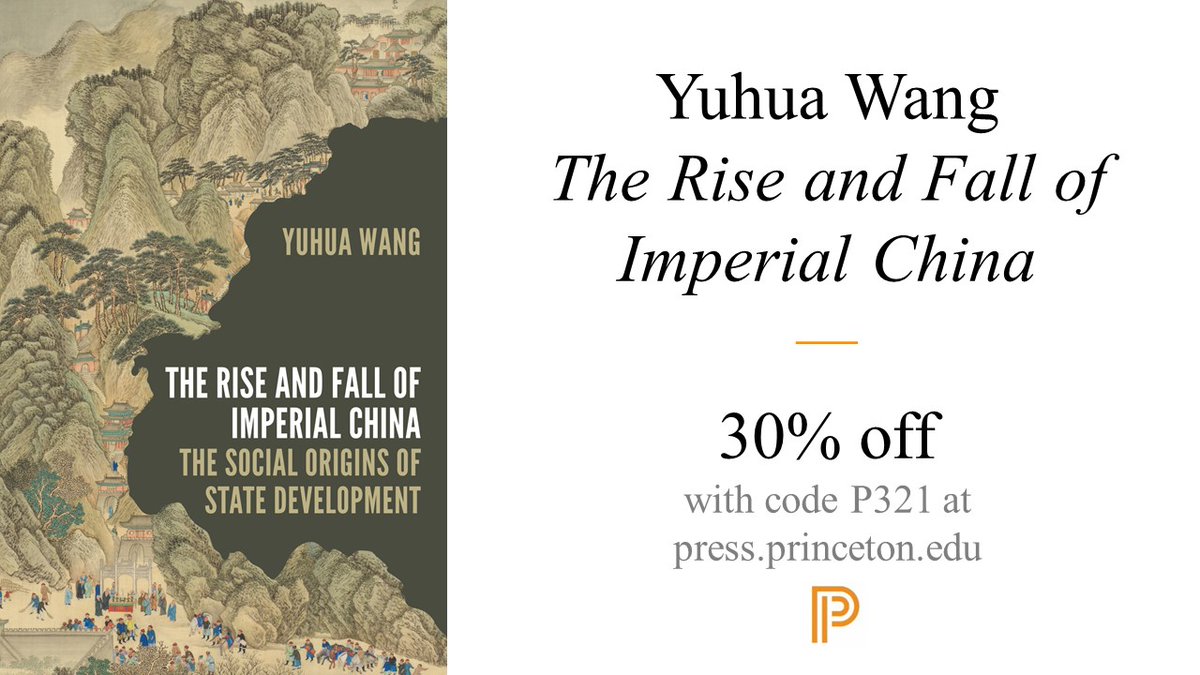
My @PrincetonUPress book The Rise and Fall of Imperial China will start shipping next week. In the preface, I said this is my dream book. Here are the main takeaways: 1/n 
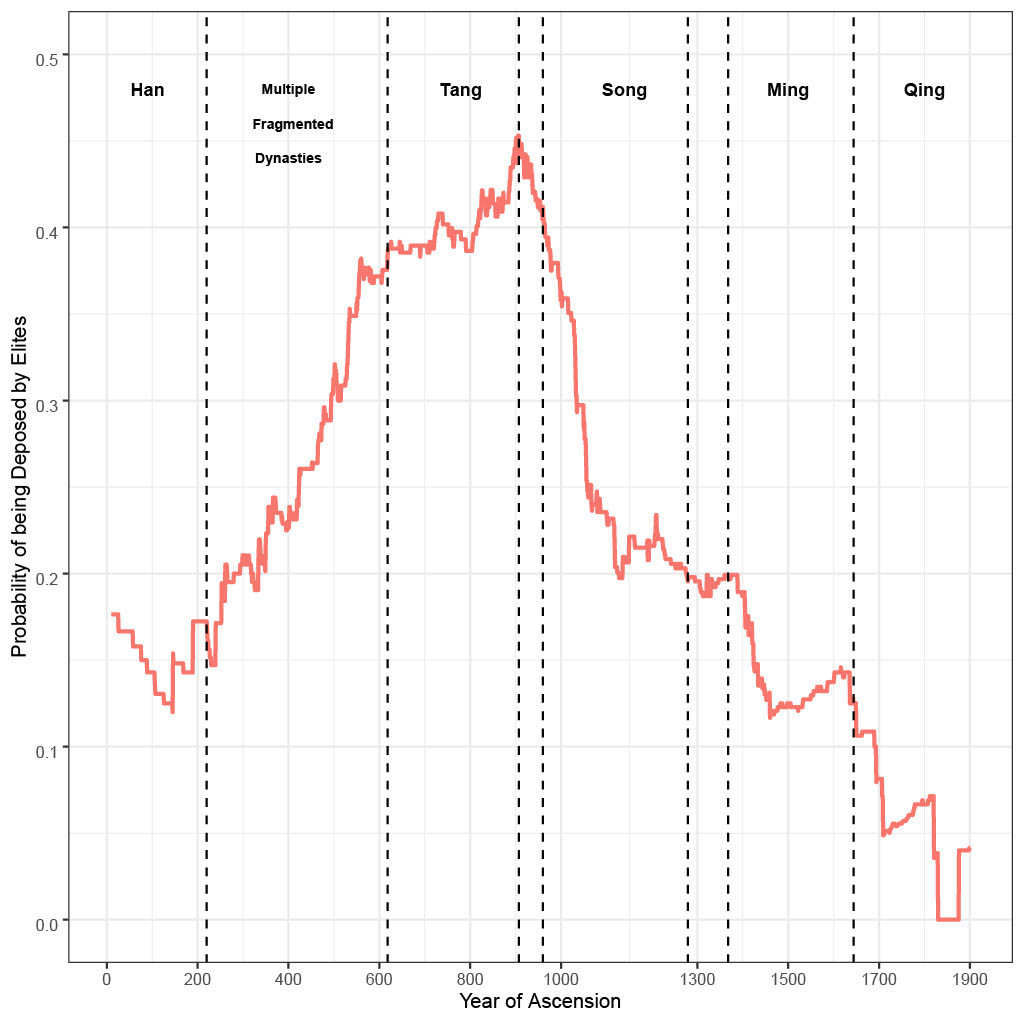
During 2,000 years of imperial rule, Chinese emperors were becoming increasingly insecure—before they became extremely secure. Their probability of being deposed by elites peaked in the 10th century and gradually declined afterwards. 2/n
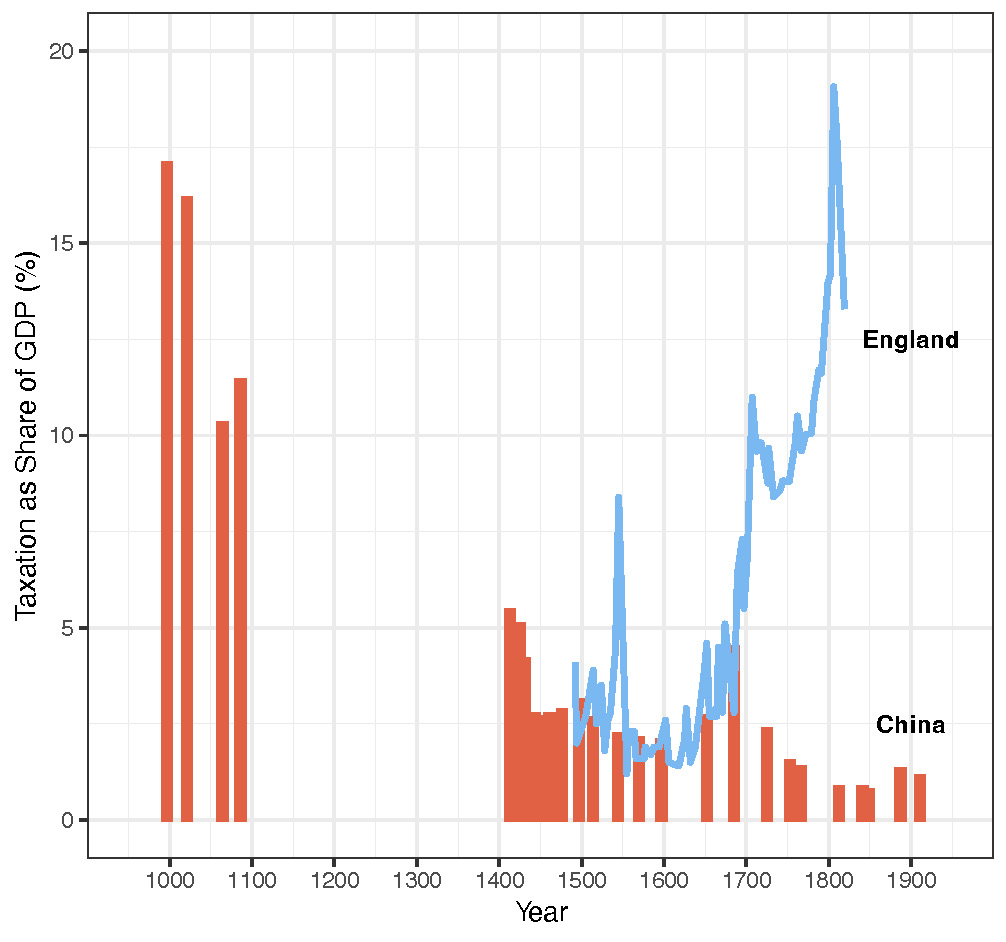
As emperors' tenures lengthened, however, the Chinese state gradually declined. Take fiscal strength as an example. In the early Song era, the Chinese government taxed over 15% of its economy. This percentage dropped to almost 1% during the Qing Dynasty. 3/n
The central puzzle that motivates this book is why short-lived emperors often ruled a strong state while long-lasting emperors governed a weak one. 4/n
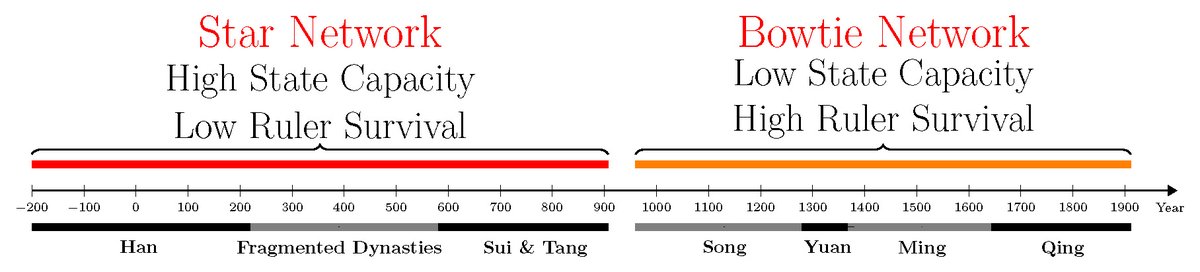
My overarching argument is that Chinese rulers faced a fundamental tradeoff that I call the sovereign's dilemma: a coherent elite that could take collective actions to strengthen the state was also capable of revolting against the ruler. 5/n
To have a strong state, the ruler needs a coherent elite who can commit to the common goal of state building. I characterize the structure of such an elite as a star network in which central elites are connected with each other via social ties (e.g., intermarriages): 6/n

However, a star network threatens the survival of the ruler. Instead, the ruler can shape the structure of the elites (when opportunity arises) into a bowtie network. Here, the elites are disconnected with each other. They are also regionally based. 7/n

A bowtie network, while conducive to ruler survival, undermines the elites' capacity to build a strong state because they can't trust each other for collective action. Their local interests also weaken their incentive to strengthen the central state. 8/n
The Chinese elites started as a star network. After a mass rebellion physically destroyed the medieval elites in the 9th century, Chinese emperors were able to reshape elite social relations into a bowtie network. 9/n
In the early 20th century, imperial China fell. It fell not because of the Western intrusion nor because of internal rebellions. It collapsed because the emperors’ relentless pursuit of power and survival through fragmenting the elites crippled the Chinese state. 10/n
If 2,000 years of Chinese history tells us something, it is that the country often suffers from a ruler who refuses to leave. 11/n
30% discount available on PUP's website: press.princeton.edu/books/paperbac… 12/n
• • •
Missing some Tweet in this thread? You can try to
force a refresh




