@Willard1951 @ncdave4life dear James, amazing how we use short term bias argument. And how we really neglect paleo reconstructions when its favorable to our arguments. There is a tsunami of paleo climate papers pointing out greenland, and Arctic in general, has experienced huge fluctuations through time.
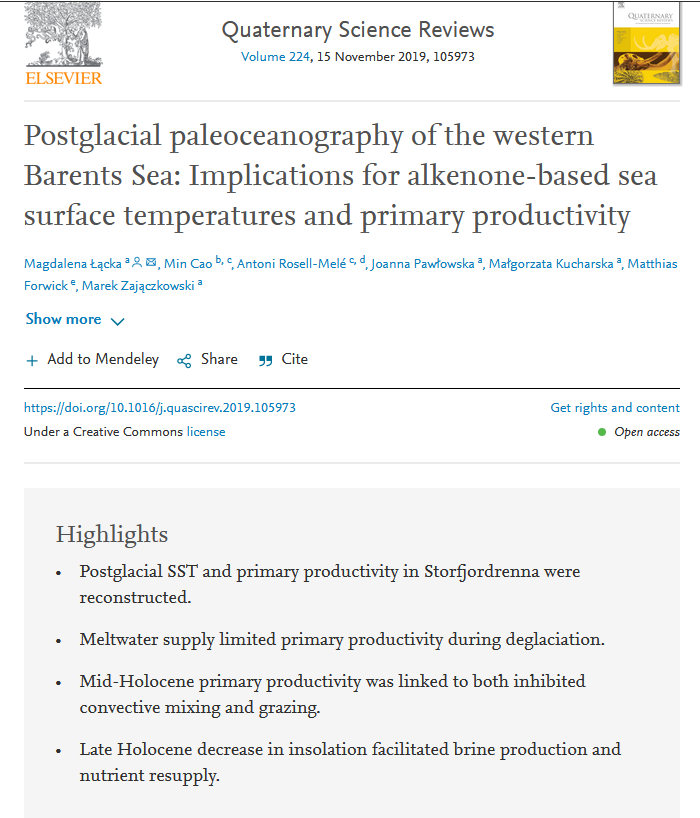
@Willard1951 @ncdave4life Łacka et al. 2019, from about 9000 to 3500 years ago, western Barents Sea region’s temperatures fluctuated between 3°C and 13°C. Evidence also suggests this region of the Arctic was sea ice-free throughout most of the mid-Holocene 

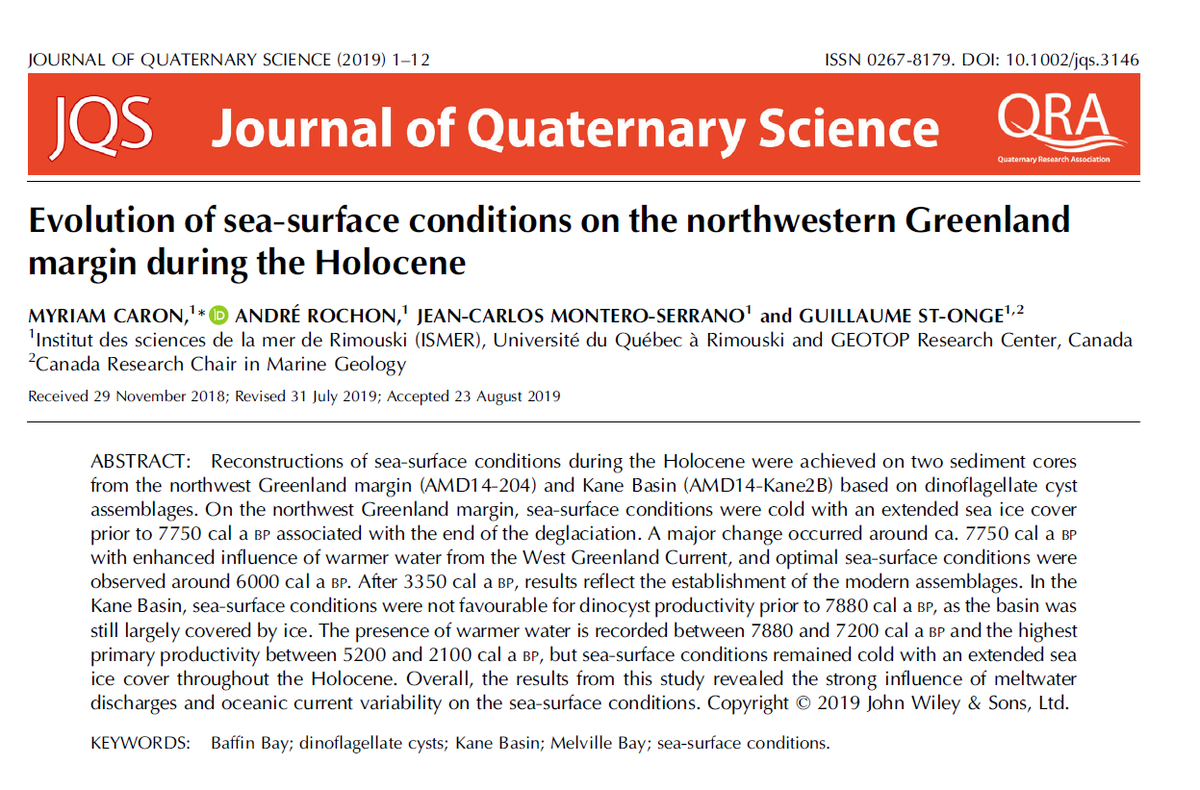
@Willard1951 @ncdave4life Reconstruction of Arctic (NW Greenland) sea ice cover (Caron et al., 2019) reveals modern day sea ice is present multiple months longer than almost any time in the last 8000 years…and today’s summer sea surface temperatures are among the coldest of the Holocene.

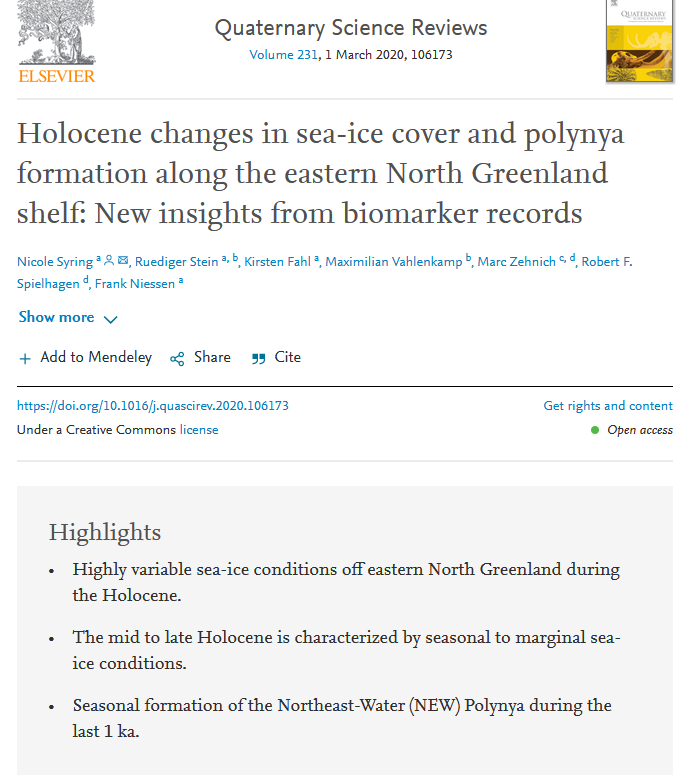
@Willard1951 @ncdave4life Syring et al., 2020, biomarker evidence – presence warmth species Armeria scabra and Mytilus edulis, and proxy presence or absence of sea ice – suggest not only warmer (4 to 5°C) northern Greenland temperatures 10,000 to 8500 years ago, but effectively sea ice-free conditions
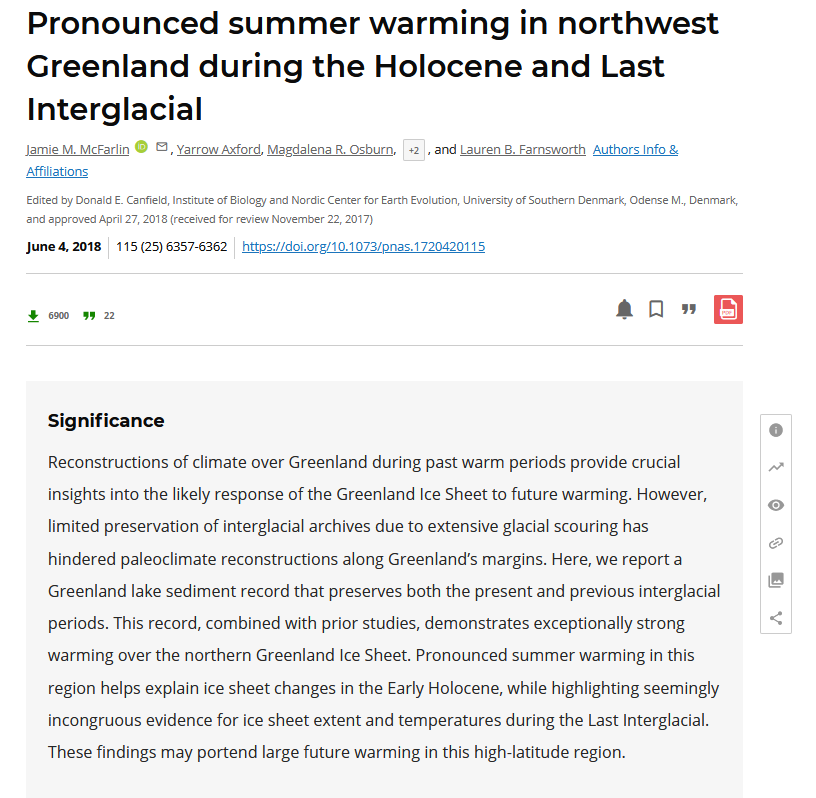
@Willard1951 @ncdave4life McFarlin et al 2018, northwestern Greenland was 4-7°C warmer than 1952-2014 during the Early Holocene, and 5.5 to 8.5°C warmer than modern during the last interglacial (~130,000 years ago)
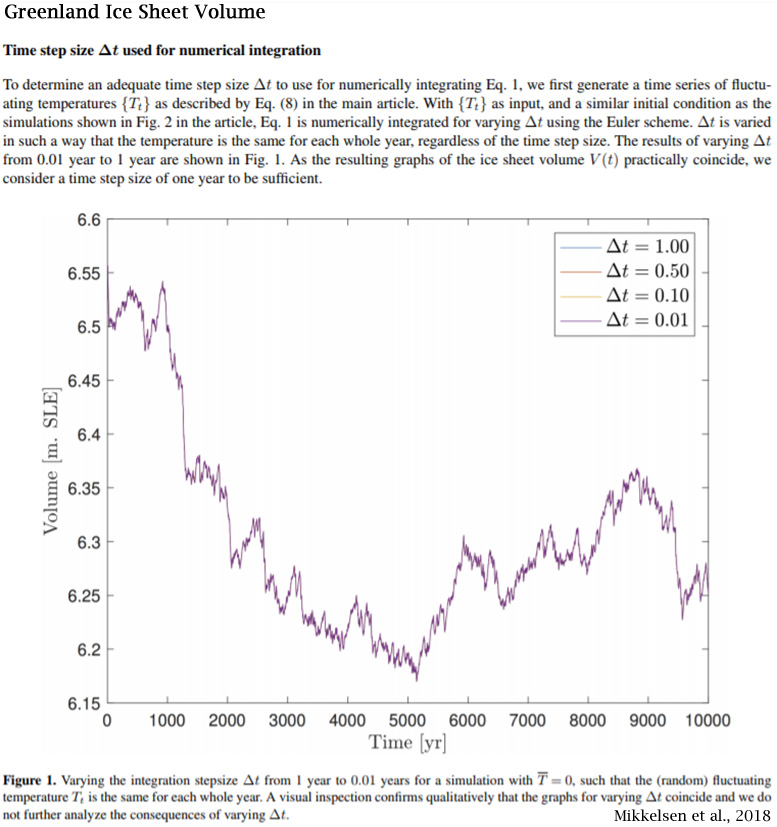
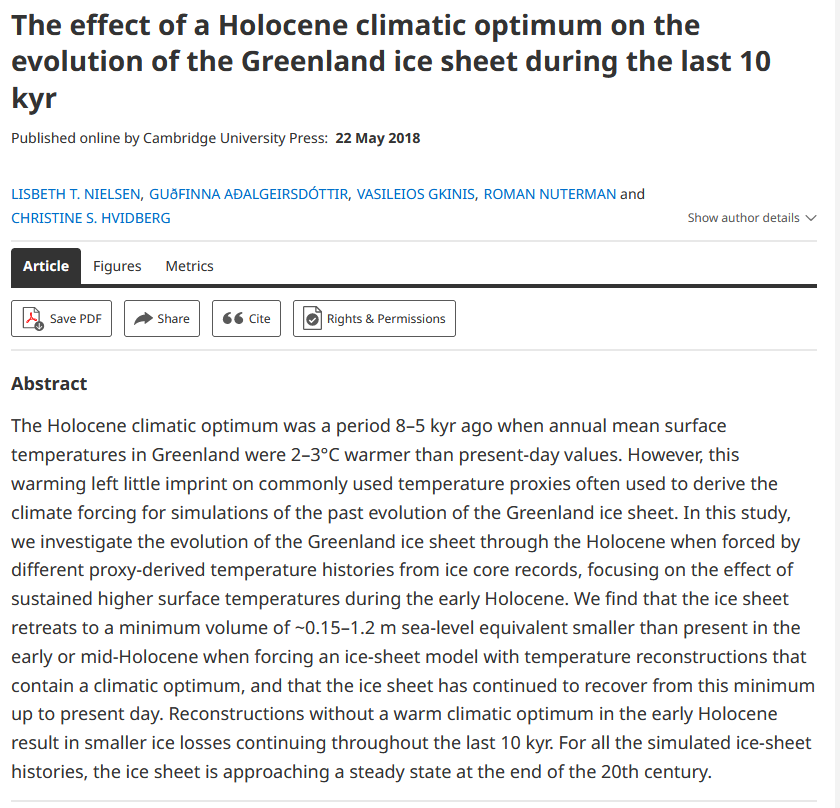
@Willard1951 @ncdave4life Mikkelsen et al. 2018, late Holocene expansion of Greenland’s ice volume and ice area extending into the modern period. Nielsen et al., 2018, Geological evidence of the relative sea-level records around Greenland suggest a minimum in ice sheet volume during the mid-Holocene
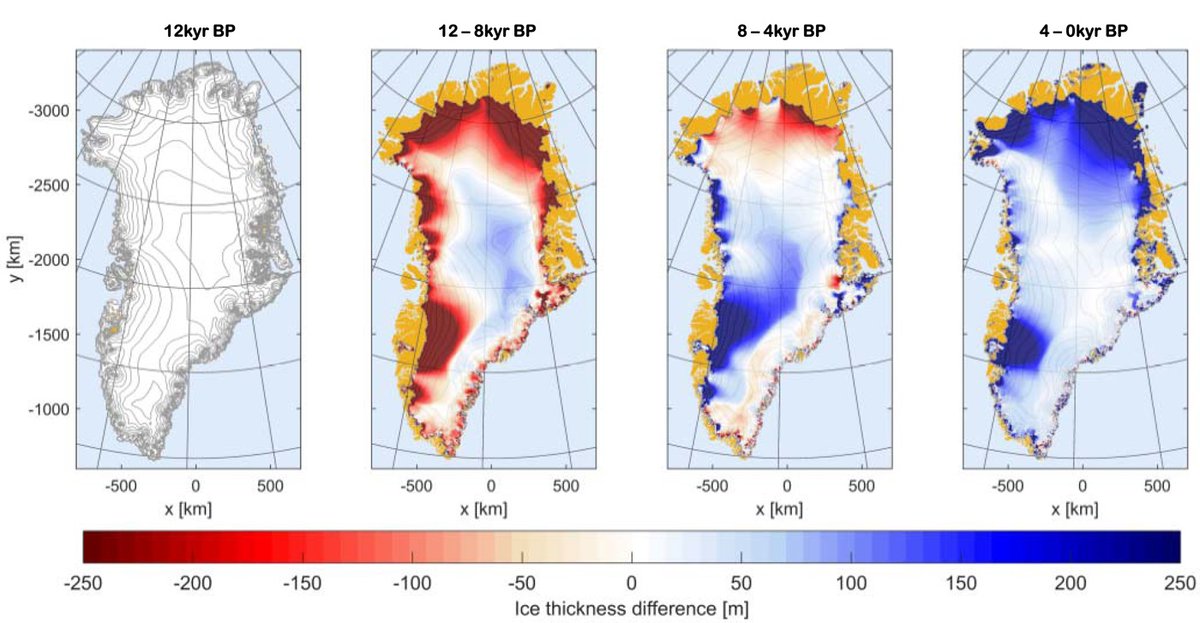
@Willard1951 @ncdave4life Westhoff et al., 2022 The most prominent melt events of the last 10,000 years centered around the Medieval Warm Period, 986 CE. Elevation of the Greenland ice sheet has grown by 0.4 km since the Early Holocene, as summer temperatures 3 ± 0.6°C warmer Early Holocene compared today
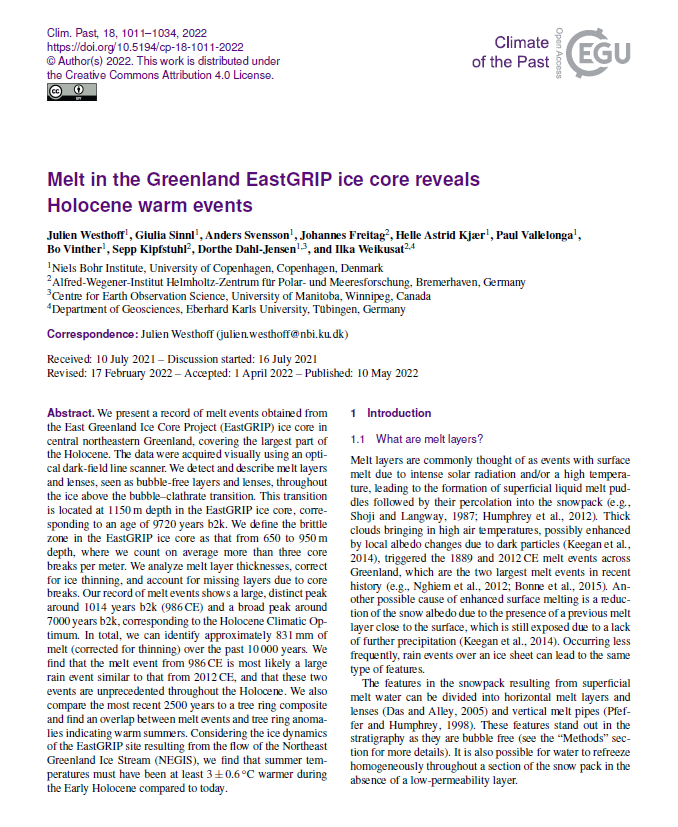

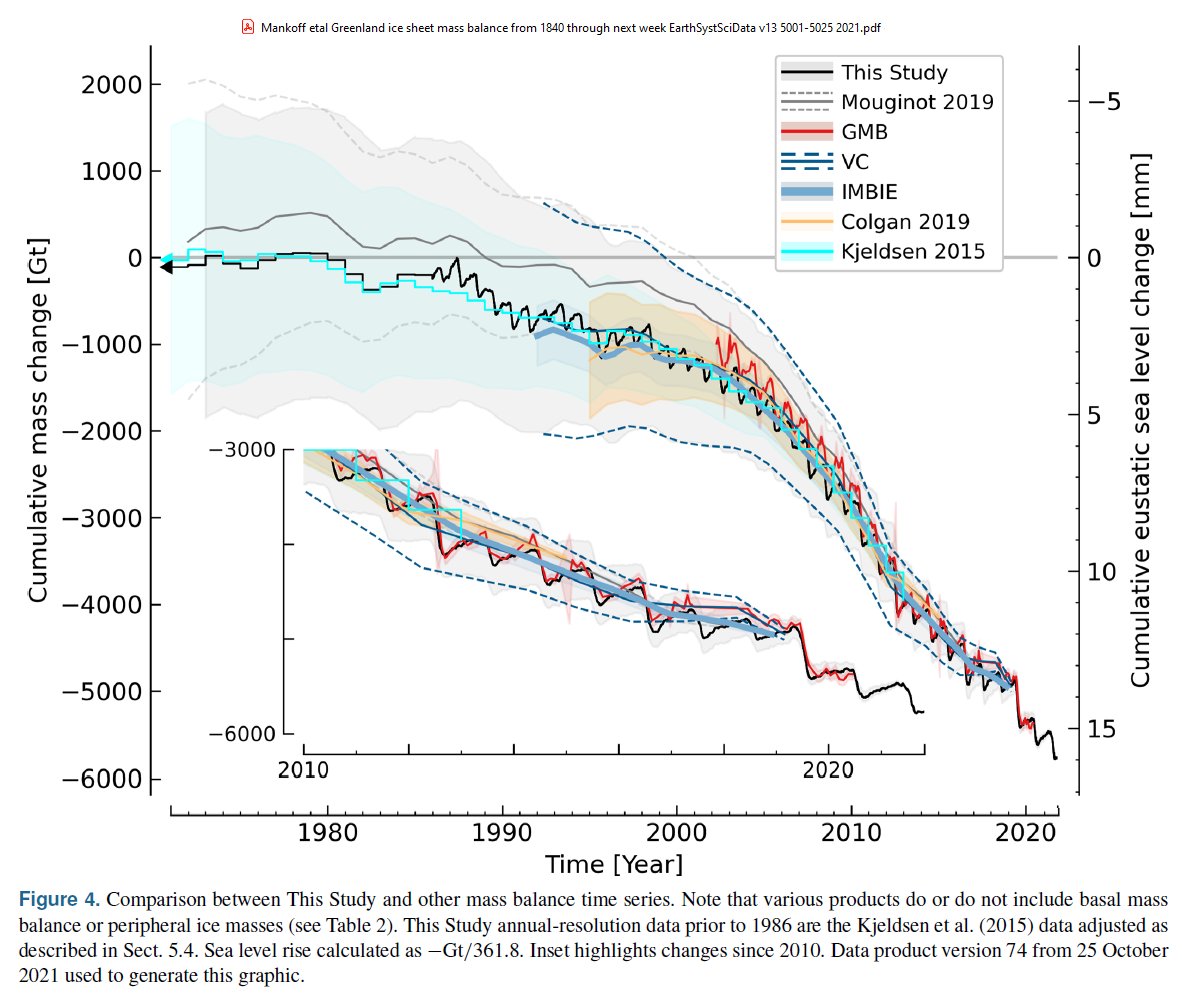
@Willard1951 @ncdave4life The evidence of natural variability, temperature variability, sea ice and glaciers in Greenland in particular, and Arctic in general, has experienced huge climate changes just 10.000y ago to the present. Avoiding the long term trend paleo reconstructions is a huge scientific bias
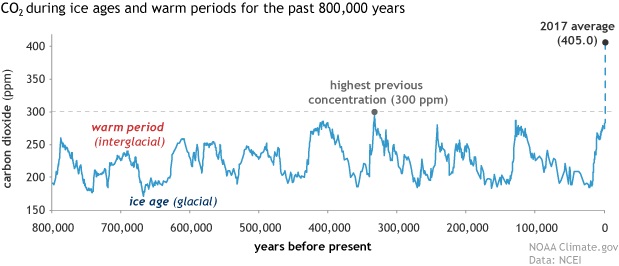
@Willard1951 @ncdave4life So coming with modern measurements starting in 1980 is a huge scientific bias. Why don't we connect to the last 10.000 years? when its convenient? When its convenient, we connect CO2 low resolutions measurements to modern high resolutions measurements, right? :-)
• • •
Missing some Tweet in this thread? You can try to
force a refresh