"Labor hoarding" has been a buzzy term among some economists and pundits to explain the relative resilience of the labor market despite a worsening economic outlook.
But the phrase doesn't hold up under examination, George Pearkes (@pearkes) writes.👇
businessinsider.com/labor-shortage…
But the phrase doesn't hold up under examination, George Pearkes (@pearkes) writes.👇
businessinsider.com/labor-shortage…
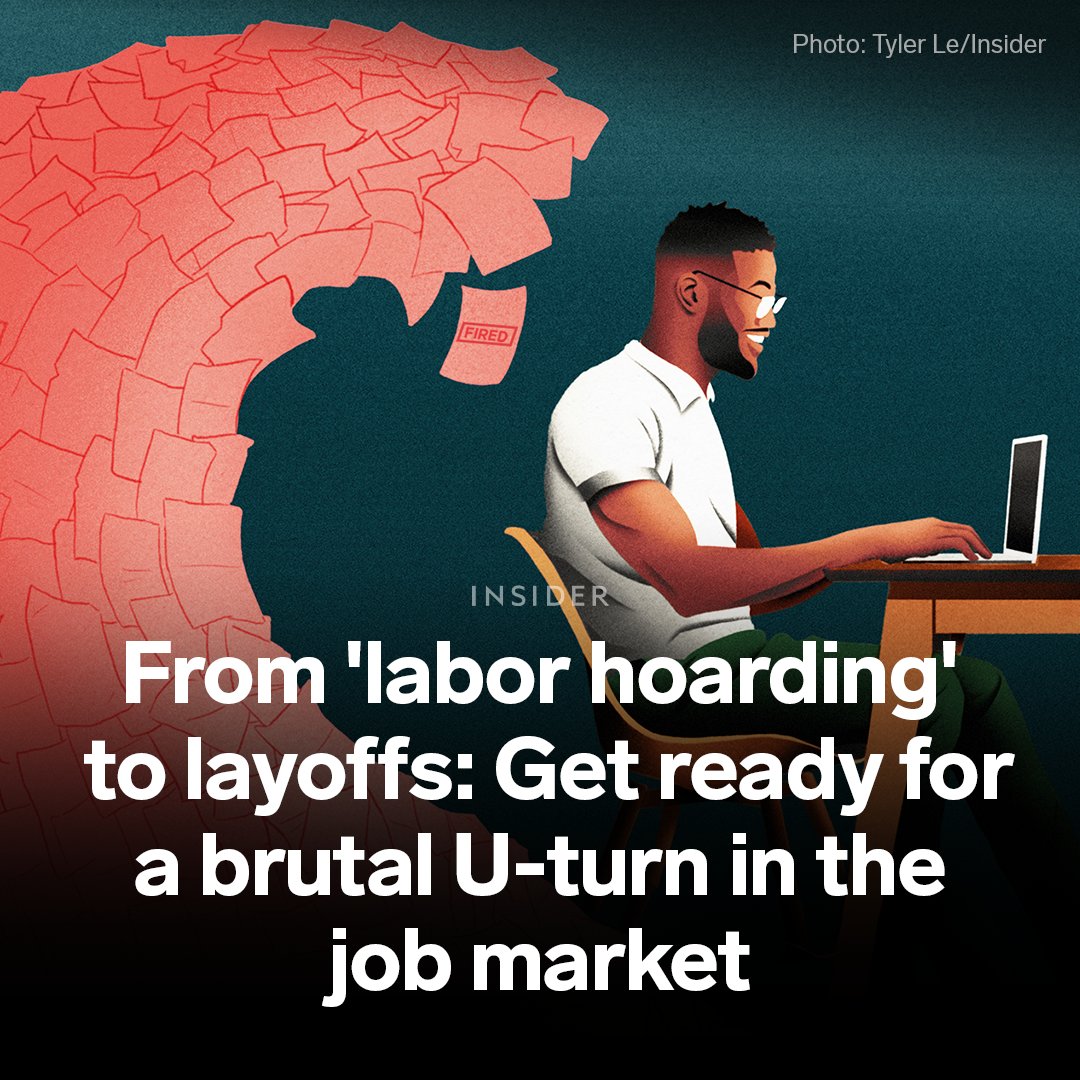
Labor hoarding is basically an assumption about the bet companies are making on the future of the labor market and customer demand.
It could theoretically soften a recession by keeping workers in their jobs even when employers see customer demand drop.
businessinsider.com/labor-shortage…
It could theoretically soften a recession by keeping workers in their jobs even when employers see customer demand drop.
businessinsider.com/labor-shortage…
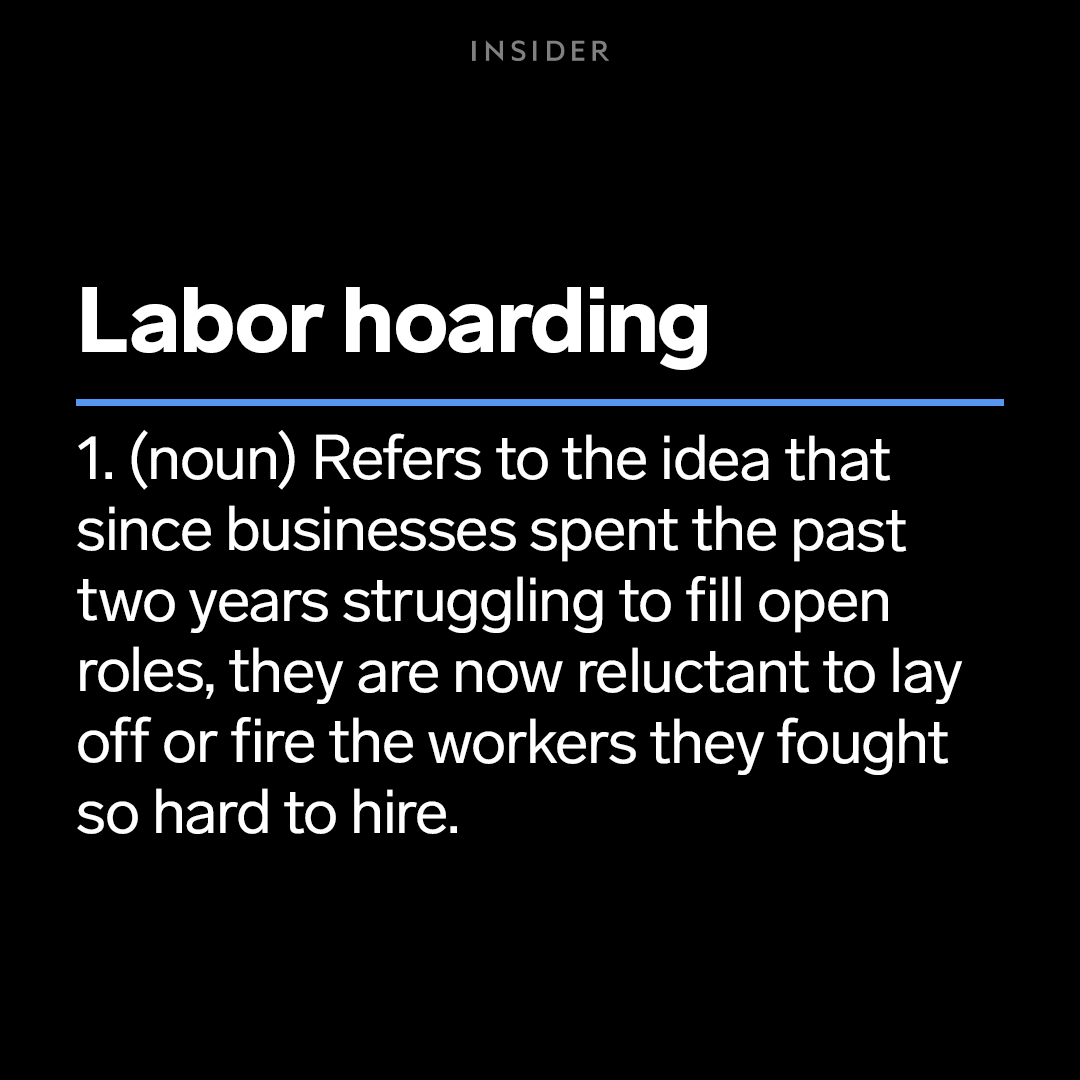
If companies assume labor markets will be tight, employers may be willing to suffer smaller profits or weaker productivity to hold on to workers.
If they assume labor markets will be loose, companies will eliminate jobs as a first line of defense.
businessinsider.com/labor-shortage…
If they assume labor markets will be loose, companies will eliminate jobs as a first line of defense.
businessinsider.com/labor-shortage…
This was one explanation for the early 2010s' hiring surge.
Now, the labor market is already tight, so proponents assume businesses are betting that predictions of a recession are overblown and they need to be ready for customer demand to stay strong.
businessinsider.com/labor-shortage…
Now, the labor market is already tight, so proponents assume businesses are betting that predictions of a recession are overblown and they need to be ready for customer demand to stay strong.
businessinsider.com/labor-shortage…
In this narrow sense, labor hoarding is a very real thing: Businesses may be slightly slower to lay off people than they otherwise would have been, even in the face of slowing customer demand.
But Pearkes says it's important not to overstate this shift.
businessinsider.com/labor-shortage…
But Pearkes says it's important not to overstate this shift.
businessinsider.com/labor-shortage…
While layoffs are very low, they are starting to rise.
Today, high but falling hiring rates show businesses are proving very successful at attracting workers but putting less effort into it.
businessinsider.com/labor-shortage…
Today, high but falling hiring rates show businesses are proving very successful at attracting workers but putting less effort into it.
businessinsider.com/labor-shortage…
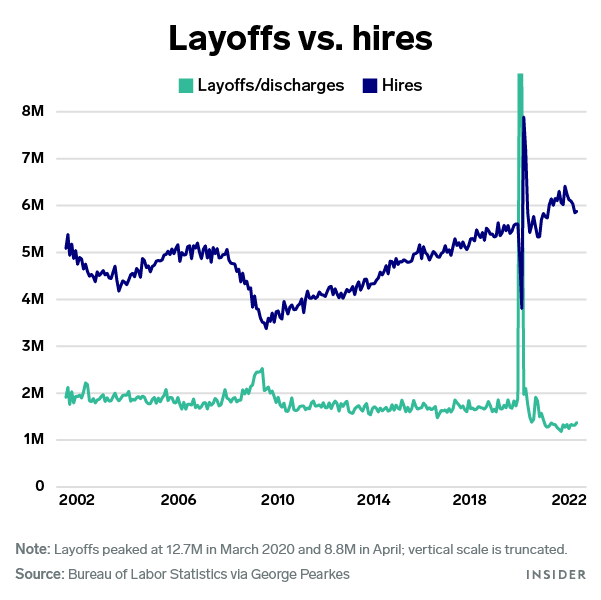
Job losses through the end of 2021 were low but relatively similar to before the pandemic.
If businesses were desperate to hang on to employees, as the labor-hoarding theory goes, we would expect to see more extreme declines in firing, Pearkes writes.
businessinsider.com/labor-shortage…
If businesses were desperate to hang on to employees, as the labor-hoarding theory goes, we would expect to see more extreme declines in firing, Pearkes writes.
businessinsider.com/labor-shortage…
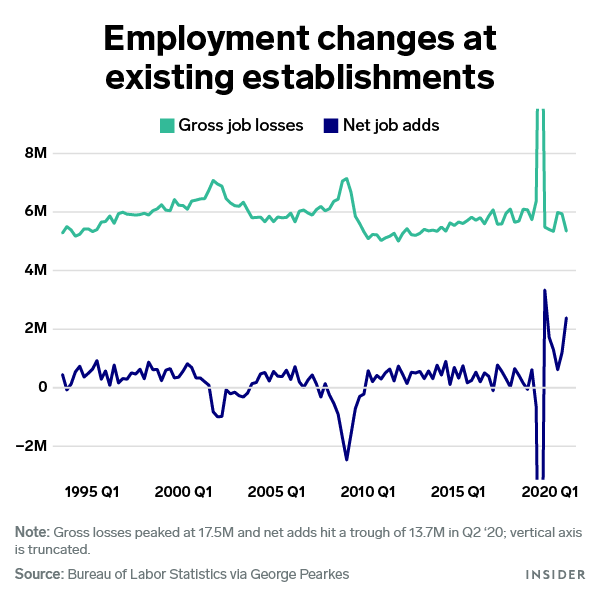
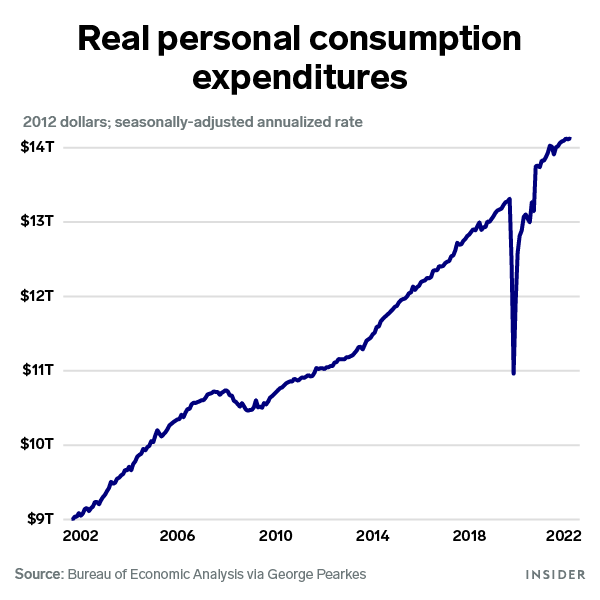
So far in 2022, growth in real consumer spending has slowed but not yet declined.
Today's "labor hoarding" could turn out to be a late reaction from employers who're not yet responding to weaker demand, Pearkes writes.
businessinsider.com/labor-shortage…
Today's "labor hoarding" could turn out to be a late reaction from employers who're not yet responding to weaker demand, Pearkes writes.
businessinsider.com/labor-shortage…
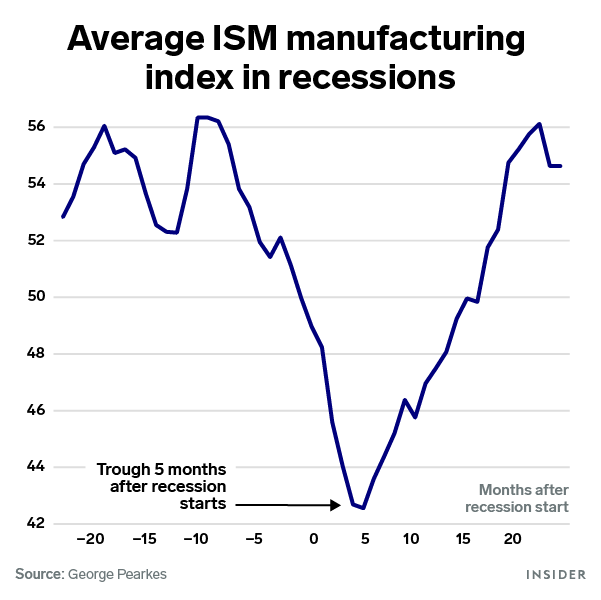
The @ism's survey of senior executives at manufacturing firms can capture real-time economic conditions well, Pearkes says.
The index typically begins to contract the month before a recession starts and hits the bottom about half a year after the start.
businessinsider.com/labor-shortage…
The index typically begins to contract the month before a recession starts and hits the bottom about half a year after the start.
businessinsider.com/labor-shortage…
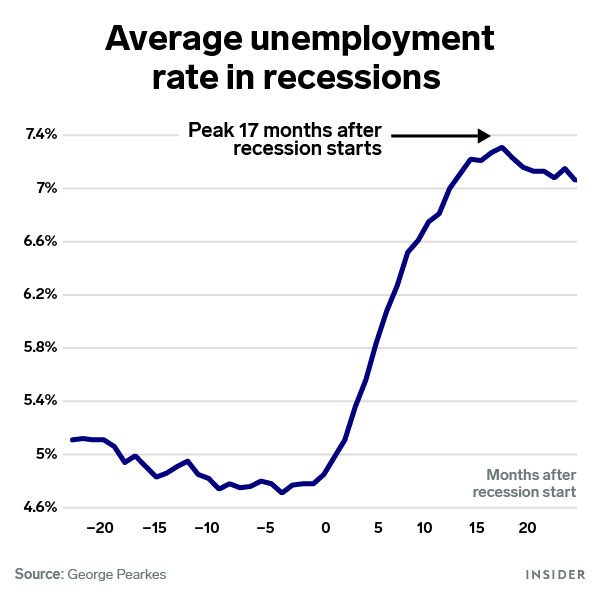
Unemployment, on the other hand, may slightly tick up around the start of a recession, but it doesn't peak until 1 ½ years after the start.
Just because companies are holding on to workers now doesn't mean that will be the case when things get ugly.
businessinsider.com/labor-shortage…
Just because companies are holding on to workers now doesn't mean that will be the case when things get ugly.
businessinsider.com/labor-shortage…
Because labor markets lag, caution around rosy predictions for how companies will react to a weakening economy is always needed.
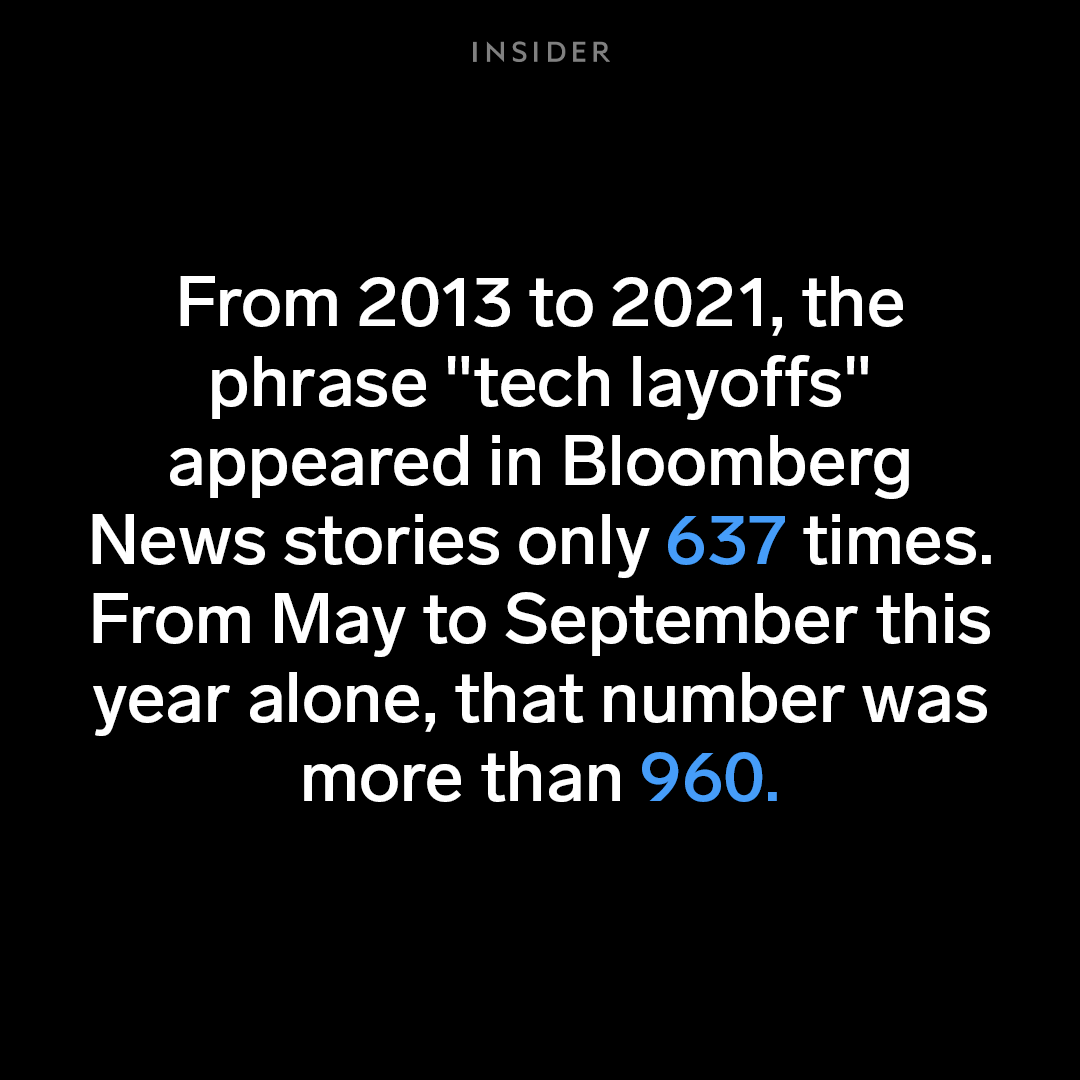
There are signs from specific sectors hit hardest by the recent market mess that layoffs are coming.
businessinsider.com/labor-shortage…
There are signs from specific sectors hit hardest by the recent market mess that layoffs are coming.
businessinsider.com/labor-shortage…
The theory of labor hoarding rests on hopeful assumptions, Pearkes writes.
Subscribe to @thisisinsider to read more. 👇
businessinsider.com/labor-shortage…
Subscribe to @thisisinsider to read more. 👇
businessinsider.com/labor-shortage…
• • •
Missing some Tweet in this thread? You can try to
force a refresh