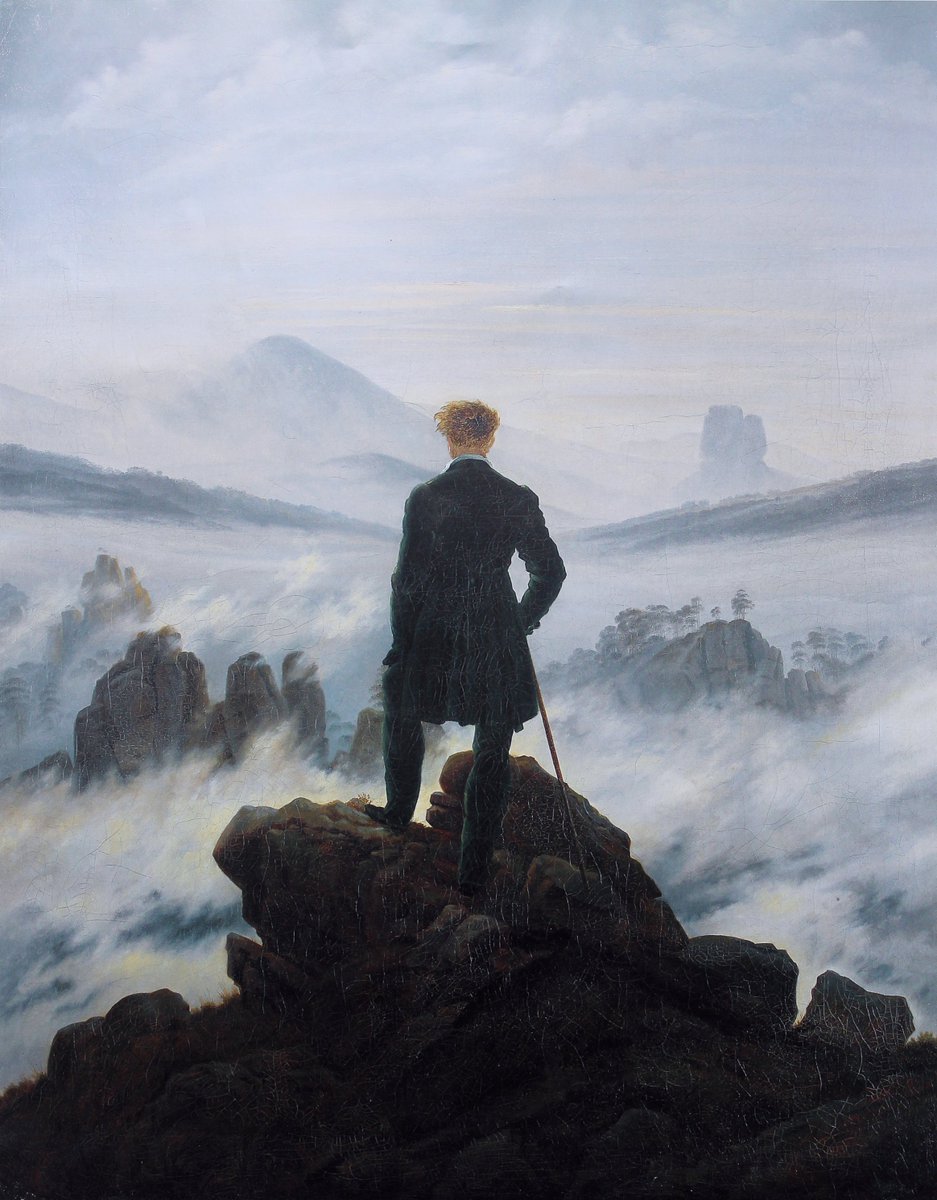
Wanderer above the Sea of Fog (1818) is one of the world's most famous paintings. You've seen it before & you love it.
But it was totally forgotten for over one hundred years, along with the genius who painted it, Caspar David Friedrich.
Here is his story...
But it was totally forgotten for over one hundred years, along with the genius who painted it, Caspar David Friedrich.
Here is his story...

Caspar David Friedrich (1774-1840) was born in the German town of Greifswald on the Baltic Sea, one of ten children raised in relative poverty.
When he was thirteen Friedrich saw his brother die, as he fell through the ice of a frozen lake and drowned.
When he was thirteen Friedrich saw his brother die, as he fell through the ice of a frozen lake and drowned.
Alas, Friedrich went to Copenhagen and studied art in its prestigious academy, before eventually settling in Dresden, in the Kingdom of Saxony.
He had long been fascinated by landscapes, partially inspired by his native Baltic coast, and we can this in his early works:
He had long been fascinated by landscapes, partially inspired by his native Baltic coast, and we can this in his early works:
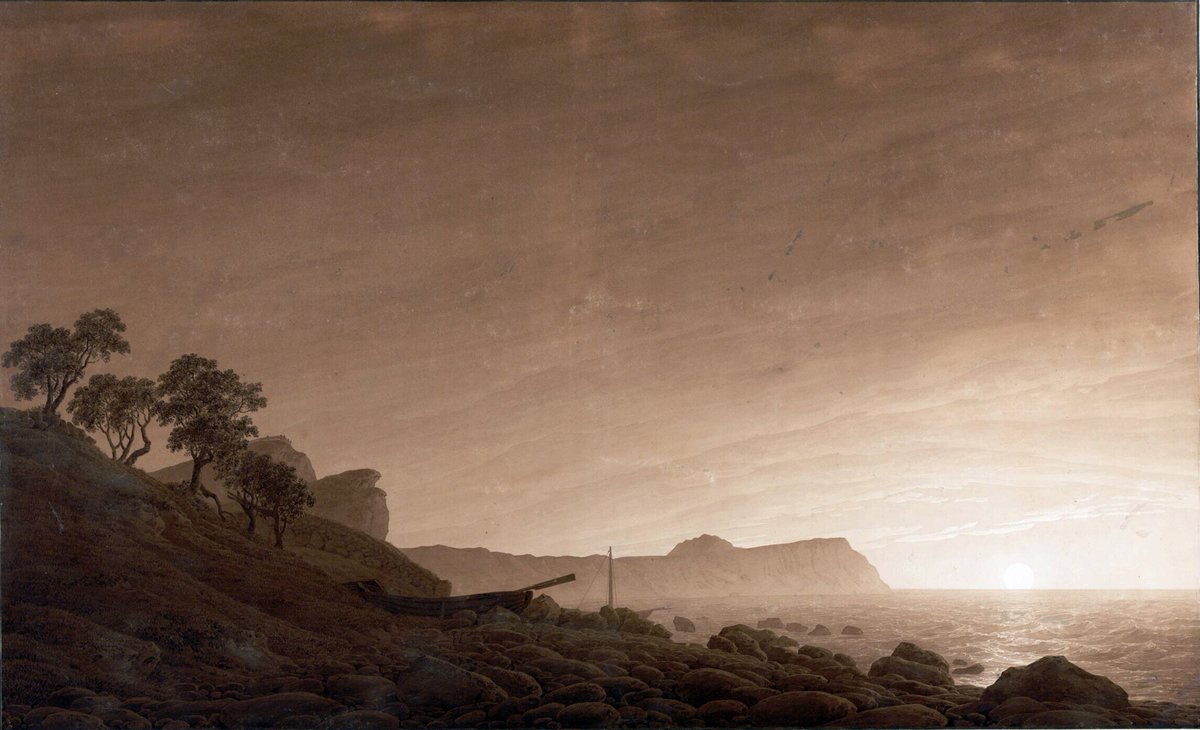
And Friedrich's first major painting, for a church altarpiece in 1808, was revolutionary.
By turning the most powerful Christian scene into a landscape, Friedrich was breaking radically from tradition, where landscape and religious art were distinctly separate genres.
By turning the most powerful Christian scene into a landscape, Friedrich was breaking radically from tradition, where landscape and religious art were distinctly separate genres.
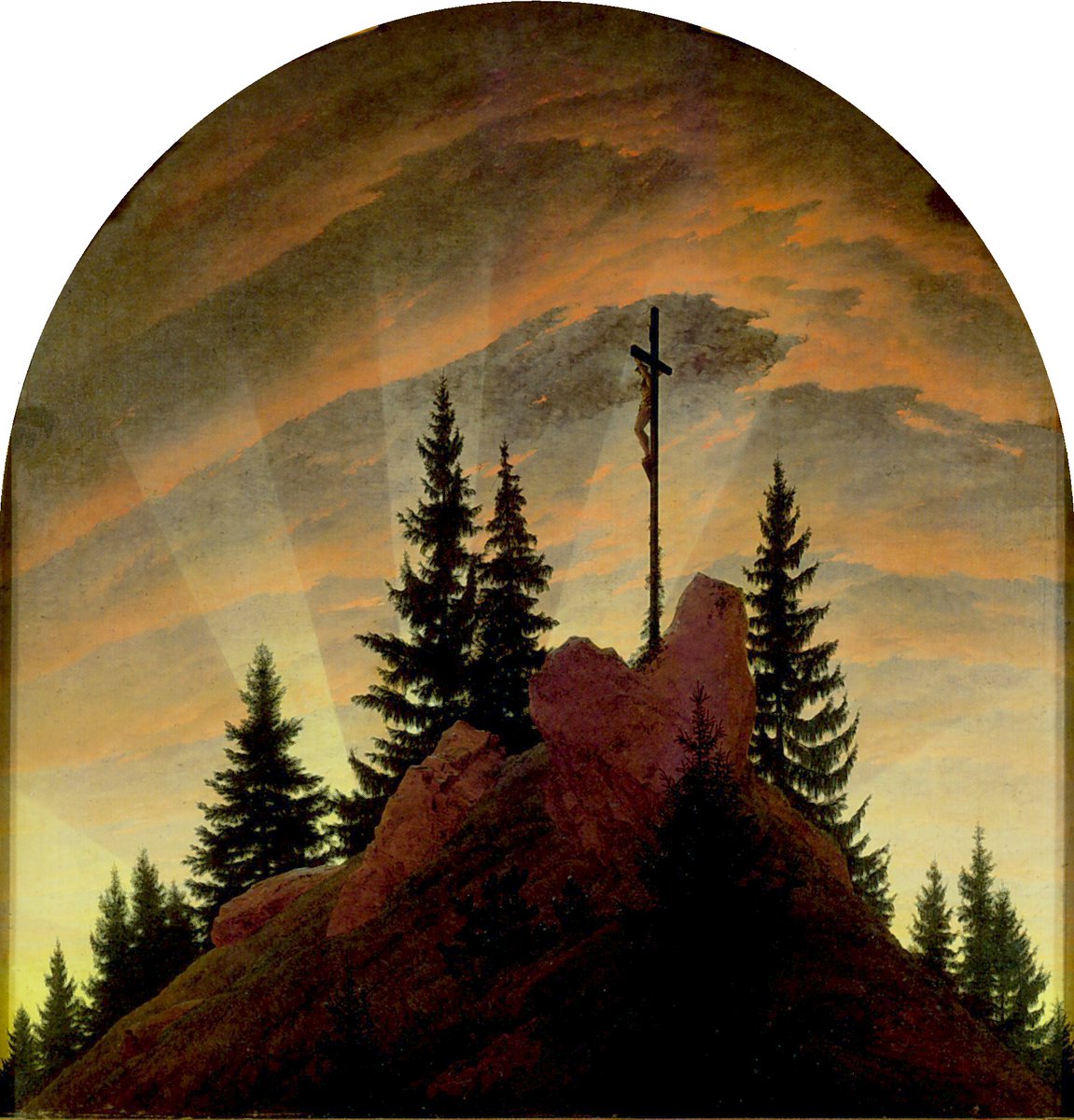
Now, the European age in which Friedrich was born was one of great turbulence. The French Revolution had rocked Europe and then came all-conquering Napoleon.
Underpinning all of this was the Enlightenment, the Age of Rationality, Science, and Progress.
Underpinning all of this was the Enlightenment, the Age of Rationality, Science, and Progress.
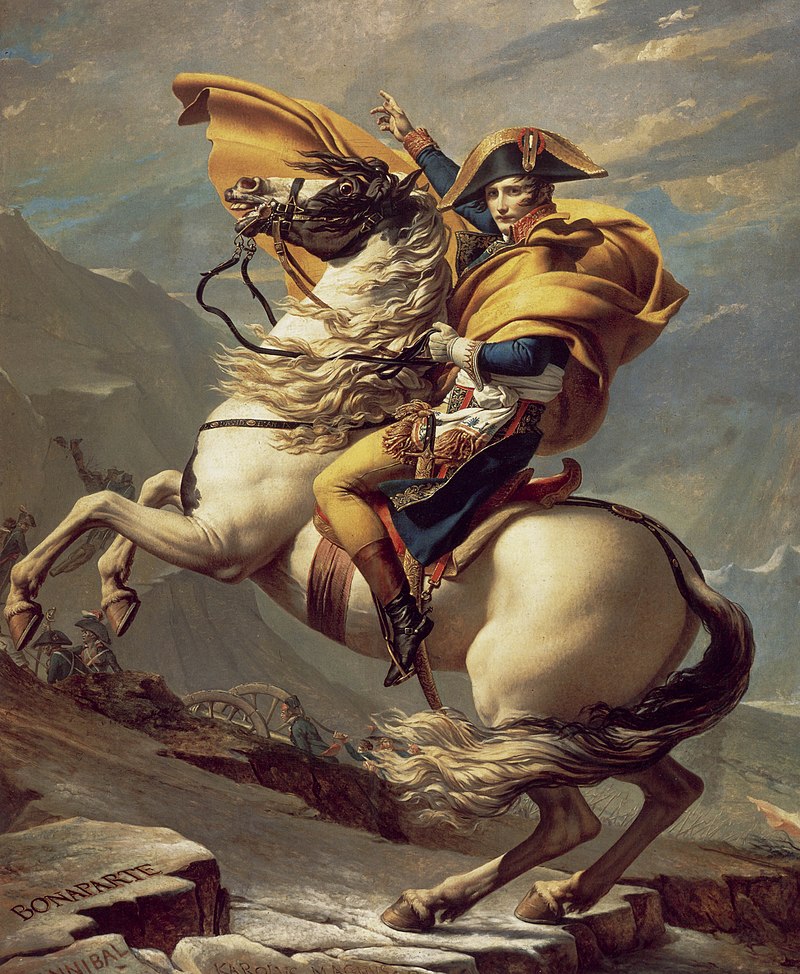
There was also a strong neoclassical element to the Enlightenment, as thinkers looked back to the values of Greece and Rome.
Painters, too, were inspired by the Renaissance, both in style and theme.
As in the work of Jacques-Louis David:
Painters, too, were inspired by the Renaissance, both in style and theme.
As in the work of Jacques-Louis David:

It was in reaction to the Enlightenment that Romanticism appeared, a literary, musical, and artistic movement embodied by the poet Lord Byron.
They felt the Enlightenment had stripped the world of wonder and mystery, turning man and nature into mere machines.
They felt the Enlightenment had stripped the world of wonder and mystery, turning man and nature into mere machines.
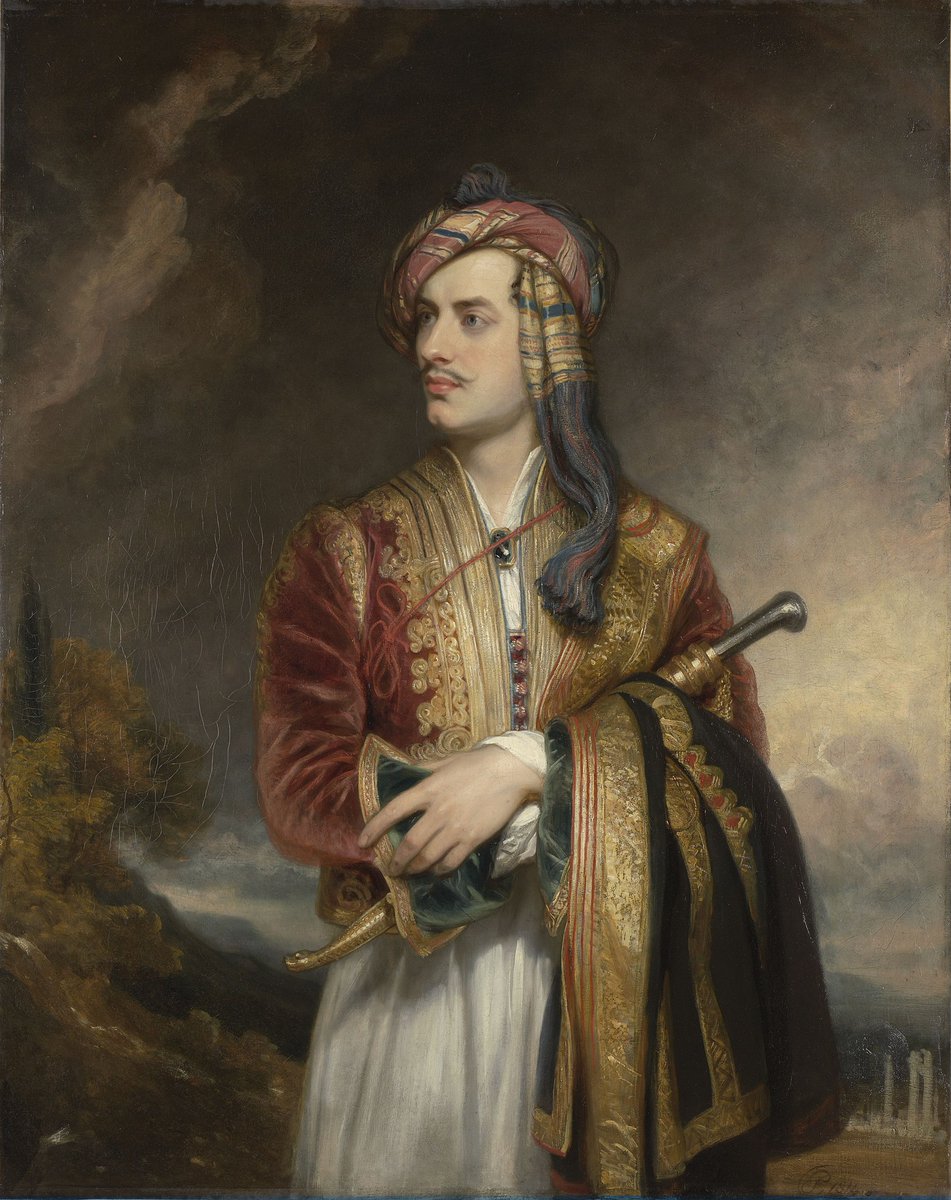
Friedrich himself was part of this Romantic movement, opposed to the Enlightenment ideal that anything and everything could be calculated, understood, codified, and conquered.
And so, Friedrich's personal version of Romanticism took three distinctive forms...
And so, Friedrich's personal version of Romanticism took three distinctive forms...
The first was an opposition to French-dominated neoclassicicism.
Friedrich's "Tomb of the Old Heroes" is simultaneously anti-French (depicting the tomb of a German national hero) and anticlassical (Arminius was a Germanic chieftain who once defeated three whole Roman legions)
Friedrich's "Tomb of the Old Heroes" is simultaneously anti-French (depicting the tomb of a German national hero) and anticlassical (Arminius was a Germanic chieftain who once defeated three whole Roman legions)
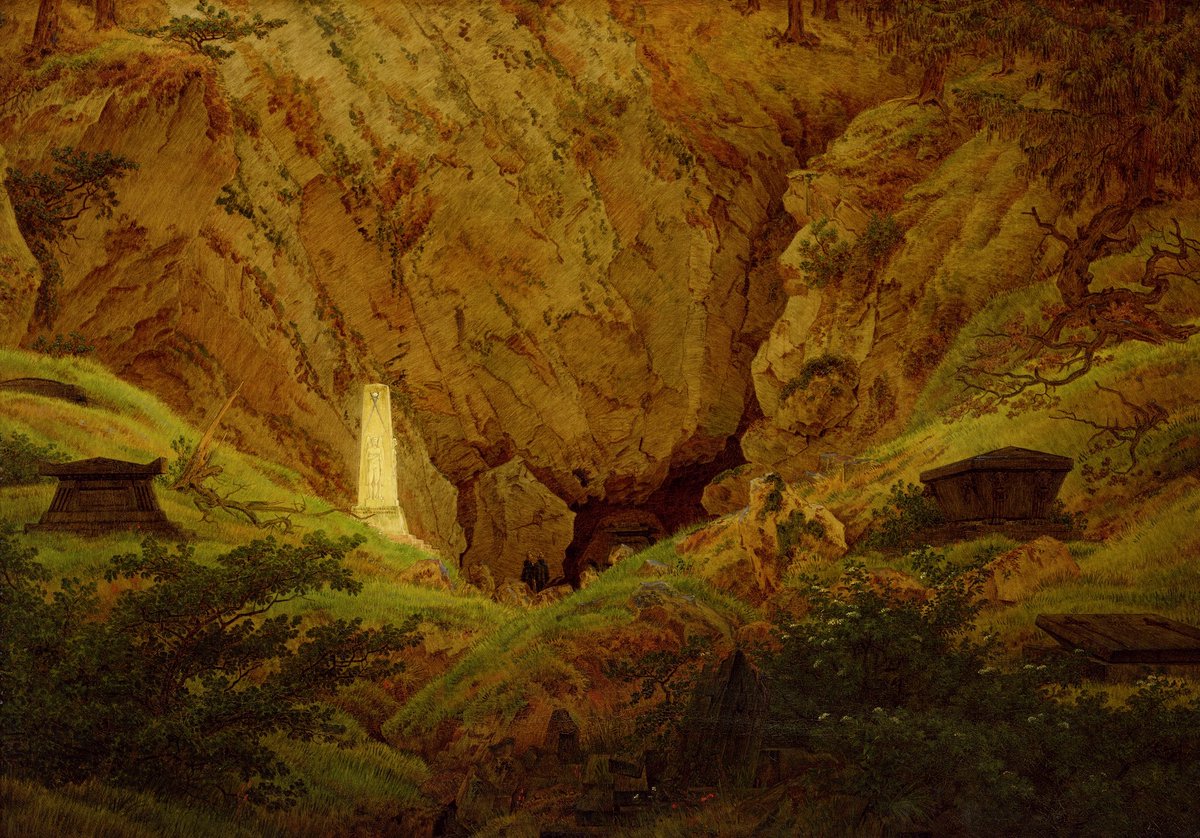
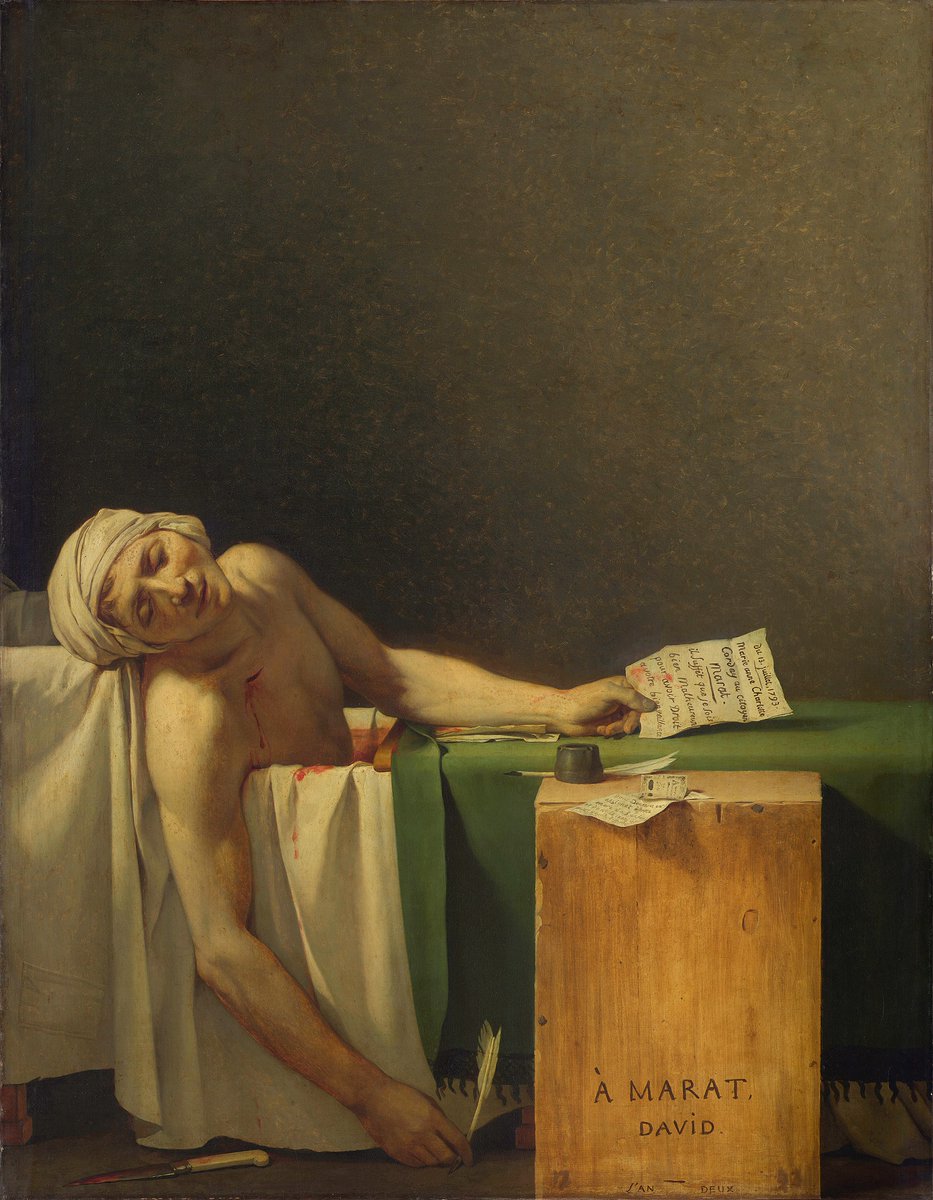
The Tomb of the Old Heroes almost feels like a response to Jacques-Louis David's The Death of Marat (an important revolutionary) painted in 1793.
David was the foremost French neoclassical painter, and a leading member of the Revolution itself.
Everything Friedrich opposed.
David was the foremost French neoclassical painter, and a leading member of the Revolution itself.
Everything Friedrich opposed.
The second element of Friedrich's Romanticism was his love of landscape painting.
Whereas the neoclassical and Enlightenment thinkers saw nature as something to be understood and conquered, Friedrich imbued his landscapes with a certain reverence, fear, and mystery:
Whereas the neoclassical and Enlightenment thinkers saw nature as something to be understood and conquered, Friedrich imbued his landscapes with a certain reverence, fear, and mystery:

But Friedrich's anti-Enlightenment stance wasn't just philosophical.
It was stylistic too. The *way* he painted was fundamentally different from neoclassical artists.
Consider the great Baroque painter, Claude Lorrain, whose landscapes are beautiful things to be observed:
It was stylistic too. The *way* he painted was fundamentally different from neoclassical artists.
Consider the great Baroque painter, Claude Lorrain, whose landscapes are beautiful things to be observed:
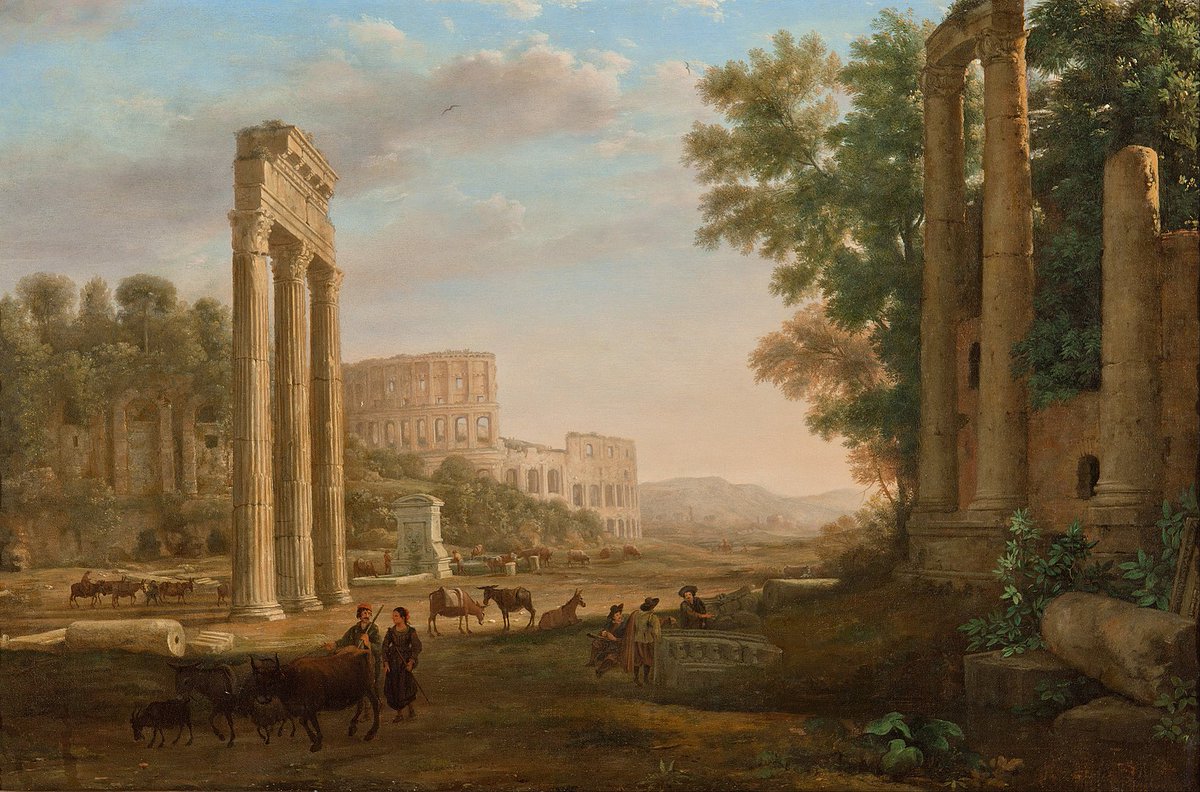
And now see how Friedrich painted ruins. Here they are almost at war with nature, which is slowly but surely reclaiming its domain from mankind.
Friedrich's landscapes were supposed to *felt*, not merely observed.
Friedrich's landscapes were supposed to *felt*, not merely observed.
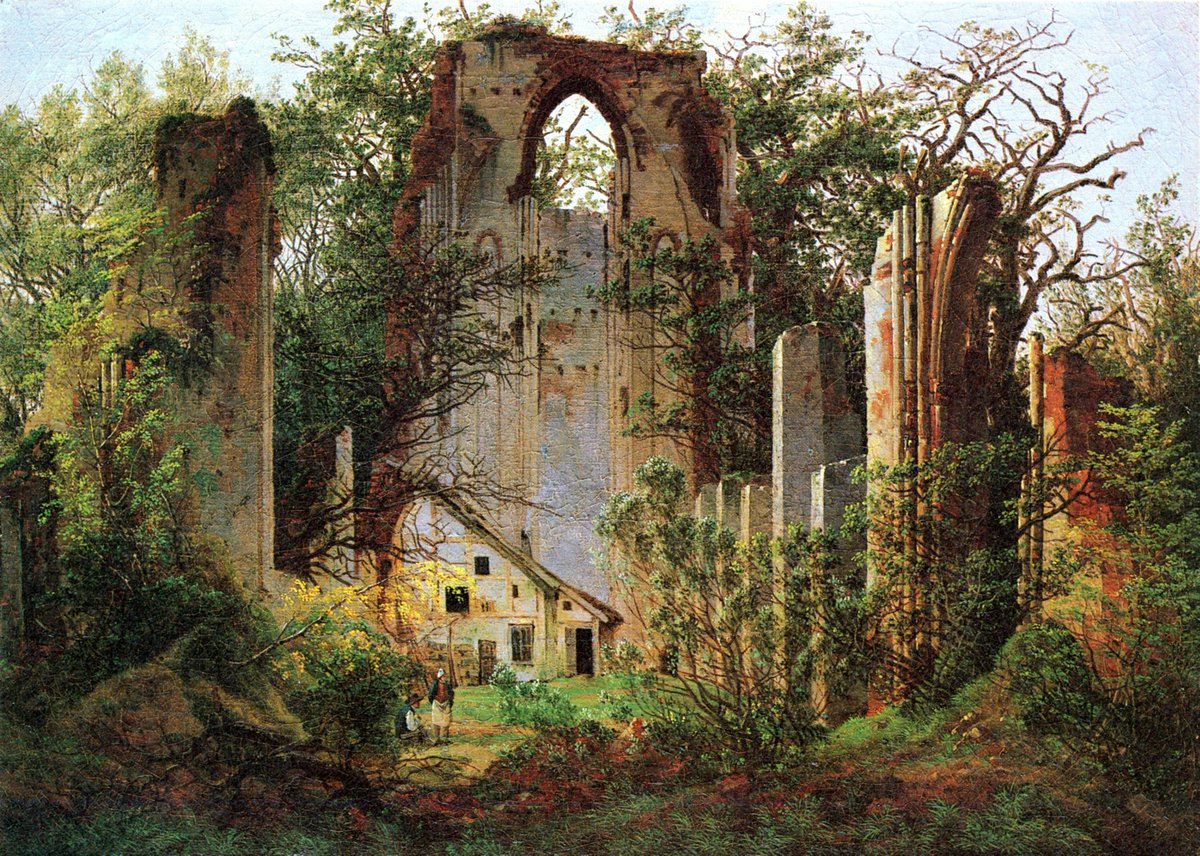
In this way Friedrich reminds us of Chinese art, where landscapes were the *highest* form of painting, in which human figures recede and the artist attempts to convey the deepest essence of the natural world, rather than a "realistic" depiction.
Closer to poetry than painting.
Closer to poetry than painting.
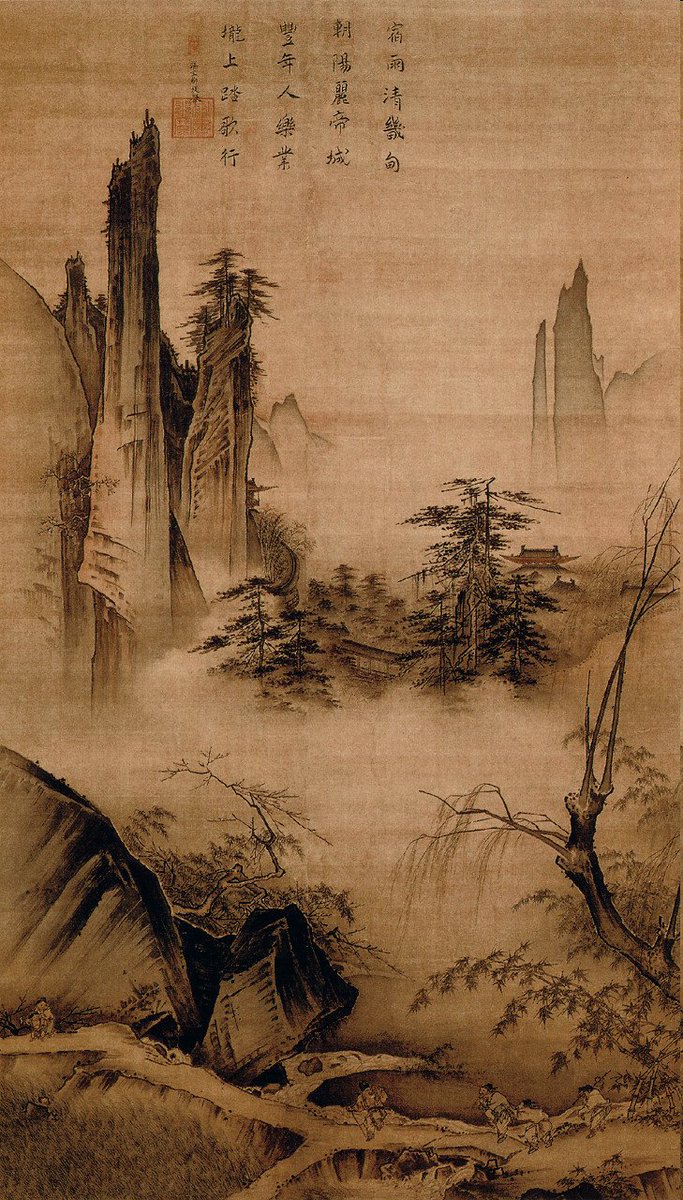
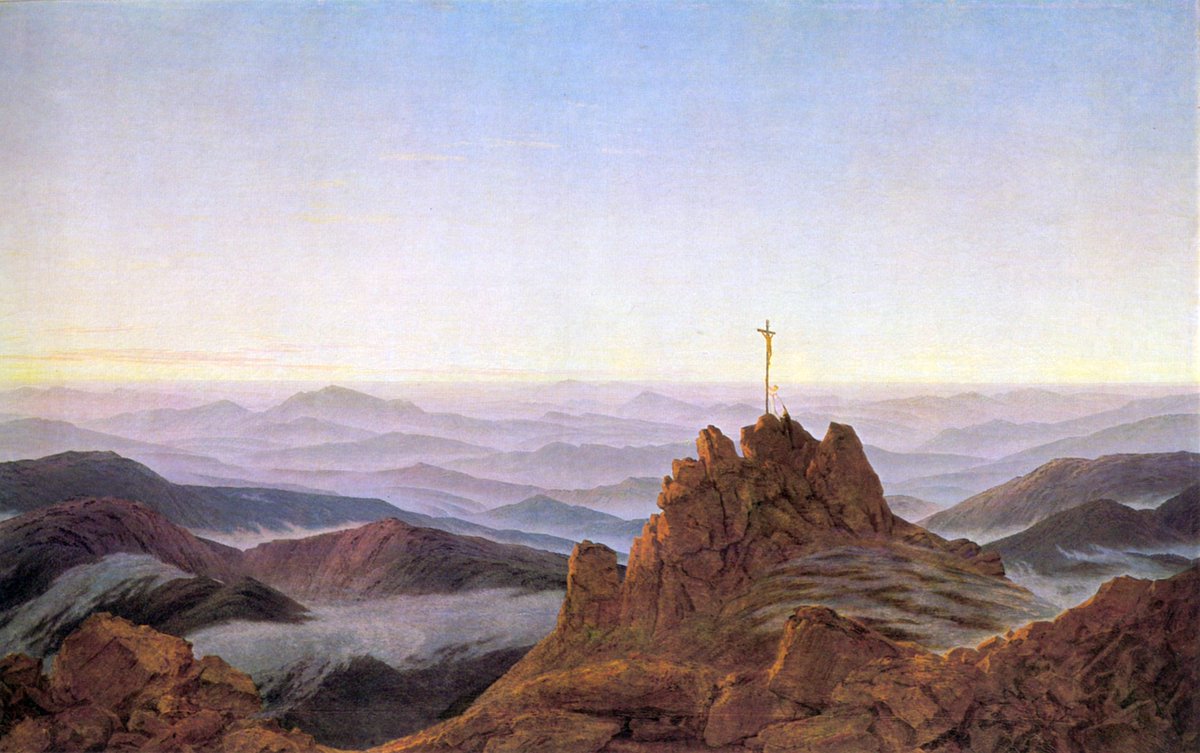
And you will notice how the human figures in Friedrich's paintings are insignificant, dwarfed by the landscape.
The relationship between mankind and nature in Friedrich's Romantic realm is not one of scientific conquest, but of unknowability, of emotion, of spiritual turbulence:
The relationship between mankind and nature in Friedrich's Romantic realm is not one of scientific conquest, but of unknowability, of emotion, of spiritual turbulence:

Renaissance and neoclassical artists planted man forthrightly at the centre of their work, triumphant and rational and beautiful.
J.A.D. Ingres, the darling of early 19th century French art, did so. But in Friedrich's work you must strain to even find the humans...
J.A.D. Ingres, the darling of early 19th century French art, did so. But in Friedrich's work you must strain to even find the humans...

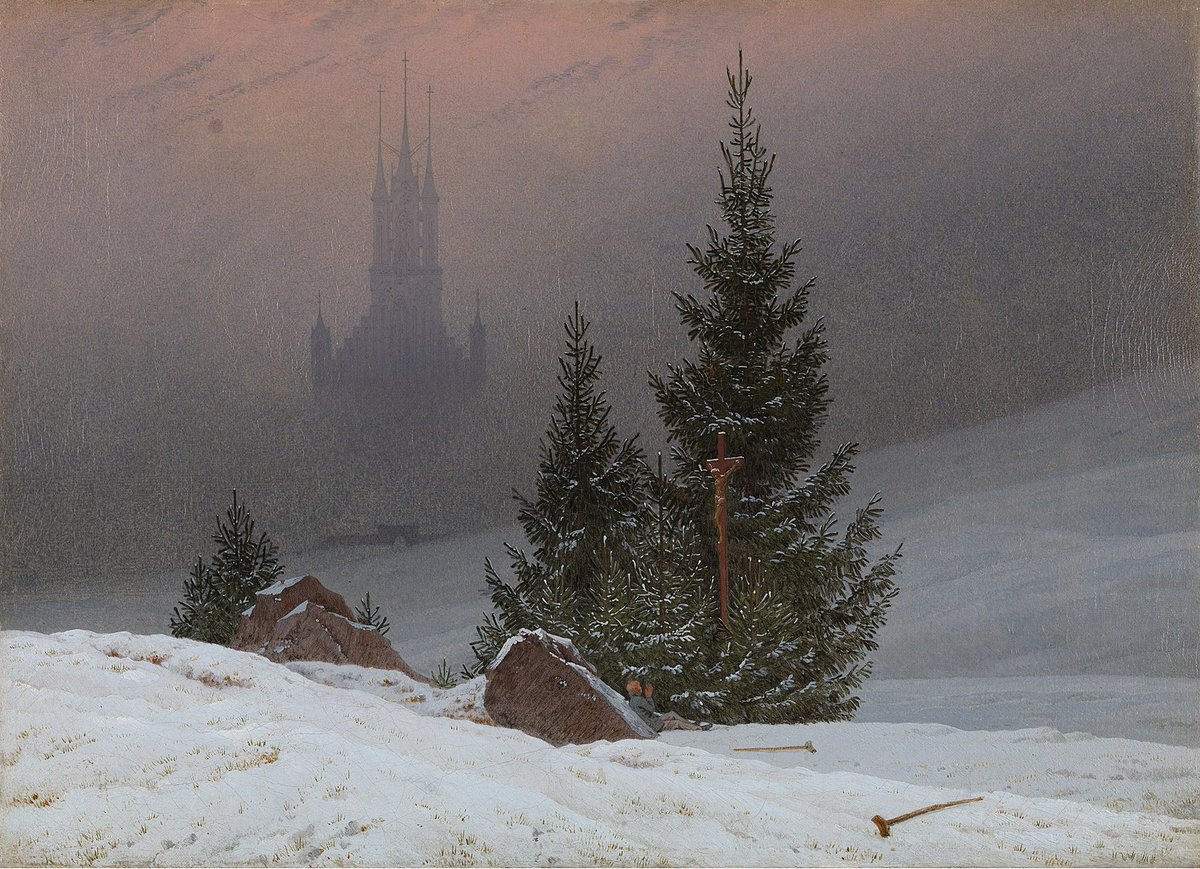
Indeed, Friedrich's favourite motif was the "Rückenfigur" where human figures are turned *away*, seen from behind, contemplating the natural world and lost within in it rather than taking centre stage.
We experience the fading light of dusk over brooding lands *with* them...
We experience the fading light of dusk over brooding lands *with* them...
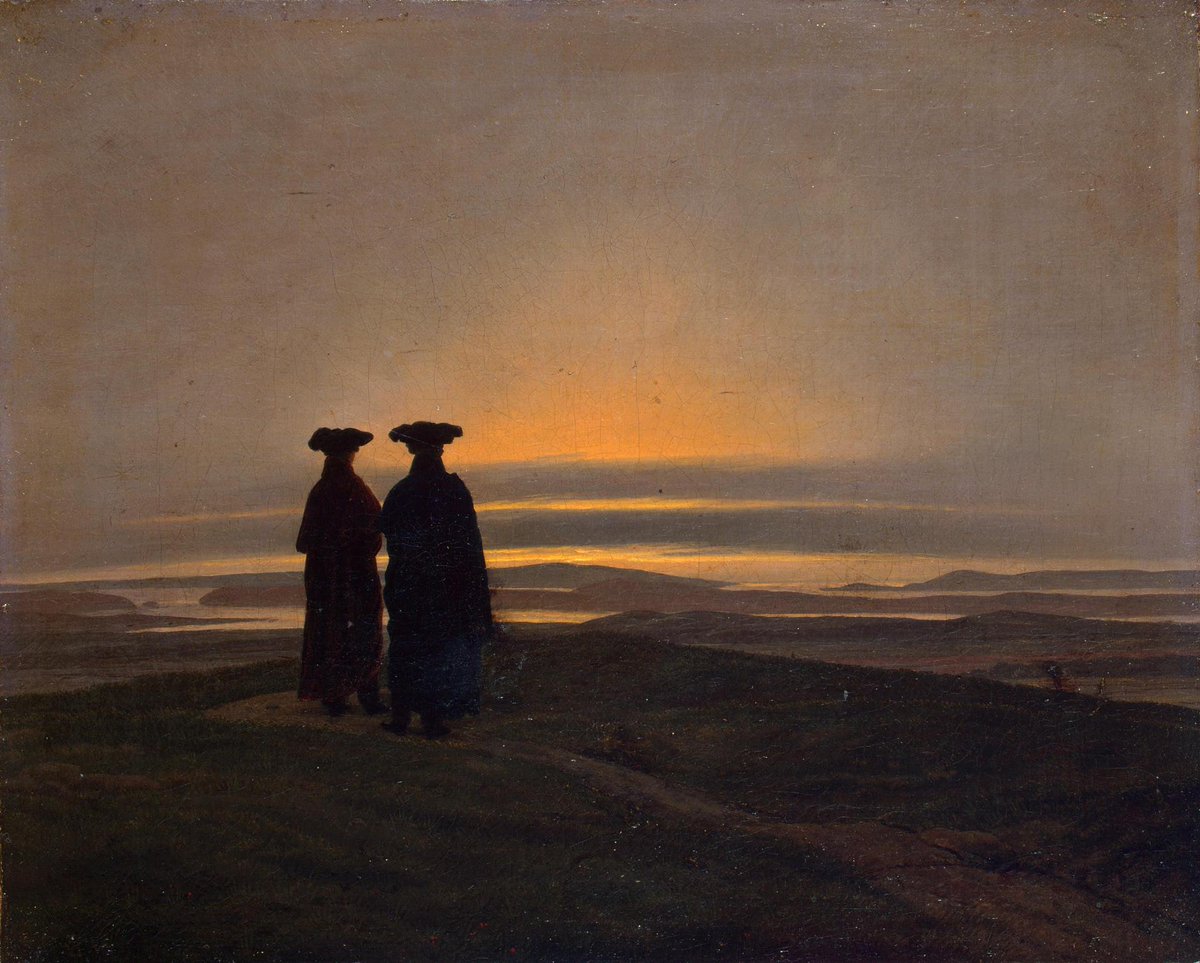
The third element of Friedrich's Romanticism was a sort of metaphysical, proto-Symbolist, Gothic atmosphere.
Here, objects and scenes cease to be "real", and instead become symbols of meaning, dreamlike in their sombre purity.
Far from the rational world of the Enlightenment.
Here, objects and scenes cease to be "real", and instead become symbols of meaning, dreamlike in their sombre purity.
Far from the rational world of the Enlightenment.

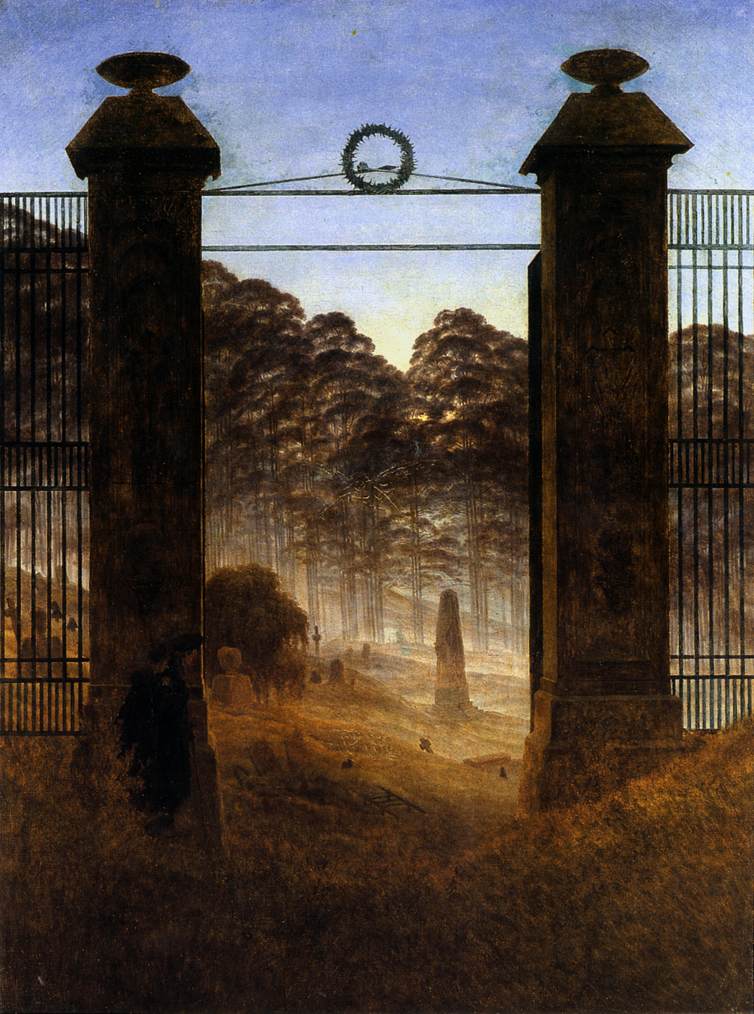
This is where we see Friedrich's ultimate and enduring genius: to take a scene and reduce it to its very essence, passing well beyond the material world and into a metaphysical one, a realm of pure meaning and feeling.
This is no longer a "real" gate... where will it lead us?
This is no longer a "real" gate... where will it lead us?
Wanderer above the Sea of Fog has now fully entered popular culture and become a pillar of art. We can see how it epitomises Friedrich's *feelings*.
A figure turned away, contemplating the mystery and beauty of nature, obscured by fog from mankind's rational investigations...
A figure turned away, contemplating the mystery and beauty of nature, obscured by fog from mankind's rational investigations...
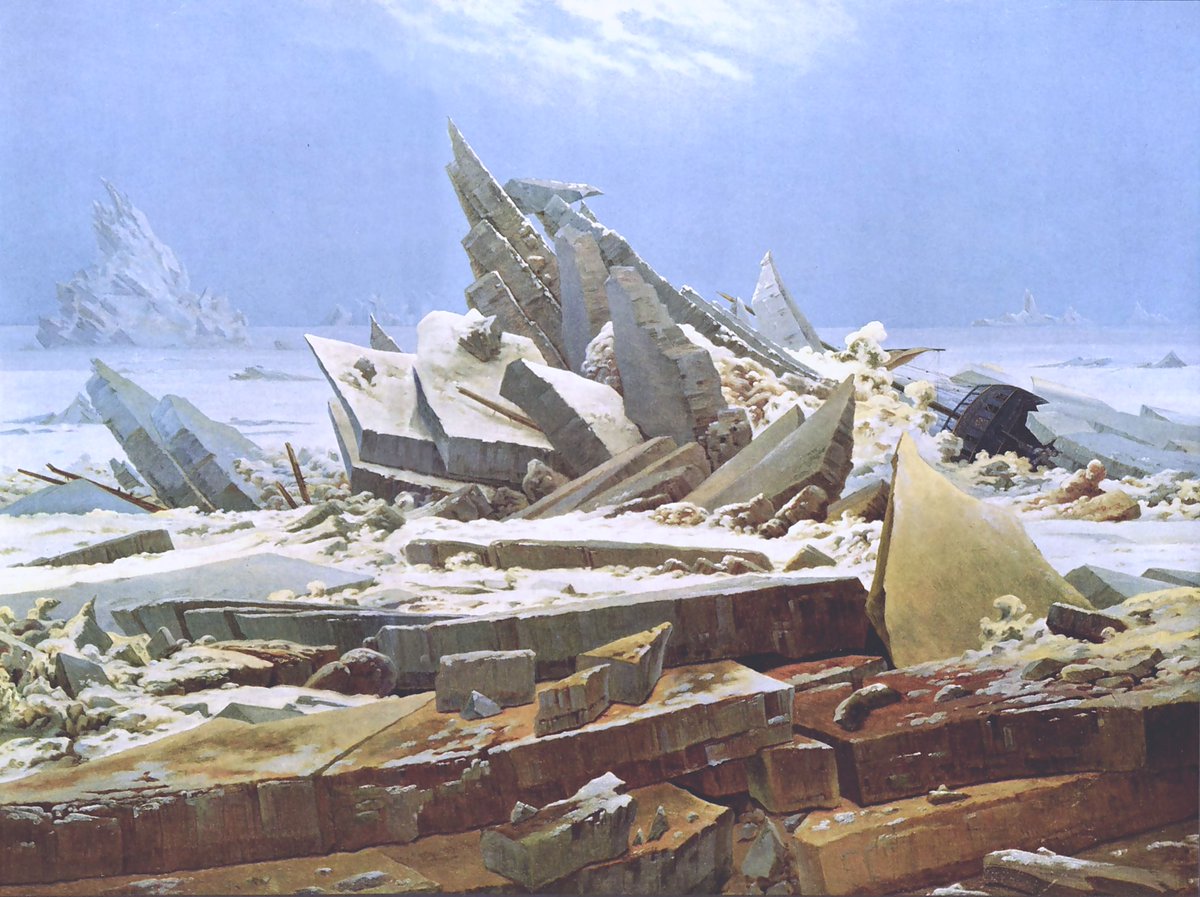
But, if a single painting truly summarises Friedrich's deeply held beliefs about the Enlightenment and its destruction of real beauty and meaning, it's The Sea of Ice.
Shipwrecks were a common theme in Friedrich's work; a perfect allegory for nature's inconquerable majesty.
Shipwrecks were a common theme in Friedrich's work; a perfect allegory for nature's inconquerable majesty.
In his early years Friedrich enjoyed success and critical acclaim. But as Romanticism waned so too did Friedrich's career.
The last two decades of his life were a story of gradual decline into ill-health, poverty, obscurity, and seclusion. Neoclassicism had won.
The last two decades of his life were a story of gradual decline into ill-health, poverty, obscurity, and seclusion. Neoclassicism had won.
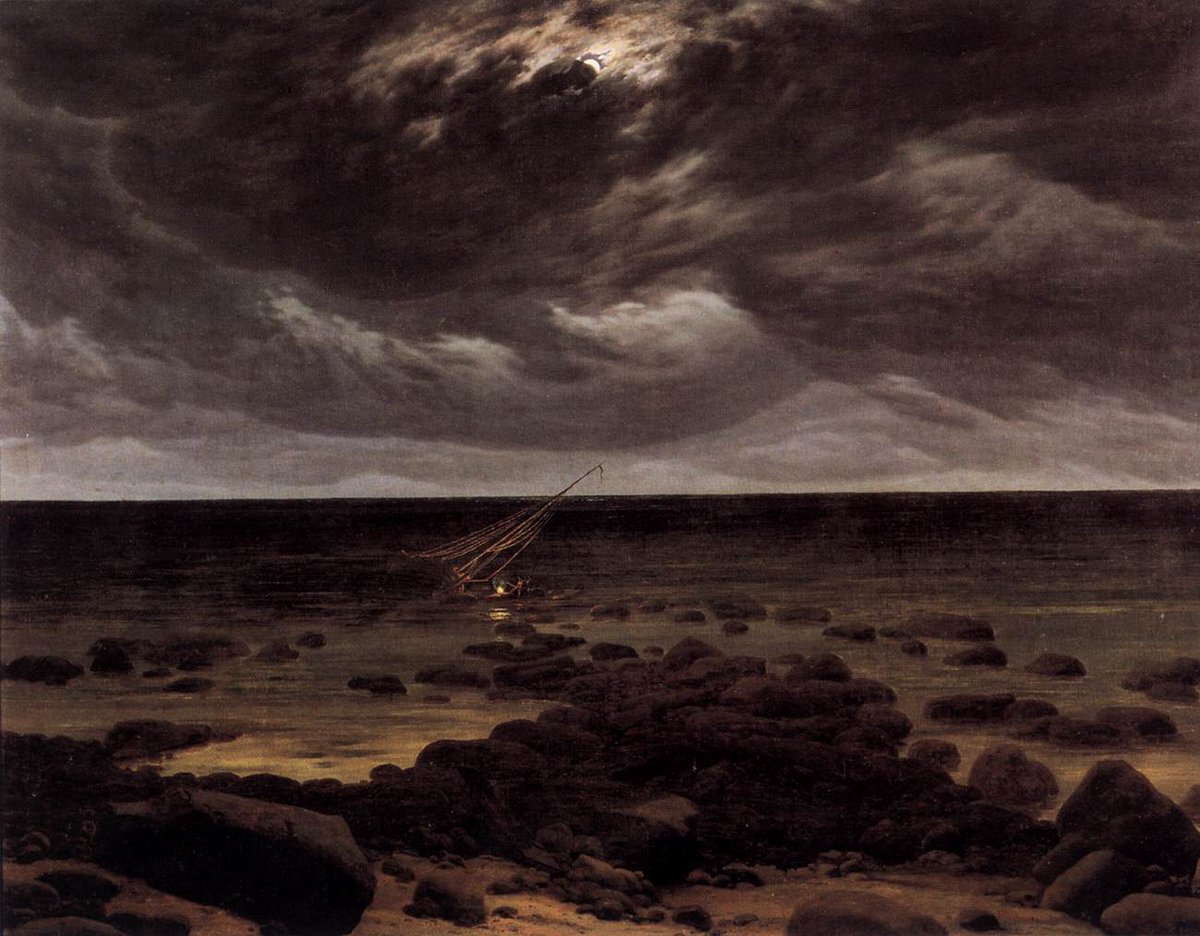
In his final painting, from around 1835, we can perhaps sense something of Friedrich's own frustration and sadness, perhaps even an awareness of the coming end.
But in nature, as ever, Friedrich found a font of expressive magnitude. Emotion, not reason, was his way.
But in nature, as ever, Friedrich found a font of expressive magnitude. Emotion, not reason, was his way.
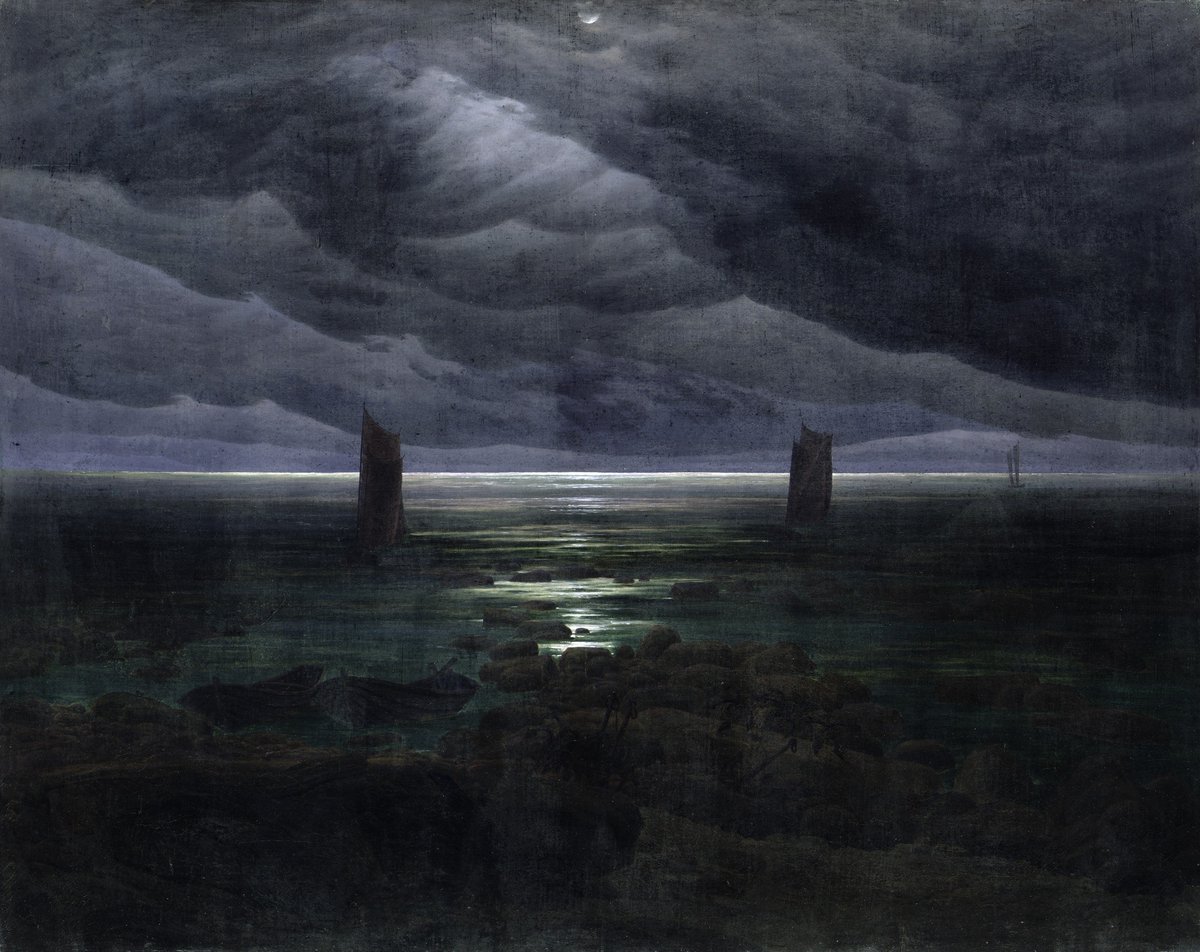
It wasn't for another hundred years that Friedrich gained any recognition. Until then he was completely forgotten.
By the 1920s he had been rediscovered and became a vital influence on the Expressionists and the Surrealists for his imaginative grandeur.
By the 1920s he had been rediscovered and became a vital influence on the Expressionists and the Surrealists for his imaginative grandeur.

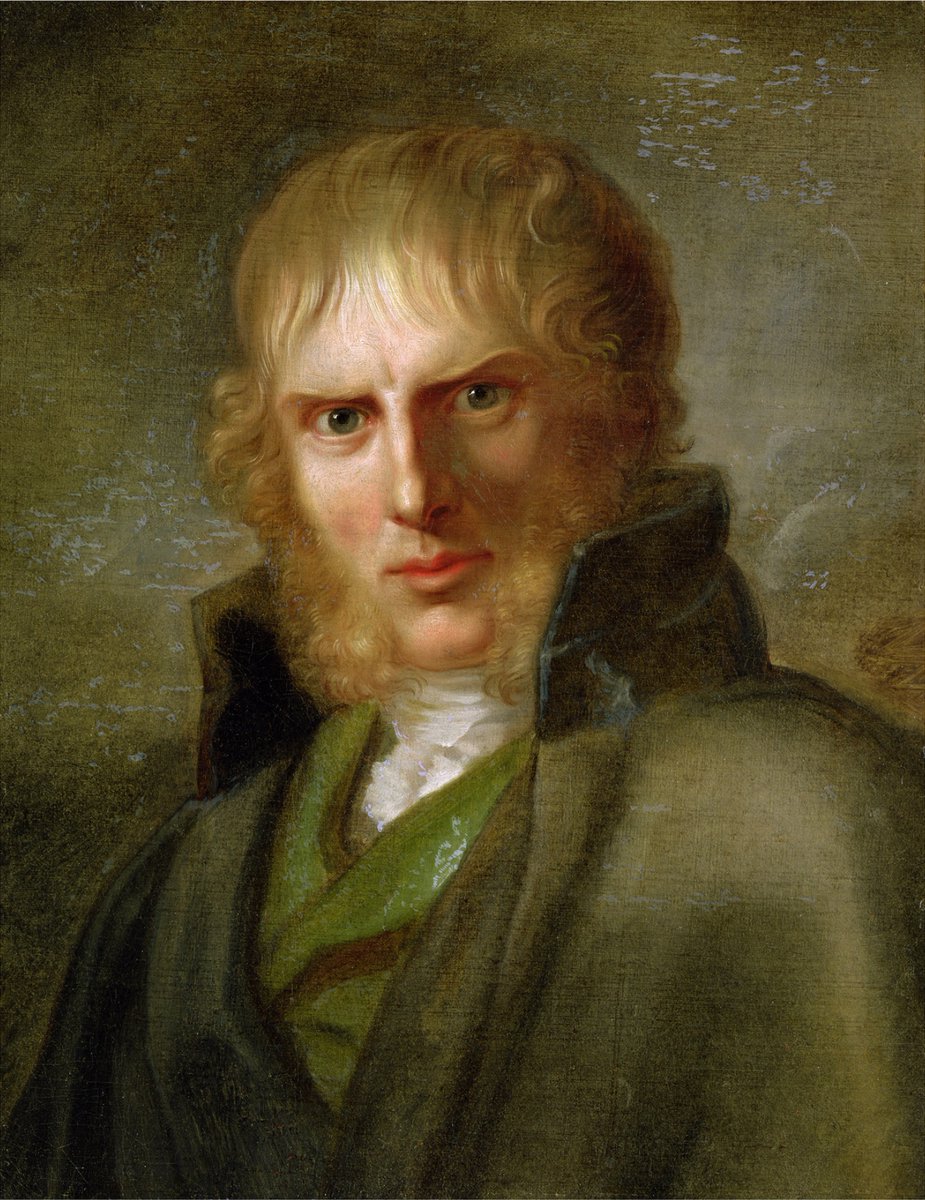
And here is Caspar David Friedrich himself, with all the intensity of expression you'd expect.
An artist who raged against the zeitgeist, who sought the unknowable beauty of nature, the divine and uncontrollable spark of the human soul.
And a bloody good painter, too.
An artist who raged against the zeitgeist, who sought the unknowable beauty of nature, the divine and uncontrollable spark of the human soul.
And a bloody good painter, too.
• • •
Missing some Tweet in this thread? You can try to
force a refresh