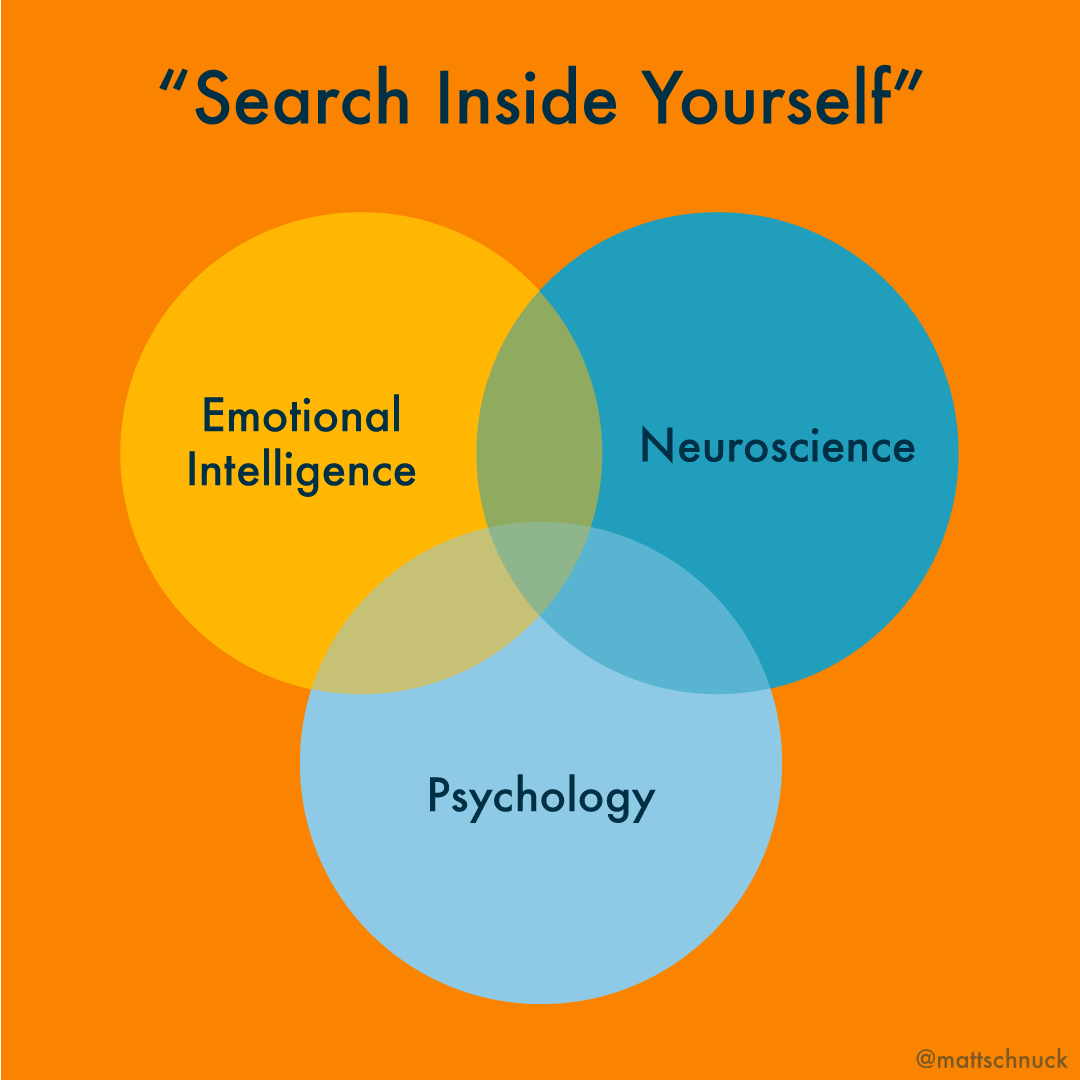
Many work cultures feed on fear & blame.
If you’re not careful, you’ll be stuck in the Drama Triangle.
HERE’S WHAT THE DRAMA TRIANGLE IS AND HOW TO OVERCOME IT: 🧵
If you’re not careful, you’ll be stuck in the Drama Triangle.
HERE’S WHAT THE DRAMA TRIANGLE IS AND HOW TO OVERCOME IT: 🧵
Many organizations (and failed marriages) live within the “Drama Triangle.”
“Drama” is characterized by blame, fear, adrenaline, and wanting to be right.
“Drama” is characterized by blame, fear, adrenaline, and wanting to be right.
Like any good drama on TV, characters play certain roles.
The Drama Triangle has three roles:
1. Victim
2. Villain
3. Savior
The Drama Triangle has three roles:
1. Victim
2. Villain
3. Savior

Take a TV show like Ted Lasso
In season 1, you had:
Ted Lasso - Victim
-coach who thought he was the savior but began as the victim
Rebecca - Villain
-team owner setting up Ted to fail to get back at ex-husband
Roy - Savior
-aging star who would not let his team or coach fail
In season 1, you had:
Ted Lasso - Victim
-coach who thought he was the savior but began as the victim
Rebecca - Villain
-team owner setting up Ted to fail to get back at ex-husband
Roy - Savior
-aging star who would not let his team or coach fail

In fictional dramas, often the roles evolve and change.
In real life, the roles and patterns become hardened.
Unlike Ted Lasso, the consequences of the Drama Triangle are not funny and heartwarming.
The Drama Triangle can be toxic.
Let’s understand how the roles work:
In real life, the roles and patterns become hardened.
Unlike Ted Lasso, the consequences of the Drama Triangle are not funny and heartwarming.
The Drama Triangle can be toxic.
Let’s understand how the roles work:
VICTIM
The Victim's role is to feel that life is happening to them.
The Victim is not in control of any outcome and feels powerless.
The Victim's role is to feel that life is happening to them.
The Victim is not in control of any outcome and feels powerless.
The Victim in action sounds like:
“This (person, circumstance, emotion I’m feeling...) is making the goal unrealistic.”
The reason can be anything: the economy, the kids, the weather, etc.
“This (person, circumstance, emotion I’m feeling...) is making the goal unrealistic.”
The reason can be anything: the economy, the kids, the weather, etc.
VILLAIN
The Villain's role is to blame.
A Villain can blame himself, others or the rest of the team.
The Villain's role is to blame.
A Villain can blame himself, others or the rest of the team.
What blaming others might look like: “It’s your fault we missed the deadline.”
What blaming yourself might look like: “I should work harder to get it done on time.”
What blaming yourself might look like: “I should work harder to get it done on time.”
SAVIOR
The Savior’s role is to provide TEMPORARY relief.
Saviors don’t want others to feel discomfort, so they provide solutions that take away immediate pain.
However, the Savior’s actions do not solve the core issue.
The Savior’s role is to provide TEMPORARY relief.
Saviors don’t want others to feel discomfort, so they provide solutions that take away immediate pain.
However, the Savior’s actions do not solve the core issue.
Saviors “save” themselves when they are overworked by finding distractions such as scrolling Twitter or overeating.
Saviors “save” others in pain by saying things like “it will be ok” or “I’ll just do the work for you.”
Saviors thrive on being needed by others.
Saviors “save” others in pain by saying things like “it will be ok” or “I’ll just do the work for you.”
Saviors thrive on being needed by others.
However, when teams are conscious of these roles, they can transform.
Two shifts need to happen.
Shift 1: Awareness of the drama triangle roles
Shift 2: Move towards a paradigm of personal responsibility
Two shifts need to happen.
Shift 1: Awareness of the drama triangle roles
Shift 2: Move towards a paradigm of personal responsibility
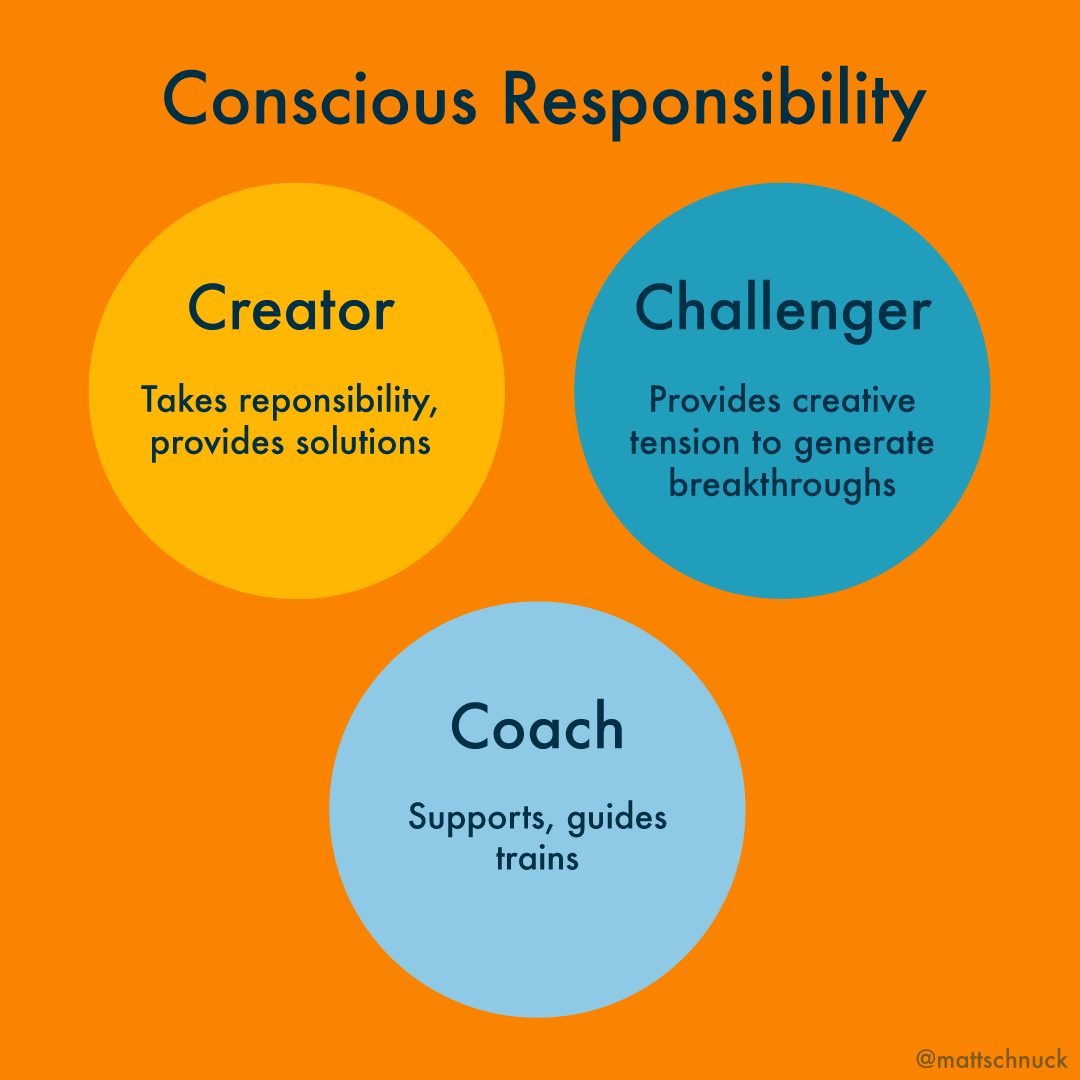
In conscious responsibility, each person takes ownership of their work, including their shortcomings, strengths, and needs.
In a conscious responsibility paradigm, the roles change to Creator, Challenger and Coach.
In a conscious responsibility paradigm, the roles change to Creator, Challenger and Coach.
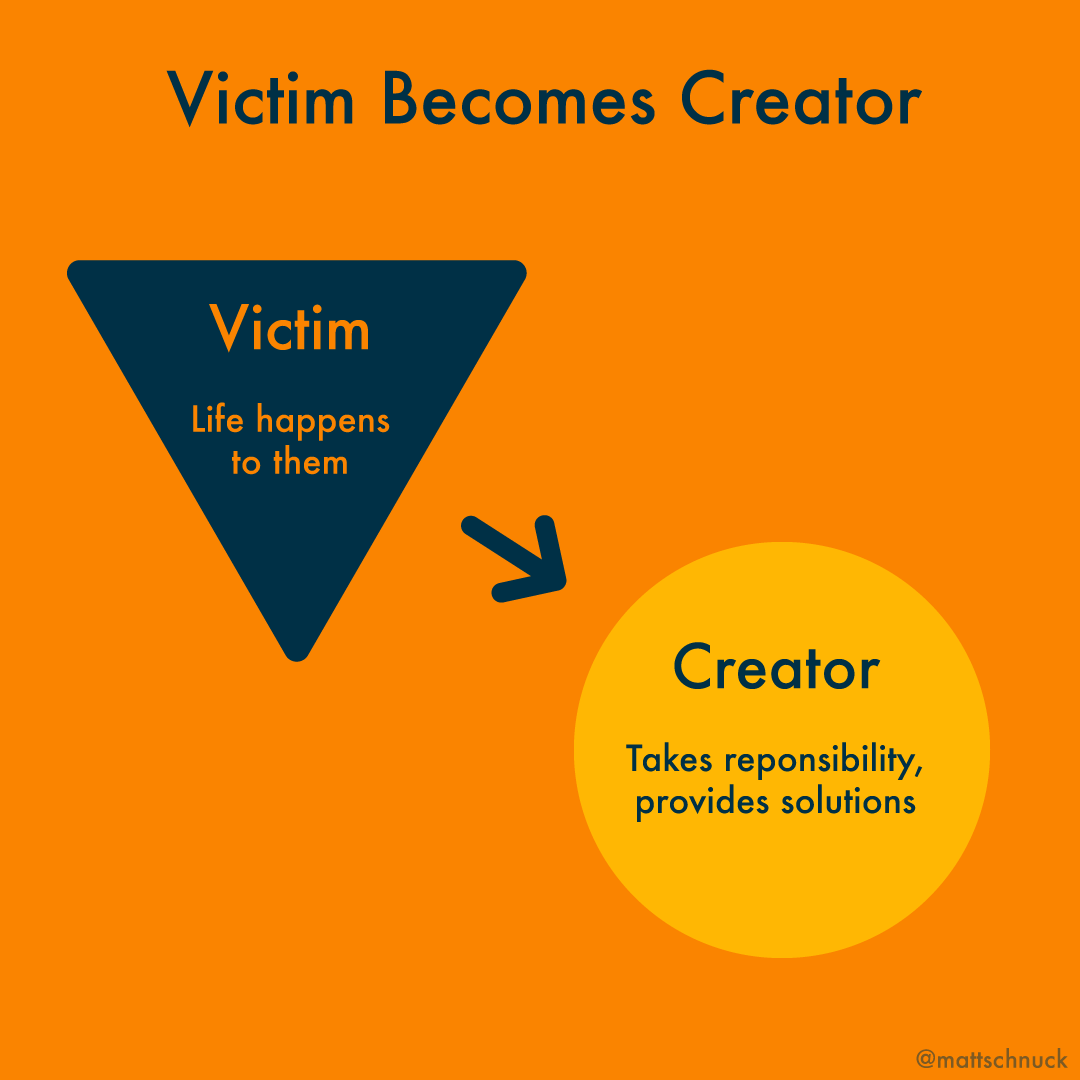
The Victim → The Creator
The Creator takes responsibility for their work and ceases complaining about what is happening to them.
Instead of complaining, they become a generator of new ideas and solutions.
The Creator takes responsibility for their work and ceases complaining about what is happening to them.
Instead of complaining, they become a generator of new ideas and solutions.
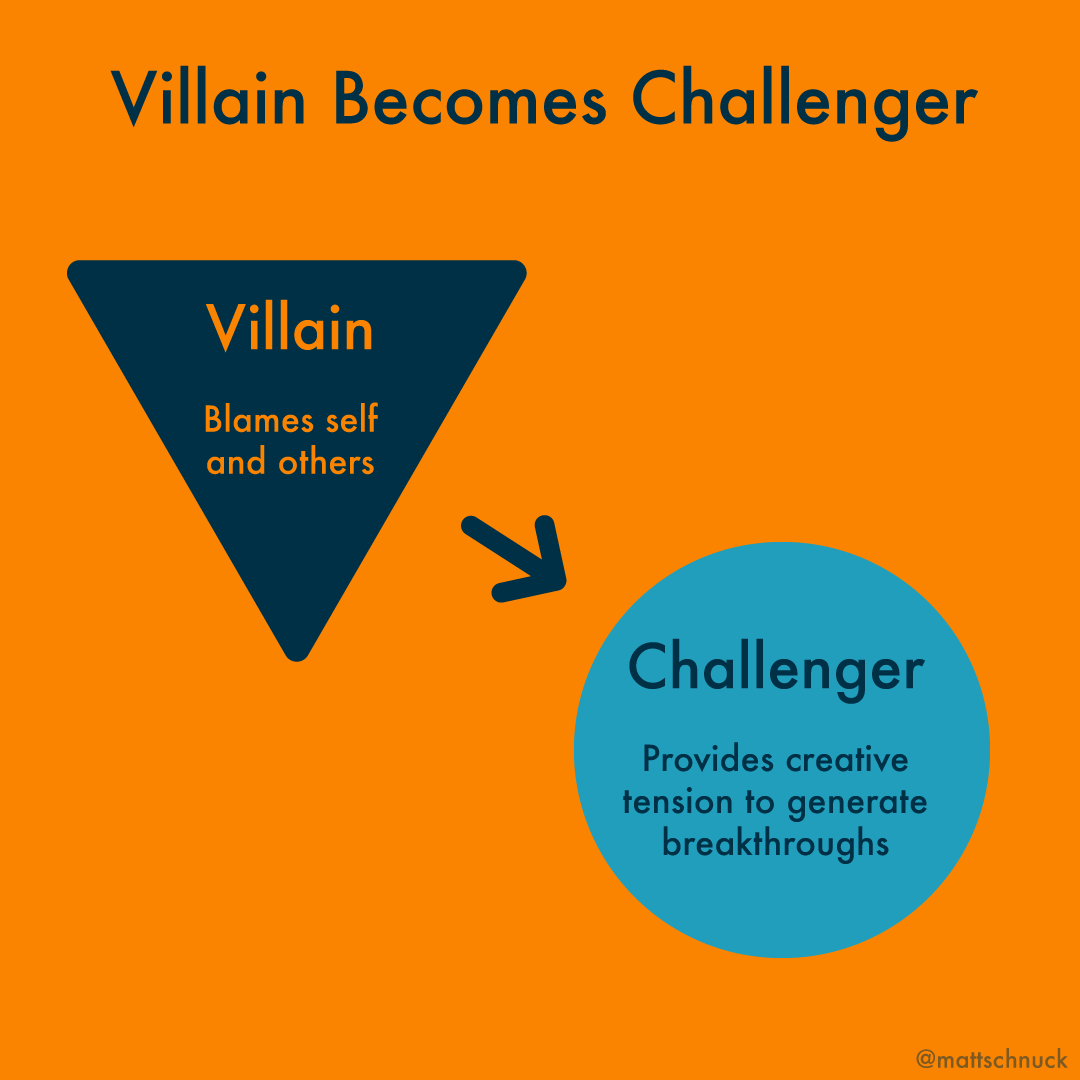
The Villain → the Challenger
Challengers create healthy tension with the Creator to support them in facing and dealing with their work in a way that creates a breakthrough.
Unlike the Villain, the Challenger does not blame or criticize.
Challengers create healthy tension with the Creator to support them in facing and dealing with their work in a way that creates a breakthrough.
Unlike the Villain, the Challenger does not blame or criticize.
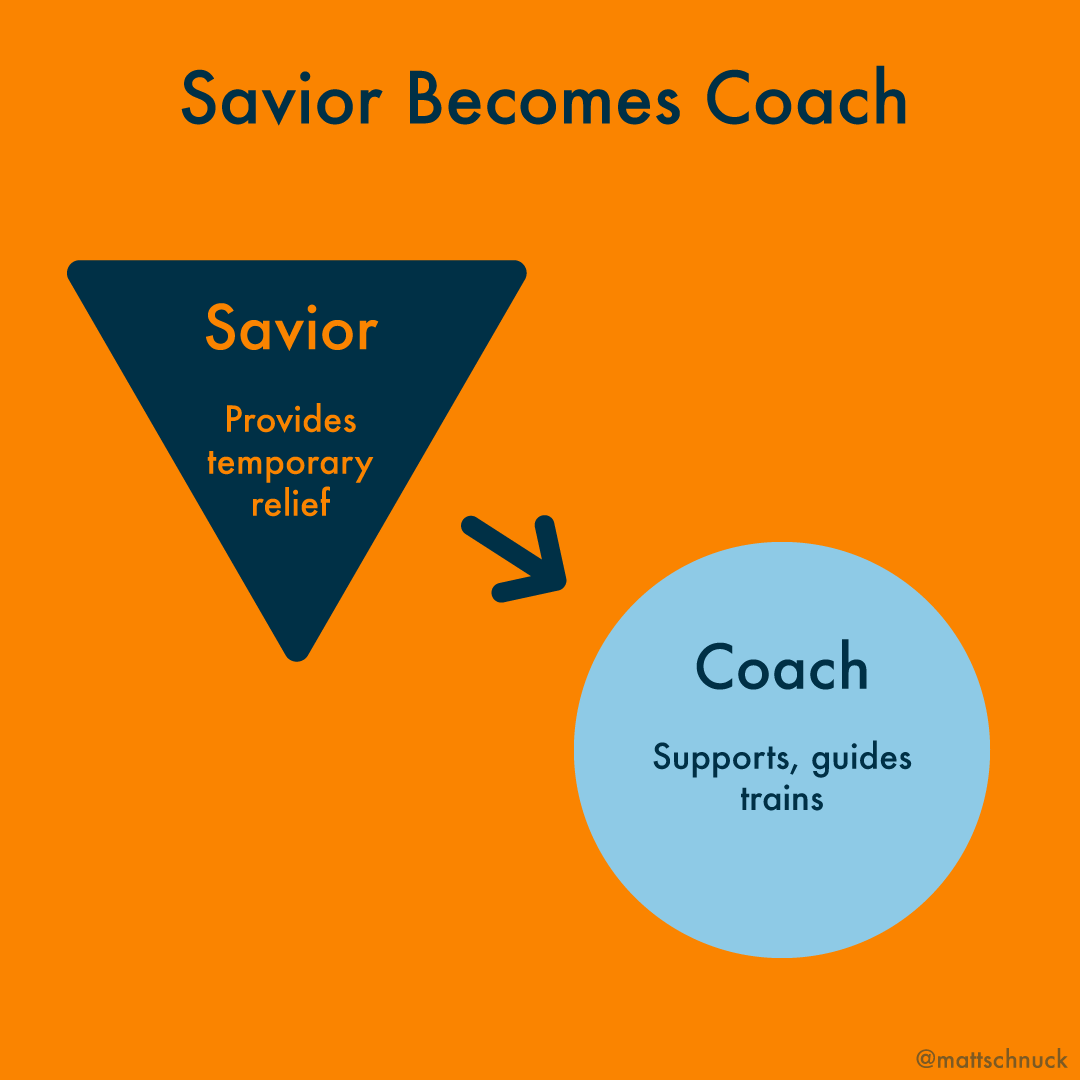
The Savior → the Coach
The Coach doesn’t try to fix anyone on the team.
Rather, the Coach looks to support, guide, and train the rest of the team into a place of ownership and responsibility for their work.
The Coach doesn’t try to fix anyone on the team.
Rather, the Coach looks to support, guide, and train the rest of the team into a place of ownership and responsibility for their work.
Teams that learn to be comprised of Creators, Challengers, and Coaches are more:
-Creative
-Productive
-Aligned
-Energized
These teams attract great talent.
They have fun and get more done.
-Creative
-Productive
-Aligned
-Energized
These teams attract great talent.
They have fun and get more done.
Reflection questions:
• Is your team working within the Drama Triangle?
• If so, how can you start to shift the roles?
• Is your team working within the Drama Triangle?
• If so, how can you start to shift the roles?
If you enjoyed this thread:
• Follow me @mattschnuck for more threads on EQ, entrepreneurship, and growth.
• Retweet the first tweet to share this framework for anyone interested in improving at work
• Follow me @mattschnuck for more threads on EQ, entrepreneurship, and growth.
• Retweet the first tweet to share this framework for anyone interested in improving at work
https://twitter.com/mattschnuck/status/1586739903664037889
For further content on the Drama Triangle and working from a conscious responsibility paradigm, check out The Conscious Leadership Group:
conscious.is
conscious.is
• • •
Missing some Tweet in this thread? You can try to
force a refresh