
20 powerful graphics on building wealth & investing, that will change your life forever:
💰If you want to be better with money, read this ASAP:
💰If you want to be better with money, read this ASAP:
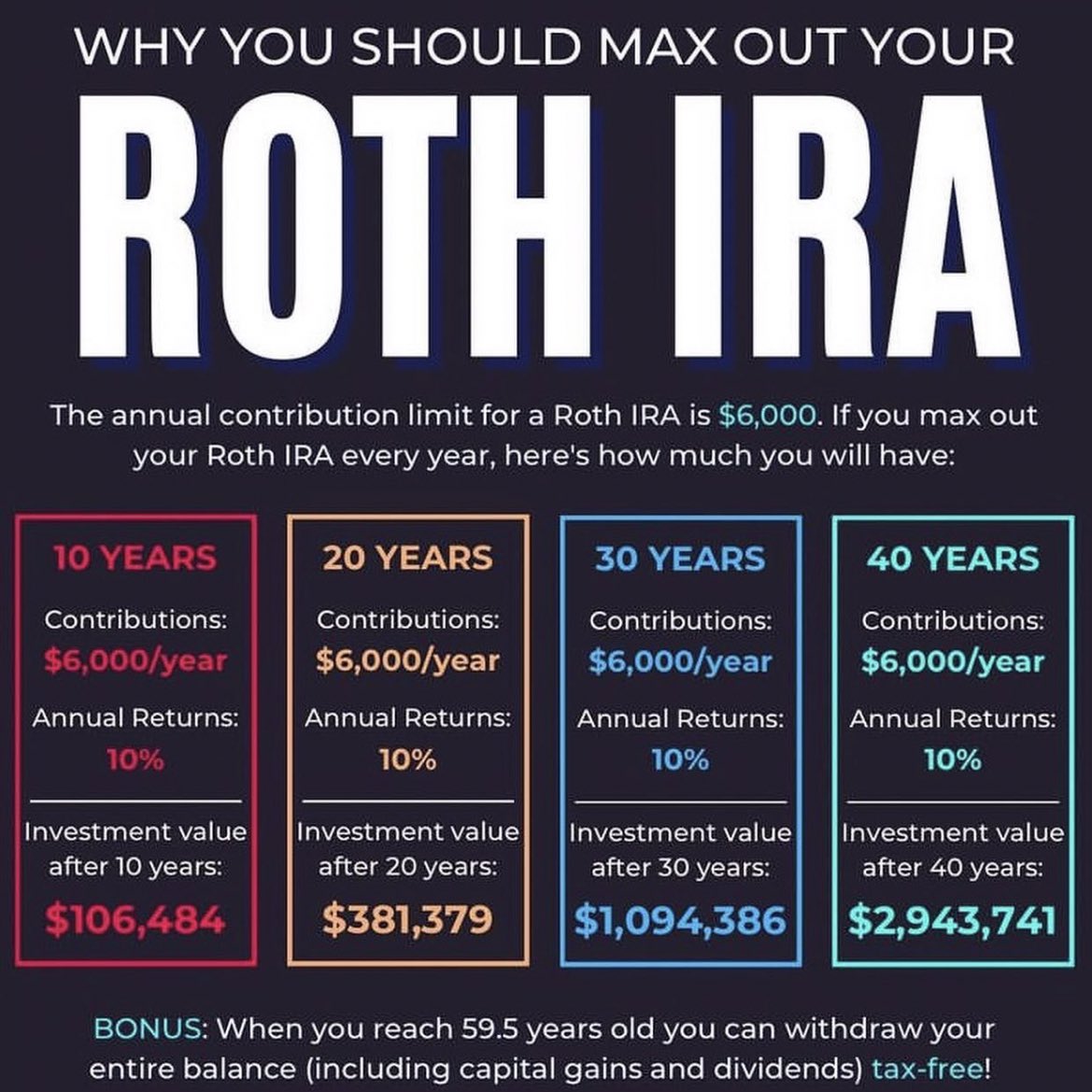
Retirement doesn’t have to be an age, it can be a number in your investment account. You can become a millionaire with a ROTH IRA & pay no taxes:
1) Invest $11 a day in an S&P 500 index fund
2) Let compound interest do all the work
3) In 30 years you’ll have $1,002,208, tax free
1) Invest $11 a day in an S&P 500 index fund
2) Let compound interest do all the work
3) In 30 years you’ll have $1,002,208, tax free
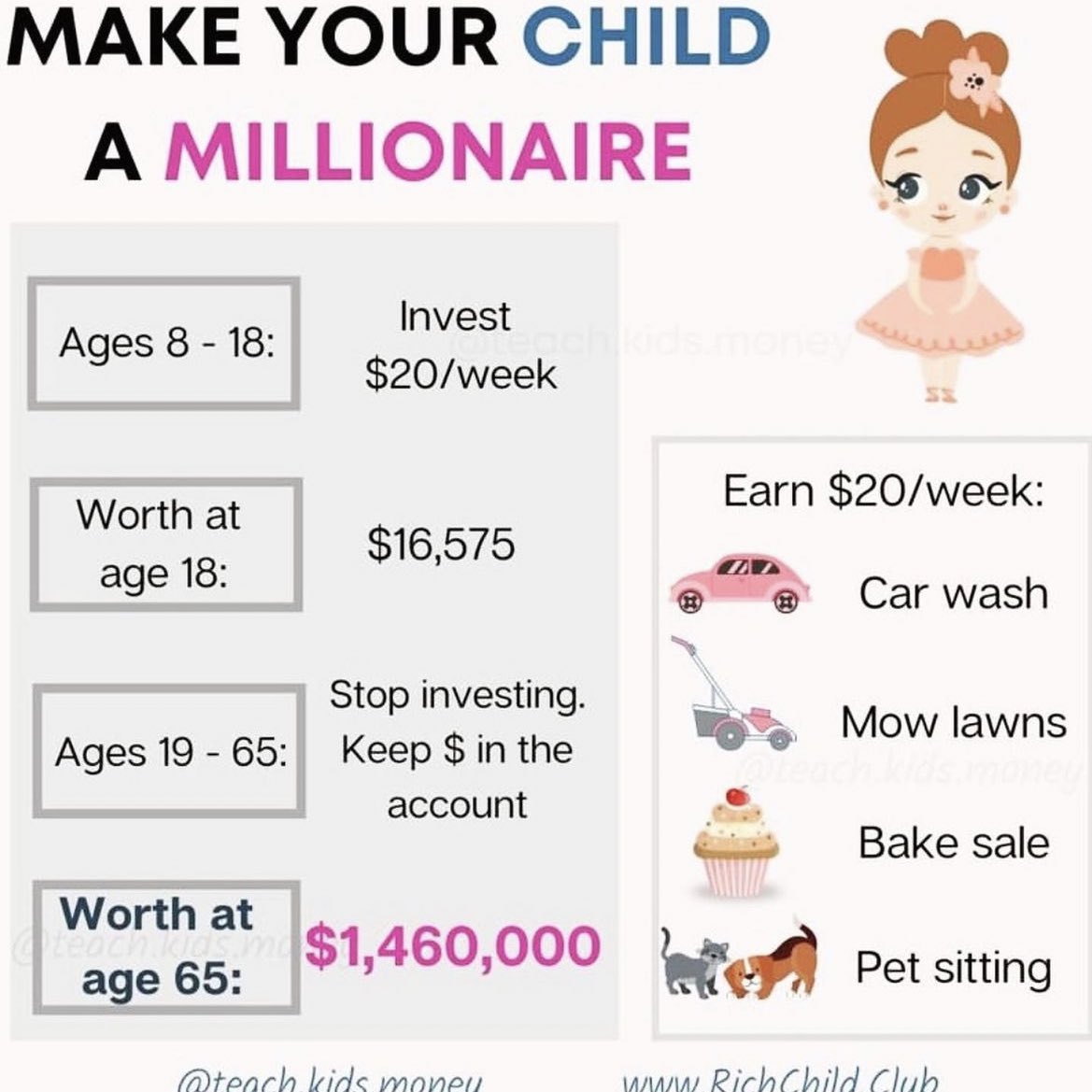
Make YOUR child a millionaire by 25:
1) Invest $150/week in an S&P 500 index fund when they're born & do nothing more
2) By the age of 25 this should grow to over $1 million due to compound interest
*based on an ~11% return, after the S&P 500's historical average over 96 years
1) Invest $150/week in an S&P 500 index fund when they're born & do nothing more
2) By the age of 25 this should grow to over $1 million due to compound interest
*based on an ~11% return, after the S&P 500's historical average over 96 years
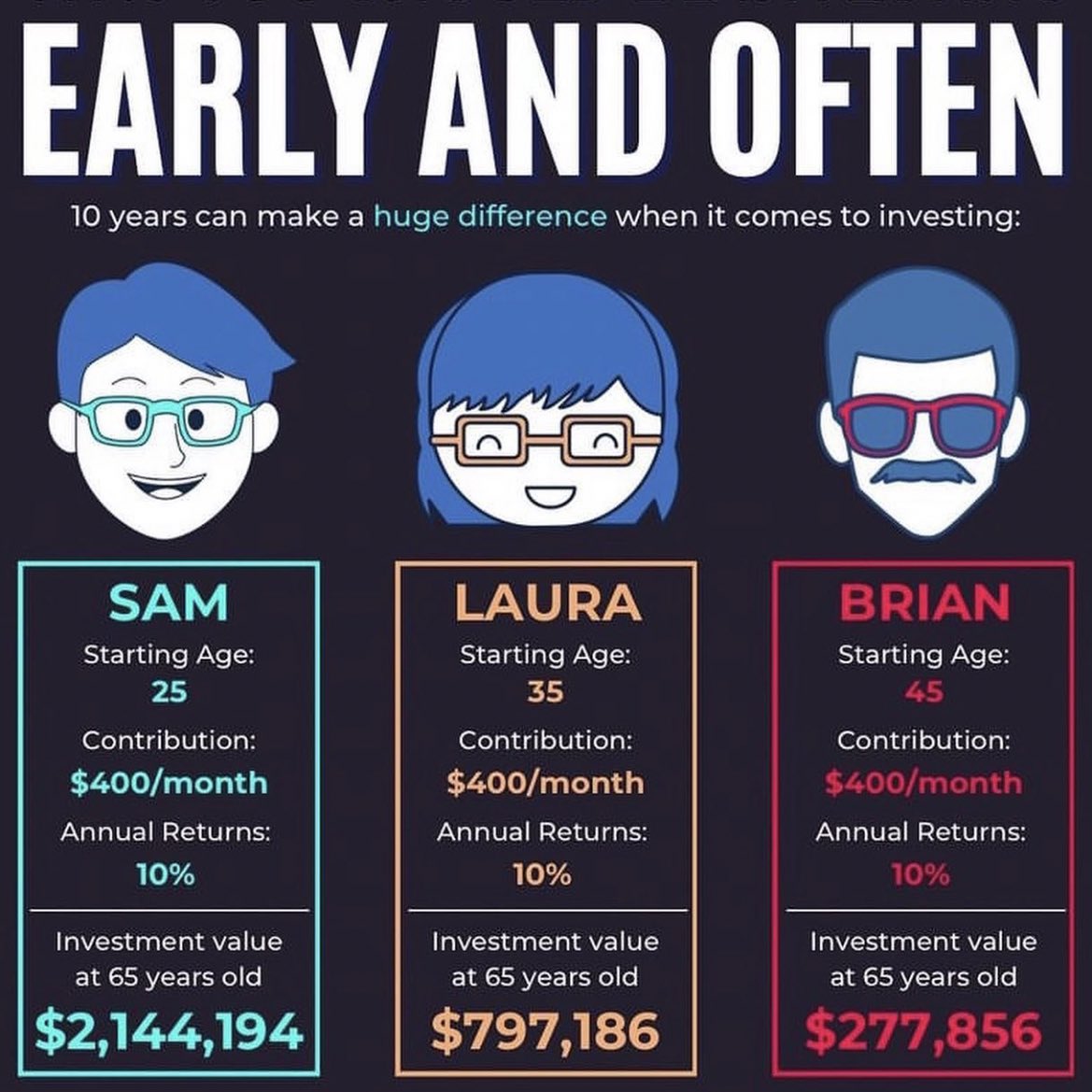
Invest early and often! The sooner you start investing, the better!
The power of compounding and compound interest is one of the greatest tools in wealth creation, and the earlier you start investing, the better.
The power of compounding and compound interest is one of the greatest tools in wealth creation, and the earlier you start investing, the better.
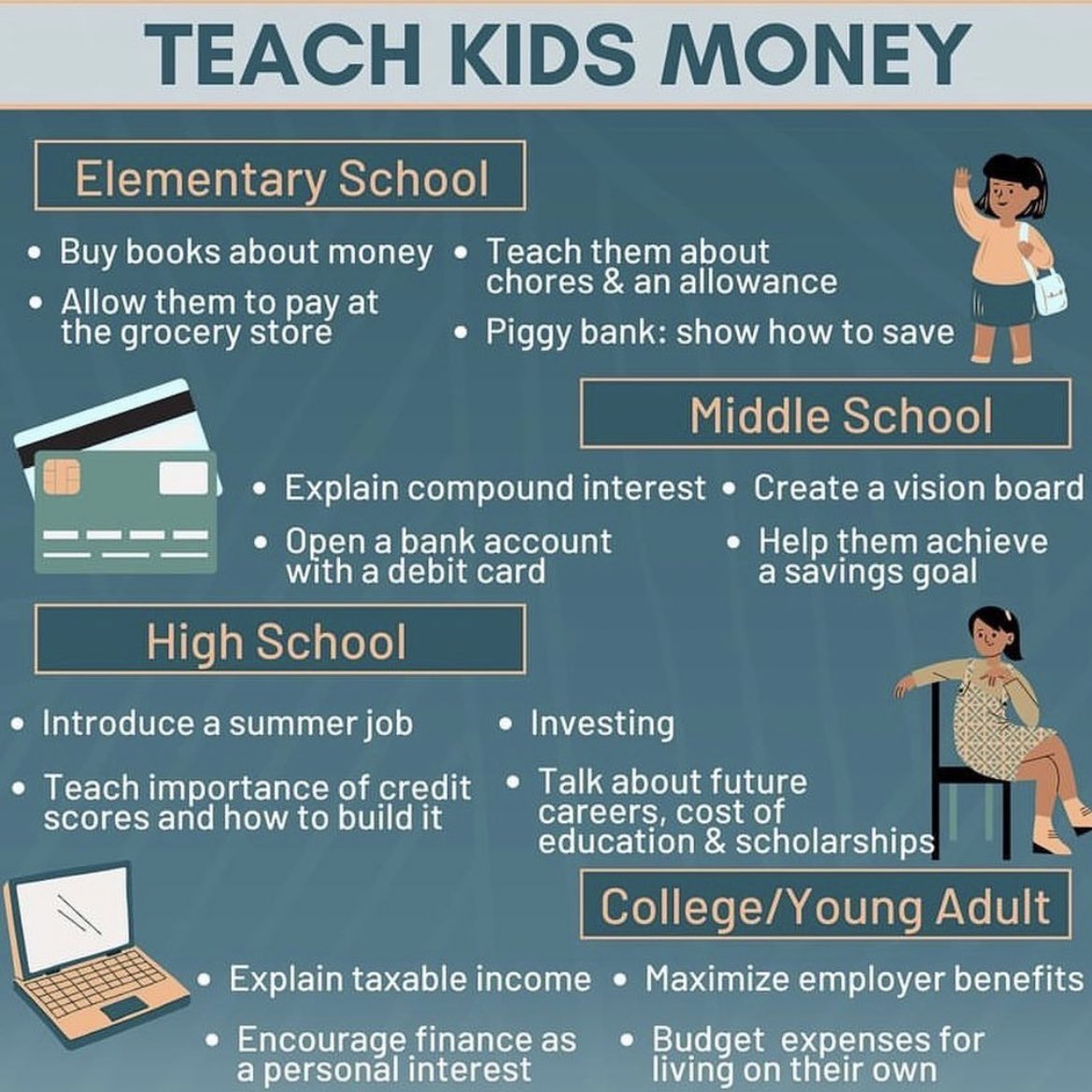
Teaching kids personal finance should be part of parenting because schools won't do it. Here are some tips from @LPinFinance:
Buy real estate with a bank's money and let tenants pay it off for you
Put down 3.5% with a FHA loan & have a tenant help pay off the 96.5% that you borrowed from the bank!
With $3,500 you control a $100,000 asset, and you get:
- cash flow
- tax benefits
- property appreciation
Put down 3.5% with a FHA loan & have a tenant help pay off the 96.5% that you borrowed from the bank!
With $3,500 you control a $100,000 asset, and you get:
- cash flow
- tax benefits
- property appreciation
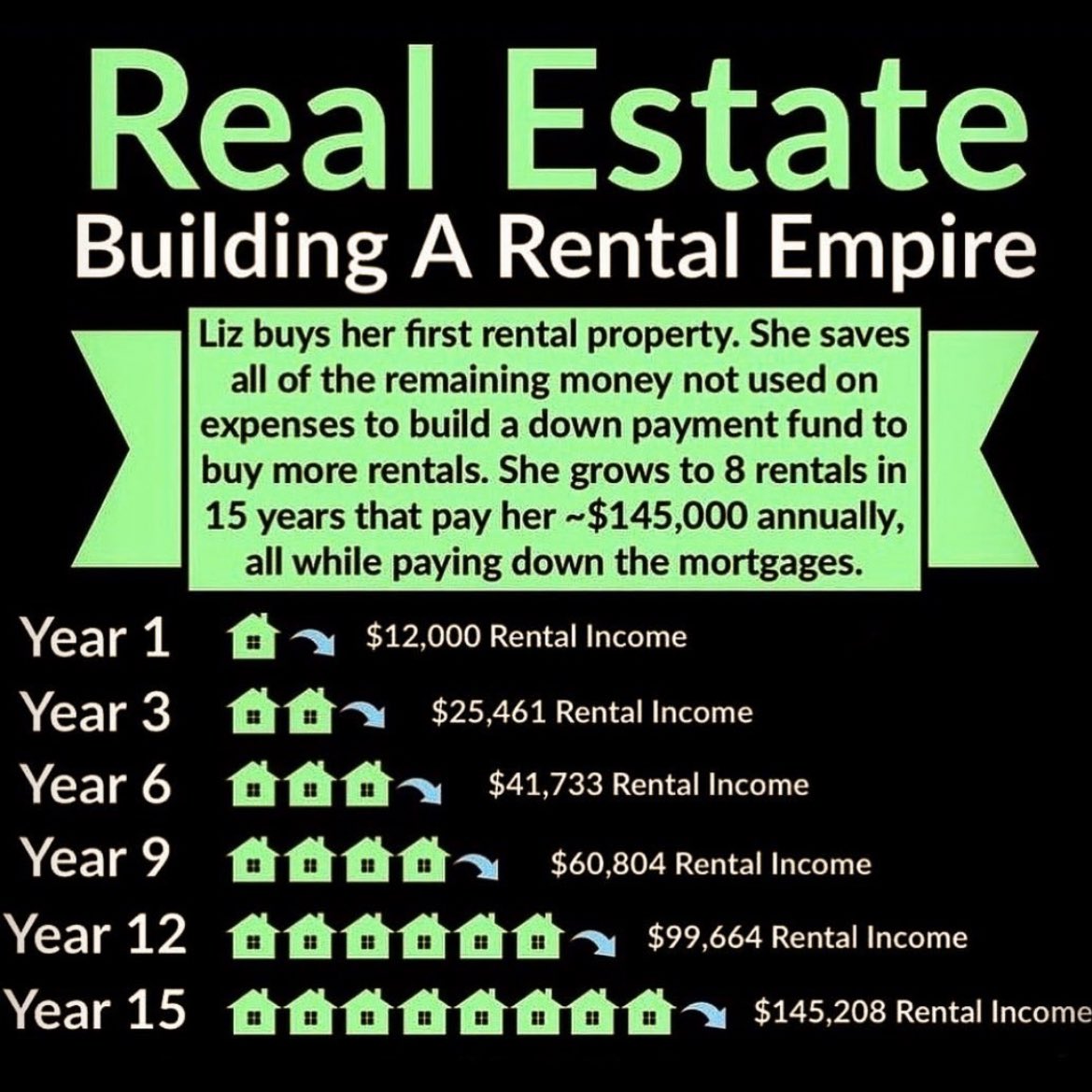
I believe that money is a tool which can be used to build wealth. When you rent, your money is solely being used to provide shelter. However, owning provides numerous benefits in addition to just providing shelter.
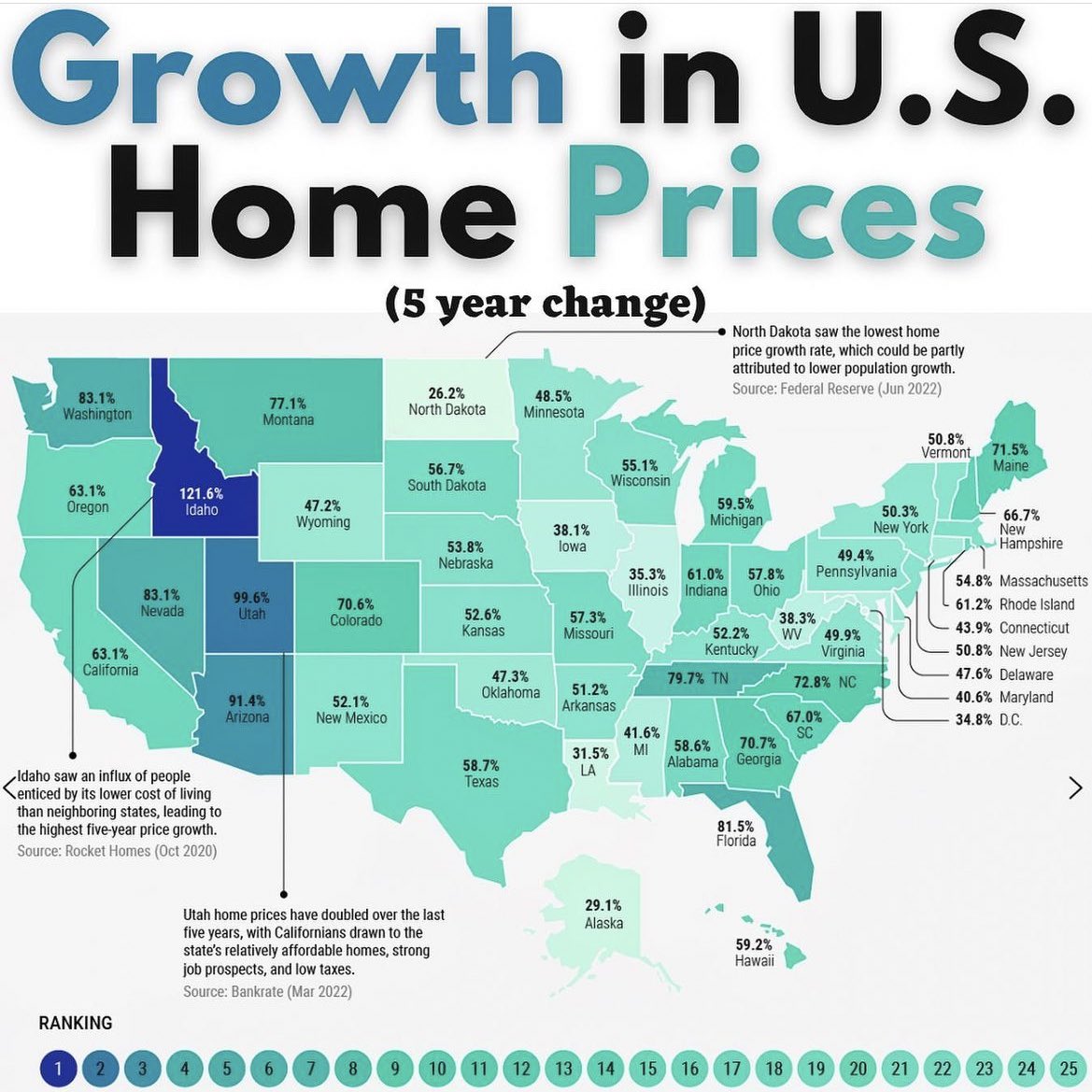
Here is the 5 year increase in home prices:
Here is the 5 year increase in home prices:
How can you make your child a millionaire?
The S&P 500 + Compounding returns. Look at this:
The S&P 500 + Compounding returns. Look at this:
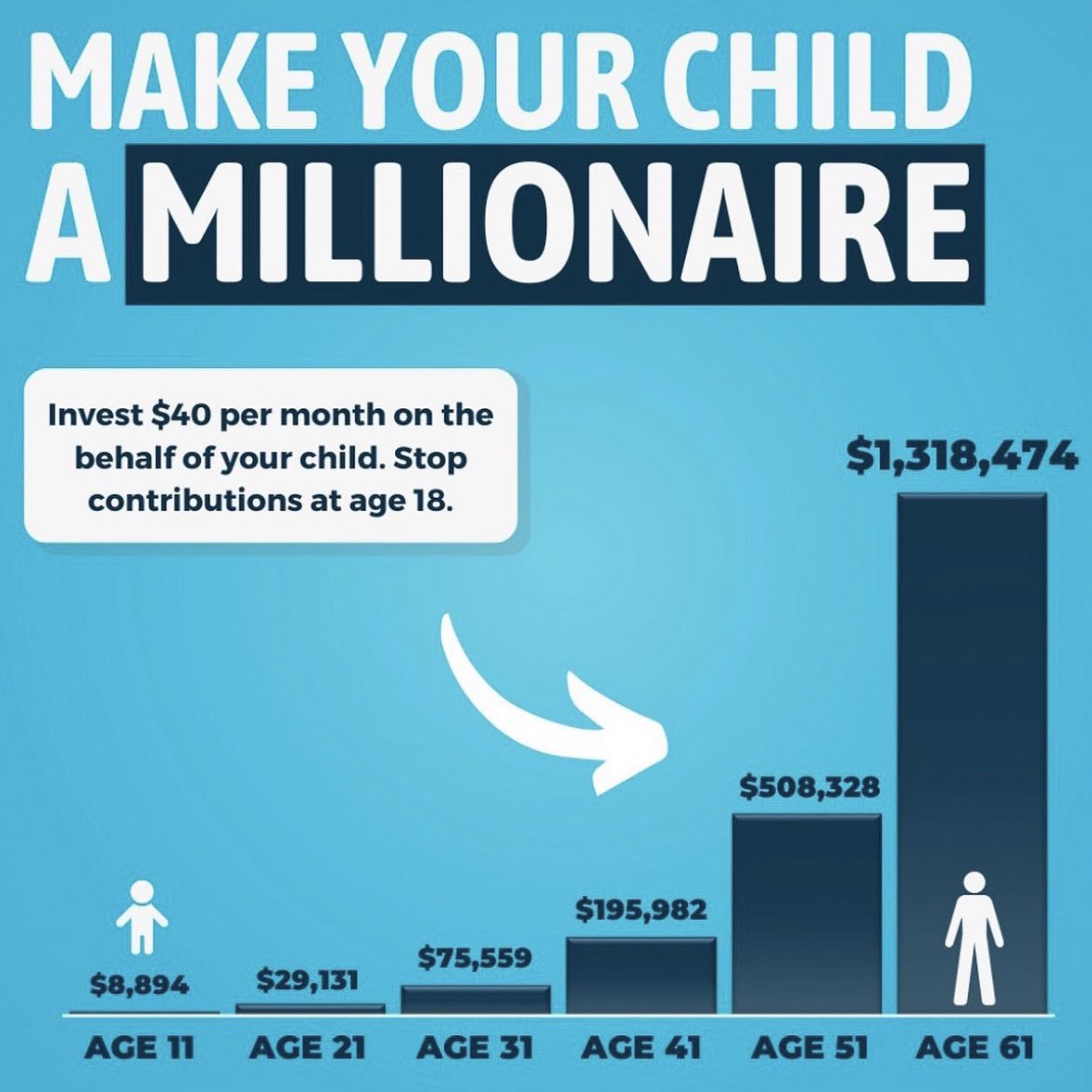
Investing for 20 years may be hard, but being old & broke will be a lot harder.
Retirement isn’t an age, it’s a financial number, and investing will get you to that number faster.
Investing may not allow you to retire tomorrow, but it will lessen the time you spend working!
Retirement isn’t an age, it’s a financial number, and investing will get you to that number faster.
Investing may not allow you to retire tomorrow, but it will lessen the time you spend working!

Every dollar you own should be working for you, while you sleep.
If you don't figure out how to make money in your sleep, a day will come where you lose sleep due to money.
Money is a tool, so use your income to buy assets!
If you don't figure out how to make money in your sleep, a day will come where you lose sleep due to money.
Money is a tool, so use your income to buy assets!

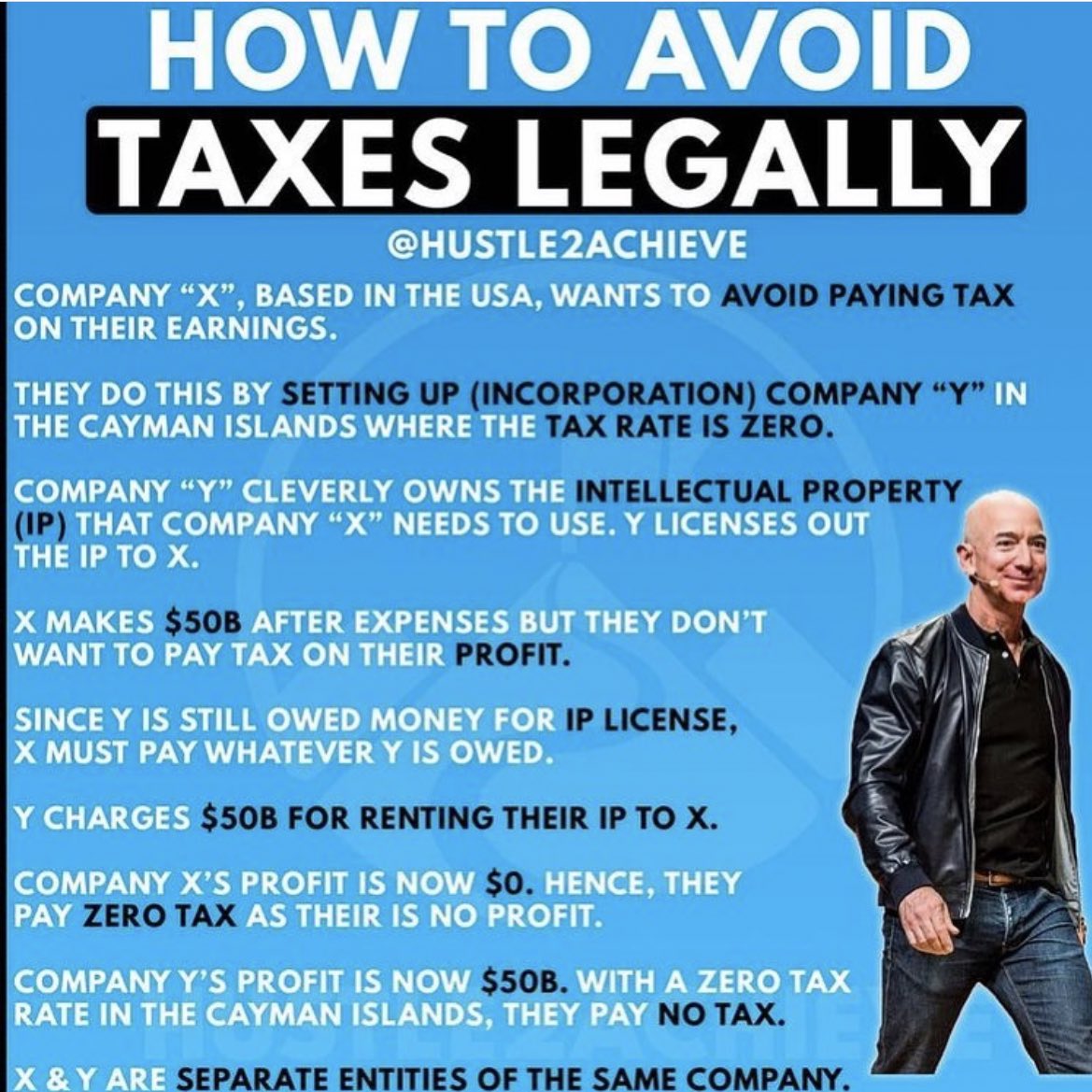
Tax code has 75,000 pages on legally avoiding taxes.
Always use tax law to your advantage.
The wealthy understand this.
Always use tax law to your advantage.
The wealthy understand this.
Why is compounding interest important?
Think of compound interest as "interest earned on interest”.
Compounding is one of the greatest tools in wealth creation, and the earlier you start investing, the better!!
Think of compound interest as "interest earned on interest”.
Compounding is one of the greatest tools in wealth creation, and the earlier you start investing, the better!!

Index Funds have many benefits such as:
1) Low risk (diversified)
2) Low fees (expense ratio)
3) Easy to invest in & simplistic
4) Often outperforms stock picking
5) Tax advantageous (generates less taxable income)
3 Largest Index Funds by Assets:
1) $SPY
2) $IVV
3) $VTI
1) Low risk (diversified)
2) Low fees (expense ratio)
3) Easy to invest in & simplistic
4) Often outperforms stock picking
5) Tax advantageous (generates less taxable income)
3 Largest Index Funds by Assets:
1) $SPY
2) $IVV
3) $VTI

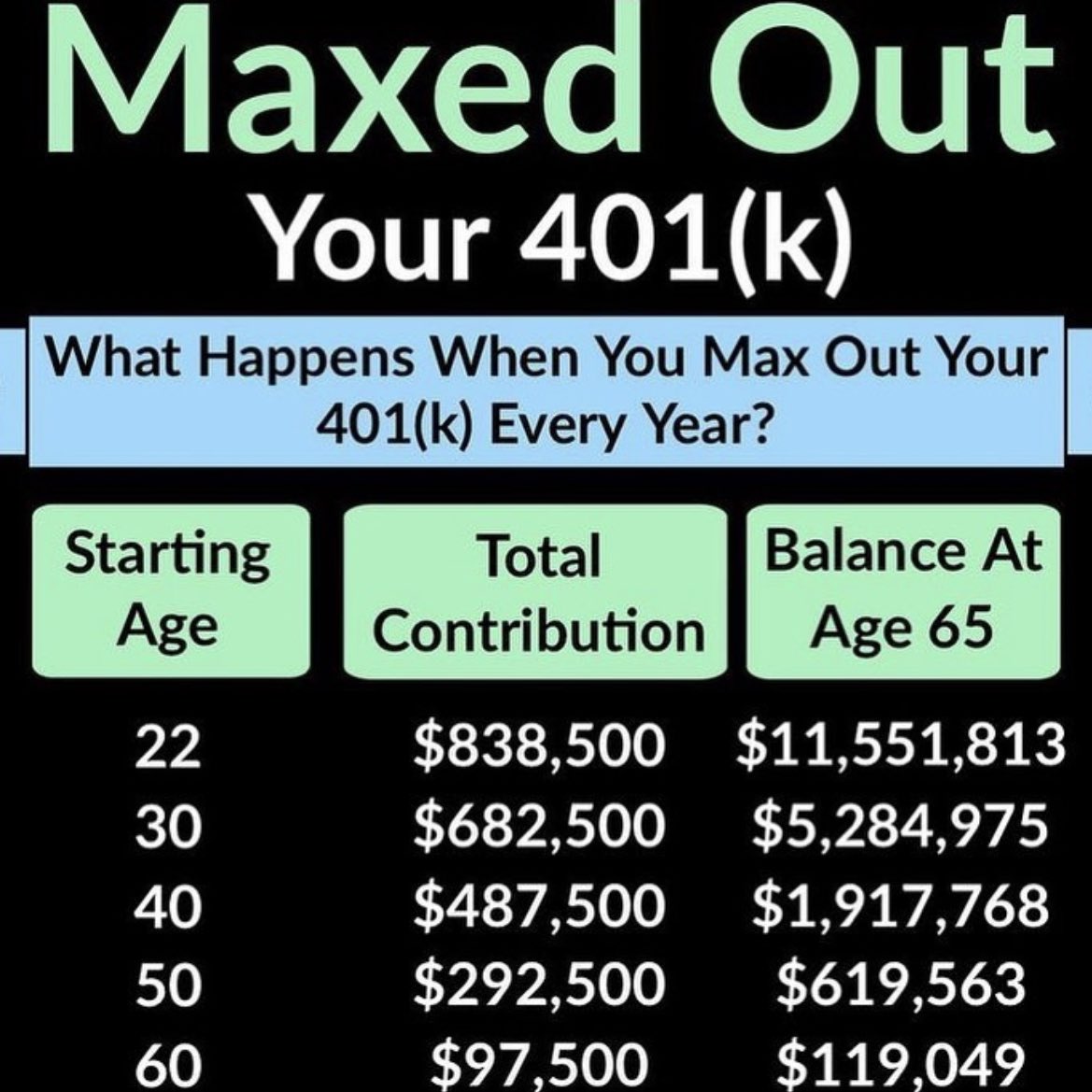
Not taking a 401(k) match from your employer is leaving free money on the table!
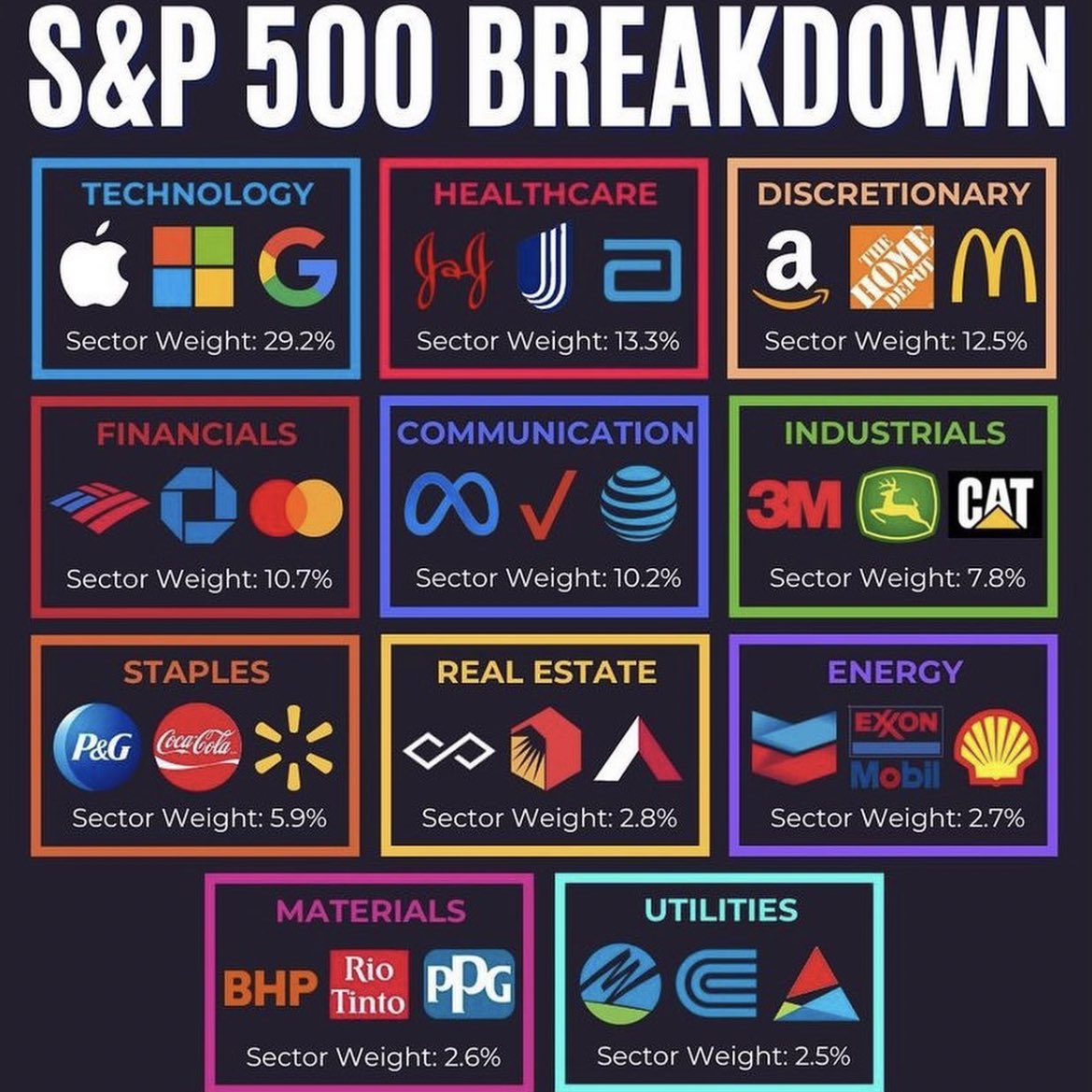
To quote Buffet from his annual shareholders meeting in 2020, “In my view, for most people, the best thing to do is to own the S&P 500 index fund.”
The S&P 500 comprises of 500 of America’s largest companies, across 11 industries!!
The S&P 500 comprises of 500 of America’s largest companies, across 11 industries!!

The S&P 500 is made up of 500 of America’s largest companies, across 11 industries, so investing in the S&P 500 is an easy and stress free way to invest for the majority of people, because you’re not betting on one single company but instead, 500 of America’s largest companies!
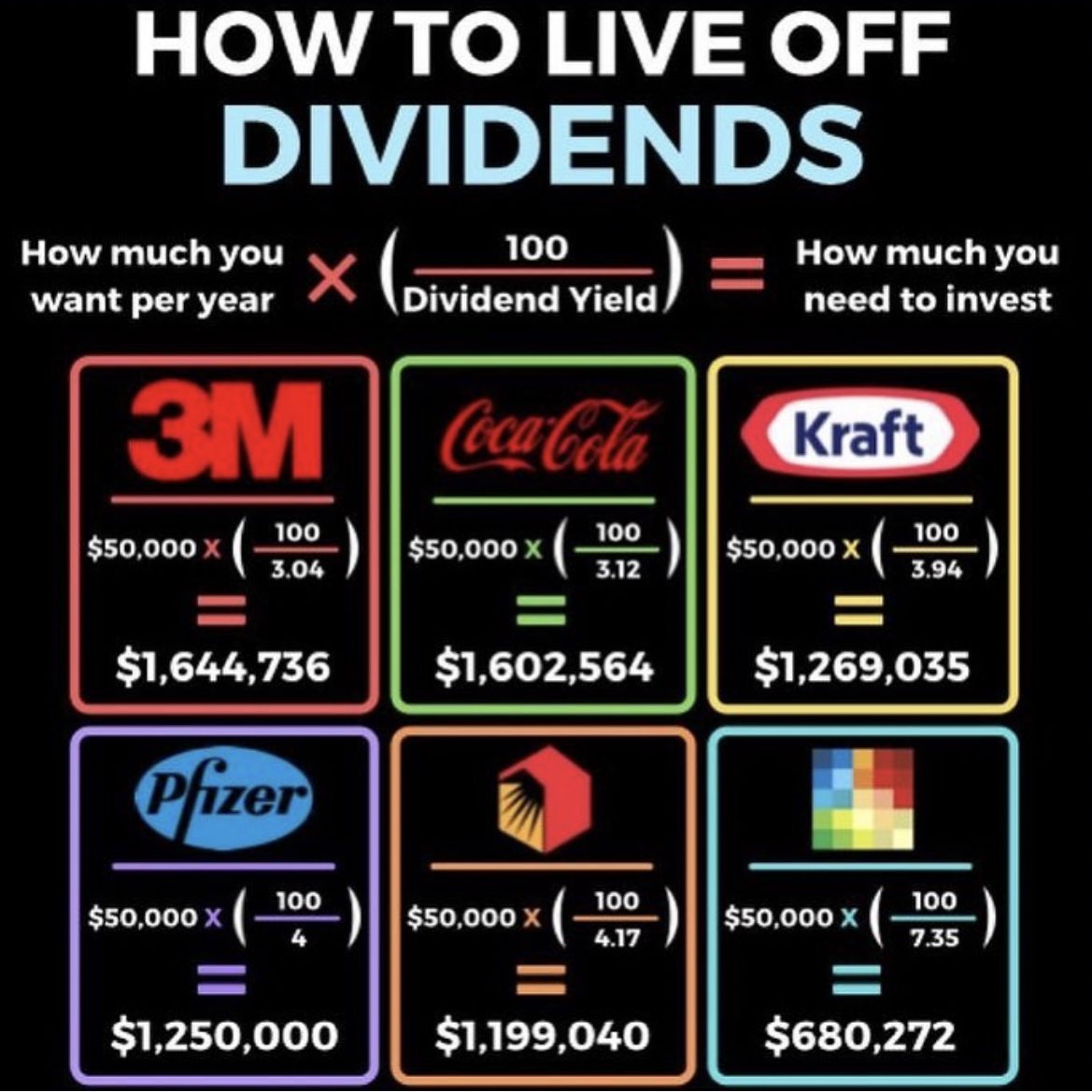
Let's talk about dividend stocks income! Dividends are payments that a company makes to share profits with its stockholders.
Dividend yield is the dividend per share / stock price, and is expressed a percentage.
$SCHD is my favorite dividend index fund!!
Dividend yield is the dividend per share / stock price, and is expressed a percentage.
$SCHD is my favorite dividend index fund!!
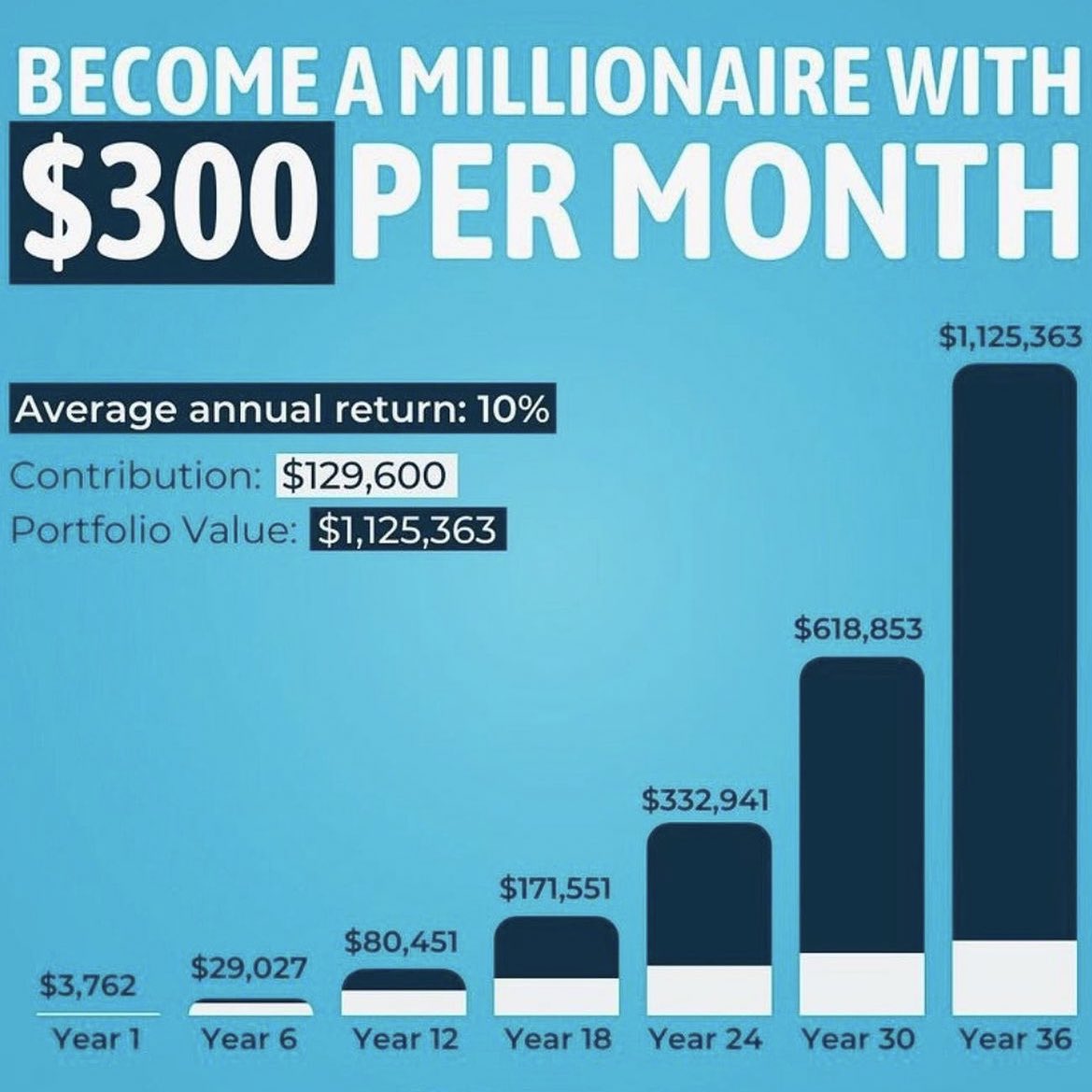
Over the last 96 years, the average return of the S&P 500 is ~11% per year!
This means, if you invest $10,000 in the S&P 500 & contribute $10,000 a year for 20 years, you only invested $210,000 in cash, but that cash would grow to $793,275 due to compound interest over time!!
This means, if you invest $10,000 in the S&P 500 & contribute $10,000 a year for 20 years, you only invested $210,000 in cash, but that cash would grow to $793,275 due to compound interest over time!!
The power of maxing out a Roth IRA:
10 Years: $117,369
20 Years: $433,591
30 Years: $1,331,479
40 Years: $3,880,962
50 Years: $11,120,016
(*based on an 11% return after the S&P 500's 96 year historical average)
10 Years: $117,369
20 Years: $433,591
30 Years: $1,331,479
40 Years: $3,880,962
50 Years: $11,120,016
(*based on an 11% return after the S&P 500's 96 year historical average)
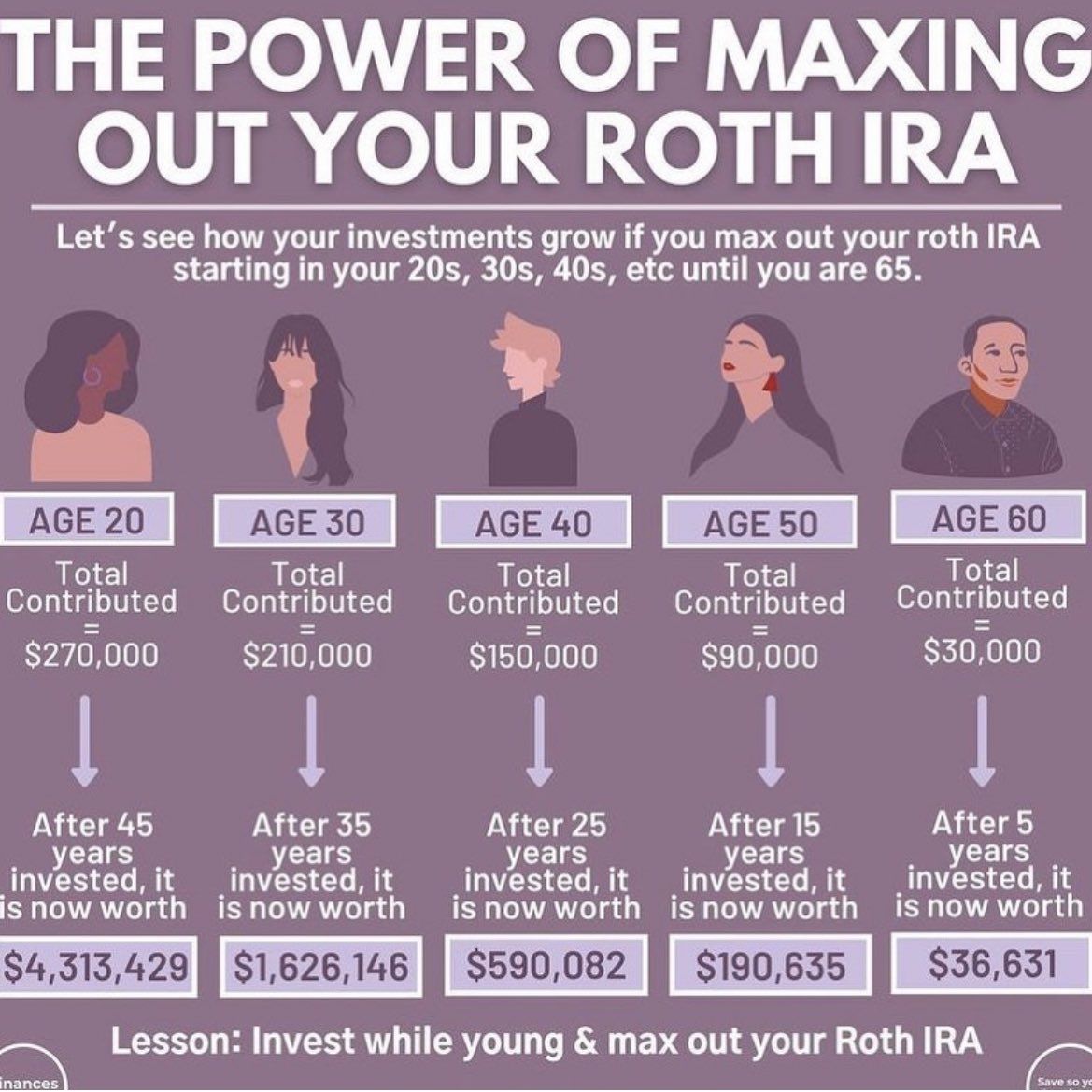
On average, the S&P 500's has returned ~11% over the last 96 years, or ~1,300,000% since 1926!!

Over time, your investment portfolio will grow!
A $100 portfolio grows to $1,000,
A $1,000 portfolio grows to $10,000,
A $10,000 portfolio grows to $100,000,
A $100,000 portfolio grows to $1,000,000
The more you invest, the more compounding interest will work in your favor!
A $100 portfolio grows to $1,000,
A $1,000 portfolio grows to $10,000,
A $10,000 portfolio grows to $100,000,
A $100,000 portfolio grows to $1,000,000
The more you invest, the more compounding interest will work in your favor!
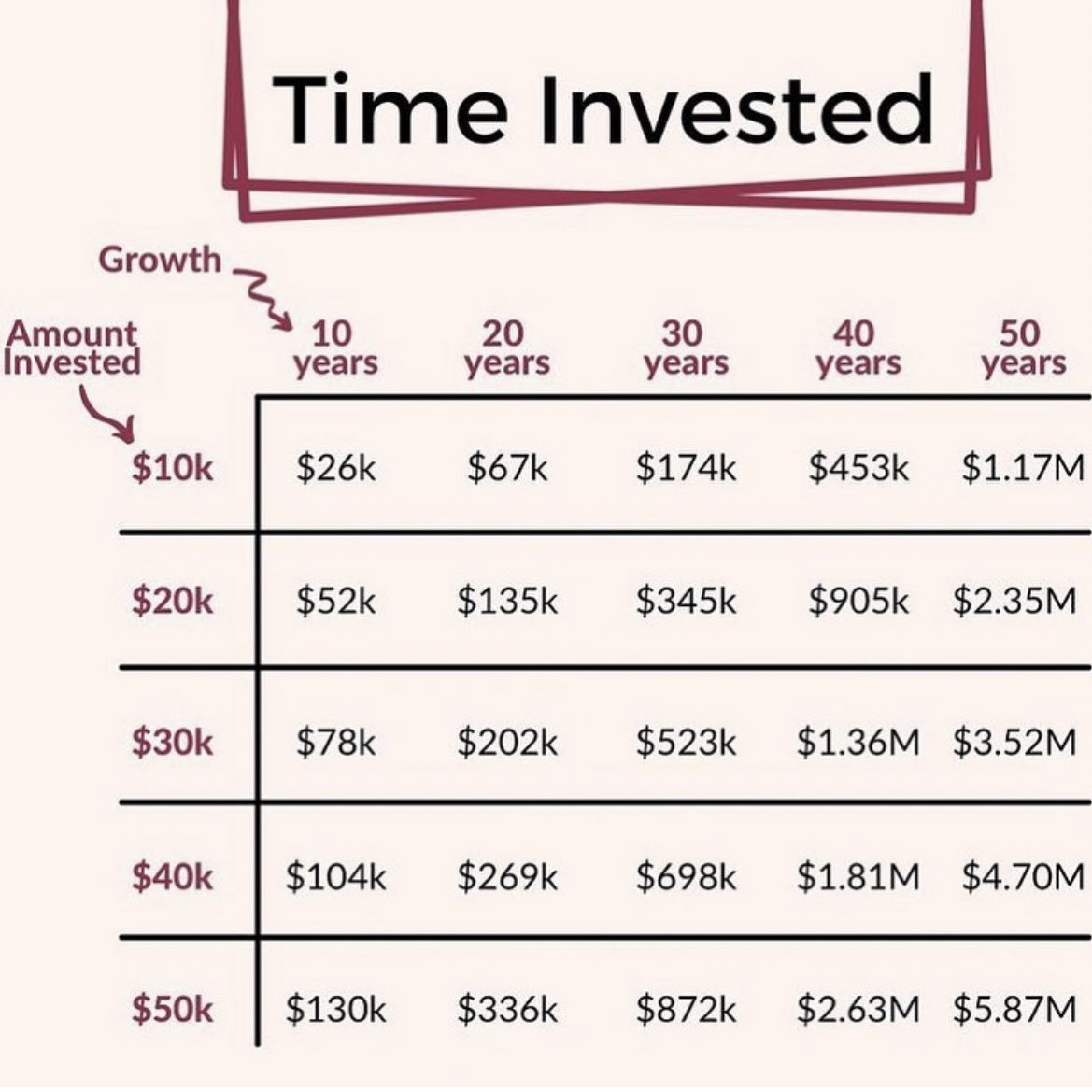
Learn as much as you can about investing and personal finance, your future self will be thankful.
If you found this thread🧵helpful:
• Follow me: @FluentInFinance
•🔁RT the FIRST tweet
•❤️LIKE the tweets
This account was created to help you build wealth & retire early!
If you found this thread🧵helpful:
• Follow me: @FluentInFinance
•🔁RT the FIRST tweet
•❤️LIKE the tweets
This account was created to help you build wealth & retire early!
• • •
Missing some Tweet in this thread? You can try to
force a refresh






