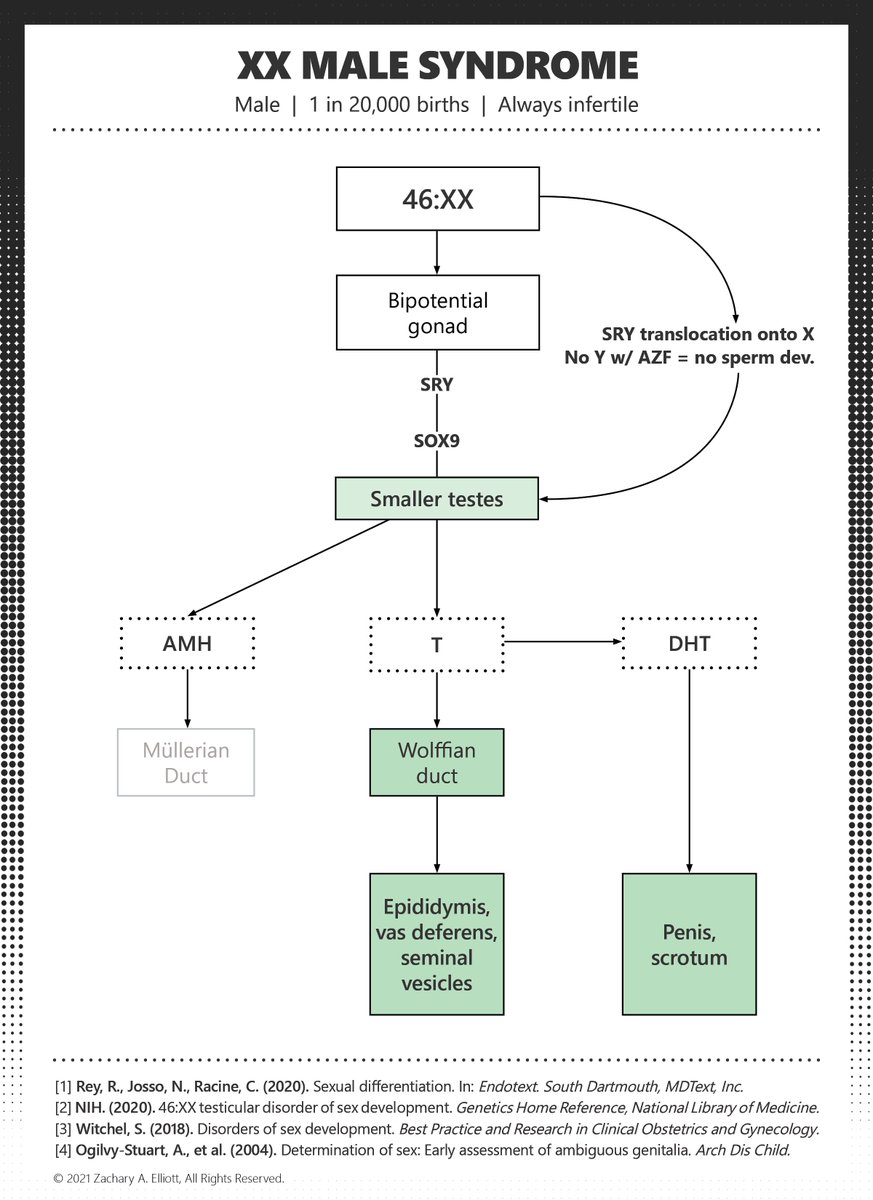
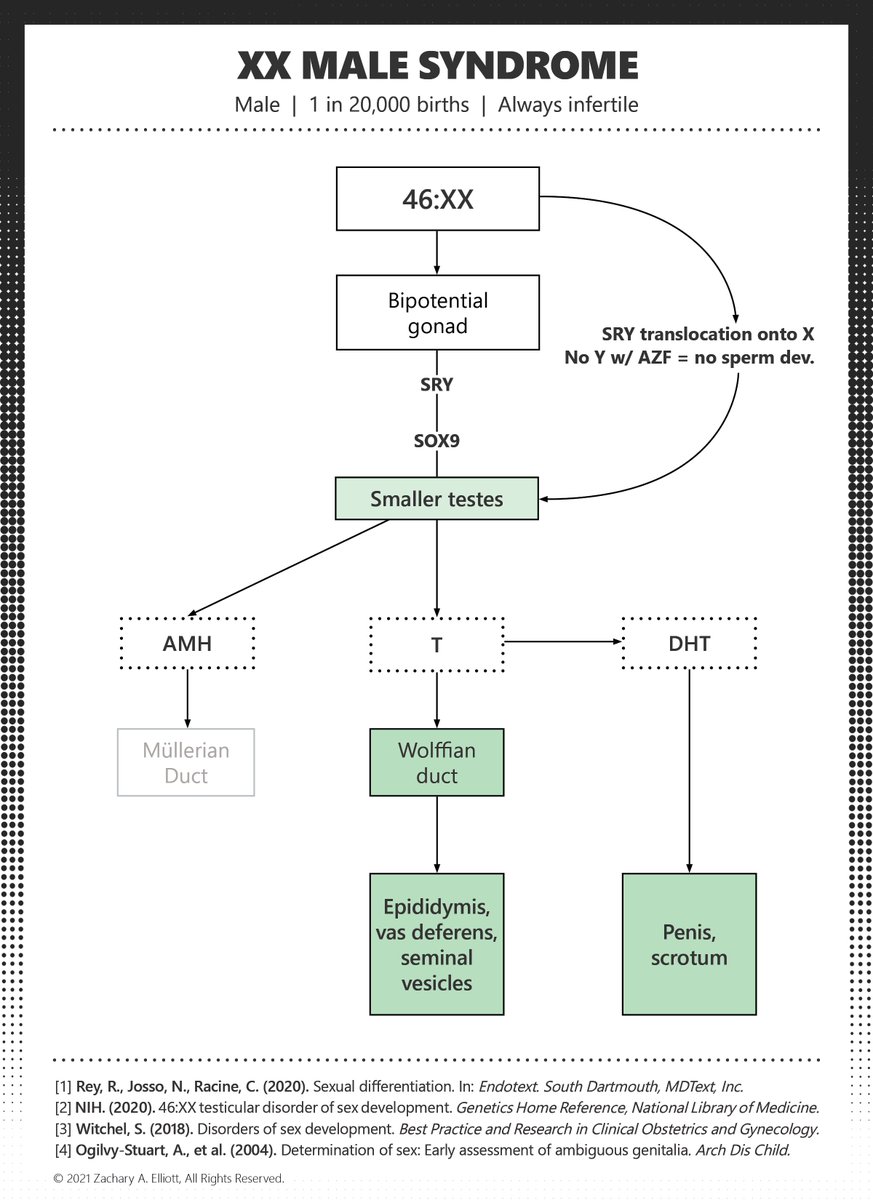
Imagine you are a male: you have a body plan organized around small gametes. You've always known you're male.
One day, you discover you have a hernia in your abdomen. You get it checked out by the doctor and they decide to do surgery. What they find shocks you and the doctors...
One day, you discover you have a hernia in your abdomen. You get it checked out by the doctor and they decide to do surgery. What they find shocks you and the doctors...
In your abdomen, they find ovarian tissue on your left side, and a partial Mullerian duct. They remove perform genetic analysis, finding you have a mixed karyotype: some of your cells are XX, but the majority are XY.
Scenario A: The doctors sit you down and tell you that you're not male or female. You're a hermaphrodite, a third sex.
You're naturally meant to be this way, and you do not need any medical intervention.
You're naturally meant to be this way, and you do not need any medical intervention.
Scenario B: The doctors reaffirm to you that you're still male, and that this genetic disorder does not make you less of a male.
They explain to you how they need to remove the ovarian tissue and Mullerian ducts or they will likely cause health problems like infertility.
They explain to you how they need to remove the ovarian tissue and Mullerian ducts or they will likely cause health problems like infertility.
If you were in this person's shoes, which scenario is more reasonable to you?
Which scenario is more humane, compassionate, medically appropriate, and accepting of you as a person and of your future physical and mental health?
Which scenario is more humane, compassionate, medically appropriate, and accepting of you as a person and of your future physical and mental health?
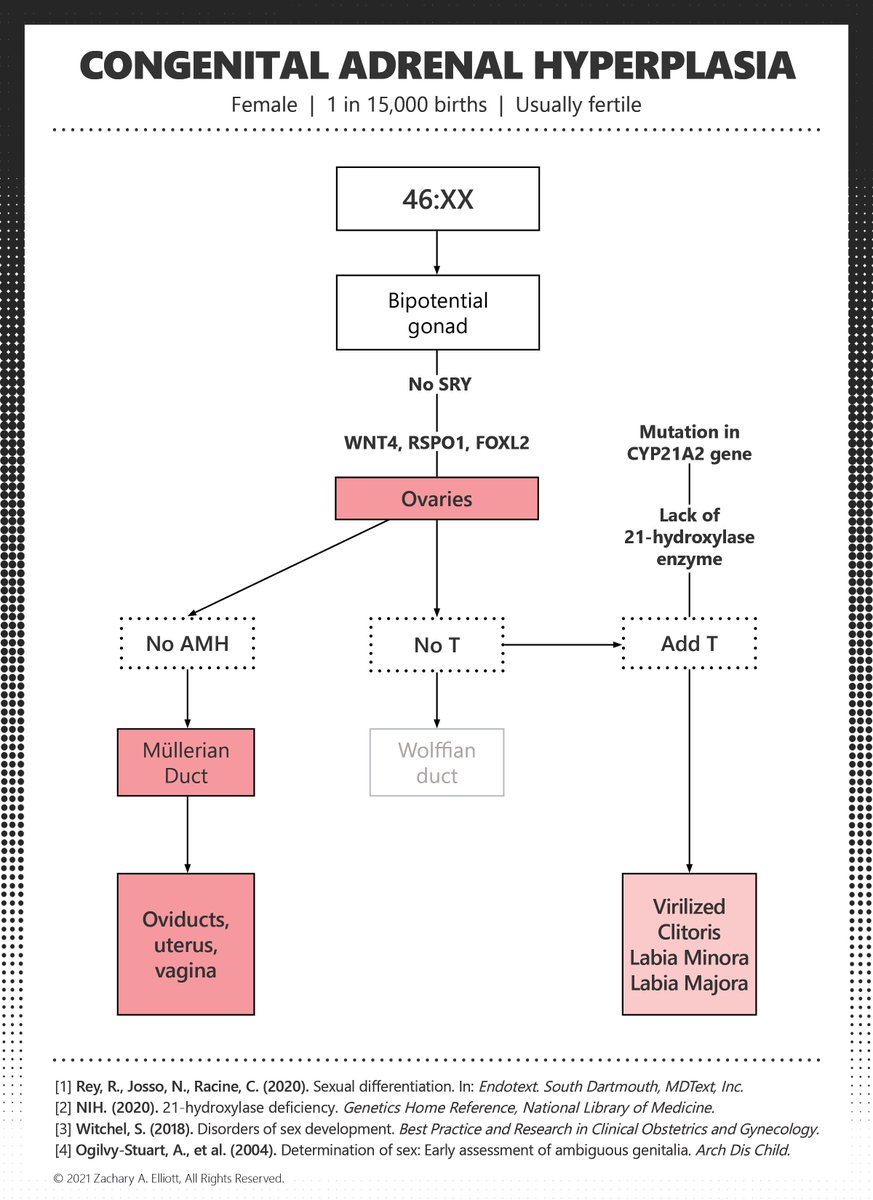
The truth is there are no human hermaphrodites. To tell people with developmental disorders, with atypical bodies, that they are not male or female is to strip them of their humanity and reinforce regressive stereotypes about what male and female bodies should look like. 
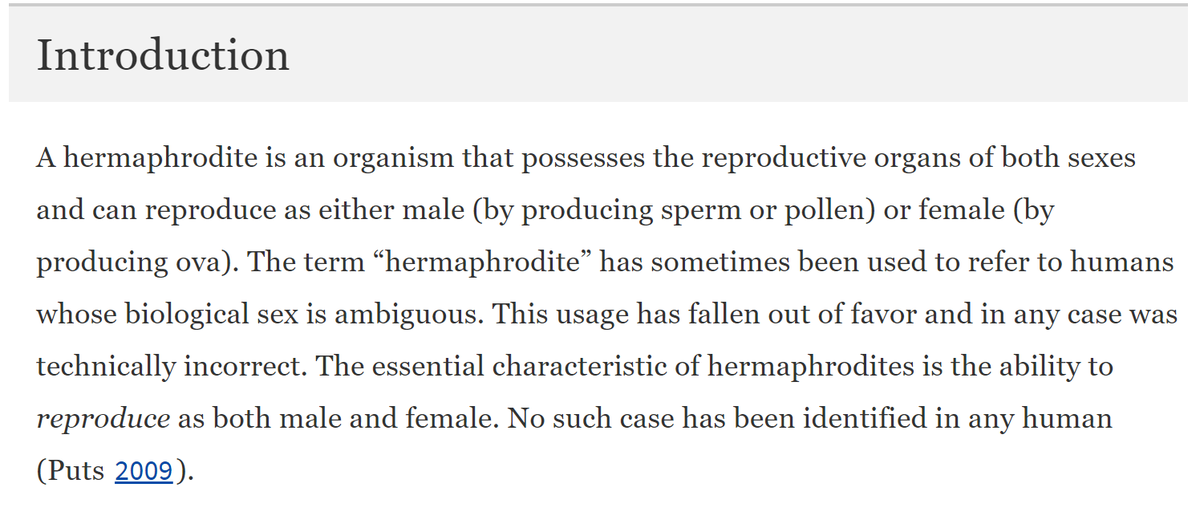
[1] Rosenfield, K. (2018). Hermaphrodite. Encyclopedia of Animal Cognition and Behavior.
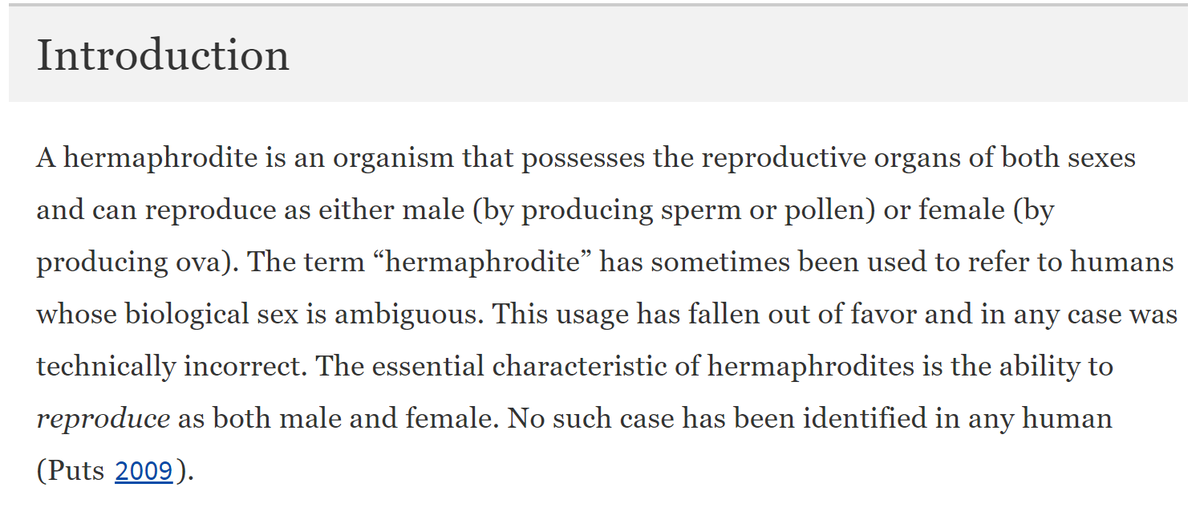
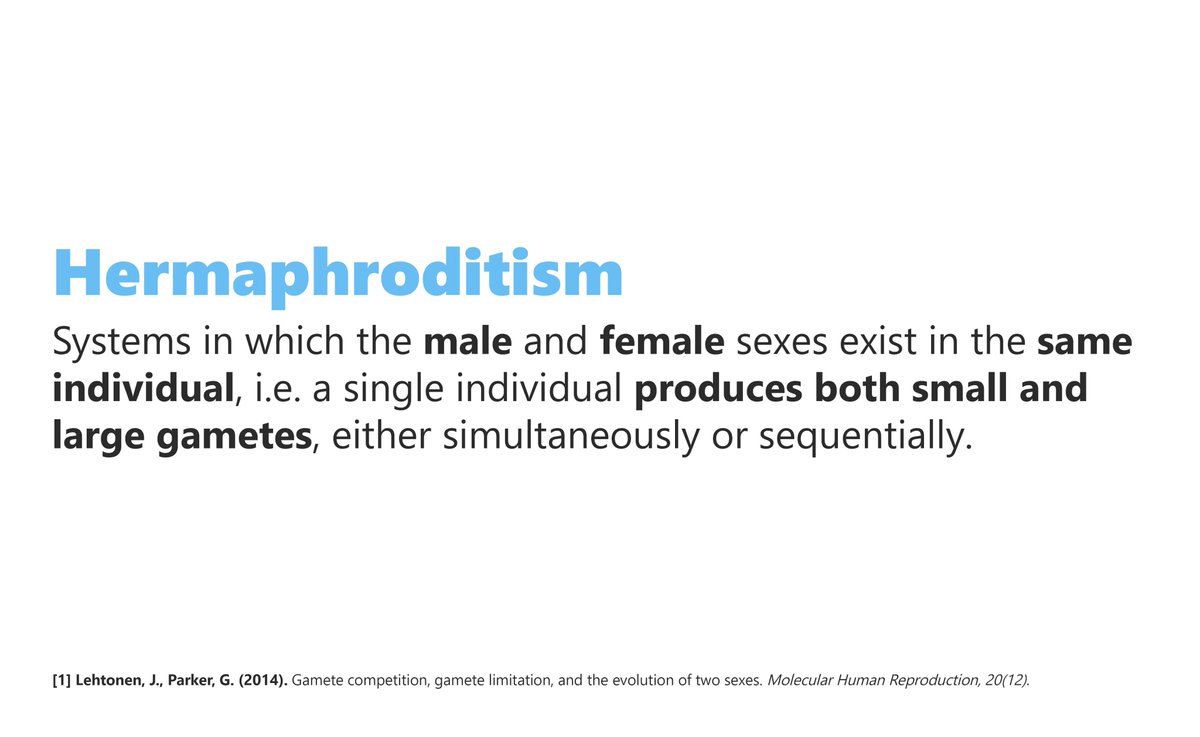
A hermaphrodite is an example of how the two sexes can be composed in one individual organism. Hermaphrodites are both sexes. They are third body type, but not a third sex.
Examples of this are common in plants, where a single plant might have both male and female flowers.
Examples of this are common in plants, where a single plant might have both male and female flowers.
In humans, however, this term is clinically problematic and scientifically incorrect, as it does not accurately describe the person's body, sex, or condition while othering them as neither male nor female.
In reality, humans are either male or female. There are only two sexed pathways of development, and these pathways are mutually antagonistic: as the fetus develops down one path, the other path is inhibited.
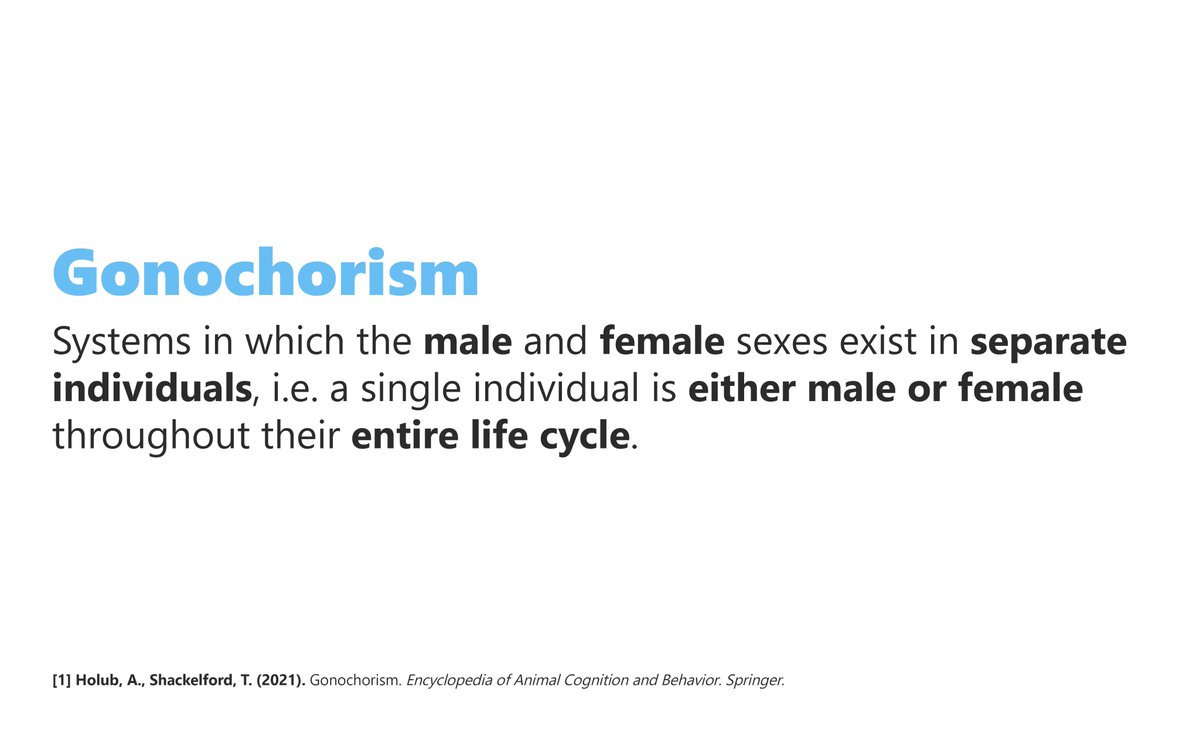
In evolutionary biology, the term for this kind of system is gonochorism.
If you want to learn about what the two sexes are and their evolutionary origins, I recommend this piece.
Peer-reviewed literature throughout.
theparadoxinstitute.com/read/origins-o…
Peer-reviewed literature throughout.
theparadoxinstitute.com/read/origins-o…
If you think the hypothetical case I described above is not realistic, check out this case study from the journal of Urology.
https://twitter.com/zaelefty/status/1587459975298809859?s=20&t=_XOTV4FQezyJ_RmTyhh7Ug
• • •
Missing some Tweet in this thread? You can try to
force a refresh