Tony Duffy Profile picture
Nov 4, 2022 11 tweets 4 min read Read on X
Palliative care: Opioids 🧵

Alfentanil and Fentanyl belong to the Phenylpiperidine family and have a much higher affinity for Mu opioid receptors than Morphine and Oxycodone which belong to the Phenanthrene class.

They are more potent but this difference has other implications
You decide to rotate a person taking 150mg of oral morphine/day to an equivalent transdermal Fentanyl patch. Their pain is stable and they are fed up taking so many pills. You do the maths and decide on a 50microgram/hour patch.
You start the Fentanyl patch and stop the patients morphine.
Day 1 all is well
Day 2 patient feeling a bit achey all over and has a headache
Day 3 patient has diarrhoea, abdominal cramps, restlessness and feels dreadful. They are yawning and have goosebumps
They are experiencing opioid withdrawal……. But hold on…They are receiving the equivalent dose of opioid to what they had before and Fentanyl is a more potent Mu receptor agonist!

What is going on?
Morphine acts on the Mu receptor and Fentanyl has that covered.

Morphine also acts to varying degrees on the Delta and Kappa opioid receptors which are not activated as well by Fentanyl. These receptors are not happy and withdrawal is occurring.
Opioid receptors are concentrated in the CNS but are also found in the peripheral nerves and end organs such as the bowels.

Fentanyl is highly liphophilic so it rapidly dissipates into the CNS leaving those more peripheral Mu receptors a little underwhelmed.
When you rotate from a Phenanthrene to a Phenylpiperidine too quickly you can precipitate this unpleasant seemingly paradoxical opioid withdrawal.

Abdominal cramps and loose stools may be main symptoms
2 ways to reduce the risk

-Carry out the rotation in smaller steps over a longer period.

-Have the original morphine or oxycodone available as an immediate release preparation to be used for pain/withdrawal

Speak with your palliative care colleagues or pain team for advice
This withdrawal reaction is far less likely to happen when rotating the opposite way back to morphine or oxycodone.

Weird stuff eh… really important though as opioid withdrawal is awful and can be mistaken for other/worsening illness leading to unnecessary distress
Opioid conversion tables and calculations are helpful but are only part of the much more complex skill that is Opioid Rotation.

Not all opioids are equal
As always this is how I understand this areas and the thread is designed to open up discussion and learning (especially me 😉)

• • •

Missing some Tweet in this thread? You can try to force a refresh

 

Keep Current with Tony Duffy

Tony Duffy Profile picture

Stay in touch and get notified when new unrolls are available from this author!

Read all threads

This Thread may be Removed Anytime!

PDF

Twitter may remove this content at anytime! Save it as PDF for later use!

Try unrolling a thread yourself!

how to unroll video
  1. Follow @ThreadReaderApp to mention us!

  2. From a Twitter thread mention us with a keyword "unroll"
@threadreaderapp unroll

Practice here first or read more on our help page!

More from @Existential_Doc

Oct 25, 2025
Naloxone in palliative care 🧵

Naloxone can save lives in people with opioid induced respiratory failure or apnoea.

It’s use only indicated when there is a fall in respiratory rate with evidence of significant ventilatory failure
There are various parameters quoted for using naloxone which include:
Resp rate <8/min with
O2 sats <85% or
Cyanosis

In palliative care patients taking regular opioid for pain great care is needed before using naloxone
Giving a 400microgram dose of naloxone to a patient with severe cancer pain treated with opioids will not only cause opioid withdrawal but also acutely unmask their pain.

Many Patients describe this as the worst experience imaginable
Read 19 tweets
Apr 14, 2025
Cancer cachexia in palliative care

A Thread 🧵

The term Cachexia originates from the Greek words Kakos and Hexis and translates to “bad physical state”

It is estimated to be the direct cause of death in up to 20% of cancer patients.
What is it?

Definitions

5% or more loss of body weight in last 12 months or BMI < 20 with 2% or more weight loss or sarcopenia with 2% or more weight loss.

A spectrum of cachexia severity exists and early identification of the pre-cachexia stage often missed

ESPEN 2017 Image
Pre-cachexia occurs when weight loss has not reached the defined cut off for cachexia.

Early weight loss of any amount coupled with reduced oral intake should make you think of pre-cachexia in anyone with cancer.
Read 25 tweets
Apr 6, 2024
Opioid induced nausea and vomiting (OINV) is very common and by no means unique to palliative care.

It is important to have an understanding of the natural history of OINV to help establish pain control in palliative care when opioids are really needed
There are 3 mechanisms likely involved:

1) opioids act as direct agonists on Mu opioid receptors found In Chemoreceptor Trigger Zone.

This is the non-specific “smoke alarm” area of the brain that detects chemical/metabolic imbalances close to the blood brain barrier
Read 13 tweets
Jan 6, 2024
Cheyne Stokes respiration at end of life- Thread

Can be scary to witness for family, loved ones and health care professionals looking on.

Understanding a little about what is happening may help alleviate some of that distress 🧵
Having witnessed this both at a personal and professional level I felt I needed to understand more.

Please Note ⭐️This may be a difficult topic for some to explore and not one that is commonly talked about in any detail even in my daily job.

I hope this may help a little
Cheyne Stokes respiration is the term given to cyclical periods of very fast breathing (tachypnoea) followed by periods when breathing stops (apnoea)

During the tachypnoeic phase respiratory rate may be >35/min

Apnoeic episodes may exceed 60 seconds
Read 21 tweets
Jul 2, 2023
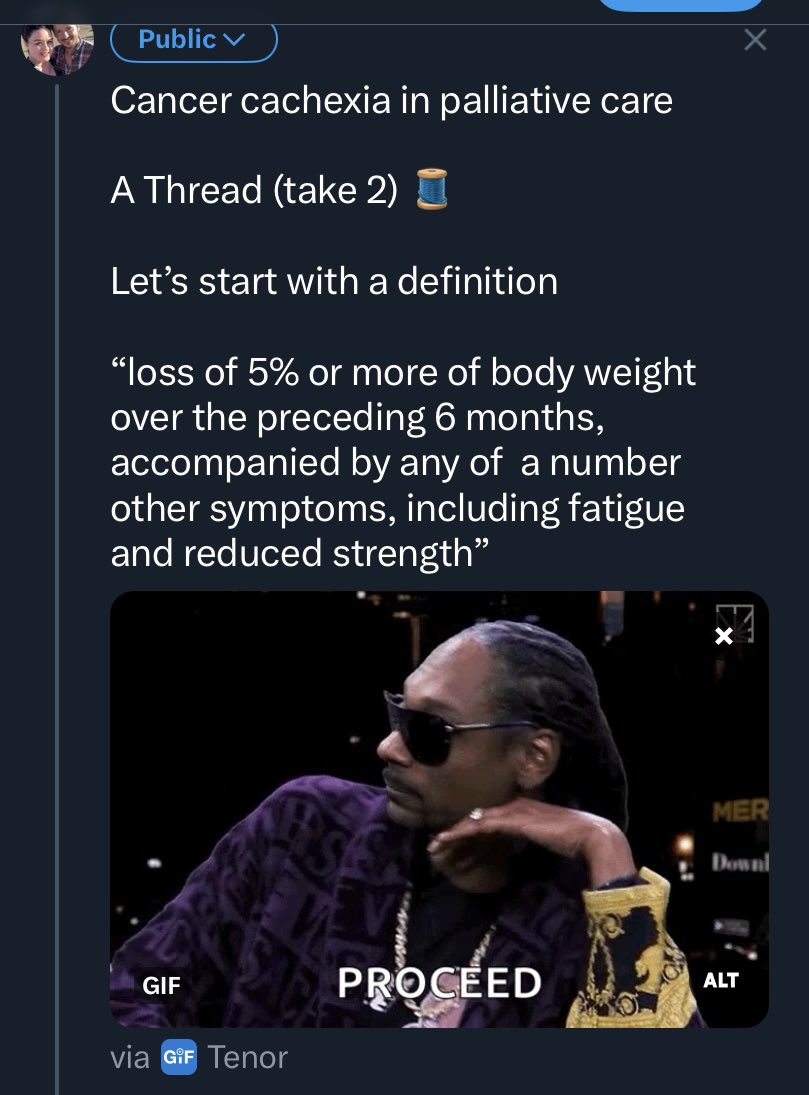
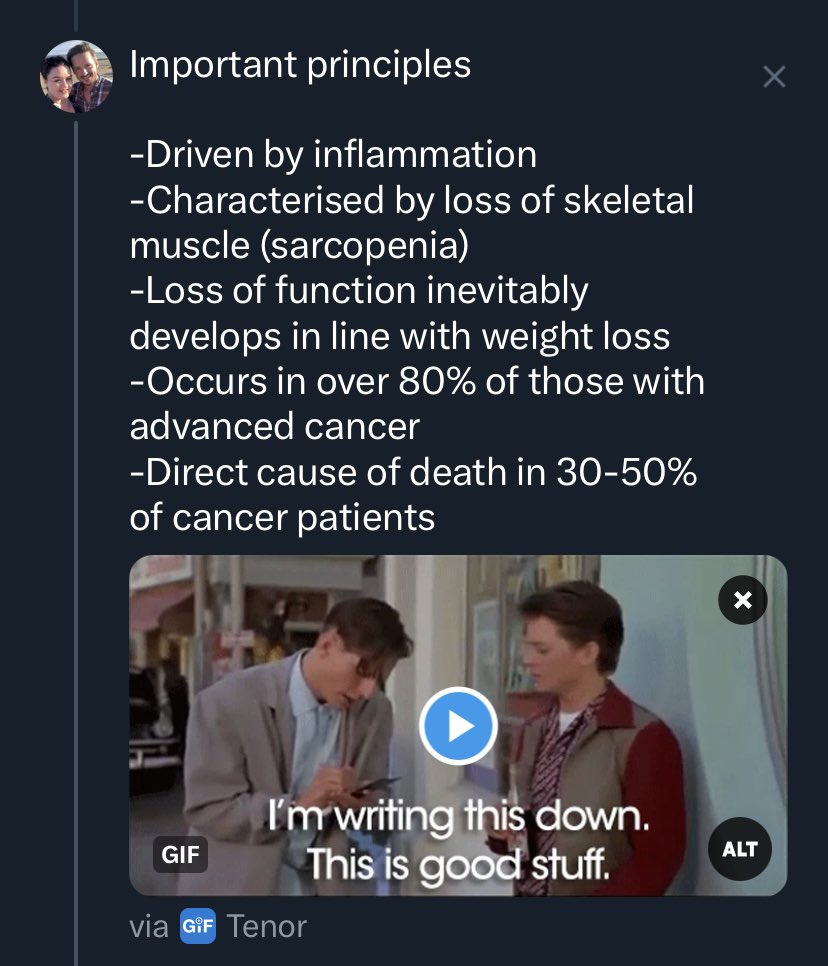
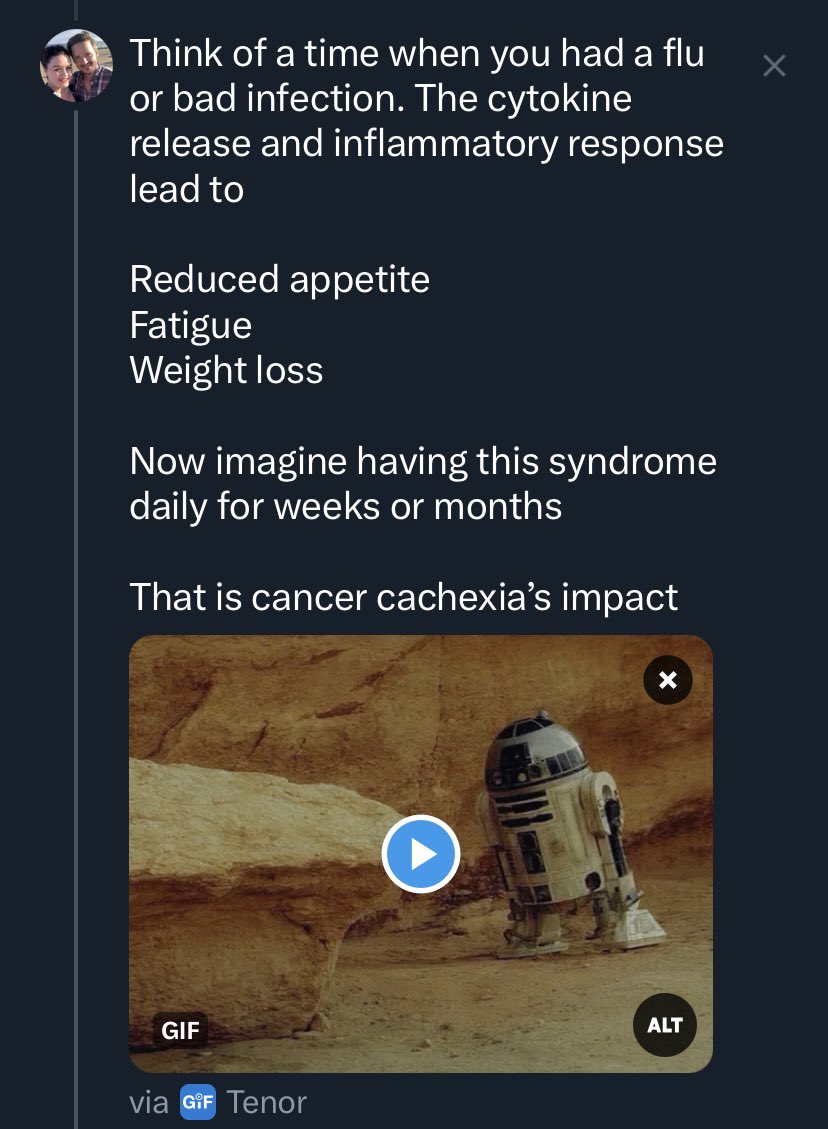
Cancer cachexia in palliative care

An improvised thread 🧵

Presented in screenshots due to Twitter having a wobble
Will post proper thread one day 😊
Read 26 tweets
Apr 12, 2023
We are good at a trial of medication to see if symptoms improve.

Why about a trial without medication?

If symptoms improve this points to side-effects

If no change/worse likely related to disease progression/new illness

The follow up is where the answer becomes clear- vital
There’s a temptation to attribute new symptoms to drug side-effects, stop the drug and think “job done”

What if the symptom persists and there is no follow up to check for resolution? What’s plan B

Unmet needs/symptom burden
Delayed diagnosis
Inaccurate intolerance lists
“It’s the morphine you started taking that’s making you drowsy, confused and constipated.”

Very well could be.. so it’s stopped

1 week later ongoing symptoms…
No planned follow up and there’s a good chance the hypercalcaemia of malignancy will lead to worsening distress
Read 4 tweets

Did Thread Reader help you today?

Support us! We are indie developers!


This site is made by just two indie developers on a laptop doing marketing, support and development! Read more about the story.

Become a Premium Member ($3/month or $30/year) and get exclusive features!

Become Premium

Don't want to be a Premium member but still want to support us?

Make a small donation by buying us coffee ($5) or help with server cost ($10)

Donate via Paypal

Or Donate anonymously using crypto!

Ethereum

0xfe58350B80634f60Fa6Dc149a72b4DFbc17D341E copy

Bitcoin

3ATGMxNzCUFzxpMCHL5sWSt4DVtS8UqXpi copy

Thank you for your support!

Follow Us!

:(