Aurochs Profile picture
Nov 8, 2022 11 tweets 4 min read Read on X
*Thread*
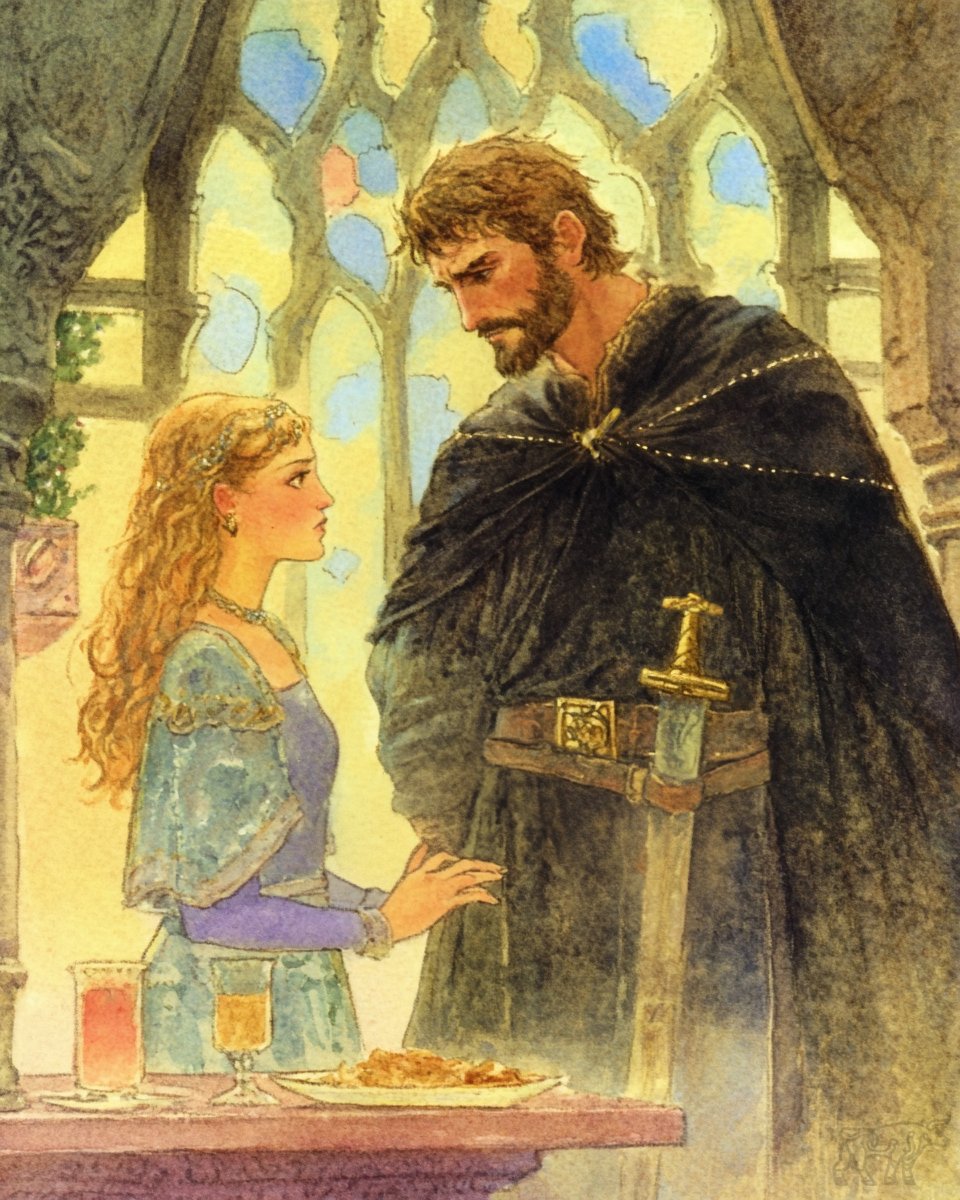
Osla Gyllellfawr, The great-knife of the Saxons? Or warrior in Arthur's warband? Image
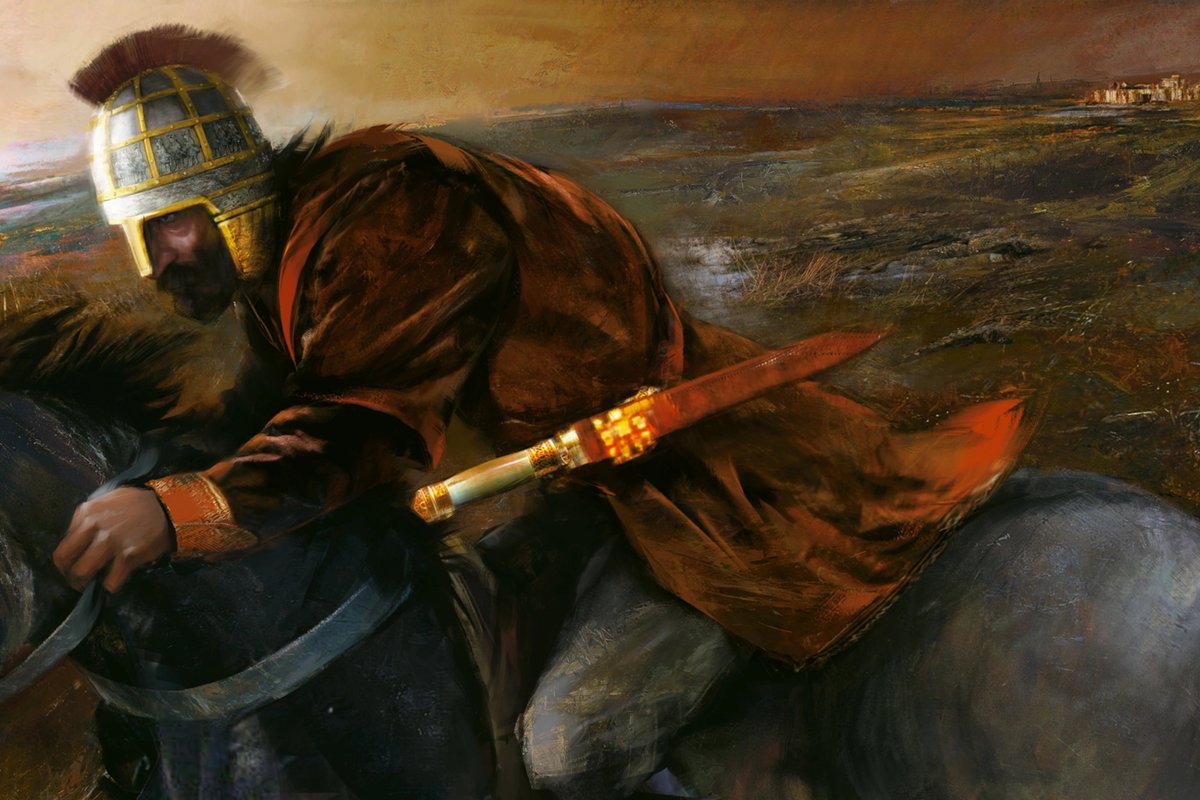
Osla shows up in two early Welsh tales, "Dream of Rhonabwy" and "Culhwch and Olwen". In 'Culhwch' he is a member of Arthur's retinue, and is known for his great-knife "Bronllafn" which was so large it could be used as a bridge. Image
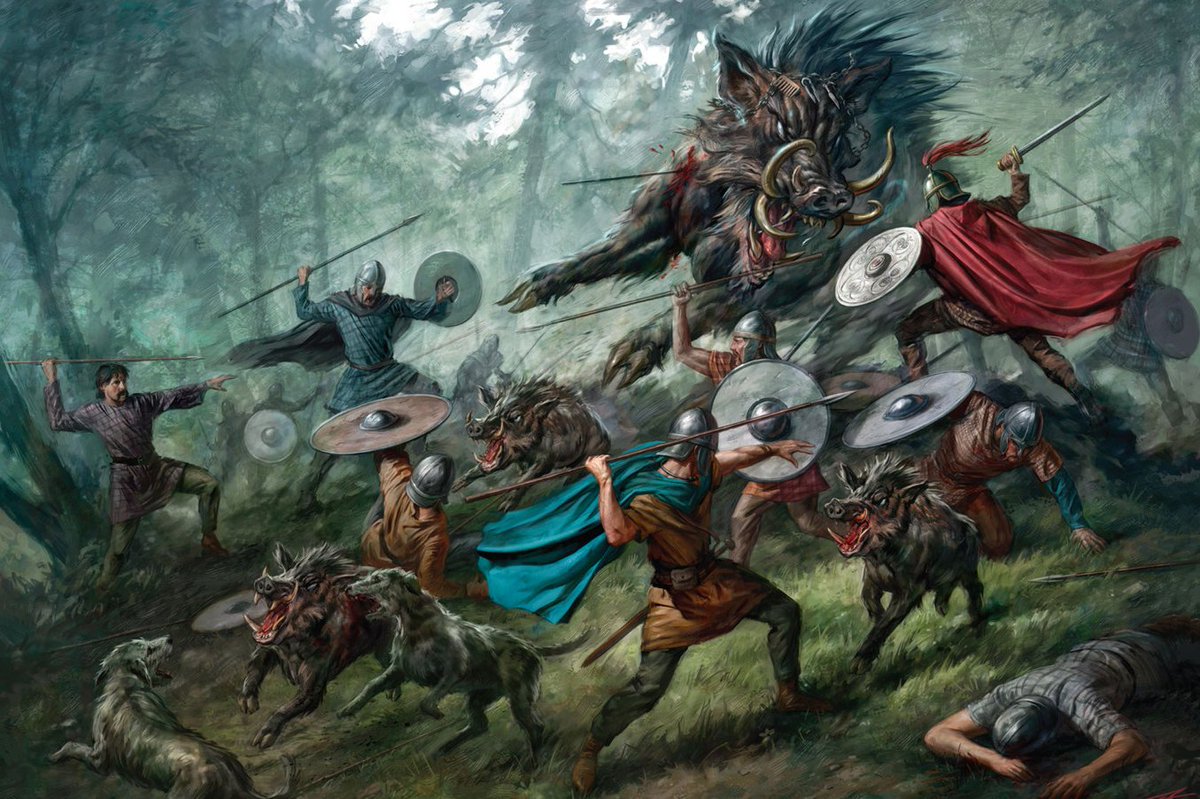
He even participates in the hunt for the monstrous boar Twrch Trwyth, dying while crossing the Severn, dragged into the depths by the sheath of his great knife which filled with water. Image
Osla appears again, this time in the "Dream of Rhonabwy", not as part of Arthur's warband, but as his enemy, awaiting a fight at the famed Battle of Badon. Image
Some have proposed that this is Offa of Mercia, the 8th century king famed for building Offa's Dyke, a great defensive earthwork designed to keep the Welsh hemmed into their own country. I would however propose that Osla is inspired by an earlier figure.
Osla is none other than Octa of Kent. Octa was either the son of Hengist, or his grandson via Oisc, although I find son to fit the accepted chronology better. Octa is known for raiding Scotland on behalf of Vortigern before becoming King of Kent. Image
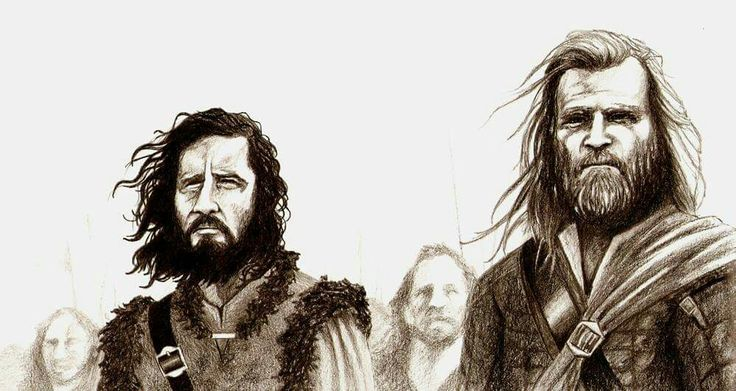
This is likely a memory of his role as a mercenary or Foederati chieftain for one of the Northern Kings, Ceneu ap Coel specifically, eventually leading to the settlement of Deira, and Octa's expulsion at the hands of Mar ap Ceneu. Image
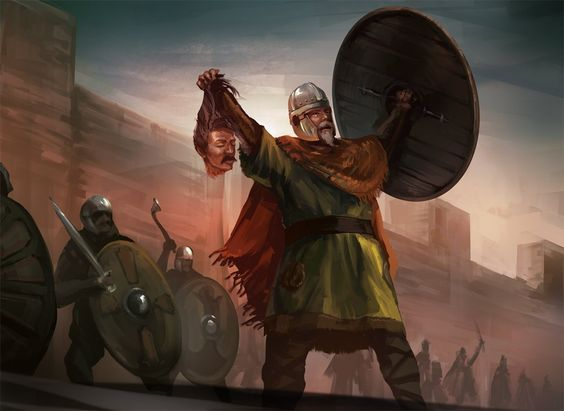
From there Octa heads back south becoming king upon his father's death, and maybe even becoming an enemy of Arthur, specifically at Badon? I have proposed a more central location for Badon before, you can read about that here.
aurochs.substack.com/i/64282755/bad…
It would not be out of the question for this to be an incursion into Powys from a Germanic coalition headed by Octa. Liddington Castle is a strong possibility as well, and easily within Octa's reach. Image
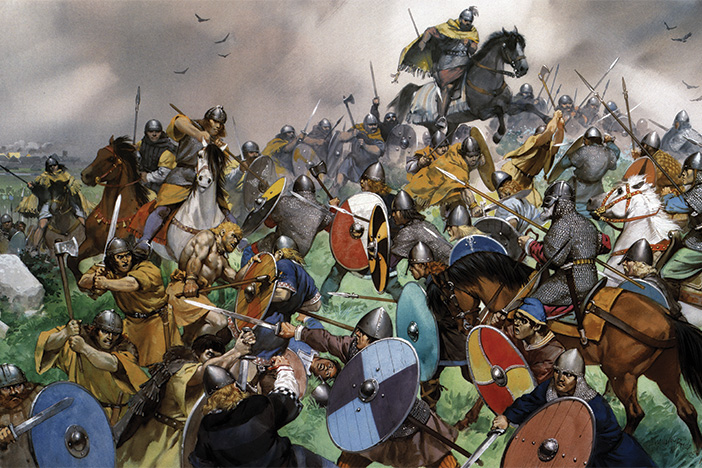
I think this memory of Octa as both ally and enemy of Arthur are quite interesting, especially when considering a Northern Arthur. Octa likely fought alongside Mar ap Ceneu in his youth, ultimately being expelled from the north by him when relations soured.
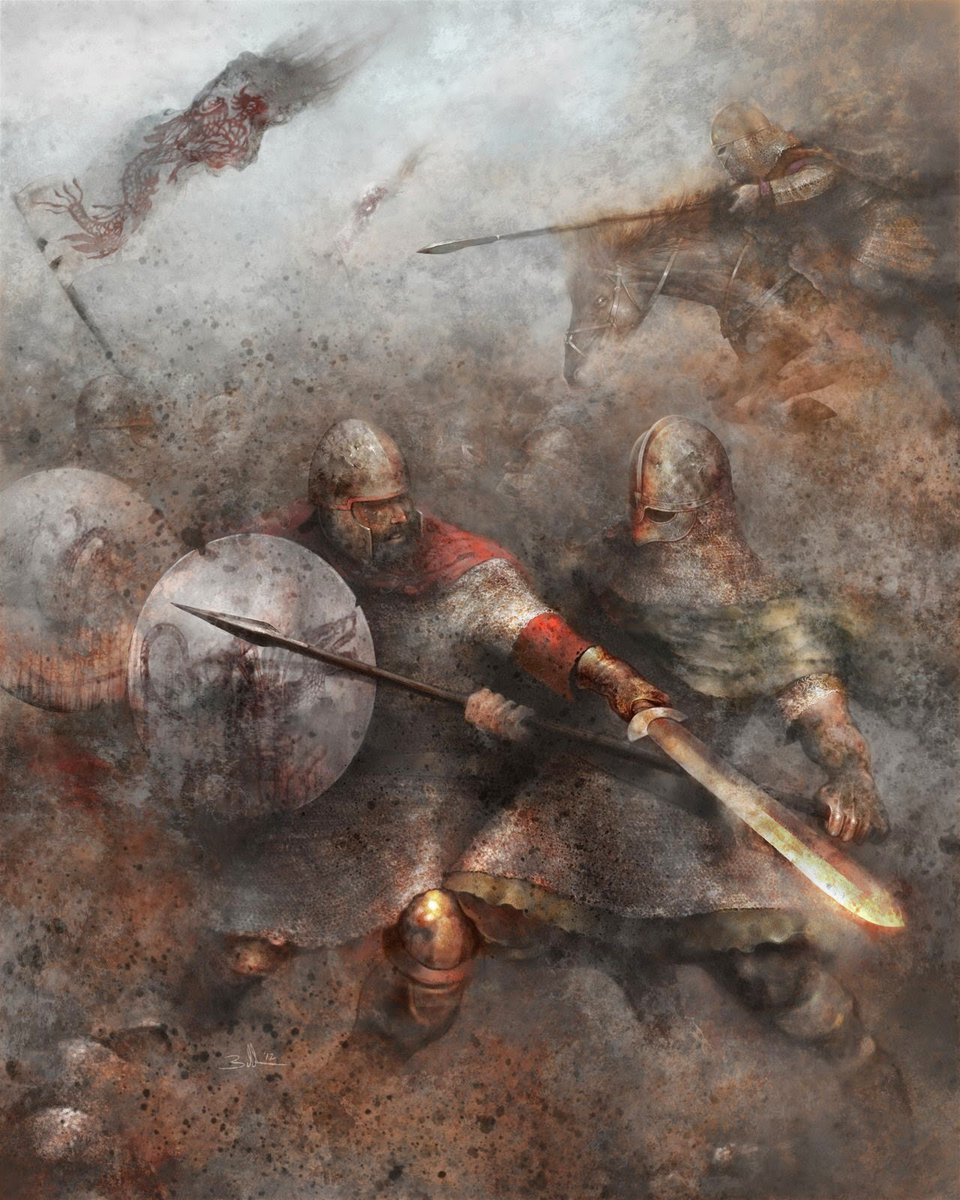
Years after his expulsion from the North, he encounters Mar's son Arthuis, who then defeats him at Badon. This leads to Octa being remembered as an ally of the British, and an enemy, as Osla "Great-Knife" (Seax), a 'Saxon' in Brythonic service, turned enemy. Image
• • •

Missing some Tweet in this thread? You can try to force a refresh

 

Keep Current with Aurochs

Aurochs Profile picture

Stay in touch and get notified when new unrolls are available from this author!

Read all threads

This Thread may be Removed Anytime!

PDF

Twitter may remove this content at anytime! Save it as PDF for later use!

Try unrolling a thread yourself!

how to unroll video
  1. Follow @ThreadReaderApp to mention us!

  2. From a Twitter thread mention us with a keyword "unroll"
@threadreaderapp unroll

Practice here first or read more on our help page!

More from @CoelingAurochs

Feb 10, 2025
Popular perception of King Arthur is often filtered through a lens of current culture. This is not a modern issue, and dates back as far as the earliest romances involving Arthuriana. Image
As a primer, it is still often parroted that King Arthur never existed, but current philological arguments on the Arthurian content within the Annales Cambriae (Welsh Annals) make a strong case that they are genuine, and date to the 6th century, within living memory of Arthur.
The majority of the earliest evidence of Arthur favors the North, and the earliest corpus of material on the period (exception of Gildas' De Excidio) generally holds a Northern context. However, by the time of Geoffrey of Monmouth Arthur is almost certainly a composite figure.
Read 19 tweets
Aug 22, 2024
Interesting approach to looking at Grendel, and other similar human-like entities from European contexts. taken from the book
"MANLIKE MONSTERS ON TRIAL:
EARLY RECORDS AND MODERN EVIDENCE"
Image
Image
The description from the 12th century German Genesis.
Image
Image
This kind of beast, often referred to as Þyrs (a term Grendel himself is called, and later conflated and translated as Demon) Image
Read 7 tweets
Aug 14, 2024
In 1136 Geoffrey of Monmouth published 'De gestis Britonum' later called 'Historia Regum Britanniae' and created what would then be used as the core canonical story of King Arthur. This was the springboard for many 'histories' as well as fiction.Image
Geoffrey claims to have been translating a "very ancient book in the British tongue" when writing his Historia, and much has been made to try and source said book, though Geoffrey seems to have worked from Gildas, Bede, Nennius, and numerous others in reality. Image
Much of what Geoffrey presents is not found in these sources however, and he seems to have creatively filled in many gaps, using information gleaned from kings lists and now lost chronicles.
Read 25 tweets
Aug 1, 2024
Mordred is always a fascinating figure, and the possibility that he's a composite is present much like the composite Arthur himself. Image
Medraut doesn't start as a negative figure, and is initially well regarded. Very little of this early tradition survives, his death in 537 as recorded in the Annales Cambriae probably the earliest mention.
"The Strife of Camlann in which Arthur and Medraut perished"Image
It is only after Geoffrey of Monmouth penned his 'Historia Regum Britanniae" and the subsequent influence of Brut y Brenhinedd that he becomes a negative figure all around. Image
Read 12 tweets
Jul 14, 2024
There is a common mistake of assuming deep antiquity to many parts of later Arthuriana. Excalibur vs The Sword in the Stone is one of those. Excalibur is probably the older of the two, appearing in the Folktale-esque Culhwch and Olwen, which probably dates to the 11th century. Image
The Sword in the Stone itself dates to the early 13th century, appearing first in Robert de Boron's Merlin. Robert seems to have been heavily influenced by the story of Saint Galgano's sword in the stone, which was extremely popular at the time.
The Prose Merlin, part of the Vulgate-Cycle is clarifies that it was Excalibur drawn from the stone. This is later redacted in the Post-Vulgate cycle which makes them different. Image
Read 13 tweets
Jul 10, 2024
In the incomplete Arthurian poem 'Pa Gur' one, possibly two of the battles in Nennius' list of King Arthur's battles are corroborated. Nennius' battle list is the earliest 'Historical' document to mention Arthur, and it is interesting to see two of it's battles in Pa Gur. Image
"In the Mount of Eidin
he fought with dog-heads.
Every group of a hundred would fall.
There fell every group of a hundred.
Before four-sinewed Bedwyr
on the shores of Tryfrwyd
in the struggle with Garwlwyd,
he was fierce in affliction
with sword and shield."
Tryfrwyd immediately stands out, as this is almost certainly the same battle as Tribruit, Arthur's 10th battle in Nennius. Bedwyr is said to have fought Garwlwyd here, 'Rough-Grey' often assumed to be the same figure from a Triad, Gwrgi Garwlwyd Image
Read 8 tweets

Did Thread Reader help you today?

Support us! We are indie developers!


This site is made by just two indie developers on a laptop doing marketing, support and development! Read more about the story.

Become a Premium Member ($3/month or $30/year) and get exclusive features!

Become Premium

Don't want to be a Premium member but still want to support us?

Make a small donation by buying us coffee ($5) or help with server cost ($10)

Donate via Paypal

Or Donate anonymously using crypto!

Ethereum

0xfe58350B80634f60Fa6Dc149a72b4DFbc17D341E copy

Bitcoin

3ATGMxNzCUFzxpMCHL5sWSt4DVtS8UqXpi copy

Thank you for your support!

Follow Us!

:(