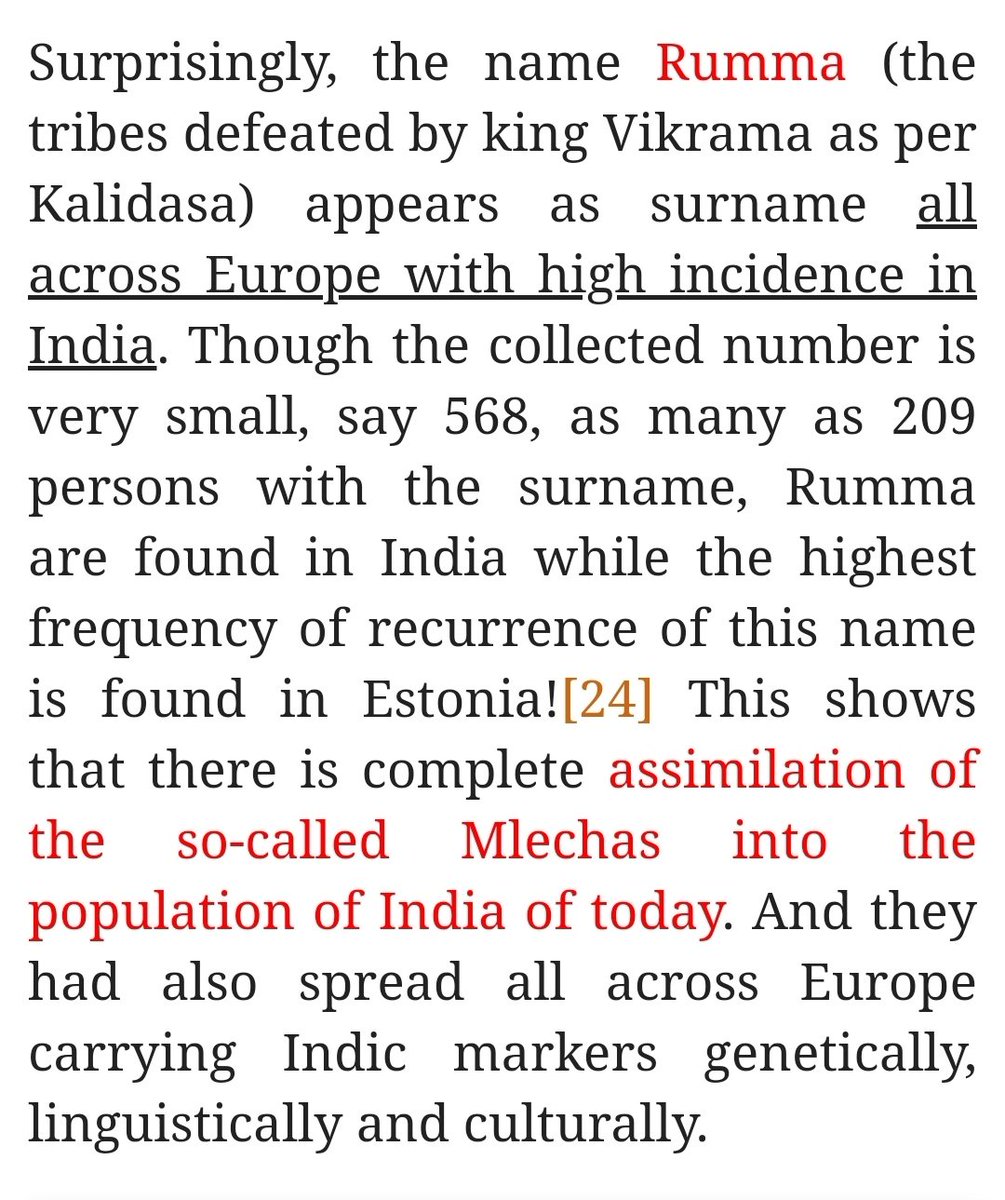
Sanskrit is part of Tamil. How?There are 4 types of words in Tamil as per Tolkaappiyam.
1. Naturally Tamil words (Eyar sol)
2. Altered words (Thiri sol)
3. Adopted from outside languages (Disai sol)
4. Northern words ( Vada sol / Sanskrit)
3rd type, a result of migrations from +
12 lands around Tamil lands. Their names given by Nacchinaarkkiniyar in his commentary covers Karnataka, & Goa. These regions were occupied by migrants since Mahabharata times and intensely from 1500 BCE when Velir migration took place. From Maharashtra to Nagarkoil, enroute+
Keeladi, Kodumanal, Porunthal, Coimbatore - these regions were occupied from people of North and north west India. Their words had entered Tamil and accepted. They are Disai sol.
Eg.
Acchan of Kuda naadu in Kerala = father.
Kuttai of Aruva's vadathalai (Aluvas) = small pond
+
The Disai sol are recognised as loan-words from other languages.
But Sanskrit, the 4th category of Tamil are not loan words. If so, they could have been merged with Disai sol.
Instead they have been retained as Tamil words common to Sanskrit!
They can be common in letters👇+
These common words are Tamilised in writing.
Look at the word 'meenam' - it is Sanskrit accepted in Tamil, as 'meen' or 'meenam' depending on context. So the entire Indus decipherment based on the assumption that Tamil 'meen' is indicated by fish symbol is nothing but bullshit+
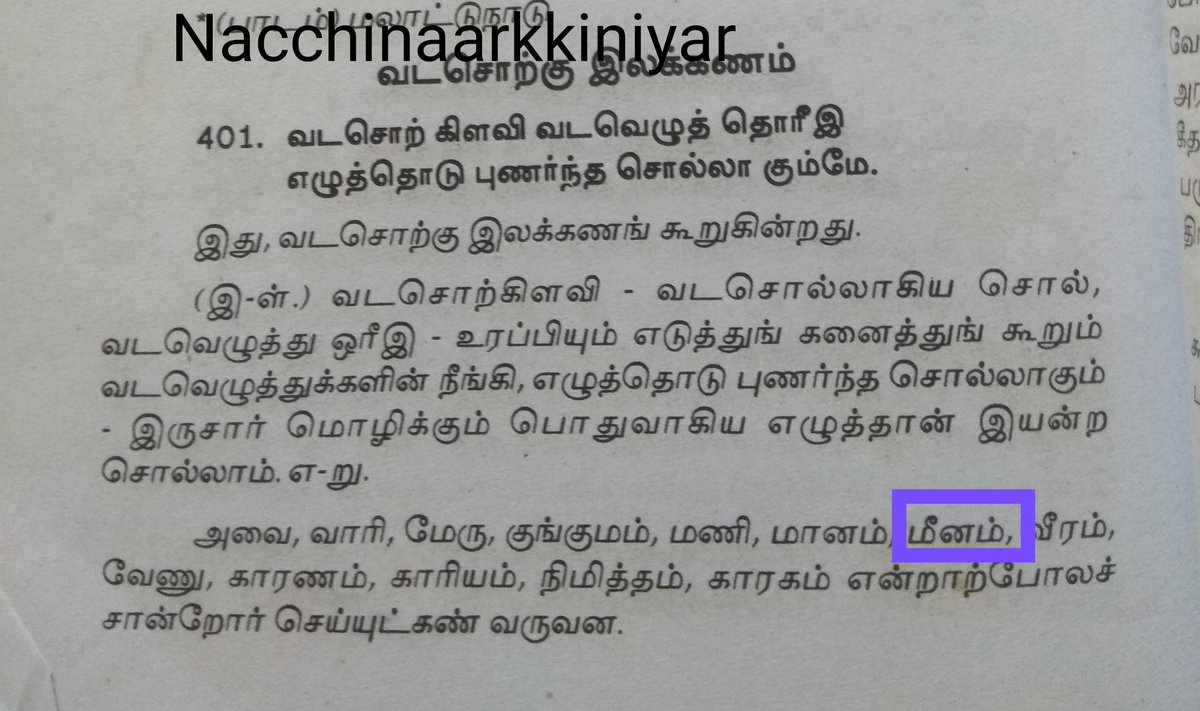
Eg of other common to Tamil, Sanskrit words are
VeNu, Kaariyam (Kaarya), Nimittham (nimitta), meru, kungumam (kumkuma).

In kungumam 'ga' sound comes whereas its absent in Sanskrit kumkuma. It's bcos of Grammar rule that vallinam following mellinam is stressed +
Other eg for stressed letters:
Sangu (not shanku) ng+ Ka= ga sound but written as ng-ka.
Manjal ( nj+sa = ja sound but written as nj- sa)
Now 2nd type of Sanskrit words in Tamil. They contain sounds not present in Tamil but altered to Tamil letters.
Eg: jala - salam
Atma - Aanma+
Other eg given by Nacchinaarkkiniyar:
Megha- Megam
Vruddhi - virutthi
Sutra - sutthiram
Yukti - vutthi
Kumari is also given as an eg.
Kumari is as much Sanskrit word as it is Tamil.
Lanka is also given.
It is Ilangai in Tamil.
Like this many Sanskrit words are part of Tamil+
Now coming to the proto language from which Tamil (grammatical) and Sanskrit were simultaneously made during Skanda's period (12ky ago), Paali fits the bill. It contains colloquial Tamil & stunted Sanskrit. Widely used by Buddhists & common man in N.India. Buddhists spread to +
West of India & their influence seen to have crossed Berring Strait into N.America. Paali lang taken by them has influenced European languages, with stunted Sanskrit making its presence in what in now called PIE language family. Another source was from Shakas sent out of India +
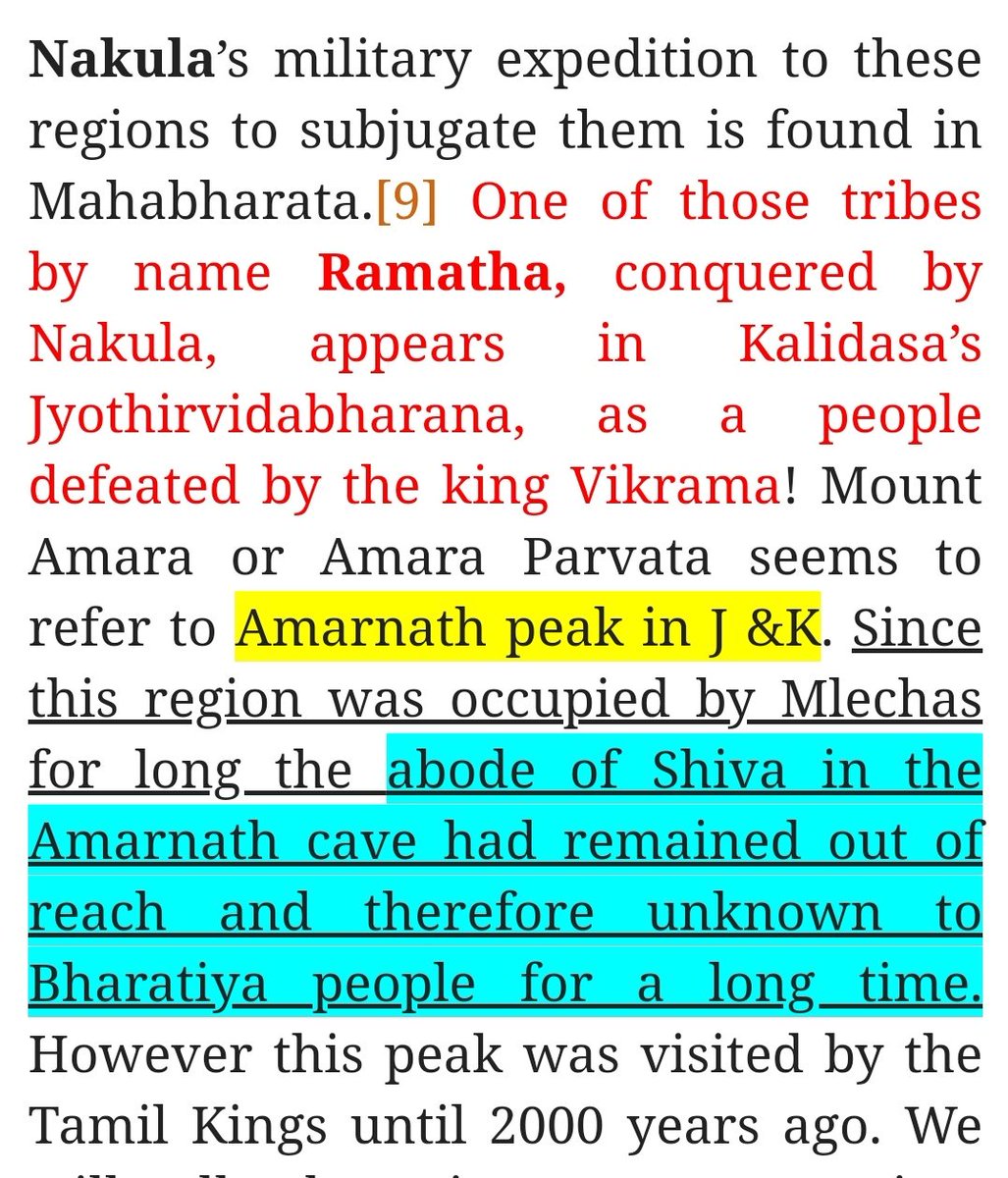
Genesis of Shaka (mleccha) tribes & the genetic trail they left as they were forced to leave Bharat as early as 8k BCE by Sagara explained here:
jayasreesaranathan.blogspot.com/2021/04/identi…
• • •

Missing some Tweet in this thread? You can try to force a refresh

 

Keep Current with Jayasree Saranathan

Jayasree Saranathan Profile picture

Stay in touch and get notified when new unrolls are available from this author!

Read all threads

This Thread may be Removed Anytime!

PDF

Twitter may remove this content at anytime! Save it as PDF for later use!

Try unrolling a thread yourself!

how to unroll video
  1. Follow @ThreadReaderApp to mention us!

  2. From a Twitter thread mention us with a keyword "unroll"
@threadreaderapp unroll

Practice here first or read more on our help page!

More from @jayasartn

Nov 4
Army of elephants (யானைப் படை) was an inevitable part of the 4 types of armies maintained by kings of ancient Bharat- popularly known as Ratha, gaja, turaga, padaati. Elephant army was specifically maintained by kings of hilly regions. As such Chera kings were forerunners in +
@sansbarrier in maintaining elephant army. So let me quote from Tamil sources to show that a Chera king by name Pal Yaanai sel kezhu kuttuvan (பல் யானை செல் கெழு குட்டுவன்) who earned this name for keeping a huge army of elephants. He lived 1000 years before Rajaraja chola +
He was the younger brother Imaya varamban Nedum Cheralaadhan (இமய வரம்பன் நெடுஞ்சேரலாதன்), the father of Ilangovadigal who composed Silappadhikaram. This shows the antiquated date of this king. The 3rd decade of Padhittru patthu written by Paalai Gauthamanaar describes his +
Read 7 tweets
Sep 4
Oakian onion

Layer 1- outermost. Viewers of his videos who have no idea of Sanatan thought or the Itihasa-s. They will question you the moment they see you tweeting against Oak's work. They are not aware of the problems with his work and project him as a great Hindu researcher +
Layer 2:
The next inner layer. It is the attack layer. Oak's army of tweeples, engaged by him. They abuse you instead of responding intellectually.
Some of them have been well noted and documented here: jayasreesaranathan.blogspot.com/2020/10/modus-…
+
Layer 3 :

This is the Think Tank of the Oakian onion. When the above 2 layers fail to curb you, they will tag the members of this layer to engage with you. Consisting of 2 active and 2 passive persons this layer gives ' intellectual defence ' for Oak's theory +
Read 5 tweets
Aug 21
Some sections of Srivaishnavas are celebrating Krishna Jayanti today (21st). The rationale has an important revelation on how the moon's exact location cannot be simulated for even 150 years.
Their rationale depends on presence of Rohini at sunrise for Krishna Jayanti which +
means the moon has not yet left Rohini till this morning. In reality ( Drik / Thirukkanitham) moon has left Rohini well before sunrise local time in India as a whole. But the Vaakhya tables followed by some show the moon continuing to traverse Rohini till around 8 am +
Such tables were updated periodically, say once every century to keep track of the exact position of moon and planets. Tracking moon is very important for ritual purposes because the tithi and star of the day are determined by it as in the case of Krishna Jayanti+
Read 10 tweets
Aug 19
(Thread) There is an authentic record on Kṛṣṇa’s exit year but not on his birth year. What is handed down through generations is Kṛṣṇa’s birth star, tithi and month and not the year. The rationale of celebrating his birthday on tithi explained here+ jayasreesaranathan.blogspot.com/2018/09/janmas… Image
In the history of Sanatanic practice of tracking time, there is only one feature that is being tracked. That is the current age of Kali that started 3179 years before the beginning of Shalivahana Shaka on 78 CE. This is specifically mentioned in this way to make it known to +
people that this is how time is being mentioned in computation manuals of Panchanga. For the purpose of easy tracking with smaller number, we take the year in the current Shalivahana Shaka and add 3179 to get the Kali Yuga year. Those who are attempting to ‘date’ the Itihasa-s +
Read 20 tweets
Aug 16
2 locations & dates for Krishna’s Dwaraka that don’t match with primary evidence of Harivamsha & Mahabharata.
1. Dr. S.R. Rao’s marine expedition at Bet Dwaraka (Kutch) dated c.1500 BCE
2. Mr. Badrinaryan’s NIOT expedition at Cambay of inundations between 7500 BP and 2800 BP +
Why don’t they match?
1. Both Kutch and Cambay excavations show continuous occupation, but Krishna’s Dwaraka didn’t exist for even 100 years.
2. There was no harbour in Krishna’s Dwaraka which was only a rectangular walled city offering physical protection to the inmates. +
Details of how Dwaraka was built, given in Harivamsha solves the issue. Dwaraka was an island to the west of Raivataka mountain. Finding it to be just enough for building a mansion for Krishna, the builder, Vishwakarma requested Krishna to create extra land. +
Read 17 tweets
Aug 12
Migrations have been happening right from the beginning of Holocene & even during Yonger Dryas. At that time interior and north India were uninhabitable with only sparse population subsisting here and there. Only equatorial region in SE Asia was populated where the early vedic+
culture started taking shape. With the gradual increase in insolation in early Holocene (11,500 y ago), the 1st flood in Indian Ocean -Arabian sea pushed Vaivasvata Manu and his clan into Saraswati and Persian Gulf. So the 1st split of a common culture happened then with a +
section of people carrying early vedic culture entered West Asia and spread from there to Europe. A brief of this given in my book on Vedic homa. After that free mingling till Rama's time. Yamnaya migration to and fro explained in my Mb book. By Mb time, lot of restrictions came+
Read 4 tweets

Did Thread Reader help you today?

Support us! We are indie developers!


This site is made by just two indie developers on a laptop doing marketing, support and development! Read more about the story.

Become a Premium Member ($3/month or $30/year) and get exclusive features!

Become Premium

Don't want to be a Premium member but still want to support us?

Make a small donation by buying us coffee ($5) or help with server cost ($10)

Donate via Paypal

Or Donate anonymously using crypto!

Ethereum

0xfe58350B80634f60Fa6Dc149a72b4DFbc17D341E copy

Bitcoin

3ATGMxNzCUFzxpMCHL5sWSt4DVtS8UqXpi copy

Thank you for your support!

Follow Us on Twitter!

:(