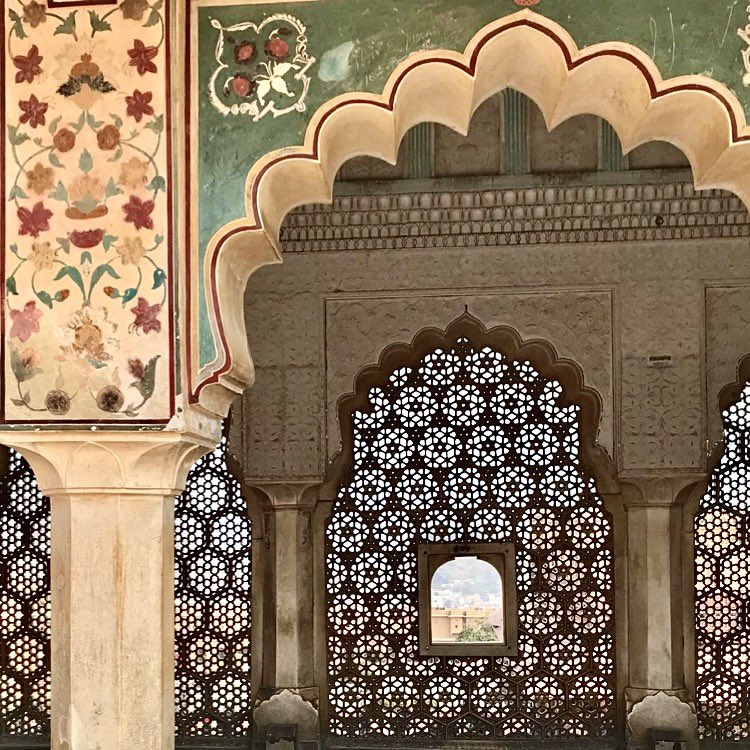
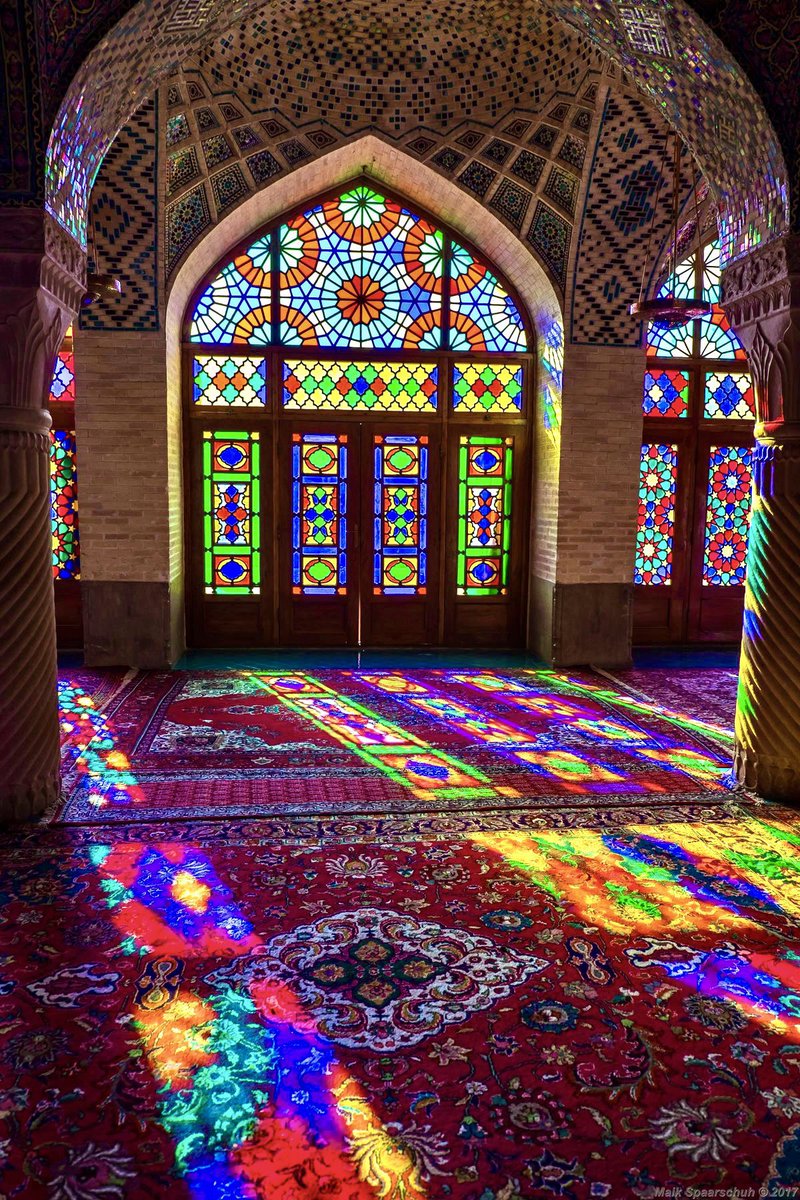
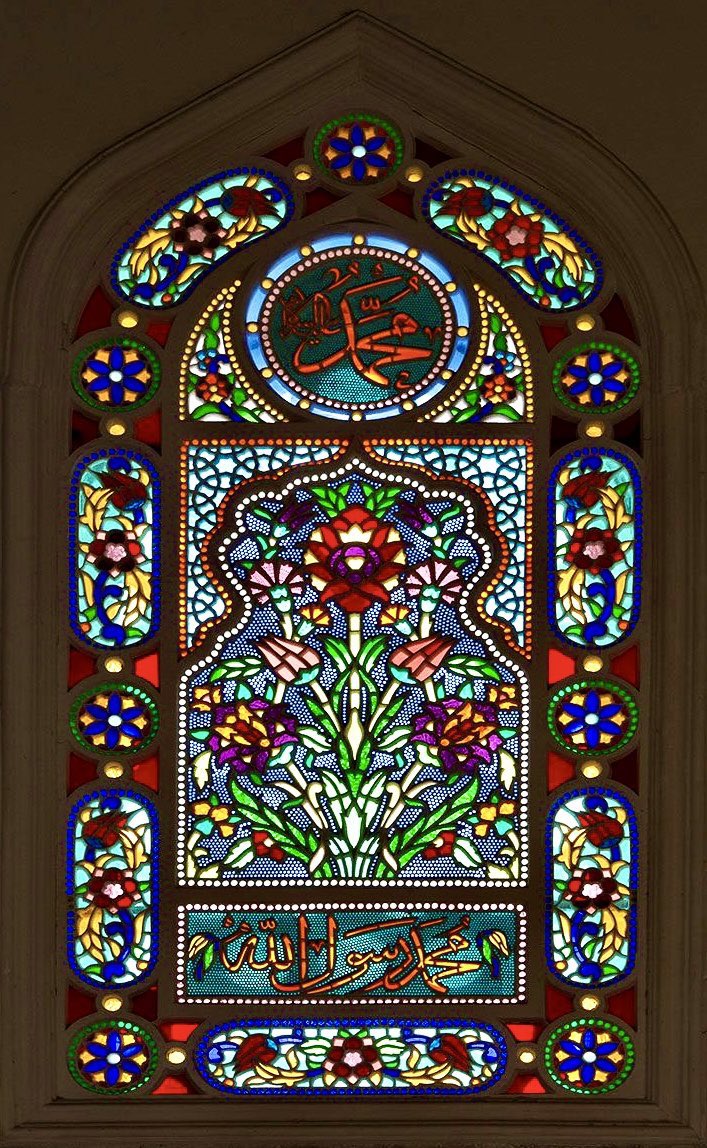
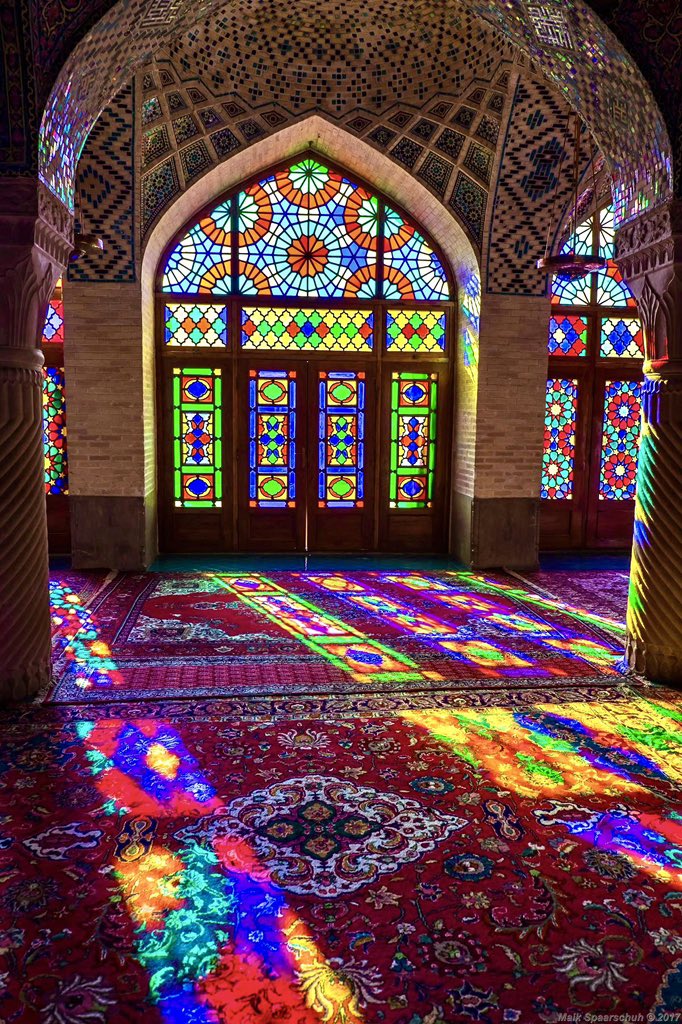
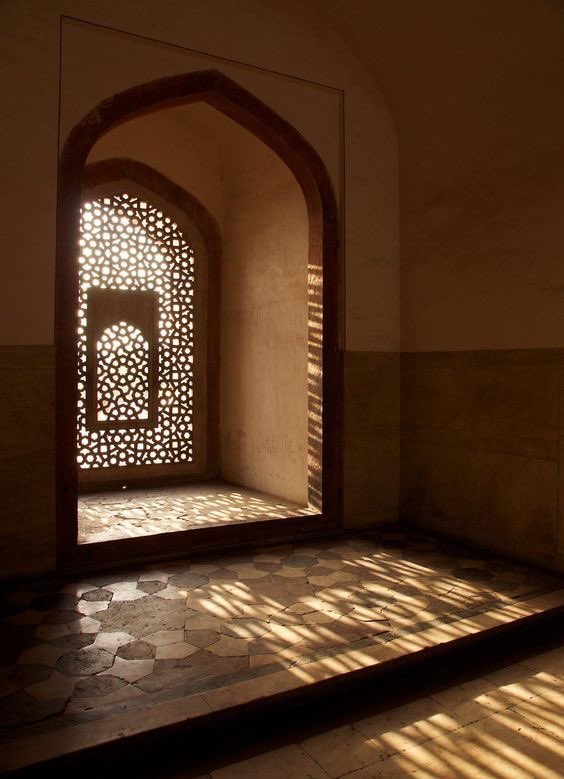
Jali is a beautiful characteristic of architectural decoration in Indo-Islamic & Mughal architecture
Meaning ‘gauze’ or ‘net’ in Urdu, Jali is a perforated stone or latticed screen with an ornamental pattern, featuring geometry or floral motifs
A thread on the art of jail…
1/ A jali, is an open frame structure of interlaced patterns created by generations of skilled workers & artisans, with materials like stone, wood and metal strips or any other building material
Jali at Amber Fort Palace
2/ The Jali lets us see out but not be seen - this was especially useful for the Islamic values of modesty & privacy
3/ Jali was an interesting way in which Muslim artists and artisans could offer ornamentation in architecture and design through geometric motifs, with symmetrical shapes and lines, floral designs with plant-based swirls of leaf shapes, vines & flower heads
4/ Tomb of Salim Chishti (1478–1572) Within is a covered passageway for circumambulation, with carved jalis, stone pierced screens all around with intricate geometric design and an entrance to the south.
5/ Jali is not only beautiful but also helps to create ventilating breezes - so very practical in the heat too
6/ The Taj Mahal, exhibits jali at its finest where it is often added with pietra dura (parchin-kari) inlay to its surrounds, using marble and semi-precious stones
7/ During the reign of Akbar, the jali was usually of a simpler hexagonal and octagonal pattern.
8/ Meanwhile, under the reign of his grandson Shah Jahan, more plant and floral motifs were used.
9/ A beautiful aspect of the jali is how light flows through the perforations and lands upon the walls and floors in geometrical shapes & shadows
10/ The play between light and shadow emphasises the geometrical symmetry and creates an illusion of infinity
11/ During the day, the sun passing through the jali creates a beautiful silhouette
12/ The interplay of light is a reminder of the light of the Divine
13/ Jalis are an example of how architecture can be both beautiful and practical
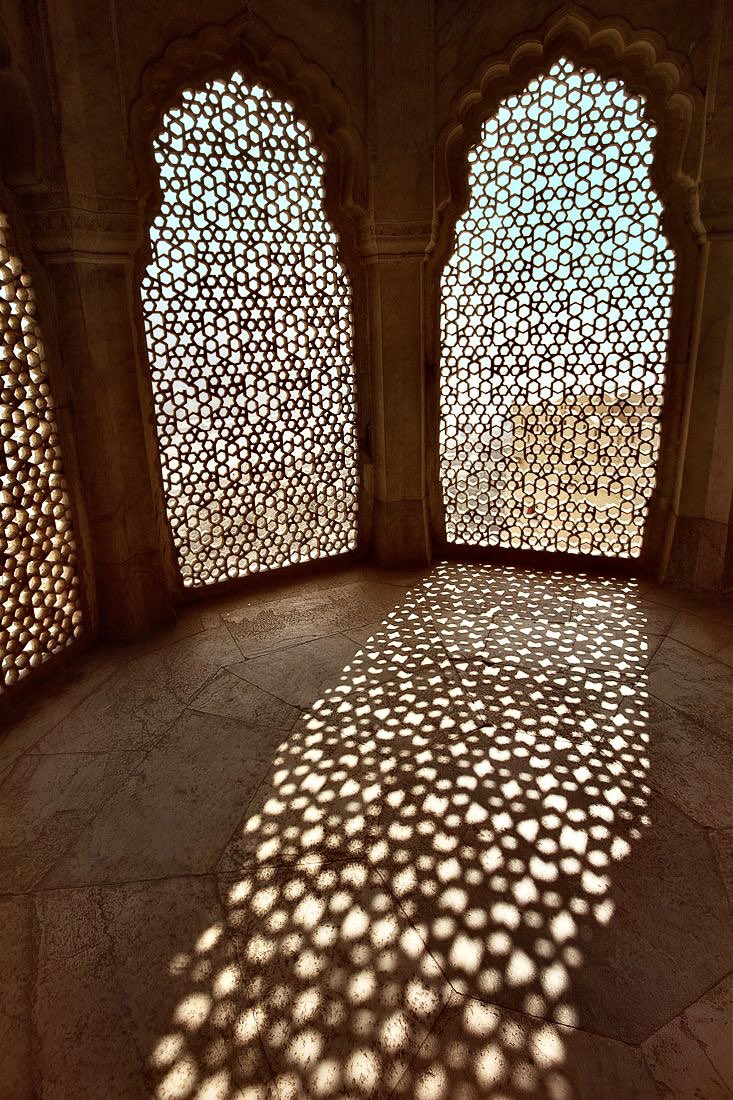
14/ The interplay of light at different times of day from dawn to dusk through the jali creates an ambience
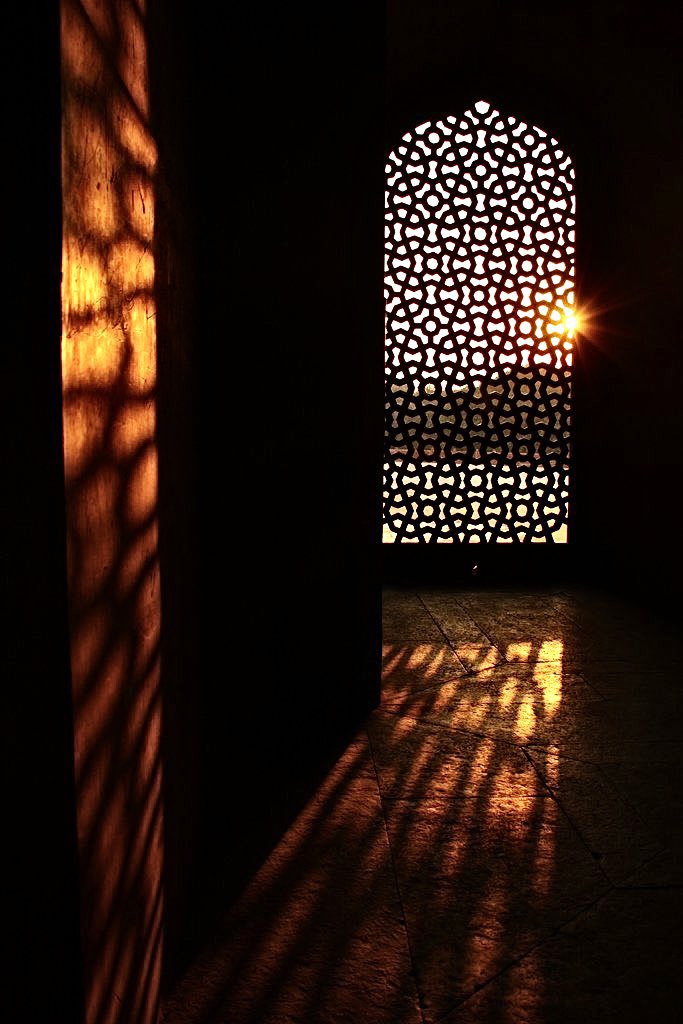
15/ The intricate craftsmanship of the jali is so delicate, beautiful and intricate
16/ Contemporary jali design is popular in Islamic architecture today
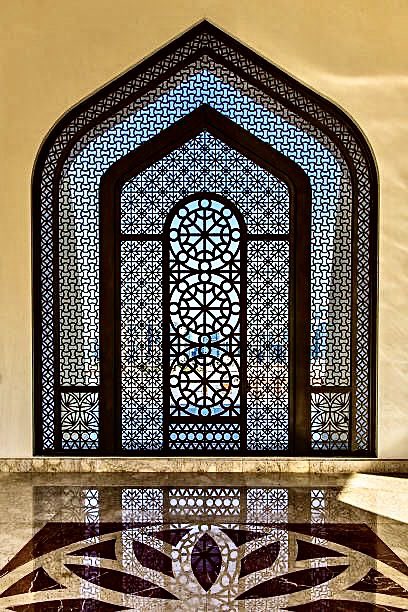
17/ Jali in a modern context
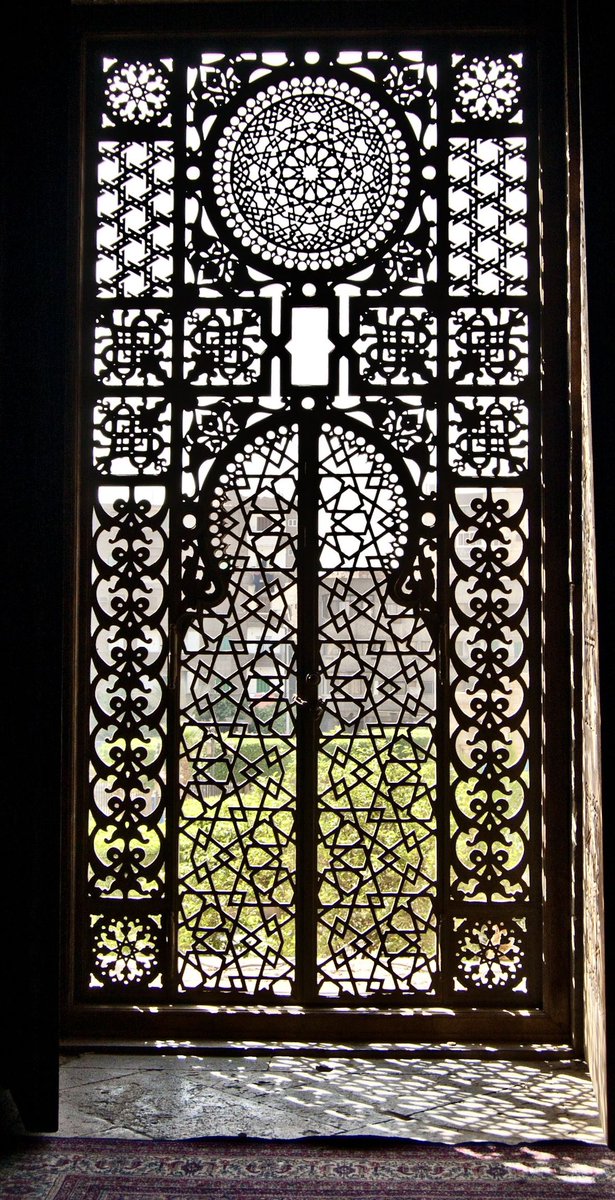
18/ The beauty of jali continues to inspire the work of contemporary artists today…
• • •
Missing some Tweet in this thread? You can try to
force a refresh

In Islam, Hajj is the annual pilgrimage made to the Kaaba, the ‘House of God’ in the city of Mecca. The Kaaba is covered in a Kiswah — a black silk cloth, exquisitely embroidered in gold
Every year, artisans work on creating a new Kiswah
A thread on the art of making the Kiswah
1/ The Kiswah is the cloth that covers the Kaaba. The term Kiswah means ‘robe’ & is also known as the ‘Ghilaf’. Hanging the Kiswah, a huge piece of black silk embroidered with gold patterns & verses from the Quran, over the Kaaba symbolises the start of the Hajj pilgrimage season
2/ Meaning cube in Arabic, the Kaaba is a square building unlike almost any other religious structure. It is fifteen meters tall and ten and a half meters on each side; its corners roughly align with the cardinal directions.
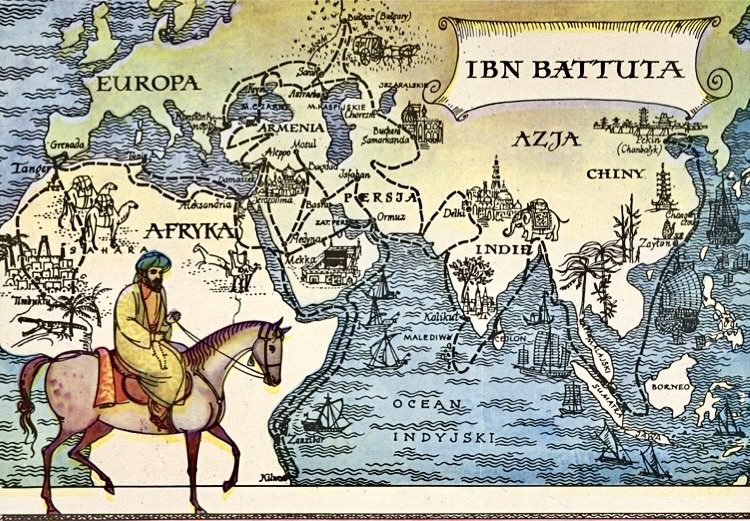
‘Traveling leaves you speechless, then turns you into a storyteller’
- Ibn Battuta
The most famous explorer in the Muslim World, Ibn Battuta, travelled more than any other explorer in pre-modern history - around 117,000 km!
A thread on the 14th century explorer Ibn Battuta…
1/ Ibn Battuta was born in 1304 CE in Tangier, Morocco. His travelogue the Rihla is his most important work. His journeys in the Rihla lasted for a period of almost thirty years, covering nearly the whole of the known Islamic world & beyond.
2/ Ibn Battuta travelled more than any other explorer in pre-modern history, surpassing Zheng He with 50,000 km (31,000 mi) and Marco Polo with 24,000 km. His total distance travelled was approximately 117,000 km (73,000 mi) (15,000 mi).
The Qur’an was first revealed during the month of Ramadan. This blessed month is also known by Muslims as the month of Fasting
To celebrate the arrival of #Ramadan here are 24 beautiful Qur’anic manuscripts found in museum collections across the world #RamadanMubarak
A thread…
1/ Folio from a Manuscript of the Qur'an
Iran, Shiraz, 1550-1575
Ink, colors and gold on paper
@LACMA #Ramadan
@LACMA 2/ Double Folio from a Qur'an
c. 1330-1350, Central Asian or Turkish
Early Muslim settlers from central and western Asia carried Islamic book traditions into India, especially in the form of Qur'ans, such as the one from which these pages come
Shah-i-Zinda is one Samarkand’s most beloved sites, which contains some of the richest tile work in the world. The magnificent architecture draws inspiration from multiple periods & styles, taking you back through time & across cultures
A thread on the beauty of Shah-i-Zinda…
1/ The Shah-i-Zinda ensemble includes mausoleums, mosques & other ritual buildings of 11-15th & 19th centuries. The name Shah-i-Zinda (meaning The living king) is connected with the legend that Qutham ibn Abbas, a cousin of the Prophet Muhammad PBUH is buried here
📷 Ash Diler
2/ Shah-i-Zinda is a world-famous example of a continuously constructed historical site. Over 1,000 years ago, it was founded with a single religious monument. Between the 11th & 19th centuries, mosques & mausoleums were continuously added
From Spain to Azerbaijan, to Germany to Bosnia, Europe has some of the finest mosques.
The presence of Islam in Europe is not a new phenomenon, with Muslims residing in the continent as early as the 8th century.
Here are 24 mosques across Europe #JummahMubarak
A thread…
1/ Koski Mehmed-Pasha Mosque, Mostar, Bosnia
Dates back to 1617 & features numerous multicolored windows, a minaret with a lookout spot & a courtyard with several tombs. Although the original Ottoman mosque was heavily damaged during the attacks of the 1990s it has been restored
2/ The Shah Jahan Mosque, Woking, England
This is the first purpose built mosque that was built in the UK.
It was built in 1889 by Dr Gottlieb Wilhelm Leitner, an orientalist of Jewish descent from Hungary. Money was donated by Begum Shah Jahan, the Nawab Begum of Bhopal.
Welcome to Al-Mutanabbi Street the ‘Book Market of Baghdad’, where books remain in the street at night because Iraqis say:
“The reader does not steal and the thief does not read.”
A thread on the rich heritage of the historic book market on Al-Mutanabbi Street…
1/ Al-Mutanabbi Street is the historic center of Baghdad bookselling, that dates back to the time of the Abbasids. Located near the old quarter of Baghdad, Al-Mutanabbi Street was Baghdad’s first book traders’ market.
2/ Al-Mutanabbi Street has been, since time immemorial, the historic heart and soul of the Baghdad literary and intellectual community.