Jon Hawkes Profile picture
Dec 24, 2022 22 tweets 7 min read Read on X
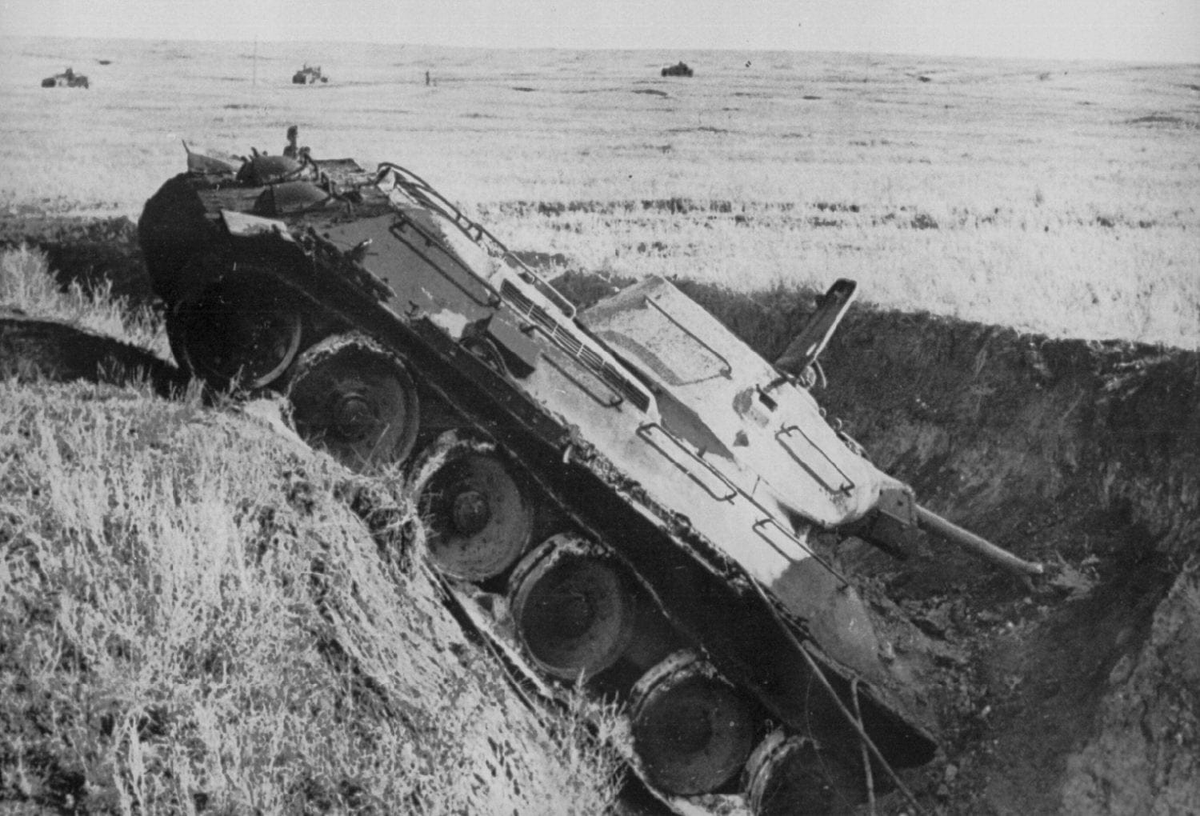
1/ Wheels vs tracks: a short series of threads on relative merits of each, continuing with another on the ability to negotiate trenches.

TLDR: tracks are better at trench crossing than wheels, and for wheels the fewer the # axles, the worse it gets.
2/ Quick point of order: these threads are to talk about comparative strengths & weaknesses outside the normal framing of 'which is best in a muddy field' and think about a few other angles that don't always get acknowledgement.
3/ Final point of clarity – comparisons assume we are comparing equivalent vehicles seeking peer weights, internal volumes, automotive performance etc. As that’s never really the case, the comparisons are more conceptual and generic than reflecting vehicle A vs vehicle B.
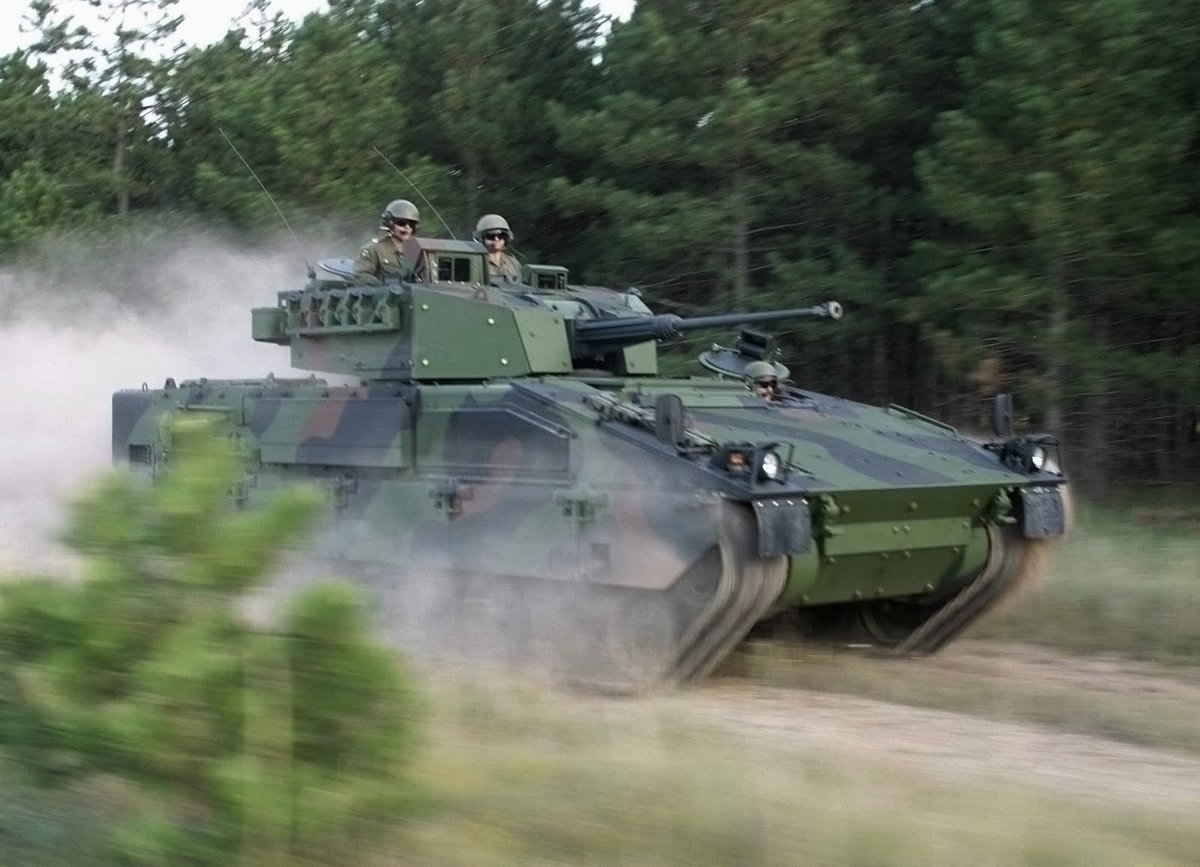
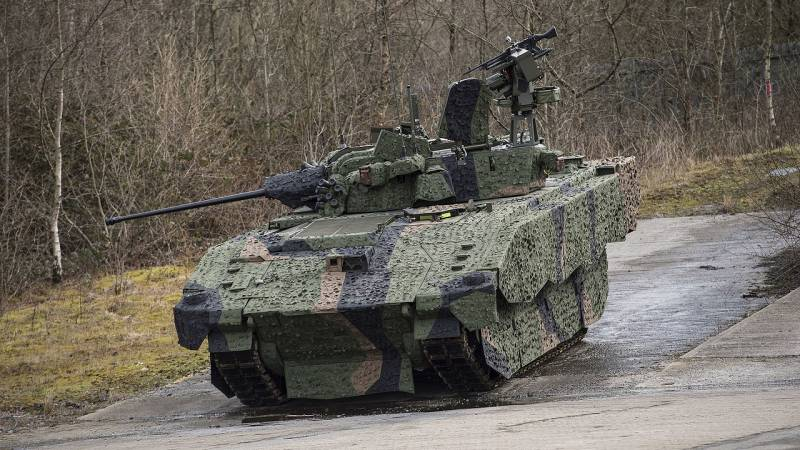
4/ So, Trench crossing: In general terms, tracked vehicles have a good capability. For 8x8s its reasonable, problematic with 6x6 and poor with 4x4.
5/ So once more tracks win out, again because that uniform surface of the tracks makes it much easier to overhang and then climb out of the other side of a trench.
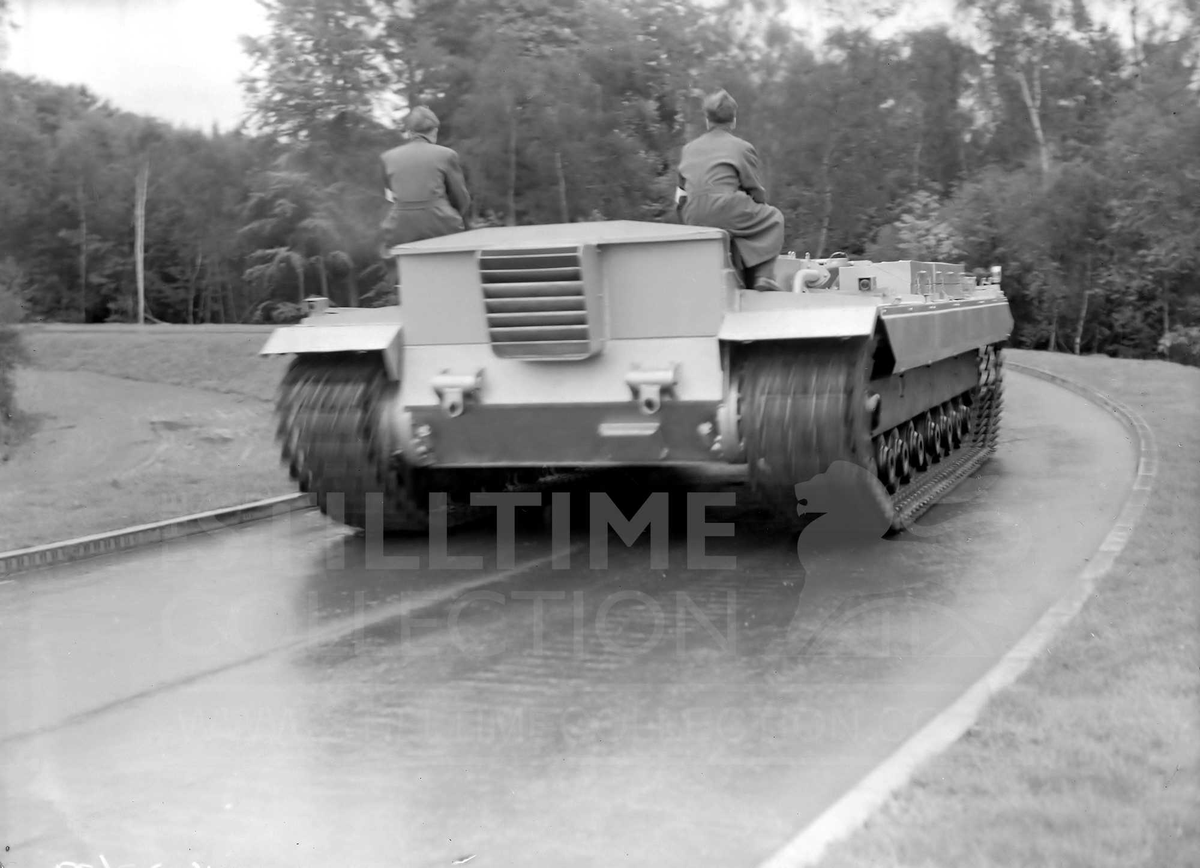
6/ The tracks act to contain the road wheels, preventing them dropping into the trench so far as to immobilise the vehicle, and then provide a form of ramp for the vehicle to drive up and out.
7/ These characteristics mean tracked vehicles can actually benefit from crossing at speed rather than slowly, but you need to be very careful the conditions are right before you do!
8/ Secondly, the sprocket/idler being projected ahead of the roadwheels creates an effective lengthening of the running gear, allowing the vehicle to reach a little further.
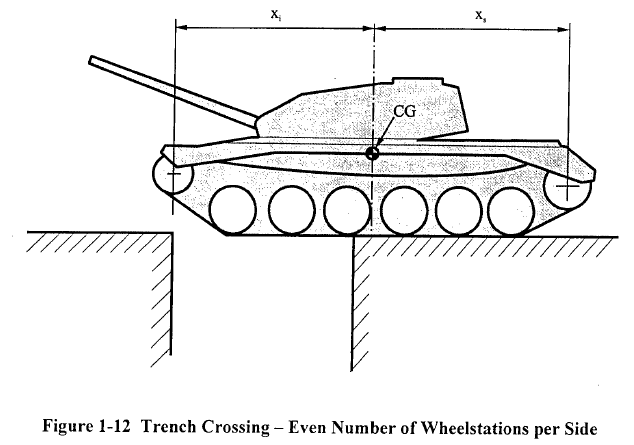
9/ An interesting factor is number of road wheels, or rather whether odd or even. Odd mean CoG ideally needs to be above centre wheelstation, allowing the vehicle to pivot about this point.
10/With even numbers, a central CoG sees the vehicle pitch into the trench as soon as the last frontal wheel ahead of CoG passes over the gap. The further forward the CoG is, the worse this becomes.
11/ For wheeled AFV again depends on # axles. 4x4s are worst, once front axle drops into the trench youre unlikely to get out, as you are now facing a step climb of >55% tyre diameter with most of the AFVs weight wedging it in place. This...
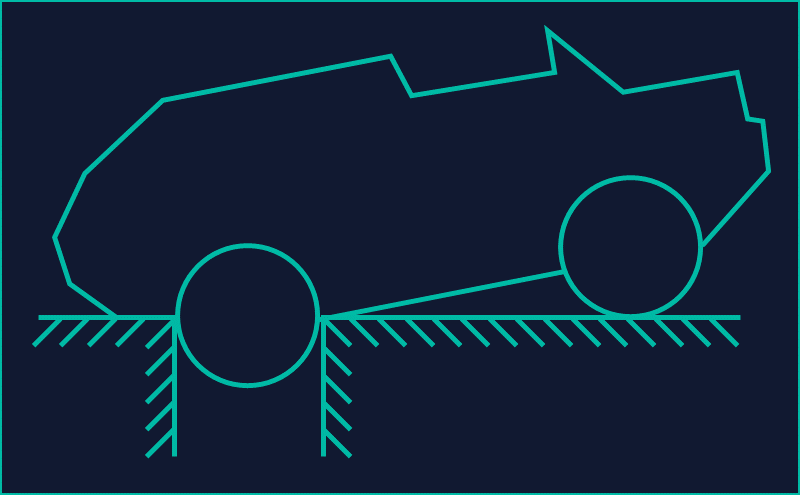
12/ ...constraint was talked about in the last thread . Effectively, 2-axle AFV dont have a trench crossing capability.
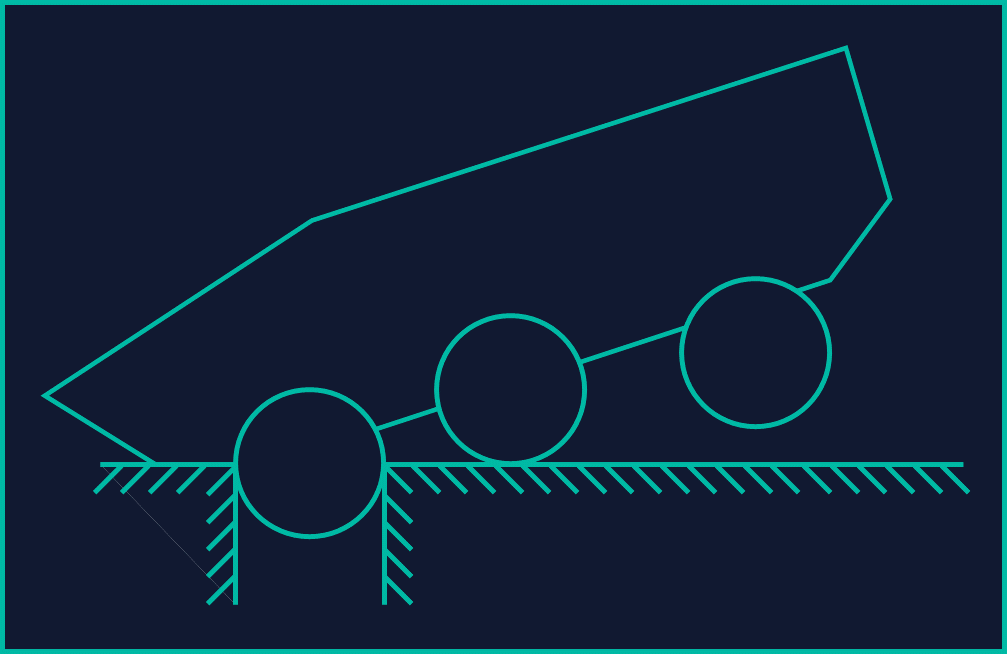
13/ 3-axle (6x6) is similar, with a (not) fun see-saw effect. If the front wheel drops in, the vehicle will still get stuck. But if the rear wheel drops in as it exits, it may also get stuck. That centre axles needs good suspension travel to avoid this pitfall.
14/ To try and mitigate these problems, wheeled AFV can approach a trench obliquely, preventing the condition where an entire axle drops in at once. This is by no means an assured method, however.
15/ 4-axles (8x8) is much better, with the limitation being a trench where the front 2 axles both fall into the trench, effectively creating the same issue as with a 4x4, just grouping the axles.
16/ ≥5 -axle vehicles are very rare, but again follow the expanding model that is clear – better than the one that came before, but again once tipped into the trench it is likely to be stuck.
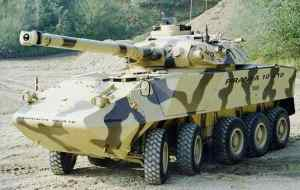
17/ Where tracked AFV want to avoid projections beyond sprocket to make sure tracks contact obstacles, wheeled AFV may benefit from a projected nose.
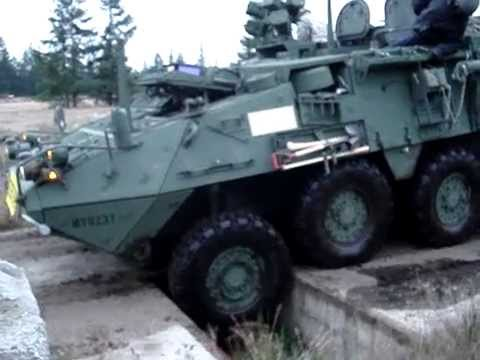
18/ When toppling into a trench it prevents the wheels falling too far into it and providing sufficient torque, the vehicle can drive its nose up the far side of the trench and then climb out as a low step obstacle.
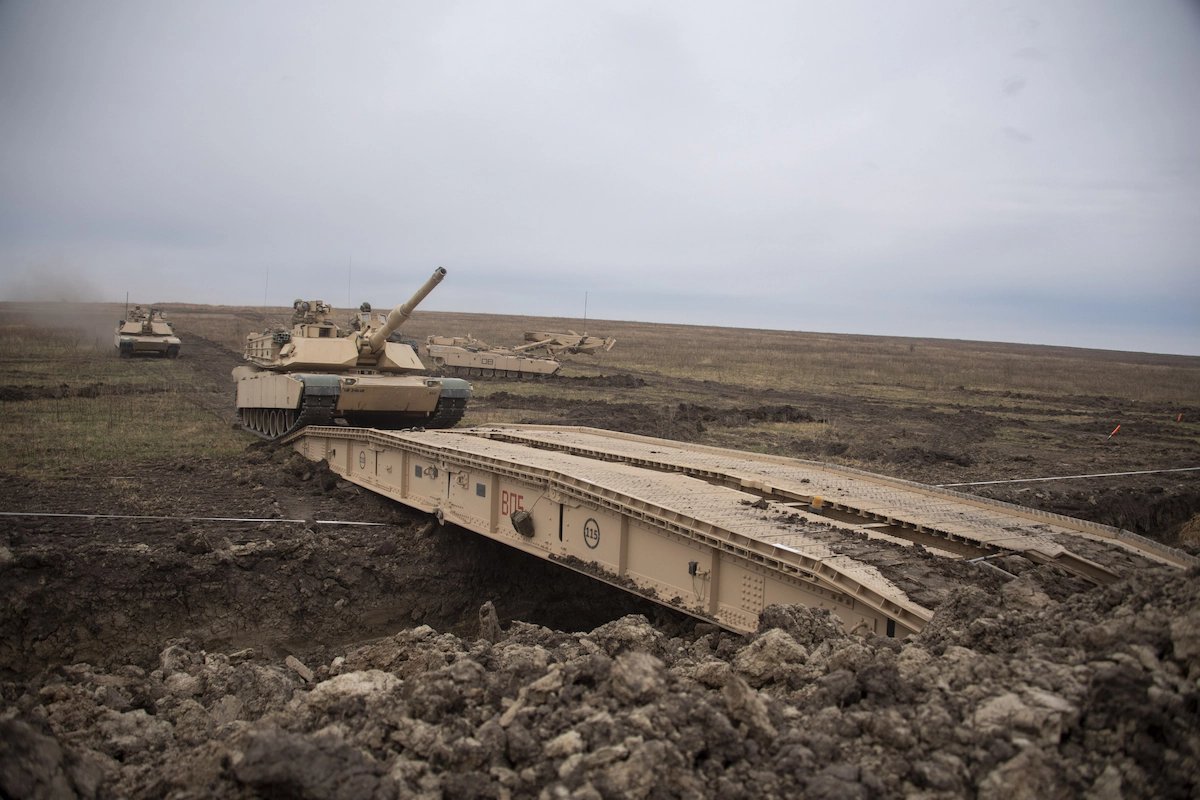
19/ In any case, the result is that tracked AFV have a much better time of it, thanks in large part to the fact they are laying a quasi-mini bridge (though better to have a real one) to run their wheels over.
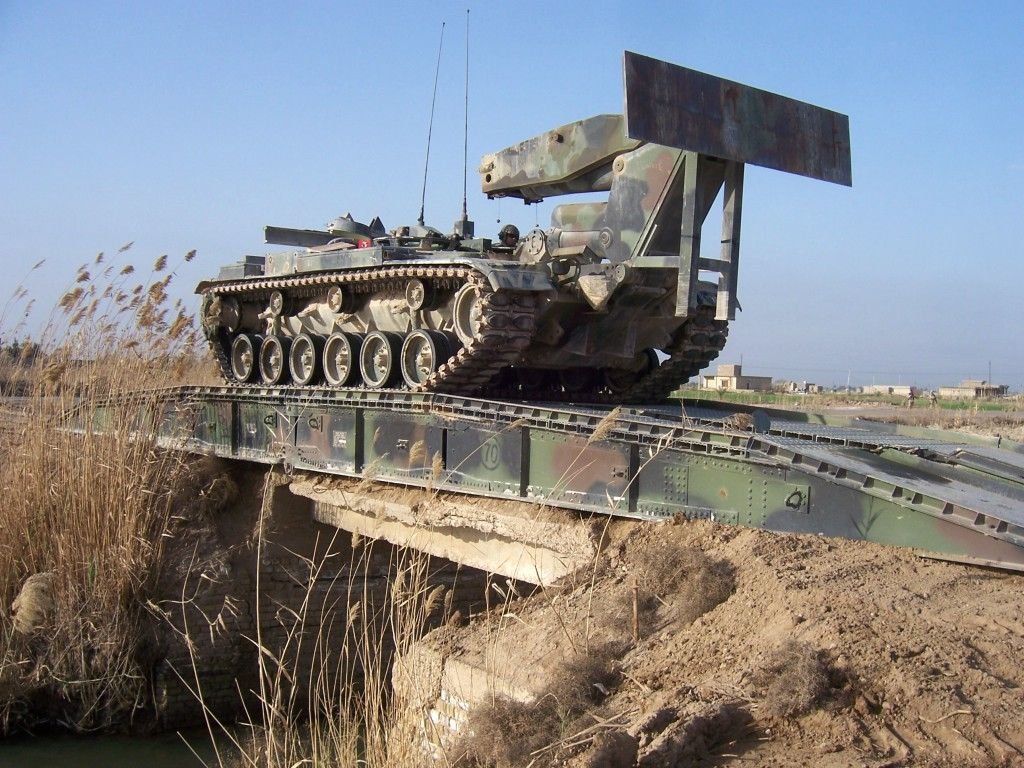
20/ Be under no illusions though, tracks are better, but ditches and trenches remain perilous for AFV, and a very effective way of stopping tanks dead. A bridge is always better (@thinkdefence)
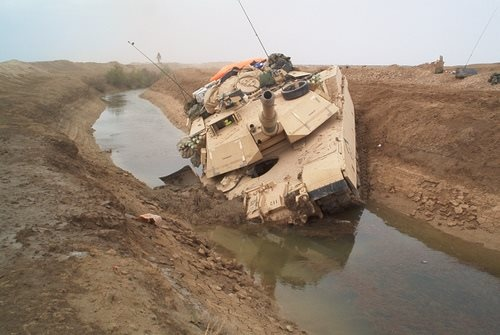
20/ And that’s that for trench crossing. Tracks win again!

End Note: These will all get gathered up, written a bit more long form, and made into a post over on the blog soon™.
21/ Next time: more obstacles – ground clearance & approach/departure angles.

Beyond that: cost and a bit of logistics; survivability considerations; and finally some odds and ends that don’t deserve a whole thread each.
• • •

Missing some Tweet in this thread? You can try to force a refresh

 

Keep Current with Jon Hawkes

Jon Hawkes Profile picture

Stay in touch and get notified when new unrolls are available from this author!

Read all threads

This Thread may be Removed Anytime!

PDF

Twitter may remove this content at anytime! Save it as PDF for later use!

Try unrolling a thread yourself!

how to unroll video
  1. Follow @ThreadReaderApp to mention us!

  2. From a Twitter thread mention us with a keyword "unroll"
@threadreaderapp unroll

Practice here first or read more on our help page!

More from @JonHawkes275

Nov 26, 2025
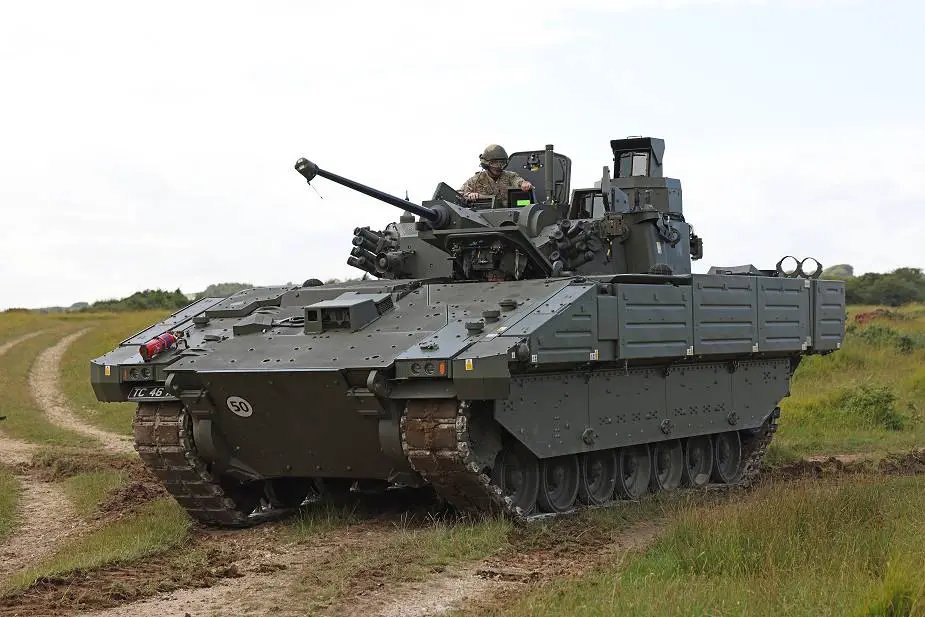
#1 Another wave of Ajax noise & vibration (N&V) chatter has followed IOC. I’m not going to weigh in on either side, but here’s how we might spot if N&V issues are real or rumour – an off-the-cuff thread. Image
#2 If a platform exhibits N&V that is excessive, it will generally manifest most evidently in two places: people and systems.
#3 People means safety limits on time in vehicle or injury patterns. If one AFV’s usage limits are significantly lower than similar AFVs, that’s a red flag.
Read 29 tweets
Oct 13, 2025
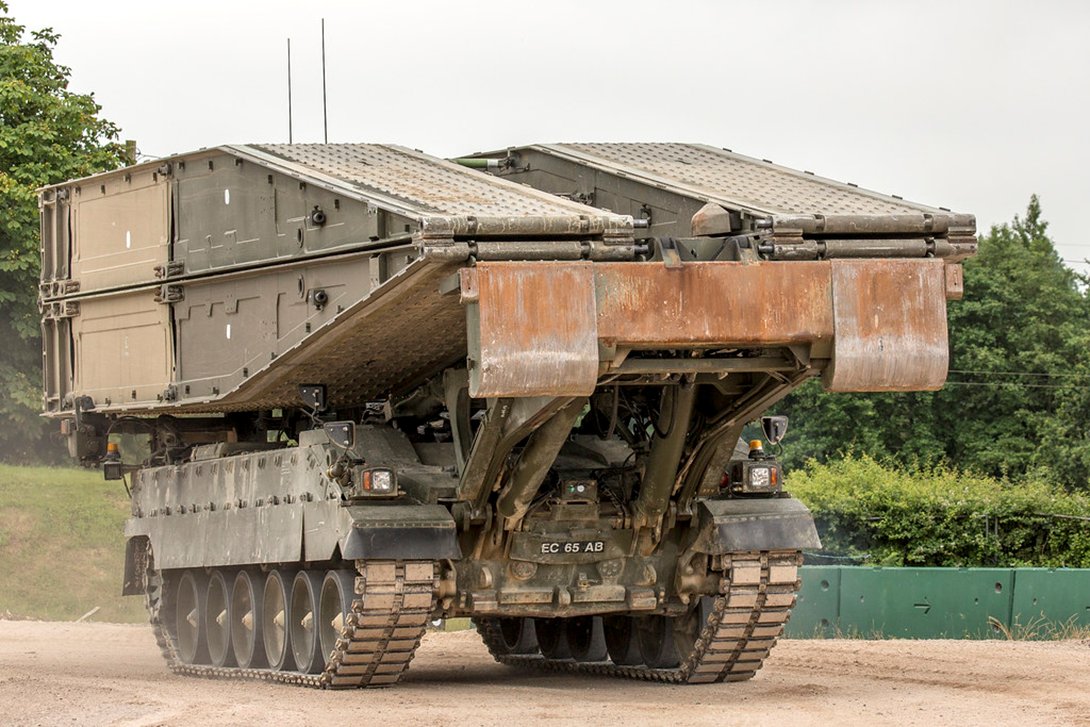
It started as a thread on the UK's Titan AVLB and Project TYRO, but got so unwieldy I’ve made it a mini series. What is Titan and TYRO; why is it one of, if not the, most important requirements in the British Army (or any army); and why us it a serious problem area for the UK? Image
I’ve broken into a few parts; on to part 3 – Why is Titan a serious problem area? This one is the grim bit of the series, but to be clear the intent is to show plainly the criticality of TYRO and back it as an essential requirement that must be delivered, not just bash on Titan.
As explained in part 1, Titan is a great capability, but it is a bespoke small fleet and consequently has some very significant problems that critically impact the Army as a whole, and the bad news is they can't really be solved in practical terms. Image
Read 44 tweets
Sep 4, 2025
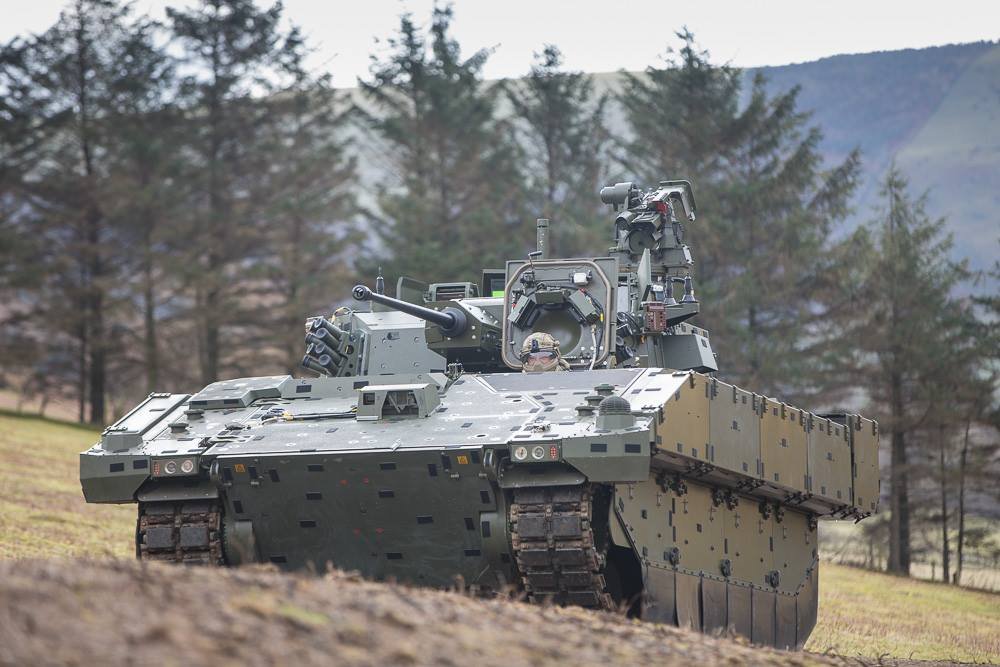
(1/19) With DSEi around the corner, expect Ajax chatter on the topic of IFVs to crop up again, as it has this week. Here’s a thread on IFV options, facts, and my usual ramblings from recent developments. Image
(2/19) As usual I’m going to try to stick to the kit, I’m not a doctrine or strategy pro on wider force design. Just here to give some facts for others to be informed and make use of as they wish.
(3/19) Ajax is itself a (heavily) modified derivative of ASCOD 2. IFV Ajax would likely take one of 2 paths – remote turret on Ares with lower dismount capacity (aka Ares IFV) or new longer Ajax with traditional IFV config. Image
Image
Image
Read 19 tweets
May 20, 2025
As Ajax comes online, a living thread of real and proposed (physical and hypothetical) variants that could expand the capabilities whilst sticking to a single core family for UK medium weight. Image
The original Ajax requirement, FRES SV, had a range of variants beyond the six the Army is presently buying, and returning to these (and a few more, like IFV) in pursuit of a common medium platform would be a good approach. Image
I've mixed in ASCOD/ASCOD2 variants as the lineage of Ajax means ASCOD variants are relatively straightforward to share across the ASCOD/ASCOD2/Ajax base platforms, moreso if Ajax does see a stretched IFV hull later this year. Image
Image
Image
Image
Read 23 tweets
Sep 30, 2024
(Part 2) It started as a thread on the UK's Titan AVLB and Project TYRO, but got so unwieldy I’ve made it a mini series. What is Titan and TYRO; why is it one of, if not the, most important requirements in the British Army (or any army); and why is it a critical requirement? Image
I’ve broken into a few parts; (1) What is Titan and Project TYRO; (2) Why is combat bridging important anyway; (3) Why is Titan a serious problem area; (4) Whats the plan for TYRO CSB; and (5) What are the other options and the implications?
So, Part 2 – Why is combat bridging important anyway? Image
Read 25 tweets
Sep 17, 2024
The UK was the birthplace of the tank and though today it has only a single upgrade programme to show for heavy tracked armour, it was the origin of many key technologies and capabilities used by tanks the world over. A🧵of a few highlights of the glory days of British armour R&D


Image
Image
Image
Image
The first practical gas turbine powered vehicle, the FV200 Turbine Test Vehicle, a Conqueror. 'Practical' is a caveat - the Germans actually had the first gas turbine tank, a Jagdtiger in WW2, but it had a problematic habit of setting trees and other nearby objects on fire.


Image
Image
Image
Image
FV4211 (initially the Chieftain Mk5/2), an all-aluminium tank that was the first with composite armour, initially called Burlington but renamed to Chobham, based around the concept of composite materials under permanent compression, laid in a matrix with additional materials... Image
Read 25 tweets

Did Thread Reader help you today?

Support us! We are indie developers!


This site is made by just two indie developers on a laptop doing marketing, support and development! Read more about the story.

Become a Premium Member ($3/month or $30/year) and get exclusive features!

Become Premium

Don't want to be a Premium member but still want to support us?

Make a small donation by buying us coffee ($5) or help with server cost ($10)

Donate via Paypal

Or Donate anonymously using crypto!

Ethereum

0xfe58350B80634f60Fa6Dc149a72b4DFbc17D341E copy

Bitcoin

3ATGMxNzCUFzxpMCHL5sWSt4DVtS8UqXpi copy

Thank you for your support!

Follow Us!

:(