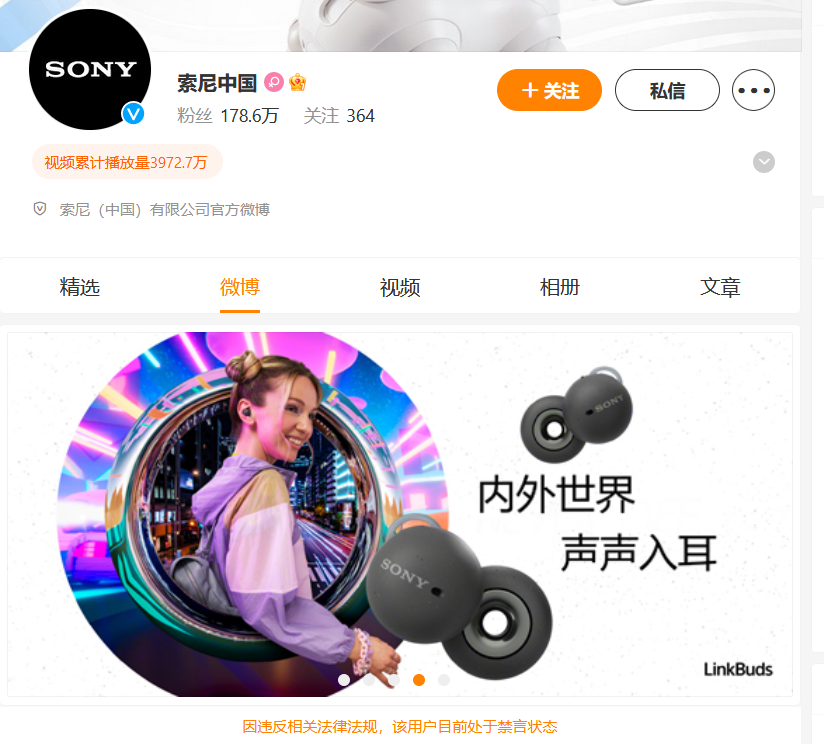
1/ Sony becomes the latest foreign company to be hung out to dry in China for nationalistic reasons. The company's social media account (Weibo) was shut last week, and it was over a post from Oct 12, in which nationalists singled out for insulting China's war heroes and martyrs.
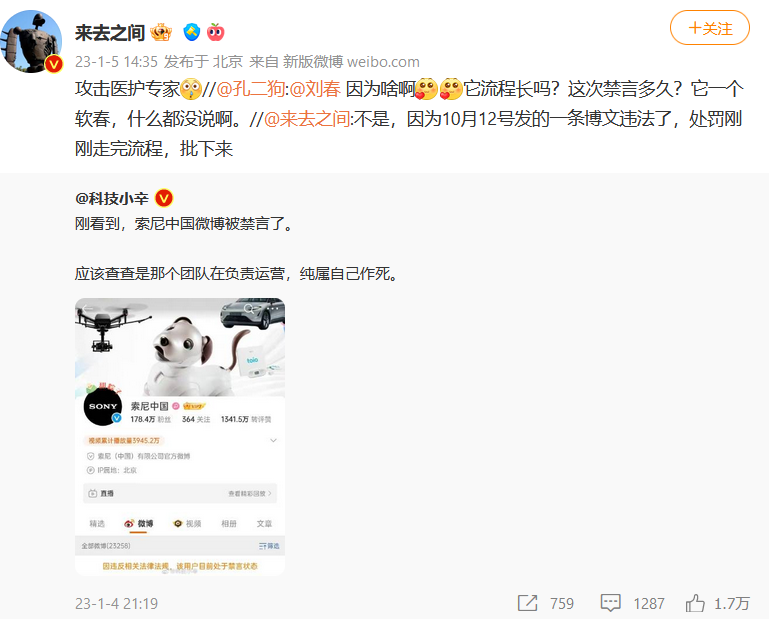
2/ Last week, astute Chinese netizens realised Sony's Weibo had been shuttered, for "running afoul of related rules and regulations." (Message in orange wording at the bottom of image)
3/ Wang Gaofei, the CEO of Weibo, dropped clues to Sony's closure in a public social media entry last week. The block was delayed punishment for a public post by Sony on October 12.
4/ Netizens were left guessing what was the offending post (some accurate guesses) but it wasn’t till Saturday, when CCTV ran a Wechat post explaining Sony’s offense. This was the post that triggered the suspension: a black dog hiding in a sea of red autumn leaves.
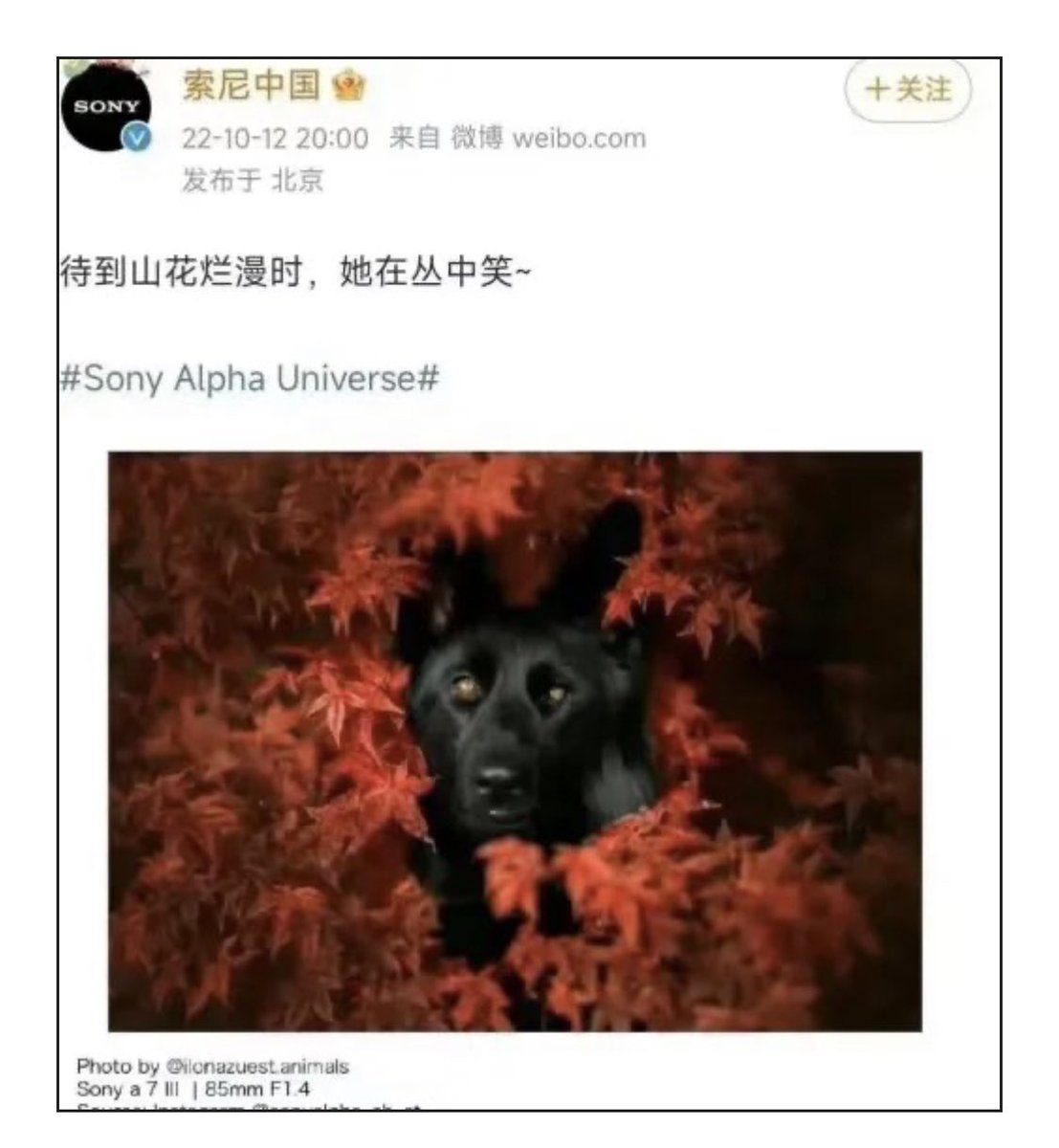
5/ The post also featured a line written by Mao Zedong about the beauty of plum blossoms. Nationalists jumped on the post. CCTV explained that plum blossoms were a sign of Party members overcoming adversity. Sony, they said, had been mocking a war hero from the Korean War.
6/ Nationalists said the post Sony had uploaded mocked Qiu Shaoyun, a Chinese soldier who had sacrificed himself to protect his troops on Oct 12 - 70 years earlier. And that the photo of the dog in the bushes resembled this picture.
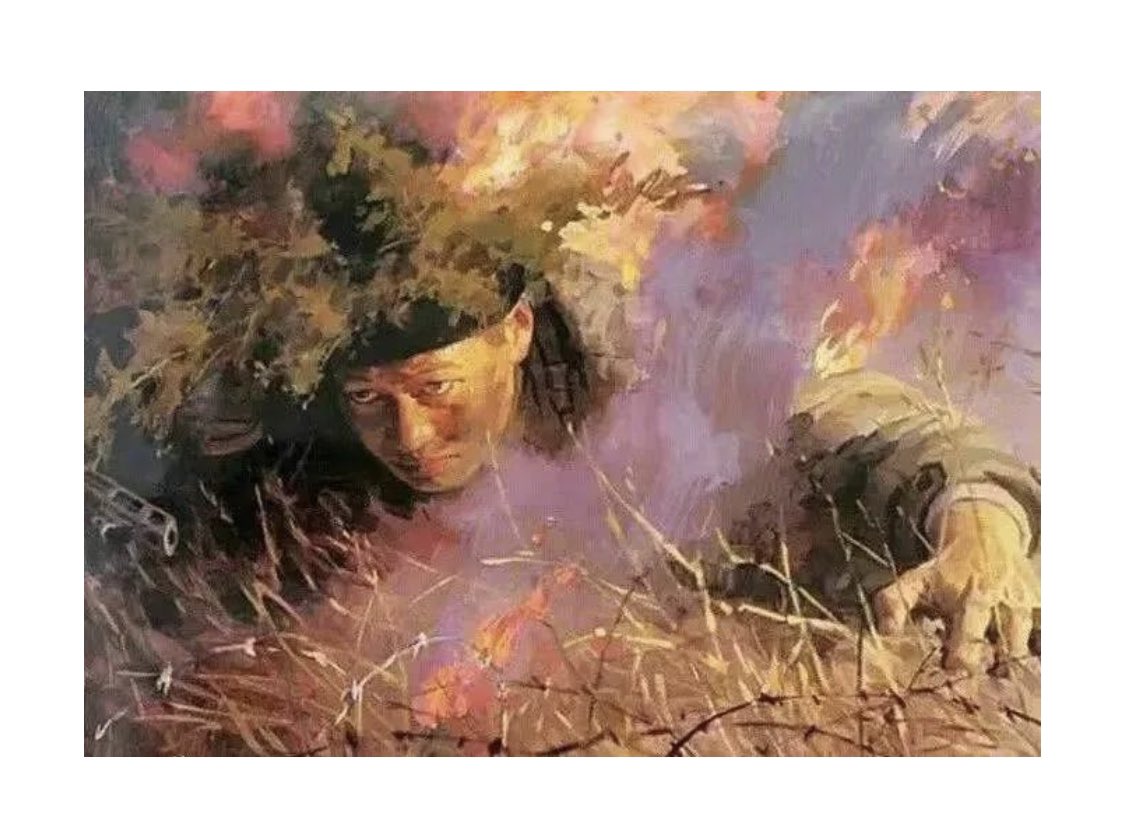
7/ For background, Qiu had burned to death after the area around him was hit by a petrol bomb and he refused to leave the spot for a nearby water body as it would give away the position of his troops. Oct 12 - the day of Sony’s post - was the 70th anniversary of his sacrifice.
8/ Sony was punished under the “Heroes and Martyrs Protection Law" from 2018, which protects the group from defamation. Enforcing control over Chinese history has been a priority for President Xi, who often talks about restoring the Party to greatness. wsj.com/articles/china…
9/ CCTV’s post also singled out another faux pas by Sony. The Japanese electronics maker had chosen July 7, the anniversary of the start of the Sino-Japan war to launch new smartphones in China in 2021. Sony was fined 100 mln yuan.
10/ China, once seen as an easy & attractive market for sales, has become a lot more challenging for foreign brands. Nationalistic boycotts have hit brands, with 90 incidents between 2008 and 2021, data from the Swedish National China Center shows. kinacentrum.se/en/publication…
11/ The last time a foreign company was openly shamed was Walmart over supposedly stripping Xinjiang products from its shelves (more than a year ago), and Swedish retailer H&M, and sportwear firms Nike and Adidas were also boycotted because of their stance on Xinjiang in 2021.
12/ Businesses and diplomats say that Xi's reign on power has only resulted in much more opacity and unpredictability. @ByChunHan and I write in this piece about the changing winds. wsj.com/articles/china…
• • •
Missing some Tweet in this thread? You can try to
force a refresh

Thread: @Danstrumpf and I set out to understand how the abrupt end of zero-covid was impacting Chinese factories, and the world's largest factory floor. The results were pretty surprising. wsj.com/articles/chine…
@DanStrumpf 2/ The speed at which the zero-covid policy was dropped took businesses - both small and large - by surprise. December was a topsy-turvy period for many Chinese factories and service businesses, as many as 90% of one factory's workforce was out with covid.
3/ The sudden u-turn in policy left many factory owners with a wave of sick workers, unable to deliver their orders on time. A toymaker in Shenzhen told @TByGraceZhu: “Everyone fell ill almost at the same time." Now he's worried clients, fearing reinfections, may withhold orders.
1/ Thread: The pandemic has given Chinese President Xi the best opportunity to promote TCM at home and abroad. Why has that sparked such intense debate about public health experts? My colleague @qianweizhang and I break it down. wsj.com/articles/appro…
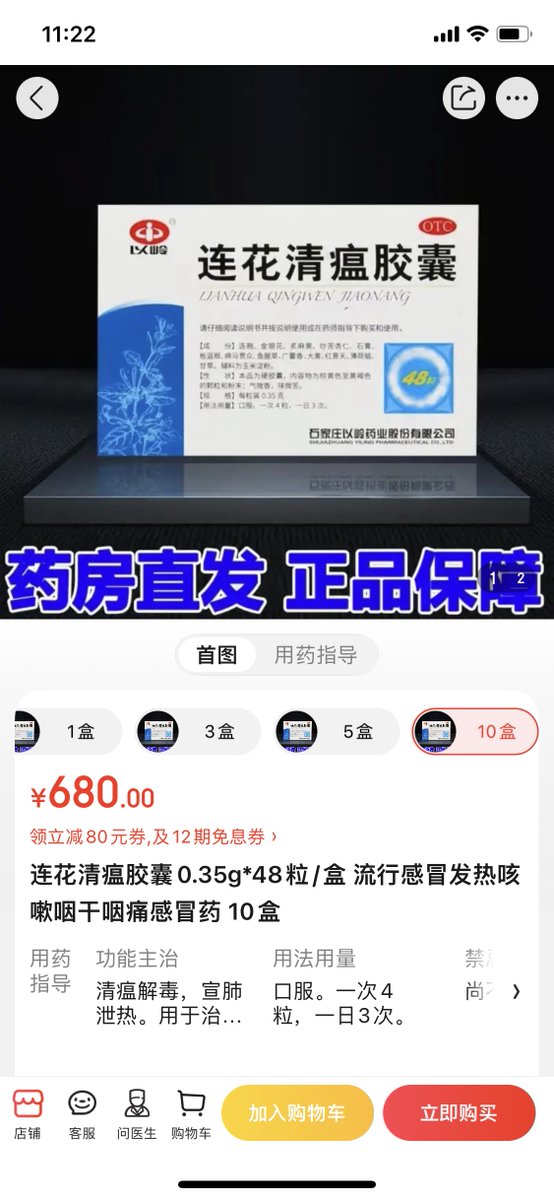
@qianweizhang 2/ Chinese are rushing to buy fever medicine and test kits as the country eases up on virus testing and pandemic control measures. One remedy, however, has been in shortage for a while: Lianhua Qingwen, a herbal drug endorsed by senior Chinese officials to beat covid.
3/ LHQW began running out online & in stores, prompting price gouging online from retailers such as this on Taobao: charging more than 4 times the usual price. 68 yuan instead of the usual 14.5 yuan. On Friday, China's SAMR threatened fines for those pushing up the prices.
1/ The impact of U.S. chip export controls towards China is more human than tech: @WSJ combed thru corporate filings to identify 43 American senior executives in 16 listed Chinese chip firms.
They now have to chose between their citizenship & for some, the startups they founded.
2/ Many in China's chip space expected limits on semiconductors and equipment, what caught most off guard was the policy restricting "US persons" from supporting and developing China's advanced chip industry. (w/@_KarenHao) wsj.com/articles/ameri…
@_KarenHao 3/ We searched through the most recent Chinese stock exchange filings to figure out which executives were affected. Many crucial executives in the C-suite: founders, chairmen, chief technical officers, and others labeled as part of "core research teams: held U.S. citizenship.
1/ THREAD: The @WSJ ran checks on China's most popular social media platforms in the weeks before the Party Congress, searching for the names of Chinese leader Xi, the standing committee members and its 31 provincial and region Party chiefs. Here's what we found:
@WSJ 2/ We analysed Douyin (China's TikTok), Weibo, Baidu's online forum Tieba, the Quora-like Zhihu (知乎)and searched for WeChat blogs using the Sogou search tool.
3/ In his 10 years in power, Xi presided over a boom in censorship that has muzzled online debate in entirely new ways. Influencers with dissenting views silenced, new laws limit online speech, and companies are fined for not policing web content.
Still, the results were a shock.
1/ JD's founder billionaire Richard Liu has been unwinding connections to his large empire in recent months in the run-up to this trial, as he seeks to distance Chinese tech company JD.com and its affiliates from the case. Here's what he no longer holds:
2/ The biggest thing is giving up executive control of JD.com in July. An electronics e-commerce platform he founded in 2004 that has since grown into one of China’s heavyweights, selling groceries, clothing to millions of Chinese. wsj.com/articles/found…
3/ The move was touted as allowing Liu to focus on longer term strategy for JD, but it was surely a difficult choice, especially for a man that many subordinates say had been micromanaging and hands-on with respect to all aspects of JD's day to day operation before the fiasco.
Wednesday's UN report will have big repercussions not just on foreign policy, but also on multinationals doing business with Xinjiang: w/@ByChunHanwsj.com/articles/xinji…
The EU Chamber of Commerce in China says Western governments, civil society and consumers are increasingly demanding that businesses demonstrate that they are not involved with forced labour practices, this UN report will only intensify those calls.
This puts companies in a very tough spot, as independent, third party supply chain audits in Xinjiang are almost impossible. Unless this is addressed, it could leave to more European companies withdrawing, the chamber said.